How to Gain Muscle if You Have a Very Fast Metabolism
How to Gain Muscle if You Have a Very Fast Metabolism

📋 TL;DR
If you're asking "how to gain muscle if you have a very fast metabolism," the answer is a consistent, aggressive calorie surplus, not magic. Most "hardgainers" underestimate their intake by 500–1,000 calories daily . You need a surplus of 300–500 calories for a lean bulk, or 700–1,000 if you're truly underweight . Protein intake should be 1.6–2.2 g per kg of body weight, spread across 3–5 meals . Training must focus on heavy compound lifts with progressive overload, 3–4 days per week . This guide provides the exact calculations, sample meal plans (including vegan options), and training splits to finally pack on muscle.
1. The "Fast Metabolism" Problem: Why You're Not Growing
You eat. A lot. Or so you think. Yet the scale never moves. You've been labeled a "hardgainer," an "ectomorph," someone with a "lightning-fast metabolism." While it's true that some people naturally burn through calories faster than others, the variation is rarely enough to prevent weight gain entirely . The real issue? You're likely overestimating your intake by a significant margin—often 500 to 1,000 calories a day .
Learning how to gain muscle if you have a very fast metabolism isn't about finding a secret supplement. It's about accurately calculating your needs, consistently hitting a calorie surplus, and training smart. Your fast metabolism is not a curse; it's simply a physiological trait you must account for with more fuel .
2. The Science: How a Fast Metabolism Works
2.1. What Is Metabolic Rate?
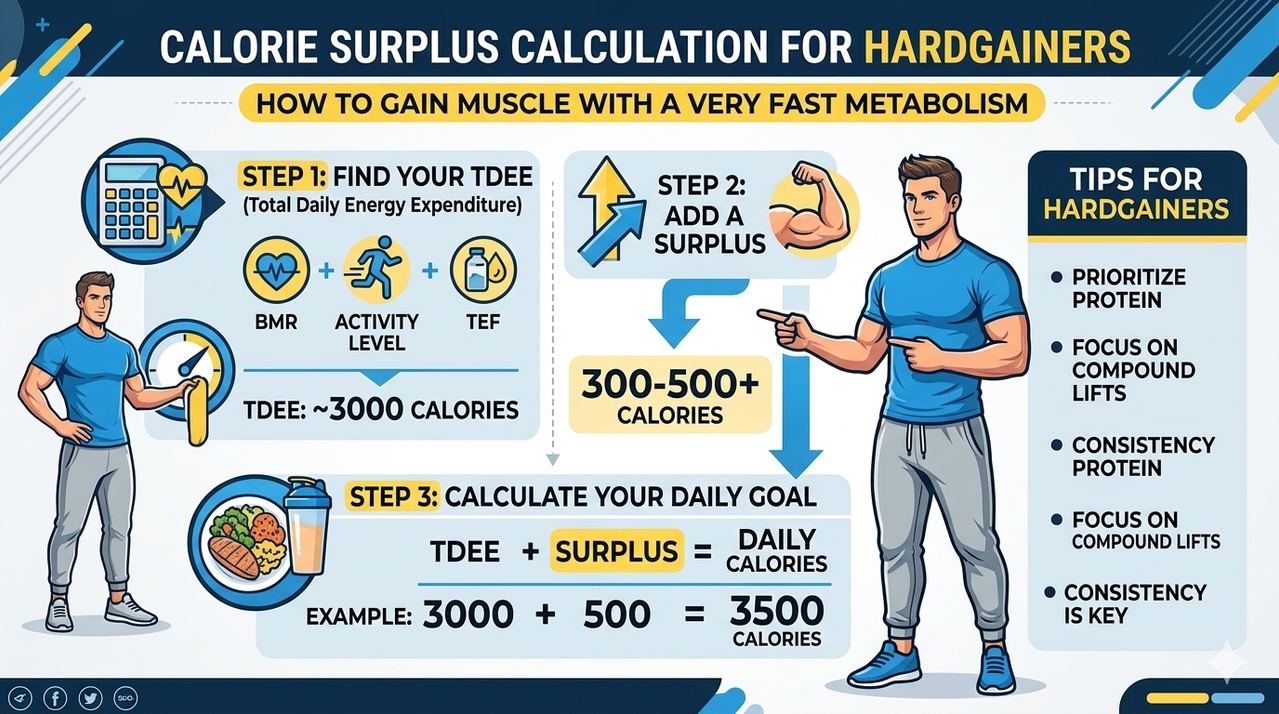
Your metabolic rate is the total number of calories your body burns each day. It's composed of your Basal Metabolic Rate (BMR—the energy needed to keep you alive), the thermic effect of food (TEF), and physical activity . Someone with a "fast" metabolism simply has a higher total daily energy expenditure (TDEE), meaning they burn more calories at rest and during activity .
2.2. Ectomorphs and NEAT
People with a fast metabolism often have higher Non-Exercise Activity Thermogenesis (NEAT). They fidget more, walk faster, and unconsciously move more throughout the day, burning extra calories without realizing it . This is a key reason why gaining weight is harder for some.
2.3. The mTOR Pathway: Your Growth Switch
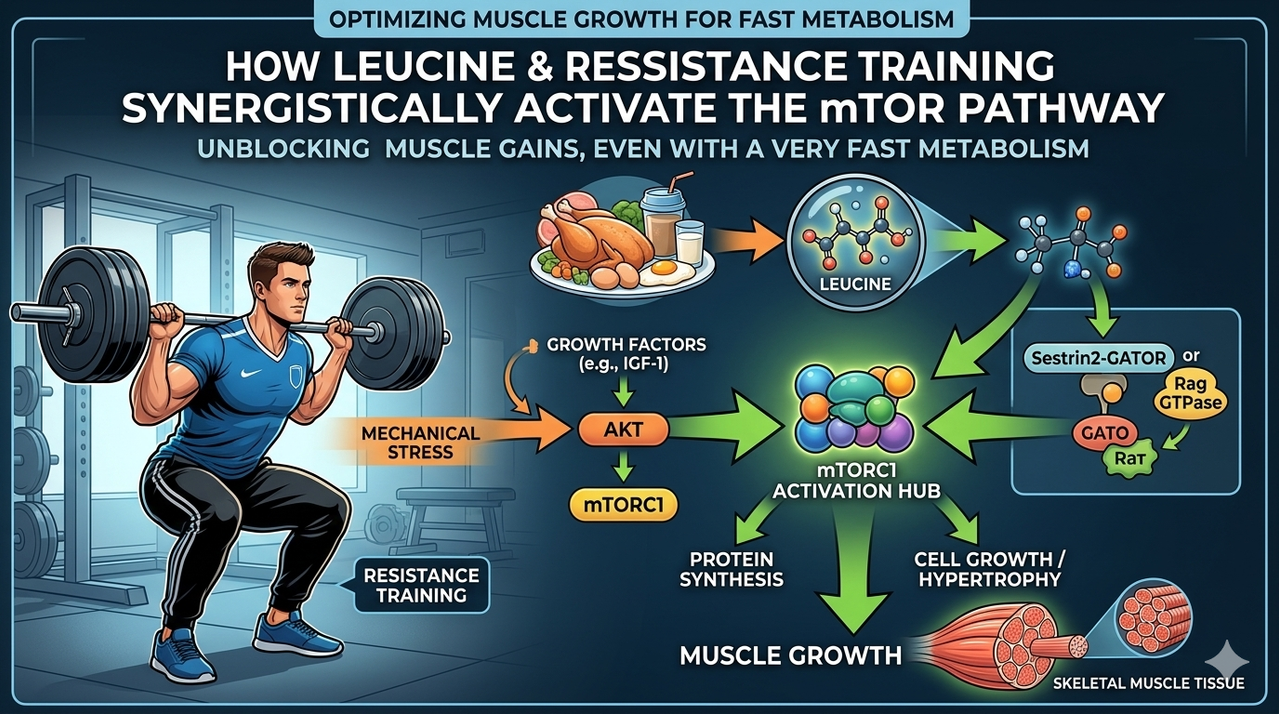
Muscle growth is controlled at the cellular level by a pathway called mTOR (mechanistic target of rapamycin). When you eat protein (especially leucine) and train with intensity, mTOR is activated, signaling your body to build new muscle tissue . For those with a fast metabolism, consistently activating this pathway with adequate protein and training is essential [citation:5].
3. Step 1: Calculate Your Calorie Surplus
3.1. Find Your Maintenance Calories
A simple starting point is multiplying your body weight (in pounds) by 14 to 16 . For a 150 lb (68 kg) guy, that's 2,100–2,400 calories to maintain weight. Track your intake for two weeks; if your weight stays the same, you've found your baseline .
3.2. Add Your Surplus
To gain weight, you need a calorie surplus. Research recommends:
- 300–500 calorie surplus: For a slow, lean bulk (0.5–1 lb gained per week) .
- 700–1,000 calorie surplus: If you are very underweight or a true beginner, you may be able to gain faster, though more fat gain is likely .
If your weight hasn't increased after two weeks, add another 200–300 calories daily .
Example: 150 lb (68 kg) Hardgainer
- Maintenance: ~2,300 kcal
- Lean Bulk Surplus: 2,600–2,800 kcal
- Aggressive Surplus: 3,000–3,300 kcal
4. Protein: The Building Block for Fast Metabolisms
4.1. How Much Protein?
For muscle growth, research from the International Society of Sports Nutrition and the NIH recommends 1.6–2.2 g per kg of body weight (0.8–1.0 g per lb) daily [citation:3][citation:9]. For a 70kg person, that's 112–154g of protein. This range effectively maximizes muscle protein synthesis [citation:5].
4.2. Protein Timing: The 3-Hour Rule
Studies show that distributing protein evenly across 3–5 meals (about 0.4–0.5 g/kg per meal) maximizes 24-hour muscle protein synthesis compared to skewed intake [citation:3]. Aim for a protein-rich meal or shake every 3–4 hours.
4.3. Top Protein Sources for Weight Gain
- Eggs: 6-7g per large egg. Eat the yolk for healthy fats and nutrients.
- Chicken thighs: Cheaper and more calorie-dense than breast; 25-27g per 100g.
- Ground beef (80/20): Higher in calories and flavor, perfect for bulking.
- Whole milk: 8g protein per cup, plus 150 calories. An easy way to add surplus.
- Greek yogurt: 17-20g protein per serving; rich in casein for slow digestion.
- Salmon & fatty fish: High-quality protein plus anti-inflammatory omega-3s.
| Food | Protein (g) | Calories | Notes |
|---|---|---|---|
| 3 large eggs | 18 | ~210 | Eat whole for nutrients |
| 200g chicken thigh | ~50 | ~330 | Skin-on for extra calories |
| 1 cup whole milk | 8 | 150 | Drink with meals |
| 200g 80/20 beef | ~40 | ~500 | High calorie density |
| 1 cup Greek yogurt | 20 | ~220 | Great for snacks |
5. Sample 3,200-Calorie Meal Plan for a 70kg Hardgainer
This sample day provides ~3,200 kcal with 160g protein, perfect for a fast metabolism [citation:10].
- Breakfast (7:30 AM) – 800 kcal, 35g protein: 3 eggs (18g) + 1 cup whole milk (8g) + 1 cup oats (10g) + 1 tbsp peanut butter (4g) + 1 banana.
- Morning Snack (10:30 AM) – 500 kcal, 20g protein: 1 cup Greek yogurt (20g) + ¼ cup mixed nuts + 2 tbsp raisins.
- Lunch (1:30 PM) – 900 kcal, 45g protein: 200g 80/20 ground beef (40g) + 1.5 cups cooked pasta + 1 tbsp olive oil + tomato sauce.
- Afternoon Snack (4:30 PM) – 400 kcal, 20g protein: 2 tbsp peanut butter (8g) + 2 rice cakes + 1 glass whole milk (8g).
- Dinner (7:30 PM) – 600 kcal, 40g protein: 200g chicken thigh (40g) + 1 large sweet potato + 1 tbsp butter.
- Pre-Bed (10:30 PM) – Optional: 1 cup cottage cheese (24g) for slow-digesting casein.
- Total: ~3,200 kcal, ~160g protein
5.1. Vegan Options for Fast Metabolism
- Breakfast: Smoothie: 1 cup soy milk (7g) + 1 banana + 2 tbsp peanut butter (8g) + 1 cup oats (10g) + 1 scoop pea protein (25g) → 50g protein
- Lunch: Lentil bowl: 1.5 cups cooked lentils (27g) + 1 cup quinoa (8g) + 1 tbsp olive oil + roasted veggies → 35g protein
- Snack: 1 cup edamame (18g) + ¼ cup almonds (6g) → 24g protein
- Dinner: Tempeh stir-fry: 200g tempeh (30g) + 1 cup brown rice (5g) + cashews (5g) + veggies → 40g protein
- Evening: 1 cup soy yogurt (6g) + berries
- Total: ~155g protein
6. Training: Turn Calories into Muscle
6.1. Focus on Compound Lifts
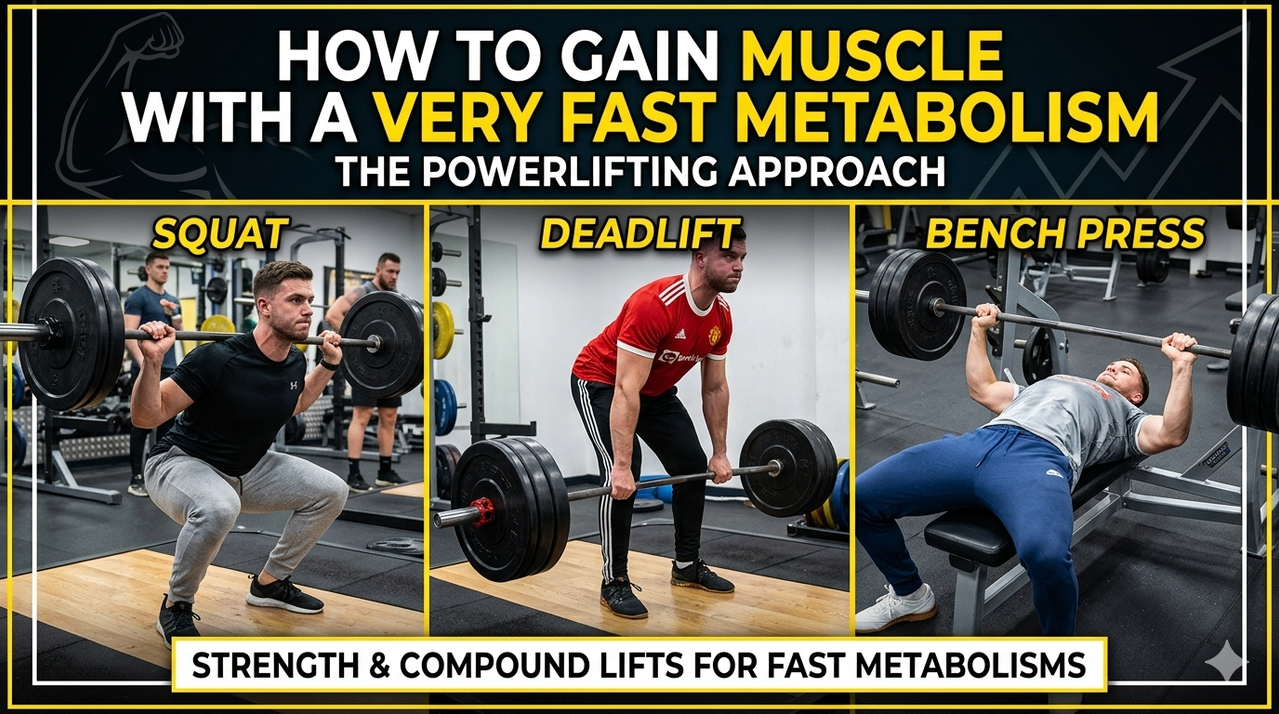
For hardgainers, isolation exercises won't cut it. Compound lifts recruit the most muscle fibers and trigger the greatest hormonal response for growth [citation:1].
- The "Big Six": Squats, Deadlifts, Bench Press, Overhead Press, Pull-Ups, Barbell Rows [citation:1].
- Train 3-4 times per week: Hit each muscle group twice weekly for optimal stimulation [citation:1].
6.2. Progressive Overload: The Secret Sauce
You must consistently challenge your muscles. Add weight, reps, or sets every week. Keep a training log and chase progress [citation:1]. Even a five-pound increase makes a difference.
6.3. Sample 4-Day Upper/Lower Split
- Day 1 (Upper Push): Bench Press 4x8, Overhead Press 3x10, Incline Dumbbell Press 3x10, Triceps Dips 3x12 [citation:1].
- Day 2 (Lower): Squats 4x8, Deadlifts 3x6, Walking Lunges 3x10/leg, Leg Curls 3x12 [citation:1].
- Day 3 (Rest/Active Recovery)
- Day 4 (Upper Pull): Pull-Ups 4xMax, Barbell Rows 3x10, Face Pulls 3x15, Bicep Curls 3x12 [citation:1].
- Day 5 (Optional Accessory Work)
7. Eating Strategies for Small Appetites
7.1. Liquid Calories
If you get full quickly, drink your calories. A 700-900 kcal smoothie with milk, oats, banana, peanut butter, and protein powder is easier to digest than a large meal [citation:2].
7.2. Eat More Meals, Not Bigger Meals
Spreading food over 5-7 smaller meals is easier on the stomach than three huge ones [citation:2]. Increase your eating window by having breakfast early.
7.3. Energy-Density Hacks
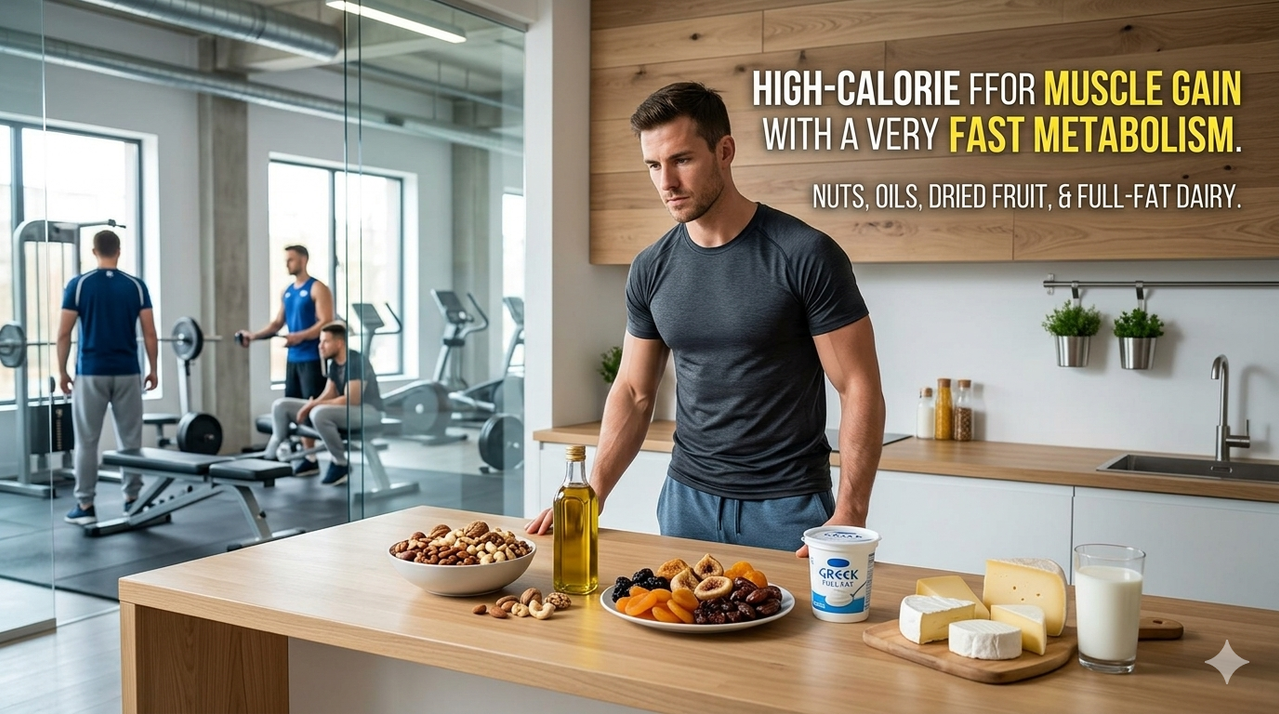
- Add 1–2 tbsp olive oil to meals (+120–240 kcal) [citation:2].
- Stir nut butter into oats, yogurt, or smoothies (+90–190 kcal) [citation:2].
- Top meals with cheese, avocado, seeds, and dried fruit.
- Swap water for milk in oatmeal, soups, or shakes [citation:2].
8. Supplements: What Actually Helps
8.1. Creatine Monohydrate
Creatine is the most researched supplement for muscle growth. It increases ATP production, giving you energy for more reps and heavier lifts. Take 5g daily [citation:1][citation:2].
8.2. Protein Powders
While whole foods come first, whey or plant-based protein powders can help you hit your daily targets, especially post-workout or in smoothies [citation:1].
8.3. Mass Gainers
Mass gainers are simply protein powder with added carbs. They can be useful if you truly struggle to eat enough, but a homemade shake (milk, oats, peanut butter, protein) is often cheaper and healthier [citation:2].
9. Recovery: Sleep and Consistency
Muscle grows when you rest, not when you lift. Aim for 7–9 hours of quality sleep per night. During deep sleep, growth hormone is released, repairing muscle tissue [citation:1][citation:2].
10. Common Mistakes That Sabotage Gains
- Mistake #1: Not tracking intake. You think you eat a lot, but data doesn't lie. Use an app and weigh food initially [citation:1].
- Mistake #2: Doing too much cardio. Excessive running burns calories you need for gains. Stick to lifting and minimal cardio [citation:1].
- Mistake #3: Avoiding fats. Fats are calorie-dense and essential for hormone production [citation:1].
- Mistake #4: Inconsistent eating. Eating a lot one day and little the next kills progress. Consistency is key [citation:1].
- Mistake #5: Relying on "dirty bulking." Junk food leads to excess fat gain, not quality muscle [citation:1].
12. Scientific References
- Evogen Nutrition. (2025). How to Gain Muscle Fast for Skinny Guys. Evogen.com. View Source
- Apollo 24|7. (2026). Ways To Gain Weight Fast. apollo247.com. View Source
- NIH. (2025). Table 3: Protein Distribution and Timing. PMC, 12655512. View Source
- BarBend. (2025). Sadik Hadzovic's 3 Go-To Meals for Mass Gain. BarBend.com. View Source
- Jeong, S.Y. (2025). The Role of mTOR and AMPK Signaling in Skeletal Muscle Hypertrophy. Cureus, 17(11), e96018. View Source
- JISSN. (2016). Table 2: Dietary Recommendations for elite athletes. BioMed Central. View Source
- Transparent Labs. (2025). How to Gain Weight with a Fast Metabolism in 2025. TransparentLabs.com. View Source
- 移民署. (2024). 瘦長型增肌飲食4重點. immigration.gov.tw. View Source
Join the conversation