Best Weekly Weight Gain Rate for Muscle Growth (Lean Bulk Guide)
Best Weekly Weight Gain Rate for Muscle Growth (Lean Bulk Guide)
⚡ TL;DR
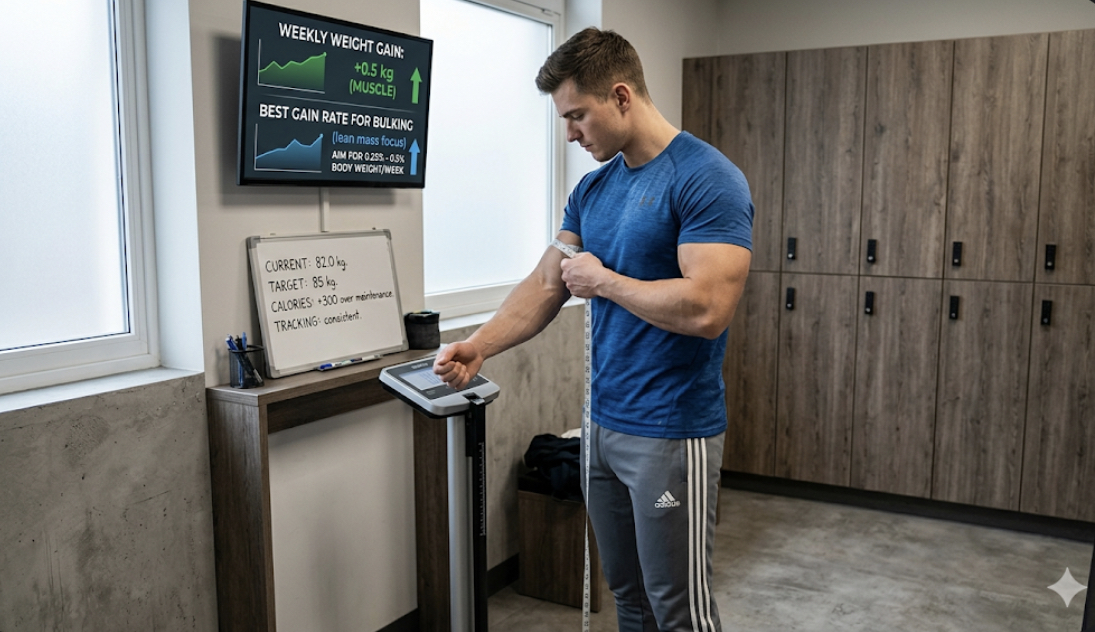
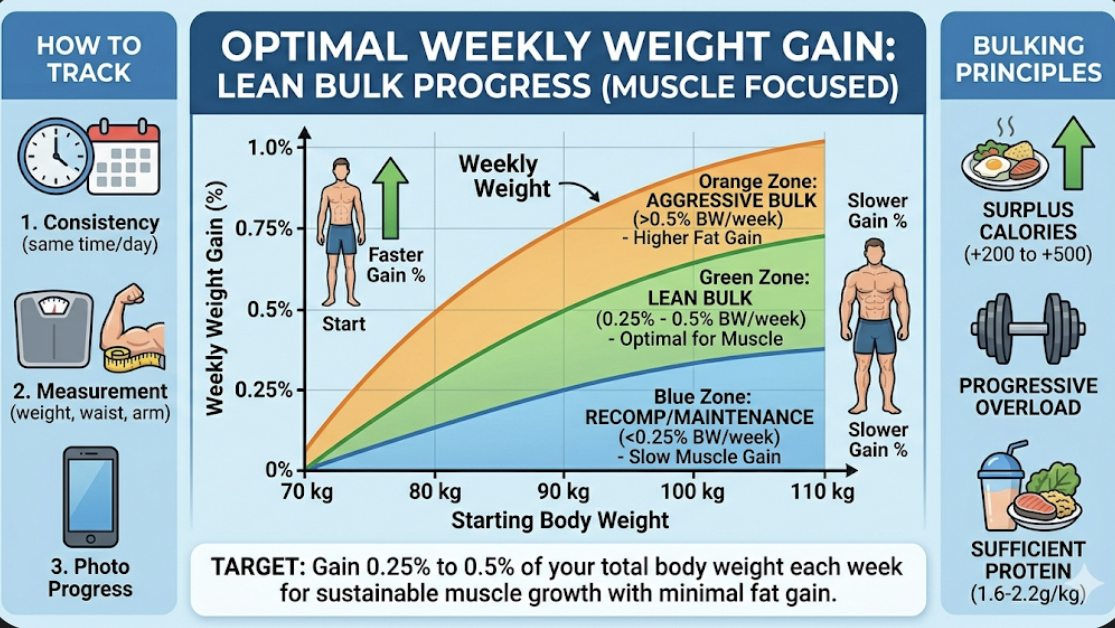
The best weekly weight gain rate for muscle growth is 0.25–0.5% of your body weight per week. For a 75 kg (165 lb) person, that's 0.19–0.38 kg (0.4–0.8 lb) per week. This rate maximizes muscle protein synthesis while minimizing fat accumulation . Faster weight gain (0.5–1%+) results in significantly more fat gain without additional muscle . This lean bulk weekly progress target applies to most natural lifters, with beginners at the higher end and advanced lifters at the lower end. This guide provides detailed calculations, sample meal plans, and tracking methods to optimize your gains.
1. The Bulking Speed Dilemma: How Fast Is Too Fast?
You've decided to bulk. You know you need to eat more. But how much more? Gain too slowly, and you might be spinning your wheels. Gain too quickly, and you'll end up with a lot of fat to lose later. The answer lies in understanding the ideal bulking rate—the sweet spot where muscle growth is maximized and fat gain is minimized.
What is the best weekly weight gain for muscle growth?
The best weekly weight gain for muscle growth is 0.25–0.5% of your body weight per week. For a 70 kg (154 lb) individual, that's 0.18–0.35 kg (0.4–0.8 lb) per week. For an 85 kg (187 lb) person, that's 0.21–0.43 kg (0.5–0.9 lb) per week. This range is supported by research showing that the maximum natural muscle growth rate is approximately 0.25–0.5% body weight per week, depending on training experience . Any weight gain beyond this is predominantly fat.
2. The Science: How Fast Can You Actually Build Muscle?
2.1. Research-Based Maximums
Studies on natural resistance training show that the maximum rate of muscle gain varies by experience level:
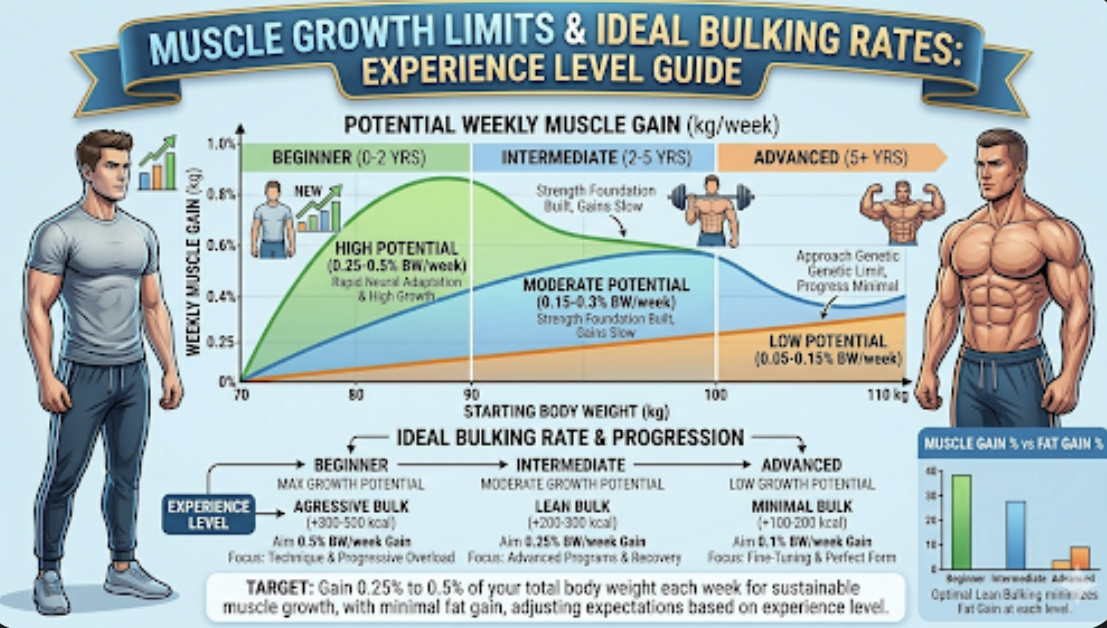
- Beginners (first year): 0.5–1.0% body weight per month (1–2% per month in lean mass gain).
- Intermediate (1–3 years): 0.25–0.5% body weight per month.
- Advanced (3+ years): 0.1–0.25% body weight per month.
When you translate these monthly rates to weekly targets, the optimal range is 0.25–0.5% of body weight per week for beginners to intermediates, and 0.1–0.25% for advanced lifters .
2.2. Why You Can't Rush Muscle Growth
Muscle protein synthesis has an upper limit. Even with optimal nutrition and training, your body can only synthesize a finite amount of new muscle tissue each day . Any surplus calories beyond what's needed to support this maximum are stored as fat. This is why aggressive "dirty bulking" leads to excessive fat gain—the extra calories have nowhere else to go.
2.3. The 2020 Meta-Analysis
A comprehensive 2020 analysis concluded that the optimal calorie surplus for muscle growth is relatively small—about 10–20% above maintenance . Larger surpluses do not accelerate muscle growth but do accelerate fat gain .
3. Recommended Weight Gain Rates by Experience Level
| Experience Level | Weekly Weight Gain (% body weight) | Weekly Weight Gain (kg for 75 kg person) | Monthly Gain (kg) |
|---|---|---|---|
| Beginner (0–1 year training) | 0.5% | 0.38 kg (0.8 lb) | 1.5 kg (3.3 lb) |
| Intermediate (1–3 years) | 0.25–0.5% | 0.19–0.38 kg (0.4–0.8 lb) | 0.8–1.5 kg (1.8–3.3 lb) |
| Advanced (3+ years) | 0.1–0.25% | 0.08–0.19 kg (0.2–0.4 lb) | 0.3–0.8 kg (0.7–1.8 lb) |
Note: These are maximum recommended rates. Many intermediates and advanced lifters may gain slower and still build muscle effectively. Focus on strength progression—if your lifts are going up, you're likely building muscle even if scale weight isn't moving quickly.
4. How to Calculate Your Personal Weight Gain Target
4.1. Step-by-Step Calculation
- Weigh yourself: Record your morning weight after using the bathroom, 3–4 times per week.
- Calculate weekly average: Add daily weights and divide by days measured.
- Apply your target percentage: Multiply your body weight by 0.0025 (0.25%) and 0.005 (0.5%).
- Set your weekly target range: For a 75 kg intermediate: 0.19–0.38 kg per week.
4.2. Adjust Based on Progress
- If gaining faster than target: Reduce calorie surplus by 100–150 kcal/day.
- If gaining slower and strength stalls: Increase surplus by 100–150 kcal/day.
- If strength is progressing and weight is stable: You may be recomping (gaining muscle while losing fat)—this is acceptable, especially for beginners.
5. Sample Lean Bulk Meal Plans for Optimal Weekly Gain
5.1. Omnivore Plan – 2,800 kcal, 150g Protein (for 70–75 kg person)
- Breakfast (7:30): 3 eggs + 2 egg whites, 1 cup oatmeal with 1 tbsp peanut butter, 1 banana (600 kcal, 35g protein)
- Lunch (12:30): 180g grilled chicken breast, 1.5 cups brown rice, 1 cup broccoli, 1 tbsp olive oil (650 kcal, 45g protein)
- Pre-workout (4:30): 1 scoop whey protein, 1 apple (200 kcal, 25g protein)
- Post-workout/Dinner (7:30): 180g lean beef or salmon, 1.5 cups sweet potato, 2 cups mixed greens (650 kcal, 45g protein)
- Evening Snack (10:00): 200g Greek yogurt, 1 cup berries, 1 tbsp honey (350 kcal, 20g protein)
- Snack (optional): 1 oz almonds (160 kcal, 6g protein)
Total: ~2,800 kcal, 160g protein
5.2. Vegan/Vegetarian Plan – 2,800 kcal, 145g Protein
- Breakfast: Tofu scramble (200g firm tofu), 1.5 cups oatmeal with 2 tbsp peanut butter, banana (700 kcal, 40g protein)
- Lunch: 200g tempeh, 1.5 cups quinoa, 1 cup roasted chickpeas, mixed greens (700 kcal, 45g protein)
- Pre-workout: 1 scoop pea protein, 1 apple (200 kcal, 25g protein)
- Post-workout/Dinner: 1.5 cups cooked lentils, 1.5 cups sweet potato, 150g edamame, 1 tbsp olive oil (650 kcal, 35g protein)
- Evening: 200g silken tofu with berries, 2 tbsp hemp seeds (350 kcal, 15g protein)
Gluten-Free Options
- Use certified gluten-free oats, quinoa, rice, or buckwheat.
- Ensure protein powders and tempeh/tofu are gluten-free certified.
5.3. Quick Lean Bulk Recipes
- Mass Gainer Smoothie (700 kcal, 40g protein): 1 scoop whey/pea protein, 1 cup oat milk, 1 banana, 2 tbsp peanut butter, 1 tbsp chia seeds, ½ cup frozen mango.
- Protein Pancakes (550 kcal, 35g protein): 1.5 scoops protein powder, ½ cup oats, 2 eggs, 1 banana, cinnamon. Top with Greek yogurt and berries.
6. How to Track Your Bulking Progress Effectively
6.1. Weekly Weigh-Ins
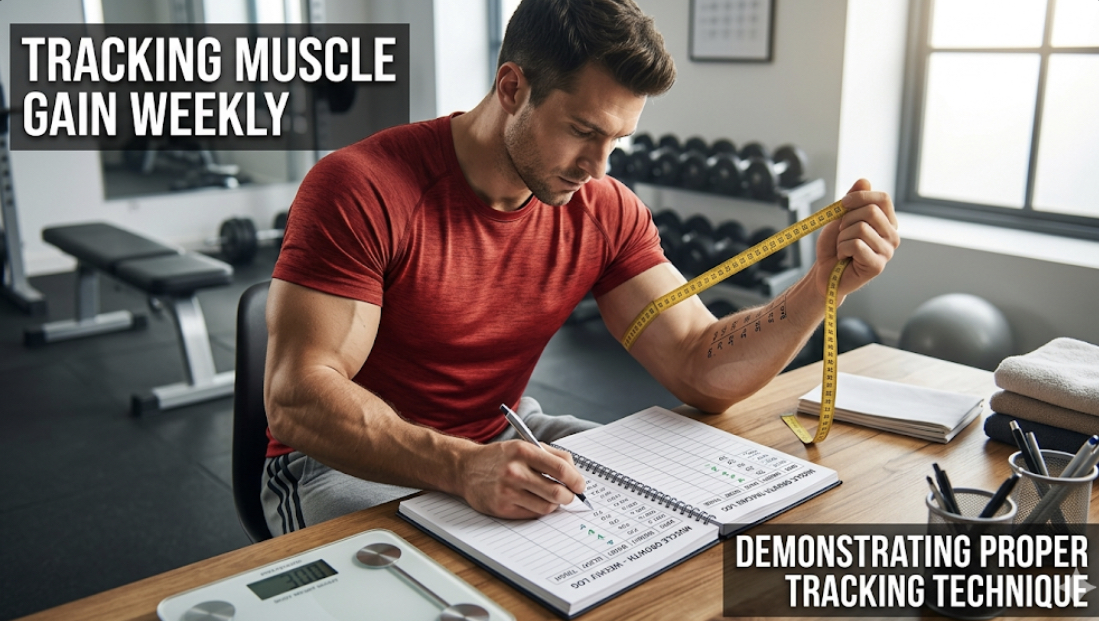
Weigh yourself at the same time, under the same conditions (morning, after bathroom, before food/water). Take a weekly average and compare week-to-week. Use a spreadsheet or app to track trends.
6.2. Strength Progression
Log your lifts. If your strength is increasing on compound movements (squat, bench, deadlift, rows, overhead press), you're building muscle. This is often a better indicator than the scale.
6.3. Body Measurements
Measure waist, hips, arms, and thighs every 2–4 weeks. A growing waistline (beyond 0.5–1 inch per month) indicates excessive fat gain—reduce surplus.
6.4. Progress Photos
Take photos every 2–4 weeks in consistent lighting. Visual changes can reveal muscle growth even when scale weight is stable.
7. Common Mistakes That Ruin Bulking Progress
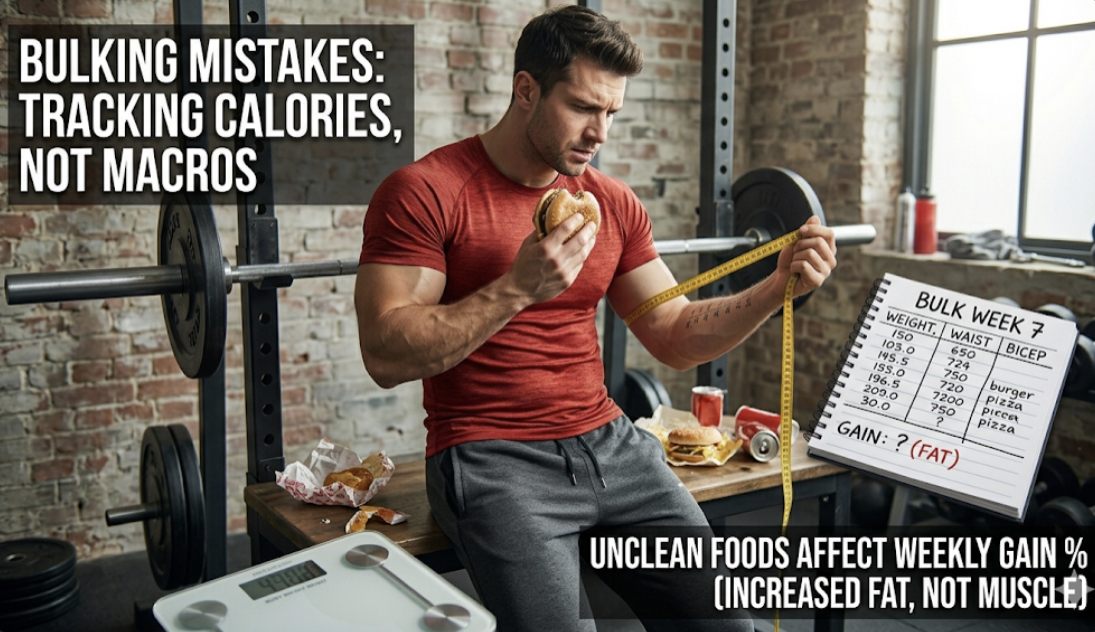
- Mistake #1: Gaining weight too fast. More than 0.5–1% body weight per week is mostly fat. Be patient.
- Mistake #2: Not tracking intake. You can't manage what you don't measure. Track calories for the first few weeks to calibrate.
- Mistake #3: Inadequate protein. Below 1.6 g/kg, you risk suboptimal muscle growth.
- Mistake #4: No progressive overload. Surplus without training stimulus = fat gain.
- Mistake #5: Bulking too long without breaks. Consider diet breaks or mini-cuts every 12–16 weeks to reset insulin sensitivity.
- Mistake #6: Ignoring sleep and stress. Poor recovery limits muscle growth and worsens nutrient partitioning.
8. Frequently Asked Questions
What is the best weekly weight gain for muscle growth?
The best weekly weight gain for muscle growth is 0.25–0.5% of body weight per week. For a 75 kg person, that's 0.19–0.38 kg per week.
How much muscle can I gain in a month?
Beginners: 1–2% of body weight (0.8–1.5 kg for 75 kg person). Intermediates: 0.5–1%. Advanced: 0.2–0.5%. These are maximums; individual results vary.
How long should a bulking phase last?
Typically 8–16 weeks. Some advanced lifters bulk for 3–6 months. Stop when you've gained 8–12% of body weight or when waist circumference has increased more than 2–3 inches.
Should I gain weight if my lifts are going up?
Strength gains are a positive sign of muscle growth. If lifts are progressing, you're likely building muscle even if scale weight is stable (recomposition).
What calorie surplus is needed for optimal bulking?
Start with 250–350 kcal above maintenance for beginners. Adjust up or down to hit your target weight gain rate. For advanced lifters, 100–200 kcal may be sufficient.
Can I build muscle without gaining weight?
Yes—this is body recomposition, common in beginners, those returning after a break, or those with higher body fat. You lose fat and gain muscle simultaneously.
How much protein do I need while bulking?
1.6–2.2 g per kg of body weight daily. For a 75 kg person, 120–165 g protein per day.
9. Related Resources
- How Much Weight Should You Add Each Week? Progressive Overload Guide
- Mind-Muscle Connection: How to Train Your Brain for Better Muscle Gains
- Why Your Muscles Look Smaller After a Workout (And How to Fix It Fast)
- Ectomorph Diet Guide: How to Eat 3000 Calories of Whole Foods for Muscle Gain
- How to Break Through a Squat Plateau Naturally and Increase Strength
10. Scientific References
- Slater, G. J., et al. (2019). Is an Energy Surplus Required to Maximize Skeletal Muscle Hypertrophy Associated With Resistance Training? Frontiers in Nutrition, 6, 131. PubMed
- Morton, R. W., et al. (2018). A systematic review, meta-analysis and meta-regression of the effect of protein supplementation on resistance training-induced gains in muscle mass and strength in healthy adults. British Journal of Sports Medicine, 52(6), 376–384. PubMed
- Hector, A. J., & Phillips, S. M. (2018). Protein Recommendations for Weight Loss in Elite Athletes: A Focus on Body Composition. International Journal of Sport Nutrition and Exercise Metabolism, 28(2), 170–177. PubMed
- Schoenfeld, B. J., et al. (2017). Effects of Resistance Training Frequency on Measures of Muscle Hypertrophy: A Systematic Review and Meta-Analysis. Sports Medicine, 46(11), 1689–1697. PubMed
- Helms, E. R., et al. (2014). Evidence-based recommendations for natural bodybuilding contest preparation. Journal of the International Society of Sports Nutrition, 11(1), 20. PubMed
- Iraki, J., et al. (2019). Nutrition Recommendations for Bodybuilders: An Evidence-Based Approach. Journal of the International Society of Sports Nutrition, 16(1), 17. PubMed
- ACSM. (2021). Nutrition and Athletic Performance. Medicine & Science in Sports & Exercise, 53(3), 600–618. PubMed
- Antonio, J., et al. (2016). A High Protein Diet (3.4 g/kg/d) Combined with a Heavy Resistance Training Program Improves Body Composition in Healthy Trained Men. Journal of the International Society of Sports Nutrition, 13(1), 1–7. PubMed
Join the conversation