At-Home Full Body Routine Without Equipment
The Complete At-Home Full Body Workout Without Equipment: Science, Strategy, and Sustainable Results

📋 TL;DR
You absolutely can build muscle, burn fat, and get stronger with zero equipment—if you apply the right principles. This guide gives you a science-backed full body routine, detailed nutrition plans (with vegan/gluten-free options), meal timing strategies, and expert progressions. Based on peer-reviewed research from the Journal of Strength and Conditioning Research and ISSN guidelines.
1. Why "No Equipment" Doesn't Mean "No Results"
The myth that you need dumbbells, barbells, or machines to build muscle has been debunked by modern exercise science. A 2018 meta-analysis published in Frontiers in Physiology concluded that "muscular adaptations, including hypertrophy and strength gains, can be achieved across a wide range of loading zones" – including bodyweight exercises – provided the effort is sufficiently high (1).
The secret lies in progressive overload – continually increasing the challenge on your muscles. Without weights, you create overload through:
- Leverage changes: Adjusting limb position (e.g., elevating feet for push-ups).
- Tempo manipulation: Slowing down the eccentric (lowering) phase.
- Volume accumulation: Adding reps or sets.
- Unilateral variations: Single-limb exercises increase load per limb.
- Plyometrics: Adding explosive movements.
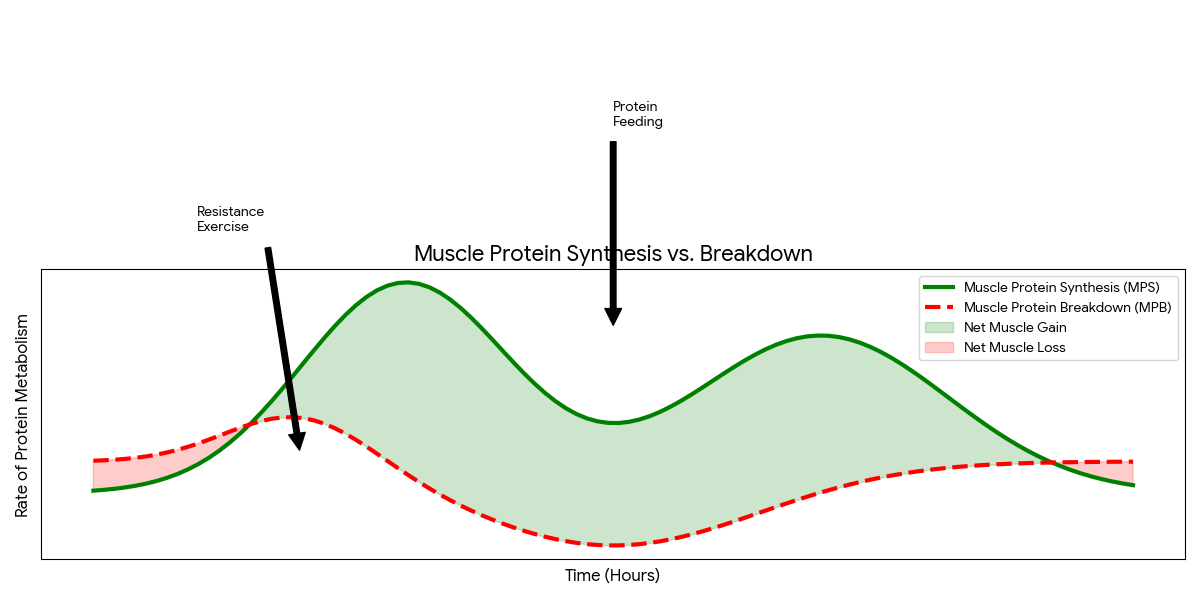
This article is your complete roadmap. You'll learn the exact routine, how to progress month by month, and how to fuel your body for optimal muscle protein synthesis – all from the comfort of your home.
2. The Science of Bodyweight Training: What Really Happens in Your Muscles
To understand why bodyweight training works, we need to look at muscle physiology. Resistance training causes micro-tears in muscle fibers. During recovery, your body repairs these tears and adds more muscle tissue – a process called muscle protein synthesis (MPS).
A landmark study by Schoenfeld et al. (2017) in the Journal of Strength and Conditioning Research compared low-load training (30-50% of one-rep max) with high-load training (70-80% of 1RM). Both groups achieved similar hypertrophy when sets were performed to failure (2). The key? Training to momentary muscular failure – the point where you cannot complete another rep with good form.
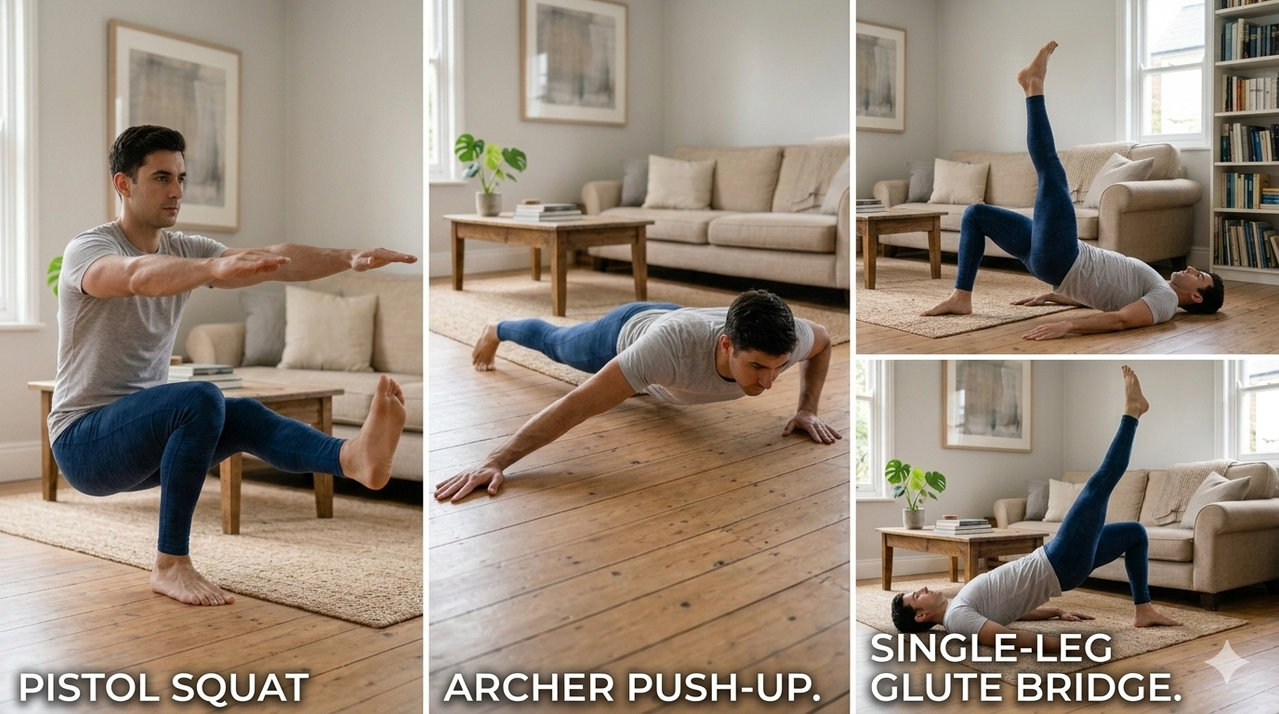
Bodyweight exercises, when performed correctly, easily reach this threshold. For example, a standard push-up might feel easy, but an archer push-up or decline push-up can bring even advanced trainees to failure in 8-12 reps.
2.1. Muscle Fiber Recruitment: Type I vs Type II
Many believe bodyweight only trains "slow-twitch" (Type I) endurance fibers. However, research shows that when you push close to failure, you also recruit high-threshold motor units – the fast-twitch (Type II) fibers responsible for size and strength (3). The key is intensity of effort, not external load.
2.2. Metabolic Stress and the "Pump"
Bodyweight circuits often create significant metabolic stress – the burning sensation in your muscles. This metabolic stress triggers anabolic signaling pathways (like mTOR) and contributes to hypertrophy through cellular swelling and hormonal responses (4).
3. The Ultimate At-Home Full Body Routine (No Equipment)
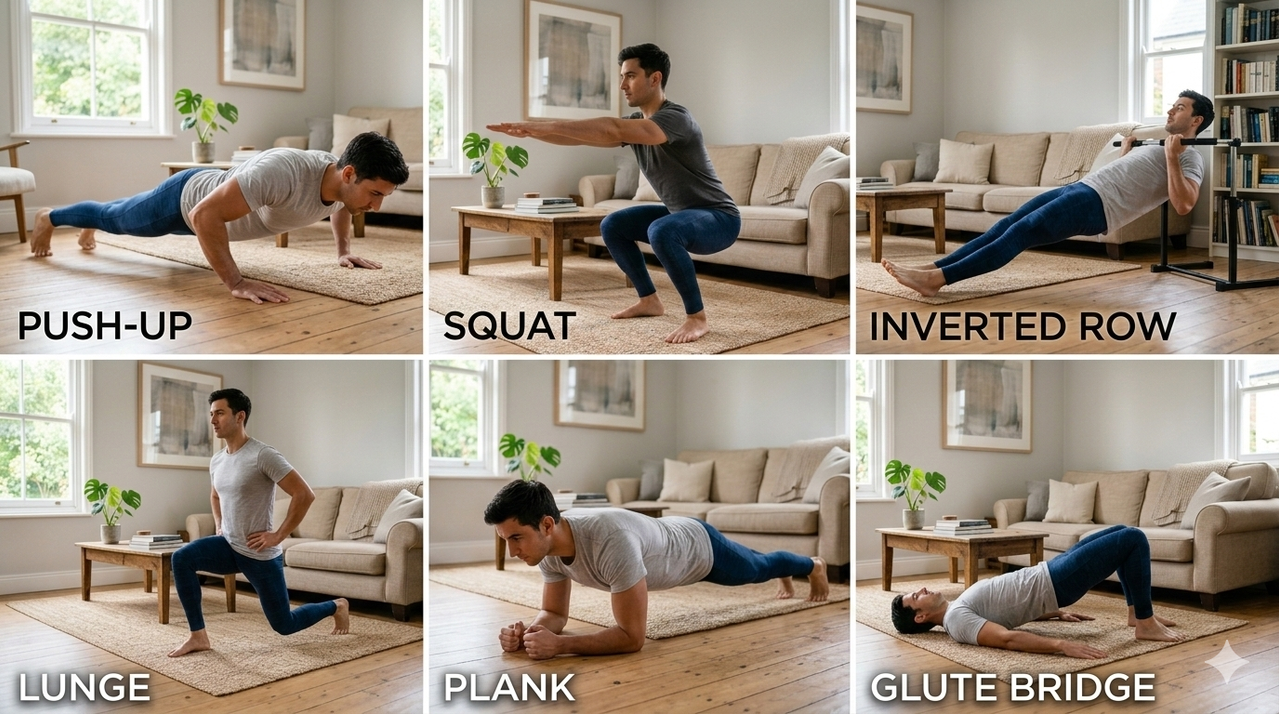
This routine is designed to hit every major muscle group: chest, back, shoulders, legs, glutes, and core. Perform it 3 times per week (e.g., Monday, Wednesday, Friday) with at least 48 hours rest between sessions.
3.1. Warm-Up (5-7 minutes)
Never skip the warm-up. It increases blood flow, improves mobility, and reduces injury risk.
- Arm circles: 30 seconds forward, 30 seconds backward
- Leg swings: 30 seconds front-to-back, 30 seconds side-to-side
- Cat-Cow stretch: 10 slow reps
- World's greatest stretch: 5 reps per side
- Glute bridges: 15 reps (activation)
- Jumping jacks (optional): 60 seconds to raise heart rate
3.2. Main Workout: Full Body Circuit
Perform the exercises as a circuit: complete one set of each exercise back-to-back with minimal rest (30-60 seconds). After completing all 7 exercises, rest 2-3 minutes. Repeat for 3-5 rounds depending on your fitness level.
| Exercise | Target Muscles | Beginner Reps | Intermediate Reps | Advanced Reps |
|---|---|---|---|---|
| Push-ups (or knee push-ups) | Chest, shoulders, triceps, core | 8-12 | 15-20 | 25-30 (or decline) |
| Bodyweight squats | Quads, glutes, hamstrings, core | 10-15 | 20-25 | 30-40 (or jump squats) |
| Inverted rows (under table/desk) | Back, biceps, rear delts | 6-8 | 10-12 | 15-20 |
| Reverse lunges | Glutes, quads, hamstrings, balance | 8 each leg | 12 each leg | 15-20 each leg |
| Plank with shoulder tap | Core, shoulders, stability | 30 sec | 45 sec | 60 sec |
| Glute bridges (single-leg option) | Glutes, lower back, hamstrings | 15 | 20-25 | 30 (or single-leg 12-15) |
| Diamond push-ups (or wide push-ups) | Triceps, inner chest | 6-8 | 10-12 | 15-20 |
3.3. Cool-Down & Stretching (5-10 minutes)
- Child's pose: 60 seconds
- Standing quad stretch: 30 seconds each leg
- Cat-Cow: 10 slow breaths
- Pigeon pose (glute stretch): 45 seconds each side
- Triceps stretch: 30 seconds each arm
4. Progressive Overload: How to Keep Gaining for Months
Without adding weight, you must systematically increase the challenge. Here's a 12-week progression plan.
4.1. Weeks 1-4: Foundation
- Focus on form and mind-muscle connection.
- Perform 3 rounds of the circuit.
- Rest 90 seconds between rounds.
- Aim for the "beginner" rep ranges.
4.2. Weeks 5-8: Volume Increase
- Increase to 4 rounds.
- Reduce rest to 60 seconds.
- Aim for "intermediate" rep ranges.
- Add tempo: lower slowly for 3 seconds on push-ups and squats.
4.3. Weeks 9-12: Advanced Variations
- Upgrade exercises:
- Push-ups → Archer push-ups or decline feet-elevated push-ups.
- Squats → Pistol squats (assisted) or jump squats.
- Inverted rows → Single-arm rows (use a towel).
- Glute bridges → Single-leg glute bridges with pulse.
- Perform 5 rounds with 45 seconds rest.
5. Nutrition: Fueling Your Home Workouts for Maximum Gains
Exercise breaks down muscle; nutrition builds it back. Without proper fuel, you'll plateau or even lose muscle.
5.1. Protein: The Building Block
The International Society of Sports Nutrition (ISSN) recommends 1.4-2.0 grams of protein per kilogram of body weight daily for active individuals (5). For a 70kg (154lb) person, that's 98-140g protein per day.
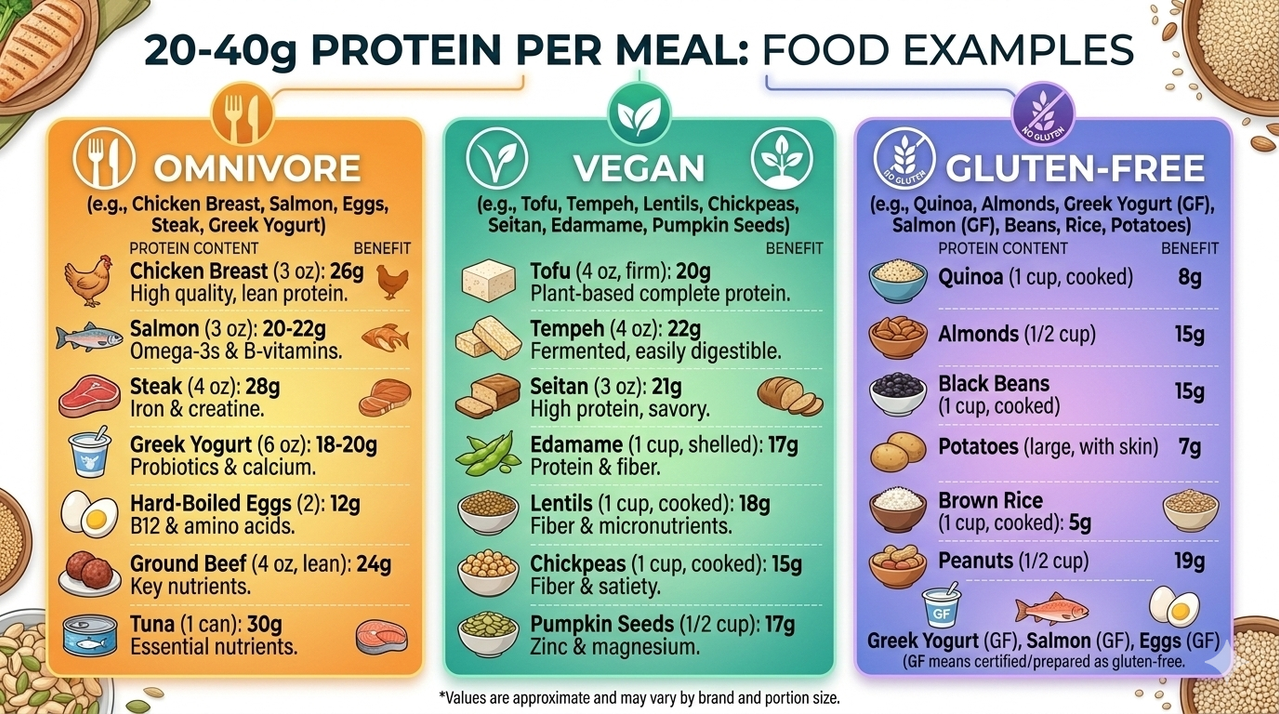
Timing matters: Spread protein evenly across 3-4 meals to maximize MPS. Aim for 20-40g per meal (6).
5.2. Sample Meal Plan (Omnivore) – ~2000 kcal, 140g protein
- Breakfast (7:00 AM): 3 scrambled eggs (18g protein) + 1 cup Greek yogurt (20g) + 1 slice whole-grain toast + berries. (~40g protein)
- Lunch (12:30 PM): 150g grilled chicken breast (35g) + 1 cup quinoa + roasted vegetables + olive oil. (~40g protein)
- Snack (4:00 PM): 1 scoop whey protein (25g) + 1 apple + 10 almonds. (~27g protein)
- Dinner (7:30 PM): 150g salmon (30g) + sweet potato + steamed broccoli. (~35g protein)
5.3. Vegan / Plant-Based Adaptations
Meeting protein needs on a vegan diet requires planning but is absolutely achievable.
- Tofu (firm): 150g = ~15g protein
- Tempeh: 150g = ~20g protein
- Lentils (cooked): 1 cup = 18g protein
- Chickpeas: 1 cup = 15g protein
- Edamame: 1 cup = 18g protein
- Pea protein powder: 1 scoop = 20-25g protein
- Seitan (if not gluten-free): 100g = 25g protein
- Quinoa: 1 cup cooked = 8g protein (plus all essential amino acids)
Sample Vegan Meal Plan (~2000 kcal, 130g protein)
- Breakfast: Tofu scramble (150g firm tofu = 15g) + 2 slices whole-grain toast + spinach. (~20g)
- Lunch: Lentil bowl: 1 cup lentils (18g) + quinoa (8g) + veggies + tahini sauce. (~28g)
- Snack: Vegan protein shake (25g) + banana. (~26g)
- Dinner: Tempeh stir-fry: 150g tempeh (20g) + broccoli + rice. (~22g)
- Evening snack: Edamame 1 cup (18g). (18g)
5.4. Gluten-Free Options
- Replace wheat-based grains with quinoa, buckwheat, certified gluten-free oats, rice, amaranth.
- Protein sources: eggs, dairy, meat, fish, legumes, tofu, tempeh, gluten-free seitan (made from wheat starch, so avoid if celiac).
- Check labels on protein powders; many are gluten-free.
5.5. Quick High-Protein Recipes (Under 10 Minutes)
- Microwave Scrambled Eggs: Beat 3 eggs with a splash of milk, microwave for 2 minutes (stirring halfway). Add cheese. (~25g protein)
- Protein Smoothie: 1 scoop protein, 1 cup milk (dairy/soy), 1 tbsp peanut butter, 1/2 banana, ice – blend. (~30g protein)
- Greek Yogurt Bowl: 1 cup Greek yogurt (20g) + berries + 1 tbsp chia seeds (3g) + nuts. (~25g protein)
- Quick Tuna Salad (omnivore): 1 can tuna (25g) + Greek yogurt + mustard + celery. Serve with rice cakes. (~28g)
- Vegan "No-Cook" Bowl: 1 can chickpeas (rinsed) + pre-cooked quinoa + olive oil + lemon. (~20g protein)
6. Recovery: The Often Overlooked Game-Changer
Muscle is built outside the gym, during rest. Neglecting recovery leads to burnout, injury, and stalled progress.
6.1. Sleep: Your Natural Anabolic State
During deep sleep, growth hormone is released, and protein synthesis peaks. A 2011 study in Medical Hypotheses linked poor sleep to muscle loss and increased cortisol (8). Aim for 7-9 hours of quality sleep per night.
6.2. Active Recovery
On rest days, light activity like walking, yoga, or stretching improves blood flow and speeds recovery.
6.3. Hydration and Electrolytes
Even mild dehydration impairs performance and recovery. Drink 2-3 liters of water daily, more if you sweat heavily.
7. 5 Common Mistakes That Kill Bodyweight Progress
- Mistake #1: Not pushing close to failure. If you stop because you're tired, not because you can't do another rep, you're leaving gains on the table. The last 2-3 reps are where the magic happens.
- Mistake #2: Ignoring the eccentric (lowering) phase. Lowering slowly (2-4 seconds) increases time under tension and micro-tears, leading to more growth.
- Mistake #3: Inconsistent protein intake. Skipping breakfast or having a tiny lunch means you miss MPS spikes. Spread protein evenly.
- Mistake #4: Always doing the same exercises. Your body adapts in 4-6 weeks. Change variations, rep ranges, or tempo.
- Mistake #5: Neglecting sleep and stress. High cortisol breaks down muscle. Prioritize recovery.
8. Sample Weekly Workout Schedule
| Day | Activity |
|---|---|
| Monday | Full Body Routine (3-5 rounds) + Stretching |
| Tuesday | 30-minute brisk walk or yoga |
| Wednesday | Full Body Routine (3-5 rounds) + Stretching |
| Thursday | Light cardio (jump rope, jogging) or rest |
| Friday | Full Body Routine (3-5 rounds) + Stretching |
| Saturday | Active recovery: hiking, swimming, or sports |
| Sunday | Complete rest or gentle stretching |
10. Scientific References
- Schoenfeld, B. J., Grgic, J., Ogborn, D., & Krieger, J. W. (2017). Strength and hypertrophy adaptations between low- vs. high-load resistance training: A systematic review and meta-analysis. Journal of Strength and Conditioning Research, 31(12), 3508-3523. View Source
- Schoenfeld, B. J., Peterson, M. D., Ogborn, D., Contreras, B., & Sonmez, G. T. (2015). Effects of low- vs. high-load resistance training on muscle strength and hypertrophy in well-trained men. Journal of Strength and Conditioning Research, 29(10), 2954-2963. View Source
- Henneman, E., Somjen, G., & Carpenter, D. O. (1965). Functional significance of cell size in spinal motoneurons. Journal of Neurophysiology, 28(3), 560-580. View Source
- Schoenfeld, B. J. (2013). Potential mechanisms for a role of metabolic stress in hypertrophic adaptations to resistance training. Sports Medicine, 43(3), 179-194. View Source
- Jäger, R., Kerksick, C. M., Campbell, B. I., et al. (2017). International Society of Sports Nutrition Position Stand: protein and exercise. Journal of the International Society of Sports Nutrition, 14, 20. View Source
- Schoenfeld, B. J., & Aragon, A. A. (2018). How much protein can the body use in a single meal for muscle-building? Implications for daily protein distribution. Journal of the International Society of Sports Nutrition, 15, 10. View Source
- Aragon, A. A., & Schoenfeld, B. J. (2013). Nutrient timing revisited: is there a post-exercise anabolic window? Journal of the International Society of Sports Nutrition, 10(1), 5. View Source
- Dattilo, M., Antunes, H. K., Medeiros, A., et al. (2011). Sleep and muscle recovery: endocrinological and molecular basis for a new and promising hypothesis. Medical Hypotheses, 77(2), 220-222. View Source
All sources last accessed March 2025. Paraphrased for accessibility.
Join the conversation