Best High-Volume Low-Calorie Foods for Cutting
Best High-Volume Low-Calorie Foods for Cutting: Eat More, Weigh Less

📋 TL;DR
One of the most common reasons people give up on trying to lose weight is that they're too hungry when dieting . The solution is the volumetrics approach: choosing foods with low calorie density that fill your stomach without blowing your calorie budget . Research confirms that fasting gastric volume is associated with calorie intake to the point of comfortable fullness—meaning you can train your stomach to feel satisfied with fewer calories . This guide covers the best high-volume low-calorie foods for cutting, including non-starchy vegetables, lean proteins, whole grains, and smart swaps that keep you full while preserving muscle.
1. Why Volume Matters: The Science of Satiety
When you're in a calorie deficit, hunger can be your biggest enemy . You can manage a nutritious, calorie-controlled breakfast, but come the afternoon or evening, you're rummaging through your cupboards in search of a biscuit . This is where high-volume, low-calorie foods become essential tools for successful cutting and understanding the best high-volume low-calorie foods for cutting.
Research from the Mayo Clinic has shown that gastric capacity during fasting is associated with calorie intake to the point of comfortable fullness . In fact, an increase in fasting gastric volume of 50 mL resulted in a 6-mL increase in volume to comfortable fullness . This means that by consistently eating high-volume foods, you can actually train your stomach to feel satisfied with fewer calories.
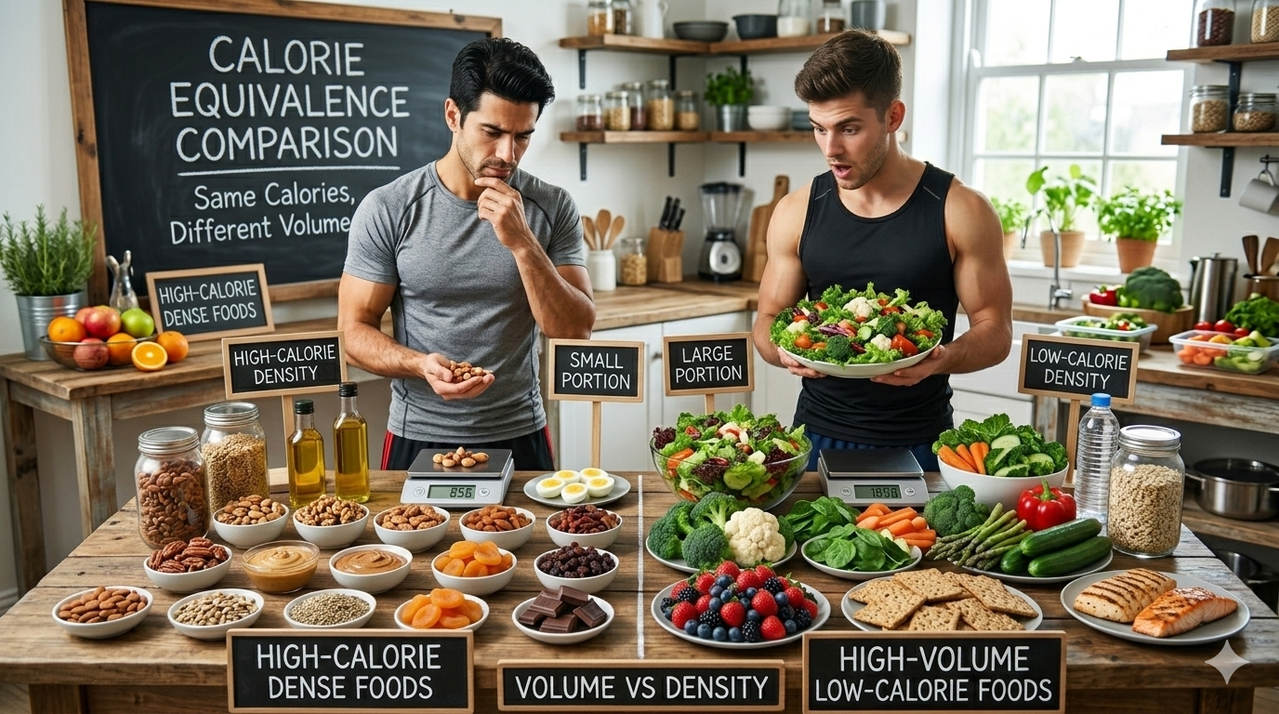
The concept is simple: choose foods that have a low calorie density and bulk up your plate with them so your portion looks a lot bigger than it actually is in calories . This approach—often called the volumetrics diet—has been validated by research showing significant reductions in body weight, fat mass, and BMI while preserving lean body mass .
2. The Science of Volumetrics: How It Works
2.1. Calorie Density Explained
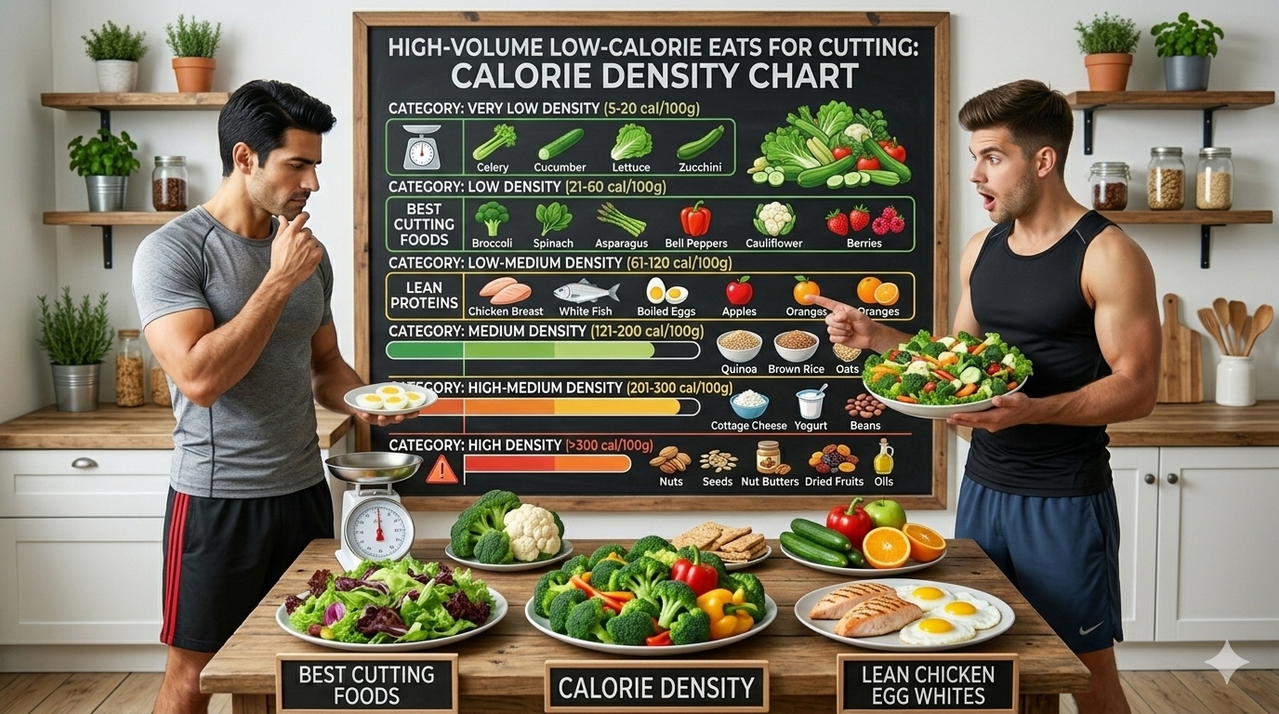
Food calories depend on their macronutrients. Carbohydrates and protein provide 4 calories per gram, while fat provides 9 calories per gram . Low-volume foods contain more calories per gram, meaning a small amount of food provides a large number of calories—think oils, nuts, cheese, and high-sugar foods, which are not the best high-volume low-calorie foods for cutting .
High-volume foods, by contrast, pack a lot of fiber and water and provide fewer calories per gram . Some examples include vegetables, high-fiber fruits, and oatmeal. When eaten in volume, these foods keep you fuller with fewer calories because they fill up your stomach more .
2.2. The Gastric Volume Connection
Research published in the American Journal of Physiology found that fasting gastric volume is significantly correlated with the volume of food needed to reach comfortable fullness . This means that your stomach's capacity directly influences how much you need to eat to feel satisfied, which is why the best high-volume low-calorie foods for cutting are so effective.
The study also revealed that factors associated with ingestive behavior significantly correlated with satiety and gastric accommodation . In plain English: your eating habits can actually change how your stomach responds to food, making volume eating a sustainable long-term strategy.
2.3. Research Validation
A 12-week randomized controlled trial comparing the volumetrics diet to time-restricted eating found that both interventions led to significant reductions in body weight, body mass index, and fat mass, while preserving lean body mass . This confirms that focusing on food volume is a scientifically valid approach to weight loss and cutting.
3. Top 15 High-Volume Low-Calorie Foods for Cutting
3.1. Vegetables (The Foundation)
1. Cauliflower
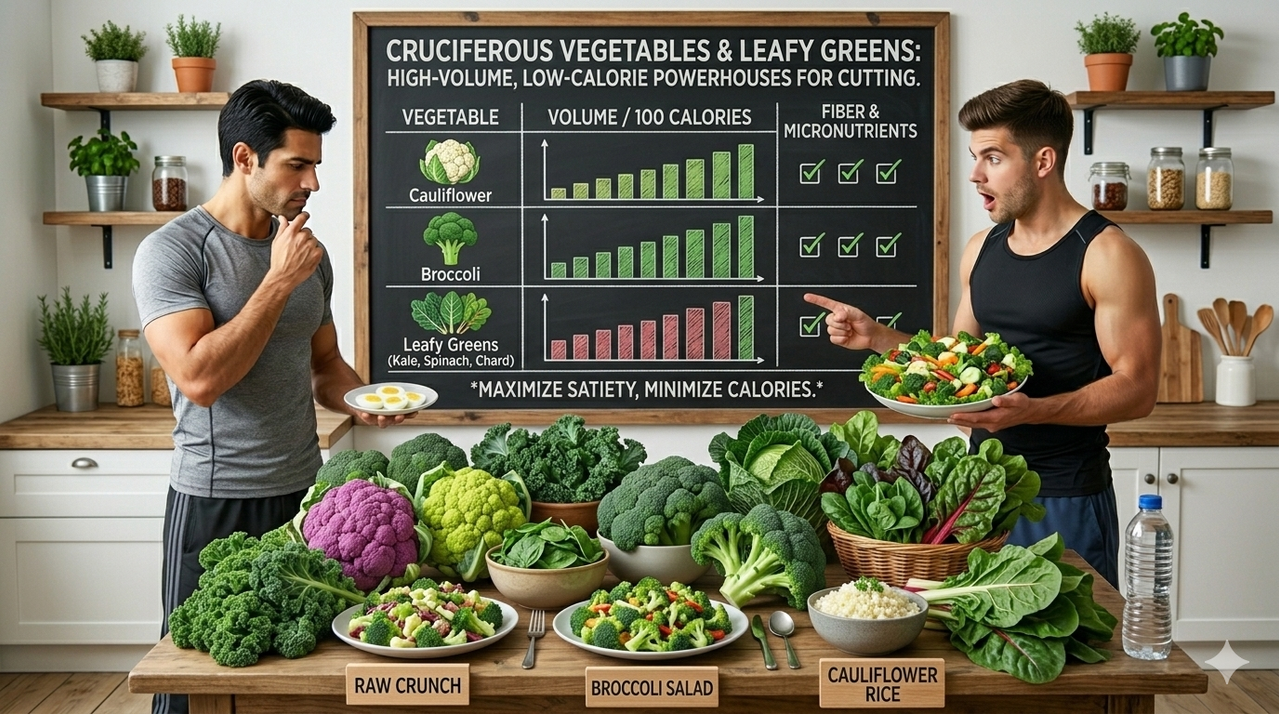
27 cal/cupOne cup of chopped cauliflower has about 27 calories and is more than 90% water . It contains 2 grams of fiber and provides magnesium and phosphorus. Use it as cauliflower rice, pizza crust, or roasted as a side dish—perfect as one of the best high-volume low-calorie foods for cutting .
Smart swap: Replace rice with cauliflower rice—a 125g portion of rice contains around 170 calories, while the same quantity of cauliflower rice has just 25 calories .
2. Leafy Greens (Spinach, Kale, Arugula)
14 cal/2 cupsTwo cups of spinach have just 14 calories and are about 90% water . Spinach is also a rich source of calcium, magnesium, and potassium . Kale provides manganese, a mineral essential for processing food into energy for your cells .
How to use: Base for salads, add to smoothies, sauté with garlic .
3. Zucchini and Cucumber
21 cal/cupOne cup of chopped zucchini has 21.1 calories and is about 95% water . Cucumbers are similarly water-rich and contain quercetin, an anti-inflammatory flavonol .
Smart swap: Make "zoodles" (zucchini noodles) instead of pasta, or add cucumber to water for flavor .
4. Tomatoes
~20 cal/mediumAlmost 95% of their weight is water, which is why they're an easy way to fill your belly and squelch cravings . They're also high in vitamin C, beta-carotene, and lycopene .
How to use: DIY salsa, chilled soup, or pizza substitute with low-fat cheese on whole-wheat tortilla .
3.2. Fruits (Sweet and Satisfying)
5. Berries (Strawberries, Raspberries, Blueberries)
64 cal/cup (raspberries)One cup of raspberries has 64 calories and 8 grams of fiber . Berries are a source of pectin, a type of fiber that may satisfy your appetite and decrease calorie intake .
Smart swap: Swap jam (40 cal/tbsp) for fresh strawberries—a bowl of strawberries offers more volume and saves calories .
6. Watermelon and Melon
46 cal/cupOne cup of watermelon has 46.5 calories and is over 90% water . It's also a rich source of vitamins A and C . Cantaloupe and honeydew are similarly hydrating and low-calorie, making them best high-volume low-calorie foods for cutting.
7. Apples
95 cal/mediumApples are a great source of pectin, a filling fiber . "The pectin in apples really serves to satiate, and the crunch when eating an apple appeals to psychological satisfaction" .
3.3. Lean Proteins (Muscle Preservation)
8. Chicken Breast
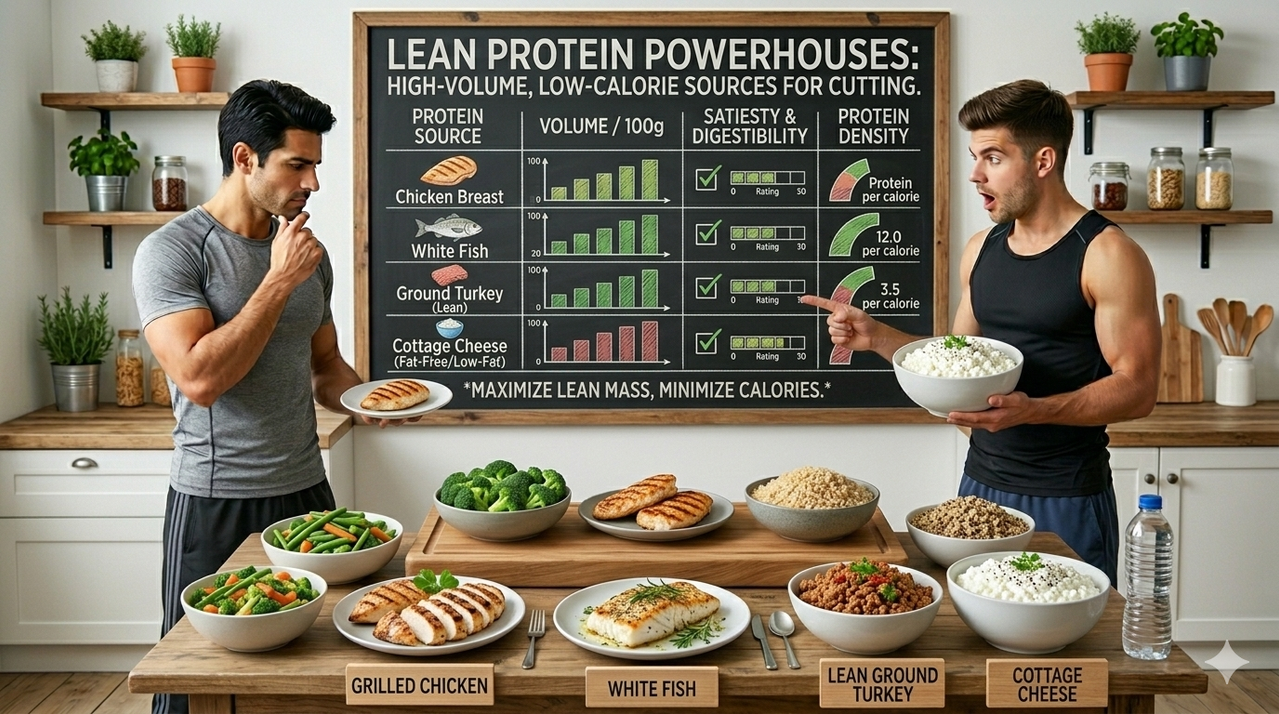
110 cal/3.5 ozA 3.5-ounce serving of boneless, skinless chicken breast has about 110 calories and 22.5 grams of protein . Research shows that a high-protein diet is effective for weight loss because protein promotes muscle growth and has a higher thermic effect than carbs or fat .
Smart swap: Swap pork sausages (370 cal) for chicken breast (210 cal) to save 160 calories and gain twice the protein .
9. White Fish (Cod, Tilapia)
~100 cal/3 ozWhite fish is extremely lean and high in protein. Fitness coach Adi recommends white fish as a top choice for high-volume, low-calorie eating .
10. Fat-Free Cottage Cheese
163 cal/cupOne cup of cottage cheese has 163 calories and 28 grams of protein . Each serving has nearly a third the protein of sirloin steak, none of the fat, and almost as much calcium as half a glass of milk .
Smart swap: Add cottage cheese to scrambled eggs—it increases volume and protein without adding as many calories as a third egg .
11. Eggs and Egg Whites
70 cal/large eggTwo large eggs have 36 calories and 7 grams of protein (just the whites) . Eggs slow gastric emptying and decrease ghrelin levels—the hunger hormone . Eating whole eggs (versus just whites) provides fat and fat-soluble vitamins that keep you full longer .
12. Shrimp
~80 cal/3 ozShrimp is extremely lean and protein-dense, making it an excellent high-volume seafood option for cutting .
3.4. Whole Grains and Legumes
13. Oats
150 cal/½ cupOne-half cup of oats has about 150 calories and 4 grams of fiber . Oatmeal helps control appetite for longer periods than breakfast cereal . When cooked with water, oats become huge in volume .
14. Lentils and Beans
226 cal/cup cookedOne cup of cooked lentils has 226 calories, 16 grams of fiber, and 18 grams of protein . Research suggests pulses may increase feelings of fullness more than high-carb meals . They're an "absolute health powerhouse" for cutting .
3.5. Smart Snacks
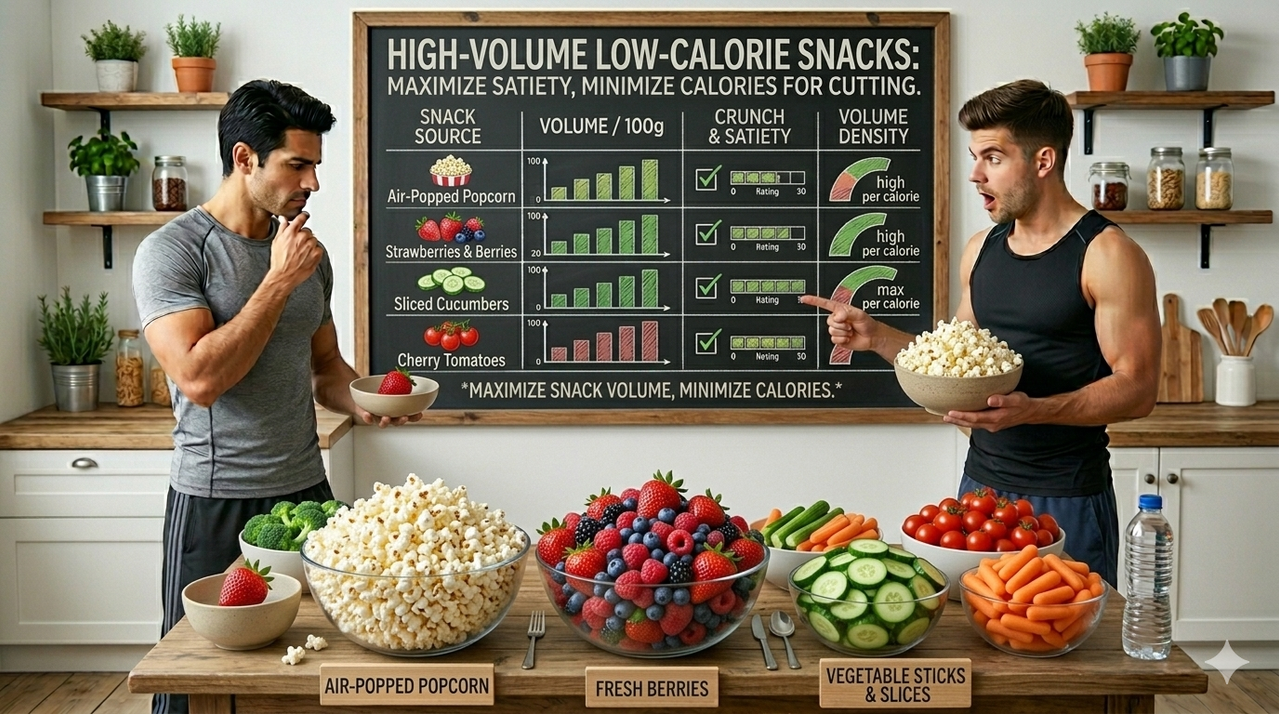
15. Air-Popped Popcorn
118 cal/2 cupsTwo cups of plain microwave popcorn have only 118 calories, making it an ideal high-volume snack . "If you have a big bowl of popcorn in front of the TV, it's going to take you a lot longer to eat than three biscuits, which you'll finish in two minutes" .
Smart swap: Swap three chocolate digestives (250 cal) for a large bowl of popcorn (180 cal) to save 70 calories and add 2.9g fiber .
4. Smart Swaps: Eat More for Fewer Calories
| Instead of This | Calories | Swap With This | Calories | Savings |
|---|---|---|---|---|
| 3 chocolate digestives | 250 | Large bowl air-popped popcorn (40g) | 180 | 70 cal + 2.9g fiber |
| 2 pork sausages | 370 | Large chicken breast (200g) | 210 | 160 cal + 30g more meat |
| 175ml glass wine | 160 | 200ml gin + slimline tonic | 65 | 95 cal |
| 125g white rice | 170 | 250g cauliflower rice | 50 | 120 cal + 4.8g fiber |
| 1 tbsp jam | 40 | Bowl fresh strawberries | 30 | 10 cal + 0.5g protein |
| 1 extra egg | 70 | 50g cottage cheese | 30 | 40 cal + casein protein |
Data compiled from
5. Sample Cutting Meal Plans
5.1. Omnivore Cutting Day (~1800 kcal, 160g protein)
- Breakfast: 3 eggs (18g) + 1 cup spinach sautéed + ½ cup oatmeal (5g) with berries → 25g protein
- Lunch: 200g chicken breast (45g) + massive salad (2 cups leafy greens + cucumber + tomatoes + bell peppers) + ½ cup quinoa (4g) → 50g protein
- Snack: 1 cup fat-free cottage cheese (24g) + cucumber slices → 24g protein
- Dinner: 200g white fish (40g) + 2 cups roasted cauliflower and broccoli + ½ cup lentils (9g) → 50g protein
- Evening snack: Air-popped popcorn (2 cups) + protein powder mixed with water (25g) optional
- Total: ~149g protein (adjust as needed)
5.2. Vegan Cutting Day (~1800 kcal, 120g protein)
- Breakfast: Tofu scramble (200g firm tofu = 20g) + 1 cup spinach + ½ cup oatmeal (5g) → 25g protein
- Lunch: Lentil bowl: 1 cup cooked lentils (18g) + massive salad + ½ cup quinoa (4g) + roasted vegetables → 25g protein
- Snack: Edamame 1 cup (18g) + cucumber slices → 18g protein
- Dinner: Tempeh stir-fry: 150g tempeh (25g) + 2 cups mixed vegetables + small brown rice portion (3g) → 30g protein
- Evening: Berries with pea protein shake (25g) optional
- Total: ~123g protein (add shake to meet needs)
5.3. Gluten-Free Adaptations
- Replace wheat-based grains with quinoa, buckwheat, certified gluten-free oats, rice
- All vegetables, fruits, lean meats, fish, eggs, legumes, and tofu are naturally gluten-free
6. Quick High-Volume Recipes (Under 15 Minutes)
1. Massive Veggie Scramble
~30g protein3 eggs + 1 cup spinach + ½ cup mushrooms + ½ cup bell peppers + ¼ cup cottage cheese. Scramble and serve with side of berries. (~30g protein, huge volume)
2. Tuna-Stuffed Tomatoes
35g protein2 large tomatoes hollowed out + 1 can tuna + 2 tbsp Greek yogurt + celery + onion. Stuff tomatoes and serve with side salad. (~35g protein)
3. Cauliflower Rice Bowl
40g protein200g chicken breast + 300g cauliflower rice + 1 cup stir-fry veggies + soy sauce. Massive bowl for ~400 calories. (~40g protein)
4. Greek Yogurt Power Bowl
28g protein1 cup Greek yogurt (0%) + 1 cup berries + 1 tbsp chia seeds. (~28g protein, high fiber)
5. Cottage Cheese Salsa Dip
24g protein1 cup fat-free cottage cheese + ½ cup salsa. Serve with cucumber slices, bell pepper strips, and celery. (~24g protein, unlimited veggies)
7. Common Cutting Mistakes to Avoid
- Mistake #1: Eating too little protein. Protein preserves muscle during cutting and has the highest thermic effect . Aim for 1.6-2.2g per kg body weight.
- Mistake #2: Avoiding all fats. Fats are important for meal satisfaction and help absorb fat-soluble vitamins . Include moderate healthy fats.
- Mistake #3: Overdoing fiber too quickly. Too much fiber from raw fruits and vegetables can cause bloating and gas . Increase gradually.
- Mistake #4: Ignoring food quality. Nutritious foods rich in fiber, vitamins and minerals give your body what it needs to stay healthy .
- Mistake #5: Relying on packaged snacks. Packaged snacks can be high in sugar, salt and saturated fat . Choose whole foods instead.
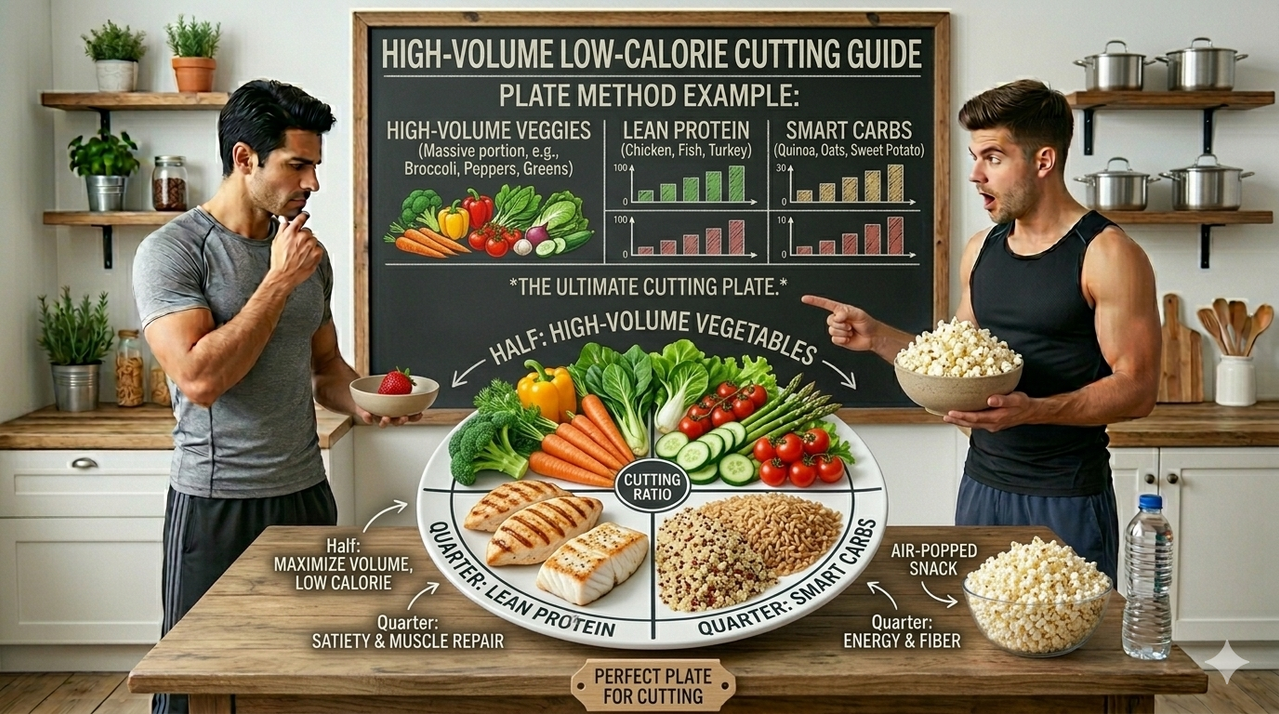
8. How to Build Your Cutting Plate
Practical ways to incorporate high-volume foods into your diet :
- Fill half your plate with non-starchy vegetables: Add colour and volume without excess calories.
- Include lean protein at every meal: Helps you stay full and supports muscle maintenance.
- Choose high-fibre whole grains or legumes: Help keep energy levels steady and reduce cravings.
- Aim for a rainbow of colours: Ensures you're getting a range of nutrients.
10. Scientific References
- Miami Herald. (2025). 4 Surprisingly Filling Foods That Will Make Your Calorie Deficits Less Miserable. The Arena Group. View Source
- Bupa Australia. (2025). Foods to help you stay in a calorie deficit. Blua Health. View Source
- 2 Minute Medicine. (2025). Volumetric diet and time-restricted eating demonstrate similar outcomes for weight reduction. 2 Minute Medicine. View Source
- The Telegraph. (2025). How to eat more and still lose weight: The volumetrics diet explained. Telegraph Media Group. View Source
- OmicsDI. (2022). Associations of gastric volumes, ingestive behavior, calorie and volume intake, and fullness in obesity. biostudies-literature. View Source
- Prevention. (2025). 20 Fat-Burning Foods to Help Boost Metabolism and Overall Health. Prevention. View Source
- Hindustan Times. (2025). Fitness coach shares 23 low-calorie, high-fibre foods that you can eat until full and still lose fat. Hindustan Times. View Source
- Mayo Clinic Elsevier Pure. (2020). Associations of gastric volumes, ingestive behavior, calorie and volume intake, and fullness in obesity. American Journal of Physiology - Gastrointestinal and Liver Physiology. View Source
- Health.com. (2023). 12 High-Volume, Low-Calorie Foods To Add to Your Diet. Health. View Source
- American Physiological Society. (2020). Associations of gastric volumes, ingestive behavior, calorie and volume intake, and fullness in obesity. AJPGI. View Source
All sources last accessed March 2026. Paraphrased for accessibility.
Join the conversation