How to Hit Your Protein Goals Without Protein Shakes
How to Hit Your Protein Goals Without Protein Shakes

📋 TL;DR
Protein shakes are convenient, but they're not necessary. You can absolutely meet your daily protein requirements using whole foods alone. The International Society of Sports Nutrition recommends 1.4–2.0 g/kg of body weight for active individuals . This guide shows you how to hit your protein goals without protein shakes using strategic food choices, meal timing, and smart combinations. You'll learn about high-protein whole foods (both animal and plant-based), sample meal plans for omnivore, vegan, and gluten-free diets, quick recipes, and practical tips for spreading protein intake across 3-5 meals to maximize muscle protein synthesis .
1. The Shake-Free Approach to Protein
Protein shakes have become synonymous with fitness culture. They're quick, convenient, and pack a punch. But for many people, shakes aren't ideal—they can be expensive, cause digestive issues, or simply aren't enjoyable. The good news? You don't need them. Learning how to hit your protein goals without protein shakes is not only possible, but it can also lead to a more sustainable, nutrient-dense diet.
Whole food sources of protein come packaged with vitamins, minerals, and other beneficial compounds that powders lack . Research suggests that the food matrix—the complex structure of whole foods—may influence how protein is utilized by the body .
This guide provides a complete roadmap to meeting your protein needs using delicious, satisfying whole foods, with strategies for every dietary preference, teaching you how to hit your protein goals without protein shakes.
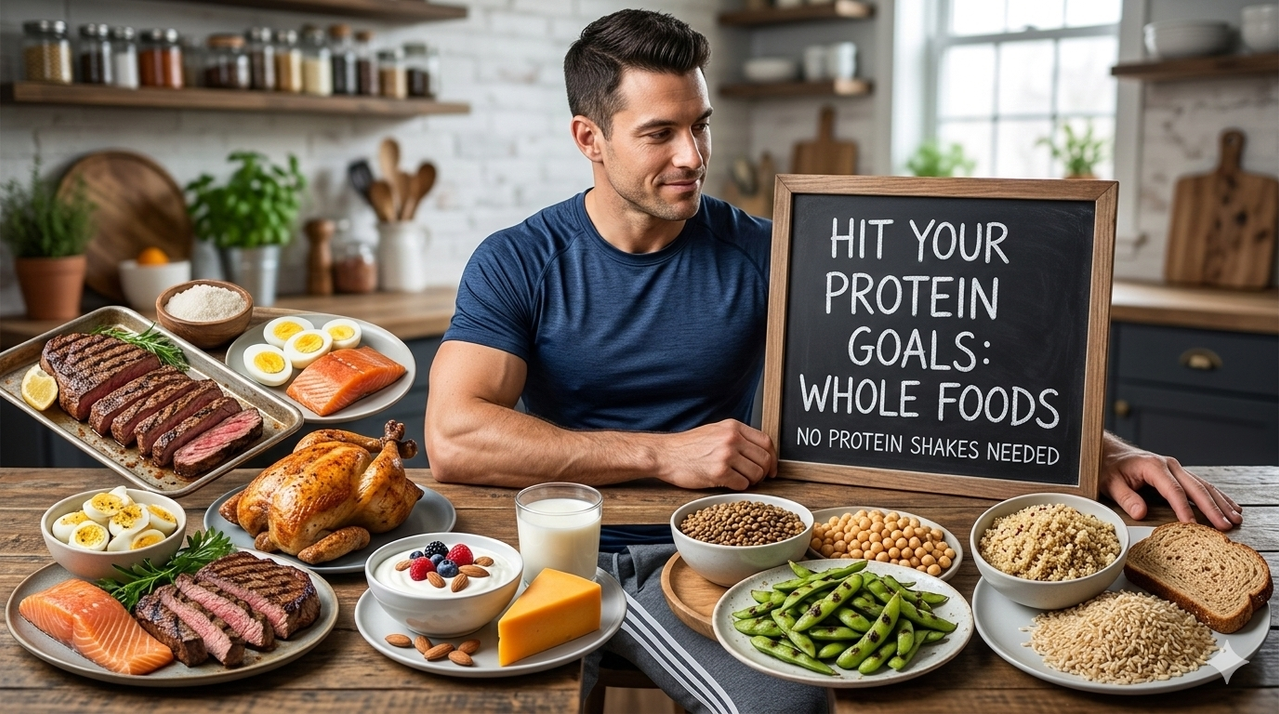
2. How Much Protein Do You Really Need?
2.1. Evidence-Based Recommendations
The International Society of Sports Nutrition (ISSN) recommends 1.4–2.0 g/kg of body weight for most exercising individuals . For a 75kg person, that's 105-150g protein daily. Higher intakes (up to 3.0 g/kg) may be beneficial during energy restriction or for those with very high muscle mass, which is important for how to hit your protein goals without protein shakes .
2.2. Protein Timing and Distribution
Research shows that consuming 20-40g of protein every 3-4 hours maximizes muscle protein synthesis . This makes strategic meal planning essential for learning how to hit your protein goals without protein shakes.
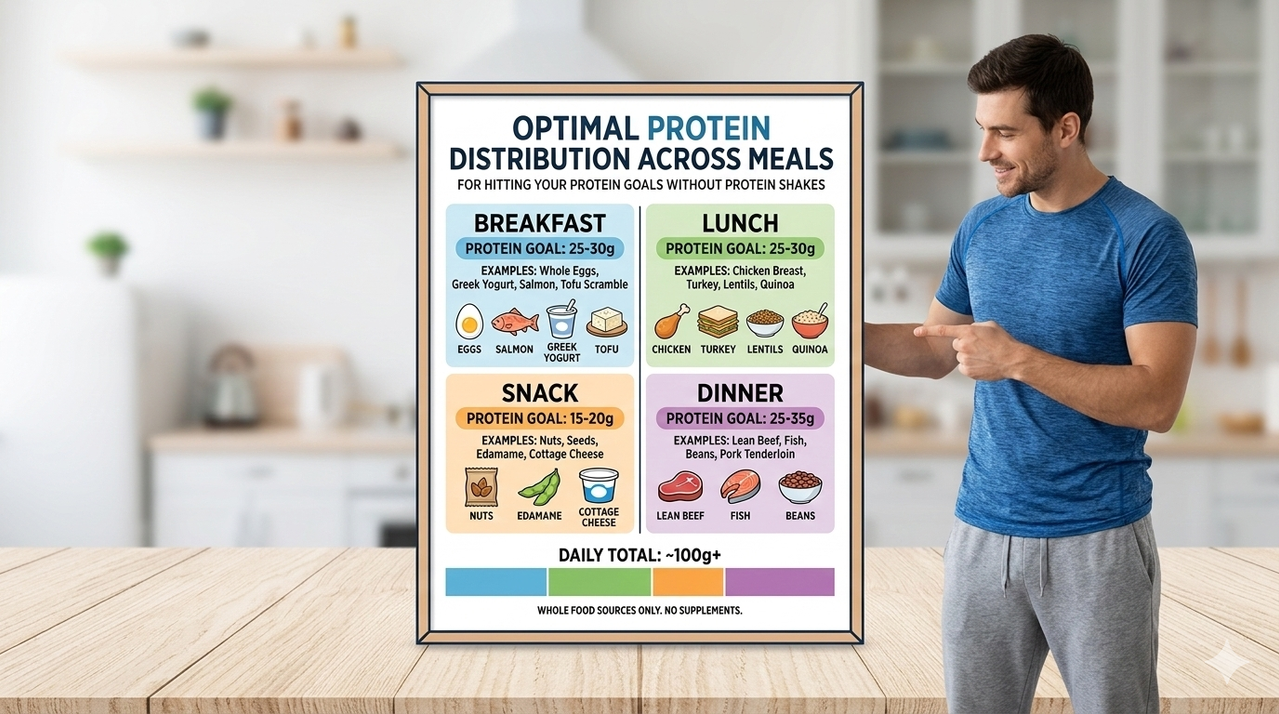
| Body Weight | Daily Protein (1.4g/kg) | Daily Protein (2.0g/kg) |
|---|---|---|
| 60 kg (132 lbs) | 84 g | 120 g |
| 70 kg (154 lbs) | 98 g | 140 g |
| 80 kg (176 lbs) | 112 g | 160 g |
| 90 kg (198 lbs) | 126 g | 180 g |
3. Top Whole Food Protein Sources (By Category)
3.1. Animal-Based Proteins (Complete)
Chicken Breast (Skinless)
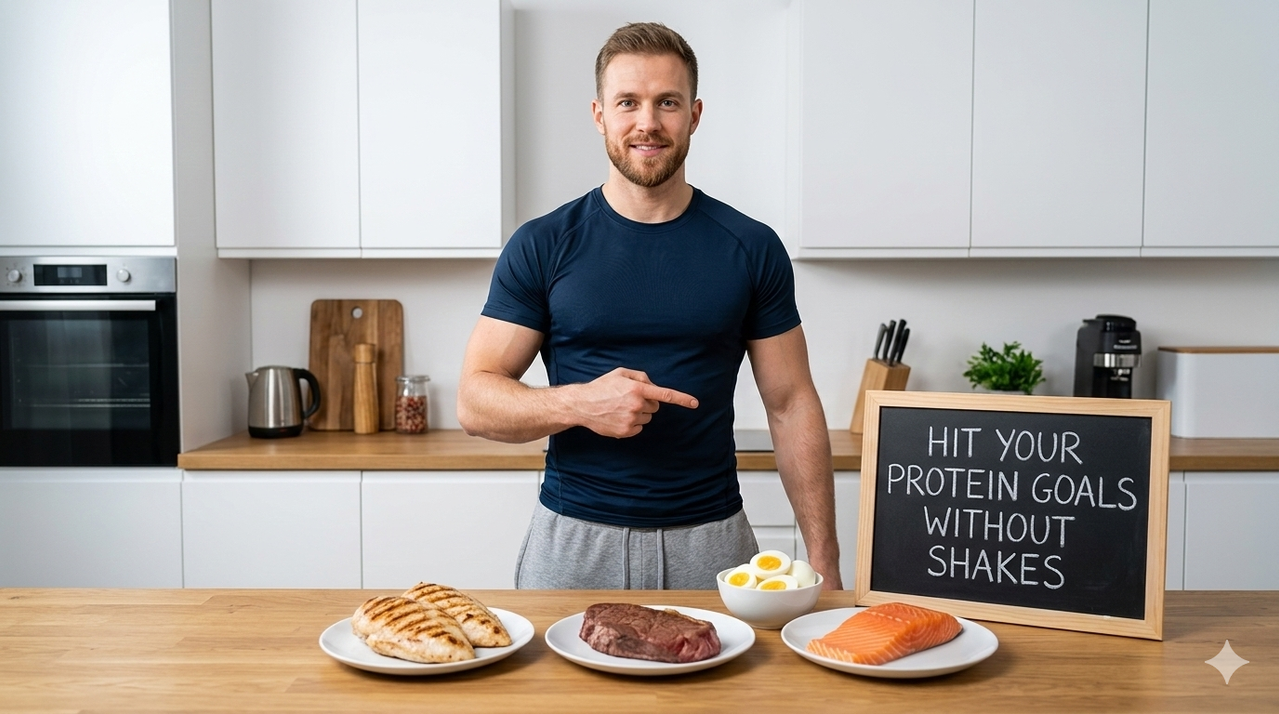
27g per 3 ozLean, versatile, and easy to prep in bulk. One 3-ounce cooked serving provides 27g protein, ideal for how to hit your protein goals without protein shakes .
Lean Beef (90/10)
23g per 3 ozRich in iron, zinc, and B12. Choose lean cuts like sirloin or 90% lean ground beef .
Eggs
6g per large eggNature's perfect protein. Eat whole eggs for additional nutrients—the yolk contains 40% of the protein .
Greek Yogurt (Plain, Low-Fat)
20g per 7 ozThick, creamy, and packed with casein protein. Also provides probiotics for gut health .
Cottage Cheese (Low-Fat)
24g per cupCasein-rich, making it ideal for pre-sleep or sustained release. Add fruit or pepper for variety .
Fish (Salmon, Tuna, Cod)
20-22g per 3 ozSalmon adds omega-3s; tuna is ultra-convenient canned; cod is lean and versatile .
3.2. Plant-Based Proteins (Combine for Completeness)
Lentils
18g per cup (cooked)High in fiber and protein. Pair with rice for a complete amino acid profile, supporting how to hit your protein goals without protein shakes for vegans .
Tofu (Firm)
15g per 150g servingA versatile soy protein. Marinate and bake, scramble, or add to stir-fries .
Tempeh
20g per 150g servingFermented soybean cake with a nutty flavor. Higher protein than tofu .
Edamame
18g per cupYoung soybeans, perfect as a snack or salad topper. Thaw frozen edamame for instant protein .
Quinoa
8g per cup (cooked)A rare plant-based complete protein containing all essential amino acids .
Chickpeas
15g per cup (cooked)Use in salads, curries, or roast for a crunchy snack .
Pumpkin Seeds
8g per ¼ cupEasy to add to oatmeal, yogurt, or salads. Also rich in magnesium .
4. Sample Meal Plans (No Shakes Required)
4.1. Omnivore Sample Day (~2000 kcal, 140g protein)
- Breakfast (7:30 AM): 3 eggs (18g) + 1 cup Greek yogurt (20g) + ½ cup oats (5g) + berries → 43g protein
- Lunch (12:30 PM): 150g chicken breast (35g) + 1 cup quinoa (8g) + roasted vegetables → 43g protein
- Snack (4:00 PM): 1 cup cottage cheese (24g) + 1 apple → 24g protein
- Dinner (7:30 PM): 150g salmon (30g) + sweet potato + broccoli → 30g protein
- Total: ~140g protein
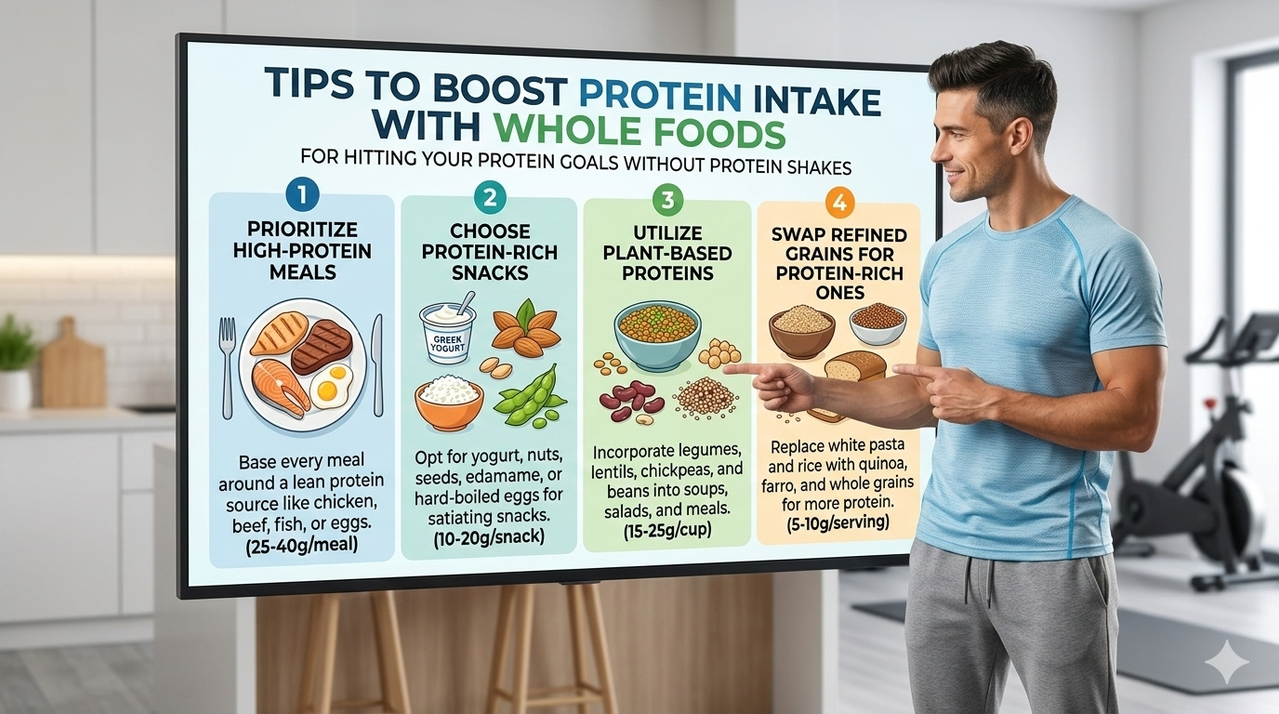
4.2. Vegan Sample Day (~2000 kcal, 120g protein)
- Breakfast (7:30 AM): Tofu scramble (200g firm tofu = 20g) + 2 slices whole-grain toast (6g) + spinach → 26g protein
- Lunch (12:30 PM): Lentil-quinoa bowl: 1 cup lentils (18g) + 1 cup quinoa (8g) + roasted veggies → 28g protein
- Snack (4:00 PM): Edamame 1 cup (18g) + 2 tbsp pumpkin seeds (4g) → 22g protein
- Dinner (7:30 PM): Tempeh stir-fry: 150g tempeh (25g) + 1 cup brown rice (5g) + veggies → 30g protein
- Evening: 1 cup soy milk (7g) optional → 7g protein
- Total: ~113g protein (adjust portions to meet higher targets)
4.3. Gluten-Free Adaptations
- Replace wheat-based grains with quinoa, buckwheat, certified gluten-free oats, rice
- All meat, fish, eggs, dairy, legumes, and soy are naturally gluten-free
- Use corn tortillas instead of bread
5. Quick High-Protein Recipes (Under 15 Minutes)
1. Greek Yogurt Power Bowl
28g protein1 cup Greek yogurt + 1 tbsp peanut butter + 1 tbsp chia seeds + berries. Mix and enjoy. (~28g protein)
2. Microwave Scrambled Eggs
22g protein3 eggs + splash of milk, microwave 2 min, stir, add spinach. (~22g protein)
3. Tuna Salad Rice Cakes
28g protein1 can tuna (drained) + 2 tbsp Greek yogurt + mustard + celery. Serve on 2 rice cakes. (~28g protein)
4. Cottage Cheese Bowl
24g protein1 cup cottage cheese + cherry tomatoes + black pepper + fresh herbs. (~24g protein)
5. Edamame Snack Bowl
18g protein1 cup frozen edamame (thawed or microwaved) + sea salt. (~18g protein)
6. Strategies to Boost Protein Without Shakes
6.1. Start with Protein at Every Meal
Make protein the anchor of each meal. Ensure your plate always includes a palm-sized portion of a high-protein food, essential for how to hit your protein goals without protein shakes .
6.2. Use Protein-Rich "Add-Ins"
- Add hemp seeds (10g protein per 3 tbsp) to oatmeal or yogurt
- Mix cottage cheese into scrambled eggs
- Add lentils or beans to soups and salads
- Use Greek yogurt as a base for dips and dressings
6.3. Prepare High-Protein Snacks in Advance
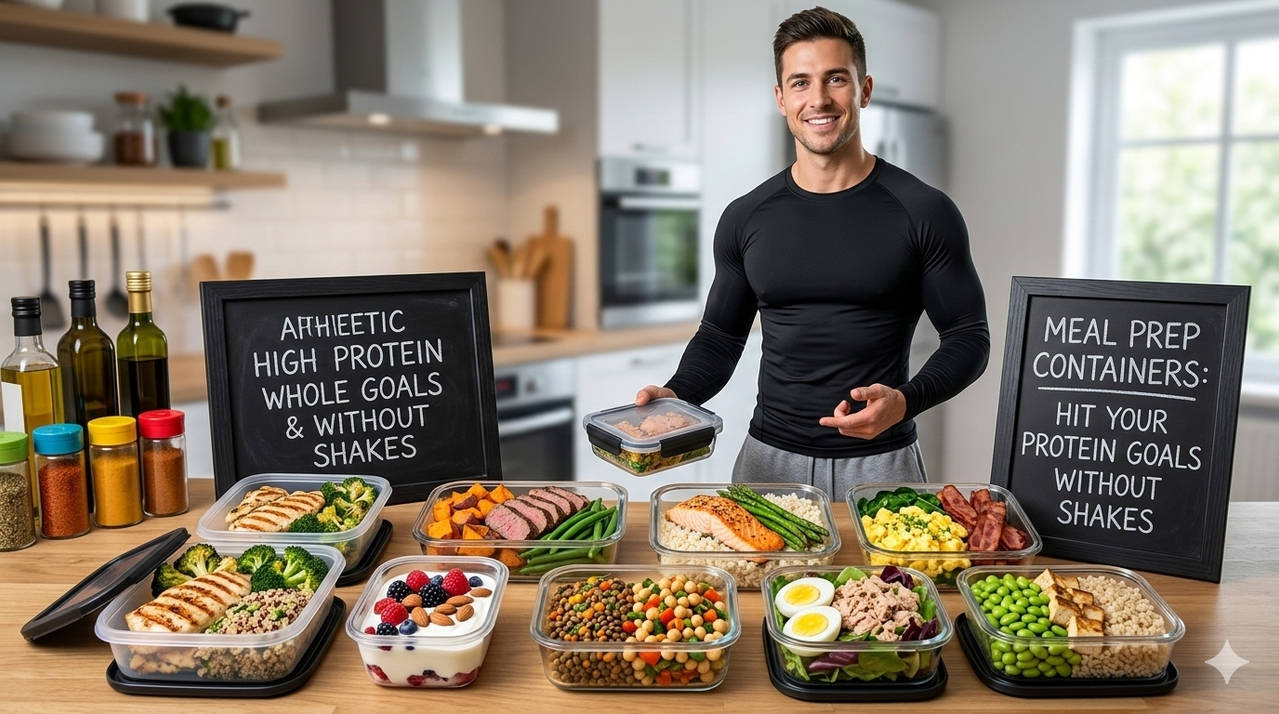
Hard-boil eggs, portion nuts, and cook chicken breast in batches so protein is always within reach, supporting how to hit your protein goals without protein shakes .
6.4. Choose Protein-First Convenience Options
When eating out, look for grilled chicken salads, sushi with fish, bean burritos, or Greek yogurt cups .
7. Common Mistakes When Ditching Protein Shakes
- Mistake #1: Not eating enough variety. Relying on the same few sources can lead to nutrient gaps. Rotate your proteins .
- Mistake #2: Ignoring protein at breakfast. Many people eat carb-heavy mornings, making it hard to hit daily targets. Prioritize protein in the morning for how to hit your protein goals without protein shakes .
- Mistake #3: Underestimating portion sizes. 3 oz of meat is the size of a deck of cards—measure until you're confident .
- Mistake #4: Not planning ahead. Without shakes, you need to think about meals. Batch cooking is your friend .
- Mistake #5: Forgetting about plant protein combinations. Vegans and vegetarians need to combine incomplete proteins (e.g., rice + beans) to ensure all amino acids .
8. Special Considerations for High-Protein Diets
8.1. Digestive Health
Increasing protein, especially from legumes and dairy, can cause bloating. Increase fiber and water intake gradually .
8.2. Kidney Concerns
For healthy individuals, high protein intake is safe. Those with pre-existing kidney disease should consult a doctor .
10. Scientific References
- International Society of Sports Nutrition. (2025). Position Stand: Protein and Exercise. JISSN. (Referenced in )
- Barnes, T.M., et al. (2023). Protein quality and the food matrix. Applied Physiology, Nutrition, and Metabolism, 48(4), 340-344. View Source
- Healthline. (2023). 7 High-Protein Snacks You Can Make at Home. Healthline.com. (Referenced in )
- Verywell Fit. (2025). The 9 Best High-Protein Snacks, According to a Dietitian. VerywellFit.com. View Source
- EatingWell. (2025). 10 High-Protein Snacks for Weight Loss. EatingWell.com. View Source
- USDA FoodData Central. (2026). Food Composition Databases. USDA.gov. View Source
- Schoenfeld, B.J., & Aragon, A.A. (2018). How much protein can the body use in a single meal? Journal of the International Society of Sports Nutrition, 15, 10. (Referenced in )
- Academy of Nutrition and Dietetics. (2025). Eating for Exercise. eatright.org. (Referenced in )
- National Kidney Foundation. (2025). Protein Intake and Kidney Health. kidney.org. (Referenced in )
- National Eating Disorders Association. (2026). Warning Signs and Symptoms. NEDA. View Source
All sources last accessed March 2026. Paraphrased for accessibility.
Join the conversation