Correct Breathing Techniques During Heavy Lifting
Correct Breathing Techniques During Heavy Lifting: Stabilize Your Core, Lift More Weight

📋 TL;DR
Breathing isn't just automatic—it's a performance tool. The primary goal of correct breathing during heavy lifting is to create intra-abdominal pressure (IAP), which stabilizes your spine and prevents energy leaks . Studies show that during heavy loads, lifters naturally hold their breath and increase inspired volume to boost IAP . The most effective technique for maximal lifts is the Valsalva maneuver: take a deep belly breath, brace your core, hold it during the lift, and exhale after the hardest part . For lighter lifts, a rhythmic approach (exhale on exertion, inhale on lowering) works well . This guide covers the science, step-by-step techniques, and common mistakes in correct breathing techniques during heavy lifting.
1. The Forgotten Foundation of Strength
You've perfected your form, optimized your nutrition, and follow a progressive program. But there's one critical element that even experienced lifters overlook: how you breathe. Breathing is often treated as automatic, but when it comes to heavy lifting, correct breathing techniques during heavy lifting can be the difference between a personal record and a failed lift—or worse, an injury.
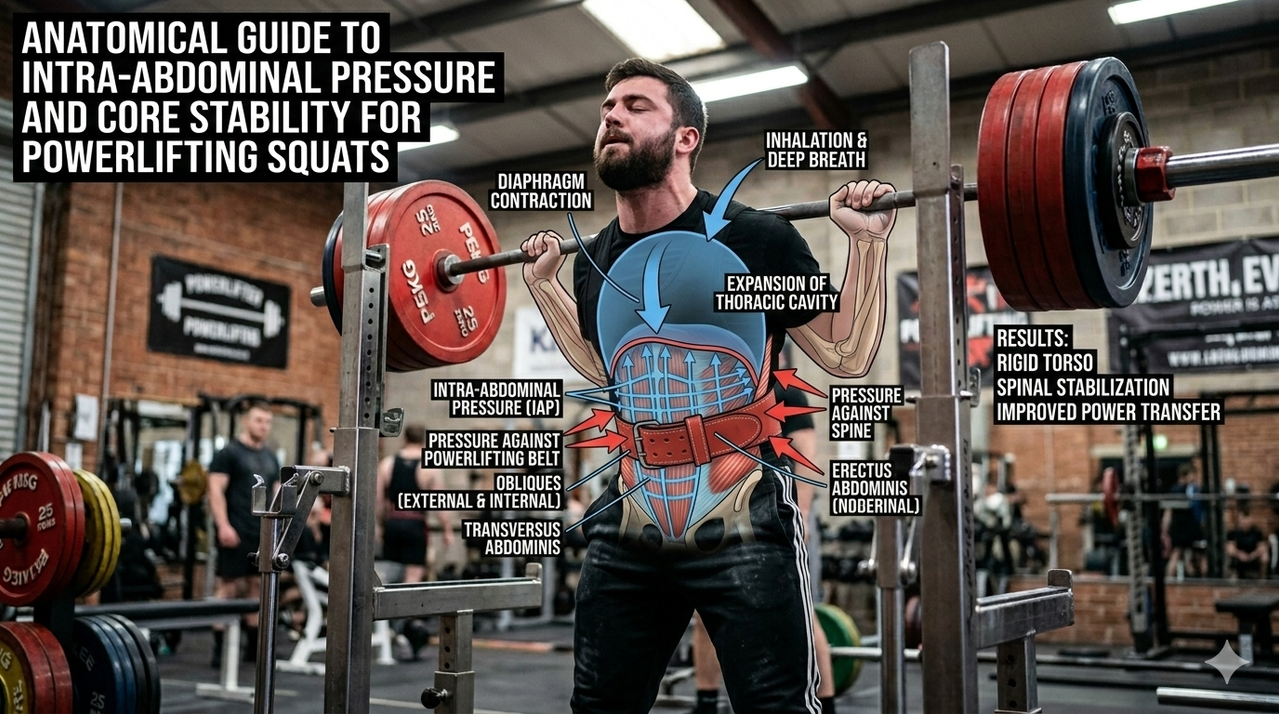
When you lift heavy weights, your body needs to create a stable foundation. This stability comes from intra-abdominal pressure (IAP)—pressure within your abdominal cavity that supports your spine . Research shows that during heavy lifts like squats and deadlifts, IAP can reach as high as 201 mmHg, creating a rigid "cylinder" of support around your spine . This pressure is generated and maintained through precise breath control.
This guide will teach you the science and application of correct breathing techniques during heavy lifting, helping you lift heavier, safer, and with more confidence.
2. The Science of Breathing and Bracing
2.1. What Is Intra-Abdominal Pressure (IAP)?
IAP is the pressure within your abdominal cavity. When you take a deep breath and brace your core, your diaphragm contracts downward while your abdominal muscles and pelvic floor engage, compressing the contents of your abdomen . This creates pressure that pushes outward against the spine, providing stability from the front to complement the muscles in your back, which is key for correct breathing techniques during heavy lifting .
Research from SpringerMedizin shows that during heavy compound lifts like squats and deadlifts, IAP can reach 201 ± 26 mmHg—more than 30 times resting pressure . This pressure significantly unloads the spine, reducing compressive forces on spinal discs .
2.2. How Breathing Affects IAP
A 2006 study by Hagins et al. demonstrated that breath control directly influences IAP. When participants held their breath during lifting tasks, IAP increased significantly compared to exhaling during exertion, highlighting correct breathing techniques during heavy lifting . The diaphragm—your primary breathing muscle—plays the most important role in generating and maintaining IAP .
Importantly, the same study found that people naturally adapt their breathing to load: with heavier weights, they instinctively take bigger breaths and hold them more often . This suggests that correct breathing techniques during heavy lifting are not just learned—they're physiological responses you can optimize.
2.3. The Valsalva Maneuver: What It Is and Why It Works
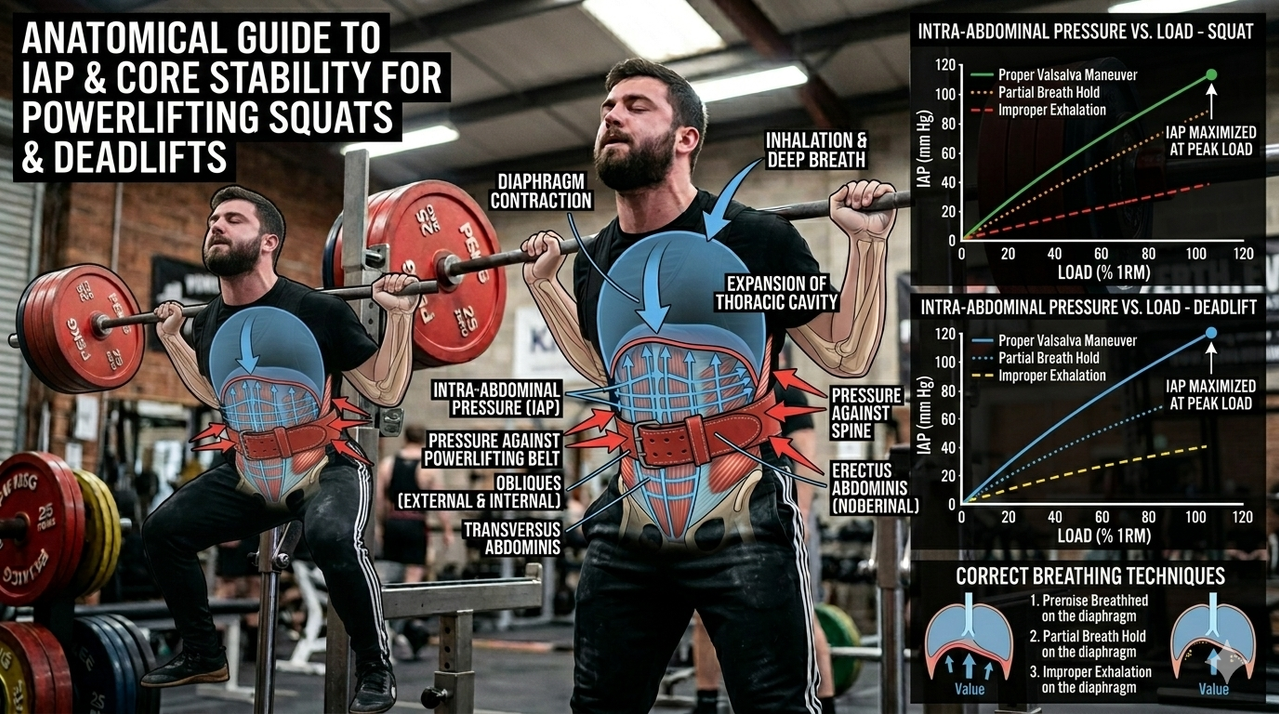
The Valsalva maneuver involves taking a deep breath, closing the glottis (holding your breath), and bracing your core while exerting force . It's the same mechanism you use naturally when coughing, sneezing, or bearing down to lift something heavy, and it's central to correct breathing techniques during heavy lifting .
Studies confirm that the Valsalva maneuver significantly increases spinal stability and allows for greater force production during maximal lifts . By pressurizing the abdominal cavity, it creates a rigid structure that transfers force efficiently from your lower body to the barbell .
3. Is the Valsalva Maneuver Safe?
A common concern about breath-holding during lifts is safety. Critics worry about excessive spikes in blood pressure. Here's what the evidence shows regarding correct breathing techniques during heavy lifting:
- Blood pressure increases, but so does external pressure: While arterial pressure rises, the pressure outside the vessel walls increases equally, creating a balanced environment .
- Short duration matters: The Valsalva maneuver is held for only 1-3 seconds during a heavy rep—not long enough to cause problems in healthy individuals .
- Absolute contraindications exist: Those with uncontrolled hypertension, cardiovascular disease, or a history of aneurysms should avoid the Valsalva maneuver and consult a physician .
For healthy lifters, the Valsalva maneuver is considered safe and is used by powerlifters and weightlifters worldwide . However, it should be reserved for maximal or near-maximal efforts (85%+ of 1RM).
4. The Two Essential Breathing Techniques
4.1. The Valsalva Maneuver (For Maximal Lifts)
This is the gold standard for heavy compound lifts like squats, deadlifts, and overhead presses, and a key part of correct breathing techniques during heavy lifting .
How to Perform the Valsalva Maneuver
Step-by-Step- Set up: Position yourself under the bar or at the starting position.
- Take a deep belly breath: Inhale deeply into your diaphragm (not your chest), expanding your stomach 360 degrees .
- Brace your core: Tighten your abs as if you're about to be punched. Your entire torso should feel rigid .
- Hold your breath: Close your glottis (throat) to trap the air.
- Perform the lift: Maintain the brace and breath-hold throughout the concentric (lifting) phase.
- Exhale at the top or after the sticking point: Release the breath forcefully once the hardest part is complete .
4.2. Rhythmic Breathing (For Moderate Lifts and Accessories)
For lifts under 80% of your max or for isolation exercises, a rhythmic pattern is more appropriate for correct breathing techniques during heavy lifting .
How to Perform Rhythmic Breathing
The "Exertion Rule"- Exhale during exertion: Breathe out on the hardest part of the lift (the concentric phase). For example, exhale when pressing up on bench press or standing up from a squat .
- Inhale during the lowering phase: Breathe in as you lower the weight (the eccentric phase) .
- Maintain rhythm: Keep a consistent breathing pattern throughout your set to control pacing and maintain focus .
5. Breathing by Exercise: A Practical Guide
5.1. Squats
At the top: Take a deep belly breath and brace. If you need to walk the bar out, do so, then take another breath before descending, following correct breathing techniques during heavy lifting .
Descent: Hold your breath and maintain the brace.
Ascent: Continue holding through the hardest part (out of the hole). Exhale forcefully as you pass the sticking point or at lockout .
5.2. Deadlifts
At the setup: Take a deep breath and brace before gripping the bar. Some prefer to breathe before setting their back, some after—find what works for you, as part of correct breathing techniques during heavy lifting .
The pull: Hold your breath throughout the lift.
At lockout or lowering: Exhale at the top or as you begin to lower the bar. Reset your breath for each rep .
5.3. Bench Press
At lockout: Take a deep breath, brace, and unrack the bar.
Descent: Hold your breath as you lower the bar to your chest.
Press: Hold through the initial drive, then exhale as you press past the sticking point, applying correct breathing techniques during heavy lifting .
5.4. Overhead Press
At the bottom: Take a deep breath and brace before pressing.
Press: Hold your breath through the hardest part (off the shoulders).
At the top: Exhale at lockout. Inhale again before lowering .
5.5. Rows and Pull-ups
Inhale: At the bottom (stretched position).
Exhale: As you pull the weight toward you (concentric), following correct breathing techniques during heavy lifting .
6. Train Your Breath: Diaphragmatic Breathing
Before you can master lifting-specific breathing, you need a strong foundation. Research shows that diaphragmatic (belly) breathing is associated with better pulmonary function, core stability, and reduced injury risk, forming the basis for correct breathing techniques during heavy lifting . Alarmingly, studies found that 44-91% of athletes display dysfunctional breathing patterns .
How to Practice Diaphragmatic Breathing
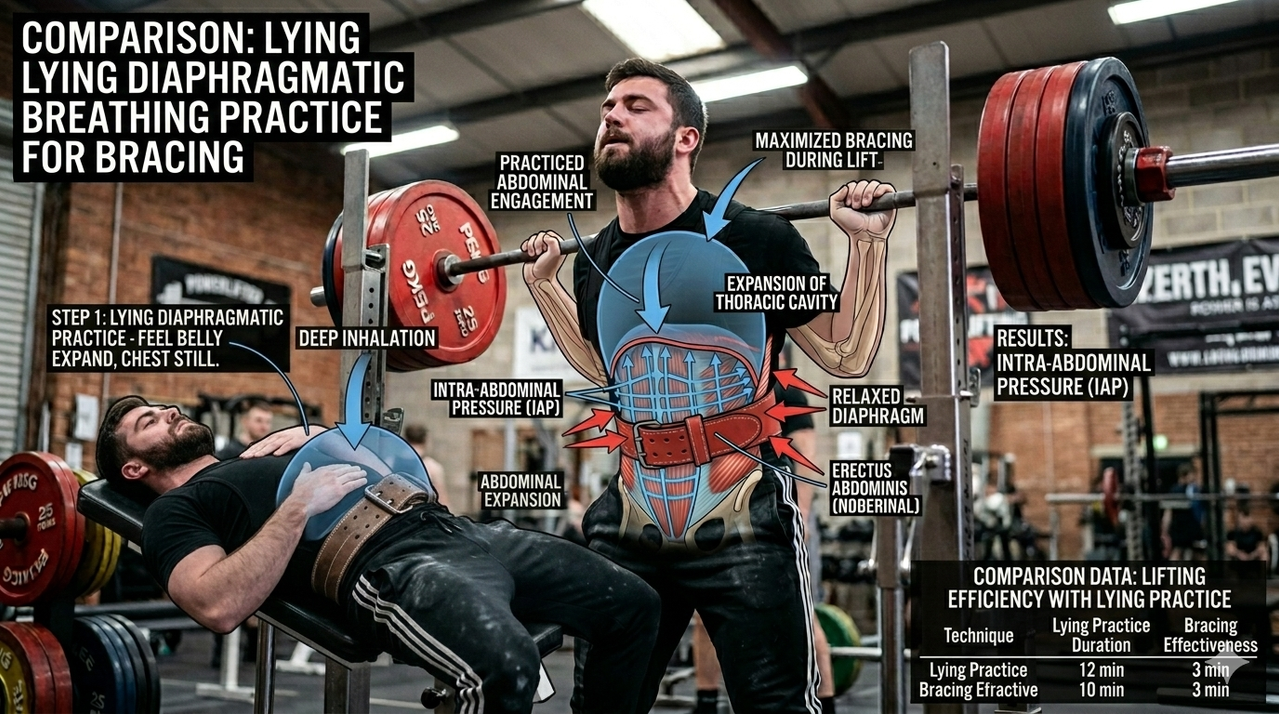
Foundation Drill- Lie on your back with knees bent, feet flat. Place one hand on your chest, one on your belly .
- Inhale slowly through your nose, feeling your belly rise while your chest stays relatively still.
- Exhale gently through pursed lips, feeling your belly fall.
- Practice for 5-10 minutes daily, especially before workouts .
7. Common Breathing Mistakes (And How to Fix Them)
- Mistake #1: Shallow chest breathing. Limits oxygen intake and core stability. Fix by practicing belly breathing .
- Mistake #2: Holding breath for entire sets. Can cause dizziness and excessive pressure. Reset your breath between reps, following correct breathing techniques during heavy lifting .
- Mistake #3: Exhaling during the hardest part. Reduces IAP and spinal support. Use the Valsalva for heavy singles .
- Mistake #4: Breathing out of sync. Destabilizes the lift. Practice tempo lifts to coordinate breath with movement .
- Mistake #5: Not bracing after inhaling. A full breath without bracing doesn't create stability. Always brace .
8. Sample Breathing-Focused Warm-up
Incorporate this 10-minute routine before every lifting session to reinforce correct breathing techniques during heavy lifting:
- 2 min: Diaphragmatic breathing practice (laying down) .
- 2 min: Cat-cow with breath coordination (inhale arching, exhale rounding).
- 2 min: Dead bug with breath holds (exhale at end range).
- 2 min: Bird-dog with breath control (hold breath briefly at extension).
- 2 min: Goblet squats (practice Valsalva on last 2-3 reps of each set).
10. Scientific References
- 中華民國健身運動協會. (2022). 到底在阻力訓練中應該如何搭配呼吸呢?Exercise.org.tw. View Source
- SpringerMedizin. (2025). Changes of abdominal wall tension across various resistance exercises. Springer Medizin. View Source
- Sikora, M., et al. (2024). Influence of the breathing pattern on the pulmonary function of endurance-trained athletes. Scientific Reports, 14(1), 1113. View Source
- Hydrow. (2025). How to Breathe When Lifting Weights: Techniques for Safety and Performance. Hydrow Blog. View Source
- Hemborg, B., et al. (1985). Intra-abdominal pressure and trunk muscle activity during lifting. IV. The causal factors of the intra-abdominal pressure rise. Scandinavian Journal of Rehabilitation Medicine, 17(1), 25-38. View Source
- Barbell Logic. (2022). How To Breathe While Lifting – Valsalva Maneuver. Barbell Logic. View Source
- Hemborg, B., Moritz, U., & Löwing, H. (1985). Intra-abdominal Pressure and Trunk Muscle Activity During Lifting. IV. Journal of Rehabilitation Medicine, 17(1), 25-38. View Source
- NDNR. (2022). Dysfunctional Breathing Patterns in Athletes. NDNR.com. View Source
- BOXROX. (2025). 3 Breathing Techniques to Improve Strength and Endurance. BOXROX.com. View Source
- Hagins, M., et al. (2006). Natural breath control during lifting tasks: effect of load. European Journal of Applied Physiology, 96(4), 453-458. View Source
All sources last accessed March 2026. Paraphrased for accessibility.
Join the conversation