Functional Training vs Bodybuilding: Which is Better?
Functional Training vs Bodybuilding: Which is Better for Your Goals?

📋 TL;DR
The "functional training vs bodybuilding" debate misses the point: neither is inherently "better"—it depends entirely on your goals. Bodybuilding (traditional strength training focused on isolation) is optimized for muscle hypertrophy, aesthetic development, and targeting specific muscles. Functional training emphasizes multi-joint, compound movements to improve movement patterns, stability, and real-world performance. Research shows functional training improves overall physical fitness more effectively than traditional programs, while bodybuilding maximizes muscle growth when volume is sufficient. The best approach? A hybrid model that leverages both.
1. The Great Debate: Aesthetics vs. Function
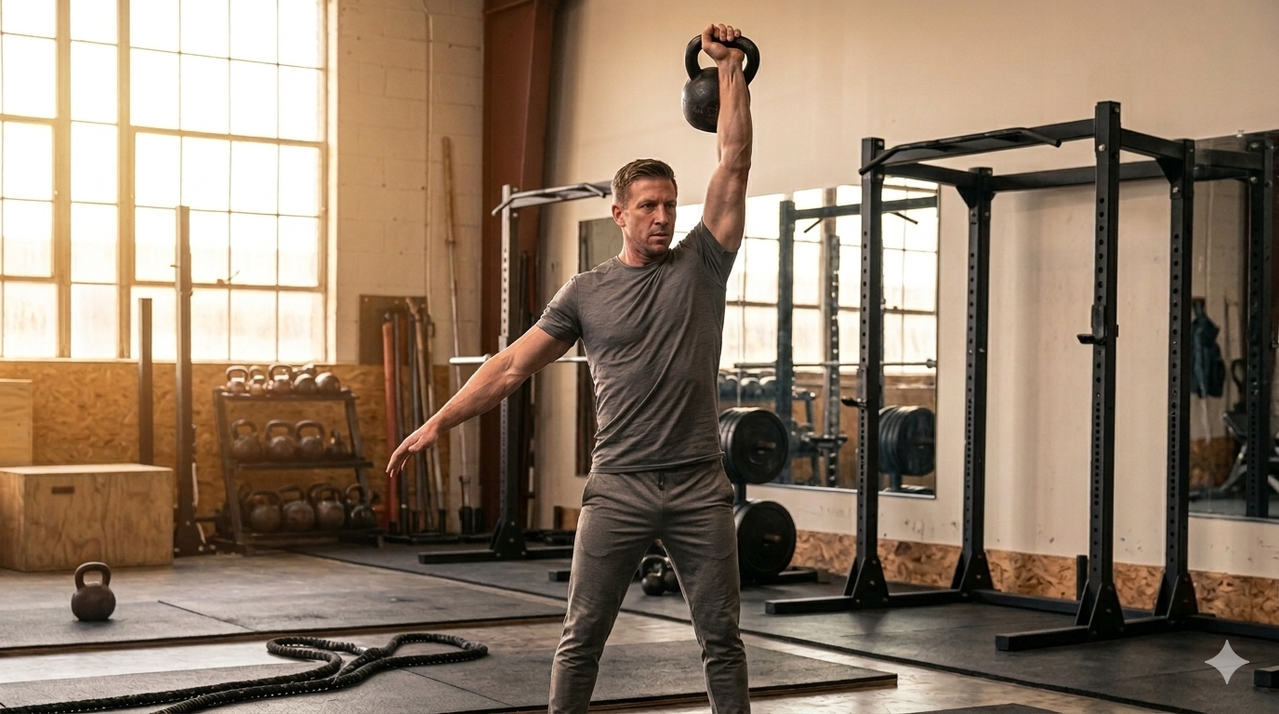
Walk into any gym, and you'll see two distinct cultures. In one corner, lifters perform barbell curls and pec-deck flies, focused on sculpting every muscle fiber. In another, athletes do kettlebell swings, battle ropes, and single-leg deadlifts, moving through space with fluidity and control. This is the essence of the functional training vs bodybuilding debate.
For decades, fitness enthusiasts have been told they must choose sides. "Train movements, not muscles," one camp insists . "You can't build real strength without isolation," the other argues. But modern exercise science suggests this is a false dichotomy. A 2025 randomized controlled trial found that while functional training produced superior gains in overall physical fitness and movement quality, traditional training still had its place, particularly for those with specific hypertrophy goals .
The truth is, functional training vs bodybuilding isn't about which is superior—it's about understanding what each methodology offers and aligning it with your personal objectives. Do you want to maximize muscle size, or do you want to move better, feel more capable in daily life, and build resilient joints? For most people, the answer lies somewhere in the middle.
2. Defining the Contenders
Before we compare functional training vs bodybuilding, we need clear definitions. Both approaches fall under the umbrella of resistance training, but their philosophies and methods differ significantly.
2.1. What is Bodybuilding (Traditional Strength Training)?
Bodybuilding, in the context of this comparison, refers to traditional resistance training focused on increasing muscle size (hypertrophy) and achieving aesthetic symmetry. It involves lifting or pushing against heavy resistance with the primary goal of increasing muscle mass. This can be done using free weights, machines, bands, or bodyweight, but it typically emphasizes isolation exercises that target specific muscles .
The core principle is mechanical tension. A recent review in the Journal of Sport and Health Science confirms that mechanical tension is the primary and essential driver of resistance-training–induced muscle hypertrophy through mechanotransductive signaling . Bodybuilding programs are designed to maximize this tension through progressive overload, often using moderate-to-heavy loads in the 8-15 rep range.
2.2. What is Functional Training?
Functional training is a method that emphasizes complex, multi-joint movements involving the upper body, core, and lower body in each exercise. These movements are designed to enable greater overall bodily functioning and performance enhancement through improved coordination and proper stimulation of muscular "firing" patterns .
While "function" can be a buzzword, the science behind it is solid. A 2025 narrative review in the Journal of Advanced Biomedical Sciences defined functional training as a comprehensive, multidimensional intervention that improves gait efficiency, postural stability, joint load distribution, and neuromuscular coordination . It's not just about "life movements"; it's about preparing the body to react and function efficiently in any environment.
2.3. The Core Philosophical Difference
The simplest way to distinguish them is by goal: bodybuilding trains muscles to look a certain way; functional training trains movements to perform a certain way. Bodybuilding asks, "How can I make this muscle bigger?" Functional training asks, "How can I make this movement pattern more efficient and resilient?" .
3. Key Differences: Movement, Muscle, and Outcome
Let's break down the specific differences that matter for your functional training vs bodybuilding decisions.
3.1. Whole Body Movement vs. Isolated Exercises
While most bodybuilding programs use compound exercises like squats and deadlifts, the focus is often on isolation exercises that target one specific muscle—a bicep curl, for example. This is because aesthetic muscle development is a more common goal . Functional training, by contrast, focuses almost exclusively on compound exercises—recruiting multiple muscle groups in tandem—and isolation exercises are uncommon .
3.2. Muscle Hypertrophy: Which Builds More Muscle?
This is where bodybuilding has a clear edge in the functional training vs bodybuilding comparison. The most common way to achieve muscle hypertrophy is via traditional strength training, as it allows for the isolation and focused fatiguing of individual muscles. Since weightlifting exercises don't involve a lot of excess movement (you're usually raising and lowering the weights through one plane of motion), there is more opportunity to lift heavy and further encourage hypertrophy .
However, this doesn't mean functional training builds no muscle. A 2025 study showed that an 8-week functional training program significantly improved physical fitness indicators, including power (standing long jump) and muscular endurance . But for pure size, bodybuilding's higher volume per muscle group (12-20 sets per week) is more effective .
3.3. Cardiovascular Benefits
Cardio, or cardiovascular training, is anything that raises your heart rate. Traditional strength training does have cardiovascular benefits, but it typically won't raise your heart rate to a great degree. Functional training often organically incorporates cardio through full-body flows—linking movements together into longer sequences that will challenge and build cardio endurance . The 2025 RCT found that the functional training group showed superior gains in the 1,000-meter run compared to the traditional training group, indicating better cardiovascular endurance .
3.4. Mobility and Flexibility
One of the core goals of functional movement is improving mobility and flexibility. It's built into the training, helping you to move better in everything you do. In traditional strength training, mobility isn't usually a part of the routine—the focus is on loading the muscles. So you need to supplement your strength training with mobility work .
3.5. Injury Prevention and Joint Health
Functional training may have an advantage here. Experts note that traditional bodybuilding alone is simply not sufficient to enhance function and improve performance. With prolonged or excessive loading for building size or strength of the upper body, the shoulder can take quite a beating. When the damage done to connective tissue and overuse is observed many years later, movement impairment is likely to occur . Functional training, with its emphasis on multi-planar movement and joint stability, may mitigate these risks .
4. What the Science Says: Evidence from Recent Studies
The functional training vs bodybuilding debate isn't just philosophical; it's now being settled in laboratories.
4.1. Functional Training Improves Overall Fitness More Effectively
A landmark 2025 randomized controlled trial compared an 8-week functional training program to a traditional training program in male university students. The results were striking. The functional training group demonstrated significantly greater improvements across all five physical fitness indicators measured: speed (50-m sprint), endurance (1,000-m run), flexibility (sit-and-reach), power (standing long jump), and vital capacity .
The authors concluded that functional training is more effective than traditional training for concurrently improving functional movement patterns and comprehensive physical fitness .
4.2. Bodybuilding and the Mechanisms of Hypertrophy
On the bodybuilding side, recent research has clarified what actually drives muscle growth. A comprehensive 2025 review debunked several myths: claims that acute hormonal responses, metabolic stress, cell swelling, or "the pump" meaningfully contribute to hypertrophy are not supported by scientific evidence . The primary driver is mechanical tension applied through progressive overload.
This means that while the "pump" might feel good, it's not the cause of growth—consistent tension on the muscle over time is what matters. Bodybuilding-style training, with its focus on controlled reps and progressive overload, is perfectly designed to deliver this stimulus.
4.3. Functional Training for Metabolic Health
Beyond fitness, functional training shows promise for metabolic health. A 2025 narrative review found that functional training elicits marked enhancements in mitochondrial function, insulin sensitivity, and systemic inflammatory modulation (e.g., reductions in IL-6 and TNF-α, increases in adiponectin) . This makes it a powerful tool not just for athletes, but for anyone looking to improve their overall health.
5. Nutrition: Fueling Your Training Style
Your training style dictates your nutritional needs. Here's how to fuel for each in the functional training vs bodybuilding context.
5.1. Bodybuilding Nutrition: Precision and Protein
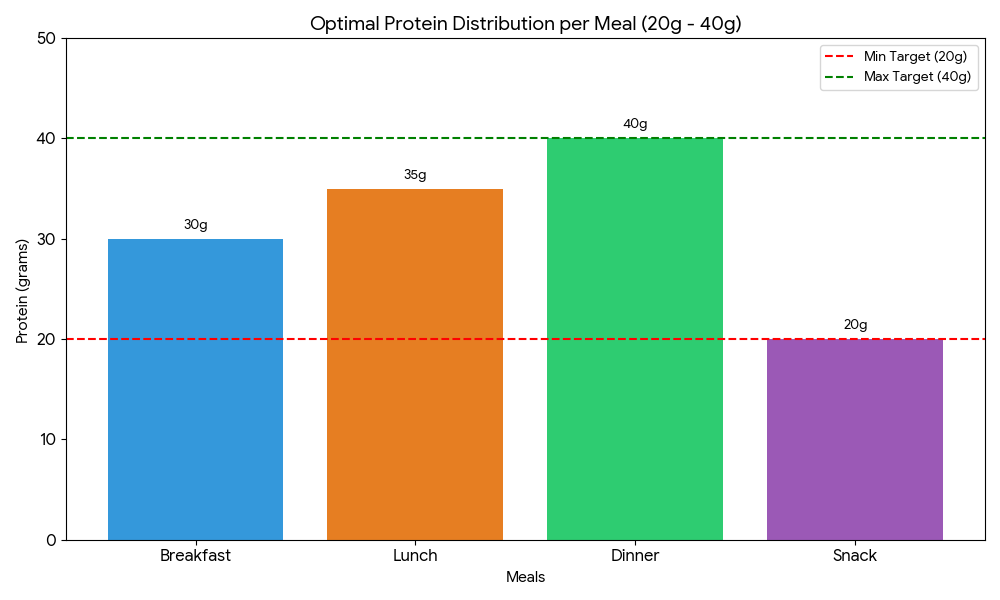
Bodybuilders often require precise macronutrient targeting to maximize muscle protein synthesis while minimizing fat gain. A high-protein approach (1.4–2.0 g/kg/day) is standard . For a 90kg athlete, that's 126-180g of protein daily. Carbohydrates are timed around workouts to fuel performance and replenish glycogen.
Sample Bodybuilding Meal Plan (~3000 kcal, 200g protein)
- Meal 1 (Post-Workout): 45g whey protein + 30g carbs (Gatorade) + electrolytes (intra-workout shake)
- Meal 2 (Breakfast): 3 whole eggs + 1 cup egg whites + 1 cup oats + berries (~45g protein)
- Meal 3 (Lunch): 200g chicken breast + 1 cup quinoa + roasted vegetables (~50g protein)
- Meal 4 (Snack): 2 protein bars (40g protein) + 1 apple (~42g protein)
- Meal 5 (Dinner): 200g lean ground meat + veggies + rice (~45g protein)
- Meal 6 (Evening): High-protein snack (e.g., protein puffs) (~20g protein)
5.2. Functional Training Nutrition: Balanced and Sustainable
Functional athletes need a balanced approach that supports energy for complex movements and recovery. While protein is still important (1.2–1.7 g/kg/day), carbohydrates play a larger role in fueling high-intensity circuits. Fats should not be overly restricted, as joint health and hormonal balance are priorities.
Sample Functional Training Meal Plan (~2800 kcal, 160g protein)
- Breakfast: 2 eggs + 2 slices sourdough + avocado + fruit (~25g protein)
- Lunch: 150g salmon + sweet potato + large mixed salad with olive oil (~35g protein)
- Snack: Greek yogurt (200g) + berries + granola (~20g protein)
- Dinner: 150g lean steak + quinoa + roasted vegetables (~40g protein)
- Post-Workout: Protein smoothie (banana, whey/plant protein, milk) (~30g protein)
Vegan Adaptations for Both Styles
- Protein sources: Firm tofu (150g = 15g), tempeh (150g = 20g), lentils (1 cup cooked = 18g), seitan (100g = 25g, if not gluten-free), pea protein powder (1 scoop = 25g).
- Meal example: Tofu scramble (200g firm tofu) + 2 slices toast + spinach for breakfast (~25g protein).
- Quick vegan recipe: Lentil-quinoa bowl: 1 cup lentils (18g) + 1 cup quinoa (8g) + roasted veggies + tahini dressing (~30g protein).
Gluten-Free Options
- Replace wheat with quinoa, buckwheat, certified gluten-free oats, rice, or amaranth.
- All natural protein sources (meat, fish, eggs, dairy, legumes, tofu) are naturally gluten-free.
5.3. Quick High-Protein Recipes (Under 10 Minutes)
- Greek Yogurt Power Bowl: 1 cup Greek yogurt + 1 tbsp peanut butter + 1 tbsp chia seeds + berries. (~25g protein)
- Microwave Scrambled Eggs: 3 eggs + splash of milk, microwave 2 min, stir, add cheese. (~22g)
- Vegan Chickpea Salad: 1 can chickpeas (mashed) + vegan mayo + mustard + celery. Serve with rice cakes. (~18g)
- Protein Smoothie: 1 scoop protein + 1 cup milk (dairy/soy) + 1 tbsp almond butter + 1/2 banana. (~28g)
6. Sample Workouts: Bodybuilding vs. Functional Training
Here's what each style looks like in practice in the functional training vs bodybuilding comparison.
6.1. Sample Bodybuilding Workout (Push Day)
- Barbell bench press: 4 sets of 8-12 reps
- Incline dumbbell press: 4 sets of 8-12 reps
- Pec deck machine: 3 sets of 12-15 reps
- Barbell military press: 4 sets of 8-12 reps
- Lateral raises: 4 sets of 15-20 reps
- Tricep rope pushdowns: 4 sets of 12 reps
- Dips: 4 sets to failure
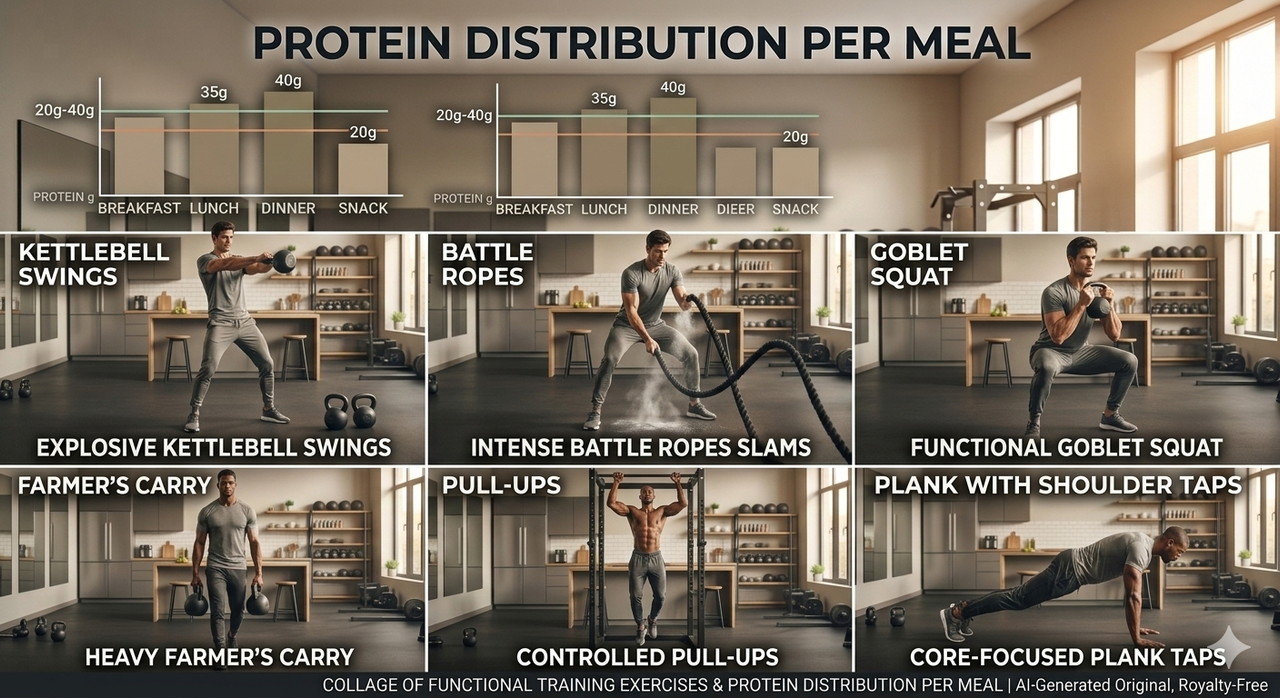
6.2. Sample Functional Training Workout
- Kettlebell swings: 3 sets of 15 reps
- Single-leg Romanian deadlifts: 3 sets of 10 each leg
- Push-ups with rotation: 3 sets of 12 reps
- Goblet squats: 3 sets of 15 reps
- Battle ropes: 3 sets of 30 seconds
- Farmer's carry: 3 sets of 30 meters
- Plank with shoulder taps: 3 sets of 45 seconds
7. 5 Common Mistakes in Both Camps
- Mistake #1 (Bodybuilding): Neglecting mobility. Focusing only on loading muscles without maintaining range of motion leads to stiffness and injury .
- Mistake #2 (Functional): Avoiding isolation work. Ignoring specific weak points (like hamstrings or glutes) can perpetuate muscle imbalances .
- Mistake #3 (Both): Chasing the "pump" over tension. Recent science confirms that metabolic stress is not a primary driver of hypertrophy; mechanical tension is .
- Mistake #4 (Functional): Using momentum and "cheating." Mass that is not functional is useless bulk. Swinging weights doesn't build stable strength .
- Mistake #5 (Bodybuilding): Overtraining and ignoring recovery. Small muscles like the rotator cuff were not meant to handle excessive loading without adequate rest .
8. So, Which is Better? A Goal-Based Framework
The answer to functional training vs bodybuilding depends entirely on you.
8.1. Bodybuilding May Be Better If...
- Your primary goal is maximizing muscle size and achieving aesthetic symmetry.
- You enjoy tracking progress on specific lifts and seeing visual changes.
- You have pure strength goals (e.g., squatting a certain weight) .
8.2. Functional Training May Be Better If...
- You want to develop strength and cardio fitness within one style of workout.
- Your goal is to increase mobility, flexibility, or balance .
- You need to improve movement skills for a physical job, sport, or daily life.
- Your main goal is to feel and move better in everyday activities .
- You're focused on overall health span, injury prevention, and metabolic health .
8.3. The Verdict: Why Not Both?
The most successful approach for most people in the functional training vs bodybuilding debate is a hybrid model. Use bodybuilding principles to build a foundation of muscle mass and strength. Use functional training to ensure that muscle works for you in the real world—that you can move, bend, lift, and play without pain. As one expert put it, "If your training goal is to get a bit more HUSTLE (i.e., better movement) and more MUSCLE (i.e., get bigger), you simply train movement AND muscles" .
10. Scientific References
- Centr Team. (2026). Functional vs traditional strength training: which is for you? Centr. View Source
- Hooshmand-Moghadam, B. (2025). Functional Training as a Therapeutic Strategy for Obesity: A Narrative Review. Journal of Advanced Biomedical Sciences, 15(3), 213-244. View Source
- Van Every, D.W., et al. (2025). Load-induced human skeletal muscle hypertrophy: Mechanisms, myths, and misconceptions. Journal of Sport and Health Science, 15, 101104. View Source
- Wolf, D. (2025). Get Ripped in 2026 with this 12-Week Diet & Training Program. Generation Iron. View Source
- NESTA Certified. (2021). Functional Training: Top 10 Common Questions. NESTA. View Source
- Li, L., et al. (2025). The effects of an 8-week functional training program on functional movement and physical fitness in male university students: a randomized controlled trial. Frontiers in Public Health, 13, 1641590. View Source
- Van Every, D.W., et al. (2025). Load-induced human skeletal muscle hypertrophy: Mechanisms, myths, and misconceptions. ScienceDirect. View Source
- RP Strength. (2025). Dr. Mike's Diet: Full Day of Eating at 6% Body Fat. RP Strength. View Source
- Tumminello, N. (2012). Train Muscles NOT Movements! Schwarzenegger.com. View Source
- Hooshmand-Moghadam, B. (2025). Functional Training as a Therapeutic Strategy for Obesity. KNE Publishing. View Source
All sources last accessed March 2026. Paraphrased for accessibility.
Join the conversation