How to Improve Grip Strength for Heavier Lifts
How to Improve Grip Strength for Heavier Lifts: The Complete Science-Backed Guide

📋 TL;DR
If your grip fails before your target muscles, you're leaving pounds on the bar. Grip strength is trainable and directly transferable to heavier lifts. This guide covers the four grip types (crushing, supporting, pinch, wrist stability), science-backed exercises (farmer's carries, dead hangs, thick bar training, plate pinches), nutrition strategies with protein timing, sample meal plans for omnivores and vegans, and a 4-week progressive program. Based on research from the Journal of Strength and Conditioning Research, ISSN, and large-scale epidemiological studies linking grip strength to longevity and performance.
1. Why Grip Strength Is the Gateway to Heavier Lifts
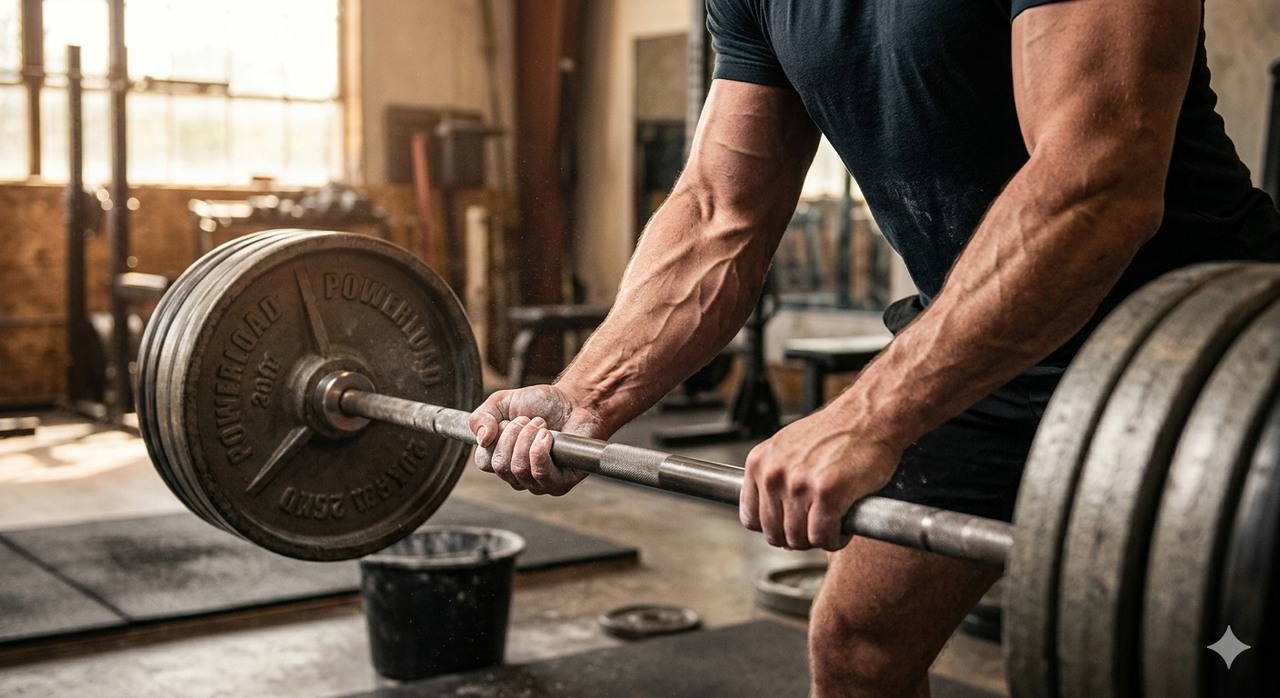
Have you ever been strong enough to deadlift a new personal record, but your hands gave out first? You're not alone. Research shows that grip strength is often the limiting factor in pulling exercises, and it's strongly correlated with overall strength, functional independence, and even longevity. A weak grip doesn't just mean dropped weights—it means your body can't fully express the strength of your back, legs, and core.
Grip strength is your first point of contact with the bar. It's the bridge that transfers power from your muscles to the weight. When your grip is strong, you lift heavier, train longer, and maintain better control under load. Conversely, a weak grip forces your body to compensate, leading to premature forearm fatigue, altered movement patterns, and increased injury risk.
Beyond the gym, grip strength is a recognized biomarker of health. A large review published in Clinical Interventions in Aging found that grip strength is strongly associated with aging outcomes, physical function, and mortality risk. In other words, building grip strength isn't just about lifting heavier—it's about building a more resilient body for life.
2. The Anatomy and Science of Grip Strength
To improve grip strength for heavier lifts, you must understand the muscles involved and how they produce force. Grip strength isn't a single quality—it's a coordinated effort between forearm muscles, intrinsic hand muscles, and the nervous system.
2.1. The Key Muscles: Flexor Digitorum Superficialis (FDS) and Beyond
The Flexor Digitorum Superficialis (FDS) is the workhorse of grip. This large forearm muscle controls finger flexion at the middle knuckle and is responsible for the bulk of force in power grips. Research using ultrasound imaging has shown that FDS thickness is strongly correlated with maximal grip strength—individuals with larger FDS cross-sectional area consistently demonstrate higher grip forces.
Other critical muscles include:
- Flexor Digitorum Profundus (FDP): Flexes fingertips, essential for terminal grip strength.
- Lumbricals and interossei: Intrinsic hand muscles for fine motor control and pinch strength.
- Extensor muscles: Balance the flexors and prevent injury.
- Thenar muscles: Control thumb movement, vital for pinch grip.
2.2. The Four Types of Grip Strength
Effective training targets all four grip dimensions. Neglecting one creates weaknesses that limit your ability to improve grip strength for heavier lifts.
- Crushing grip: The squeezing force between fingers and palm (e.g., hand grippers, deadlifts). Relies on finger flexors.
- Supporting grip: The ability to hold onto an object for time (e.g., dead hangs, farmer's carries). Tests endurance of flexors.
- Pinch grip: Holding objects between thumb and fingers (e.g., plate pinches). Develops thumb and intrinsic muscles.
- Wrist stability: Resistance to rotational or bending forces (e.g., wrist curls, wrist roller). Essential for safe pressing and carrying.
2.3. What the Research Says About Grip and Performance
A 2025 study on forearm muscle architecture during maximal contractions found that grip width affects muscle activation—wide grips alter pennation angle and muscle thickness, potentially enhancing force production. Another study in Scientific Reports revealed that nearly one-third of people are strongest in their non-dominant hand, highlighting the importance of bilateral training.
Large epidemiological studies confirm that grip strength predicts cardiovascular health, mobility, and all-cause mortality. The message is clear: training grip is both a performance and longevity investment.
3. The 7 Best Exercises to Improve Grip Strength for Heavier Lifts
These exercises are selected based on scientific evidence and practical effectiveness. Perform them 2-3 times per week as part of your routine.
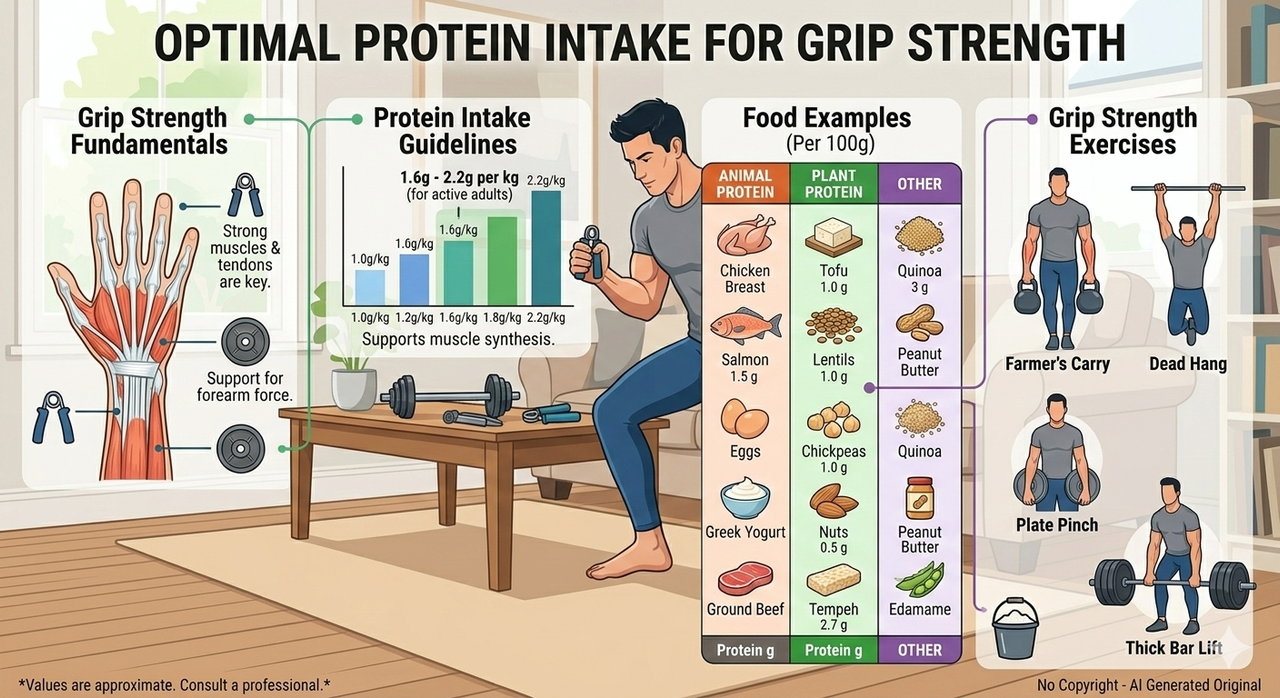
3.1. Farmer's Carries (Supporting Grip + Full Body)
How to do it: Grab heavy dumbbells or kettlebells, stand tall, and walk 20-40 meters with controlled steps. Keep wrists neutral and core braced.
Why it works: Farmer's carries train grip endurance, forearm flexors, and extensors while engaging shoulders, core, and legs. Research shows loaded carries activate multiple upper limb muscles and enhance stability transfer to compound lifts.
Progression: Increase weight, distance, or duration. For advanced variation, use thick handles or fat grips.
3.2. Dead Hangs (Supporting Grip + Shoulder Health)
How to do it: Hang from a pull-up bar with arms fully extended. Squeeze the bar tightly. Start with 20-30 seconds and build to 60+ seconds.
Why it works: Dead hangs improve grip endurance, decompress the spine, and condition the shoulders. Studies highlight hanging for shoulder health and grip performance in climbers.
Variations: Towel hangs (draping a towel over the bar) add instability and increase forearm recruitment.
3.3. Plate Pinches (Pinch Grip + Thumb Strength)
How to do it: Pinch two smooth-sided weight plates together with thumb and fingers. Hold for 15-30 seconds per set.
Why it works: Pinch grip is often neglected but vital for real-world tasks and thumb strength. Biomechanical studies show thumb-finger coordination is critical for load stabilization.
Progression: Increase plate weight, duration, or use thicker implements.
3.4. Thick Bar / Fat Grip Training (Crushing + Supporting)
How to do it: Attach fat grips to dumbbells or barbells, or use a thick-handled axle bar. Perform deadlifts, rows, or curls with the thicker diameter.
Why it works: Increasing handle diameter reduces mechanical advantage, forcing finger flexors and extensors to work harder. Research confirms greater forearm activation during thick-bar pulling tasks.
Application: Use once weekly with lighter loads than usual; focus on controlled reps.
3.5. Wrist Curls and Extensions (Wrist Stability)
How to do it: Rest forearms on thighs or a bench, palms up for wrist curls (flexion), palms down for extensions. Curl the weight slowly through full range.
Why it works: Balanced flexion and extension strength prevents injuries and improves wrist resilience under heavy loads.
3.6. Towel or Rope Pull-Ups (Dynamic Instability)
How to do it: Drape a towel over a pull-up bar and grip each end. Perform pull-ups or static hangs.
Why it works: Unstable surface recruits more motor units and stabilizer muscles, mimicking real-world gripping demands.
3.7. Hand Grippers (Crushing Grip)
How to do it: Use adjustable hand grippers. Squeeze fully, hold briefly, release slowly. Train both hands evenly.
Why it works: Grippers directly strengthen finger flexors and improve neuromuscular coordination. They're convenient for daily training.
4. Nutrition: How Protein and Amino Acids Fuel Grip Strength
Muscle is built from protein—and your forearm muscles are no exception. Recent large-scale research confirms that dietary protein intake is directly associated with handgrip strength, especially when combined with resistance exercise.
4.1. Protein Intake Recommendations for Grip Strength
A 2025 study published in Nutrition Journal analyzing data from over 18,500 adults found that total and plant protein intakes were positively associated with handgrip strength levels. For every 1% increase in protein intake from total energy, grip strength increased significantly.
Another study in postmenopausal women showed that adequate protein intake (≥1.0–1.2 g/kg/day) combined with regular resistance exercise (≥2 times/week) was associated with 42% lower odds of low handgrip strength.
| Population | Recommended Protein Intake | Outcome |
|---|---|---|
| General adults (active) | 1.4–2.0 g/kg/day | Optimal muscle protein synthesis |
| Older adults (≥65 years) | 1.2–1.5 g/kg/day | Reduced sarcopenia risk |
| Postmenopausal women | ≥1.0–1.2 g/kg/day + exercise | 42% lower odds of low grip strength |
4.2. Amino Acids: The Building Blocks
Essential amino acids (EAAs) and branched-chain amino acids (BCAAs) are particularly important for muscle strength. Research shows that higher intake of non-essential amino acids (NEAAs) and plant protein (8-10% of energy) is associated with lower risk of low grip strength in older adults. Leucine, in particular, stimulates muscle protein synthesis.
4.3. Sample Meal Plans for Grip Strength
Omnivore Sample Meal Plan (~2200 kcal, 150g protein)
- Breakfast: 3 eggs (18g) + 1 cup Greek yogurt (20g) + 1 cup oats + berries. (~40g protein)
- Lunch: 170g grilled chicken breast (40g) + 1 cup quinoa + roasted vegetables. (~45g protein)
- Snack: 1 scoop whey protein (25g) + 1 apple + 15 almonds. (~28g protein)
- Dinner: 170g salmon (35g) + sweet potato + steamed broccoli. (~40g protein)
Vegan Sample Meal Plan (~2200 kcal, 135g protein)
- Breakfast: Tofu scramble (200g firm tofu = 20g) + 2 slices whole-grain toast + spinach. (~25g)
- Lunch: Lentil-quinoa bowl: 1 cup lentils (18g) + 1 cup quinoa (8g) + roasted veggies + tahini. (~30g)
- Snack: Vegan protein shake (pea/rice blend, 25g) + banana. (~27g)
- Dinner: Tempeh stir-fry: 200g tempeh (25g) + broccoli + bell peppers + rice. (~30g)
- Evening: Edamame 1 cup (18g). (18g)
Gluten-Free Adaptations
- Replace wheat with quinoa, buckwheat, certified gluten-free oats, rice.
- Protein sources: eggs, dairy, meat, fish, legumes, tofu, tempeh.
- Check protein powder labels for gluten-free certification.
4.4. Quick High-Protein Recipes (Under 10 Minutes)
- Greek Yogurt Power Bowl: 1 cup Greek yogurt + 1 tbsp peanut butter + 1 tbsp chia seeds + berries. (~25g protein)
- Microwave Scrambled Eggs: 3 eggs + splash of milk, microwave 2 min, stir, add cheese. (~22g)
- Vegan Chickpea Salad: 1 can chickpeas (mashed) + vegan mayo + mustard + celery. Serve with rice cakes. (~18g)
- Protein Smoothie: 1 scoop protein + 1 cup milk (dairy/soy) + 1 tbsp almond butter + 1/2 banana. (~28g)
5. How to Program Grip Training for Heavier Lifts
Grip training should be integrated smartly—not added randomly. Here's a science-based approach.
5.1. Weekly Structure
Train grip 2-3 times per week, allowing 48 hours between sessions for tendon recovery. Grip muscles are small and fatigue easily, so recovery is critical.
5.2. Sample 4-Week Progressive Program
Weeks 1-2: Foundation
- Day A (Upper Body Focus): Dead hangs 3×20-30 sec; Wrist curls 2×15; Hand grippers 2×20 reps
- Day B (Lower Body Focus): Farmer's carries 3×30 sec; Plate pinches 3×20 sec; Wrist extensions 2×15
- Day C (Optional): Towel hangs 2×20 sec; Soft ball squeezes for blood flow
Weeks 3-4: Intensity Phase
- Increase hang time by 5-10 seconds
- Add 2.5-5 kg to farmer's carries
- Progress plate pinch weight or duration
- Introduce thick bar work on one day (e.g., fat grip rows 3×8-10)
5.3. Integration with Main Lifts
- Perform grip work after your main lifts to avoid pre-fatiguing forearms.
- On deadlift days, use overhand grip without straps when possible to train supporting grip.
- Add carries as a finisher—they build grip while conditioning your entire body.
6. Recovery, Injury Prevention, and Common Mistakes
6.1. Signs of Overtraining
- Persistent soreness in forearms or hands
- Stiffness in fingers or wrists
- Decreased grip strength despite training
- Elbow pain (golfer's elbow)
If you experience these, take 3-5 days off grip-specific work and focus on mobility and blood flow.
6.2. 5 Common Mistakes That Kill Grip Progress
- Mistake #1: Always using straps. You miss the opportunity to train your grip during heavy pulls.
- Mistake #2: Neglecting thumb and pinch strength. Most grip programs overemphasize crushing grip.
- Mistake #3: Insufficient protein intake. Grip muscles need dietary protein to grow.
- Mistake #4: Overtraining grip. Small muscles need recovery; 2-3 sessions weekly is plenty.
- Mistake #5: Ignoring wrist extensors. Imbalances lead to injuries.
6.3. Mobility and Recovery Tools
- Finger extensor band stretches
- Wrist circles and dynamic mobility
- Self-massage with lacrosse ball
- Warm water soaks for blood flow
7. How to Track Grip Strength Gains
Use these practical markers to measure progress:
- Dead hang duration: Are you hanging longer than 4 weeks ago?
- Farmer's carry load/distance: Can you carry more weight or walk farther?
- Plate pinch time/weight: Holding heavier plates for longer?
- Dynamometer reading: If available, track max voluntary contraction.
- Subjective feel: Does the bar feel more secure in your hands during deadlifts?
Remember: nearly one-third of people are strongest in their non-dominant hand, so test both sides.
9. Scientific References
- Crunch Fitness. (2026). 5 Ways To Build Hand Strength for Heavier Lifts. Crunch The Hub. View Source
- Hutchison, J., Timmons, M., & Jones, B. (2025). Forearm Muscle Alterations During Maximal Voluntary Isometric Contraction. Appalachian Student Healthcare Research Review, 1(1). View Source
- Parkview Health. (2025). How to improve your grip strength. Parkview Sports Medicine. View Source
- Relationship between dietary protein and amino acid intake and handgrip strength in Korean adults. (2025). Nutrition Journal, 24, 61. View Source
- One third of people exert greater handgrip strength with their non-dominant hand. (2025). Scientific Reports. View Source
- BOXROX. (2025). 3 Unusual Exercises to Level Up Your Grip Strength. View Source
- The Hidden Power in Your Hands: How a Single Muscle Predicts Your Grip. (2025). Biomedical Engineering Science. View Source
- BOXROX. (2025). 5 Grip Strength Exercises That Boost Arm Training. View Source
- Baek, J.K., Kim, H.R., Lee, E.J., et al. (2026). Combined associations of protein intake and resistance exercise with handgrip strength in postmenopausal women. Maturitas, 205, 108808. View Source
All sources last accessed March 2026. Paraphrased for accessibility.
Join the conversation