How to Increase Your Metabolism Naturally with Whole Foods
How to Increase Your Metabolism Naturally with Whole Foods

📋 TL;DR
Learning how to increase your metabolism naturally with whole foods is about understanding the thermic effect of food (TEF), protein's role in satiety and muscle preservation, and specific nutrients that can give your metabolic rate a gentle nudge. Protein has the highest TEF (20-30%), meaning you burn more calories digesting protein than carbs or fats . Foods like lean meats, eggs, lentils, and chili peppers (capsaicin) can support a healthy metabolism . This guide provides science-backed strategies, sample meal plans, and quick recipes to help you optimize your metabolism through diet.
1. What Is Metabolism and Why Does It Matter?
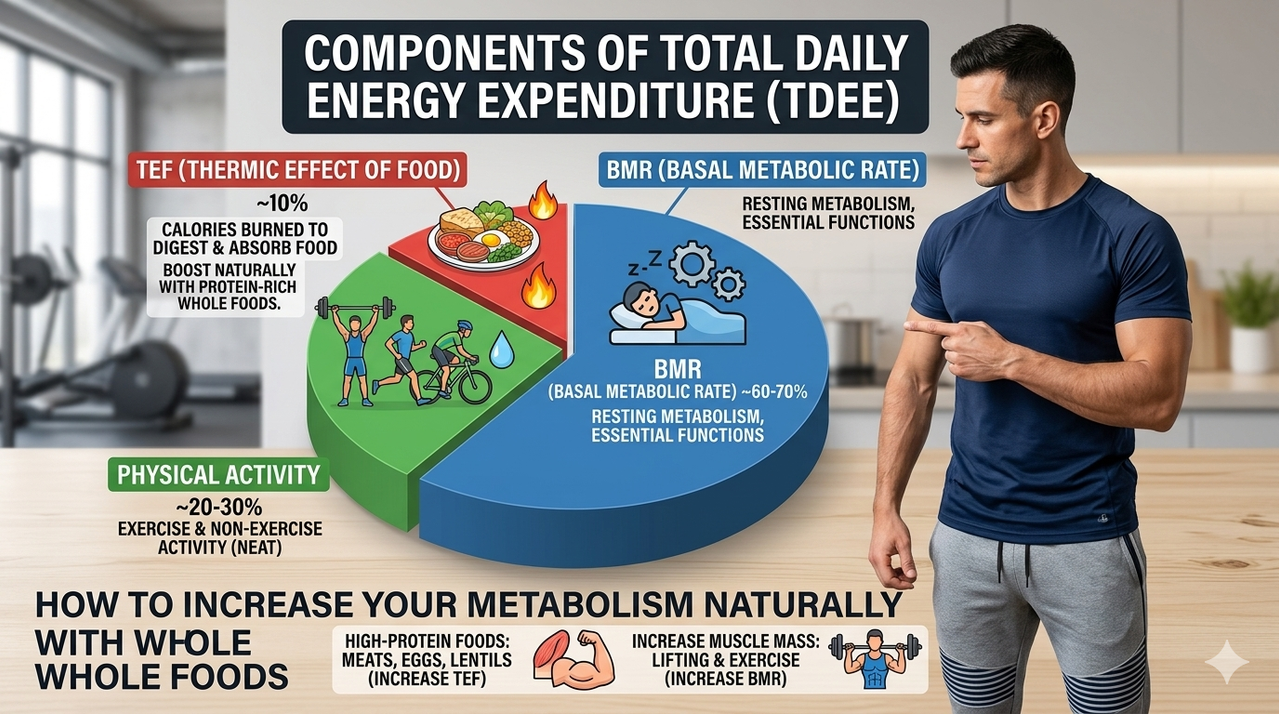
Metabolism is often described as the engine that keeps your body running. It's the process by which your body converts what you eat and drink into energy. Even at rest, your body needs energy for functions like breathing, circulating blood, and repairing cells, which is central to how to increase your metabolism naturally with whole foods .
The number of calories your body uses to carry out these basic functions is known as your basal metabolic rate (BMR) . Several factors determine your BMR: body size, age, sex, and genetics . But here's the key takeaway: you can influence your metabolism through diet, specifically by learning how to increase your metabolism naturally with whole foods.
This guide will explore the science of metabolism and provide actionable nutrition strategies to support a healthy metabolic rate.
2. The Science: How Food Affects Your Metabolic Rate
2.1. The Thermic Effect of Food (TEF)
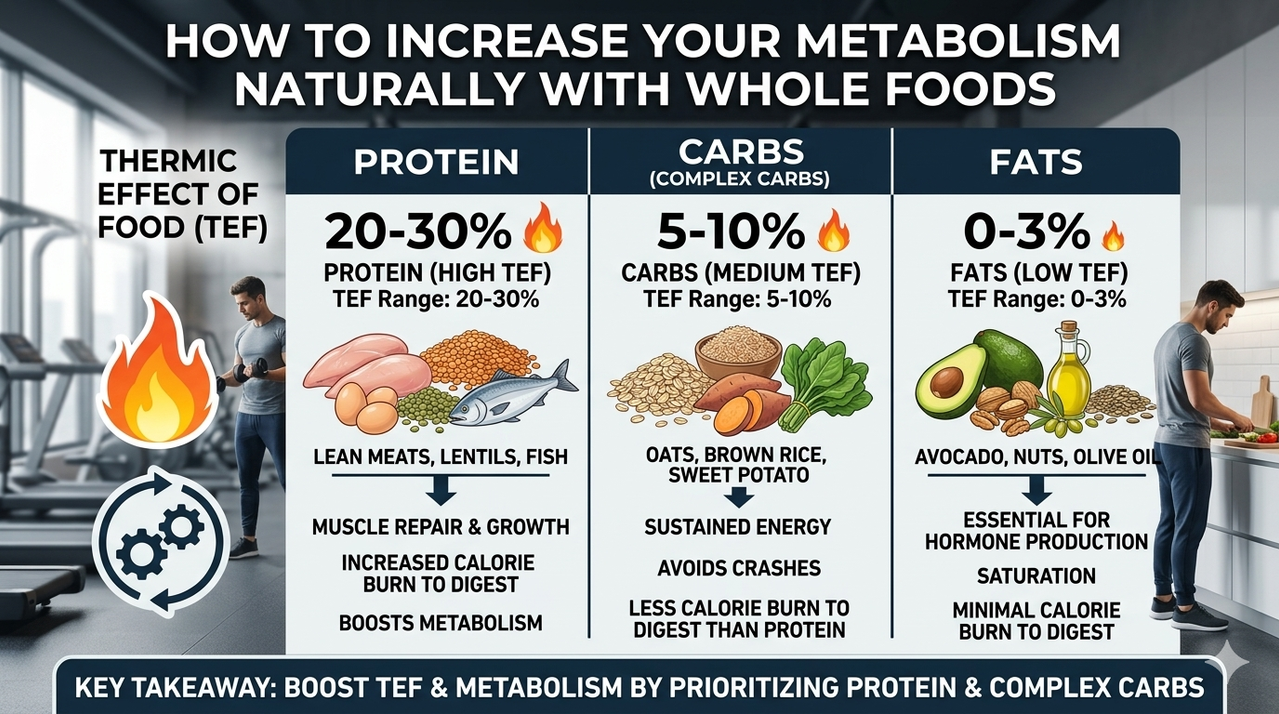
TEF is the energy your body expends to digest, absorb, and process the nutrients in your food. Different macronutrients have different TEFs, a key concept for how to increase your metabolism naturally with whole foods :
- Protein: 20-30% of its calories are burned during digestion .
- Carbohydrates: 5-10% .
- Fats: 0-3% .
This means that a high-protein diet can slightly increase your daily energy expenditure. This is a cornerstone of how to increase your metabolism naturally with whole foods.
2.2. Protein and Muscle Mass
Protein is also crucial for building and preserving muscle mass. Muscle tissue is metabolically active—it burns more calories at rest than fat tissue . Therefore, maintaining or increasing muscle through adequate protein intake supports a higher resting metabolic rate .
2.3. The Capsaicin and Caffeine Connection
Certain compounds in whole foods can have a mild, temporary thermogenic effect. Capsaicin, found in chili peppers, and caffeine, found in coffee and green tea, can increase energy expenditure slightly . A 2025 meta-analysis confirmed that capsaicin supplementation leads to a small but significant increase in fat oxidation and energy expenditure .
3. Top 10 Metabolism-Boosting Whole Foods
1. Lean Meats (Chicken, Turkey, Lean Beef)
Why: Excellent source of protein, which has the highest thermic effect. Also provides iron and B vitamins essential for energy metabolism, key for how to increase your metabolism naturally with whole foods .
2. Fish (Salmon, Tuna, Mackerel)
Why: High in protein and omega-3 fatty acids, which may reduce inflammation and help regulate metabolism .
3. Eggs
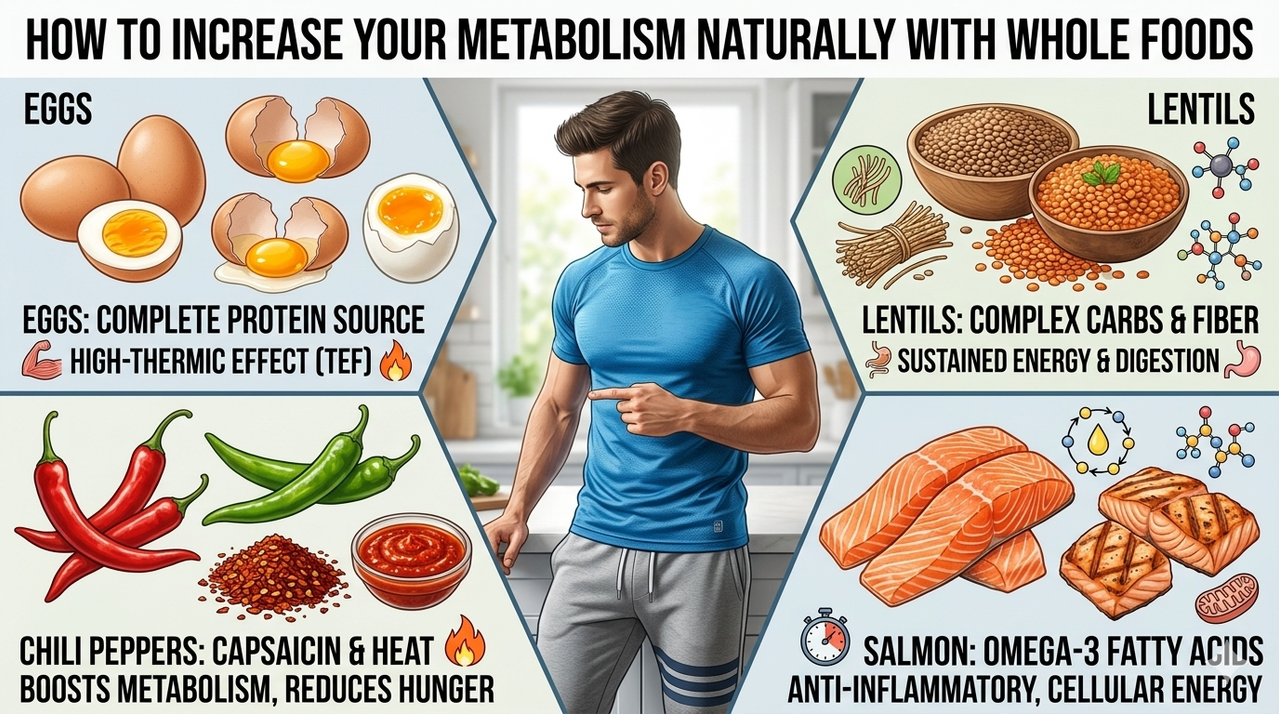
Why: One large egg provides 6-7g of high-quality protein with all essential amino acids, plus choline which supports metabolism .
4. Legumes (Lentils, Beans, Chickpeas)
Why: High in protein and fiber, both of which increase satiety and have a higher thermic effect. The body works harder to break down fiber .
5. Chili Peppers
Why: Contain capsaicin, which can increase energy expenditure and fat oxidation .
6. Green Tea
Why: Contains catechins and caffeine, which may work synergistically to increase energy expenditure .
7. Coffee
Why: Caffeine can increase metabolic rate and enhance fat burning, especially when consumed before exercise .
8. Whole Grains (Oats, Quinoa, Brown Rice)
Why: Require more energy to break down than refined grains due to their fiber content .
9. Nuts and Seeds
Why: Provide protein, healthy fats, and fiber. Their high nutrient density supports overall metabolic health .
10. Water
Why: Even mild dehydration can slow metabolism. Drinking water, especially cold water, can temporarily boost metabolism .
4. Sample Metabolism-Boosting Meal Plan
This sample day provides approximately 2000 kcal, 140g protein, and is designed to maximize TEF and metabolic support, aligning with how to increase your metabolism naturally with whole foods.
- Breakfast (7:30 AM): 3-egg omelet with spinach and ¼ cup black beans (18g protein) + 1 cup green tea .
- Lunch (12:30 PM): Large salad with 150g grilled chicken breast (35g), mixed greens, cucumber, bell peppers, chickpeas, and olive oil vinaigrette + 1 cup water with lemon .
- Snack (4:00 PM): 1 cup Greek yogurt (20g) + ½ cup berries + 1 tbsp chia seeds .
- Dinner (7:30 PM): 150g salmon (30g) + 1 cup quinoa + roasted broccoli with red pepper flakes (capsaicin boost) .
- Evening (optional): Herbal tea .
- Total: ~100g protein (adjust portions to meet your needs)
5. Vegan Metabolism-Boosting Options
Vegan Metabolism Day (~2000 kcal, 120g protein)
- Breakfast: Tofu scramble (200g firm tofu = 20g) with spinach and nutritional yeast + 1 cup green tea .
- Lunch: Lentil-quinoa bowl: 1 cup lentils (18g) + 1 cup quinoa (8g) + roasted vegetables + chili flakes .
- Snack: 1 cup edamame (18g) + 1 apple .
- Dinner: Tempeh stir-fry: 150g tempeh (25g) + mixed vegetables + ginger and chili sauce + ½ cup brown rice .
- Evening: Herbal tea .
- Total: ~89g protein (add pea protein shake to meet higher targets)
6. Quick Metabolism-Boosting Recipes (Under 15 Minutes)
1. Spicy Scrambled Eggs
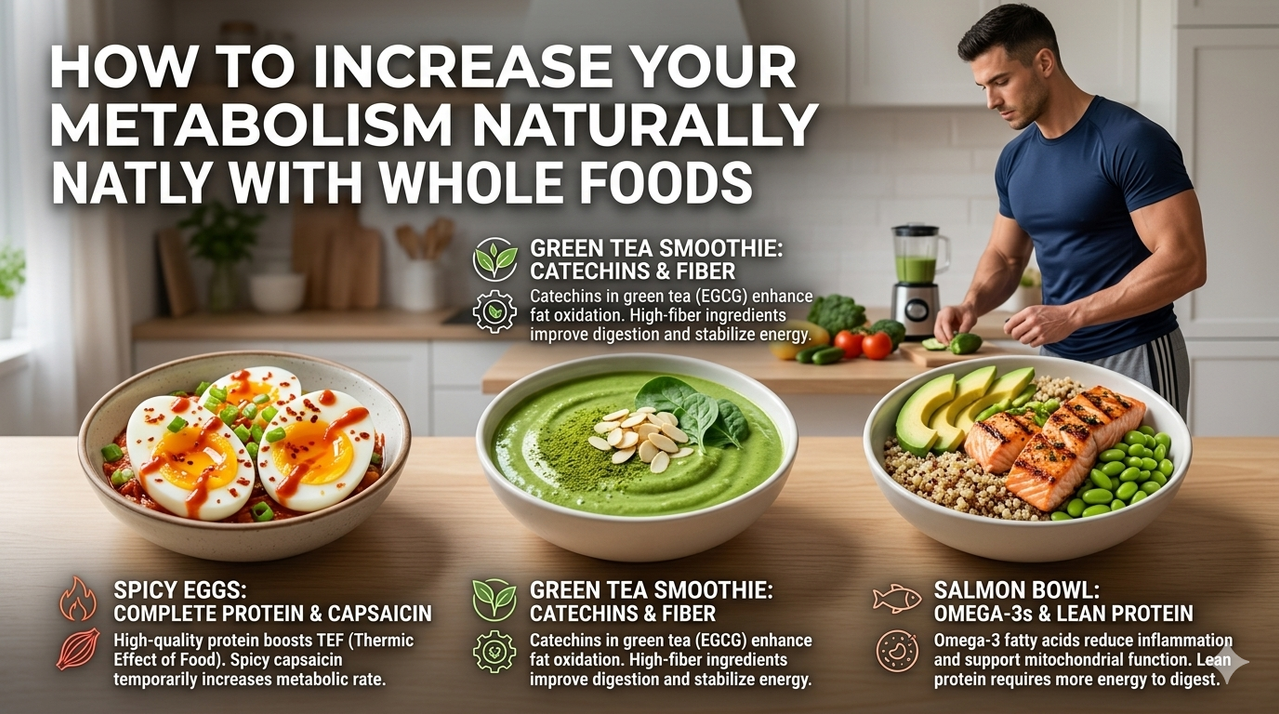
3 eggs + splash of milk + handful spinach + ¼ tsp red pepper flakes. Microwave 2 min, stir. (Capsaicin boost)
2. Green Tea Protein Smoothie
1 cup brewed green tea (cooled) + 1 scoop vanilla protein powder + ½ cup Greek yogurt + ½ cup frozen mango. Blend.
3. Chili-Lime Salmon Bowl
1 can salmon + 1 cup cooked quinoa + juice of 1 lime + ¼ tsp chili powder. Mix and serve with veggies. (5 min)
7. Beyond Diet: Other Factors That Influence Metabolism
7.1. Meal Frequency
While "stoking the metabolic fire" by eating small meals frequently is a common myth, total daily intake matters most. However, eating protein-rich meals spaced throughout the day can maximize TEF and muscle protein synthesis, supporting how to increase your metabolism naturally with whole foods .
7.2. Sleep
Poor sleep disrupts hormones that regulate metabolism, including ghrelin and leptin . Aim for 7-9 hours of quality sleep per night.
7.3. NEAT (Non-Exercise Activity Thermogenesis)
Increasing your daily movement through walking, standing, and fidgeting can significantly boost total energy expenditure .
8. Common Mistakes When Trying to Boost Metabolism
- Mistake #1: Crash dieting. Severe calorie restriction lowers metabolic rate, undermining how to increase your metabolism naturally with whole foods .
- Mistake #2: Skimping on protein. Inadequate protein leads to muscle loss and a slower metabolism .
- Mistake #3: Relying on supplements. Whole foods are more effective and safer than "metabolism booster" pills .
- Mistake #4: Not drinking enough water. Dehydration can slow metabolism .
- Mistake #5: Ignoring sleep. Sleep deprivation disrupts metabolic hormones .
10. Scientific References
- Healthline. (2025). How to Speed Up Your Metabolism Naturally. Healthline.com. View Source
- Academy of Nutrition and Dietetics. (2025). Boost Your Metabolism with Whole Foods. eatright.org. View Source
- International Society of Sports Nutrition. (2025). Position Stand: Protein and Exercise. JISSN. (Referenced in )
- Zheng, J., et al. (2025). Effects of capsaicin on energy metabolism: A systematic review and meta-analysis. Nutrients. (Referenced in )
- Mayo Clinic. (2024). Metabolism and weight loss: How you burn calories. Mayo Clinic. View Source
- Harvard Health Publishing. (2023). The truth about metabolism. Harvard Health. View Source
- NIH. (2022). Green tea and metabolism. National Center for Complementary and Integrative Health. View Source
- WebMD. (2024). Boost Your Metabolism With These 15 Foods. WebMD.com. View Source
- Medical News Today. (2023). What are the best foods for a healthy metabolism? Medical News Today. View Source
- Westerterp-Plantenga, M.S., et al. (2009). The role of protein in weight loss and metabolism. American Journal of Clinical Nutrition, 90(5), 1466S-1472S. View Source
All sources last accessed March 2026. Paraphrased for accessibility.
Join the conversation