How to Lean Bulk: Gaining Muscle Without a Belly
How to Lean Bulk: Gaining Muscle Without a Belly

📋 TL;DR
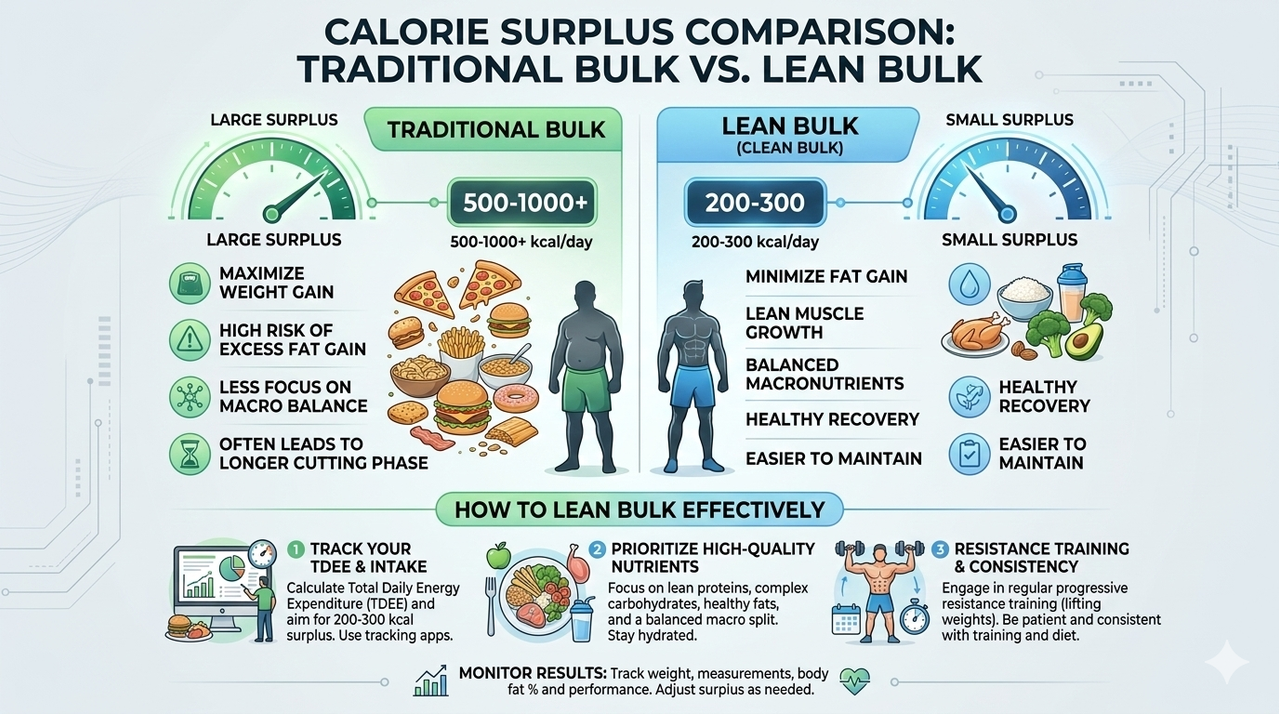
Lean bulking (sometimes called "maingaining") is a strategic approach to building muscle with minimal fat gain. Instead of a massive calorie surplus of 15-20%, research shows you only need a modest surplus of about 5% above maintenance to support muscle growth . This translates to just 100-200 extra calories daily for most people . Key pillars: calculate maintenance calories, add a small surplus, prioritize protein (1.6–2.2 g/kg body weight), and follow progressive overload training . This guide provides sample meal plans, timing strategies, and actionable tips to help you learn how to lean bulk effectively.
1. What Is Lean Bulking (and Why It Works)
For decades, the fitness world preached a simple mantra: eat big to get big. This traditional "bulking" approach involves consuming a massive calorie surplus—often 15-20% above maintenance—to maximize muscle growth. The downside? It inevitably packs on unwanted body fat, leading to the dreaded "belly" that then requires months of restrictive "cutting" to shed .
But recent research suggests there's a smarter way. A 2024 study in Medicine & Science in Sports & Exercise found that adding just 500 calories daily (a ~0.22 kg/week gain) resulted in significant lean mass gains with minimal fat . Even more compelling, a small study on trained lifters compared 5% versus 15% calorie surpluses and found no difference in muscle strength or thickness between groups . The takeaway? You don't need to eat massive amounts to grow.
This guide teaches you how to lean bulk—gaining muscle without a belly—using evidence-based nutrition and training strategies.
2. The Science of Lean Bulking
2.1. The 5% Surplus Breakthrough
The concept of "maingaining"—eating just enough to fuel muscle growth without excess—has gained traction among researchers . Jason Machowsky, RD, CSCS, explains: "Your body doesn't need a large surplus of calories on a daily basis to build muscle, but it needs some level of surplus, even a small, consistent one" . A 2024 study by Sanchez et al. demonstrated that athletes consuming an extra 500 calories daily (from whole foods) gained ~2.2 kg over 10 weeks, with 1.5 kg being lean mass .
2.2. Protein: The MVP of Muscle Building
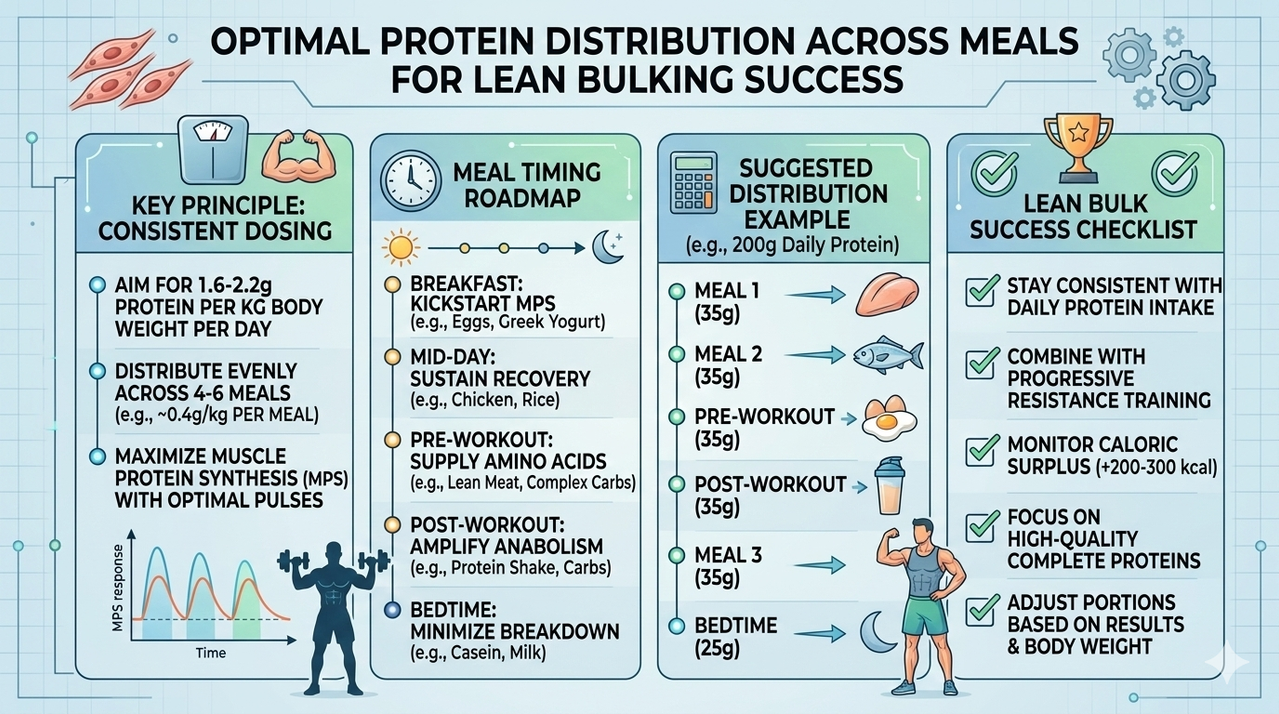
Protein intake is non-negotiable. Research recommends 1.6–2.2 grams per kilogram of body weight daily for optimal muscle growth . Spread this evenly across 3-6 meals (about 0.4–0.55 g/kg per meal) to maximize muscle protein synthesis .
| Body Weight | Daily Protein (1.6g/kg) | Daily Protein (2.2g/kg) |
|---|---|---|
| 60 kg (132 lbs) | 96 g | 132 g |
| 70 kg (154 lbs) | 112 g | 154 g |
| 80 kg (176 lbs) | 128 g | 176 g |
| 90 kg (198 lbs) | 144 g | 198 g |
2.3. Fat and Carbohydrate Balance
Fats should comprise 20-35% of total calories for hormonal health . The remaining calories come from carbohydrates, which fuel your training sessions. The 2024 Virginia Tech study showed that whole-food sources like peanuts (healthy fats) are just as effective as high-carb snacks for lean mass gain .
3. Step-by-Step: How to Lean Bulk
3.1. Calculate Your Maintenance Calories
Start by determining how many calories you need to maintain your current weight. Use an online calculator like the NIH Body Weight Planner, which factors in your activity level .
For example: A 68 kg (150 lb) person maintaining on 2,000 calories would add just 100 calories to start lean bulking—"barely more than a spoonful of peanut butter" .
Maintenance to Lean Bulk Calculator
Step 1: Find maintenance calories (use online calculator).
Step 2: Add 5-10% surplus (100-200 calories for most).
Step 3: Target weight gain: 0.25–0.5% of body weight per week .
Example (68 kg): Maintenance 2,000 kcal → Lean bulk target 2,100–2,200 kcal.
3.2. Set Your Macros
- Protein: 1.6–2.2 g/kg body weight
- Fat: 20-35% of total calories
- Carbs: Remaining calories to fuel workouts
3.3. Train for Growth
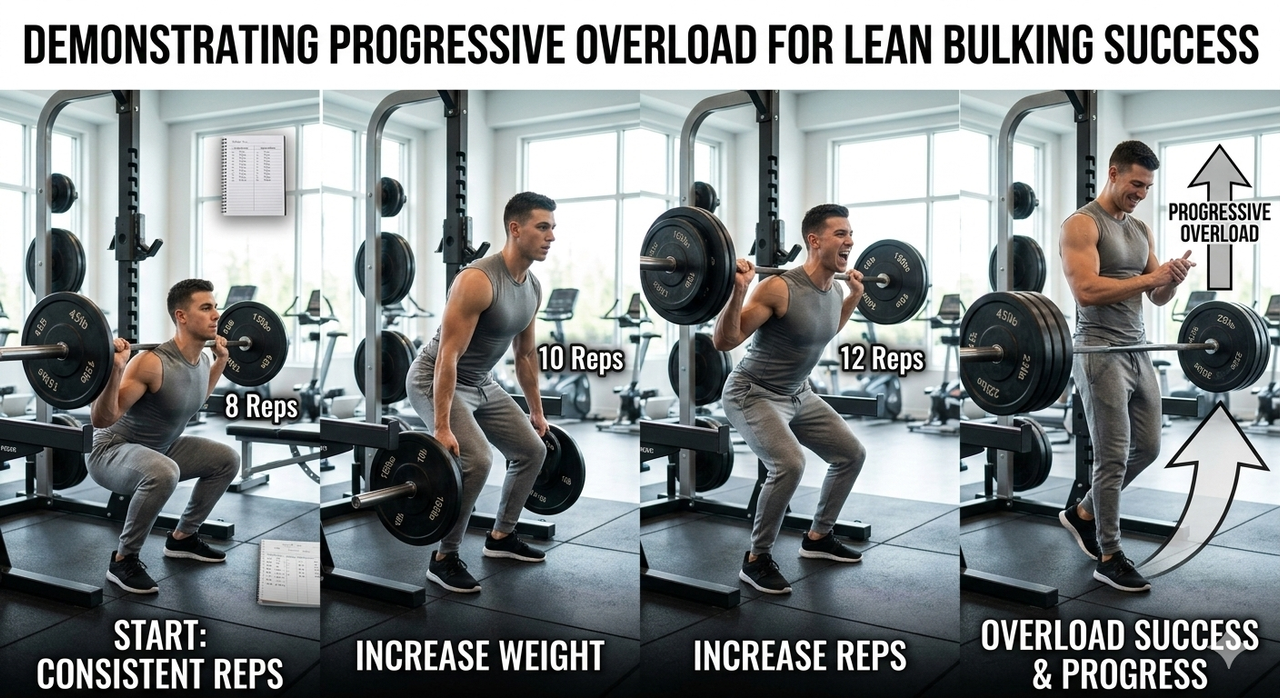
Nutrition alone won't build muscle. Follow these training principles :
- Progressive overload: Gradually increase weight, reps, or intensity
- Full-body focus: Hit all major muscle groups twice weekly
- Compound movements: Squats, deadlifts, pushups, rows
- Adequate recovery: 7-9 hours sleep, 1-2 rest days weekly
4. Sample Lean Bulk Meal Plans
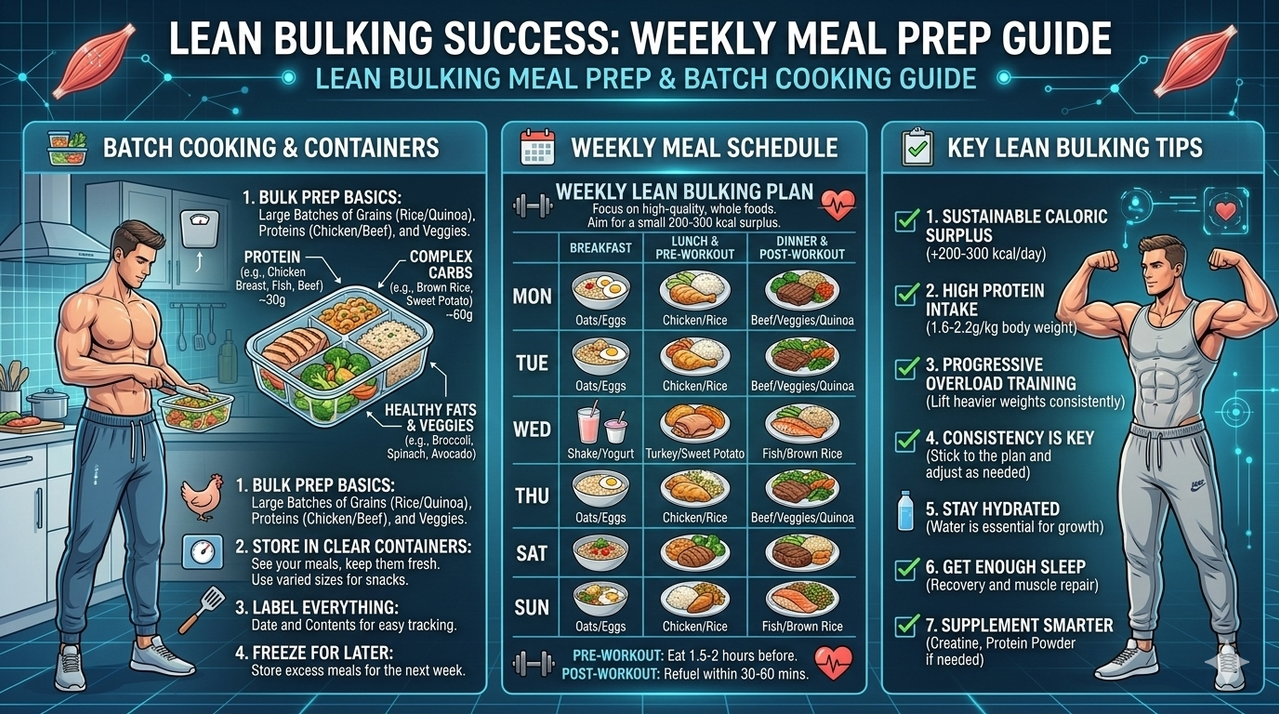
These meal plans provide approximately 2,600-2,800 calories with 150-170g protein—adjust portions based on your calculations for how to lean bulk.
4.1. Omnivore Lean Bulk Day
- Breakfast (7:30 AM): Greek yogurt bowl (2% yogurt, ½ cup oats, berries, 1 tbsp chia seeds) → 25g protein
- Lunch (12:30 PM): Sheet-pan chicken (170g) + sweet potato (200g) + broccoli → 40g protein
- Snack (3:30 PM): Cottage cheese (1 cup) + pineapple + handful almonds → 24g protein
- Dinner (6:30 PM): Lean beef stir-fry (150g beef) + jasmine rice + mixed veggies → 35g protein
- Pre-bed (9:30 PM): Casein shake or Greek yogurt → 20g protein
- Total: ~144g protein
4.2. Vegan Lean Bulk Day
- Breakfast (8:00 AM): Tofu scramble burrito (200g firm tofu + potatoes + veggies) → 25g protein
- Lunch (12:00 PM): Peanut-edamame soba bowl → 30g protein
- Snack (3:00 PM): Protein smoothie (soy milk, pea protein, banana) → 25g protein
- Dinner (6:30 PM): Red lentil coconut curry + brown rice → 22g protein
- Pre-bed (9:00 PM): Soy skyr or high-protein soy yogurt → 15g protein
- Total: ~117g protein (adjust portions upward to meet 1.6-2.2 g/kg)
Quick Lean Bulk Recipes (Under 10 Minutes)
- Greek Yogurt Power Bowl: 1 cup Greek yogurt + 1 tbsp peanut butter + 1 tbsp chia seeds + berries. (~28g protein)
- Microwave Scrambled Eggs: 3 eggs + splash of milk, microwave 2 min. (~22g protein)
- Tuna Salad Rice Cakes: 1 can tuna + 2 tbsp Greek yogurt + mustard + celery. (~28g protein)
- Protein Smoothie: 1 scoop protein + 1 cup milk + 1 tbsp almond butter + ½ banana. (~30g protein)
5. Smart Grocery List for Lean Bulking
Use this template to build your weekly shopping list for how to lean bulk :
| Category | Options | Budget Tip |
|---|---|---|
| Proteins | Chicken thighs, lean beef, eggs, Greek yogurt, cottage cheese, tofu, tempeh, lentils, canned tuna | Compare "cost per 30g protein" and prioritize budget winners |
| Carb Staples | Oats, quinoa, brown rice, sweet potatoes, whole-grain bread, potatoes | Buy grains in bulk for savings |
| Healthy Fats | Peanut butter, almonds, olive oil, avocado, chia seeds | Store brands work just as well |
| Fruits & Veggies | Frozen berries, bananas, spinach, broccoli, mixed vegetables | Frozen produce is cheaper and equally nutritious |
6. How to Track Progress (Without Obsessing)
6.1. Weekly Rate of Gain
Target 0.25–0.5% of body weight per week . For a 70 kg person, that's 175–350 grams weekly. If you're gaining faster, reduce your surplus slightly.
6.2. Body Composition Checks
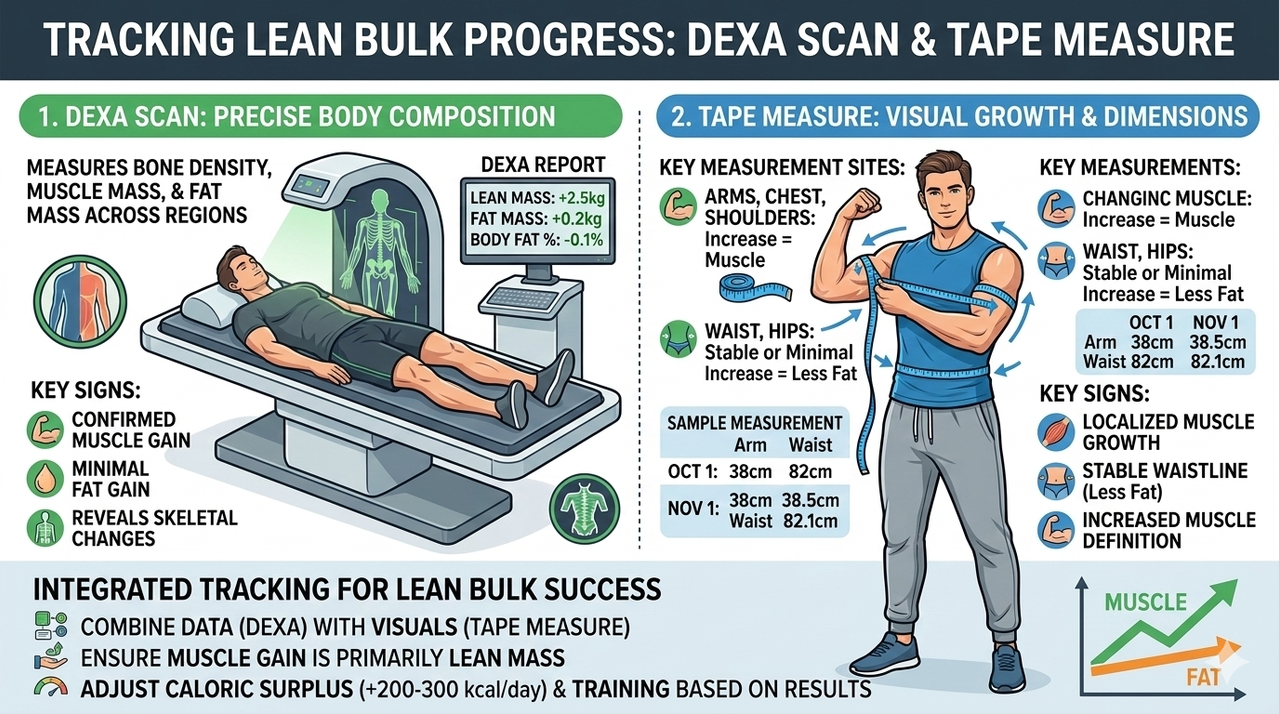
DEXA scans provide precise fat mass and lean mass data. Scan at baseline, week 6-8, and end of bulk . If fat gain outpaces lean gain, trim the surplus.
6.3. Measurements and Photos
- Take progress photos every 4-6 weeks in consistent lighting
- Measure waist, arms, and thighs monthly
- If waist expands faster than other areas, reduce surplus
7. Red Flags: Signs You're Gaining Too Much Fat
- Waist expanding rapidly: Measure waist weekly—if it's increasing faster than other areas, reduce surplus .
- Strength plateau or decline: If weight increases but gym performance stagnates, the extra weight is likely fat.
- Gaining >1 kg per week: This exceeds the recommended 0.25–0.5% rate .
- Clothes tight only around belly: If sleeves aren't tighter but waist is, adjust nutrition.
8. Is Lean Bulking Right for You?
8.1. Ideal Candidates
- People with average body composition who want to avoid fat gain
- Those who dislike traditional bulking/cutting cycles
- Individuals comfortable with slower, steady progress
- Anyone with body fat below 20% (men) or 30% (women)
8.2. When to Choose Traditional Bulking
- "Hard gainers" who struggle to gain any weight
- Advanced lifters who need larger surpluses to progress
- Those preparing for physique competitions (periodized approach)
9. Common Lean Bulking Mistakes
- Mistake #1: "See food" eating. Even a lean bulk requires precision—track your intake initially .
- Mistake #2: Ignoring protein distribution. Spread protein across 3-6 meals .
- Mistake #3: Expecting overnight results. Lean bulking is slower but more sustainable—trust the process .
- Mistake #4: Overtraining without recovery. Muscle grows during rest, not in the gym .
- Mistake #5: Relying on ultra-processed supplements. Whole foods should be your foundation .
11. Scientific References
- Women's Health UK. (2025). How to use 'maingaining' to add muscle without gaining body fat. Women's Health. View Source
- Sanchez, A.D., et al. (2024). A Randomized Trial of Healthy Weight Gain in Athletic Individuals. Medicine & Science in Sports & Exercise, 56(8), 1454-1466. View Source
- BodySpec. (2025). Lean Bulk Meal Plan: Templates, Macros & Grocery Lists. BodySpec Blog. View Source
- Men's Health Australia. (2024). Build muscle without packing on fat by 'maingaining'. Men's Health. View Source
- Liezl Jayne. (2025). Summer meal prep | 16 high protein meals in 1 hour. Liezl Jayne Blog. View Source
- Helms, E., et al. (2023). Comparison of 5% vs 15% caloric surplus on muscle hypertrophy in trained lifters. Sports Medicine-Open. (Referenced in )
- International Society of Sports Nutrition. (2025). Position Stand: Protein and Exercise. JISSN. (Referenced in )
- USDA Agricultural Research Service. (2025). FoodData Central. USDA.gov. View Source
- National Institute of Health. (2025). Body Weight Planner. NIH.gov. (Referenced in )
- Academy of Nutrition and Dietetics. (2025). Nutrition for Athletic Performance. eatright.org. (Referenced in )
All sources last accessed March 2026. Paraphrased for accessibility.
Join the conversation