How to Track Progress Without a Scale: Mirror vs Measurements
How to Track Progress Without a Scale: Mirror vs Measurements

⚖️ TL;DR
The scale is a liar. It cannot distinguish between muscle, fat, water, or the meal you just ate . That's why learning how to track progress without a scale is essential for anyone serious about body composition change. The two primary tools are the mirror (visual assessment) and tape measurements (anthropometry). Research shows that self-measured waist, hip, and neck circumferences are reliable when done correctly . For mirror tracking, take monthly progress photos in consistent lighting and angles—changes appear slowly, but photos don't lie. For measurements, follow the 2025 ISAK protocol: measure the same spots (waist at navel, hips at widest point) at the same time monthly . Combine these with performance metrics (strength gains) and non-scale victories (better sleep, more energy) for a complete picture . This guide provides exact protocols, printable trackers, and sample meal plans to keep you motivated.
1. The Scale Deception: Why Weight Fluctuates Daily
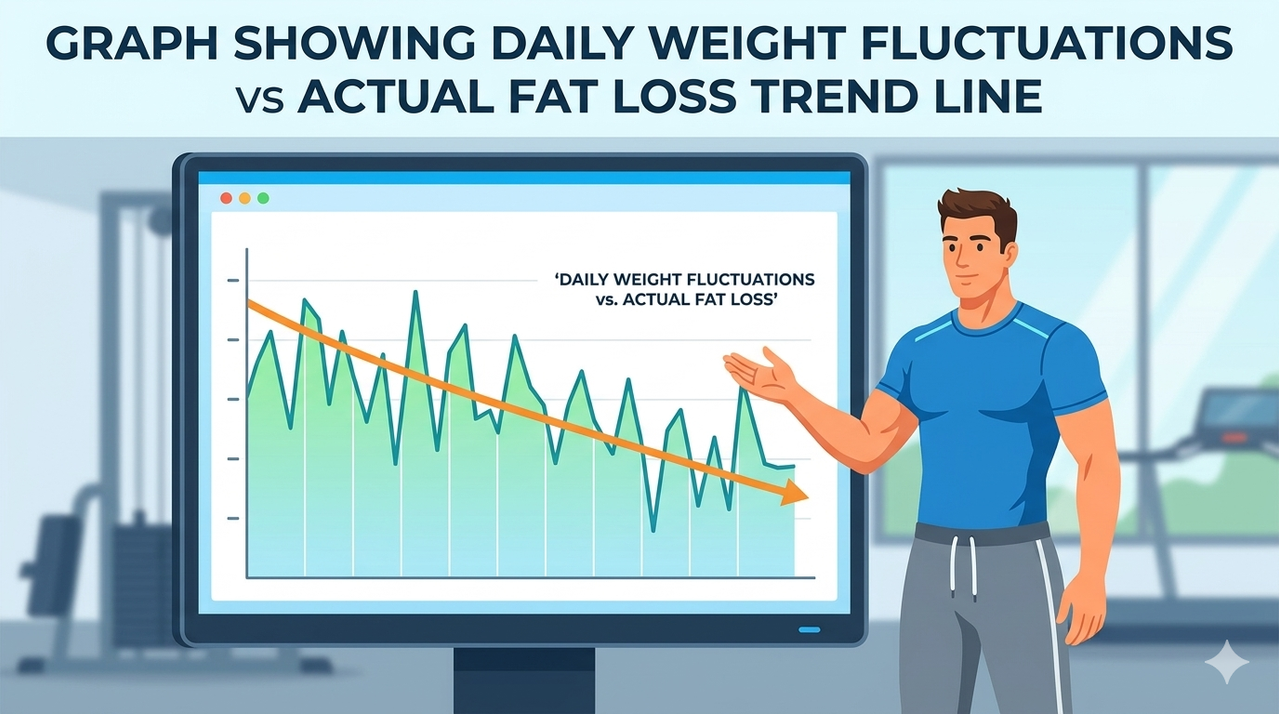
You step on the scale Monday morning: 180 lbs. Tuesday: 182 lbs. Wednesday: 179 lbs. Did you gain two pounds of fat overnight? Lose three pounds of muscle by Wednesday? Of course not. Yet this daily drama drives countless people to abandon their fitness goals.
Body weight can fluctuate by 2-4 pounds daily due to hydration, glycogen stores, sodium intake, and digestive contents . A 1993 study using whole-body calorimetry confirmed that weight changes don't linearly reflect fat loss or gain—during overfeeding, only 37% of weight gain was fat . The scale simply cannot tell you what you're losing or gaining. This is why how to track progress without a scale is a critical skill for anyone serious about changing their body composition.
2. The Mirror: Your Most Honest Coach
2.1. The Ankur Warikoo Philosophy: No Mirrors, No Scales
Entrepreneur Ankur Warikoo recently proposed a radical gym concept: a facility with no mirrors, no scales, and no trainers . Members work out alone, forced to find motivation from within. The lesson? "Consistent action and reflection matter more than instant rewards" . While Warikoo's approach emphasizes internal motivation, the mirror remains a powerful feedback tool when used correctly—not for instant validation, but for tracking long-term transformation .
2.2. The Progress Photo Protocol
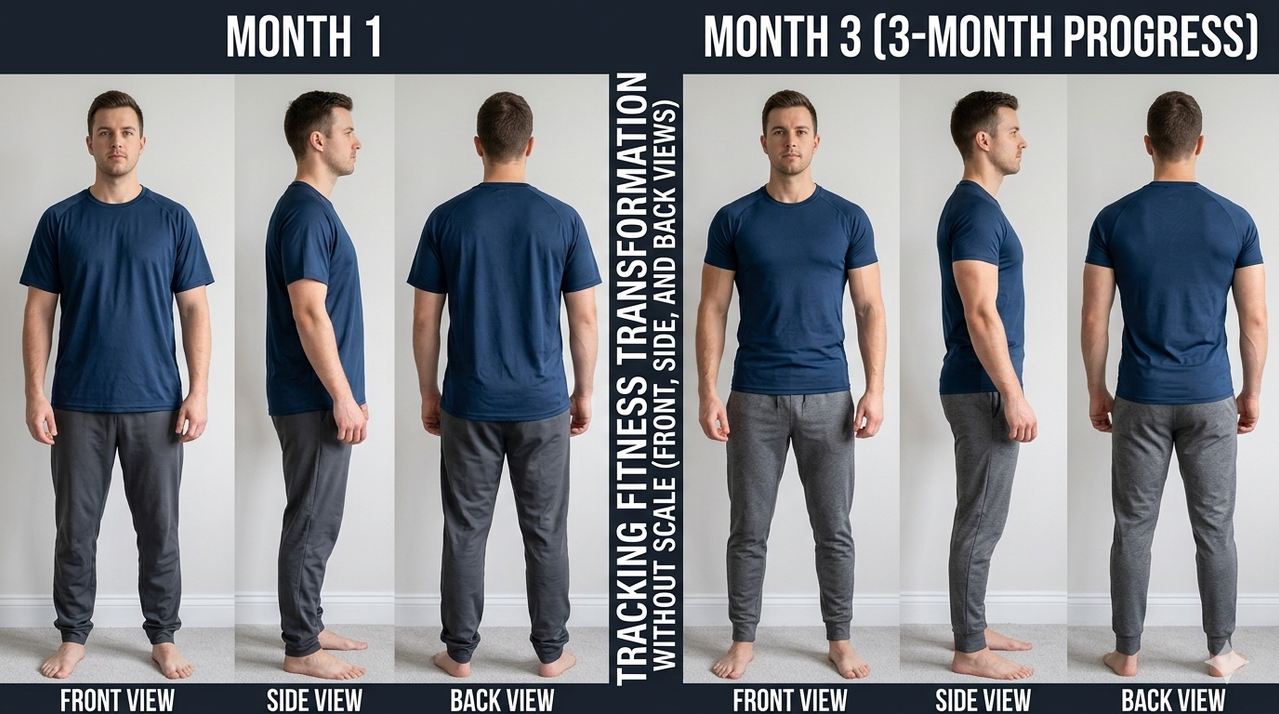
Research confirms that visual changes are one of the most reliable indicators of body composition shifts, often showing progress before the scale moves . Follow this evidence-based photo protocol:
- Frequency: Once every 4 weeks. Daily photos create obsession; monthly photos reveal trends .
- Consistency: Same time of day (morning, fasted), same location, same lighting, same clothing (minimal) .
- Angles: Front, side, and back. Stand naturally, not flexed or posed to hide problem areas.
- What to look for: Changes in waist definition, muscle striations, vascularity, and the way clothes fit over time .
As one fitness expert noted, "If you feel a positive change in intuitive markers, your mind is telling you that your efforts are nourishing your whole self" . The mirror, when combined with photos, becomes objective evidence.
3. Measurements: The Science of Tape
3.1. Why Tape Measurements Work
Tape measurements (anthropometry) are one of the oldest and most reliable methods for tracking body composition change . A 2016 study published in BMC Medical Research Methodology validated self-measured waist, hip, and neck circumferences, finding them reliable when standardized protocols are followed . The key insight: "Exact measurements are very important" . Unlike the scale, a tape measure can detect fat loss even when weight stays the same—because you're replacing fat with denser muscle .
3.2. The ISAK Protocol for Self-Measurement
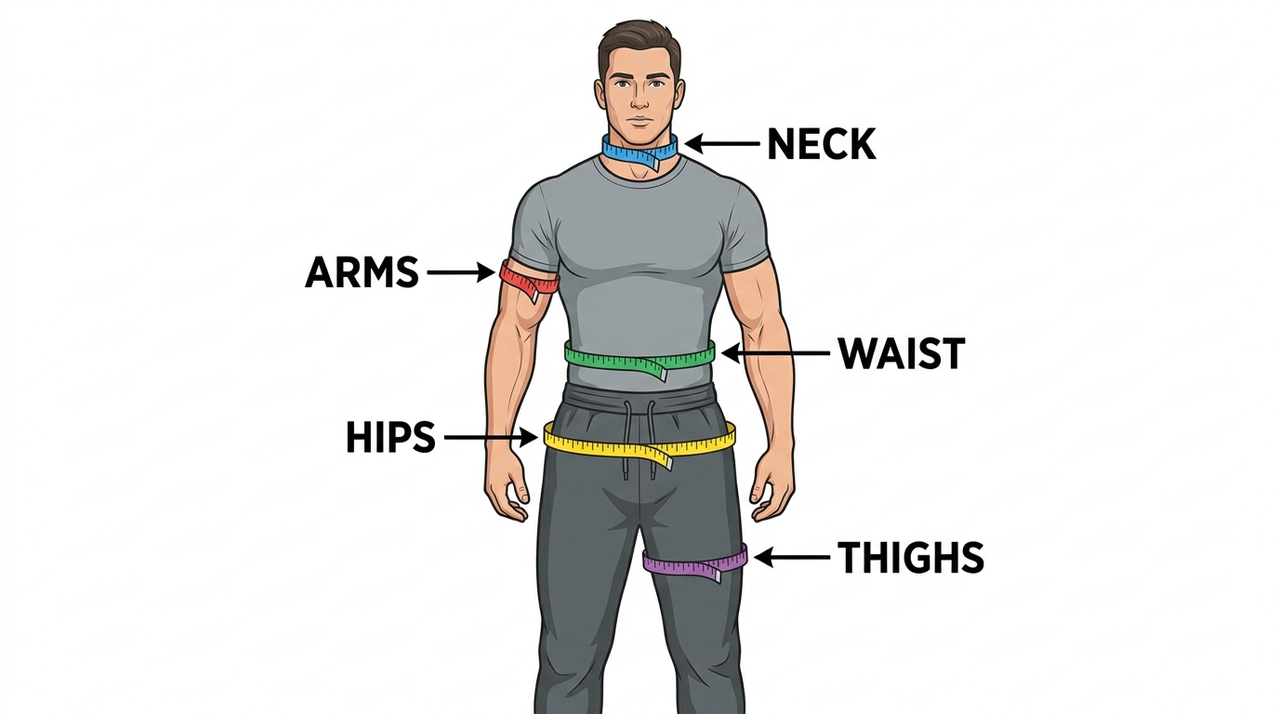
The International Society for the Advancement of Kinanthropometry (ISAK) provides the gold standard for measurements . Here's the simplified self-measurement protocol based on validated research :
- Waist: Measure at the level of the belly button. Remove clothing or wear tight-fitting clothing. Keep tape flat and snug against skin, not compressing. Inhale, then exhale normally; measure at the end of exhalation .
- Hips: Measure at the widest point around the buttocks (usually the greater trochanter). Keep tape horizontal .
- Neck: Measure just below the larynx (Adam's apple), at the narrowest point. Look straight ahead, shoulders relaxed .
- Arms: Measure at the midpoint between shoulder and elbow, arm hanging relaxed .
- Thighs: Measure at the midpoint between hip and knee, standing with weight evenly distributed .
Frequency: Measure every 4 weeks, at the same time of day (morning, before food/drink), and record immediately .
| Measurement Site | Location | Tape Position |
|---|---|---|
| Waist | At navel level | Snug, after normal exhale |
| Hips | Widest point (buttocks) | Horizontal, snug |
| Neck | Below larynx | Just below Adam's apple |
| Upper Arm | Midpoint (shoulder to elbow) | Arm relaxed, hanging |
| Thigh | Midpoint (hip to knee) | Standing, weight distributed |
4. Performance: The Ultimate Validation
4.1. Strength Gains = Muscle Gains
If you're getting stronger, you're building muscle—regardless of what the scale says. A MyFitnessPal community discussion on lean bulking highlighted that experienced lifters prioritize performance metrics over weight . One user noted: "I track progression or regression of my accumulated volume, trends of my lifts, and my recovery and stress level" .
4.2. Volume Tracking (Tonnage)
Track your total volume (weight × sets × reps) for key lifts. This is called "tonnage." A consistent increase in tonnage over time proves muscle growth, even if the scale hasn't moved . For example:
- Week 1: Bench press 100 lbs × 3 sets × 8 reps = 2,400 lbs total volume.
- Week 4: Bench press 105 lbs × 3 sets × 8 reps = 2,520 lbs total volume (+5% strength).
That 5% strength increase reflects neurological adaptation and, over time, muscle fiber growth .
4.3. Recovery Metrics
How fast you recover between sets and between workouts is another progress indicator. If you're able to add weight or reps while maintaining recovery, you're making gains . Track resting heart rate, sleep quality, and subjective energy levels as additional performance proxies .
5. Non-Scale Victories: The Wins That Matter
5.1. What Are NSVs?
Non-scale victories (NSVs) are the positive changes that have nothing to do with weight . The Obesity Action Coalition lists examples like: "More energy throughout the day, improved sleep, better mood or mental clarity, increased stamina, and clothes fitting differently" . These are often the first signs that your health is improving .
5.2. How to Track NSVs
Create a simple "micro-win journal" . A few times a week, jot down one thing you did well and one way you felt better . Examples:
- "Walked up two flights of stairs without getting winded."
- "Slept through the night for the first time in months."
- "Chose a salad over fast food without feeling deprived."
- "Recovered faster after yesterday's leg workout."
This practice shifts focus from what the scale says to what your body can actually do .
Weekly NSV Tracker
- Energy: Rate 1-10 daily; look for upward trend.
- Sleep: Hours and quality rating.
- Mood: Note any improvements in stress resilience.
- Clothes: How do your favorite jeans fit?
- Performance: One strength or cardio win.
6. Technology: InBody, DEXA, and Smart Scales
6.1. InBody and BIA Devices
Bioelectrical Impedance Analysis (BIA) devices like InBody scales estimate body fat percentage and muscle mass. However, accuracy varies. Dr. Nanthini Dhevi notes that InBody machines have an error of around 5-7% and are highly dependent on hydration . "Better way with accuracy near to MRI and DEXA scan is by using US Army formula or you can add your measurements in FITTR app to calculate," she advises .
6.2. DEXA Scans: The Gold Standard
Dual-energy X-ray absorptiometry (DEXA) is the current gold standard for body composition assessment . It provides precise measures of fat mass, lean mass, and bone density . However, it's expensive and not practical for frequent tracking. A 2025 review noted that while DEXA is robust, it has operational limitations for routine monitoring .
6.3. The Best Approach: Combine Methods
Shannon Jarvis, Director of MB360 at Life Time, recommends using both data-based and intuitive methods . "The data can inform you while your direct experiences and feelings can help guide you" . Use monthly InBody or tape measurements for data, and daily NSV tracking for intuition .
7. Sample Meal Plan to Support Visible Progress
This 2200-calorie meal plan is designed to support fat loss while preserving muscle—so your mirror and measurement progress accelerates.
Breakfast (8 AM) – 450 kcal
- 3 eggs (scrambled) with spinach
- 1 slice whole-grain toast
- 1 cup mixed berries
Lunch (1 PM) – 550 kcal
- 150g grilled chicken breast
- 2 cups mixed greens with 1 tbsp olive oil vinaigrette
- ½ cup quinoa
Snack (4 PM) – 200 kcal
- 1 apple
- 1 tbsp almond butter
Dinner (7 PM) – 600 kcal
- 150g salmon
- 1 cup roasted broccoli
- 1 medium sweet potato with 1 tsp butter
Evening Snack (9 PM) – 150 kcal (optional)
- 1 cup Greek yogurt (plain, non-fat)
Total: ~2,200 kcal, ~150g protein, ~50g fat, ~220g carbs
7.1. Vegan/Vegetarian Adjustments
- Replace chicken/salmon with 200g firm tofu or tempeh.
- Use pea protein powder in smoothies if needed.
- Add ½ cup lentils or chickpeas to lunch salad.
- Evening snack: 1 cup soy yogurt.
8. Common Progress-Tracking Mistakes
- Mistake #1: Daily measurements. Measuring waist or weight daily reveals noise, not trend. Stick to monthly .
- Mistake #2: Inconsistent photo conditions. Different lighting, time of day, or clothing makes photos useless .
- Mistake #3: Ignoring how clothes fit. Your favorite jeans are an excellent, honest tracking tool .
- Mistake #4: Obsessing over one metric. Combine mirror, measurements, performance, and NSVs for the full picture .
- Mistake #5: Not celebrating NSVs. Progress is happening even when the tape doesn't move—acknowledge it .
10. Scientific References
- The Economic Times. (2026). Ankur Warikoo's 'new gym' idea teaches a life lesson. economictimes.com. View Source
- Hume, P. A. (2024). Assessing and changing body composition. Taylor & Francis. View Source
- Sworkit Health. (2026). Tracking Micro-Wins: How to Measure Progress Without Obsessing Over Numbers. sworkit.com. View Source
- BMC Medical Research Methodology. (2016). Reliability and criterion validity of self-measured waist, hip, and neck circumferences. Springer. View Source
- MyFitnessPal Community. (2019). Tracking lean bulk - scale or lift progression. community.myfitnesspal.com. View Source
- CORE. (1993). In vivo measurement of changes in body composition. core.ac.uk. View Source
- Experience Life. (2026). 5 Ways to Track Fitness Progress — Without a Traditional Scale. experiencelife.lifetime.life. View Source
- LinkedIn. (2023). Dr.Nanthini Dhevi: Inbody analysis machines are not accurate. linkedin.com. View Source
- Aminogram. (2025). Body composition methods: an integrative view for modern clinical practice. aminogram.com. View Source
- Your Weight Matters. (2025). How to Measure Progress Beyond the Scale. yourweightmatters.org. View Source
Join the conversation