How to Use Fiber to Stay Full During a Calorie Deficit
How to Use Fiber to Stay Full During a Calorie Deficit

🥗 TL;DR
Hunger is the #1 reason diets fail. But how to use fiber to stay full during a calorie deficit is a science-backed strategy that changes the game. Fiber stimulates satiety hormones (GLP-1, PYY) and slows digestion, keeping you fuller for longer . The target: 25-35g daily (or 14g per 1,000 calories) . Prioritize both soluble fiber (oats, beans, apples) to form a gel that blunts hunger, and insoluble fiber (veggies, whole grains) for bulk and regularity . A 2025 study confirmed rye and oat fibers are particularly effective for appetite control . This guide provides the exact foods, sample 1500-calorie meal plans, vegan options, and practical tips to hit your fiber goals without bloating.
1. The Hunger Problem: Why Deficits Fail
You've done the math. You've set your calories at a perfect deficit—500 below maintenance. You're ready to shed fat. Then hunger hits. By 3 p.m., you're raiding the snack drawer. By evening, willpower is gone, and the deficit is blown.
This isn't a lack of discipline; it's a lack of strategy. The most effective solution isn't sheer willpower—it's understanding how to use fiber to stay full during a calorie deficit. Fiber is the only macronutrient that actively fights hunger by triggering hormonal signals, slowing stomach emptying, and adding bulk to every meal . A 2026 study in *Nutrition Reviews* confirmed that higher cereal fiber intake (especially from rye and oats) has "positive effects on satiety measures" . This guide will teach you to weaponize fiber against hunger.
2. The Science: How Fiber Kills Hunger
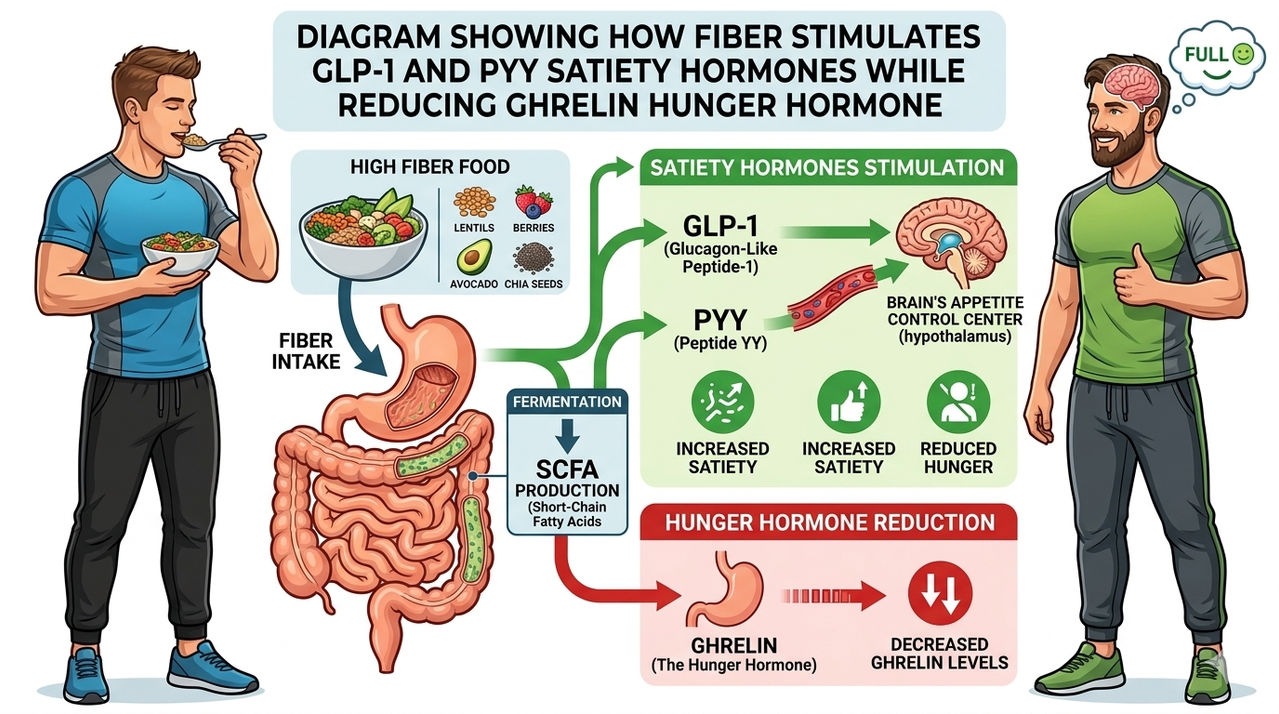
2.1. Satiety Hormones: GLP-1 and PYY
When you eat fermentable fiber (from foods like beans, oats, and berries), your gut bacteria break it down into short-chain fatty acids. These compounds stimulate the release of satiety hormones—GLP-1 and PYY—which signal your brain that you're full . A Swedish study found that people who ate beans for supper had higher PYY and lower ghrelin (the hunger hormone) the next morning, reducing food intake at lunch by about 100 calories .
2.2. Gastric Emptying and the "Gel" Effect
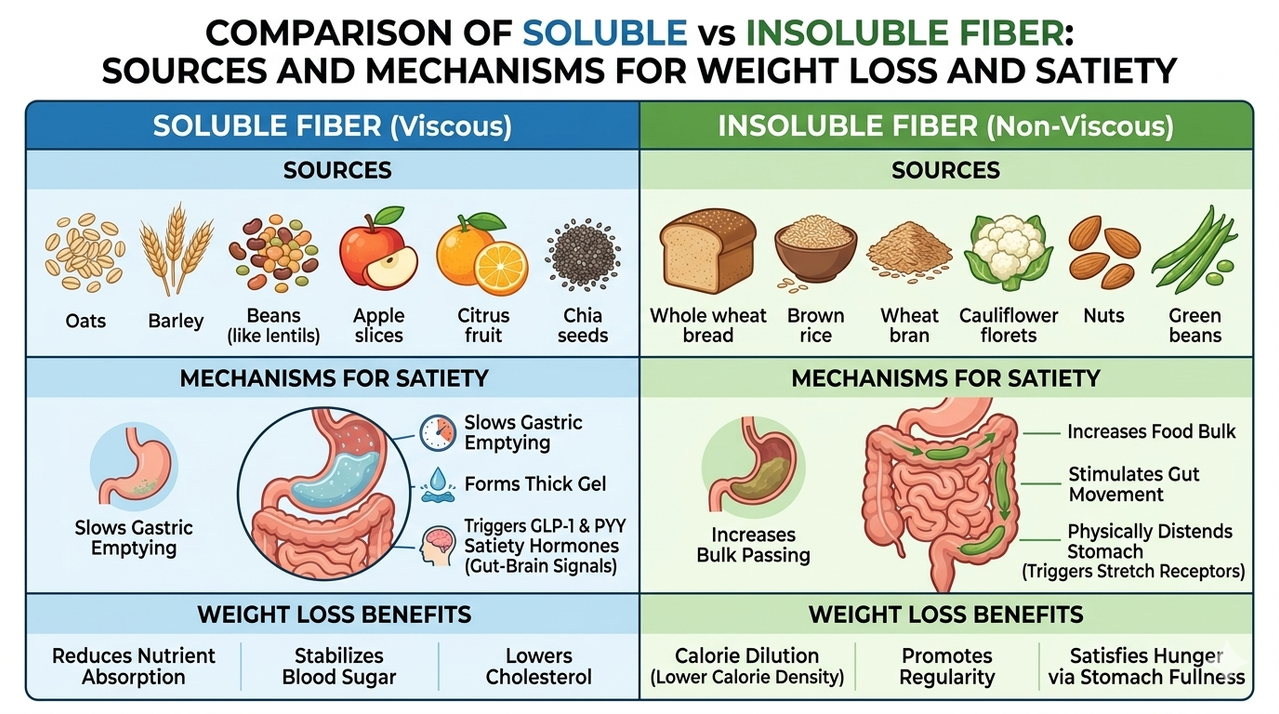
Soluble fiber (found in oats, apples, and psyllium) forms a gel-like substance in your stomach. This physical property slows gastric emptying, meaning food stays in your stomach longer, and you feel full for hours after eating . It also blunts blood sugar spikes, preventing the crashes that trigger cravings .
2.3. Bulk and Chewing
Insoluble fiber (from vegetables, bran, and nuts) doesn't dissolve. Instead, it adds bulk to food and requires more chewing. This mechanical action gives your brain time to register fullness and physically stretches the stomach, activating stretch receptors that signal satiety .
3. How Much Fiber Do You Really Need?
3.1. The Daily Targets
The USDA recommends 14 grams of fiber per 1,000 calories consumed . For most adults in a calorie deficit, that translates to:
- Women: 25–28 grams per day .
- Men: 30–38 grams per day .
Shockingly, 97% of men and 90% of women fail to meet these targets . If you're in a deficit, hitting these numbers is non-negotiable for hunger control.
3.2. The Fiber-Per-Meal Rule
Dietitian Keri Gans recommends aiming for at least 8 grams of fiber per meal . This ensures even distribution throughout the day, preventing energy crashes and between-meal hunger.
| Meal | Sample Foods | Fiber (g) |
|---|---|---|
| Breakfast | 1 cup oatmeal + ½ cup raspberries | ~10g |
| Lunch | Lentil soup (1 cup lentils) + salad | ~15g |
| Dinner | Grilled chicken + 1 cup broccoli + ½ avocado | ~10g |
| Snack | 1 pear + 1 tbsp chia seeds | ~8g |
4. Top 10 Fiber-Packed Foods for Satiety
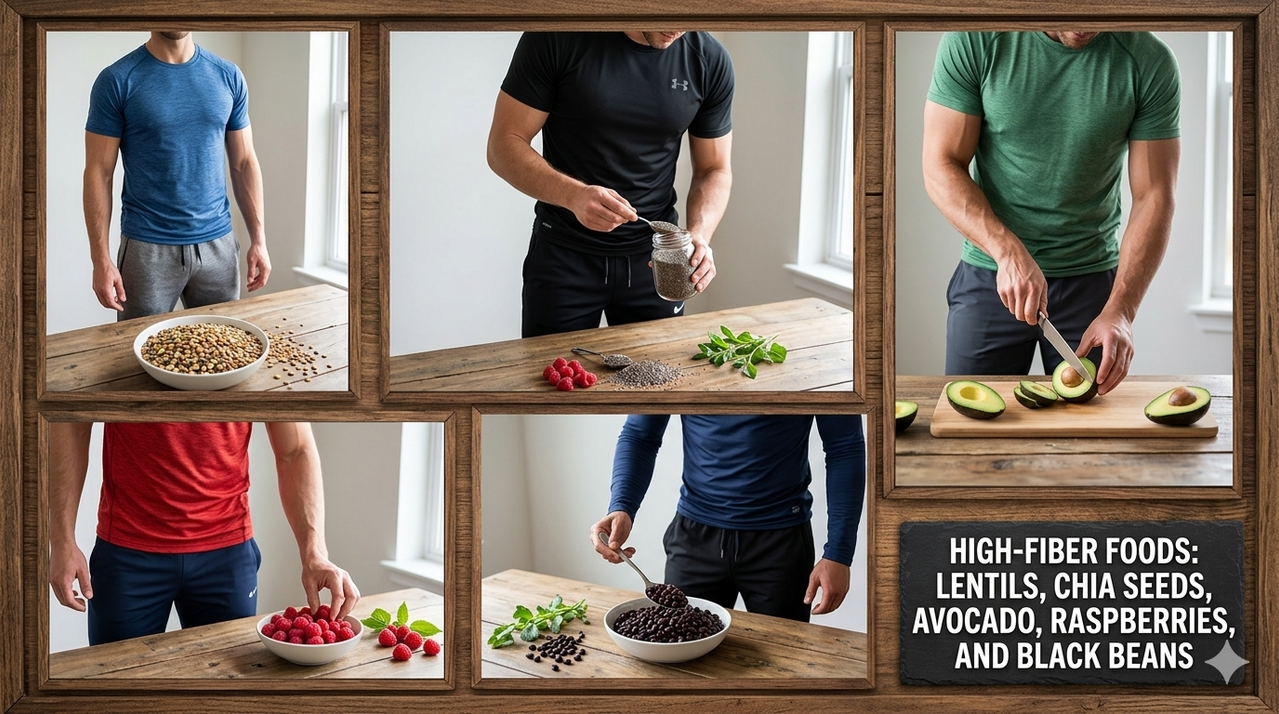
Here are the highest-fiber foods, ranked by grams per serving, with preparation tips .
- 1. Lentils (cooked): 15.6g per cup Soluble Insoluble — Add to soups, salads, or roast for a crunchy snack .
- 2. Avocado: 13.5g per whole fruit Soluble — Use as a sandwich spread or salad topper .
- 3. Chia Seeds: 9.75g per ounce Soluble — Make chia pudding or sprinkle on yogurt .
- 4. Black Beans (cooked): 15g per cup Soluble Insoluble — Add to tacos, soups, or blend into brownies .
- 5. Raspberries: 8g per cup Soluble — Top oatmeal or blend into smoothies .
- 6. Oat Groats (dry): 5g per ¼ cup Soluble — Cook as porridge; chewier and higher fiber than rolled oats .
- 7. Edamame (cooked): 8g per cup Insoluble — Snack on steamed edamame or add to salads .
- 8. Flaxseeds: 5.6g per tablespoon Soluble — Grind and add to smoothies or oatmeal .
- 9. Brussels Sprouts (cooked): 4g per cup Insoluble — Roast with olive oil and garlic .
- 10. Blackberries: 7.6g per cup Soluble — Eat fresh or frozen in smoothies .
5. Sample 1500-Calorie High-Fiber Meal Plan
This plan provides ~35g of fiber, perfectly distributed across the day.
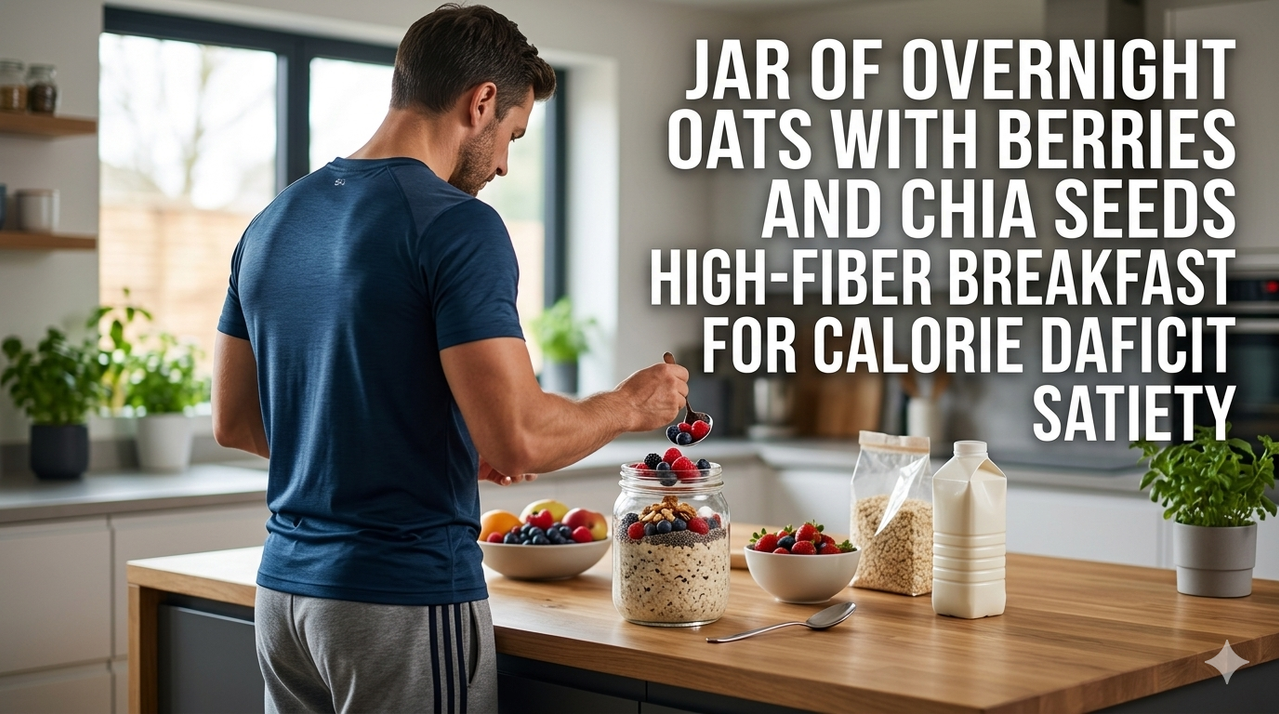
Breakfast (8 AM) – 350 kcal | 12g fiber
- 1 cup cooked oatmeal (4g fiber)
- ½ cup raspberries (4g fiber)
- 1 tbsp chia seeds (4g fiber)
- 1 scoop protein powder (optional, for protein)
Lunch (1 PM) – 400 kcal | 15g fiber
- 1.5 cups lentil soup (homemade: ¾ cup lentils + veggies) (12g fiber)
- Side salad: 2 cups spinach + ½ avocado (3g fiber)
- Dressing: 1 tbsp olive oil + lemon
Snack (4 PM) – 150 kcal | 6g fiber
- 1 medium pear (6g fiber)
- Handful of almonds (optional, for healthy fats)
Dinner (7 PM) – 600 kcal | 8g fiber
- 150g grilled chicken breast or tofu
- 1 cup roasted Brussels sprouts (4g fiber)
- ½ cup cooked quinoa (2.5g fiber)
- 1 tbsp olive oil for roasting
Total: ~1,500 kcal, ~41g fiber, ~120g protein
5.1. Vegan/Vegetarian Adjustments
- Replace chicken with 200g firm tofu or tempeh.
- Use pea protein powder in oatmeal.
- Add ½ cup edamame to lunch salad for extra protein and fiber.
- Evening snack: 1 cup edamame pods (8g fiber, 18g protein) .
6. Practical Tips: How to Add Fiber Without the Bloat
6.1. The "Slow and Steady" Rule
If you're currently eating 15g of fiber daily, jumping to 40g overnight will cause gas, bloating, and discomfort. Increase gradually—add 3-5g per day each week . Let your gut microbiome adapt.
6.2. Hydration is Non-Negotiable
Fiber acts like a sponge. Without adequate water, it can cause constipation. Aim for 8-10 cups of water daily when increasing fiber .
6.3. Distribution Matters
Spread fiber across all meals. A massive fiber load at dinner will cause discomfort, while steady distribution throughout the day maintains stable energy and fullness .
6.4. Prioritize Whole Foods Over Supplements
While fiber supplements (psyllium, inulin) can help, whole foods provide additional nutrients and phytochemicals. A 2022 meta-analysis found fiber supplements led to modest weight loss (~2.5 lbs), but whole foods are superior .
7. The 2025/2026 Research: Rye and Oats Win
7.1. The Cereal Fiber Review
A systematic review published in Nutrition Reviews (January 2026) analyzed 48 studies on cereal fibers and appetite . Key findings:
- Rye and oat fibers showed "superior effects on appetite" compared to controls.
- Wheat and barley fibers showed weaker effects on appetite sensations.
- Fiber intake was associated with favorable satiety outcomes, though effects on actual calorie intake at next meal were limited .
Takeaway: Prioritize oats, oat bran, rye bread, and rye crackers for the strongest hunger-suppressing effects.
7.2. The Bean Effect
Research highlighted by NutritionFacts.org showed that beans eaten at supper reduce hunger the next morning via gut bacteria fermentation . This "second-meal effect" means fiber pays dividends beyond the immediate meal.
8. Common Fiber Mistakes That Sabotage Your Deficit
- Mistake #1: Relying on "Fiber-Fortified" Processed Foods. Many protein bars and cereals add isolated fibers (inulin, chicory root) that can cause bloating without the same satiety benefits as whole foods .
- Mistake #2: Not Drinking Enough Water. Fiber without water = constipation and discomfort. Always pair fiber increase with hydration .
- Mistake #3: Ignoring Soluble Fiber. Many focus only on bran and vegetables (insoluble), missing the gel-forming, appetite-suppressing power of soluble fiber from oats, beans, and avocados .
- Mistake #4: Adding Too Much Too Fast. This leads to gas and bloating, causing many to abandon fiber altogether. Go slow .
- Mistake #5: Only Counting Calories. Two 400-calorie meals can have wildly different satiety based on fiber content. Prioritize fiber-rich choices over calorie-matched processed options .
10. Scientific References
- Health.com. (2026). 5 Nutrition Habits Dietitians Say Matter More Than How Many Calories You Eat. Health.com. View Source
- Health.com. (2025). Top 10 Fiber-Packed Foods Nutritionists Swear By for Lasting Weight Loss. Health.com. View Source
- MSD Manuals. (2026). Table: Comparing Soluble and Insoluble Fiber. MSD Manual Consumer Version. View Source
- Women's Health. (2025). Here's Exactly How Much Fiber Per Day To Eat For Weight Loss. Womenshealthmag.com. View Source
- Machalias, A., et al. (2026). Cereal Fibers and Satiety: A Systematic Review. Nutrition Reviews, 84(1), 47-68. PubMed
- NutritionFacts.org. (2026). One of the Most Effective Single Pieces of Advice for Weight Loss. NutritionFacts.org. View Source
- Health.com. (2025). 10 High-Fiber Foods for Weight Loss, Backed by Nutritionists. Health.com. View Source
- Hilton Head Health. (2025). The role of fiber in weight loss and gut health. hhhealth.com. View Source
- UNC Health Talk. (2026). How Much Fiber Do You Need? unchealthcare.org. View Source
- Dayib, M., et al. (2020). Dietary fibers reduce obesity-related disorders: mechanisms of action. Current Opinion in Clinical Nutrition and Metabolic Care, 23(6), 445-450. PubMed
Join the conversation