Knee-Friendly Leg Workouts for Beginners with Joint Pain
Knee-Friendly Leg Workouts for Beginners with Joint Pain

📋 TL;DR
Knee pain doesn't have to mean the end of leg day. By understanding basic knee biomechanics and focusing on exercises that minimize compressive and shear forces, you can strengthen your legs safely . Research from the Hospital for Special Surgery (HSS) emphasizes that for beginners, knee-friendly leg workouts for beginners with joint pain should prioritize form, controlled range of motion, and low-impact movements . The key is to strengthen the muscles around the knee (quadriceps, hamstrings, glutes) to provide better joint support. This guide provides a complete beginner's routine, exercise modifications, and nutrition strategies to reduce inflammation and support joint health.
1. Why Knee Pain Doesn't Mean No Leg Day
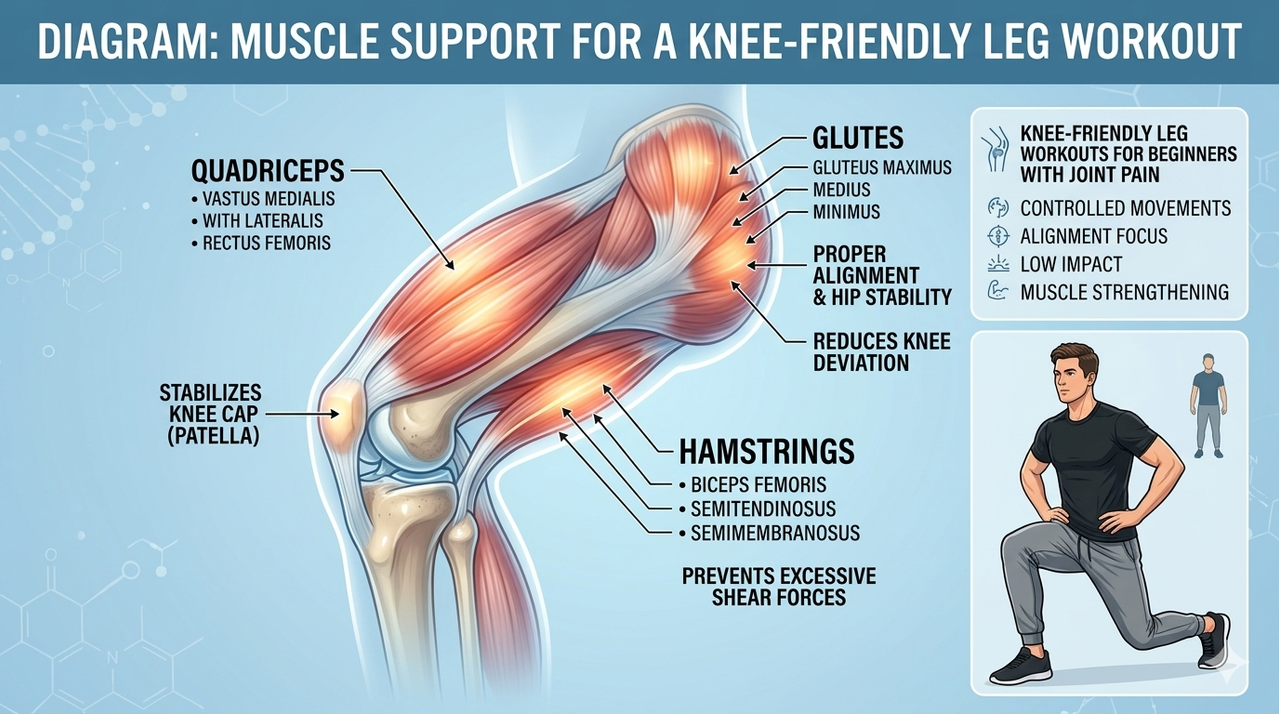
If you have knee pain, the thought of squats or lunges might make you wince. You might be tempted to skip leg day altogether. But that's often the worst thing you can do. Your knees rely on the surrounding muscles—your quads, hamstrings, and glutes—for stability and support, which is why knee-friendly leg workouts for beginners with joint pain are so important . When these muscles are weak, the knee joint bears more stress .
Research from leading orthopedic institutions confirms that appropriate strengthening exercises can reduce knee pain, improve function, and prevent future injury . The key is knowing which exercises are safe and how to perform them correctly. This guide provides knee-friendly leg workouts for beginners with joint pain, designed by physical therapists and sports medicine experts.
2. The Science: Knee Biomechanics for Beginners
2.1. The Knee's Role in Movement
The knee is a hinge joint, designed primarily for flexion (bending) and extension (straightening). It's stabilized by ligaments and powered by the muscles of the thigh and hip, a key concept for knee-friendly leg workouts for beginners with joint pain . The patella (kneecap) acts as a pulley, increasing the force your quadriceps can generate .
2.2. What Makes an Exercise "Knee-Friendly"?
Safe exercises for beginners with joint pain share common characteristics, central to knee-friendly leg workouts for beginners with joint pain :
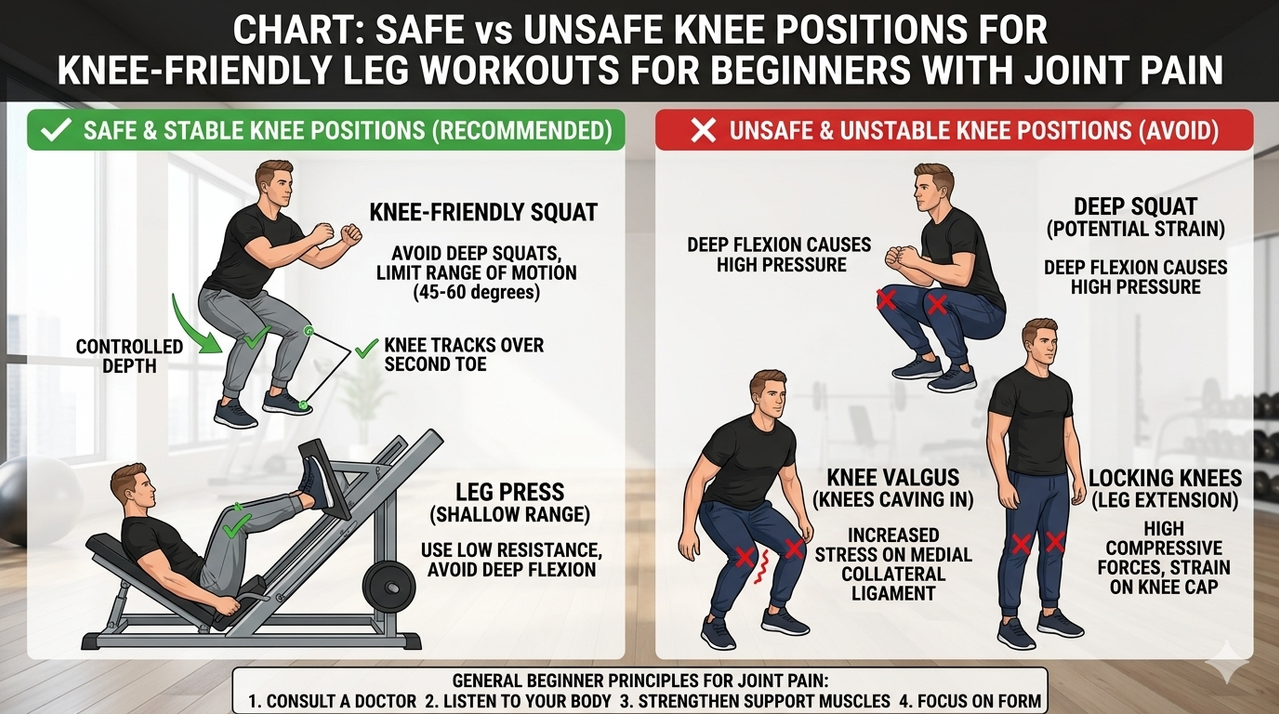
- Controlled range of motion (ROM): Avoiding end-range flexion (deep squats) where compressive forces are highest .
- Minimized shear forces: Keeping the knee aligned over the foot, preventing it from caving inward (valgus collapse) .
- Low-impact movements: Exercises where at least one foot remains in contact with the ground (or equipment), reducing jarring forces .
- Glute and core engagement: Strong glutes prevent the femur from rotating internally, a common cause of knee pain .
2.3. Research on Exercise for Knee Osteoarthritis and Patellofemoral Pain
Numerous studies confirm the benefits of specific exercises for knee conditions. A 2015 review of 27 studies found strong evidence that strengthening exercises, particularly those targeting the quadriceps, significantly reduce pain and improve function in people with patellofemoral pain syndrome . The Hospital for Special Surgery (HSS) provides a detailed beginner's guide emphasizing the importance of form, warm-up, and progression .
3. The 7 Best Knee-Friendly Leg Exercises
These exercises are selected based on recommendations from the Hospital for Special Surgery and other orthopedic sources, forming the core of knee-friendly leg workouts for beginners with joint pain. Perform them 2-3 times per week on non-consecutive days.
3.1. The Routine
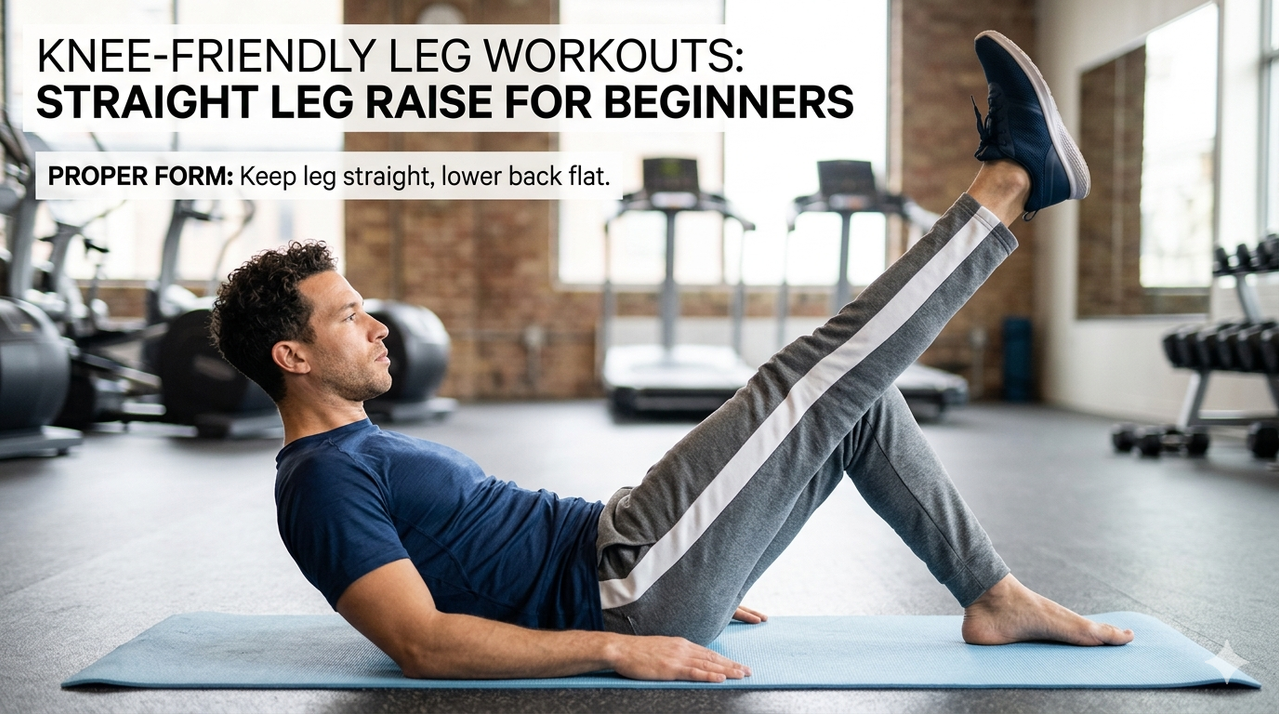
1. Straight Leg Raises
Beginner EssentialTarget: Quadriceps, hip flexors .
How to do it: Lie on your back with one leg bent and the other straight. Tighten your quad on the straight leg and lift it to the height of the opposite knee. Hold for 2-3 seconds, then lower slowly .
Key cue: Keep your lower back pressed into the floor.
2. Glute Bridges
Glute ActivatorTarget: Glutes, hamstrings, core .
How to do it: Lie on your back with knees bent, feet flat. Lift your hips toward the ceiling, squeezing glutes at the top. Hold for 2 seconds, then lower .
Key cue: Don't overarch your lower back; drive through your heels .
3. Seated Hamstring Curls (with Resistance Band)
Low ImpactTarget: Hamstrings .
How to do it: Sit on a chair, anchor a resistance band to a low point in front, and hook the other end around your ankle. Pull your heel toward the chair, bending your knee .
Progression: Increase band resistance as you get stronger.
4. Wall Sits
Isometric StrengthTarget: Quadriceps, glutes .
How to do it: Lean against a wall with feet shoulder-width, about 2 feet from the wall. Slide down until knees are at a comfortable angle (avoiding sharp pain). Hold .
Safety: Stop if you feel sharp knee pain.
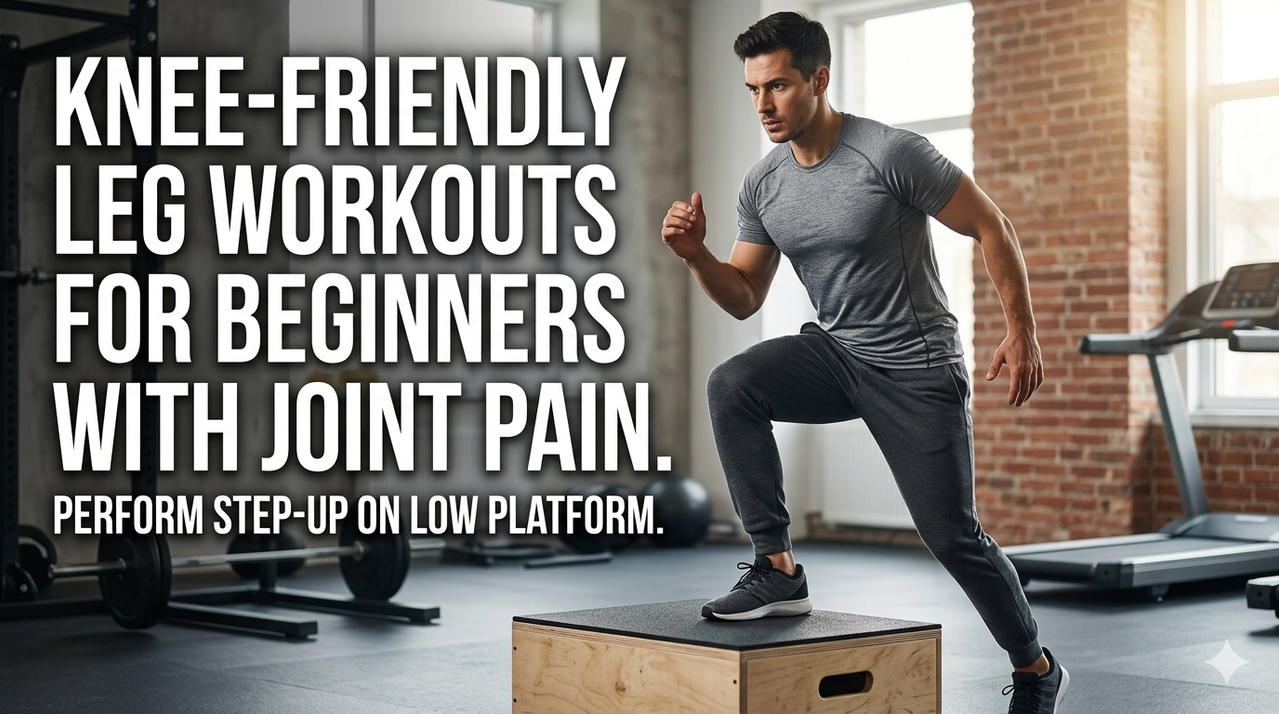
5. Step-Ups (Low Platform)
FunctionalTarget: Quads, glutes .
How to do it: Use a low platform (4-6 inches). Step up with one leg, then bring the other up. Step down with the same leg. Keep the step low to avoid excessive knee bend .
Key cue: Push through your heel, not your toes.
6. Clamshells
Hip StabilityTarget: Gluteus medius (hip abductors) .
How to do it: Lie on your side with knees bent at 45 degrees. Keeping feet together, lift your top knee without rotating your hips. Hold, then lower .
Why it helps knees: Strong glutes prevent the knee from collapsing inward during movement .
7. Seated Knee Extensions (Short Arc)
Quad FocusTarget: Quadriceps .
How to do it: Sit on a chair with a rolled towel under your knee to keep it slightly bent. Straighten your leg fully, hold for 2 seconds, then lower .
4. Sample Beginner Workout (No Pain, All Gain)
Perform 2-3 rounds of this circuit, with 30-45 seconds rest between exercises, as part of knee-friendly leg workouts for beginners with joint pain.
- Straight Leg Raises: 10-12 reps per leg
- Glute Bridges: 12-15 reps
- Seated Hamstring Curls (band): 12-15 reps per leg
- Clamshells: 12-15 reps per side
- Wall Sit: 15-30 second hold
- Cool-down: Gentle quad and hamstring stretches (avoid overstretching)
5. Nutrition: Fueling Joint Health and Muscle Repair
5.1. Anti-Inflammatory Foods
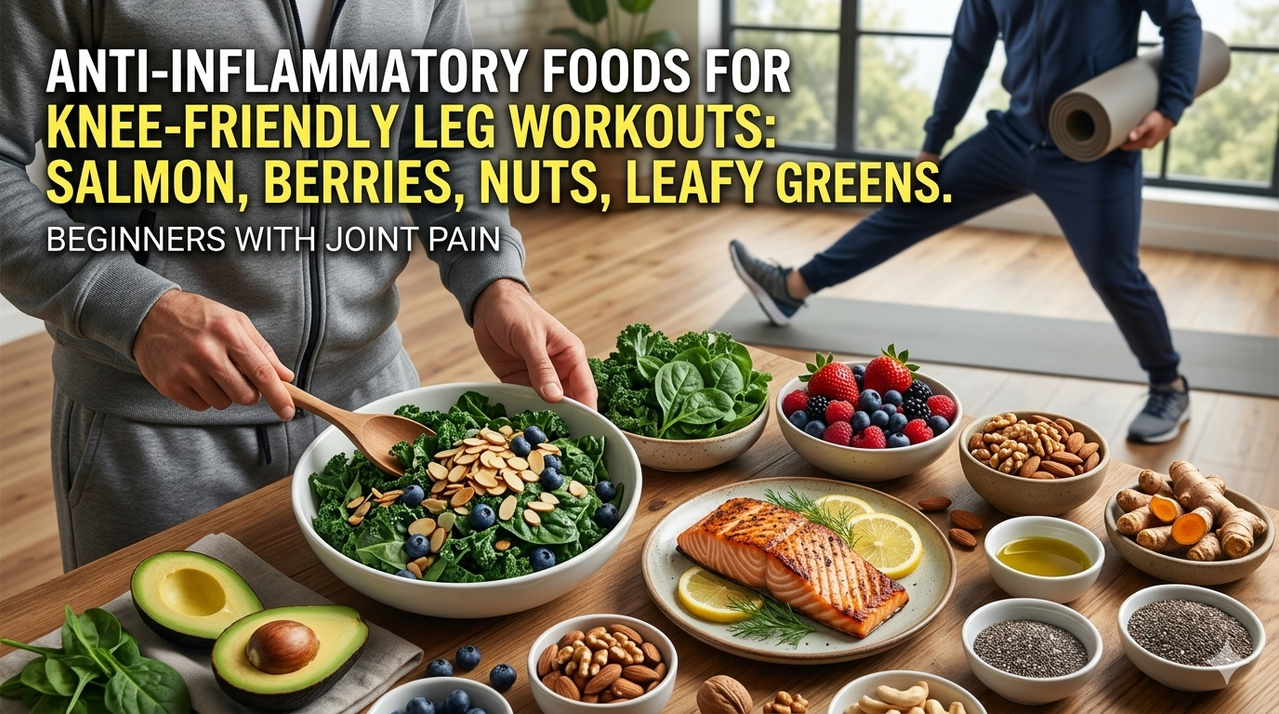
Chronic inflammation can worsen joint pain. Including anti-inflammatory foods in your diet supports both muscle recovery and joint comfort, essential for knee-friendly leg workouts for beginners with joint pain .
- Fatty fish: Salmon, mackerel, sardines (rich in omega-3s EPA/DHA) .
- Fruits and vegetables: Berries, cherries, oranges, leafy greens (antioxidants) .
- Healthy fats: Olive oil, avocados, nuts .
- Spices: Turmeric and ginger have natural anti-inflammatory properties .
5.2. Protein for Muscle Repair
To build and repair muscle, aim for 1.2–1.6 g per kg of body weight for beginners or those with joint pain, as muscle support is crucial for joint stability .
5.3. Sample Anti-Inflammatory Day (~2000 kcal, 120g protein)
- Breakfast: Oatmeal with 1 cup mixed berries, 1 tbsp chia seeds, and 1 scoop protein powder → 25g protein
- Lunch: Large salad with 150g grilled salmon (30g), mixed greens, cucumber, bell peppers, and olive oil vinaigrette → 30g protein
- Snack: 1 cup Greek yogurt (20g) + ½ cup blueberries → 20g protein
- Dinner: 150g chicken breast (35g) + 1 cup roasted broccoli + ½ cup quinoa (4g) + turmeric-seasoned sweet potato → 39g protein
- Evening (optional): Tart cherry juice (anti-inflammatory)
- Total: ~114g protein
5.4. Vegan Options for Joint Health
- Protein: Tofu, tempeh, lentils, chickpeas, edamame
- Omega-3s: Flaxseeds, chia seeds, hemp seeds, walnuts, algae oil
- Anti-inflammatory: Berries, turmeric, ginger, green tea
- Sample vegan day: Tofu scramble breakfast, lentil soup with turmeric for lunch, edamame snack, tempeh stir-fry with ginger for dinner
6. Exercises to Avoid (or Modify) with Knee Pain
These exercises place high stress on the knee joint and may exacerbate pain for beginners, so they are not part of knee-friendly leg workouts for beginners with joint pain .
- Deep squats (especially weighted): High compressive forces on the patella .
- Lunges with long strides: Can place excessive shear force on the knee .
- Leg extensions with heavy weight: High shear forces at the patellofemoral joint .
- Plyometrics (jumping): High impact loads.
- Deep knee bends (like the "ass to grass" squat): Increases stress on ligaments and cartilage .
Modification strategy: Reduce range of motion, decrease weight, or choose an alternative exercise from the list above.
7. When to See a Professional
While these exercises are designed to be safe, they are not a substitute for professional medical advice. Consult a physical therapist or sports medicine doctor if you experience :
- Sharp, stabbing pain during exercise
- Swelling, warmth, or redness around the knee
- Knee buckling or giving way
- Pain that persists for more than 2 weeks despite rest
- Inability to bear weight on the affected leg
A professional can diagnose the underlying cause of your pain (e.g., patellofemoral syndrome, IT band syndrome, meniscus issues) and create a personalized rehabilitation plan .
8. Common Mistakes to Avoid
- Mistake #1: Pushing through sharp pain. Differentiate between muscle fatigue (good) and joint pain (bad). Stop if you feel sharp pain .
- Mistake #2: Ignoring glute strength. Weak glutes force your knees to take on extra load .
- Mistake #3: Letting your knees cave in. Keep your knees tracking over your second toe during all exercises .
- Mistake #4: Skipping the warm-up. Cold muscles and joints are more prone to injury .
- Mistake #5: Overtraining. Give your muscles 48 hours to recover between strength sessions .
10. Scientific References
- Hospital for Special Surgery. (2025). Beginner's Guide to Working Out With Knee Pain. hss.edu. View Source
- Harvard Health Publishing. (2023). Knee pain: Common causes and solutions. health.harvard.edu. View Source
- Kettunen, J.A., et al. (2015). Exercise therapy for patellofemoral pain syndrome. Cochrane Database of Systematic Reviews. View Source
- Mayo Clinic. (2025). Knee pain: Strengthening exercises. mayoclinic.org. View Source
- National Institute of Arthritis and Musculoskeletal and Skin Diseases. (2023). Knee Problems. nih.gov. View Source
- American Academy of Orthopaedic Surgeons. (2022). Patellofemoral Pain Syndrome. orthoinfo.org. View Source
- Esculier, J.F., et al. (2018). A 12-week exercise program for patellofemoral pain: A randomized controlled trial. British Journal of Sports Medicine, 52(6), 378-385. View Source
- Arthritis Foundation. (2025). Best Exercises for Knee Pain. arthritis.org. View Source
- Tan, S.S., et al. (2022). The role of gluteal muscles in knee injury prevention. Journal of Athletic Training. View Source
- Vincent, H.K., & Vincent, K.R. (2012). The importance of gluteal strength in lower extremity function. Current Sports Medicine Reports, 11(4), 198-204. View Source
All sources last accessed March 2026. Paraphrased for accessibility.
Join the conversation