Optimal Sleep Temperature for Maximum Muscle Repair
Optimal Sleep Temperature for Maximum Muscle Repair

📋 TL;DR
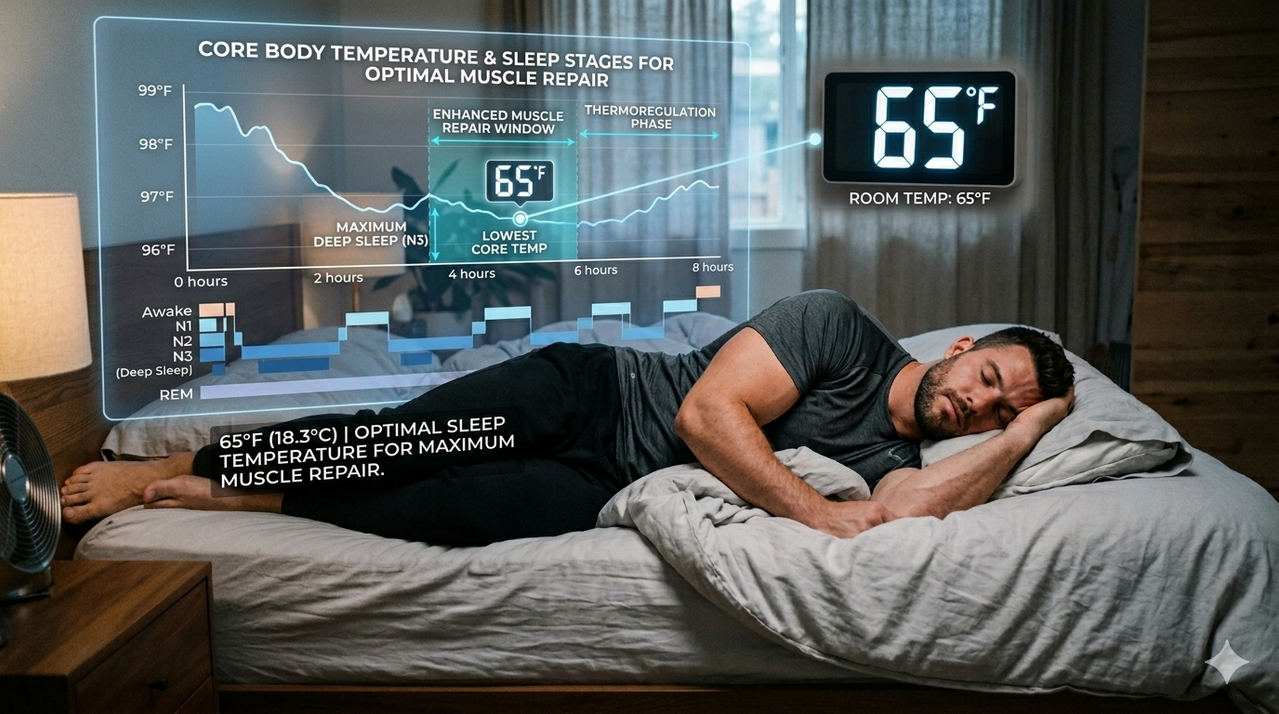
The optimal sleep temperature for maximum muscle repair is between 65-68°F (18-20°C). This range is critical because it supports the body's natural thermoregulation during sleep. Research from the 1970s established that deviations from this range inhibit growth hormone (HGH) secretion while simultaneously activating cortisol, a catabolic stress hormone . A cool environment facilitates the drop in core body temperature needed to initiate and maintain deep sleep, where the majority of HGH is released . This guide explores the science behind this phenomenon and provides actionable strategies to optimize your sleep environment and nutrition for unparalleled muscle repair.
1. The Thermostat of Recovery: Why Temperature Matters
You train with intensity, you hit your protein targets, and you prioritize getting 8 hours of sleep. But have you ever considered the temperature of the room you're sleeping in? The concept of an optimal sleep temperature for maximum muscle repair is not just a matter of comfort—it's a matter of endocrinology .
Your body is not passive during sleep. It is an active factory of restoration, governed by precise hormonal rhythms. For this factory to run efficiently, the environmental conditions must be right. A bedroom that is too hot or too cold can trigger a stress response, flooding your system with cortisol and inhibiting the very hormones responsible for rebuilding the muscle tissue you worked so hard to break down .
This guide will explore the science of thermoregulation during sleep, its direct impact on muscle protein synthesis, and how you can engineer your environment to become a recovery powerhouse.
2. The Science: How Temperature Orchestrates Overnight Recovery
2.1. The Growth Hormone (HGH) Connection
Up to 70% of your body's Human Growth Hormone (HGH) is secreted during deep, slow-wave sleep (SWS) . HGH is the master hormone of repair; it stimulates protein synthesis, promotes fat utilization, and supports immune function. Its release is intricately linked to your body's thermoregulation, making the optimal sleep temperature for maximum muscle repair essential.
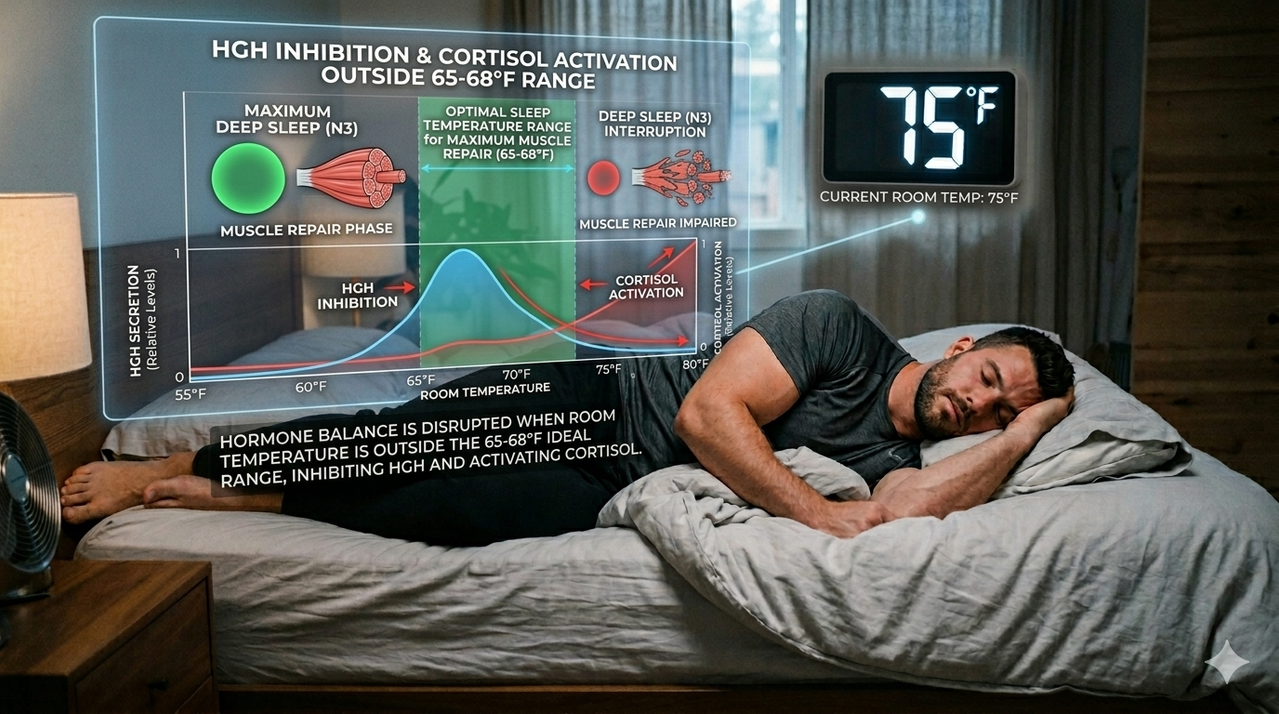
Pioneering studies from the mid-1970s demonstrated a direct relationship between temperature and HGH. Research published in the European Archives of Psychiatry and Clinical Neuroscience found that both raised and lowered ambient temperatures led to a measurable inhibition of HGH secretion during sleep . When your environment is outside the "thermo-neutral zone," your body prioritizes temperature regulation over repair, effectively putting the brakes on HGH release .
2.2. The Cortisol Problem
When you're too hot or too cold, your body perceives it as a stressor. This activates the hypothalamic-pituitary-adrenal (HPA) axis, leading to the release of cortisol . The same 1976 study showed a statistically significant increase in plasma cortisol levels during nights where the ambient temperature was uncomfortable .
Cortisol is a catabolic hormone—it breaks down muscle tissue for energy and inhibits protein synthesis. A high-cortisol, low-HGH environment is the opposite of what you want for muscle repair. The optimal sleep temperature for maximum muscle repair is, therefore, the temperature that minimizes this stress response and allows anabolic hormones to flow freely .
2.3. Sleep Architecture: Deep Sleep and REM
Your sleep cycles through various stages, most notably deep sleep (for physical repair) and REM sleep (for cognitive recovery). High ambient temperatures have been shown to decrease total sleep time and specifically reduce the duration of paradoxical (REM) sleep . Without sufficient deep sleep, your body cannot complete the repair cycles necessary for muscle growth.
Conversely, a cool environment helps you fall asleep faster and spend more time in these critical restorative stages. This is why organizations like the American Academy of Sleep Medicine and resources for elite athletes consistently recommend a cool sleeping environment .
3. The Sweet Spot: Why 65-68°F (18-20°C) is Optimal
Multiple sources converge on the same recommendation: the optimal sleep temperature for maximum muscle repair is between 65 and 68 degrees Fahrenheit (18-20 degrees Celsius) .
Why This Range?
- Initiates Sleep: Your core body temperature must drop by about 1-2 degrees to initiate and maintain sleep. A cool room facilitates this natural drop.
- Minimizes Cortisol: Staying within this range prevents the thermal stress that triggers a cortisol spike .
- Optimizes HGH: It provides the ideal backdrop for the massive pulses of HGH that occur during deep sleep.
- Improves Sleep Quality: It helps you spend more time in restorative deep and REM sleep .
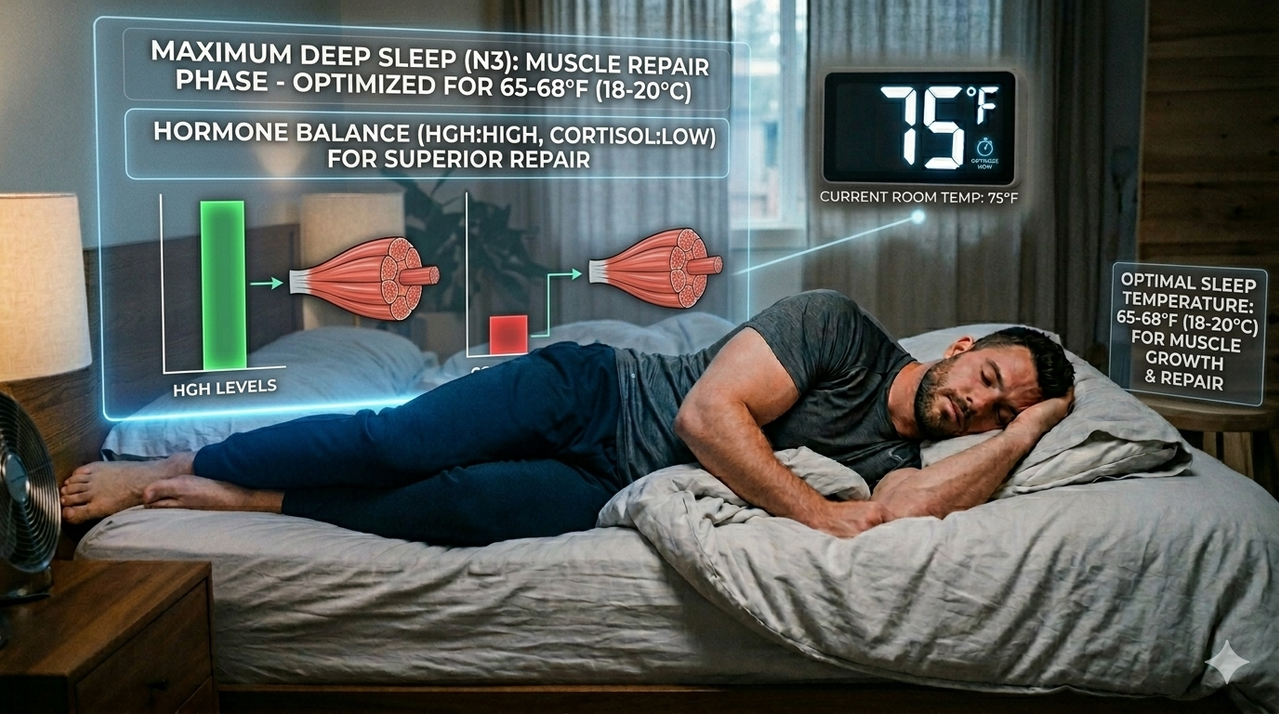
While 65-68°F is the ideal target, the range can be slightly extended. Some experts recommend a range of 60-67°F for the general population, and 65-70°F is often cited as a more flexible goal . The key is to avoid temperatures above 75°F or below 54°F, which are more likely to disrupt sleep .
4. Practical Setup: Engineering Your Recovery Environment
4.1. Thermostat and Timing
Set your programmable thermostat to reach the target temperature about 30-60 minutes before your bedtime. Your body will respond to the cooler air as a sleep cue, enhancing the optimal sleep temperature for maximum muscle repair.
4.2. Bedding and Sleepwear
Choose breathable, natural fabrics like cotton, bamboo, or linen for your sheets and pajamas. These materials wick moisture away and allow for better air circulation. If you use a heavier comforter, your body can still thermoregulate effectively because the room itself is cool.
4.3. Fans and Airflow
A ceiling fan or standing fan serves a dual purpose: it cools the room through convection and provides white noise that can mask disruptive sounds, contributing to better sleep hygiene .
4.4. The "Warm Bath" Trick
Ironically, taking a warm bath or shower 60-90 minutes before bed can help you achieve that optimal core temperature drop. The warm water increases blood flow to your skin (vasodilation). When you step out into the cool room, your body radiates heat rapidly, causing your core temperature to fall and signaling to your brain that it's time to sleep.
5. Nutrition: Fueling Overnight Repair
While your environment sets the stage, the nutrients you provide are the building blocks for repair. Optimizing your pre-sleep nutrition works synergistically with the optimal sleep temperature for maximum muscle repair .
5.1. The Case for Pre-Sleep Protein
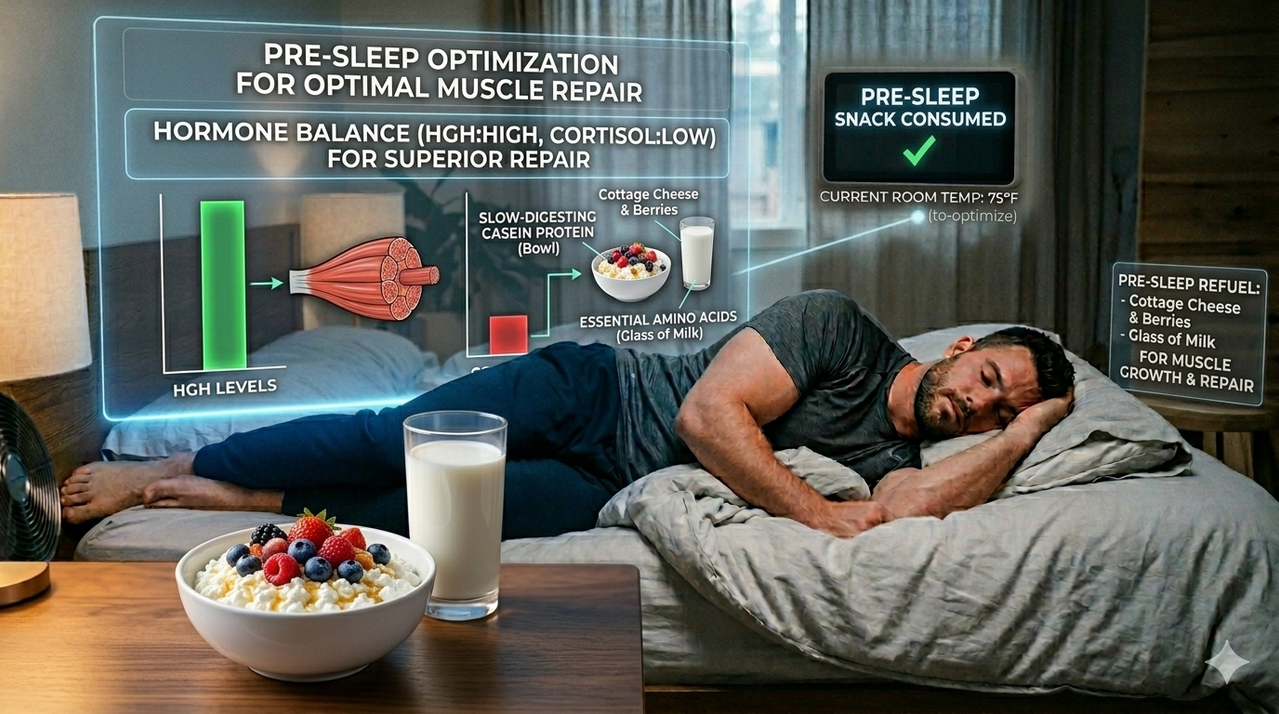
During sleep, your body is in a fasted state, which can lead to muscle catabolism (breakdown). Consuming a slow-digesting protein like casein before bed provides a sustained release of amino acids throughout the night, effectively "trickle-feeding" your muscles .
A 2025 study on trained athletes compared pre-sleep casein intake to post-exercise intake. The research highlighted the importance of strategic protein timing for optimizing recovery markers and anaerobic performance, showing that both windows have value, but that pre-sleep intake is a powerful tool for overnight recovery .
5.2. Sample Pre-Sleep Meal (30-60 minutes before bed)
The goal is about 30-40g of slow-digesting protein with minimal fat and sugar to avoid disrupting sleep.
- Option 1 (Omnivore): 1 cup (225g) low-fat cottage cheese (24g protein) + a handful of berries.
- Option 2 (Omnivore): 1 scoop casein protein powder mixed with 8-10 oz of water or milk (25-30g protein).
- Option 3 (Vegan): 1 cup (200g) firm tofu (20g protein) crumbled with a small amount of berries, or 1 scoop plant-based casein alternative (e.g., from potato or pea protein) in water.
- Option 4 (Vegan): 1 cup (200g) plain soy or pea-based yogurt (approx. 15-20g protein) + 1 tbsp hemp seeds (3g protein).
5.3. Foods and Drinks to Avoid Before Bed
Avoid large, heavy meals, caffeine, alcohol, and high-sugar foods within 2-3 hours of bedtime. Alcohol may help you fall asleep, but it significantly disrupts sleep architecture and HGH release later in the night .
6. Sample "Optimal Recovery" Day Plan
This sample day integrates the principles of temperature management and nutrition for a 75kg (165lb) athlete, focusing on optimal sleep temperature for maximum muscle repair.
| Time | Activity/Nutrition | Notes |
|---|---|---|
| 7:30 AM | Wake up, get morning light exposure | Sets circadian rhythm |
| 8:00 AM | Breakfast: 3 eggs (18g), 1 cup oats (10g), 1 cup berries | ~28g protein |
| 12:30 PM | Lunch: 200g chicken breast (45g), 1 cup quinoa (8g), roasted vegetables | ~53g protein |
| 4:00 PM | Pre-workout snack: Banana + 1 tbsp peanut butter | Quick energy |
| 5:30 PM | Intense workout (Resistance training) | Stimulus for growth |
| 6:45 PM | Post-workout meal: 1 scoop whey/pea protein (25g) + 1 cup rice | Rapid refuel |
| 8:30 PM | Begin winding down, dim lights, set thermostat to 66°F (19°C) | Prepare environment |
| 9:30 PM | Pre-sleep meal: 1 cup low-fat cottage cheese (24g) + berries | Sustained overnight repair |
| 10:15 PM | Lights out. Room temperature is optimal. | Growth hormone release peaks in deep sleep |
7. Common Mistakes That Sabotage Overnight Recovery
- Mistake #1: Sleeping in a room that's too warm. This is the most common error. Temperatures above 75°F directly inhibit HGH and reduce deep sleep, undermining the optimal sleep temperature for maximum muscle repair .
- Mistake #2: Using alcohol as a sleep aid. Alcohol may help you fall asleep, but it fragments sleep architecture and suppresses growth hormone and testosterone production.
- Mistake #3: Eating a large, heavy, or spicy meal too close to bedtime. This raises your core body temperature and metabolic rate, fighting against the natural drop needed for sleep.
- Mistake #4: Ignoring pre-sleep protein. You're missing a key opportunity to prevent overnight muscle breakdown and support repair .
- Mistake #5: Using technology in bed. The blue light disrupts melatonin, and the mental engagement increases cortisol, keeping you in a state of arousal .
9. Scientific References
- Amerisleep. (2025). How to Sleep with Sore Muscles. amerisleep.com. View Source
- Schilkrut, R., et al. (1975). Growth hormone release during sleep and with thermal stimulation in depressed patients. Neuropsychobiology. View Source
- ICHGCP. (2025). Optimizing Protein Timing for Athletes: Pre-Sleep vs Post-Exercise Casein Supplementation Study. ichgcp.net. View Source
- Hogrefe Publishing. (2025). Sleep optimization as sports psychiatry intervention: A clinical framework for elite performance enhancement. Sports Psychiatry, 4(4). View Source
- Trekeducation. (2025). Recovery - ACL management. trekeducation.org. View Source
- Beck, U., et al. (1976). Temperature and endocrine activity during sleep in man. Activation of cortisol and thyroid-stimulating hormone, inhibition of human growth hormone secretion by raised or decreased ambient and body temperatures. European Archives of Psychiatry and Clinical Neuroscience, 222(2-3), 245-256. View Source
- ICHGCP. (2025). Casein Supplementation: Pre-Sleep vs. Post-Exercise. ichgcp.net. View Source
- ICHGCP. (2025). Sleep Hygiene Strategies Among Track and Field Athletes. ichgcp.net. View Source
- Muscle & Fitness. (2019). 5 Things You Need to Know for Better Muscle Recovery. muscleandfitness.com. View Source
- SpringerLink. (1976). Temperature and endocrine activity during sleep in man. European Archives of Psychiatry and Clinical Neuroscience. View Source
All sources last accessed March 2026. Paraphrased for accessibility.
Join the conversation