Rest Intervals: How Long to Wait Between Sets for Size
Rest Intervals: How Long to Wait Between Sets for Size
⏱️ TL;DR
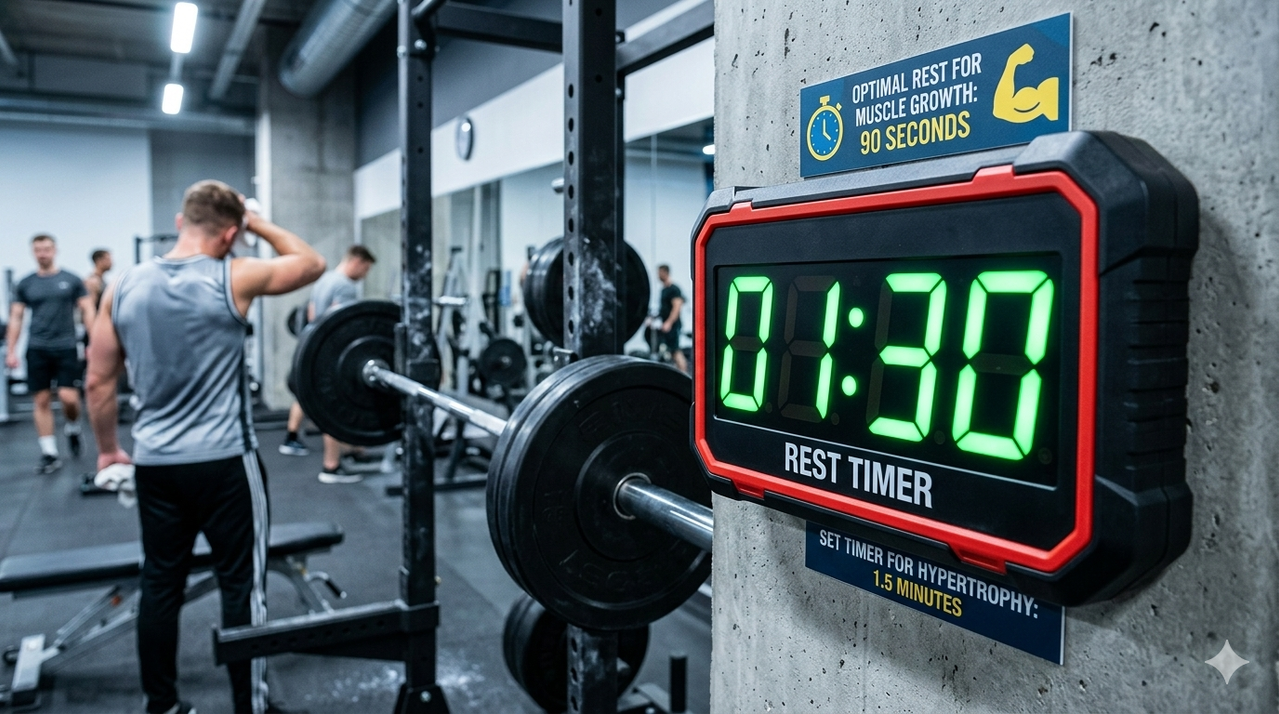
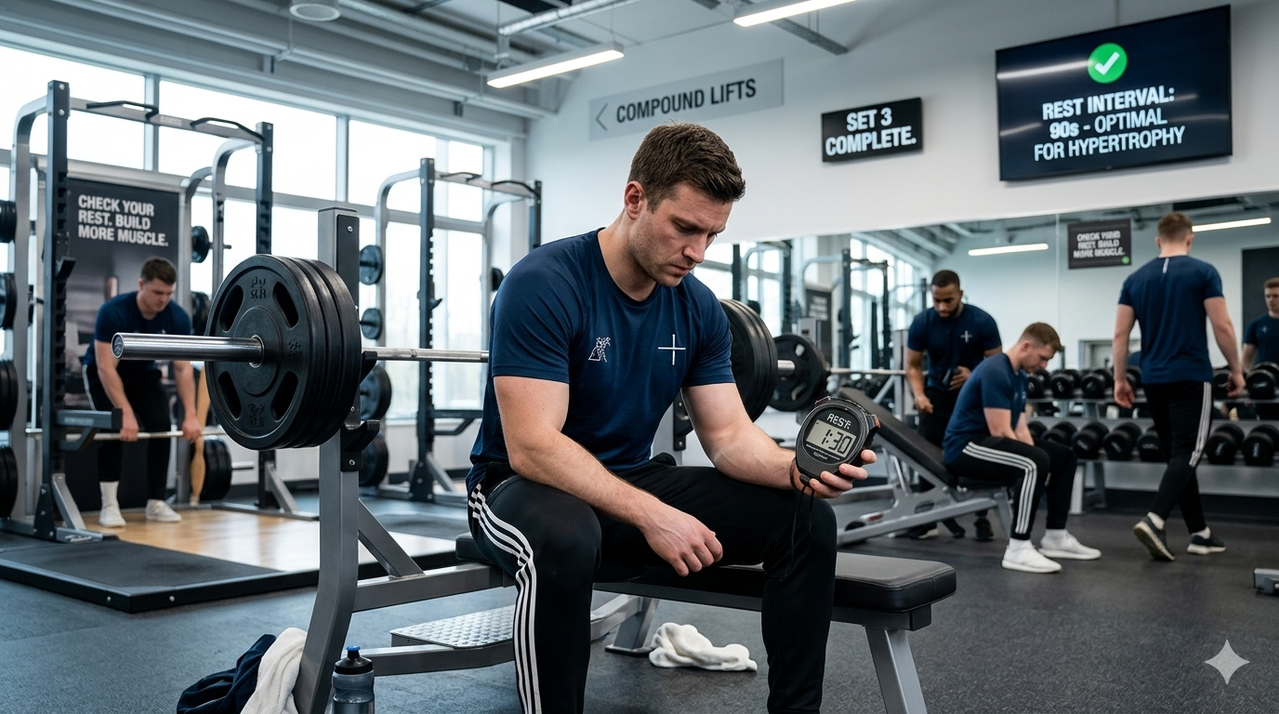
If you are wondering how long to rest between sets for muscle size, the short answer is 1.5 to 2 minutes. Recent 2024 meta-analyses confirm that resting at least 60 seconds is crucial for hypertrophy, with 90-120 seconds being the "sweet spot" for trained lifters . For pure strength on compound lifts, longer rest of 3-5 minutes is superior . For muscular endurance, short 20-60 second rests are best . The science is clear: longer rest allows for higher volume load, which is the primary driver of muscle growth. This guide breaks down the exact rest periods for every goal, with sample routines and the latest research from 2024/2025.
1. The Forgotten Variable: Why Rest Matters
You carefully select your exercises, track your sets and reps, and ensure you're eating enough protein. But there's one variable that is often left to chance: the rest period between sets. Whether you're scrolling through social media for 30 seconds or chatting for five minutes, your rest interval profoundly impacts your results .
Sports scientists refer to this as inter-set rest, the critical recovery window where your muscles replenish adenosine triphosphate (ATP) and clear metabolic byproducts like lactate . Understanding how long to wait between sets for size is not about dogma; it's about physiology. Rest too little, and your next set's performance plummets. Rest too long, and you risk losing workout density and potentially, the metabolic stimulus for growth.
2. The Science of Inter-Set Recovery
2.1. ATP-PC System: The Body's Battery
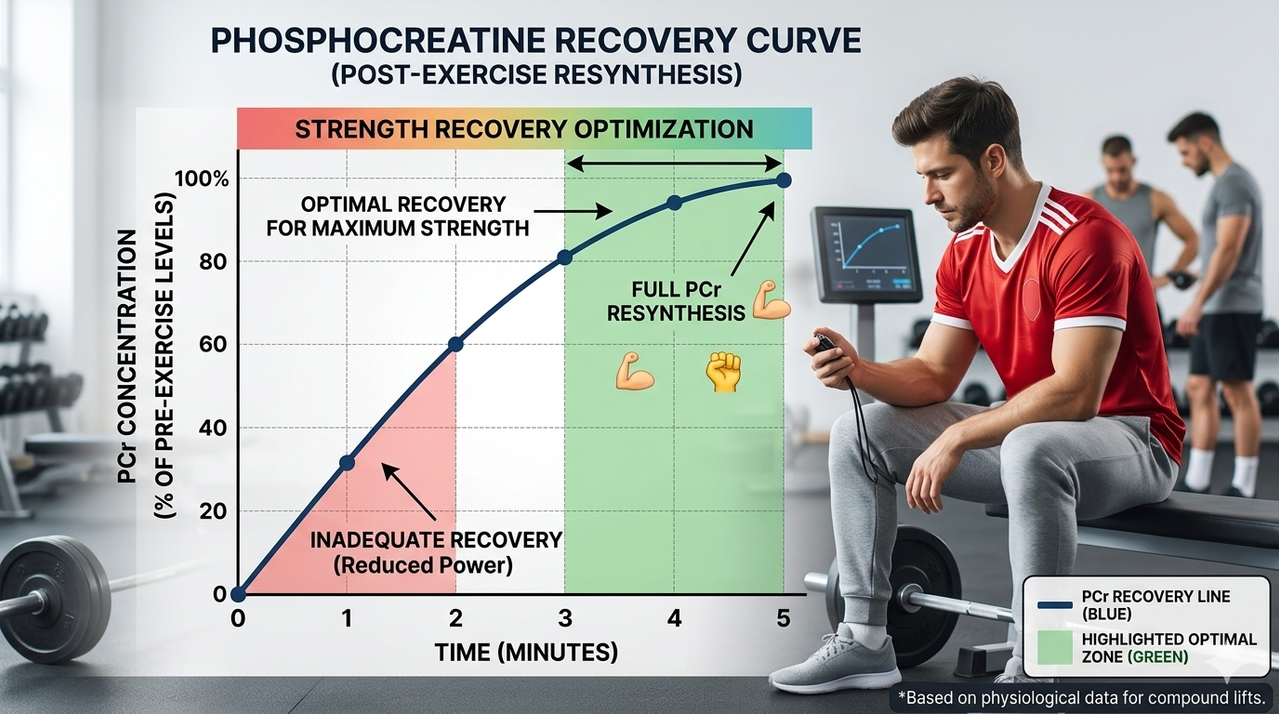
Your muscles work on a high-energy molecule called ATP. During a heavy set of 6-12 reps, you primarily deplete your immediate ATP stores and the phosphocreatine (PC) system. Replenishing these stores takes time. Studies show it takes 2 to 3 minutes for phosphocreatine levels to return to near-complete capacity . This is a key reason why longer rest intervals support higher force production in subsequent sets.
2.2. Metabolic Stress vs. Mechanical Tension
For decades, the "pump" from short rest intervals was thought to be a primary driver of muscle growth. While metabolic stress (the burn) may contribute to hypertrophy, the primary driver is now understood to be mechanical tension . Shorter rests (under 60 seconds) significantly reduce the amount of weight or reps you can perform, thereby reducing total mechanical tension and volume load . Longer rests allow you to maintain tension across all sets.
2.3. Neural Fatigue and Motor Unit Recruitment
Heavy lifting isn't just hard on your muscles; it's taxing on your central nervous system (CNS). For maximal strength efforts, your CNS needs time to recover to fully activate high-threshold motor units. A 2024 study by McMahon et al. found that 5-minute rest intervals preserved neuromuscular function across sets, while 2-minute rests led to a significant drop in muscle activation and peak torque .
3. What the Latest 2024/2025 Research Says
The debate on rest intervals has been revitalized by recent high-quality meta-analyses. Here’s what the most current science concludes:
3.1. The 2024 NIH Bayesian Meta-Analysis
A landmark study published in the NIH's *Frontiers in Sports and Active Living* analyzed data from 19 measurements across 9 studies . The key finding? There was a small hypertrophic benefit to employing inter-set rest durations >60 seconds. Importantly, the analysis "did not detect appreciable differences in hypertrophy when resting >90 seconds between sets" . This suggests a plateau: 90 seconds may be sufficient for muscle growth, and longer isn't necessarily *better* for size alone, though it may be for strength.
3.2. The 2024 McMahon Study: 5-Minute vs. 2-Minute
This study, published in the *Journal of Strength and Conditioning Research*, used a rigorous within-subject design . Participants performed 4 sets of maximal isometric contractions with either 2 or 5 minutes of rest. The 5-minute rest group produced 15% more total work and experienced far less neuromuscular fatigue. This reinforces that if your goal is to maximize volume on heavy lifts, longer rest is a powerful tool .
3.3. The 2025 MedRxiv Review: >60s vs. <60s
This recent systematic review focusing on trained males found that longer rest intervals (>60s) led to small improvements in hypertrophy (SMD = 0.08) and more significant improvements in strength (SMD = -0.74) compared to shorter rest . The authors noted that while metabolic stress is higher with short rest, it comes at the cost of reduced mechanical tension and power output .
Key Takeaway from 2024/2025 Data
For muscle growth, rest at least 60 seconds. The 30-60 second range often recommended in old bodybuilding magazines is likely too short for optimal hypertrophy in trained individuals. The "sweet spot" for maximizing both growth and gym efficiency appears to be 90 seconds to 2 minutes for most hypertrophy work .
4. How Long to Rest, Based on Your Goal
4.1. For Muscle Growth (Hypertrophy) Hypertrophy
Recommendation: 60 to 120 seconds (1-2 minutes).
This is the most debated category. While older sources often cite 30-90 seconds , newer evidence pushes the lower boundary higher. Jim Stoppani's analysis of a meta-analysis suggests that for experienced lifters, resting longer than 60 seconds (up to 90) is better for muscle growth than shorter rests . The 2024 NIH meta-analysis confirms that going over 60 seconds is beneficial, but resting longer than 90 seconds doesn't substantially increase hypertrophy . Therefore, 90 seconds is an excellent target for most size-oriented exercises. For very high-rep sets (15-20 reps) targeting endurance, you might drop to 60 seconds.
4.2. For Pure Strength Strength
Recommendation: 3 to 5 minutes.
If you are lifting >85% of your one-rep max (1RM) on compound lifts like squats, deadlifts, and bench presses, you need longer rest. The consensus across multiple sources is that 3-5 minutes allows for sufficient ATP-PC replenishment and neural recovery to maintain maximal force output . The 2024 McMahon study showed that 5-minute rest preserved strength across sets, while 2-minute rest led to significant drops . For strength, err on the side of longer rest.
4.3. For Muscular Endurance Endurance
Recommendation: 20 to 60 seconds.
When training for endurance, the goal is to teach your muscles to perform under fatigue and clear metabolic byproducts efficiently. Short rest periods of 30-60 seconds (or even 15-30 seconds) keep the heart rate elevated and stress the muscle's ability to recover . This is ideal for circuit training or higher-rep isolation work.
| Training Goal | Rest Interval | Rep Range | % 1RM |
|---|---|---|---|
| Strength | 3 - 5 minutes | 1 - 5 reps | >85% |
| Hypertrophy (Size) | 60 - 120 seconds | 6 - 12 reps | 67-85% |
| Muscular Endurance | 20 - 60 seconds | 15+ reps | <67% |
5. Practical Application: How to Implement This
5.1. Exercise Selection Matters
The recommended rest period can also depend on the exercise. For a heavy barbell back squat, you will likely need the full 3-5 minutes. For a bicep curl or lateral raise, 60-90 seconds is usually plenty, even if training for hypertrophy, because the muscle mass and neural demand are lower . A good rule of thumb: the heavier and more compound the movement, the longer the rest.
5.2. Using Rest Time Productively
Worried that 3-minute rests will make your workout too long? Use that time strategically. If you're resting 3 minutes for squats, use the middle minute to perform a set of calf raises or ab work. This is a form of "superset" that doesn't compromise your main lift's recovery . This keeps your workout density high without sacrificing performance on your primary movement.
5.3. Listen to Your Performance
Numbers on a timer are guidelines. Researcher Dr. Milo Wolf suggests a practical approach: "Rest long enough to get a solid performance on your next set. Generally if you only see a drop of one or a few reps on the next set, it's a good sign you've rested for long enough" . If your goal is 8 reps and you only get 5 on your second set, you need to rest longer.
6. Sample Training Split with Timed Rests
Here is a sample "Upper Body Power and Hypertrophy" day that strategically uses different rest intervals based on the exercise goal. Perform 3-4 working sets per exercise.
- Exercise 1: Barbell Bench Press (Strength Focus) — 4 sets of 5 reps @ 85% 1RM. Rest: 3-4 minutes.
- Exercise 2: Bent-Over Barbell Row (Strength Focus) — 4 sets of 5 reps @ 85% 1RM. Rest: 3-4 minutes.
- Exercise 3: Dumbbell Shoulder Press (Hypertrophy Focus) — 3 sets of 8-12 reps. Rest: 90 seconds.
- Exercise 4: Lat Pulldown (Hypertrophy Focus) — 3 sets of 10-12 reps. Rest: 90 seconds.
- Exercise 5: Superset: Bicep Curls & Tricep Pushdowns (Endurance/Pump) — 3 sets of 15 reps each. Rest: 45-60 seconds between supersets.
7. Common Rest Period Mistakes
- Mistake #1: Inconsistent rests. Resting 1 minute on one set and 3 on the next makes it impossible to track progression. Use a timer.
- Mistake #2: Rushing strength work. Taking only 60-90 seconds rest on heavy squats will crush your performance and limit strength gains .
- Mistake #3: Resting too long on accessories. You don't need 5 minutes between sets of face pulls. This just makes your workout unnecessarily long.
- Mistake #4: Letting your heart rate dictate rest. For strength, your CNS may be ready before your heart rate has fully dropped. Rely on performance, not just breathing .
9. Scientific References
- McMahon, G., Best, N., Coulter, T., & Erskine, R. M. (2024). Increased neuromuscular activation, force output and resistance exercise volume when using 5-minute compared with 2-minute rest intervals between sets. Journal of Strength and Conditioning Research. View Source
- Stoppani, J. (2025). How Long Should You Rest Between Sets for Muscle Growth? JimStoppani.com. View Source
- Men's Health UK. (2026). The Best Rest Times Between Sets for Muscle Gain, Strength and Endurance. Menshealth.com. View Source
- Borland, B. (2023). Size, Strength, or Power? A Training Method Primer. Breaking Muscle. View Source
- Grgic, J., et al. (2024). Give it a rest: a systematic review with Bayesian meta-analysis on the effect of inter-set rest interval duration on muscle hypertrophy. Frontiers in Sports and Active Living, 6, 1429789. View Source
- Schoenfeld, B. J., et al. (2016). Longer Interset Rest Periods Enhance Muscle Strength and Hypertrophy in Resistance-Trained Men. Journal of Strength and Conditioning Research, 30(7), 1805-12. View Source
- Women's Health. (2025). How Long To Rest Between Sets For Maximum Muscle Growth, According To Trainers. Womenshealthmag.com. View Source
- Northy Gym. (2025). The Science of Reps and Sets: How to Train for Strength vs. Size. northygym.com.au. View Source
- Shaul, E. (2025). Research Review: Five-Minute Rest Between Sets Increases Force and Total Work Compared to Two Minutes. Mountain Tactical Institute. View Source
- Davidson, L., & Barillas, S. (2025). Investigating the impact of less than or greater than 60 seconds of inter-set rest on muscle hypertrophy and strength increases in males. medRxiv. View Source
Join the conversation