The Impact of Stress on Muscle Growth and Performance
The Impact of Stress on Muscle Growth and Performance

📋 TL;DR
Chronic stress is a potent catabolic state that directly opposes muscle growth. It activates the hypothalamic-pituitary-adrenal (HPA) axis, leading to sustained elevation of cortisol . High cortisol levels trigger muscle protein breakdown by activating degradation pathways (ubiquitin-proteasome system) while simultaneously suppressing protein synthesis . This leads to muscle atrophy and reduced performance. Stress also promotes inflammation (via cytokines like IL-6 and TNF-α) and can impair the function of satellite cells needed for repair . The impact of stress on muscle growth and performance is a critical, often overlooked factor. This guide explains the science and provides actionable strategies—from nutrition (protein quality, omega-3s, polyphenols) to recovery tools—to mitigate these effects.
1. The Hidden Saboteur of Your Gains
You follow your training program meticulously. You hit your protein targets and prioritize sleep. Yet your progress stalls. The missing variable might not be in the gym or your kitchen—it might be in your mind. The impact of stress on muscle growth and performance is profound and well-documented by science, yet often overlooked in fitness circles .
While the acute stress of a heavy set is a potent growth signal, chronic psychological stress triggers a cascade of physiological responses that actively break down muscle tissue . This guide will delve into the molecular mechanisms linking stress to muscle loss and provide you with a comprehensive toolkit to defend your gains against this hidden saboteur.
2. The Science: How Stress Wrecks Muscle
2.1. The Cortisol Connection: A Catabolic Cascade
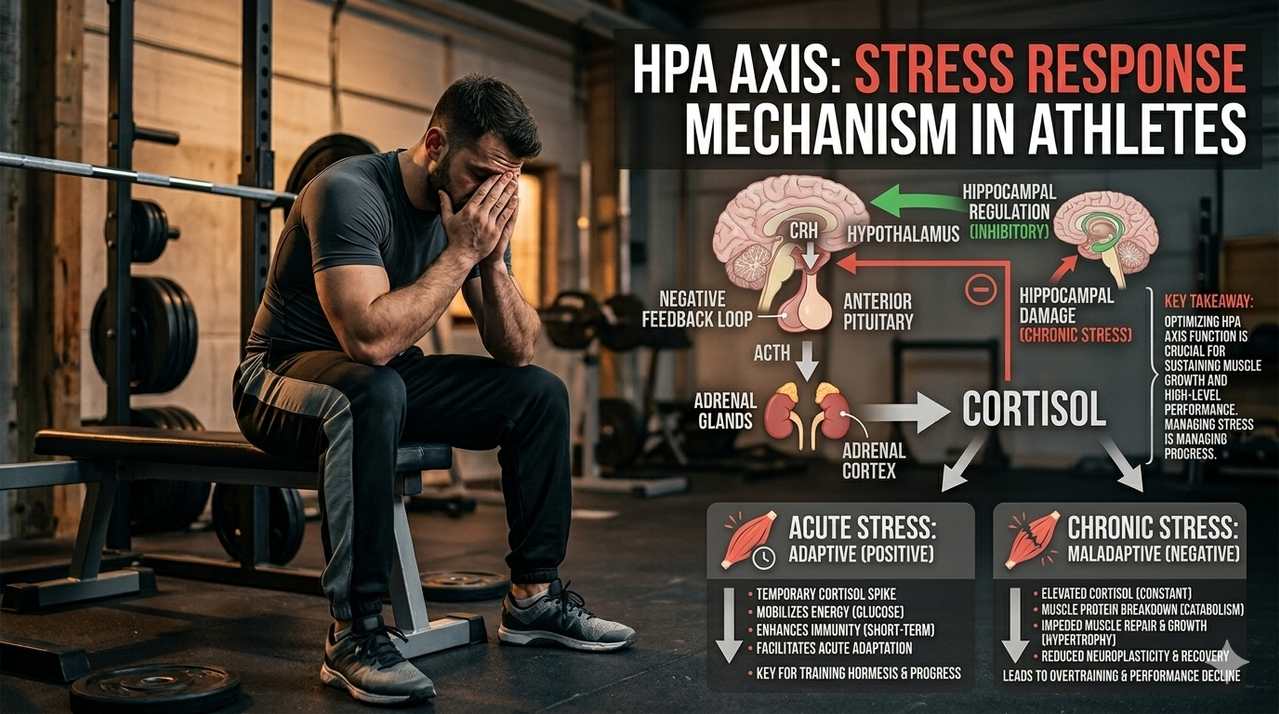
When you experience chronic stress, your body's hypothalamic-pituitary-adrenal (HPA) axis remains activated. This results in consistently elevated levels of cortisol, the primary stress hormone . Cortisol's role is to mobilize energy, but when chronically high, it triggers a catabolic cascade in muscle tissue, illustrating the impact of stress on muscle growth and performance .
High cortisol levels:
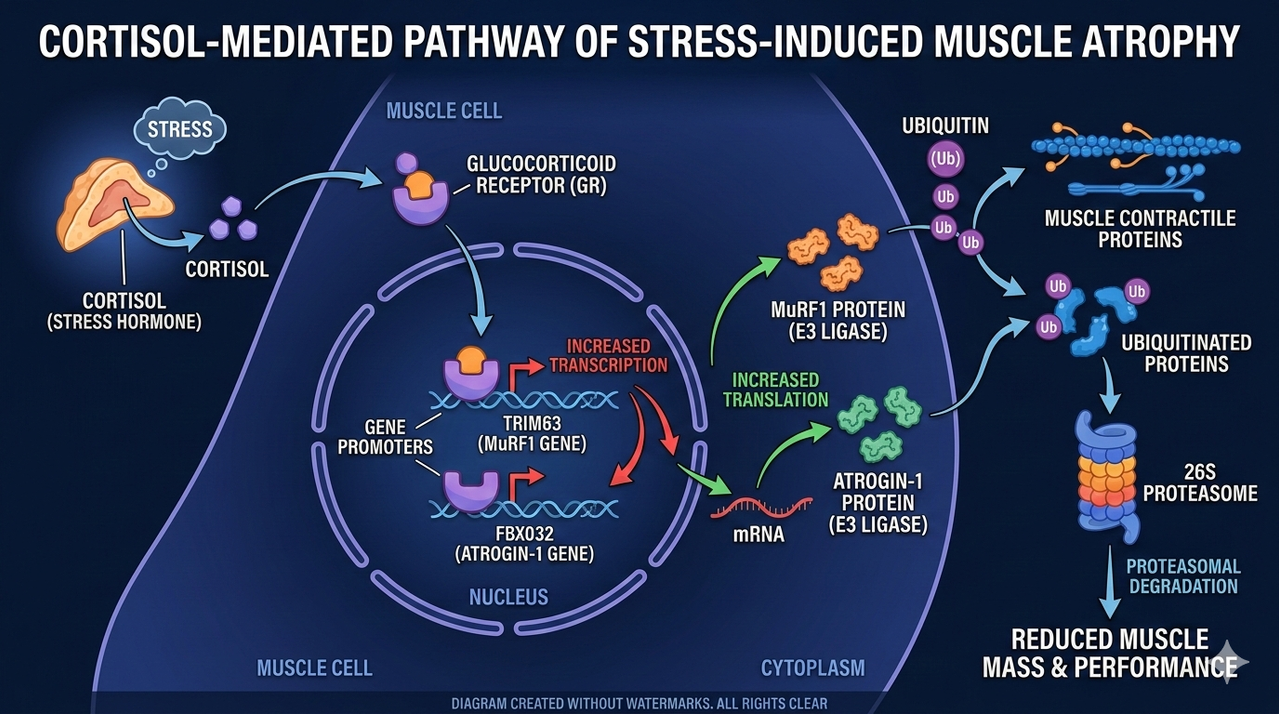
- Increase protein breakdown by activating the ubiquitin-proteasome pathway, specifically upregulating muscle-specific E3 ligases like MuRF1 and atrogin-1/MAFbx . These "atrogenes" tag muscle proteins for degradation.
- Suppress protein synthesis at the level of translational initiation, preventing the creation of new muscle proteins .
- Antagonize insulin and IGF-1, further blunting anabolic signals .
2.2. The Testosterone-Cortisol Tipping Point
Muscle growth is a function of the anabolic/catabolic balance. Research shows that the testosterone-to-cortisol ratio is a key marker of this balance. A lower ratio indicates a catabolic state, highlighting the impact of stress on muscle growth and performance . Studies on military personnel found that higher protein quality (like lean pork) led to higher testosterone/cortisol ratios and better recovery from intense physical stress, demonstrating that nutrition can directly combat cortisol's effects .
2.3. Inflammation and Satellite Cell Dysfunction
Chronic stress induces systemic inflammation, characterized by elevated cytokines like TNF-α and IL-6 . These inflammatory molecules can further activate proteolytic pathways (like NF-κB) and interfere with muscle regeneration . Additionally, stress can impair the function of satellite cells—the stem cells responsible for repairing and building muscle—by affecting regulatory factors like PAX3, leading to a "bimodal response" to stress and hindering regeneration, further demonstrating the impact of stress on muscle growth and performance .
3. Eustress vs. Distress: The Good, The Bad, and The Ugly
Not all stress is created equal. The body's stress response is designed to help us rise to a challenge. The key difference lies in perception and duration, which is central to the impact of stress on muscle growth and performance .
Eustress (The Good)
This is the "positive stress" associated with a challenging workout or competition. It heightens focus, increases energy, and mobilizes resources for peak performance . Acute cortisol spikes from exercise are part of the adaptation process. Athletes who view pre-competition "butterflies" as excitement rather than anxiety can harness this energy .
Distress (The Bad & Ugly)
This is the chronic, persistent stress from work, relationships, or constant worry. It keeps the HPA axis chronically activated, leading to the muscle-wasting cascade described above. The Yerkes-Dodson law illustrates this: performance peaks at an intermediate level of arousal; too little or too much impairs function .
4. Strategies to Counteract Stress and Protect Muscle
A multi-pronged approach involving nutrition, sleep, and mind-body techniques is most effective in mitigating the impact of stress on muscle growth and performance .
4.1. Nutritional Countermeasures
What you eat can directly modulate the impact of stress.
- High-Quality Protein: Ensuring adequate intake of high-quality protein (rich in leucine) is paramount. A 2025 clinical trial showed that cadets consuming lean pork (high-quality protein) after intense exercise had significantly lower cortisol, higher testosterone/cortisol ratios, and reduced inflammation compared to those on plant-based MREs, despite identical macros . Protein quality—not just quantity—matters for combating stress.
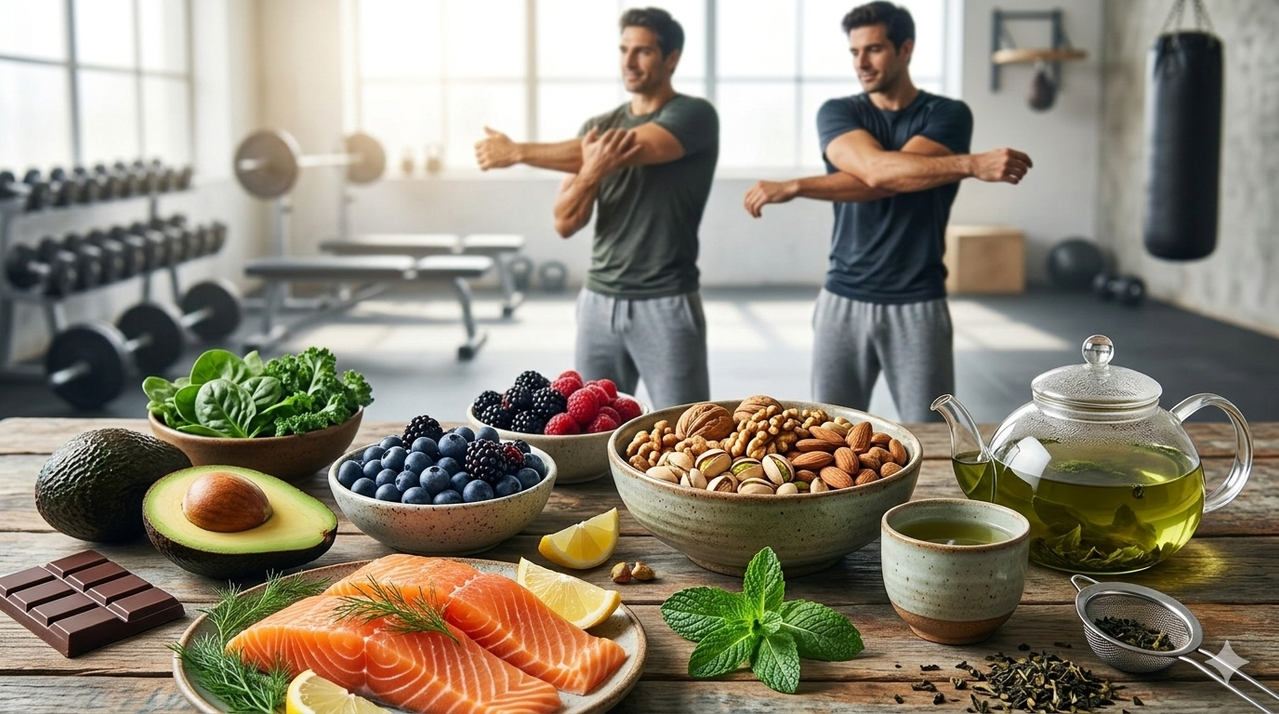
- Omega-3 Fatty Acids: Omega-3s (EPA/DHA) have potent anti-inflammatory effects and can help lower cortisol . Sources include fatty fish (salmon, mackerel), flaxseeds, and algae oil.
- Polyphenols: Found in berries, dark chocolate, and green tea, polyphenols are powerful antioxidants that can reduce oxidative stress and inflammation, supporting a healthier muscle environment .
- Creatine Monohydrate: Beyond its well-known role in ATP production, creatine may also help mitigate muscle damage and inflammation caused by intense stress .
4.2. Sample Stress-Busting Meal Plan (~2600 kcal, 180g protein)
- Breakfast: 3-egg omelet with spinach and feta (18g) + 1 cup cooked quinoa (8g) + ½ cup blueberries → 26g protein
- Lunch: 6 oz (170g) grilled salmon (40g) + 1 cup wild rice + roasted asparagus + 1 tbsp olive oil → 40g protein
- Snack: 1 cup Greek yogurt (20g) + ¼ cup walnuts (5g) + 1 oz dark chocolate (2g) → 27g protein
- Dinner: 8 oz (225g) lean pork tenderloin (50g) + 1 large sweet potato + steamed broccoli + 1 tbsp butter → 50g protein
- Post-Dinner: 1 scoop casein protein in milk (25g) + handful of berries → 25g protein
- Total: ~168g protein
4.3. Vegan Stress-Fighting Options
- Protein: Prioritize complete plant proteins like soy (tofu, tempeh, edamame), quinoa, and combine legumes with grains (rice & beans) to ensure sufficient leucine intake.
- Omega-3s: Flaxseeds, chia seeds, hemp seeds, and walnuts are excellent sources.
- Sample Vegan Day: Tofu scramble breakfast, lentil-quinoa bowl for lunch, edamame snack, and tempeh stir-fry for dinner. Consider a pea protein supplement to boost total protein.
5. Mind-Body Techniques for Athletes
Mental skills are trainable. Stanford sports psychologist Kelli Moran-Miller emphasizes techniques used by elite athletes to manage pressure, which are directly applicable to anyone dealing with stress and its impact on muscle growth and performance .
5.1. Breathwork and Focus Cues
Diaphragmatic breathing stimulates the body's relaxation response, reducing muscle tension and stress . Use focus cues—short, action-oriented words or phrases like "breathe, focus, go hard" or "deep breath, see the ball, trust"—to direct attention away from stressful thoughts and onto the task at hand .
5.2. Reframing and Self-Talk
Transform critical, unhelpful self-talk into positive, instructional cues. Instead of "I'm so stressed I'll fail," try "This energy is my body preparing me to perform." This shifts the perception from threat to challenge, leveraging eustress .

5.3. Sleep: The Ultimate Recovery Tool
Sleep is when growth hormone is released and muscle repair peaks. Chronic stress often disrupts sleep, creating a vicious cycle. Prioritize 7-9 hours of quality sleep, maintain a consistent schedule, and create a dark, cool, quiet environment .
6. Evidence-Based Supplements for Stress Mitigation
A 2024 review highlights that beyond protein, several supplements support a healthy muscle environment under stress, addressing the impact of stress on muscle growth and performance .
- Creatine Monohydrate: 5g daily. Supports energy production and may reduce inflammation and muscle damage from intense exercise.
- Omega-3 Fatty Acids: 2-3g combined EPA/DHA. Potent anti-inflammatory effects.
- Polyphenols (e.g., Resveratrol, Curcumin): Found in supplements or foods, they reduce oxidative stress .
- Magnesium: Plays a role in muscle relaxation and nervous system regulation; often depleted during stress.
7. Common Mistakes That Amplify Stress
- Mistake #1: Overtraining without adequate recovery. More is not better. Excessive training adds physical stress to psychological stress, compounding the catabolic signal and worsening the impact of stress on muscle growth and performance.
- Mistake #2: Skimping on sleep. Sacrificing sleep for more work or training backfires, as sleep is your primary recovery window.
- Mistake #3: Ignoring hunger. Undereating, especially carbohydrates and protein, elevates cortisol. Fuel your body adequately.
- Mistake #4: Relying on alcohol to unwind. Alcohol disrupts sleep and protein synthesis, impairing recovery.
- Mistake #5: Catastrophizing setbacks. Viewing a missed workout or poor performance as a disaster adds to the stress load .
9. Scientific References
- Agarwal, V., Gupta, A., Chaudhary, R., & Kumar, A. (2025). Elucidating the potential mechanism and therapeutic targets of chronic stress-induced muscle atrophy. International Immunopharmacology. View Source
- Cadore, E. L., et al. (2008). Hormonal responses to resistance exercise in long-term trained and untrained middle-aged men. Journal of Strength and Conditioning Research, 22(5), 1617-24. View Source
- Stanford University. (2026). How elite athletes handle performance pressure: Sports psychologist Kelli Moran-Miller shares strategies. Stanford Report. View Source
- Gonzalez, D. E., et al. (2025). Effects of Pork Protein Ingestion Prior to and Following Performing the Army Combat Fitness Test on Markers of Catabolism, Inflammation, and Recovery. Nutrients. View Source
- Zoglio, V., et al. (2024). Role of the transcription factor PAX3 during myogenesis: from the embryo to the adult stage. Med Sci (Paris). View Source
- Braun, T. P., & Marks, D. L. (2015). The regulation of muscle mass by endogenous glucocorticoids. Frontiers in Physiology, 6, 12. View Source
- National Federation of Professional Trainers. (2025). Channeling Stress Towards Athletic Excellence. NFPT Blog. View Source
- Paoli, A., et al. (2024). Not Only Protein: Dietary Supplements to Optimize the Skeletal Muscle Growth Response to Resistance Training: The Current State of Knowledge. Journal of Human Kinetics. View Source
- News-Medical. (2025). Clinical trial finds pork meals enhance recovery and mood in military cadets. News-Medical.net. View Source
- National Institutes of Health. (2024). Dietary Supplements to Optimize Skeletal Muscle Growth. PMC. View Source
All sources last accessed March 2026. Paraphrased for accessibility.
Join the conversation