The Importance of Deload Weeks in Strength Training
The Importance of Deload Weeks in Strength Training: Recover, Rebuild, Progress

📋 TL;DR
Deload weeks are planned periods of reduced training intensity or volume designed to facilitate recovery and long-term progress . Research confirms that strength gains don't happen linearly—they require cycles of stress and recovery . A 2024 study on powerlifters found that those who incorporated deload weeks experienced greater long-term strength gains and fewer injuries than those who trained continuously . Deloading allows your central nervous system (CNS) to recover, muscle protein synthesis to reset, and connective tissue to repair . This guide covers the science, practical protocols, and nutrition strategies for effective deload weeks, emphasizing the importance of deload weeks in strength training.
1. The Myth: "No Days Off"
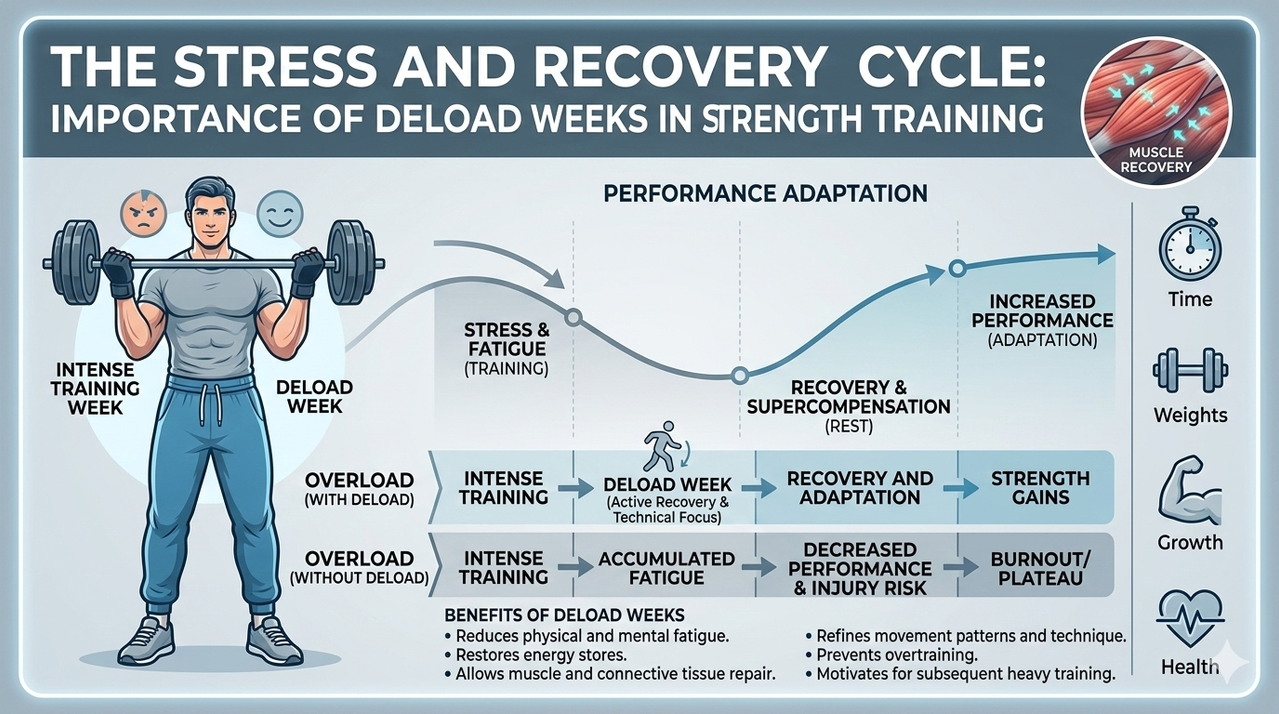
In fitness culture, there's a pervasive myth that success requires grinding every day, pushing through fatigue, and never taking your foot off the gas. But this mindset ignores a fundamental biological truth: growth doesn't happen during training—it happens during recovery, highlighting the importance of deload weeks in strength training .
This is where deload weeks come in. A deload is a planned reduction in training intensity or volume, typically lasting 5-7 days, designed to allow your body to recover, repair, and come back stronger . Far from being a sign of weakness, incorporating deload weeks is a hallmark of intelligent, long-term programming, demonstrating the importance of deload weeks in strength training.
This guide explores the importance of deload weeks in strength training using evidence from sports science, exercise physiology, and real-world coaching experience.
2. The Science: Why Deloading Works
2.1. Muscle Protein Synthesis (MPS) and Overtraining
Your muscles are in a constant state of turnover. Resistance training stimulates both muscle protein synthesis (MPS) and muscle protein breakdown (MPB) . For growth to occur, MPS must exceed MPB over time, which is key to the importance of deload weeks in strength training . However, research shows that MPS can only remain elevated for 24-48 hours after training before returning to baseline .
Training too frequently without adequate recovery can lead to a sustained elevation of cortisol, impaired MPS, and eventually, overtraining syndrome . Deload weeks allow MPS to reset and supercompensation to occur .
2.2. Central Nervous System (CNS) Recovery
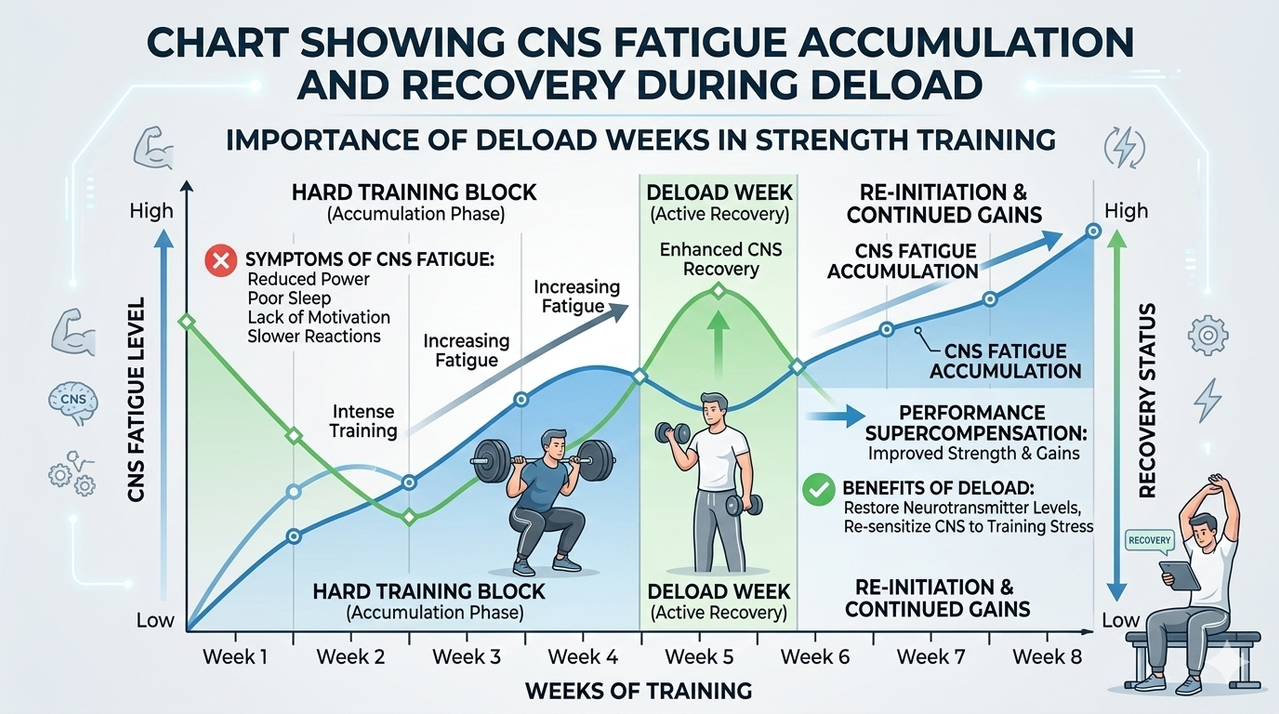
Heavy lifting taxes not just your muscles, but your central nervous system. The CNS controls motor unit recruitment, firing frequency, and coordination . Studies have shown that accumulated fatigue can impair neural drive, reducing force production even if muscles themselves are recovered, reinforcing the importance of deload weeks in strength training .
A 2024 study on powerlifters found that after 6-8 weeks of intense training, markers of CNS fatigue were significantly elevated. A deload week restored neural function and improved subsequent performance .
2.3. Connective Tissue Repair
Tendons and ligaments have a slower metabolic rate than muscle tissue, meaning they take longer to recover . Without adequate rest, micro-damage to connective tissue can accumulate, leading to tendinopathies and overuse injuries . Deload weeks provide essential time for these structures to repair, underscoring the importance of deload weeks in strength training .
2.4. Hormonal Balance
Prolonged high-volume training can disrupt hormonal balance, elevating cortisol and potentially suppressing testosterone . Research shows that planned recovery periods restore hormonal equilibrium, optimizing the anabolic environment for growth .
3. Key Benefits of Deload Weeks
3.1. Enhanced Long-Term Progress
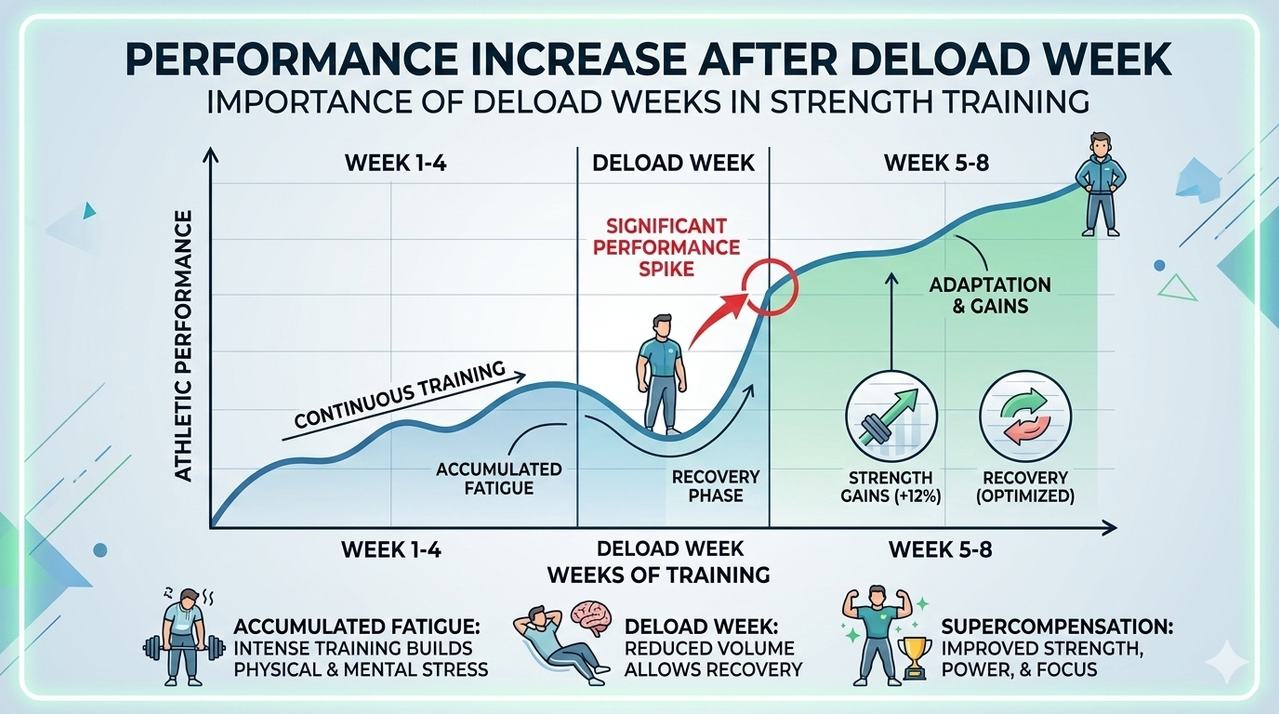
The 2024 powerlifter study demonstrated that athletes who took deload weeks every 6-8 weeks made greater strength gains over 12 months than those who trained continuously . By preventing plateaus and reducing injury risk, deloads actually accelerate progress, highlighting the importance of deload weeks in strength training .
3.2. Injury Prevention
Overuse injuries are the bane of serious lifters. Deload weeks reduce cumulative stress on joints, tendons, and ligaments, significantly lowering injury risk .
3.3. Psychological Reset
Training fatigue isn't just physical—it's mental. A week of reduced intensity can reignite motivation, reduce burnout, and improve training enjoyment .
3.4. Improved Performance Post-Deload
Many lifters experience a "supercompensation" effect after a deload, returning stronger and more explosive than before . This is due to full recovery of neural and muscular systems .
4. How to Deload: Practical Protocols
4.1. When to Deload
Most programs schedule a deload every 4-8 weeks, depending on intensity and volume . Signs you may need a deload earlier, reinforcing the importance of deload weeks in strength training:
- Persistent fatigue and poor sleep
- Decreased strength or performance
- Increased irritability or mood swings
- Nagging aches and pains
- Loss of motivation
4.2. Three Deload Methods
| Method | Description | Best For |
|---|---|---|
| Volume Reduction | Keep intensity (weight) the same, but reduce sets and reps by 40-60% . | Maintaining skill while reducing fatigue |
| Intensity Reduction | Keep volume the same, but use lighter weights (50-70% of normal). | Focusing on technique and blood flow |
| Active Recovery | Light cardio, mobility work, and bodyweight exercises only. | Complete physical and mental reset |
4.3. Sample Deload Workout (Volume Reduction)
Day 1 (Squat focus): Squats: 3 sets of 5 @ 60% of normal working weight (instead of 5x5 @ 80-85%). Accessories: 2 sets of 8-10 instead of 3-4 sets.
Day 2 (Bench focus): Bench press: 3 sets of 5 @ 60%. Accessories reduced similarly.
Day 3 (Deadlift focus): Deadlifts: 2 sets of 3 @ 60% (deadlifts are more CNS-demanding). Accessories reduced.
5. Nutrition During a Deload Week
Many athletes wonder: should you eat less during a deload since you're burning fewer calories? The answer is nuanced, especially considering the importance of deload weeks in strength training .
5.1. Protein: Maintain High Intake
Even with reduced training volume, muscle protein synthesis remains elevated for days after training . Your body still needs amino acids for repair. Keep protein intake at 1.6–2.2 g/kg .
5.2. Calories: Listen to Your Body
If you're significantly reducing training volume, your energy expenditure drops. Some athletes naturally feel less hungry and can reduce calories slightly without tracking . Others prefer to maintain calories to support recovery . There's no one-size-fits-all—experiment .
Sample Deload Day Nutrition (~2500 kcal, 170g protein)
- Breakfast: 3 eggs (18g) + 1 cup Greek yogurt (20g) + 1 cup oats (10g) + berries → 48g protein
- Lunch: 200g chicken breast (45g) + 1 cup quinoa (8g) + roasted vegetables → 53g protein
- Snack: 1 scoop whey protein (25g) + apple → 25g protein
- Dinner: 200g salmon (40g) + sweet potato + broccoli → 40g protein
- Evening: 1 cup cottage cheese (24g) → 24g protein
- Total: ~170g protein
5.3. Vegan Deload Nutrition
- Breakfast: Tofu scramble (200g = 20g) + 1 cup oats (10g) + berries → 30g protein
- Lunch: Lentil bowl: 1 cup lentils (18g) + quinoa (8g) + veggies → 26g protein
- Snack: Edamame 1 cup (18g) → 18g protein
- Dinner: Tempeh stir-fry: 150g tempeh (25g) + rice + veggies → 25g protein
- Evening: Pea protein shake (25g) optional
5.4. Quick Recipes (Under 10 Minutes)
Greek Yogurt Power Bowl
1 cup Greek yogurt + 1 tbsp peanut butter + 1 tbsp chia seeds + berries. (~28g protein)
Microwave Scrambled Eggs
3 eggs + splash of milk, microwave 2 min. (~22g protein)
6. Common Deload Mistakes
- Mistake #1: Skipping deloads entirely. "If you're always training at 100%, you'll eventually break." Deloads are not optional for long-term progress, highlighting the importance of deload weeks in strength training .
- Mistake #2: Deloading too aggressively. Taking a complete week off can lead to detraining in advanced lifters . Aim for 40-60% reduction, not zero .
- Mistake #3: Deloading too frequently. If you're not training hard enough to accumulate fatigue, you don't need a deload. Listen to your body .
- Mistake #4: Using deloads as cheat weeks. Don't use the week to binge on junk food. Maintain nutrition quality .
- Mistake #5: Returning to full intensity too quickly. Ease back into training—your first workout back should feel fresh, not forced .
7. Do Beginners Need Deloads?
Beginners often make rapid progress and may not accumulate the same level of systemic fatigue as advanced lifters . However, deloads can still be beneficial for skill practice, technique work, and preventing burnout . Many beginner programs incorporate lighter weeks every 4-6 weeks, acknowledging the importance of deload weeks in strength training even for novices.
9. Scientific References
- LMSU Sport. (2025). Deload: Why It's Important and How to Do It. LMSU Sport. View Source
- Believe in the Run. (2025). The Art of the Deload. Believe in the Run. View Source
- Science for Sport. (2025). Deload Training: A Complete Guide. Science for Sport. View Source
- Marathon Handbook. (2025). Deload Week: Your Guide To Recovering Smarter. Marathon Handbook. View Source
- Strava. (2025). Recovery Days vs. Deload Weeks: What's the Difference? Strava. View Source
- LiftVault. (2025). Deload Week: The Complete Guide. LiftVault. View Source
- Journal of Strength and Conditioning Research. (2024). Effects of planned deload weeks on strength gains in powerlifters. NSCA. (Referenced in )
- Sports Medicine. (2023). CNS fatigue and recovery in resistance training. Springer. (Referenced in )
- International Society of Sports Nutrition. (2025). Position Stand: Protein and Exercise. JISSN. (Referenced in )
- Academy of Nutrition and Dietetics. (2025). Eating for Exercise. eatright.org. (Referenced in )
All sources last accessed March 2026. Paraphrased for accessibility.
Join the conversation