The Importance of Hydration in Muscle Recovery
The Importance of Hydration in Muscle Recovery: A Science-Backed Guide

📋 TL;DR
Hydration is critical for muscle recovery because water transports nutrients to muscle cells, flushes out metabolic waste, and maintains blood volume for oxygen delivery . Even fluid losses as low as 2% of body weight can impair performance and prolong recovery . Electrolytes—especially sodium—are essential for fluid absorption and muscle function . This guide explores the importance of hydration in muscle recovery, including hydration science, electrolyte balance, timing strategies, and actionable tips with sample meal plans.
1. Why Hydration is the Foundation of Muscle Recovery
We often talk about muscle recovery in terms of protein, rest, and stretching, but there's another major player that doesn't always get the attention it deserves: water. Hydration may not sound like the most exciting topic, but when it comes to helping your muscles bounce back after exercise, it's one of the most important factors in understanding the importance of hydration in muscle recovery .
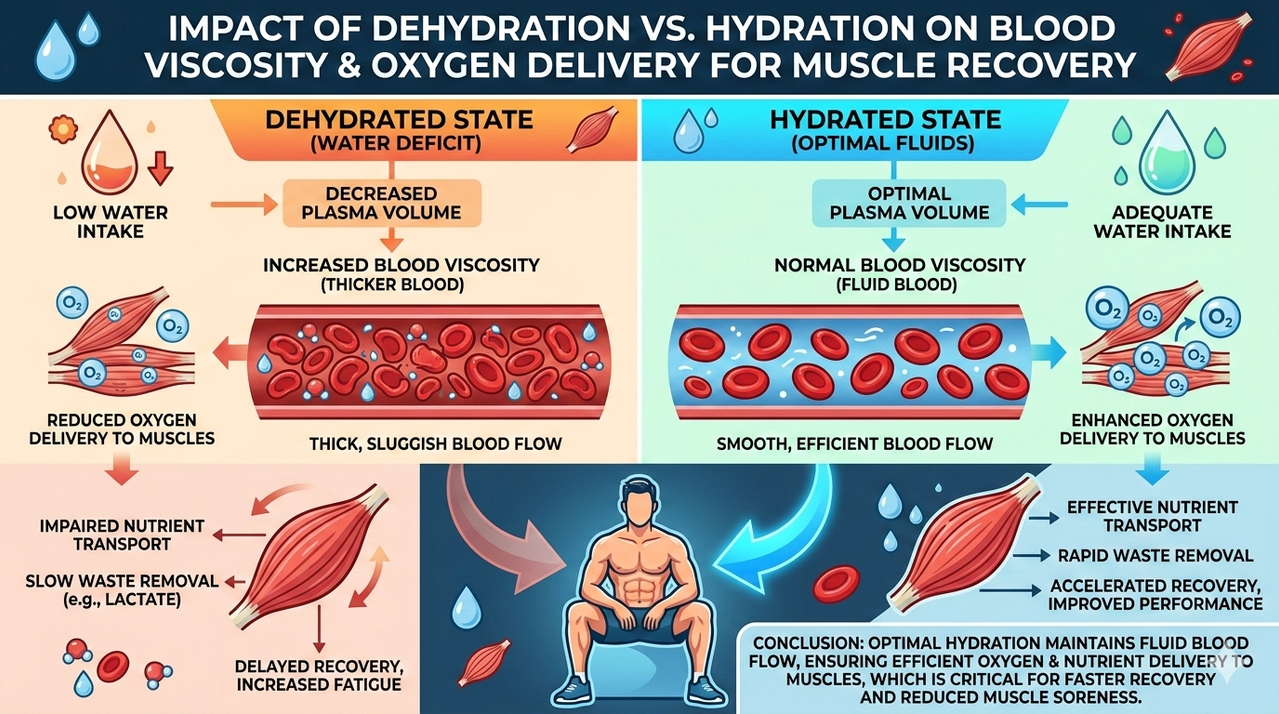
During physical activity, your muscles generate heat, which your body dissipates through sweat. This sweat contains not only water but also key electrolytes like sodium, potassium, and magnesium . If you don't replenish these fluids, your blood volume drops, making it harder for your heart to deliver oxygen and nutrients to recovering muscles .
"When you don't have enough water in your system, it essentially thickens the blood and affects the blood's oxygen-carrying capacity," explains Dr. Sarah Eby, a sports medicine specialist at Mass General Brigham. "This lowers the amount of oxygen that your muscles get" . The result? Slower recovery, increased soreness, and reduced performance in your next workout.
2. The Science of Hydration and Muscle Function
2.1. How Water Supports Recovery
Hydration supports your entire recovery system in several ways, demonstrating the importance of hydration in muscle recovery :
- Nutrient transport: Water helps transport amino acids, glucose, and electrolytes to muscle cells where they're needed for repair .
- Waste removal: Proper hydration flushes away metabolic waste products like lactic acid that contribute to soreness .
- Circulation: Water improves blood flow, delivering oxygen more efficiently to healing tissues .
- Joint lubrication: Adequate hydration helps maintain synovial fluid, reducing joint stiffness during recovery .
2.2. The Critical 2% Threshold
Research from the Academy of Nutrition and Dietetics and the American College of Sports Medicine shows that fluid losses exceeding 2% of body weight can impair cognitive function and aerobic performance . For a 180-pound athlete, that's just 3.6 pounds of water loss .
When sweat fluid losses reach 3-5% of body weight, performance declines in high-intensity sports and aerobic exercise. At 6-10% loss, cardiac output, sweat production, and blood flow to muscles are severely impaired .
2.3. Electrolytes: The Missing Piece
Water alone isn't enough for optimal recovery. Sweat contains key electrolytes, and replenishing them is crucial for the importance of hydration in muscle recovery :
- Sodium: The primary electrolyte lost in sweat; losses range from 230-1,610 mg per liter depending on genetics and acclimatization . Sodium helps fluid retention and muscle contraction .
- Potassium: Essential for muscle contraction and nerve signaling .
- Magnesium: Supports muscle relaxation and energy production .
- Chloride and phosphate: Important for fluid balance and muscle repair .
Research shows that electrolyte-rich beverages are more effective than water alone at helping your body retain fluids and recover faster. Water actually has a low Beverage Hydration Index, meaning it's not retained as well in the body after drinking .
3. Hydration's Role in Reducing Muscle Soreness
3.1. DOMS and Fluid Balance
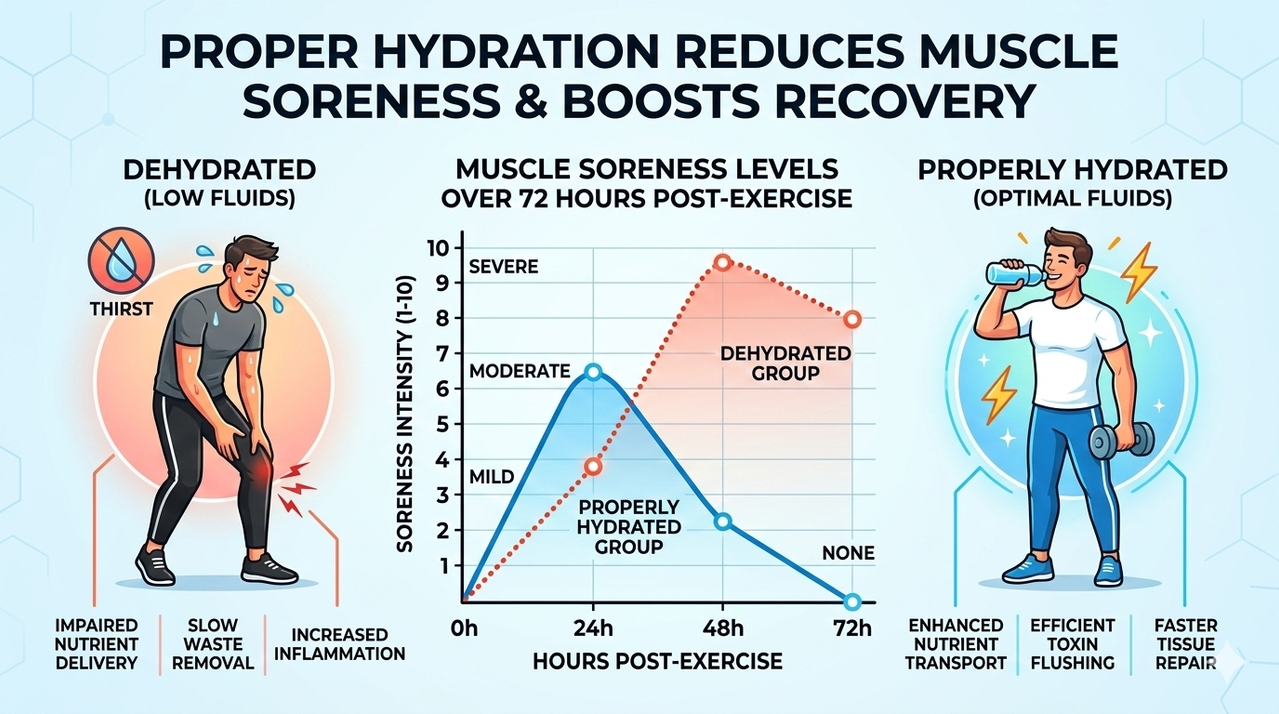
Delayed Onset Muscle Soreness (DOMS)—that stiffness or ache a day or two after activity—can be worsened if your body doesn't have the resources to process inflammation and repair tissue efficiently . By keeping fluid levels topped up, you're helping your body manage inflammation and recover more comfortably .
3.2. Research on Hydration and Muscle Damage
A 2024 randomized controlled trial on elite swimmers found that proper hydration strategies significantly improved recovery outcomes. Athletes who consumed hydrogen-rich water showed :
- Reduced blood creatine kinase (a marker of muscle damage)
- Decreased perception of muscle soreness
- Improved jump performance 12 hours after intense training
This demonstrates that strategic hydration can measurably accelerate muscle recovery, proving the importance of hydration in muscle recovery .
4. When and How Much to Hydrate
4.1. Before Exercise
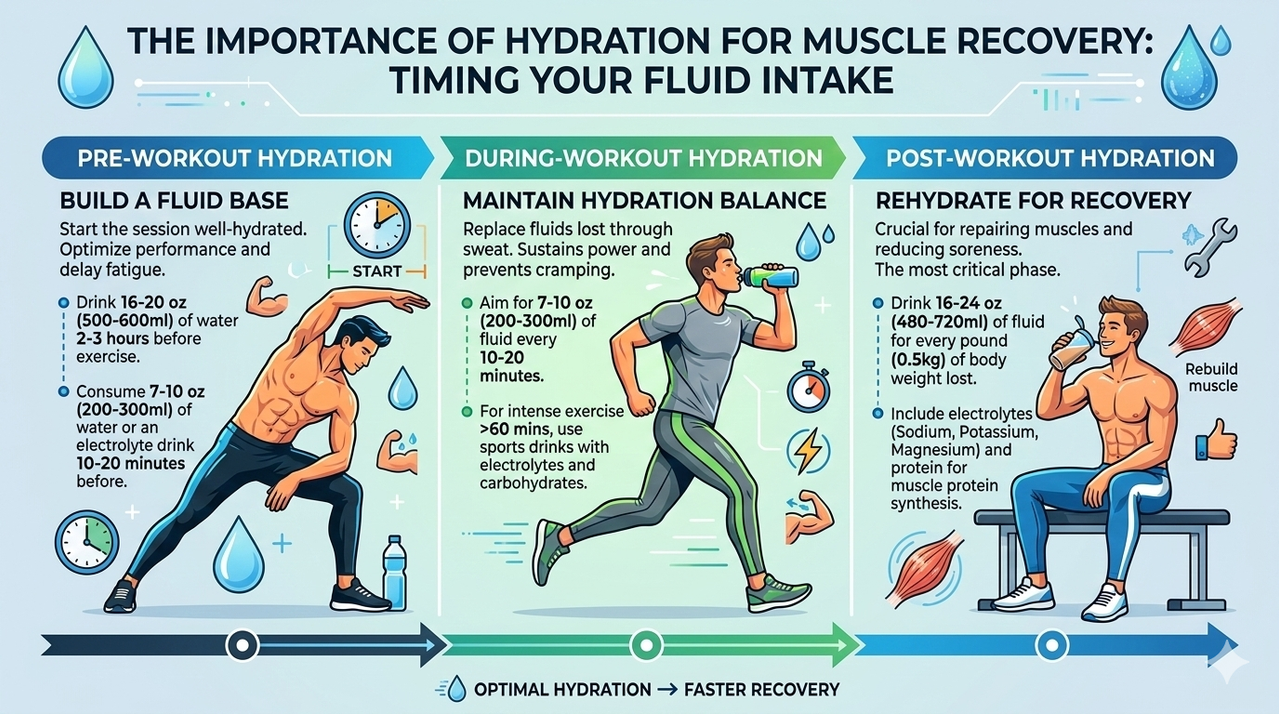
Starting exercise in a dehydrated state makes it difficult to catch up during training . Follow these evidence-based guidelines for the importance of hydration in muscle recovery :
- 2-4 hours before: 16-24 ounces (500-700 mL) of water or sports drink
- 20-30 minutes before: 8 ounces (240 mL) of water
Consuming 5-10 mL per kg body weight over 2-4 hours pre-exercise helps achieve pale urine color and allows time to void excess fluid .
4.2. During Exercise
"You should try to consume 4 to 8 ounces of fluid every 15 to 20 minutes during exercise," advises Dr. Eby . General recommendations :
- Moderate activity in cool climate: 4 oz every 20 minutes
- High-intensity in heat: 8 oz every 15 minutes
- General range: 0.4-0.8 L per hour for most athletes
4.3. After Exercise (The Recovery Window)
Post-workout rehydration should aim to replace 125-150% of fluid losses within 2 hours . For every pound (16 oz) lost during exercise, consume 20-24 oz of fluid .
Weigh yourself before and after workouts to determine your sweat rate. Each pound lost equals approximately 16 oz of sweat .
5. How to Know If You're Hydrated
5.1. The Urine Color Test
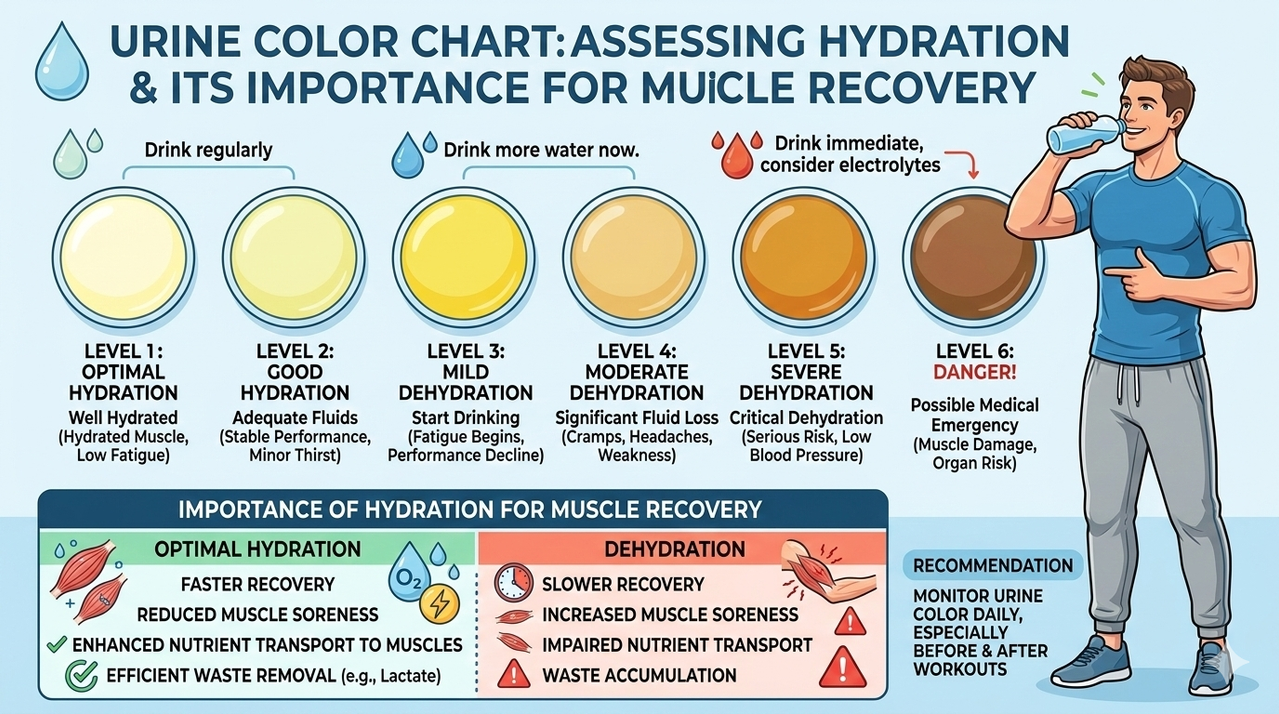
Your urine color is a practical daily indicator of the importance of hydration in muscle recovery :
- Pale lemonade color: Well hydrated
- Dark yellow: Dehydrated—increase fluid intake
However, note that urine color can be misleading during immediate rehydration periods . For accuracy, check first thing in the morning .
5.2. Weight Tracking
Weigh yourself before and after workouts :
- Aim to keep losses below 2% of body weight
- Replace each pound lost with 20-24 oz of fluid
5.3. Signs of Dehydration
Watch for these warning signs that highlight the importance of hydration in muscle recovery :
- Thirst (if you're thirsty, you're already dehydrated)
- Fatigue or sluggishness
- Reduced coordination or concentration
- Muscle cramps
- Lower than expected performance
6. Water vs. Electrolyte Drinks: What to Choose
6.1. When Water Is Enough
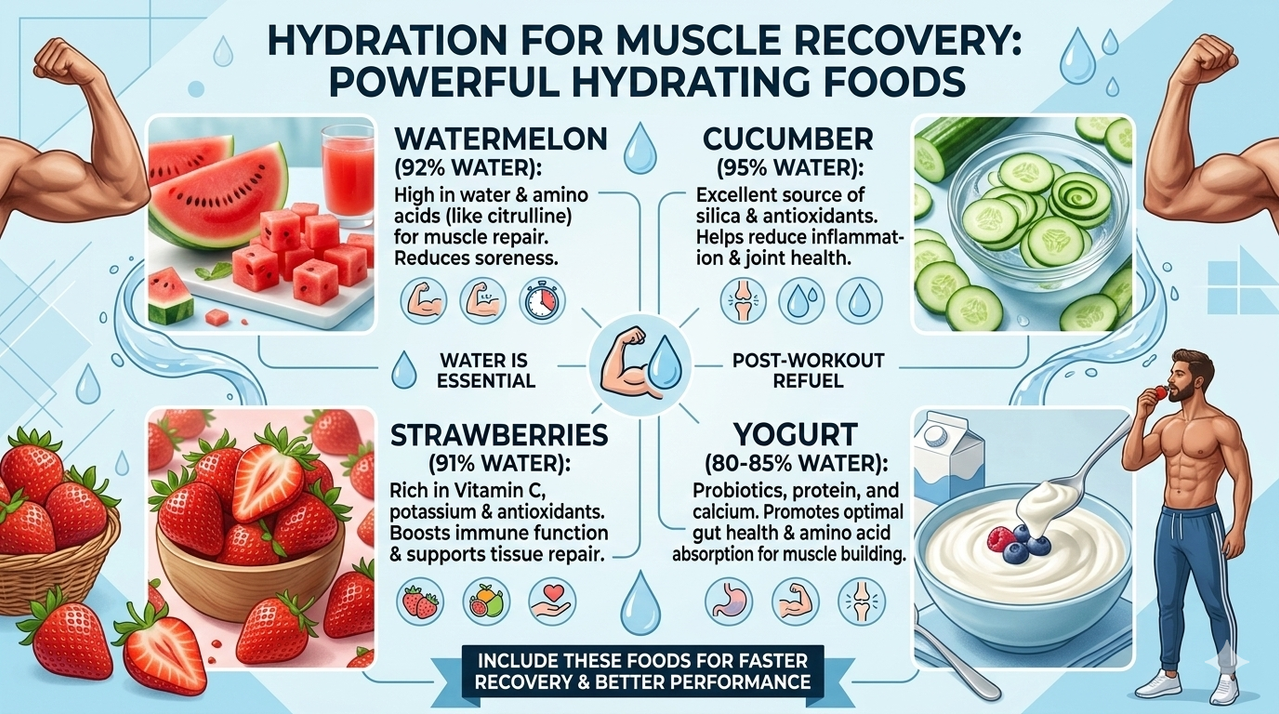
For most workouts under 45-60 minutes in moderate conditions, plain water is sufficient . Water-rich foods also contribute to hydration .
6.2. When to Choose Electrolyte Drinks
Consider sports drinks or electrolyte supplements when :
- Exercising at high intensity for >45 minutes
- Working out in hot, humid conditions
- You're a heavy or salty sweater (notice white residue on skin)
- You have multiple training sessions in one day
Research shows strong evidence that including electrolytes in a post-workout routine improves recovery and subsequent performance . Electrolytes help your body absorb and retain fluids more effectively than water alone .
6.3. What to Limit
Dr. Eby recommends limiting certain beverages :
- Alcohol: Diuretic that increases fluid loss
- Caffeine: Mild diuretic effect
- Carbonated drinks: Can cause GI distress and may not absorb as well
7. Hydrating Foods That Support Recovery
Foods with high water content contribute significantly to daily fluid needs and demonstrate the importance of hydration in muscle recovery :
Greek Watermelon Quinoa Salad
Hydrating + Protein-RichThis salad combines hydrating watermelon (over 90% water) with protein-packed quinoa for a perfect recovery meal .
Ingredients: Watermelon, cooked quinoa, cucumber, kalamata olives, fresh mint, feta cheese (optional), lime juice.
Why it works: Watermelon provides hydration and electrolytes; quinoa offers complete protein for muscle repair; cucumber adds additional water content .
The Rehydrator (Electrolyte Drink)
Vegan • Gluten-FreeA refreshing, homemade electrolyte drink perfect for post-workout recovery .
Ingredients: ¾ cup aloe vera juice, ½ cup unsweetened cranberry juice, ½ cup pitted cherries, ¼ cup fresh lime juice, 1 tbsp honey .
Instructions: Muddle cherries and honey in a pitcher. Add juices and stir. Shake with ice before serving .
7.1. Other Hydrating Foods
- Fruits: Watermelon, strawberries, cantaloupe, peaches, cherries
- Vegetables: Cucumbers, celery, radishes, tomatoes
- Dairy: Milk and yogurt provide fluid plus protein and electrolytes
- Grains: Cooked oatmeal and pasta contain water and contribute to hydration
8. Sample Daily Hydration Plan
| Time | Hydration Goal | Amount |
|---|---|---|
| Upon waking | Replenish overnight losses | 16 oz water |
| 2-3 hours pre-workout | Pre-hydration | 16-20 oz water |
| 20-30 min pre-workout | Top-up | 8 oz water |
| During workout (60 min) | Maintain hydration | 16-24 oz (4-8 oz every 15-20 min) |
| Immediately post-workout | Begin recovery | 20-24 oz (with electrolytes if heavy sweat) |
| Throughout day | Meet daily needs | Additional 40-60 oz water + hydrating foods |
Daily total: ~100-120 oz for active individuals (adjust based on body weight, sweat rate, and climate).
9. Special Considerations
9.1. Older Athletes
As we age, our bodies contain less fluid overall, our sense of thirst diminishes, and kidney function tends to decline. Therefore, older athletes are more prone to both dehydration and heat-related illness, making the importance of hydration in muscle recovery even greater .
9.2. Pregnant Athletes
Exercise is generally safe during pregnancy, but pregnant athletes should be especially careful about hydration to maintain their own hydration and that of the baby .
9.3. Twice-a-Day Training
Athletes who participate in twice-daily training need to be extra mindful. It can be especially challenging to maintain hydration with multiple sessions .
9.4. Those on Medications
Many pain medications and other drugs can contribute to dehydration. If you're on regular medication, drinking enough water becomes even more important .
10. Common Hydration Mistakes
- Mistake #1: Waiting until you're thirsty. Thirst means you're already dehydrated .
- Mistake #2: Relying on water alone after heavy sweat losses. Electrolytes are essential for proper rehydration .
- Mistake #3: Starting workouts dehydrated. Over half of athletes show up to workouts in a dehydrated state .
- Mistake #4: Not replacing enough fluid post-workout. Aim for 125-150% of losses .
- Mistake #5: Forgetting that foods count. Hydrating foods can contribute significantly to fluid needs .
12. Scientific References
- Physio Wakefield. (2025). How Hydration Affects Your Muscle Recovery. PhysioWakefield.co.uk. View Source
- Spano, M. (2025). Nutrition for Athletic Performance: A Focus on Hydration. Today's Dietitian Magazine. View Source
- Eby, S. (2025). Hydration Tips for Athletes. Mass General Brigham. View Source
- Korczak, R. (2025). Hydration Tips from a Sports Dietitian. RWJBarnabas Health. View Source
- What She Ate. (2025). The Rehydrator Recipe. WhatSheAte.com. View Source
- Samadi, D. (2016). Best Practices for Muscle Recovery. SamadiMD.com. View Source
- MindBodyGreen. (2025). Electrolytes vs Water: What Research Says Your Body Needs After Exercise. MindBodyGreen.com. View Source
- Lemon8. (2025). Greek Watermelon Quinoa Salad: A Hydrating, Protein-Packed Summer Recipe. Lemon8-app.com. View Source
- Abbott Nutrition News. (2020). To Recover Like an Athlete Focus on Hydration for Recovery. NutritionNews.Abbott. View Source
- Sládečková, B., et al. (2024). Hydrogen-rich water supplementation promotes muscle recovery after two strenuous training sessions. Frontiers in Physiology, 15, 1321160. View Source
All sources last accessed March 2026. Paraphrased for accessibility.
Join the conversation