The Role of Rest Days in Progressive Overload
The Role of Rest Days in Progressive Overload: Why Recovery Drives Growth

📋 TL;DR
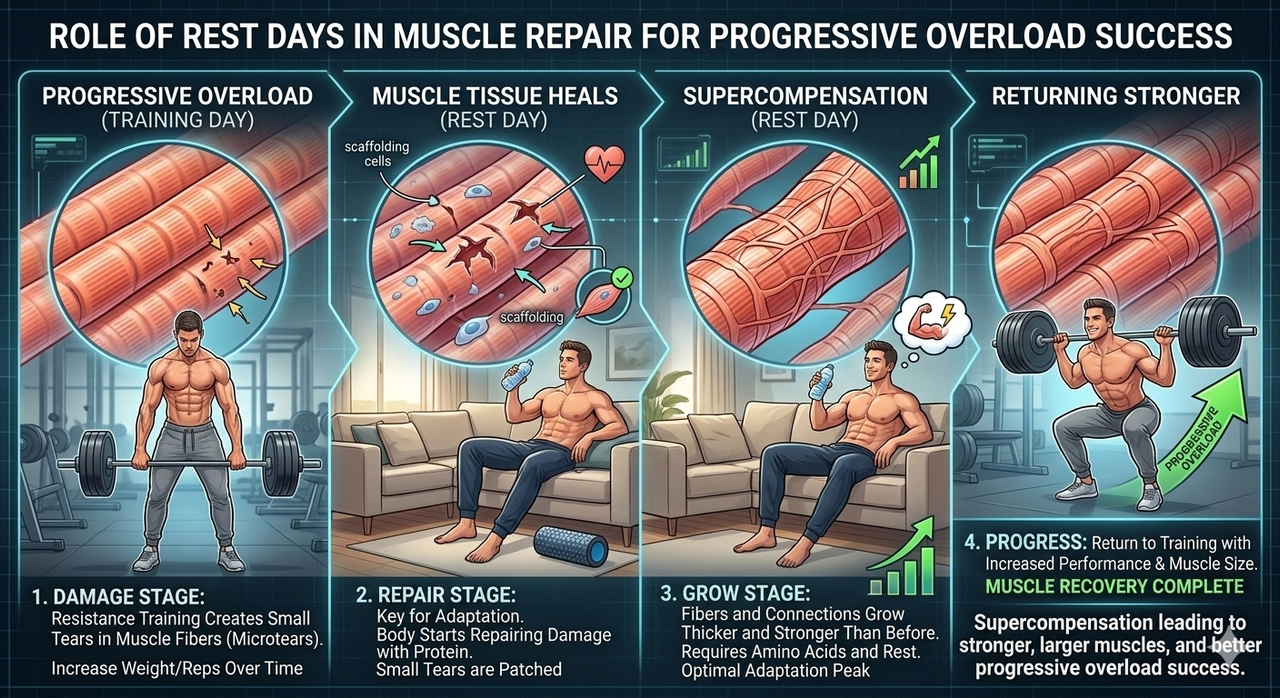
Progressive overload is the foundation of muscle growth, but it's incomplete without recovery. "When you train or push yourself through a workout, your muscles sustain microscopic damage – known as microtears. It sounds dramatic, but these microtears give a signal to our muscle tissue to replenish, and it's this progressive overload process that encourages them to repair and grow bigger and stronger to better cope with the same load the next time around. Crucially, this means that you only reap the benefits of training when the body is at rest, relaxing and sleeping" . This guide explores the role of rest days in progressive overload, including muscle protein synthesis, neural recovery, nutrition strategies, and actionable rest day protocols.
1. The Myth: Muscles Are Built in the Gym
Walk into any gym on a Monday night and you'll see it: young lifters grinding through marathon sessions, punishing themselves with set after set, terrified that taking a day off will erase their progress. For many aspiring bodybuilders, rest is treated like a dirty word — a sign of weakness, laziness, or lack of discipline. But here's the hard truth: If you're never taking a day off, you're not hardcore, you're just overtrained .
This misconception has been around forever. Too many people believe that muscles are built in the gym — that every rep, every set, every hour logged is directly adding size to their physique. In reality, the gym is only the spark, the stimulus. True growth happens later — in bed, while you sleep, when your body has the chance to repair and rebuild the muscle fibers you broke down with training .
Science backs this up. Hypertrophy — the increase in muscle size — is the result of adaptation during recovery, not of endless lifting itself. The harder you train, the more recovery you actually need. Put simply: If you don't give your body the downtime it requires, you're short-circuiting your own progress . This article explores the role of rest days in progressive overload and how to optimize them.
2. The Science: Why Rest Days Are Essential
2.1. Muscle Protein Synthesis (MPS) and Breakdown (MPB)
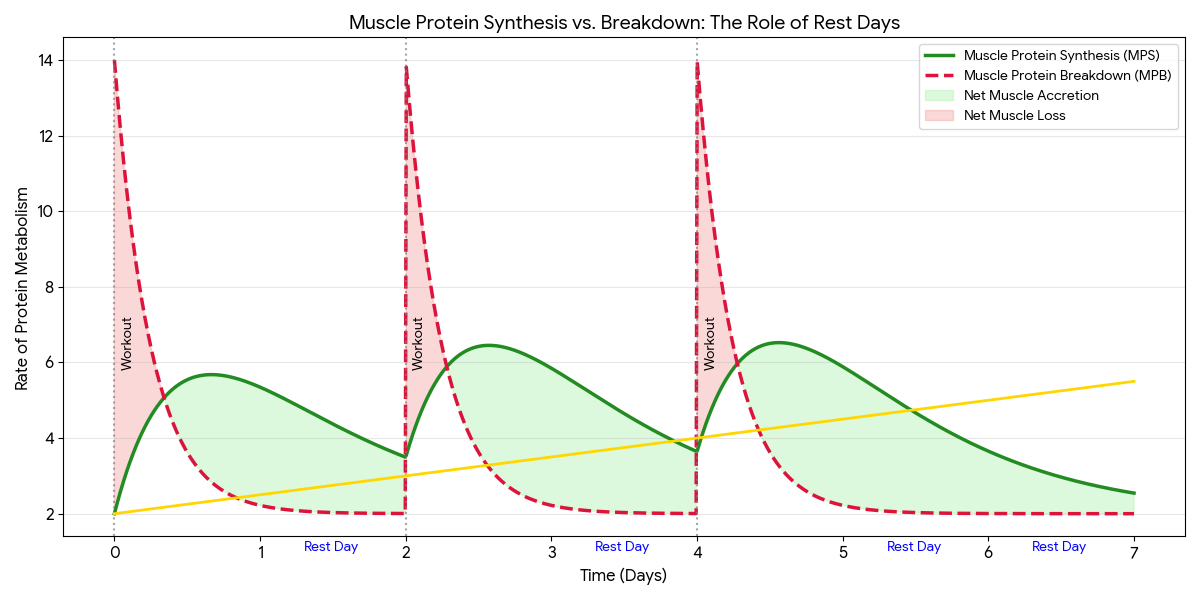
Your muscles are in a constant state of turnover. Muscle protein synthesis (MPS) is the process of building new muscle proteins, while muscle protein breakdown (MPB) is the breakdown of existing proteins. For muscle growth to occur, MPS must exceed MPB .
Resistance training stimulates both MPS and MPB, but the net balance depends on recovery and nutrition. "When you train or push yourself through a workout, your muscles sustain microscopic damage – known as microtears. It sounds dramatic, but these microtears give a signal to our muscle tissue to replenish, and it's this progressive overload process that encourages them to repair and grow bigger and stronger" .
Studies show that MPS rises after resistance training and remains elevated for 24–48 hours, sometimes longer in less trained individuals. Training too frequently without allowing this process to complete can blunt growth . Rest days provide the necessary environment for protein accretion and tissue repair.
2.2. Neural Adaptations and CNS Recovery
Strength gains are not solely dependent on muscle size. Research shows that early increases in strength are largely neural, involving improved motor unit recruitment, synchronization, and firing frequency . These adaptations can occur with relatively low training frequency, provided recovery is adequate.
Strength training also taxes the central nervous system (CNS). Insufficient recovery can lead to diminished motor drive, slower reaction times, and reduced force output . Lower training frequency helps mitigate CNS fatigue and preserves performance.
2.3. Hormonal Regulation
Adequate rest regulates anabolic and catabolic hormones. Intense or excessive training without recovery elevates cortisol, reduces testosterone, and can impair strength . In contrast, appropriate spacing of workouts maintains a favorable hormonal environment for adaptation.
Key Recovery Processes During Rest Days
- Muscle repair: Damaged fibers are rebuilt stronger
- Glycogen replenishment: Energy stores are restored
- Hormonal balance: Cortisol drops, anabolic hormones rise
- Inflammation reduction: Post-exercise inflammation subsides
- Neural recovery: CNS fatigue resolves
3. Progressive Overload and Rest: The Delicate Balance
3.1. What Is Progressive Overload?
Strength is developed when muscles are exposed to progressive overload—gradual increases in resistance or training stress. This creates microscopic damage to muscle fibers, triggering adaptation and growth . Yet adaptation occurs not during training itself, but during the recovery process .
3.2. The Rest Rundown Technique
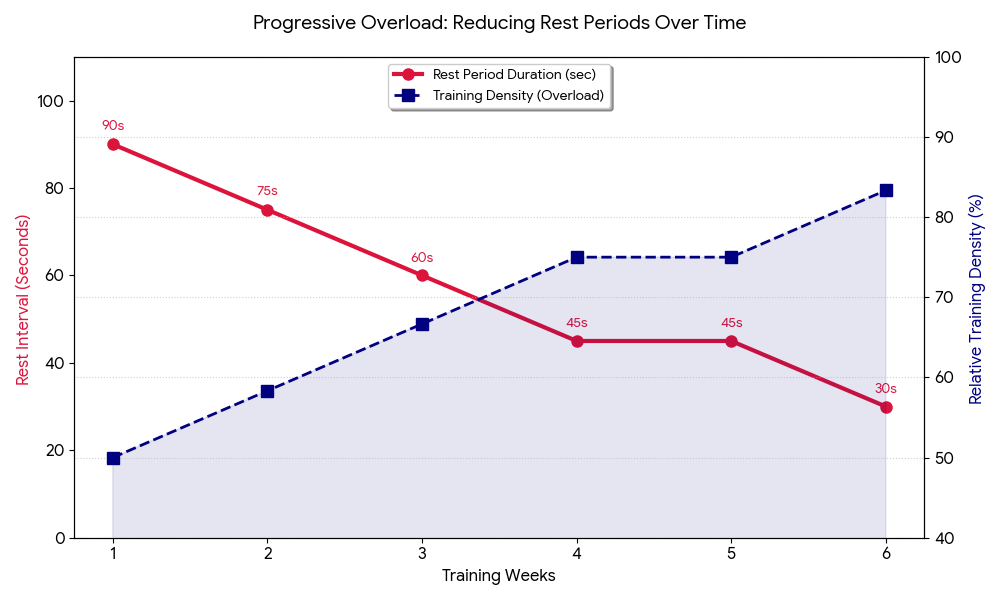
Interestingly, rest periods themselves can be manipulated as a form of progressive overload. A research study from Brazil found that participants who reduced their rest periods by 15 seconds each week for eight weeks experienced more significant gains in upper arm and thigh muscle size compared to those who maintained a constant two-minute rest interval. This indicates that altering rest periods can be a powerful form of progressive overload .
The Rest Rundown technique works like this :
- Week 1: 2 minutes rest between sets
- Week 2: 1 minute 45 seconds rest
- Week 3: 1 minute 30 seconds rest
- Week 4: 1 minute 15 seconds rest
- Continue reducing by 15 seconds weekly
This strategy is tougher than it sounds! You might not always hit the "same reps, same weight" target in every workout, but the challenge itself will trigger metabolic changes in your muscles, leading to greater endurance, strength, and growth .
3.3. Training Frequency and Strength Gains
Research demonstrates that training less frequently can yield equal or superior results. McLester et al. (2000) found no significant difference in strength gains between individuals training three times per week versus once per week, provided total training volume was equated . Schoenfeld et al. (2016) reported that while higher frequency may optimize hypertrophy when volume is matched, strength outcomes are less sensitive to frequency, particularly for trained lifters .
These findings suggest that once adequate training stimulus is applied, additional sessions may not provide proportional benefits. In fact, for advanced lifters with greater recovery demands, fewer but higher-quality sessions often prove more effective .
4. Nutrition on Rest Days: Fueling Recovery
4.1. Protein: The Non-Negotiable
Many athletes wonder: "If I don't train today, does it make sense to take protein anyway?" The idea that protein is only necessary right after training has been widespread for years, but current science shows a very different reality .
Although we tend to associate protein with post-workout, muscle recovery does not occur while you are lifting weights or running, but when you are resting. On those "off" days, your body continues to work to repair damaged fibers, recover energy, reduce inflammation, and prepare the muscle to perform again .
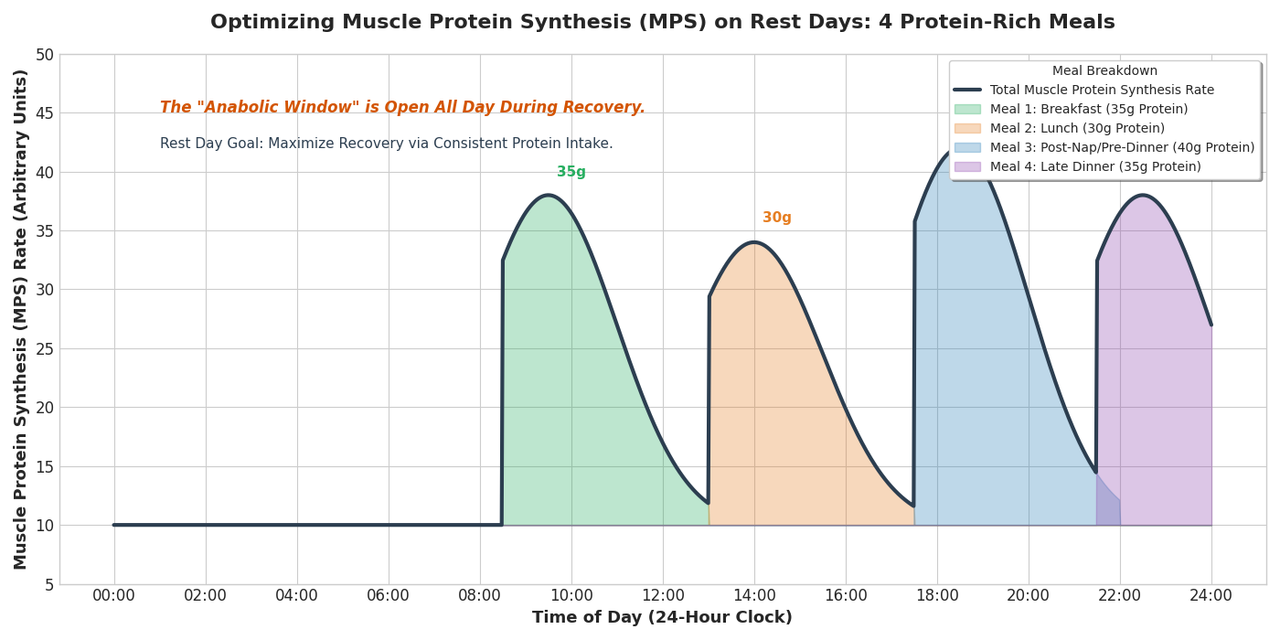
The International Society of Sports Nutrition recommends 1.4–2.0 g/kg of body weight for active individuals, and this applies to rest days as well . For a 70kg individual, that's 98-140g protein daily, evenly distributed across 3-4 meals.
| Body Weight | Daily Protein (1.4g/kg) | Daily Protein (2.0g/kg) |
|---|---|---|
| 60 kg (132 lbs) | 84 g | 120 g |
| 70 kg (154 lbs) | 98 g | 140 g |
| 80 kg (176 lbs) | 112 g | 160 g |
| 90 kg (198 lbs) | 126 g | 180 g |
4.2. Protein Timing on Rest Days
Spreading protein intake evenly across meals is crucial. Research shows that consuming protein in 3-4 balanced meals (0.4–0.5 g/kg per meal) maximizes 24-hour muscle protein synthesis compared to uneven distribution . Pre-sleep protein (30-40g casein) enhances overnight muscle repair .
4.3. Sample Rest Day Meal Plan (~2000 kcal, 130g protein)
- Breakfast (8:00 AM): 3 eggs (18g) + 1 cup oats (10g) + berries. (~28g protein)
- Lunch (12:30 PM): 150g chicken breast (35g) + 1 cup quinoa (8g) + roasted vegetables. (~45g protein)
- Snack (4:00 PM): 1 cup Greek yogurt (20g) + 1 apple + 10 almonds (3g). (~23g protein)
- Dinner (7:30 PM): 150g salmon (30g) + sweet potato + broccoli. (~35g protein)
- Pre-sleep (10:30 PM): 1 cup cottage cheese (24g) or casein shake. (~24g protein)
- Total: ~155g protein
4.4. Vegan Rest Day Options
- Tofu (firm): 150g = 15g protein
- Tempeh: 150g = 20g protein
- Lentils: 1 cup cooked = 18g protein
- Seitan (if not gluten-free): 100g = 25g protein
- Pea protein powder: 1 scoop = 25g protein
- Edamame: 1 cup = 18g protein
4.5. Gluten-Free Adaptations
- Replace wheat-based grains with quinoa, buckwheat, certified gluten-free oats, rice
- All natural protein sources (meat, fish, eggs, dairy, legumes, tofu) are naturally gluten-free
5. Active Recovery: Making the Most of Rest Days
5.1. What Is Active Recovery?
The good news is you don't need to veg out on the sofa all day to call a rest day a rest day. While you can if you wish, you can also enjoy active recovery with a walk in the sunshine, perhaps with friends, or some light stretching or a gentle yoga session – and just move to feel good .

5.2. Benefits of Active Recovery
Gentle activities—such as walking or mobility work—can improve circulation and speed up muscle repair . Even on "off" days, gentle activities support recovery without adding stress .
Active Recovery Ideas
- Walking: 30-60 minutes at conversational pace
- Light stretching: 15-20 minutes full body
- Yoga: Gentle flow focusing on mobility
- Foam rolling: Self-myofascial release
- Swimming: Easy laps without intensity
6. Red Flags: Signs You Need More Rest
Your body has a way of telling you when enough is enough. The real discipline isn't in doing more, it's in knowing when to do less .
- Persistent fatigue: Feeling tired even after sleeping
- Decreased strength and performance: Weights feel heavier, reps decline
- Insomnia or restless sleep: Difficulty falling or staying asleep
- Elevated resting heart rate: Heart rate higher than normal upon waking
- Mood swings or irritability: Increased stress and irritability
- Frequent injuries or nagging aches: Persistent soreness or new pains
- Loss of motivation: Dreading workouts you used to enjoy
As Mike Mentzer famously said, "There's no such thing as being overtrained, only under-rested" .
7. How to Structure Your Rest Days
7.1. Weekly Rest Day Schedule
Rather than waiting until your body breaks down, it's best to create a routine where you have a weekly rest day . Options include:
- Friday rest: End the week recovered and ready for weekend workouts
- Monday rest: Ease into the week after weekend training
- Post-heavy session: Rest after your most intense workout of the week
7.2. Deload Weeks
A 2018 review published in the Journal of Sports Sciences highlighted that planned rest and "deload" weeks reduce injury risk and improve long-term performance . Consider taking a deload week every 6-12 weeks where you reduce volume or intensity by 40-60%.
7.3. Sleep: The Ultimate Recovery Tool
Sleep is when growth hormone is released and muscle repair peaks. Aim for 7-9 hours of quality sleep per night, especially on rest days .
8. Quick Rest Day Recipes (Under 15 Minutes)
1. Greek Yogurt Power Bowl
28g protein1 cup Greek yogurt + 1 tbsp peanut butter + 1 tbsp chia seeds + berries. (~28g protein)
2. Microwave Scrambled Eggs
22g protein3 eggs + splash of milk, microwave 2 min, stir, add spinach. (~22g protein)
3. Tuna Salad Rice Cakes
28g protein1 can tuna + 2 tbsp Greek yogurt + mustard + celery. Serve on 2 rice cakes. (~28g protein)
4. Overnight Oats (Prep Night Before)
25g protein½ cup oats + 1 cup milk + 1 scoop protein powder + 1 tbsp chia seeds + berries. (~25g protein)
5. Cottage Cheese Bowl
24g protein1 cup cottage cheese + cherry tomatoes + black pepper + olive oil. (~24g protein)
9. Common Rest Day Mistakes
- Mistake #1: Skipping protein on rest days. Your body still needs amino acids for repair .
- Mistake #2: Complete inactivity. Active recovery enhances blood flow; complete rest isn't always optimal .
- Mistake #3: Poor sleep habits. Sleep is when most recovery happens—don't sacrifice it .
- Mistake #4: Ignoring signs of overtraining. Listen to your body before injury forces you to stop .
- Mistake #5: Feeling guilty about rest. Rest is strategic, not lazy. "Rest isn't laziness. Rest isn't quitting. Rest is strategy" .
11. Scientific References
- Stoppani, J. (2025). Best Rest Periods for Muscle Growth and Fat Loss. JimStoppani.com. View Source
- NDL Pro-Health. (2025). Protein on rest days? The science behind muscle recovery. NDL Pro-Health Blog. View Source
- Holland & Barrett. (2024). Why rest is essential for muscle growth. Holland & Barrett Health Hub. View Source
- 蕭捷健醫師. (2025). 蛋白質吃錯竟無法增肌!醫揭最佳攝取時間. Common Health Magazine Taiwan. View Source
- BOXROX. (2025). Why Training Less Might Make You Stronger. BOXROX.com. View Source
- NIH National Library of Medicine. (2025). Table 6: Protein recommendations for master athletes. PMC. View Source
- Muscle & Fitness. (2025). Why Rest Days Build More Muscle Than Endless Workouts. Muscle & Fitness. View Source
- Souza-Junior, T.P., et al. (2011). Strength and hypertrophy responses to constant and decreasing rest intervals in trained men using creatine supplementation. Journal of the International Society of Sports Nutrition, 8, 17. (Referenced in )
- McLester, J.R., et al. (2000). Comparison of 1 day and 3 days per week of equal-volume resistance training in experienced subjects. Journal of Strength and Conditioning Research, 14(3), 273–281. (Referenced in )
- Schoenfeld, B.J., et al. (2016). Effects of resistance training frequency on measures of muscle hypertrophy: A systematic review and meta-analysis. Sports Medicine, 46(11), 1689–1697. (Referenced in )
All sources last accessed March 2026. Paraphrased for accessibility.
Join the conversation