Top 10 Natural High-Protein Foods for Muscle Gain
Top 10 Natural High-Protein Foods for Muscle Gain: A Science-Backed Guide

📋 TL;DR
Building muscle requires consistent resistance training and adequate protein intake. Research recommends 1.6–2.2 grams of protein per kilogram of body weight daily for optimal muscle gain . This guide covers the top 10 natural high-protein foods for muscle gain, including lean beef, chicken breast, fish, eggs, dairy, and plant-based options like lentils, quinoa, and hemp seeds. You'll also find sample meal plans (omnivore, vegan, gluten-free), quick recipes, protein timing strategies, and evidence-based nutrition tips to maximize your results.
1. Why Protein is the Foundation of Muscle Growth
Protein is the key macronutrient for muscle building. Protein-rich foods provide amino acids needed for muscle growth and repair . Since muscles are approximately 80% protein, a diet rich in protein can boost muscle mass and strength when combined with resistance training .
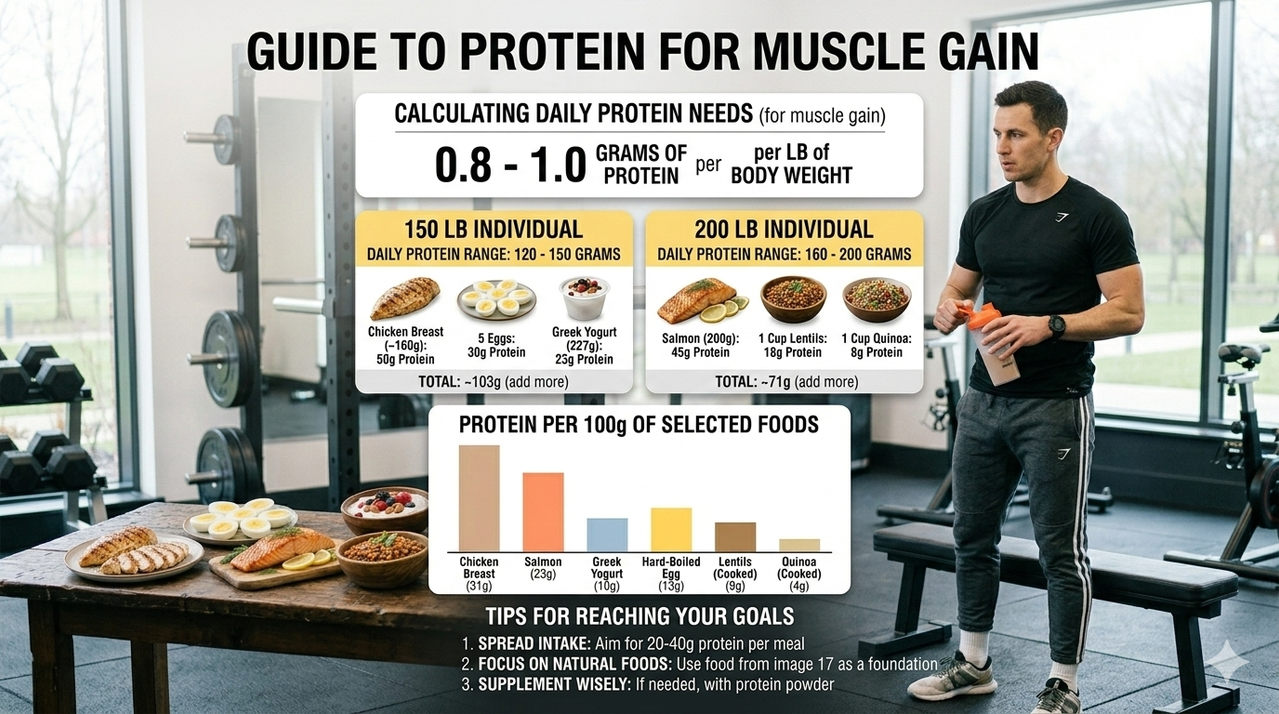
The Recommended Dietary Allowance (RDA) for protein is 0.8 grams per kilogram of body weight (0.36 grams per pound). However, if you're trying to build muscle, you'll need significantly more protein . Current research suggests that consuming 1.6–3.1 grams of protein per kilogram (0.7–1.4 grams per pound) daily, combined with resistance training, is effective for muscle gain . For a 150-pound person, this translates to about 105-210 grams of protein per day .
Beyond total intake, emerging research highlights the importance of protein distribution, meal timing, and food matrix effects. A 2025 study found that whole foods may be superior to processed protein sources for stimulating post-workout muscle-protein synthesis . This guide presents the top 10 natural high-protein foods for muscle gain, with practical recommendations for incorporating them into your daily diet.
2. The Science of Protein Quality and Muscle Synthesis
2.1. Complete vs. Incomplete Proteins
Proteins are made of amino acids, and nine of these are "essential" because your body cannot produce them. Complete proteins contain all nine essential amino acids in adequate amounts. Most animal-based proteins (meat, fish, eggs, dairy) are complete, while most plant proteins are incomplete, lacking one or more essential amino acids . However, combining complementary plant proteins (like rice and beans or lentils and quinoa) creates a complete amino acid profile .
2.2. The Food Matrix Effect: Whole Foods vs. Processed Protein
Recent research challenges the idea that all protein sources are equal. A 2025 study published in the American Journal of Clinical Nutrition found that eating whole foods like lean pork after weight training led to greater muscle-protein synthesis compared to consuming protein isolates or high-fat versions of the same food .
Dr. Nicholas Burd, the study's lead author, explains: "What we're finding is that not all high-quality animal protein foods are created equal. Whole foods are more nutrient-dense and better quality than a shake" . Previous research from his lab found that whole eggs stimulated muscle growth better than egg whites, and salmon outperformed processed nutrient mixtures .
2.3. Protein Timing and Distribution
Experts recommend spreading protein intake evenly across 3-4 meals throughout the day. This "protein pulse feeding" strategy may be more effective for muscle protein synthesis than consuming most protein in one meal . The traditional "anabolic window" immediately post-workout may be less critical than once thought—you have approximately two hours after exercise when muscles are most sensitive to amino acids, and total daily intake matters most .
3. Top 10 Natural High-Protein Foods for Muscle Gain
Based on nutritional science and recent research, these are the best natural sources of protein to support muscle growth.
3.1. Animal-Based Protein Sources
1. Lean Beef
25g protein per 3 ozNutrition basics: 3 ounces cooked: 25g protein, 186 calories .
Why it's top-tier: Beef contains several nutrients beneficial for muscle growth and recovery :
- Creatine: Increases energy stores in muscles, enabling tougher workouts and aiding recovery .
- L-carnitine: Carries fatty acids to mitochondria for energy, preserving muscle glycogen for longer training .
- Carnosine and beta-alanine: Help reduce muscle soreness and fatigue by balancing pH levels .
Best for: Post-workout meals. Try grilling lean cuts (sirloin, top round) or adding to stir-fries.
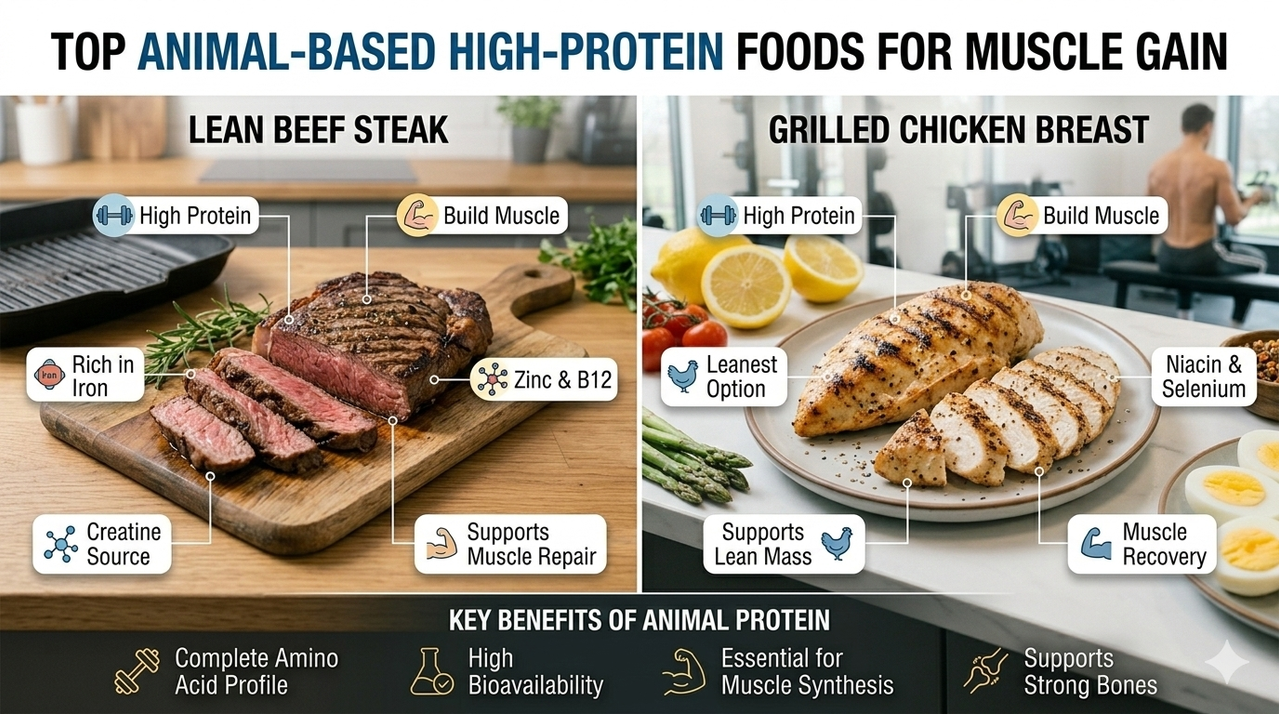
2. Chicken Breast
26g protein per 3 ozNutrition basics: 3 ounces cooked: 26g protein, 128 calories .
Why it's top-tier: Chicken breast is a lean protein source containing many of the same nutrients as beef (creatine, carnosine, beta-alanine) at slightly different concentrations . It's versatile, low in fat, and easily incorporated into any meal.
Best for: Post-workout meals, salads, pastas, and meal prep. Remove skin to keep fat content minimal.
3. Fish (Salmon, Tuna, Cod)
17-22g protein per 3 ozNutrition basics: 3 ounces cooked or canned: Tuna 20g protein, 109 calories; Cod 17g protein, 71 calories .
Why it's top-tier: Fatty fish like salmon provide omega-3 fatty acids, which have anti-inflammatory effects that reduce muscle soreness and support quicker recovery . Studies suggest omega-3s may also boost muscle growth .
Best for: Post-workout meals, fish tacos, grain bowls, or sandwiches.
4. Eggs (Whole)
6g protein per large eggNutrition basics: One large egg: 6g protein, 72 calories .
Why it's top-tier: Eggs are a high-quality complete protein. Egg yolks contain over 40% of the total protein in an egg, and research shows that consuming whole eggs after strength training leads to greater muscle growth than egg whites alone .
Best for: Breakfast, post-workout meals, added to casseroles, ramen, or grain bowls.
5. Greek Yogurt
20g protein per 7 ozNutrition basics: 7 ounces: 20g protein, 146 calories .
Why it's top-tier: Greek yogurt is rich in casein, a slow-digesting milk protein that provides a sustained release of amino acids, making it ideal for muscle repair, especially when consumed before bed . Research has found Greek yogurt helps muscles grow both after exercise and during rest .
Best for: Breakfast, snacks, parfaits, or pre-bed meals.
6. Cottage Cheese
12-14g protein per 4 ozNutrition basics: 4 ounces: 12-14g protein, 92 calories .
Why it's top-tier: Like Greek yogurt, cottage cheese is rich in casein protein, providing a slow, steady amino acid release that supports overnight muscle repair .
Best for: Snacks, pre-bed meals, mixed with fruit or savory seasonings.
3.2. Plant-Based Protein Sources
7. Soybeans (Edamame, Tofu, Tempeh)
16-20g protein per servingNutrition basics: ½ cup cooked soybeans: 16g protein, 148 calories . Tempeh: 19.9g per 100g .
Why it's top-tier: Soybeans are one of the few plant proteins that are complete, containing all essential amino acids . Research shows soy protein works just as well as whey protein for building muscle . Isoflavones in soy have antioxidant and anti-inflammatory properties that may reduce exercise-induced muscle damage .
Best for: Stir-fries, scrambles, bowls, or as a meat alternative.
8. Lentils
18g protein per cup (cooked)Nutrition basics: 1 cup cooked: 18g protein, 230 calories .
Why it's top-tier: Lentils are protein powerhouses in the legume family. They're also rich in fiber, iron, and folate . While lentils alone don't contain all essential amino acids, pairing them with grains (like rice) creates a complete protein .
Best for: Soups, stews, dals, protein bowls, or lentil "tofu." Avoid eating large amounts immediately before workouts due to fiber content .
9. Quinoa
8g protein per cup (cooked)Nutrition basics: 1 cup cooked: 8g protein, 220 calories .
Why it's top-tier: Quinoa is a rare plant-based complete protein, containing all nine essential amino acids . It's also gluten-free, rich in fiber, and provides B vitamins and magnesium .
Best for: Breakfast bowls, lunch salads, dinner sides, or mixed with lentils for a complete protein meal.
10. Hemp Seeds
9.5g protein per 3 tablespoonsNutrition basics: 3 tablespoons: 9.5g protein, 166 calories .
Why it's top-tier: Hemp seeds are nutrient-dense, providing over half the daily value for magnesium and around one-third for zinc in one serving . Zinc supports protein synthesis and immune function, iron delivers oxygen to muscles, and magnesium aids muscle contraction . Hemp seeds also contain omega-3 and omega-6 fatty acids .
Best for: Adding to oatmeal, yogurt, smoothies, baked goods, or salads.
4. Sample Meal Plans for Muscle Gain
4.1. Omnivore Sample Meal Plan (~2500 kcal, 160g protein)
- Breakfast (7:00 AM): 3 whole eggs (18g) + 1 cup Greek yogurt (20g) + 1 cup oats + berries. (~40g protein)
- Lunch (12:30 PM): 6 oz grilled chicken breast (45g) + 1 cup quinoa (8g) + roasted vegetables. (~55g protein)
- Snack (4:00 PM): 1 cup cottage cheese (24g) + 1 apple + 10 almonds. (~28g protein)
- Dinner (7:30 PM): 6 oz salmon (40g) + sweet potato + steamed broccoli. (~42g protein)
- Evening (optional): Casein shake or Greek yogurt (20g) for overnight recovery .
4.2. Vegan Sample Meal Plan (~2500 kcal, 150g protein)
- Breakfast: Tofu scramble (200g firm tofu = 20g) + 2 slices whole-grain toast + spinach + 2 tbsp hemp seeds (6g). (~28g)
- Lunch: Lentil-quinoa bowl: 1 cup lentils (18g) + 1 cup quinoa (8g) + roasted veggies + tahini sauce + ½ cup edamame (9g). (~38g)
- Snack: Vegan protein shake (pea/rice blend, 25g) + 1 banana + 1 tbsp almond butter. (~30g)
- Dinner: Tempeh stir-fry: 200g tempeh (30g) + broccoli + bell peppers + brown rice (5g). (~40g)
- Evening: Chia pudding made with 3 tbsp chia seeds (6g) + soy milk (7g). (~13g)
4.3. Gluten-Free Adaptations
- Replace wheat-based grains with quinoa, buckwheat, certified gluten-free oats, rice, amaranth.
- All natural protein sources (meat, fish, eggs, dairy, legumes, tofu, tempeh) are naturally gluten-free.
- Check labels on protein powders for gluten-free certification.
5. Quick High-Protein Recipes (Under 10 Minutes)
5.1. Pre/Post-Workout Options
- Greek Yogurt Power Bowl: 1 cup Greek yogurt + 1 tbsp peanut butter + 1 tbsp chia seeds + berries. (~28g protein)
- Microwave Scrambled Eggs: 3 eggs + splash of milk, microwave 2 min, stir, add cheese. (~22g protein)
- Protein Smoothie: 1 scoop protein + 1 cup milk (dairy/soy/almond) + 1 tbsp almond butter + ½ banana + ice. (~30g protein)
5.2. Quick Meals
- Tuna Salad on Rice Cakes: 1 can tuna (25g) + 2 tbsp Greek yogurt + mustard + celery. Serve on rice cakes. (~28g protein)
- Microwaved Salmon with Quinoa: Pre-cooked quinoa + 3 oz smoked salmon + avocado + lemon. (~25g protein)
- Vegan Chickpea Salad: 1 can chickpeas (mashed) + vegan mayo + mustard + celery. Serve with rice cakes. (~18g protein)
- Cottage Cheese Bowl: 1 cup cottage cheese + cherry tomatoes + black pepper + olive oil. (~24g protein)
6. 5 Common Mistakes When Increasing Protein Intake
- Mistake #1: Relying solely on protein shakes. Whole foods provide additional nutrients that may enhance muscle-protein synthesis .
- Mistake #2: Consuming most protein in one meal. Spread intake across 3-4 meals for better muscle protein synthesis .
- Mistake #3: Ignoring plant protein combinations. Pair incomplete proteins (rice + beans, lentils + quinoa) to create complete profiles .
- Mistake #4: Choosing high-fat protein sources post-workout. Fat slows digestion; opt for leaner proteins immediately after training .
- Mistake #5: Neglecting overall calorie intake. You need a slight calorie surplus to build muscle effectively.
8. Scientific References
- Health.com. (2025). Muscle-Building Diet Plan: Top Foods for Muscle Gain. Health. View Source
- EurekAlert! (2025). Study: Muscle-building response to weight training differs among high-protein animal foods. University of Illinois at Urbana-Champaign. View Source
- Women's Health. (2026). 蛋白質什麼時候吃最有效?營養師揭密「黃金分配法」. Women's Health Taiwan. View Source
- Continental Hospitals. (2025). Rice Protein: A Gluten-Free Vegan Protein Option. Continental Hospitals Blog. View Source
- Health.com. (2026). 10 High-Protein Foods That Help Support Muscle Growth and Faster Recovery. Health. View Source
- SELF Magazine. (2025). This Food Beats Protein Shakes for Building Muscle, New Research Says. SELF. View Source
- Women's Health. (2025). 想增肌「蛋白質什麼時候吃」最有效?營養師揭密「2關鍵時間」. Women's Health Taiwan. View Source
- Hindustan Times. (2025). Are you vegan? Nutritionist shares 11 high-protein foods to boost daily protein intake naturally. Hindustan Times. View Source
- Women's Health. (2025). 想增肌不是只能吃雞胸肉!營養師曝10大高蛋白質食物、「1穀類」也上榜. Women's Health Taiwan. View Source
- M3 Research Group. (2025). The food matrix: From protein concentrates to wholefoods. Maastricht University. View Source
All sources last accessed March 2026. Paraphrased for accessibility.
Join the conversation