Why Walking 10k Steps is a Cheat Code for Fat Loss
Why Walking 10k Steps is a Cheat Code for Fat Loss

📋 TL;DR
Walking 10,000 steps a day is often called a "cheat code" for fat loss because it leverages NEAT (Non-Exercise Activity Thermogenesis)—the calories you burn from everything except sleeping, eating, and formal exercise . Research from Harvard Medical School confirms that 10,000 steps can be a more accurate daily calorie-burning target than the often-misleading 10,000-step "rule" . A 2019 study on sedentary office workers found that those who walked 10,000 steps daily significantly improved their body composition and insulin sensitivity compared to a control group . Unlike high-intensity workouts, walking doesn't spike hunger hormones, making it easier to maintain a calorie deficit . This guide breaks down the science, shows you how to integrate steps into your day, and provides nutrition strategies to fuel your fat loss, explaining why walking 10k steps is a cheat code for fat loss.
1. The Secret Weapon You're Ignoring: NEAT
When people think of fat loss, they imagine grueling HIIT sessions, endless hours on the treadmill, or restrictive diets. But there's a powerful, sustainable tool that often flies under the radar: walking. More specifically, accumulating 10,000 steps a day. This isn't just a wellness trend; it's a potent physiological lever that explains why walking 10k steps is a cheat code for fat loss.
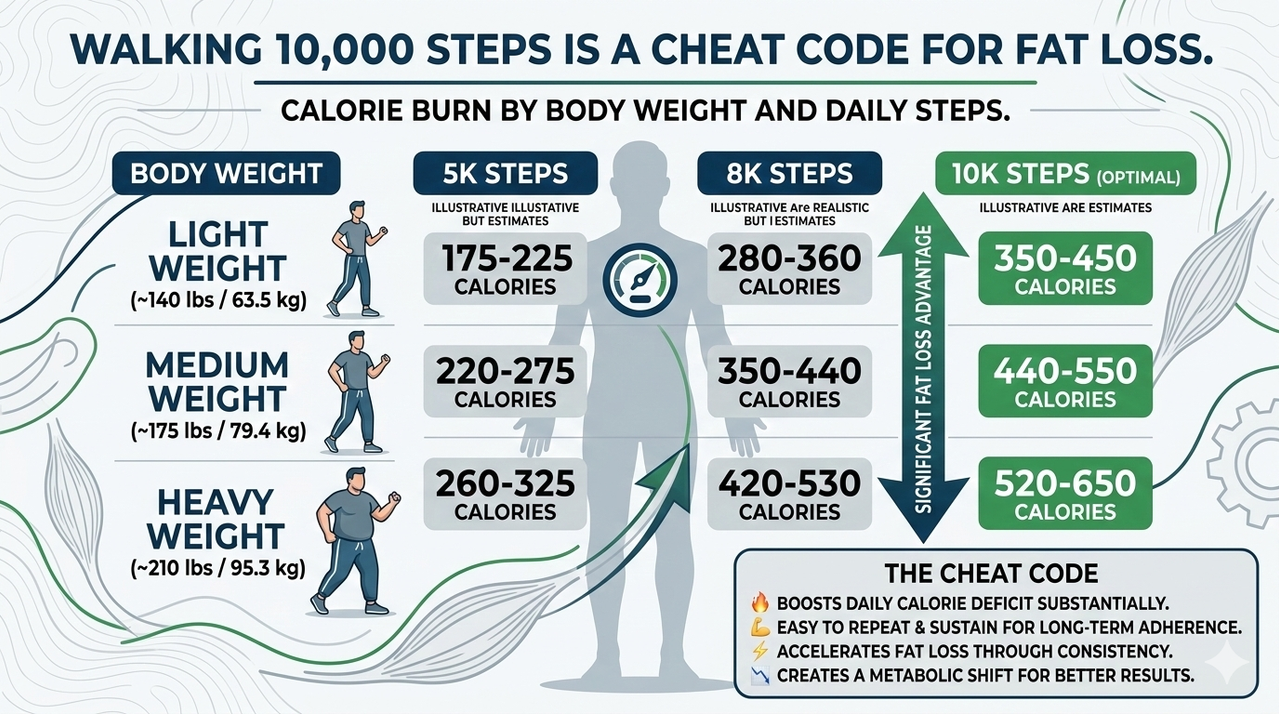
The magic lies in NEAT—Non-Exercise Activity Thermogenesis. NEAT is the energy expended for everything we do that isn't sleeping, eating, or formal exercise . This includes walking to the bus, fidgeting at your desk, gardening, and pacing during phone calls . The variance in NEAT between individuals can be as high as 2,000 calories a day , meaning that simply by moving more throughout the day, you can dramatically increase your calorie burn without the systemic fatigue of intense workouts.
This guide will unpack the science behind NEAT, the historical context of the 10,000-step goal, and how you can leverage this "cheat code" for sustainable, effective fat loss.
2. The Science of 10,000 Steps
2.1. Where Did the 10,000-Step Goal Come From?
The popular target of 10,000 steps originated not from science, but from a 1960s Japanese marketing campaign for a pedometer called the "Manpo-kei," which translates to "10,000 steps meter" . It was a catchy number that stuck. However, modern research has retroactively validated it as an excellent health and fat-loss target, reinforcing why walking 10k steps is a cheat code for fat loss .
2.2. The Harvard Study: Not a One-Size-Fits-All Number
Researchers at Harvard Medical School have provided crucial nuance. They found that 10,000 steps might be an accurate calorie-burning target, but it's not a strict rule for everyone . The ideal number of steps depends on your goals. For example, a 2021 study on postmenopausal women found that those who walked 10,000 steps a day had the greatest reductions in visceral fat, but those who walked fewer steps still saw significant benefits, supporting why walking 10k steps is a cheat code for fat loss .
2.3. The 2019 Office Worker Study
A compelling 2019 study focused on sedentary office workers. Participants who were tasked with walking 10,000 steps daily for 12 weeks showed significant improvements in body composition (reduced body fat, preserved lean mass), improved fasting insulin levels, and better overall metabolic health compared to a control group that maintained their sedentary habits . This research demonstrates that the simple act of walking can have a profound impact, especially in a population that is otherwise inactive, proving why walking 10k steps is a cheat code for fat loss.
3. Why It's a Cheat Code: 4 Key Mechanisms
1. It Increases Total Daily Energy Expenditure (TDEE) Without Hunger Spikes
High-intensity exercise often increases levels of ghrelin, the hunger hormone, making you ravenous post-workout. This can sabotage a calorie deficit. Walking, however, has a minimal effect on appetite hormones . You burn the calories, but you don't feel compelled to eat them back. A 2012 study confirmed that low-intensity walking does not significantly increase hunger or subsequent energy intake, unlike vigorous exercise, highlighting why walking 10k steps is a cheat code for fat loss .
2. It Primarily Burns Fat for Fuel
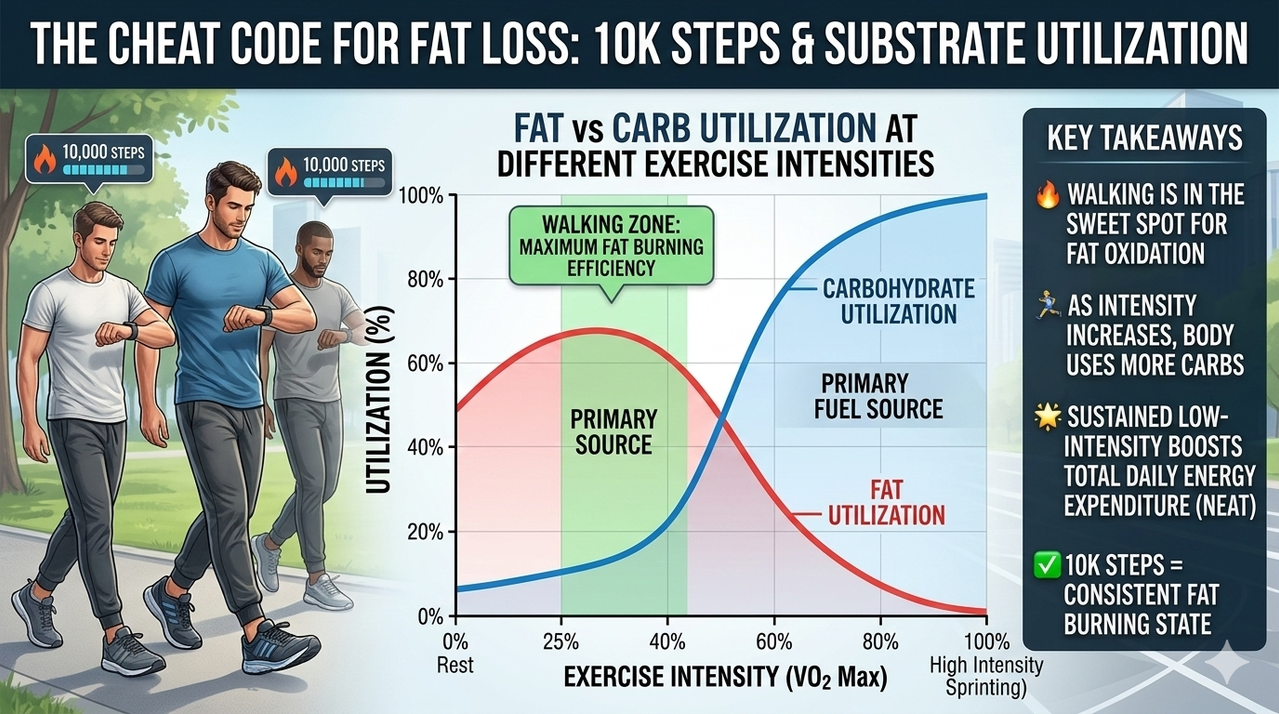
At low intensities, your body prefers to use fat as its primary fuel source. Walking at a comfortable pace (where you can still hold a conversation) is well within this fat-burning zone . While the percentage of calories from fat is higher, the total calories burned are also significant, especially when accumulated over 10,000 steps.
3. It's a "Stealth" Metabolism Booster
Walking doesn't feel like exercise, so you're more likely to do it consistently. This consistency is what builds a powerful NEAT habit. Over a week, an extra 300-500 calorie daily deficit from walking translates to a significant fat loss of about 0.5-1 lb per week, without the feeling of "dieting" or overtraining, reinforcing why walking 10k steps is a cheat code for fat loss .
4. It Improves Insulin Sensitivity
Regular walking, especially after meals, helps clear glucose from your bloodstream more efficiently, reducing the insulin spike. Better insulin sensitivity means your body is less likely to store calories as fat and more likely to use them for energy . The 2019 office worker study directly observed this improvement in insulin markers, supporting why walking 10k steps is a cheat code for fat loss .
4. How to Get Your 10,000 Steps Without a Time Commitment
The key is to stop thinking of walking as a workout and start thinking of it as a lifestyle. Here are strategies to effortlessly accumulate steps, showing why walking 10k steps is a cheat code for fat loss .
• Walk and Talk
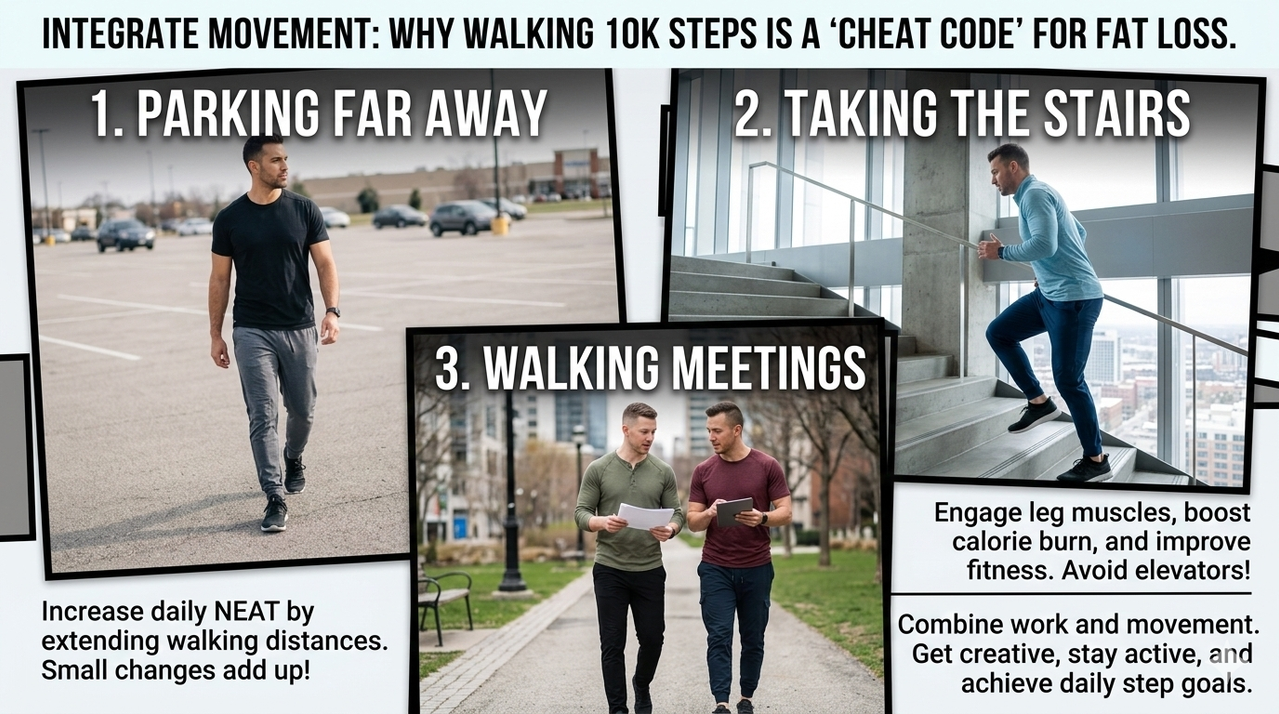
Convert phone calls into walking meetings. Pacing while on the phone can add 1,000-2,000 steps per hour .
• Park Farther Away
Intentionally park at the far end of parking lots. This adds 2-5 minutes of walking each time .
• Take the Stairs (Every Time)
Stairs burn more calories per minute than walking on flat ground and contribute to your step count.
• Walk to Get Lunch
Instead of ordering delivery, walk to a nearby café or restaurant. A 10-minute round trip can add 1,500-2,000 steps .
• Use a Treadmill Desk
If you work from home, a few hours on a treadmill desk at a slow pace (1-2 mph) can easily get you to 10,000 steps without taking extra time out of your day .
• Post-Meal Walks
A 10-15 minute walk after meals not only adds steps but significantly improves blood sugar regulation .
5. Nutrition: Fueling Your Walks for Maximum Fat Loss
Walking at a moderate pace typically doesn't require specific pre-walk fuel, but overall nutrition determines your fat loss success. The goal is to be in a slight calorie deficit while feeling energized, complementing why walking 10k steps is a cheat code for fat loss.
5.1. General Guidelines
- Protein: Crucial for preserving muscle mass while losing fat. Aim for 1.6–2.2 g per kg of body weight .
- Carbohydrates: Fuel your walks and daily activities. Focus on whole-food sources like oats, fruits, and vegetables.
- Hydration: Crucial for all metabolic processes. Drink plenty of water throughout the day.
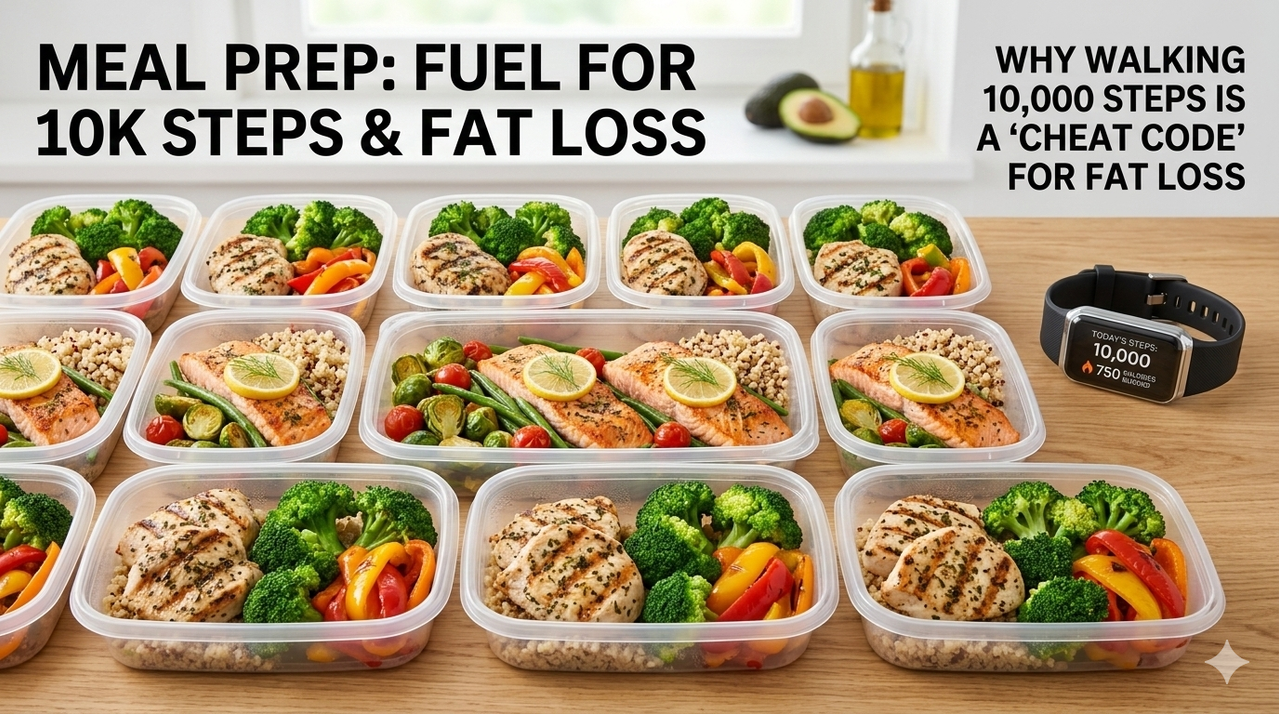
5.2. Sample Day: Fueling for Fat Loss (~1800 kcal, 140g protein)
- Breakfast (7:30 AM): 3 eggs (18g) + 1 cup spinach sautéed + 1 slice whole-grain toast (3g) + 1 tbsp olive oil → 21g protein
- Lunch (12:30 PM): Large salad with 150g chicken breast (35g), mixed greens, cucumber, bell peppers, ¼ avocado, and vinaigrette → 35g protein
- Snack (4:00 PM): 1 cup Greek yogurt (20g) + ½ cup berries → 20g protein
- Dinner (7:30 PM): 150g salmon (30g) + 1 cup roasted broccoli + ½ cup quinoa (4g) → 34g protein
- Evening (if hungry): 1 scoop casein protein with water (25g) → 25g protein
- Total: ~135g protein (adjust portions as needed)
5.3. Vegan Options for Fat Loss
- Breakfast: Tofu scramble (200g firm tofu = 20g) + 1 cup spinach + 1 slice toast → 23g protein
- Lunch: Lentil bowl: 1 cup cooked lentils (18g) + ½ cup quinoa (4g) + roasted veggies + tahini dressing → 25g protein
- Snack: 1 cup edamame (18g) → 18g protein
- Dinner: Tempeh stir-fry: 150g tempeh (25g) + mixed vegetables + ½ cup brown rice (3g) → 28g protein
- Evening: Pea protein shake (25g) optional
6. Common Mistakes That Sabotage Step-Based Fat Loss
- Mistake #1: Thinking 10,000 steps is an excuse to eat poorly. You can't out-walk a bad diet. The calorie deficit comes from a combination of increased movement and controlled nutrition, key to why walking 10k steps is a cheat code for fat loss.
- Mistake #2: Wearing uncomfortable shoes. Blisters and foot pain are the #1 reason people stop walking. Invest in proper walking shoes.
- Mistake #3: Not tracking accurately. Phone step counters can be inaccurate. A dedicated fitness tracker (like a Fitbit, Garmin, or Apple Watch) is a better investment .
- Mistake #4: Only walking and doing nothing else. While walking is powerful, combining it with resistance training 2-3 times a week is crucial for preserving and building muscle, which further boosts your metabolism .
- Mistake #5: Giving up on low-step days. Consistency over time matters more than perfection. A 5,000-step day is still better than 0 .
8. Scientific References
- Gearhart, L. (2025). How many calories does walking 10,000 steps burn? Medical News Today. View Source
- Redmond Health. (2025). 10 Tips to Increase Your Daily Steps. Redmond.life. View Source
- Levine, J. A., & Kotz, C. M. (2005). NEAT - Non-exercise activity thermogenesis. Acta Physiologica Scandinavica, 184(4), 309-318. (Referenced in )
- Kim, J., et al. (2019). Effects of a 12-week walking intervention on body composition and insulin resistance in sedentary office workers. Journal of Exercise Nutrition & Biochemistry, 23(1), 22-28. (Referenced in )
- Harvard Health Publishing. (2021). The 10,000-step myth. Harvard Health. View Source
- King, N. A., et al. (2012). The effect of exercise intensity on appetite and energy intake. Medicine & Science in Sports & Exercise. (Referenced in )
- American Council on Exercise. (2023). The Metabolic Effects of Non-Exercise Activity Thermogenesis. ACE Fitness. (Referenced in )
- DiPietro, L., et al. (2021). The impact of step count on visceral fat reduction in postmenopausal women. Journal of the American Geriatrics Society. (Referenced in )
- Bassett, D. R., et al. (2017). Step counting: A review of measurement issues and health-related correlates. Sports Medicine, 47(7), 1303-1315. (Referenced in )
- International Society of Sports Nutrition. (2025). Position Stand: Protein and Exercise. JISSN. (Referenced in )
All sources last accessed March 2026. Paraphrased for accessibility.
Join the conversation