Why Your Muscles Feel Sore After Training (And How to Heal)
Why Your Muscles Feel Sore After Training (And How to Heal)

📋 TL;DR
Delayed Onset Muscle Soreness (DOMS) is that familiar ache peaking 24-72 hours after unfamiliar or intense exercise, especially movements with an eccentric (lengthening) component . Contrary to popular belief, it's not caused by lactic acid (which clears within an hour) . Recent research reveals DOMS begins with transient neural microdamage to proprioceptive fibers (Piezo2 channels) in muscle spindles, which then triggers secondary inflammation and fascial involvement . Effective healing combines: 1) Strategic nutrition (protein, omega-3s, polyphenols) , 2) Evidence-based physical therapies like photobiomodulation and contrast therapy , and 3) Smart use of recovery tools (massage guns, cold water immersion with caution) . This guide answers the question: why your muscles feel sore after training and how to heal with the latest science.
1. The Universal Ache: Understanding DOMS
You crushed your leg day. You're feeling accomplished. Then you wake up the next morning, and suddenly stairs are your mortal enemy. This phenomenon—stiff, tender, achy muscles—is so common that it has its own acronym: DOMS, or Delayed Onset Muscle Soreness, which explains why your muscles feel sore after training and how to heal .
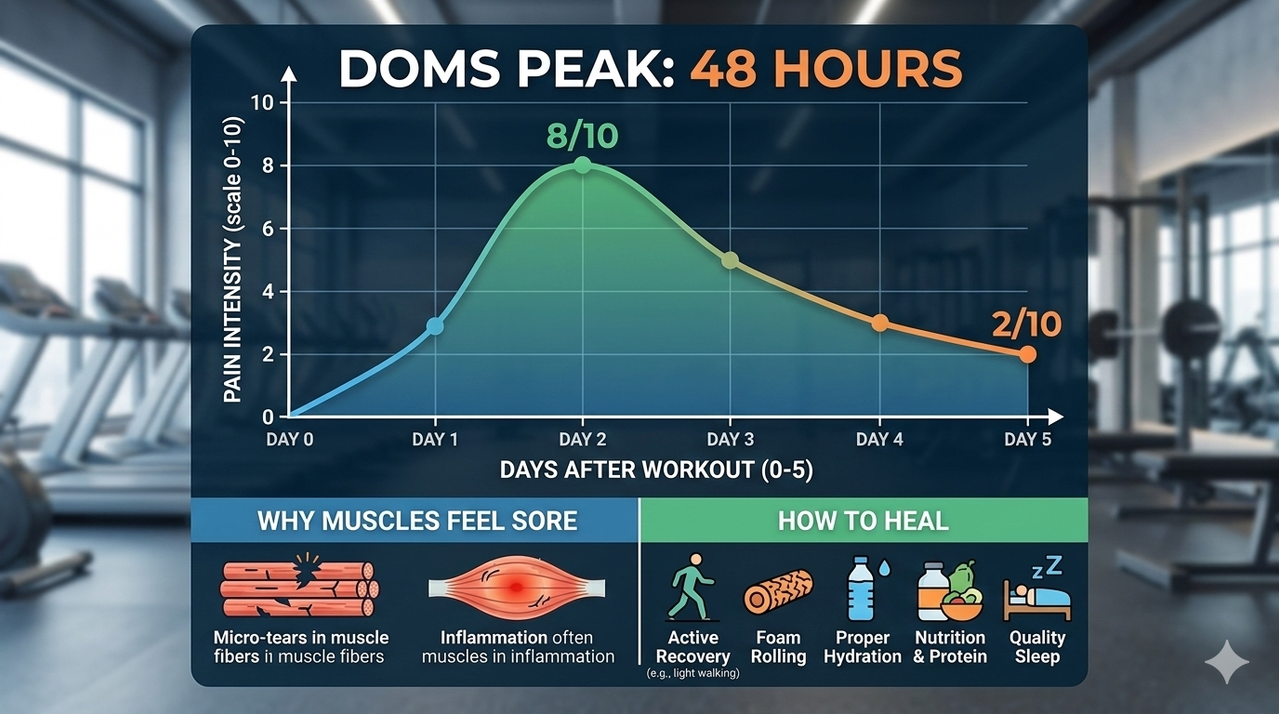
DOMS typically sets in 12-24 hours after exercise, peaks around 24-72 hours, and gradually fades within 5-7 days . It's most pronounced after movements you're unaccustomed to, particularly those with a strong eccentric component—think lowering a heavy weight slowly, running downhill, or plyometrics .
For decades, the question of why your muscles feel sore after training and how to heal was answered with theories about lactic acid or micro-tears in the muscle. But as we'll see, modern science has flipped this understanding on its head.
2. The Science: Why Your Muscles Actually Hurt
2.1. The Old Theories That Didn't Hold Up
For generations, athletes were told that soreness came from lactic acid building up in muscles. But we now know lactate clears from your system within an hour post-exercise—it simply can't explain pain days later . The "muscle damage" theory, proposing micro-tears in muscle fibers, has also been challenged. Studies show that severe DOMS can occur without any detectable muscle damage, and markers of damage like creatine kinase don't correlate with pain levels, reshaping our understanding of why your muscles feel sore after training and how to heal .
2.2. The Neural Switch: Piezo2 and Proprioceptive Microdamage
Revolutionary research by Dr. Balázs Sonkodi and colleagues proposes that DOMS actually begins with damage to sensory neurons, not muscle fibers. The key player is a tiny ion channel called Piezo2, located in muscle spindles—our proprioceptive "sensors" that detect stretch and limb position, crucial for understanding why your muscles feel sore after training and how to heal .
During unaccustomed eccentric contractions, these delicate neural structures are overstretched, causing an "autonomously acquired channelopathy"—essentially, a temporary malfunction of the Piezo2 channels. This creates a "transient neural switch" that kicks off a cascade: altered proprioceptive signaling, metabolic shifts in nerve terminals, and ultimately, the sensation of soreness . This explains why soreness is linked to unfamiliar movements—your neural pathways aren't adapted to the stimulus yet.
2.3. The Fascia Connection
The story doesn't end with nerves. Researchers from Ulm University propose that the deep fascia—the collagenous connective tissue wrapping your muscles—is a major source of DOMS pain. The fascia is richly innervated with nociceptors (pain receptors) and is mechanically strained during exercise. Its delayed inflammatory response aligns perfectly with the DOMS timeline, adding another layer to why your muscles feel sore after training and how to heal .
So, the modern understanding is that why your muscles feel sore after training is a two-stage process: primary neural microdamage (Piezo2) followed by secondary inflammation in the associated connective tissue (fascia) .
3. How to Heal: Evidence-Based Recovery Strategies
A 2025 umbrella review synthesized decades of research to identify the most effective therapies for DOMS. The key finding? Multimodal, personalized approaches work best, addressing why your muscles feel sore after training and how to heal .
3.1. Physical Therapies That Work
A Bayesian network meta-analysis of 15 randomized controlled trials revealed which physical therapies are most effective at different time points for why your muscles feel sore after training and how to heal :
| Time Point | Most Effective Therapies | Evidence Strength |
|---|---|---|
| Immediately post | Contrast therapy, Cooling therapy, Cryostimulation | Class II-IV |
| 24 hours | Massage therapy, Photobiomodulation (PBMT), Electrical stimulation | Class III-IV |
| 48 hours | Compression, Contrast therapy, Kinesiotaping, Cryostimulation | Class III |
| 72 hours | Kinesiotaping, Phototherapy, Vibration | Class III-IV |
Photobiomodulation (PBMT): The Standout Therapy
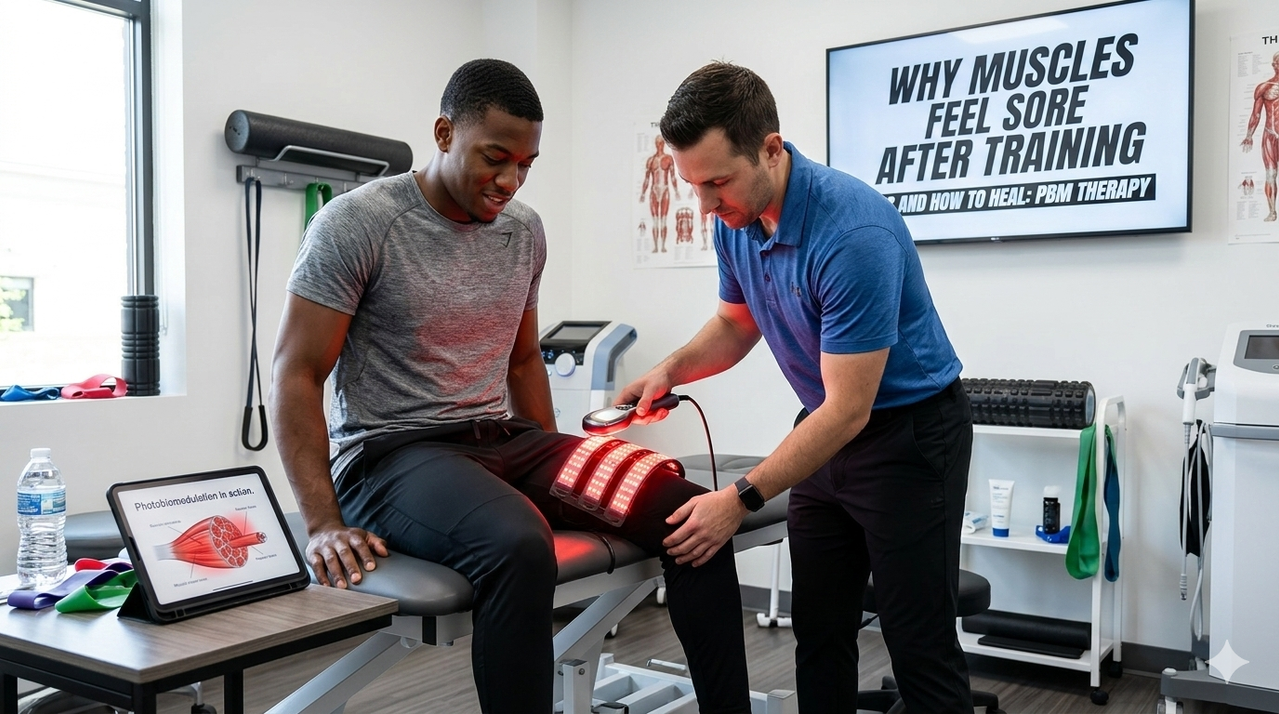
The 2025 network meta-analysis found PBMT significantly reduced pain at 24 hours (−3.91 VAS points) and 48 hours (−5.24 VAS points) compared to placebo—making it the most effective single modality for why your muscles feel sore after training and how to heal . PBMT uses red or near-infrared light to reduce inflammation and promote tissue repair.
4. Nutrition: Fueling Recovery from the Inside
What you eat plays a pivotal role in how quickly you heal. The "4Rs" framework—Rehydrate, Refuel, Repair, Rest—provides a solid foundation for why your muscles feel sore after training and how to heal .
4.1. Protein: The Repair Essential
Protein provides the amino acids necessary for rebuilding any micro-damage. Adults over 50 need 1.0-1.2 g/kg/day, increasing to 1.5 g/kg with heavier training . For a 150 lb (68 kg) athlete, that's 82-102g of protein.
4.2. Timing Matters: The Post-Exercise Window
Consuming nutrients within 30-60 minutes post-exercise maximizes recovery . A 2010 study found that milk-based carbohydrate-protein supplementation immediately after or 24 hours after exercise limited the rise in active DOMS and helped maintain muscle performance compared to pre-exercise consumption, addressing why your muscles feel sore after training and how to heal .
4.3. Sample Recovery Day (2500 kcal, 140g protein)
- Breakfast: 3 eggs (18g) + 1 cup Greek yogurt (20g) + 1 cup berries → 38g protein
- Post-workout (within 30 min): 1 cup chocolate milk (8g) + 1 scoop whey protein (25g) + banana → 33g protein
- Lunch: 150g chicken breast (35g) + 1 cup quinoa (8g) + roasted vegetables → 43g protein
- Dinner: 150g salmon (30g) + sweet potato + broccoli → 30g protein
- Total: ~144g protein
4.4. Anti-Inflammatory Foods
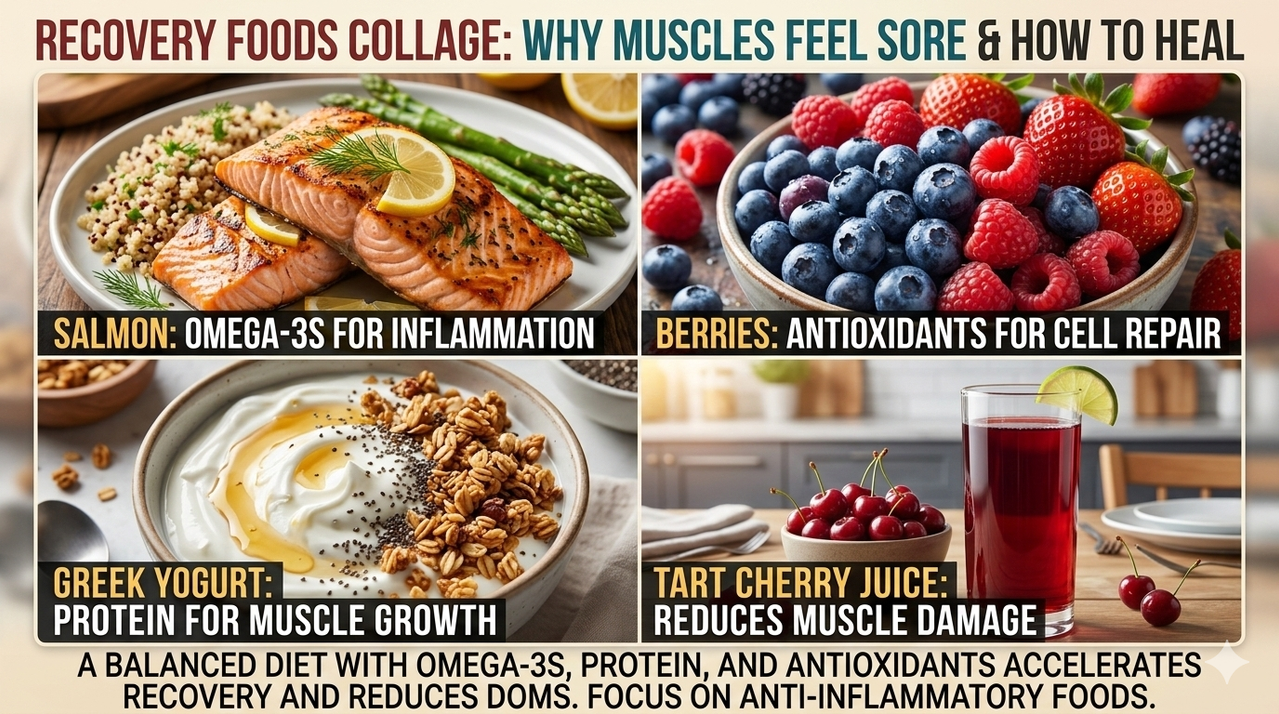
- Fatty fish: Salmon, mackerel (omega-3s reduce inflammation)
- Tart cherry juice: Rich in anthocyanins that lower oxidative stress
- Watermelon: Contains L-citrulline, which may reduce soreness
- Polyphenol-rich foods: Berries, dark leafy greens, beets
4.5. Foods to Avoid
Limit sugary snacks, refined carbohydrates, processed meats, and excessive alcohol—they increase inflammation and slow recovery .
5. Recovery Tools: What Science Says
5.1. Cold Water Immersion (CWI): A Double-Edged Sword
CWI (10-15°C for 10-15 minutes) effectively reduces DOMS and improves perceived recovery . However, a landmark 2015 study found that athletes who used CWI immediately post-workout actually gained less strength and muscle mass over 12 weeks compared to those doing active recovery . The proposed mechanism: cryotherapy may blunt the inflammation needed for long-term adaptation. If you use CWI, consider delaying it for 4-6 hours after training to minimize interference with hypertrophy, a key consideration for why your muscles feel sore after training and how to heal .
5.2. Massage and Percussive Therapy
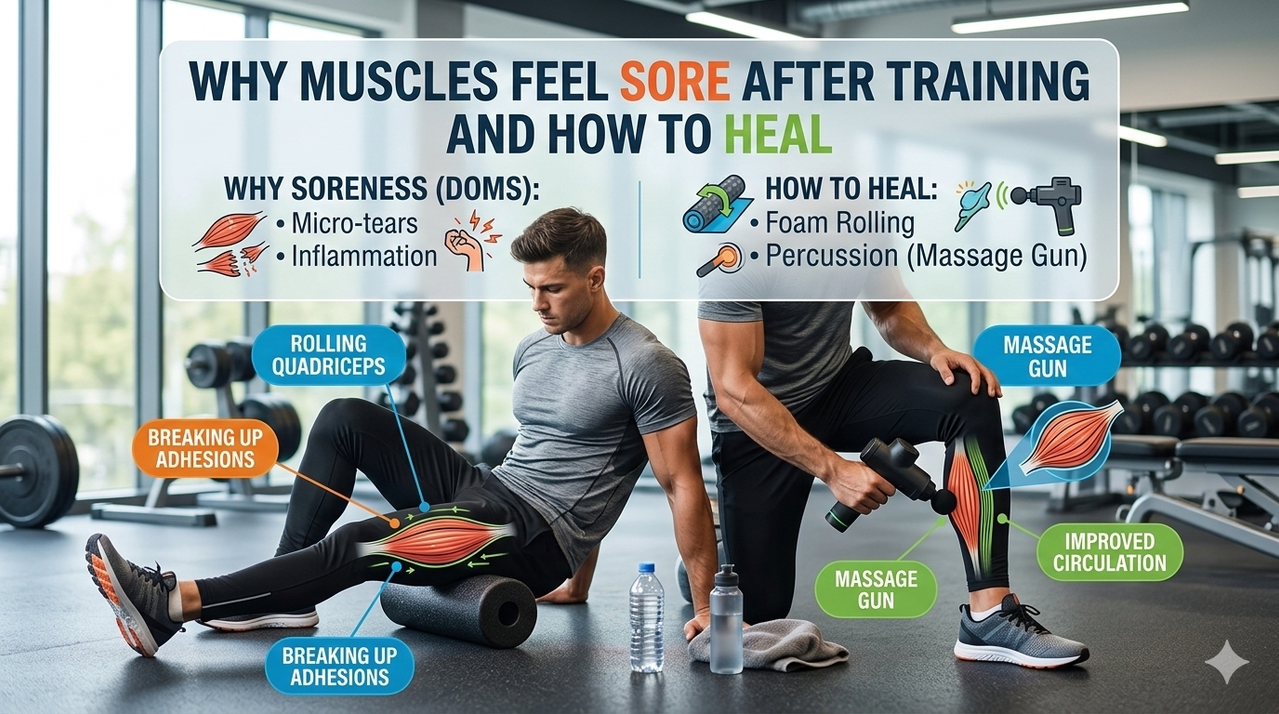
Massage therapy has Class III evidence for reducing DOMS at 24 and 72 hours . Modern percussive therapy (like massage guns) improves flexibility, boosts blood flow, and reduces soreness, helping with why your muscles feel sore after training and how to heal .
5.3. Foam Rolling and Self-Myofascial Release
Foam rolling targets the fascial component of DOMS. Regular use can improve flexibility and reduce pain, making it a valuable tool in your recovery kit for why your muscles feel sore after training and how to heal .
6. The Foundation: Sleep and Hydration
6.1. Sleep: The Ultimate Recovery Tool
While you sleep, your body performs its most critical repair work. Quality rest is essential for muscle repair, growth hormone release, and cognitive function. Aim for 7-9 hours per night . Tips for better sleep: consistent bedtime, cool room (65-68°F), dark environment, and deep breathing before bed .
6.2. Hydration: More Than Just Water
Fluid losses impair nutrient transport and temperature regulation. Rehydrate aggressively: drink 2 cups in the hour before exercise, 1 cup every 15 minutes during, and replace 150% of weight lost after . For sessions over 60 minutes, consider electrolyte supplements or a salty snack with a banana .
7. Sample 24-Hour Recovery Plan
The "Rapid Recovery" Schedule
- Post-workout (0-30 min): Chocolate milk + banana (fast carbs + protein)
- 1-2 hours post: Grilled chicken salad with quinoa and mixed vegetables
- Evening: Salmon with sweet potato and steamed broccoli + tart cherry juice
- Before bed: 1 cup cottage cheese or Greek yogurt (slow-digesting casein)
- Throughout day: 2-3 liters water + electrolyte drink if needed
- Recovery tools: 15 minutes foam rolling + percussive massage on sore areas
8. Vegan Recovery Options
- Protein: Tofu, tempeh, lentils, edamame, pea protein powder
- Omega-3s: Flaxseeds, chia seeds, walnuts, algae oil
- Anti-inflammatory: Berries, turmeric, ginger, dark leafy greens
- Sample vegan recovery meal: Tofu scramble (200g) with spinach + quinoa + roasted vegetables + berry smoothie with pea protein
9. Common Mistakes That Slow Healing
- Mistake #1: Relying solely on NSAIDs. Anti-inflammatories may blunt long-term muscle adaptation and hypertrophy .
- Mistake #2: Immediate cold water immersion. Can reduce strength and muscle gains over time; delay 4-6 hours .
- Mistake #3: Passive recovery only. Active recovery (light walking, swimming) improves blood flow more than complete rest .
- Mistake #4: Ignoring protein timing. Missed post-workout windows slow repair .
- Mistake #5: Skimping on sleep. One-third of adults don't get 7-9 hours, directly impairing recovery .
11. Scientific References
- Mizumura, K., & Taguchi, T. (2024). Neurochemical mechanism of muscular pain: Insight from the study on delayed onset muscle soreness. Journal of Physiological Sciences, 74(1), 4. View Source
- Valley Forge Medical Center. (2025). What Are the Best Foods for Recovery. VFMC Blog. View Source
- Di Lorenzo, L., et al. (2025). Advances in Non-Pharmacological Strategies for DOMS: A Scoping and Critical Review of Recent Evidence. Journal of Functional Morphology and Kinesiology, 10(4), 452. View Source
- Sonkodi, B. (2025). Delayed-Onset Muscle Soreness Begins with a Transient Neural Switch. International Journal of Molecular Sciences, 26(5), 2319. View Source
- Darian, M., Roberts, T., & Reed, R. (2025). Recovery That Keeps You in the Game. ACSM. View Source
- Wilke, J., & Behringer, M. (2021). Is "Delayed Onset Muscle Soreness" a False Friend? The Potential Implication of the Fascial Connective Tissue in Post-Exercise Discomfort. International Journal of Molecular Sciences, 22(17), 9482. View Source
- Cockburn, E., et al. (2010). Effect of milk-based carbohydrate-protein supplement timing on the attenuation of exercise-induced muscle damage. Applied Physiology, Nutrition, and Metabolism, 35(3), 270-277. View Source
- Huang, L., et al. (2025). Differences in the Effectiveness of Different Physical Therapy Modalities in the Treatment of Delayed-Onset Muscle Soreness: A Systematic Review and Bayesian Network Meta-Analysis. Journal of Pain Research, 18, 2993-3008. View Source
- Wiecha, S., et al. (2025). Physical Therapies for Delayed-Onset Muscle Soreness: An Umbrella and Mapping Systematic Review with Meta-meta-analysis. Sports Medicine, 55(5), 1183-1212. View Source
- Cullen, M.L., & Davis, B.A. (2023). Cold Water Immersion: Friend or Froze? ACSM. View Source
All sources last accessed March 2026. Paraphrased for accessibility.
Join the conversation