Why Your Weight Plateaus During a Cut (And How to Fix It)
Why Your Weight Plateaus During a Cut (And How to Fix It)

📋 TL;DR
Weight loss plateaus during a cut are inevitable—and they don't mean you've failed. The primary culprit is metabolic adaptation: as you lose weight, your body requires fewer calories, meaning your original deficit shrinks . Water retention from increased cortisol, carb-loading, or menstrual cycles can also mask fat loss . Other factors include tracking errors, reduced NEAT, and muscle gain masking fat loss . Fixing a plateau requires recalculating calories, increasing NEAT, incorporating refeeds, and focusing on non-scale victories. This guide explains why your weight plateaus during a cut and how to fix it with evidence-based strategies.
1. The Frustration of the Stalled Scale
You've been crushing your diet for weeks. Calories are tracked, protein is high, workouts are intense. The scale was moving beautifully—down a pound, then another. But suddenly, it stops. Day after day, the same number stares back at you. Welcome to the dreaded weight loss plateau, which explains why your weight plateaus during a cut and how to fix it.
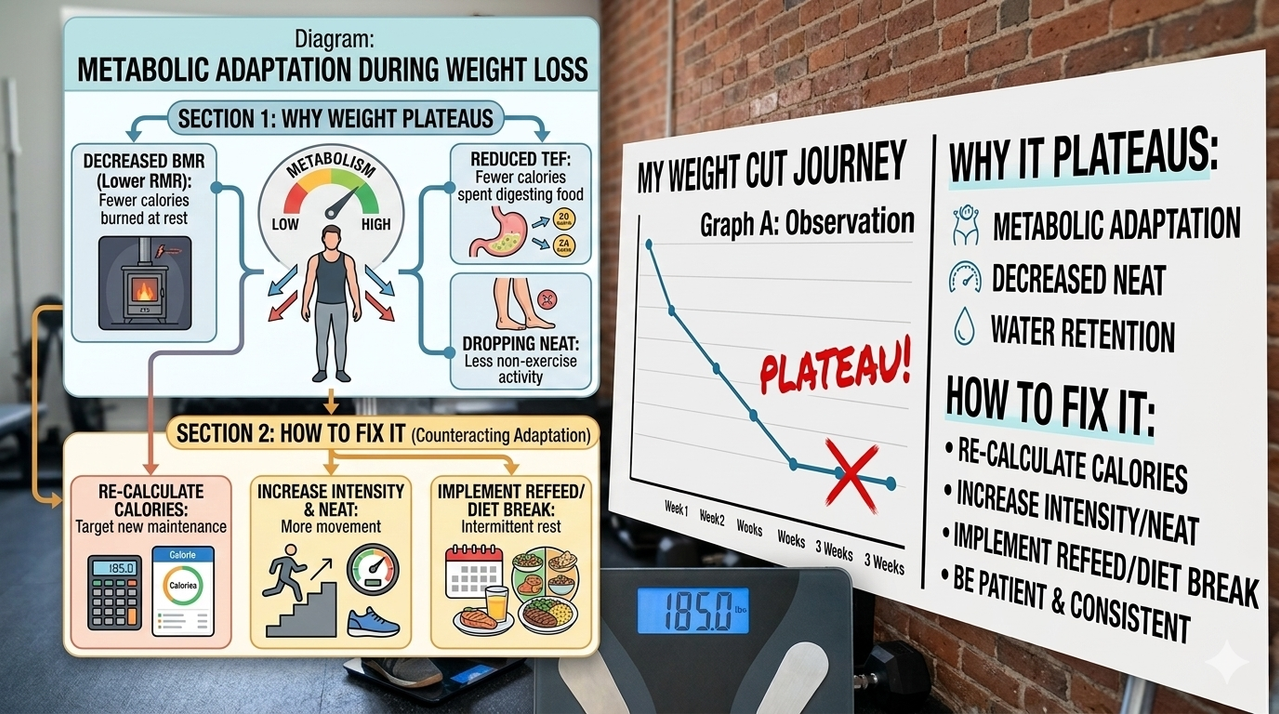
Here's the truth: plateaus are not just common—they're expected. When you lose weight, your body undergoes physiological changes that reduce your energy expenditure . This metabolic adaptation means the calorie deficit that worked initially may no longer be sufficient, contributing to why your weight plateaus during a cut and how to fix it .
The good news? Plateaus are fixable. This guide will teach you why your weight plateaus during a cut and how to fix it using science-backed strategies. You'll learn about metabolic adaptation, water retention, and practical adjustments to restart your progress.
2. The Science: Why Weight Loss Stalls
2.1. Metabolic Adaptation (The Biggest Culprit)
Your body is designed to maintain homeostasis. When you reduce calories, your body responds by lowering its energy expenditure—a phenomenon called metabolic adaptation or "adaptive thermogenesis" . This includes decreases in resting metabolic rate (RMR), the thermic effect of food (TEF), and non-exercise activity thermogenesis (NEAT), all contributing to why your weight plateaus during a cut and how to fix it .
Studies have shown that metabolic adaptation can persist long after weight loss, explaining why many people struggle to maintain weight loss . A landmark study from the Biggest Loser found that contestants' metabolisms remained suppressed years after the competition .
2.2. The Shrinking Deficit
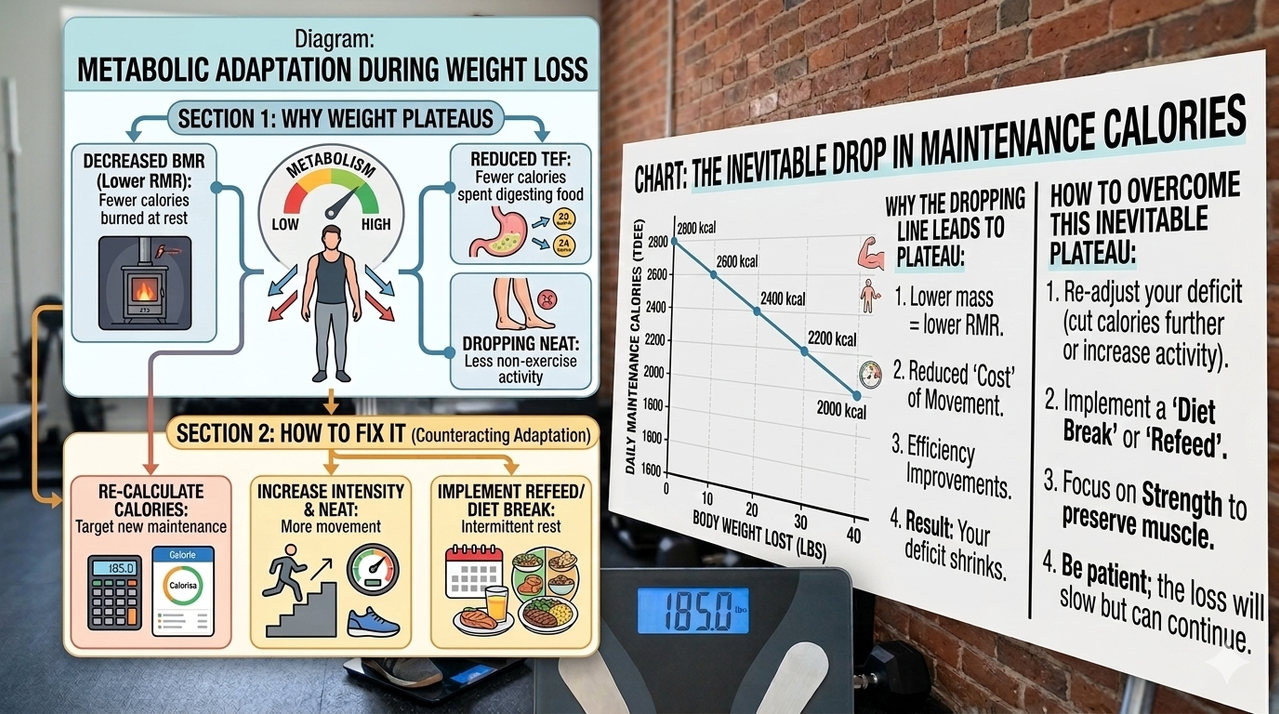
Here's the math: a 500-calorie deficit might cause steady weight loss initially. But after losing 5-10 kg, your maintenance calories drop. Your original deficit may now be only 200-300 calories, significantly slowing weight loss . This is a key reason why your weight plateaus during a cut and how to fix it.
2.3. Water Weight Fluctuations
The scale measures everything: fat, muscle, water, glycogen, and waste. Water weight can easily mask fat loss. Increased sodium intake, higher carb consumption (glycogen binds water), menstrual cycles, and elevated cortisol can all cause water retention . It's possible to lose fat but see no scale movement for 2-4 weeks due to water fluctuations, explaining why your weight plateaus during a cut and how to fix it .
2.4. Tracking Errors and "Cheat Meals"
Research shows that people consistently underestimate calorie intake, especially from snacks, oils, and beverages . A few un-tracked bites or a weekend "cheat meal" can erase your deficit . One high-calorie meal can wipe out days of progress, contributing to why your weight plateaus during a cut and how to fix it .
2.5. Reduced NEAT
When you're in a calorie deficit, your body unconsciously reduces non-exercise activity. You might fidget less, take fewer steps, and move slower without realizing it . This reduction in NEAT can account for hundreds of calories daily, a key factor in why your weight plateaus during a cut and how to fix it .
2.6. Muscle Gain Masking Fat Loss
If you're new to training or restarting after a break, you might be building muscle while losing fat. Since muscle is denser than fat, the scale may not change even as your body composition improves . This is why non-scale victories matter when understanding why your weight plateaus during a cut and how to fix it.
3. How to Fix a Weight Loss Plateau: 7 Strategies
1. Recalculate Your Calories
#1 Most ImportantYour original deficit is likely no longer accurate. Recalculate your maintenance calories based on your new weight. A simple method: multiply your current weight in pounds by 11-13 for maintenance, then subtract 300-500 for a deficit . Use an online calculator like the NIH Body Weight Planner for precision, addressing why your weight plateaus during a cut and how to fix it .
Example: If you started at 80 kg and now weigh 75 kg, your maintenance may have dropped by 100-150 calories. Adjust your intake accordingly.
2. Increase Your NEAT
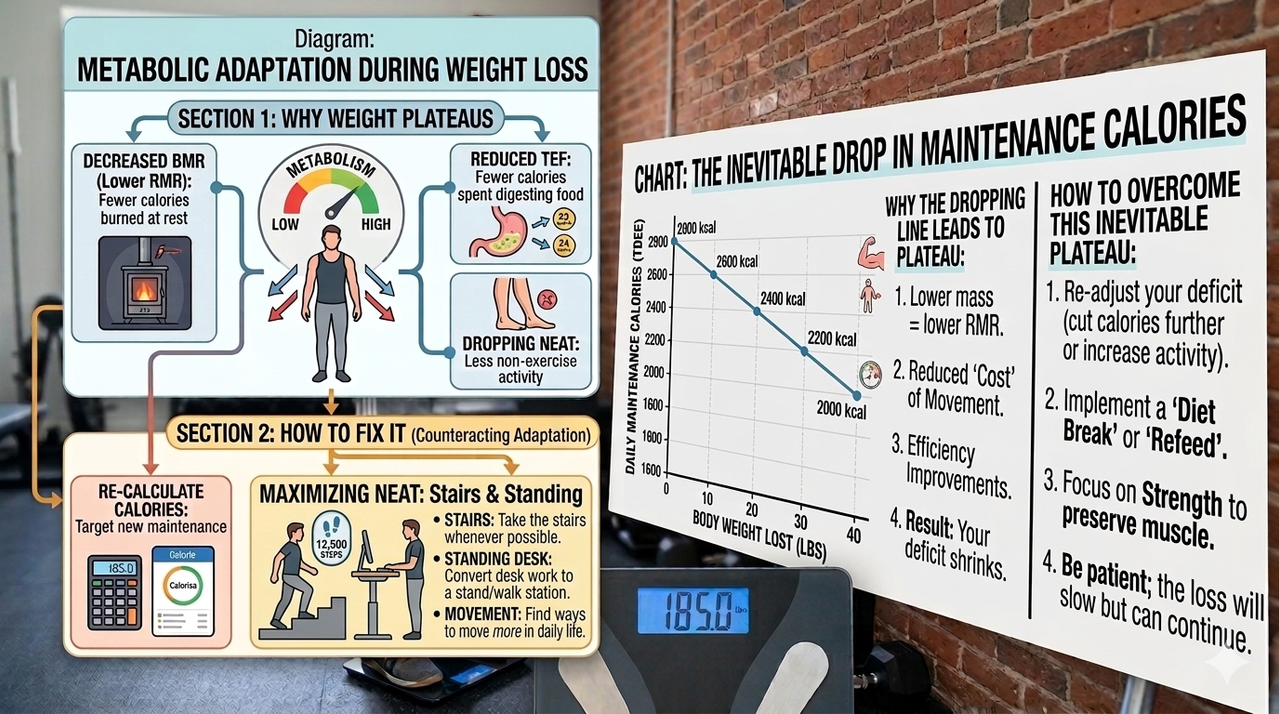
Powerful ToolSince metabolic adaptation often reduces NEAT, consciously increasing it can restart weight loss. Aim for 8,000-12,000 steps daily . Take the stairs, park farther away, pace during phone calls, and use a standing desk . These small movements add up to significant calorie burn, addressing why your weight plateaus during a cut and how to fix it .
3. Incorporate Refeed Days
Strategic Carb UpsRefeed days involve increasing carbohydrate intake (often to maintenance calories) for 1-2 days. This can replenish glycogen stores, boost leptin (a satiety hormone), and potentially increase metabolic rate . Research suggests that periodic refeeds may improve diet adherence and mitigate metabolic adaptation, helping with why your weight plateaus during a cut and how to fix it .
How to refeed: Increase carbs by 50-100g while keeping protein high and fat moderate. Do this once every 1-2 weeks, especially if you've been dieting for 8+ weeks .
4. Review Your Protein Intake
Muscle PreservationInadequate protein can accelerate muscle loss, lowering your metabolic rate. Ensure you're consuming 1.6–2.2 g per kg of body weight . Spread protein evenly across 3-4 meals to maximize muscle protein synthesis, supporting why your weight plateaus during a cut and how to fix it .
5. Adjust Your Training
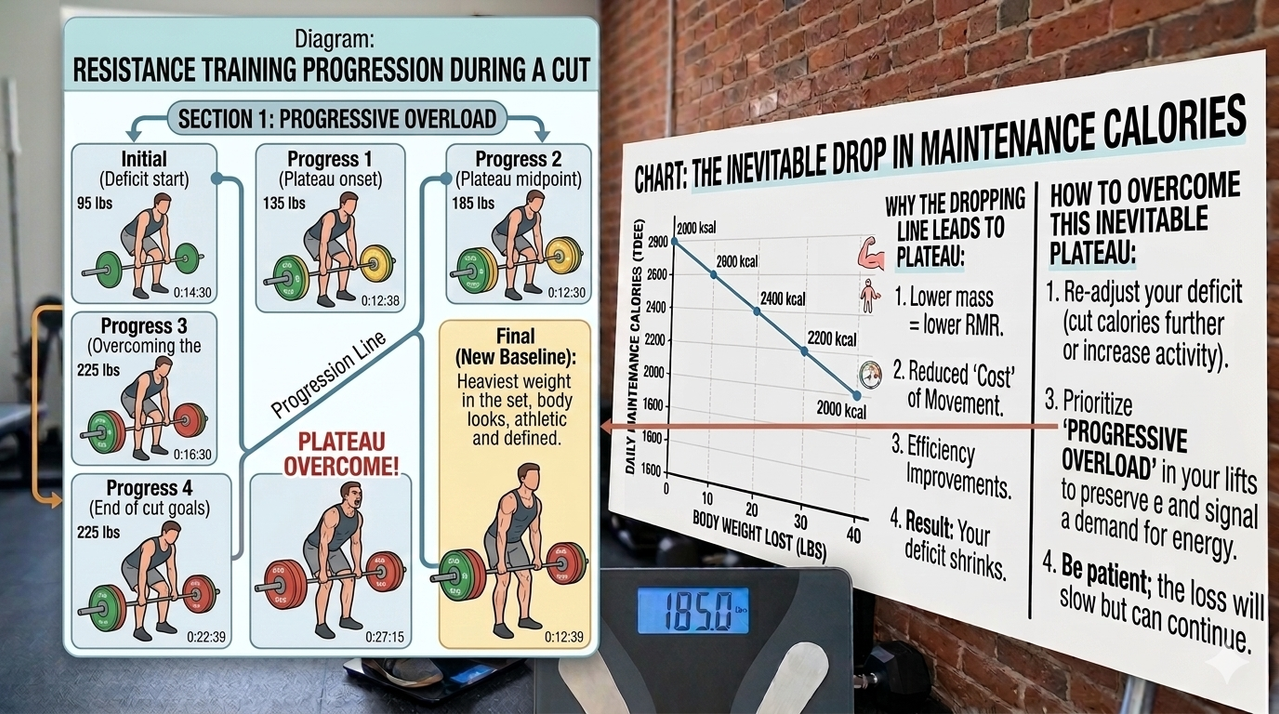
Progressive OverloadIf you've been doing the same routine for months, your body has adapted. Increase intensity, add weight, or change exercises. Progressive overload signals your body to preserve muscle, which supports metabolic rate . Consider incorporating HIIT 1-2 times weekly for an extra calorie burn, addressing why your weight plateaus during a cut and how to fix it .
6. Prioritize Sleep and Stress Management
Often OverlookedChronic stress and poor sleep elevate cortisol, which promotes water retention and can hinder fat loss . Aim for 7-9 hours of quality sleep nightly and incorporate stress-reduction techniques like meditation or walking, crucial for why your weight plateaus during a cut and how to fix it .
7. Be Patient—and Trust Non-Scale Victories
Mental GameSometimes the scale lags behind actual fat loss. If your clothes fit better, your strength is maintained, and you're seeing visual changes, you're likely still progressing . Plateaus lasting 2-4 weeks are normal; if it's longer than 4-6 weeks, it's time to adjust, which is key for why your weight plateaus during a cut and how to fix it .
4. Sample Refeed Day Meal Plan
This sample day provides approximately 2,500 calories with 160g protein—a refeed for someone maintaining on ~2,000 calories. Adjust portions based on your needs for why your weight plateaus during a cut and how to fix it.
- Breakfast (600 kcal, 40g protein): 3 eggs (18g) + 1 cup oatmeal (40g carbs) + 1 cup milk (8g) + 1 banana (27g carbs) + 1 tbsp honey (17g carbs)
- Lunch (650 kcal, 45g protein): 150g chicken breast (35g) + 1.5 cups cooked rice (70g carbs) + roasted vegetables + 1 tbsp olive oil
- Snack (400 kcal, 25g protein): 1 cup Greek yogurt (20g) + 1 apple (25g carbs) + 2 rice cakes (15g carbs) + 1 tbsp peanut butter
- Dinner (850 kcal, 50g protein): 200g salmon (40g) + 1.5 cups sweet potato (70g carbs) + large salad + 1 tbsp olive oil
- Total: ~2500 kcal, ~160g protein, ~350g carbs, ~60g fat
5. High-Volume Foods to Maximize Satiety
During a cut, hunger can sabotage your efforts. Incorporate these high-volume, low-calorie foods to stay full while maintaining your deficit, addressing why your weight plateaus during a cut and how to fix it .
| Food | Serving | Calories | Key Benefit |
|---|---|---|---|
| Leafy Greens | 2 cups | ~15 | High water content, fiber |
| Cauliflower | 1 cup | 27 | Versatile, replaces rice |
| Berries | 1 cup | ~60-80 | Antioxidants, fiber |
| Popcorn (air-popped) | 3 cups | ~90 | High volume snack |
| Lean Proteins | Various | Low | Satiety, muscle preservation |
Data compiled from
6. Common Mistakes That Extend Plateaus
- Mistake #1: Cutting calories too drastically. Very low-calorie diets (under 1,200 for women, 1,500 for men) can backfire, increasing hunger and metabolic adaptation .
- Mistake #2: Ignoring tracking accuracy. Use a food scale—estimating leads to under-reporting by up to 50% .
- Mistake #3: Over-relying on the scale. Daily weigh-ins fluctuate with water; focus on weekly averages and trends .
- Mistake #4: Doing too much cardio. Excessive cardio can increase hunger and interfere with strength recovery .
- Mistake #5: Quitting too soon. Many people abandon their cut right before a "whoosh" of fat loss .
7. How to Track Progress Beyond the Scale
- Weekly measurements: Use a tape measure for waist, hips, arms, and thighs .
- Progress photos: Take photos every 4 weeks in consistent lighting and angles.
- How clothes fit: If your pants feel looser, you're losing fat—even if the scale hasn't moved.
- Strength levels: Maintaining or increasing strength indicates muscle preservation.
- Body composition scans: DEXA or bioimpedance can reveal fat loss hidden by water retention.
8. Vegan and Vegetarian Adaptations
- Protein sources: Tofu, tempeh, lentils, chickpeas, edamame, seitan, pea protein.
- High-volume options: All vegetables and fruits work perfectly for plant-based dieters.
- Refeed carbs: Quinoa, oats, rice, sweet potatoes, whole-grain pasta.
- Sample vegan refeed meal: Tofu scramble (200g) + 1.5 cups quinoa + roasted veggies + 1 cup edamame.
10. Scientific References
- University of Pittsburgh Medical Center. (2025). What Is a Weight-Loss Plateau? UPMC HealthBeat. View Source
- Finer, S., & Saravanan, P. (2025). Weight loss plateaus: pathophysiology and management. British Medical Journal, 388, e081342. View Source
- Verywell Health. (2026). Why Am I Not Losing Weight in a Calorie Deficit? Verywell Health. View Source
- HealthifyMe. (2025). How To Overcome Weight Loss Plateau. HealthifyMe Blog. View Source
- NIH News in Health. (2025). Healthy Weight Loss. National Institutes of Health. View Source
- Redmond Health. (2025). Overcoming a Weight Loss Plateau. Redmond Health Blog. View Source
- Science Daily. (2024). A new pathway to a long-sought weight loss goal. ScienceDaily. View Source
- Beyond the Scale. (2023). How to Break Through a Weight Loss Plateau. Beyond the Scale. View Source
- Business Standard. (2025). Weight loss no more? Scientists find new way to burn calories. Business Standard. View Source
- Fastscience. (2025). How to break a weight loss plateau: Causes and solutions. Fastscience. View Source
All sources last accessed March 2026. Paraphrased for accessibility.
Join the conversation