5 Natural Foods That Boost Testosterone and Support Muscle Growth
5 Natural Foods That Boost Testosterone and Muscle Growth

🥩 TL;DR
While no single food is a magic bullet, a 2025 review in the Journal of Advanced Research confirms that dietary patterns significantly influence testosterone balance . The key nutrients are zinc, magnesium, vitamin D, healthy fats, and antioxidants . This article covers 5 natural foods that boost testosterone and muscle growth: 1) Oysters and shellfish for zinc , 2) Eggs for cholesterol, vitamin D, and protein , 3) Fatty fish (salmon, sardines) for omega-3s and vitamin D , 4) Leafy greens (spinach) for magnesium , and 5) Pumpkin seeds and nuts for zinc, magnesium, and healthy fats . We also provide sample meal plans, vegan alternatives, and the latest evidence on dietary patterns like the Mediterranean diet, which supports optimal hormone function .
1. The Diet-Hormone Connection
You're in the gym religiously. You're following a solid training program. But if your diet is missing key nutrients, you're leaving gains—and hormonal health—on the table. Testosterone, the primary anabolic hormone, doesn't operate in a vacuum. Its production is directly influenced by what you eat.
A landmark 2025 review published in the Journal of Advanced Research systematically examined how dietary patterns affect testosterone . The researchers found that while restrictive diets can sometimes impair hormone production, diets rich in specific nutrients—particularly healthy fats, zinc, magnesium, and vitamin D—support optimal testosterone synthesis . This article focuses on 5 natural foods that boost testosterone and muscle growth, backed by peer-reviewed science.
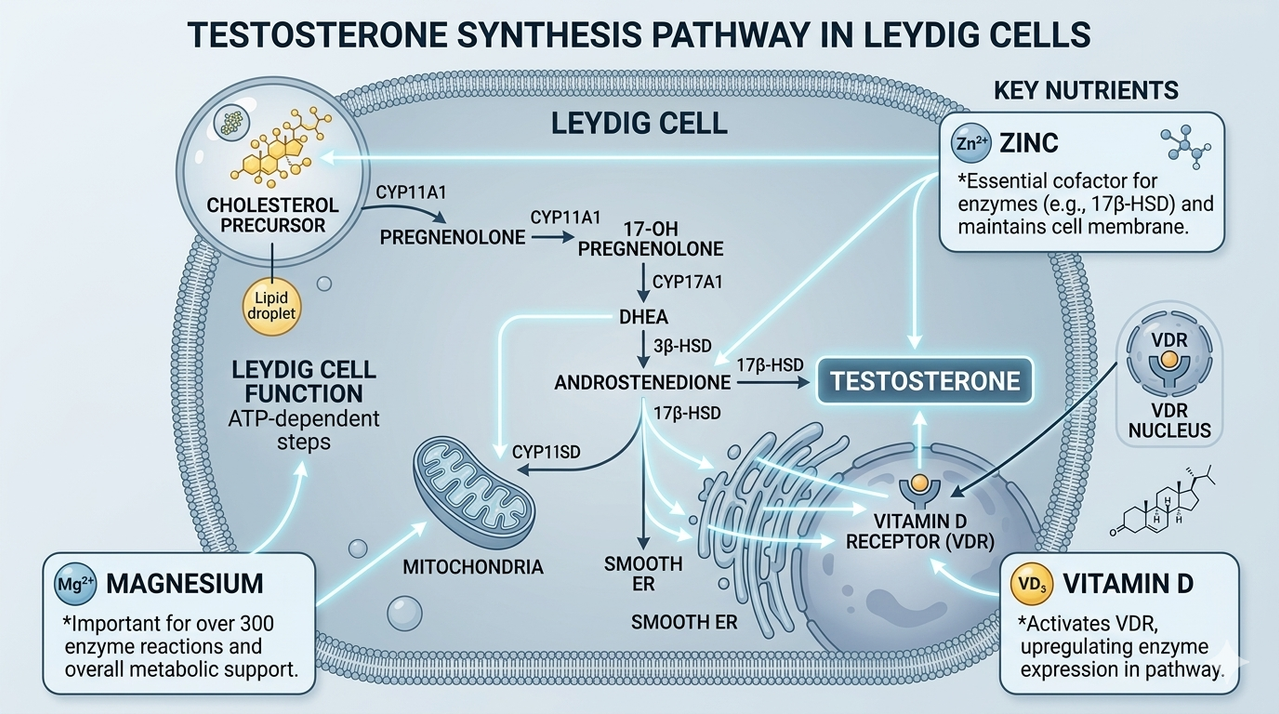
2. The Science: How Food Affects Testosterone
2.1. The 2025 Dietary Patterns Review
The 2025 Journal of Advanced Research review evaluated four dietary patterns: ketogenic, vegetarian, Mediterranean, and Western . Key findings relevant to our topic:
- Ketogenic diets may enhance testosterone synthesis through increased cholesterol availability (a key precursor) and reduced inflammation (TNF-α, IL-6) .
- Vegetarian diets often result in lower cholesterol bioavailability due to high fiber and low fat, which may impair testosterone synthesis, but their abundant antioxidants support reproductive health .
- Mediterranean diets enhance testosterone via synergistic actions of multiple bioactive nutrients (oleocanthal, resveratrol) that inhibit COX enzymes, reduce oxidative stress, and support testicular antioxidant capacity .
- Western diets (high fat/sugar) promote obesity-associated testosterone decline through hepcidin overproduction and inflammation .
The takeaway: a diet rich in healthy fats, antioxidants, and key micronutrients—like the foods below—supports healthy testosterone levels .
2.2. The Role of Key Nutrients
Examine.com's evidence-based review confirms that correcting deficiencies in zinc, magnesium, and vitamin D can raise testosterone levels, especially in men with low levels . The International Society of Sports Nutrition (ISSN) also notes that higher-fat diets may maintain circulating testosterone better than low-fat diets .
3. Food #1: Oysters and Shellfish Zinc Powerhouse
3.1. The Zinc Connection
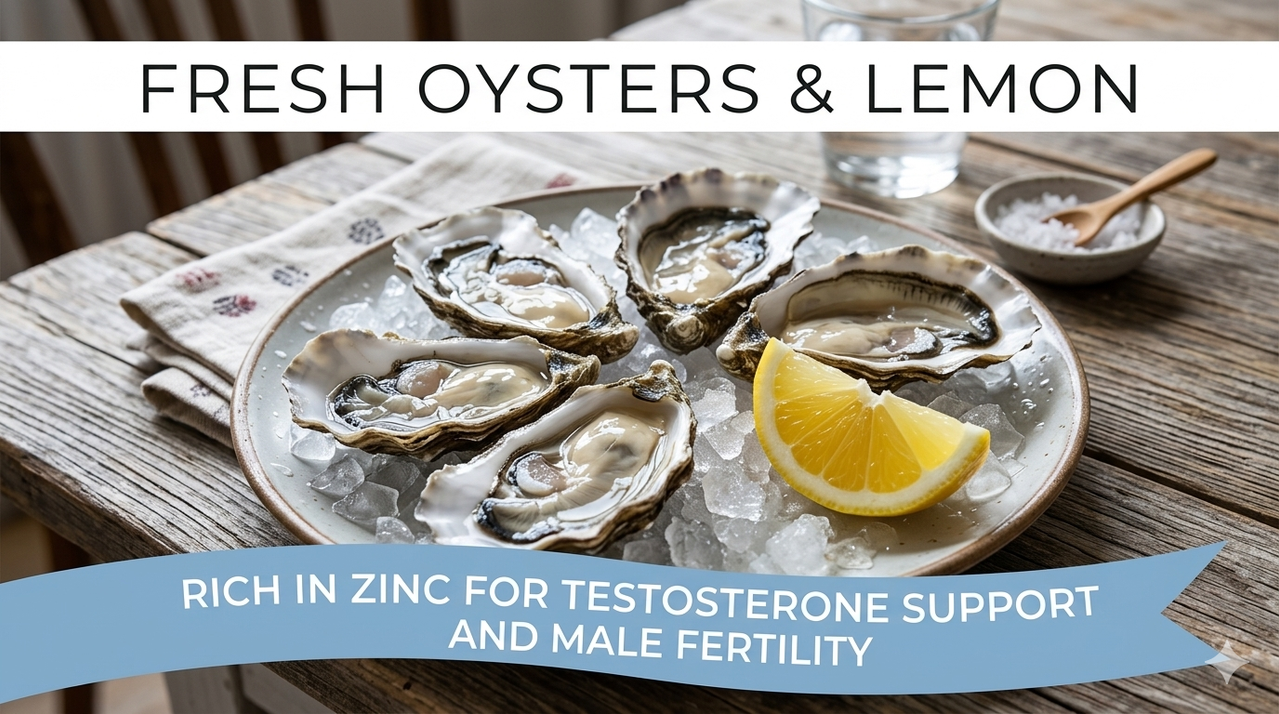
Oysters are famously known as an aphrodisiac, and science supports this reputation—at least indirectly. They are the single richest food source of zinc, a mineral absolutely essential for testosterone production . The National Institutes of Health notes that zinc deficiency is directly linked to hypogonadism (insufficient testosterone production) .
A 2025 review in Physician's Weekly confirmed that zinc in oysters drives testosterone synthesis and leads to the production of nitric oxide, increasing blood flow to the penis .
3.2. How Much Do You Need?
The RDA for zinc is 11 mg for adult men . Just 3-4 oysters provide 15-30 mg of zinc, more than the daily requirement . Other shellfish like crab and mussels are also excellent sources.
3.3. Sample Preparation: Grilled Oysters with Garlic
- 12 fresh oysters, shucked
- 2 cloves garlic, minced
- 2 tbsp butter (or olive oil for dairy-free)
- Fresh parsley, lemon wedges
- Grill for 5-7 minutes until edges curl. Serve with garlic butter.
4. Food #2: Eggs Complete Protein + Vitamin D
4.1. Why the Whole Egg Matters
Eggs have been unfairly demonized for their cholesterol content. But cholesterol is the precursor to all steroid hormones, including testosterone . The yolk is also one of the few food sources of vitamin D, which acts more like a hormone in the body and directly supports testosterone regulation .
A 2026 Apollo 24|7 guide confirms that eggs (especially the yolk) are packed with vitamin D, cholesterol, and protein, all of which help in hormone synthesis . Don't skip the yolk—it's the most nutritious part .
4.2. Nutrient Profile
One large egg contains:
- 6-7g high-quality protein (all essential amino acids)
- 5g fat (mostly unsaturated)
- ~40 IU vitamin D
- Significant choline (brain health)
4.3. Sample Meal: Veggie-Packed Egg Scramble
- 3 large eggs (pasture-raised if possible)
- 1 cup fresh spinach
- ¼ cup diced bell peppers
- 1 tbsp olive oil
- Salt, pepper, and turmeric to taste
Sauté veggies in olive oil, add beaten eggs, cook until set. Serve with ½ avocado.
5. Food #3: Fatty Fish Omega-3 & Vitamin D
5.1. Omega-3s and Testosterone
Fatty fish like salmon, sardines, and mackerel are rich in omega-3 fatty acids (EPA and DHA) and vitamin D. The 2025 dietary review noted that the Mediterranean diet, which emphasizes fatty fish, enhances testosterone via synergistic actions of multiple nutrients . Omega-3s reduce inflammation, which can otherwise suppress testosterone production .
5.2. Vitamin D: The Hormone Precursor
Examine.com's analysis shows that vitamin D helps regulate testosterone levels . Ideally, you'd get vitamin D from sunlight, but fatty fish are an excellent dietary source. A 3-ounce serving of salmon provides around 400-500 IU of vitamin D .
5.3. Sample Meal: Lemon-Herb Baked Salmon
- 150g salmon fillet
- Juice of ½ lemon
- 1 tbsp olive oil
- Fresh dill, garlic powder, salt, pepper
- Bake at 190°C (375°F) for 12-15 minutes.
Serve with roasted sweet potatoes and steamed broccoli for a muscle-building, hormone-supporting meal.
Omega-3 for Vegans
If you don't eat fish, you can get ALA omega-3s from walnuts, flaxseeds, chia seeds, and hemp seeds. However, conversion to EPA/DHA is limited. Consider an algae-based DHA supplement.
6. Food #4: Leafy Greens Magnesium
6.1. Magnesium's Role
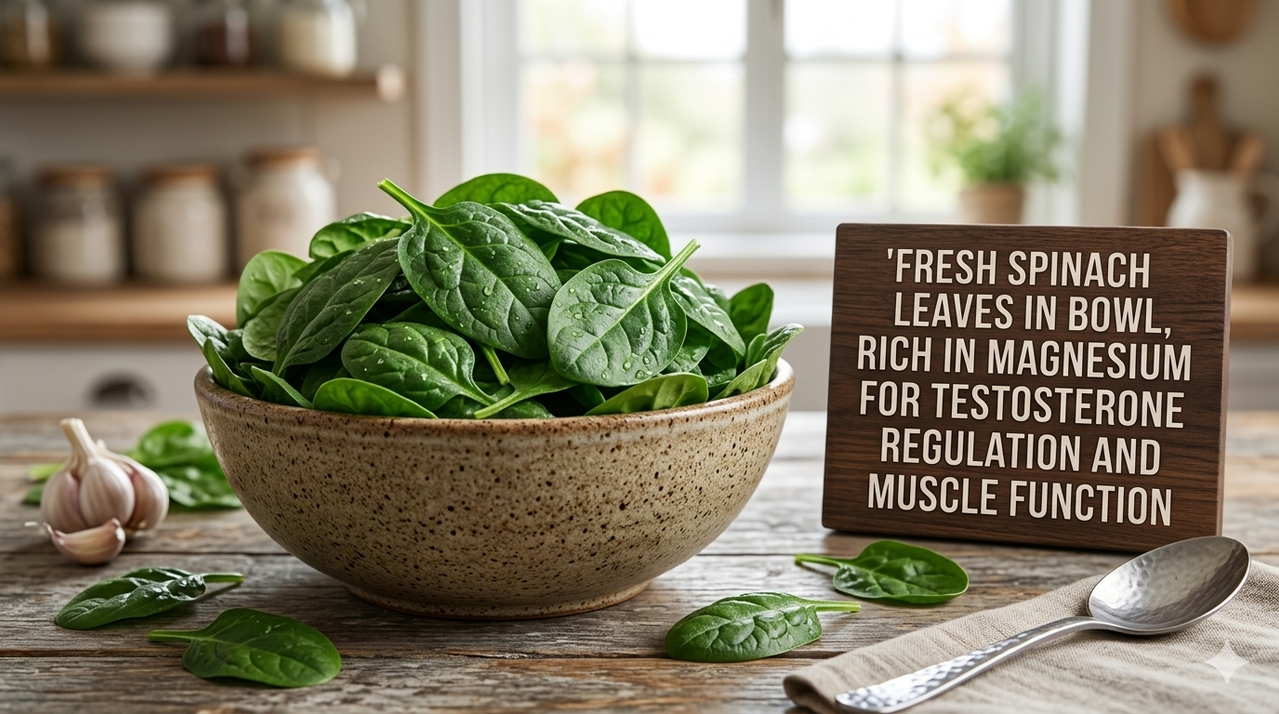
Spinach and other leafy greens (kale, Swiss chard) are packed with magnesium, a mineral that helps regulate testosterone levels . Examine.com explains that magnesium helps convert vitamin D into its active form, indirectly supporting testosterone production . In males with low magnesium and low testosterone, increasing magnesium intake can translate into increased testosterone .
6.2. How Much Magnesium?
The RDA for magnesium is 400-420 mg for adult men . One cup of cooked spinach provides about 157 mg of magnesium—nearly 40% of the RDA. Other good sources: pumpkin seeds, almonds, black beans.
6.3. Sample Preparation: Garlic Sautéed Spinach
- 200g fresh spinach
- 2 cloves garlic, minced
- 1 tbsp olive oil
- Sauté garlic in oil for 1 minute, add spinach and cook until wilted (2-3 minutes). Season with salt and pepper.
7. Food #5: Pumpkin Seeds and Nuts Zinc, Magnesium, Healthy Fats
7.1. The Nutrient Density
Pumpkin seeds are a true superfood for hormone health. A quarter-cup serving provides:
- ~2.5 mg zinc (23% RDA)
- ~190 mg magnesium (45% RDA)
- Healthy fats and protein
A 2025 review in Physician's Weekly noted that walnuts, rich in omega-3s, improved sperm health, motility, and morphology in a study of 117 men . A separate study found that a mix of almonds, hazelnuts, and walnuts significantly improved sperm quality .
7.2. How to Incorporate
- Add pumpkin seeds to oatmeal, yogurt, or salads.
- Eat a small handful of mixed nuts (almonds, walnuts) daily.
- Use nut butters (peanut, almond) as snacks or in smoothies.
8. Sample 2800-Calorie Testosterone-Supporting Meal Plan
This sample day incorporates all five foods, with balanced macros to support muscle growth.
Breakfast (7:30 AM) – 650 kcal | 40g protein
- 3-egg scramble with 1 cup spinach and ¼ cup bell peppers
- 1 slice whole-grain toast with ½ avocado
- 1 cup Greek yogurt (plain) with 1 tbsp pumpkin seeds and berries
Lunch (1:00 PM) – 700 kcal | 45g protein
- 150g grilled salmon (or 200g firm tofu for vegan)
- 1 large sweet potato, roasted
- 2 cups mixed greens with 1 tbsp olive oil vinaigrette
Afternoon Snack (4:00 PM) – 350 kcal | 15g protein
- Handful of mixed nuts (almonds, walnuts)
- 1 apple
- 1 hard-boiled egg (omit for vegan)
Dinner (7:30 PM) – 800 kcal | 50g protein
- 150g lean beef steak or 200g tempeh
- 1 cup quinoa
- Garlic sautéed spinach (200g) with 1 tbsp olive oil
Evening Snack (10:00 PM) – 300 kcal | 20g protein
- 1 cup cottage cheese or 1 scoop casein protein with 1 tbsp pumpkin seeds
Total: ~2,800 kcal, ~170g protein, ~280g carbs, ~120g fat
8.1. Vegan/Vegetarian Adaptations
- Replace salmon with grilled tempeh or marinated tofu.
- Replace beef with lentils, chickpeas, or seitan.
- Ensure adequate zinc from pumpkin seeds, chickpeas, and fortified foods.
- Consider algae-based DHA/EPA supplement.
- Use pea protein powder for shakes.
9. Beyond Food: Lifestyle Factors That Boost Testosterone
9.1. Sleep
Examine.com emphasizes that quality sleep is non-negotiable for testosterone. Lack of sleep decreases testosterone production and facilitates fat gain . Aim for 7-9 hours nightly .
9.2. Resistance Training
Resistance training can raise testosterone levels for 15-30 minutes post-exercise and improves body composition, supporting long-term hormone health . The ISSN notes that multi-joint, moderate-to-high intensity exercises with 60-90 second rest periods optimize acute testosterone responses .
9.3. Weight Management
Weight gain, especially belly fat, is strongly linked to testosterone decline. A meta-analysis found that a 9.8% weight loss from diet increased testosterone by 2.9 nmol/L (84 ng/dL) .
9.4. Stress Management
Chronic stress elevates cortisol, which suppresses testosterone. Practice meditation, deep breathing, or yoga .
10. Related Resources
11. Scientific References
- Apollo 24|7. (2026). Testosterone-Boosting Foods for Natural Increase. apollo247.com. View Source
- Journal of Advanced Research. (2025). Dietary patterns and testosterone balance: a review of clinical data and perspectives. ScienceDirect. View Source
- Examine.com. (2025). How can you increase testosterone naturally? examine.com. View Source
- Physician's Weekly. (2025). "Superfoods" May Support Male Sexual Health & Fertility. physiciansweekly.com. View Source
- GPNi. (2025). Protein Intake, Exercise Modalities, and Testosterone Regulation. thegpni.com. View Source
- GoodRx. (2022). Can Certain Foods Increase Testosterone? goodrx.com. View Source
- Diabetes Victoria. (2025). Nutrition & Men's Health. diabetesvic.org.au. View Source
- GPNi. (2025). Top 5 Ways To Boost Testosterone Naturally With Nutrition. thegpni.com. View Source
- Lux Hospitals. (2025). Top 10 Superfoods for Men Health. luxhospitals.com. View Source
- Advance Study. (2025). Can You Still Gain Muscle With Low Testosterone? advancestudy.org. View Source
Join the conversation