Clean Bulking vs Dirty Bulking: Which Is Better for Muscle Growth?
Clean Bulking vs Dirty Bulking: Which Is Better for Muscle Growth?
⚡ TL;DR
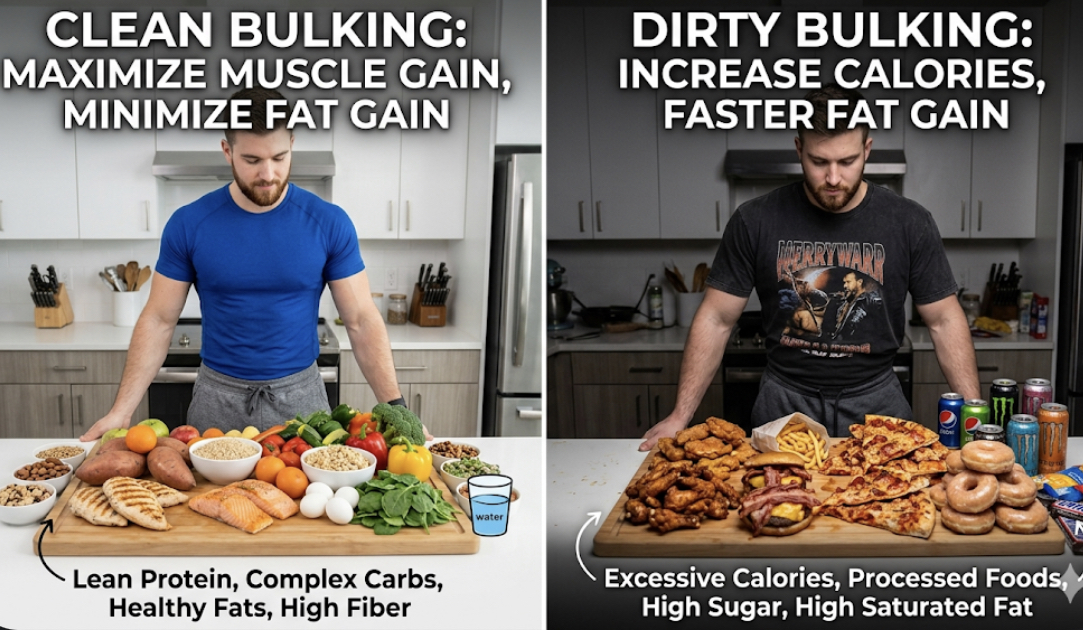
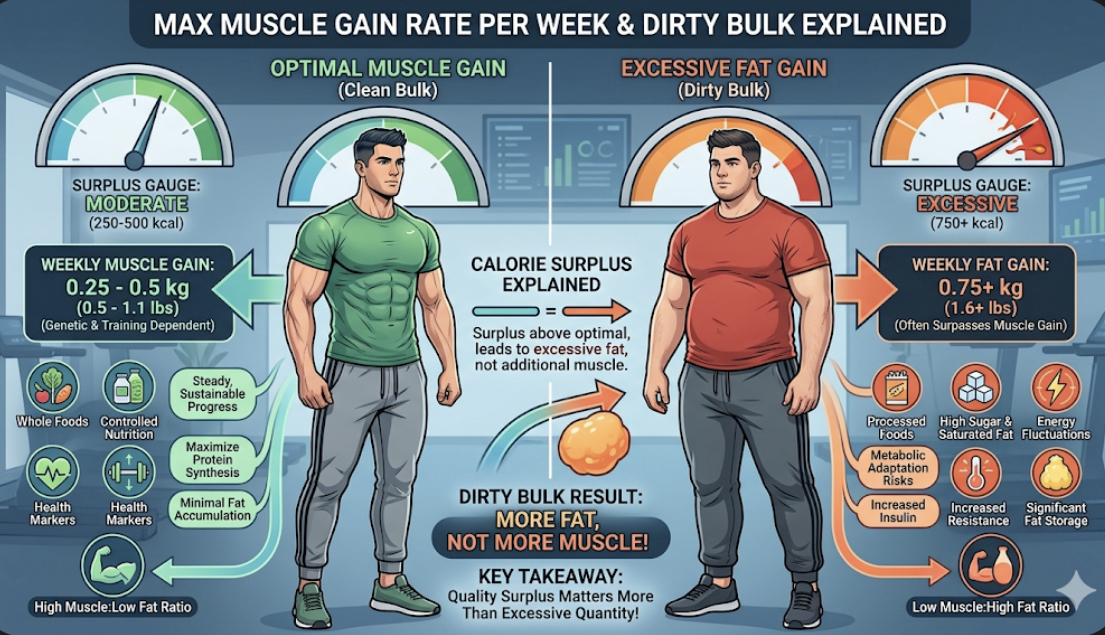
Clean bulking vs dirty bulking—the debate comes down to muscle gain efficiency vs fat gain. Clean bulking uses a small calorie surplus (250–500 kcal) with nutrient-dense whole foods, resulting in slower but leaner gains. Dirty bulking involves a large surplus (500–1,000+ kcal) with processed, high-calorie foods, leading to faster weight gain but significantly more fat. Research shows that the rate of muscle gain is limited (about 0.25–0.5% body weight per week), so excess calories beyond this are stored as fat . For most people, clean bulking is better for long-term results, body composition, and health.
1. The Great Bulking Debate: Quality vs Quantity
If you've spent any time in fitness circles, you've heard the terms "clean bulk" and "dirty bulk." But what do they actually mean, and which approach truly builds more muscle? The answer isn't as simple as "clean is always better"—it depends on your goals, metabolism, and tolerance for fat gain. This article breaks down the science behind clean vs dirty bulking to help you choose the right strategy.
Is clean bulking better than dirty bulking?
Yes, clean bulking is generally better than dirty bulking for most people because it results in significantly less fat gain while still maximizing muscle growth. Clean bulking uses a controlled calorie surplus of 250–500 kcal above maintenance with nutrient-dense whole foods, which supports optimal nutrient partitioning, better insulin sensitivity, and easier post-bulk cutting phases. Dirty bulking's large surplus (500–1,000+ kcal) often leads to excessive fat gain, metabolic issues, and a longer, harder cutting phase .

2. Definitions: Clean Bulking vs Dirty Bulking
🥗 Clean Bulking
Definition: A controlled approach to muscle gain using a small calorie surplus (250–500 kcal above maintenance) with nutrient-dense, minimally processed whole foods.
- Calorie surplus: 250–500 kcal/day
- Weight gain rate: 0.25–0.5% body weight/week
- Food choices: Lean meats, fish, eggs, whole grains, fruits, vegetables, nuts, seeds
- Fat gain: Minimal (2–4 lbs over a 12-week bulk)
🍔 Dirty Bulking
Definition: An aggressive approach using a large calorie surplus (500–1,000+ kcal above maintenance) with calorie-dense, often processed foods to maximize total weight gain.
- Calorie surplus: 500–1,000+ kcal/day
- Weight gain rate: 0.5–1%+ body weight/week
- Food choices: Fast food, pizza, ice cream, sugary cereals, processed meats
- Fat gain: Significant (6–12+ lbs over a 12-week bulk)

3. The Science: Why More Calories ≠ More Muscle
3.1. The Maximum Rate of Muscle Growth
Research consistently shows that even under optimal conditions, the body can only build a limited amount of muscle per week. For natural lifters, the maximum rate is approximately 0.25–0.5% of body weight per week (e.g., 0.2–0.4 kg for an 80 kg person) . Any weight gain beyond this is almost exclusively fat.
3.2. Nutrient Partitioning and Insulin Sensitivity
Your body's ability to direct calories toward muscle vs fat storage is called nutrient partitioning. Clean bulking with whole foods supports better insulin sensitivity, which improves nutrient partitioning . Dirty bulking with high sugar and processed foods can impair insulin sensitivity, pushing more calories into fat storage .
3.3. The Thermic Effect of Food (TEF)
Whole foods (especially protein-rich foods) have a higher thermic effect, meaning more calories are burned during digestion. Processed foods have a lower TEF, leaving more net calories available for storage . This difference can compound over a long bulk.
4. Head-to-Head Comparison: Clean vs Dirty Bulk
| Factor | Clean Bulking | Dirty Bulking |
|---|---|---|
| Muscle Gain | Optimal (0.25–0.5% bw/week) | Similar (excess beyond optimal) |
| Fat Gain | Minimal (2–4 lbs over 12 weeks) | High (6–12+ lbs over 12 weeks) |
| Cutting Phase | Shorter, easier | Longer, more difficult |
| Health Impact | Improved biomarkers | Worsened cholesterol, blood sugar |
| Energy Levels | Stable, consistent | Possible energy crashes |
| Workout Performance | Good | Can be high from quick energy, but inconsistent |
| Appetite Management | Easier (high satiety) | Harder (low satiety foods) |
| Nutritional Quality | High vitamins, minerals, fiber | Low micronutrients |
5. Sample Meal Plans: Clean Bulk vs Dirty Bulk (3,000 kcal)
5.1. Clean Bulk Day – 3,000 kcal, 170g Protein
- Breakfast: 4 whole eggs, 1 cup oatmeal with 1 tbsp peanut butter, 1 banana (650 kcal, 35g protein)
- Lunch: 200g grilled chicken breast, 1.5 cups brown rice, 1 cup broccoli, 1 tbsp olive oil (700 kcal, 50g protein)
- Pre-workout: 1 scoop whey protein, 1 apple (200 kcal, 25g protein)
- Post-workout: 200g salmon, 2 medium sweet potatoes, 2 cups mixed greens, 1 tbsp vinaigrette (750 kcal, 45g protein)
- Evening: 200g Greek yogurt, 1 cup berries, 1 tbsp honey (350 kcal, 20g protein)
- Snack: 1 oz almonds (160 kcal, 6g protein)
5.2. Dirty Bulk Day – 3,000 kcal, 130g Protein
- Breakfast: 3 large pancakes with syrup, 2 sausage links (700 kcal, 15g protein)
- Lunch: Large fast food burger, medium fries, regular soda (1,100 kcal, 35g protein)
- Snack: 2 slices pepperoni pizza (500 kcal, 20g protein)
- Dinner: 200g ground beef with cheese, white rice (600 kcal, 45g protein)
- Evening: Ice cream (300 kcal, 5g protein)
Key difference: Same calories, but dirty bulk has 40g less protein, 2x more saturated fat, and significantly fewer vitamins and fiber.
Vegan Clean Bulk Option
- Replace eggs with tofu scramble
- Replace chicken with tempeh or seitan
- Replace whey with pea protein
- Replace Greek yogurt with silken tofu or soy yogurt
6. Is There Ever a Place for Dirty Bulking?
Despite its drawbacks, dirty bulking may have limited applications:
- Hard gainers with extremely fast metabolisms: Some individuals struggle to maintain any surplus and may need higher-calorie foods to meet energy needs.
- Short-term appetite stimulation: For those with suppressed appetite, palatable foods can help reach calorie goals.
- Emergency weight gain after illness: When rapid weight restoration is medically necessary.
7. How to Execute a Successful Clean Bulk
7.1. Calculate Your Surplus
Start with your maintenance calories (track for 1–2 weeks) and add 250–350 kcal initially. Monitor weight gain: aim for 0.25–0.5% body weight per week.
7.2. Prioritize Protein
1.6–2.2 g per kg body weight spread across 4–5 meals. This ensures maximal muscle protein synthesis.
7.3. Choose Quality Carbs and Fats
- Carbs: oats, quinoa, rice, sweet potatoes, fruits, legumes
- Fats: olive oil, nuts, seeds, avocado, fatty fish, eggs
7.4. Train with Progressive Overload
Your surplus is useless without a growth stimulus. Focus on compound lifts and aim to add weight or reps weekly.
7.5. Track and Adjust
Weigh yourself weekly. If weight gain exceeds 0.5% per week, reduce surplus by 100–150 kcal. If strength stalls with no gain, increase surplus slightly.
8. Common Mistakes in Both Bulking Approaches
- Mistake #1: Dirty bulking with massive surplus. Leads to excessive fat gain, insulin resistance, and a miserable cutting phase.
- Mistake #2: Clean bulking without tracking. Many people underestimate calories and end up at maintenance, gaining no muscle.
- Mistake #3: Neglecting training intensity. Surplus without progressive overload = fat gain.
- Mistake #4: Ignoring sleep and recovery. Poor sleep impairs muscle growth and worsens nutrient partitioning.
- Mistake #5: Bulking too long without a break. Prolonged surplus can reduce insulin sensitivity; consider diet breaks or mini-cuts.
9. Frequently Asked Questions
Is clean bulking better than dirty bulking?
Yes, clean bulking is better for most people because it results in significantly less fat gain while still maximizing muscle growth, and it makes the subsequent cutting phase much easier.
Can you gain muscle on a dirty bulk?
Yes, you can gain muscle on a dirty bulk because you're in a calorie surplus. However, you'll also gain significantly more fat, and the muscle-to-fat ratio is much worse than with clean bulking.
How much weight should I gain per week on a clean bulk?
Aim for 0.25–0.5% of body weight per week. For an 80 kg person, that's 0.2–0.4 kg per week.
Can I build muscle without gaining fat?
In a perfect scenario (beginner, returning after break, or using a very small surplus), you can gain muscle with minimal fat. For advanced lifters, some fat gain is inevitable but can be minimized with clean bulking.
What's the best bulking method for beginners?
Clean bulking. Beginners are sensitive to anabolic stimulus and can build muscle even at maintenance. A small surplus ensures steady, lean gains.
How long should I bulk before cutting?
Typically 8–16 weeks. Some advanced lifters bulk for 3–6 months. When you've gained 8–12% of body weight or feel you've accumulated too much fat, start a cutting phase.
Does clean bulking cost more than dirty bulking?
Clean bulking can be more expensive if you buy premium cuts of meat and organic produce, but it's possible to bulk clean on a budget with eggs, oats, lentils, chicken thighs, and frozen vegetables.
10. Related Resources
- How Much Weight Should You Add Each Week? Progressive Overload Guide
- Mind-Muscle Connection: How to Train Your Brain for Better Muscle Gains
- Why Your Muscles Look Smaller After a Workout (And How to Fix It Fast)
- Ectomorph Diet Guide: How to Eat 3000 Calories of Whole Foods for Muscle Gain
- How to Break Through a Squat Plateau Naturally and Increase Strength
11. Scientific References
- Slater, G. J., et al. (2019). Is an Energy Surplus Required to Maximize Skeletal Muscle Hypertrophy Associated With Resistance Training? Frontiers in Nutrition, 6, 131. PubMed
- Hector, A. J., & Phillips, S. M. (2018). Protein Recommendations for Weight Loss in Elite Athletes: A Focus on Body Composition. International Journal of Sport Nutrition and Exercise Metabolism, 28(2), 170–177. PubMed
- Morton, R. W., et al. (2018). A systematic review, meta-analysis and meta-regression of the effect of protein supplementation on resistance training-induced gains in muscle mass and strength in healthy adults. British Journal of Sports Medicine, 52(6), 376–384. PubMed
- Schoenfeld, B. J., et al. (2017). Effects of Resistance Training Frequency on Measures of Muscle Hypertrophy: A Systematic Review and Meta-Analysis. Sports Medicine, 46(11), 1689–1697. PubMed
- Helms, E. R., et al. (2014). Evidence-based recommendations for natural bodybuilding contest preparation. Journal of the International Society of Sports Nutrition, 11(1), 20. PubMed
- Iraki, J., et al. (2019). Nutrition Recommendations for Bodybuilders: An Evidence-Based Approach. Journal of the International Society of Sports Nutrition, 16(1), 17. PubMed
- ACSM. (2021). Nutrition and Athletic Performance. Medicine & Science in Sports & Exercise, 53(3), 600–618. PubMed
- Antonio, J., et al. (2016). A High Protein Diet (3.4 g/kg/d) Combined with a Heavy Resistance Training Program Improves Body Composition in Healthy Trained Men. Journal of the International Society of Sports Nutrition, 13(1), 1–7. PubMed
Join the conversation