How to Increase Strength Without Gaining Fat (Lean Strength Guide)
How to Increase Strength Without Gaining Fat (Lean Strength Guide)
⚡ TL;DR
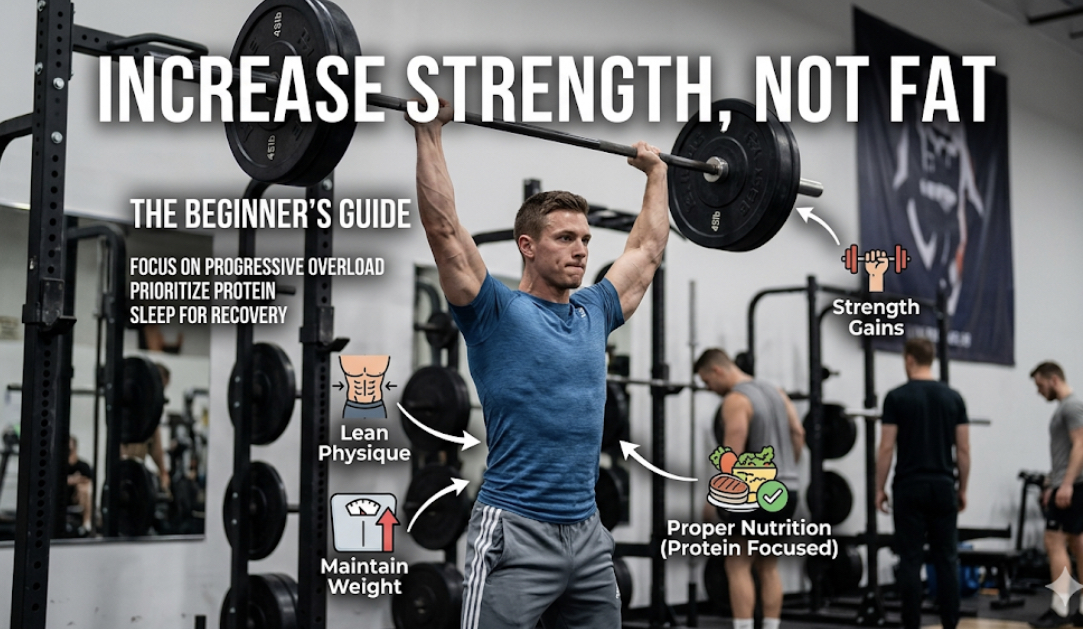
You can increase strength without gaining fat by leveraging neuromuscular adaptations, strategic periodization, and precise nutrition. Strength gains come from both muscle growth (hypertrophy) and neural efficiency—and the latter can increase significantly without adding mass . Key strategies: maintain calories at maintenance or a small surplus (0–200 kcal), consume high protein (1.6–2.2 g/kg), prioritize compound lifts, use periodization, and focus on progressive overload. This lean strength training approach allows you to get stronger while staying shredded.
1. The Myth: Strength Requires Bulking
For decades, lifters believed that getting stronger meant getting bigger—and often, fatter. The classic "bulk to build strength, cut to reveal" approach led many to accept unwanted fat gain as the price of progress. But the truth is more nuanced: strength gains can occur through neuromuscular adaptations that require little to no muscle mass increase . In fact, research shows that strength can increase by 20–40% in beginners within the first 8–12 weeks with minimal muscle growth .
Can you increase strength without gaining fat?
Yes, absolutely. You can increase strength without gaining fat by focusing on three pillars: 1) Maintain calories at maintenance or a very small surplus (0–200 kcal above maintenance) to fuel performance without excess fat storage. 2) Prioritize progressive overload—consistently adding weight or reps to your lifts. 3) Consume high protein (1.6–2.2 g/kg body weight) to support muscle repair and neural adaptations. This approach leverages neuromuscular efficiency, allowing you to recruit more motor units and coordinate muscles better without adding size.
2. The Science: Neural vs. Muscular Strength Gains
2.1. Neuromuscular Adaptations
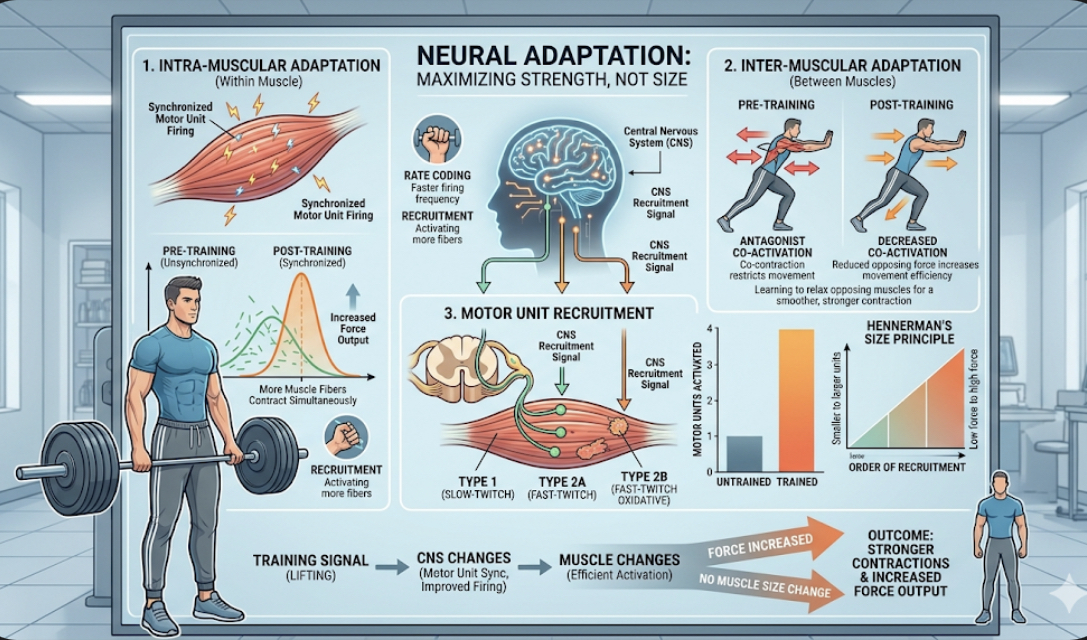
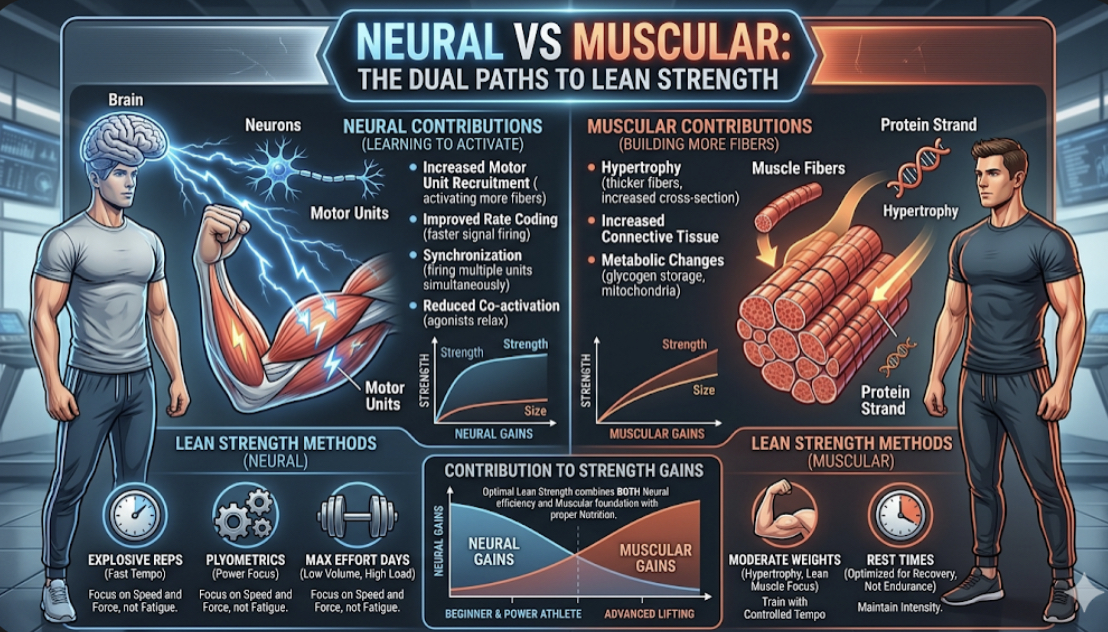
Strength is a combination of muscle cross-sectional area and neural efficiency. Early strength gains (first 4–8 weeks) come primarily from improved motor unit recruitment, rate coding, and intermuscular coordination . You're literally teaching your nervous system to activate muscles more effectively.
2.2. Hypertrophy vs. Neural Gains
Research shows that strength can increase by 20–40% with minimal (<5%) muscle growth in novices . In advanced lifters, neural adaptations still contribute significantly to strength increases, even without gaining weight . This means you can get stronger while staying the same size—or even losing fat.
2.3. The Role of Protein in Neural Adaptations
While muscle growth requires a surplus, neural adaptations don't. Adequate protein (1.6 g/kg) supports recovery and neurotransmitter synthesis, which are essential for skill acquisition and motor learning .
3. Strategy #1: Calorie Management – Maintenance or Minimal Surplus
3.1. Find Your Maintenance
Track your intake for 1–2 weeks while weight remains stable. This is your maintenance. For strength without fat gain, eat at maintenance or add a tiny surplus of 100–200 kcal—enough to fuel performance but not enough to store significant fat .
3.2. Why Not a Deficit?
While you can gain strength in a deficit (especially as a beginner), large deficits (>500 kcal) can impair recovery and performance . A moderate deficit may still allow strength gains, but maintenance or small surplus is optimal.
3.3. Sample Calories for a Lean Strength Phase
For an 80 kg (176 lb) person: maintenance ~2,800 kcal. Aim for 2,800–3,000 kcal daily. Adjust based on strength progress and scale weight (aim for 0.1–0.2 kg gain per month if any).
4. Strategy #2: High Protein for Recovery and Neural Function
4.1. How Much Protein?
1.6–2.2 g per kg of body weight daily. For an 80 kg person: 128–176 g protein. This supports muscle repair, neurotransmitter synthesis, and recovery without excess calories .
4.2. Timing Matters
Spread protein across 3–5 meals (20–40 g per meal). Pre- and post-workout protein (20–30 g) supports performance and recovery .
4.3. Best Lean Protein Sources
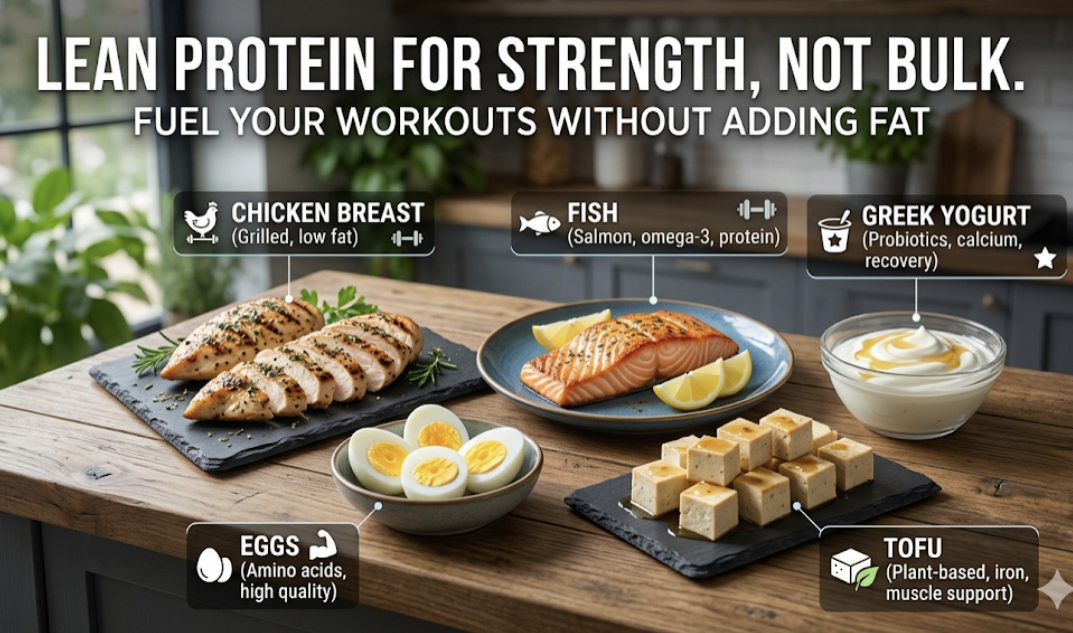
- Animal: Chicken breast, turkey, lean beef, egg whites, Greek yogurt, cottage cheese, white fish, whey isolate.
- Plant: Tofu, tempeh, seitan, edamame, lentils, chickpeas, pea protein.
5. Strategy #3: Training for Neural Strength – Progressive Overload & Periodization
5.1. Focus on Compound Lifts
Squat, deadlift, bench press, overhead press, rows, and pull-ups recruit the most motor units and allow the greatest progressive overload. These exercises are optimal for neural adaptations .
5.2. Progressive Overload
Add weight (2.5–5 kg) or reps weekly. Without increasing demand, your nervous system has no reason to adapt. Track every workout.
5.3. Intensity Matters
For neural strength gains, train at 70–85% of your one-rep max (1RM) in the 1–5 rep range for strength-focused work. This maximizes motor unit recruitment .
5.4. Periodization
Use linear periodization (increase weight, decrease reps over weeks) or undulating periodization to avoid plateaus. Example: Weeks 1–4: 8–10 reps; Weeks 5–8: 5–7 reps; Weeks 9–12: 3–5 reps.
5.5. Volume Management
For neural strength, lower volume (3–5 sets per exercise) with heavier weights is more effective than high volume . Avoid junk volume that increases fatigue without strength benefit.
6. Sample Lean Strength Meal Plan (2,800–3,000 kcal, 160g Protein)
Omnivore Plan
- Breakfast (7:30): 3 eggs + 3 egg whites, 1 cup oatmeal with 1 tbsp peanut butter, 1 banana (550 kcal, 40g protein)
- Lunch (12:30): 200g grilled chicken breast, 1.5 cups brown rice, 1 cup broccoli, 1 tbsp olive oil (650 kcal, 50g protein)
- Pre-workout (4:30): 1 scoop whey protein, 1 apple (200 kcal, 25g protein)
- Post-workout/Dinner (7:30): 200g salmon or lean beef, 1.5 cups sweet potato, 2 cups mixed greens, 1 tbsp vinaigrette (650 kcal, 45g protein)
- Evening Snack (10:00): 200g Greek yogurt, 1 cup berries, 1 tbsp honey (350 kcal, 20g protein)
- Snack (optional): 1 oz almonds (160 kcal, 6g protein)
Vegan/Vegetarian Plan (2,800 kcal, 150g Protein)
- Breakfast: Tofu scramble (200g firm tofu), 1 cup oatmeal with 2 tbsp peanut butter, banana (650 kcal, 40g protein)
- Lunch: 200g tempeh, 1.5 cups quinoa, 1 cup roasted chickpeas, mixed greens (700 kcal, 45g protein)
- Pre-workout: 1 scoop pea protein, 1 apple (200 kcal, 25g protein)
- Post-workout/Dinner: 1.5 cups cooked lentils, 1.5 cups sweet potato, 200g edamame, 1 tbsp olive oil (700 kcal, 40g protein)
- Evening: 200g silken tofu with berries, 2 tbsp hemp seeds (350 kcal, 15g protein)
Gluten-Free Options
- Use certified gluten-free oats, quinoa, rice, or buckwheat.
- Ensure protein powders and tempeh/tofu are gluten-free certified.
7. Sample 3-Day Lean Strength Program (Beginner-Intermediate)
Focus on compound lifts with progressive overload. Perform each session with 3–5 sets of 5 reps at 80–85% 1RM.
- Day 1 (Upper): Bench press, overhead press, bent-over row, pull-ups (weighted if possible), face pulls.
- Day 2 (Lower): Squat, deadlift (or Romanian deadlift), leg press, calf raises, planks.
- Day 3 (Full Body): Power clean or clean pull, bench press variation, squat variation, pull-ups, core.
Progression: Add 2.5–5 kg to main lifts each week. If you fail to hit target reps, deload and reduce volume.
8. Common Mistakes When Trying to Build Strength Without Fat
- Mistake #1: Eating too little. Severe deficits impair recovery and neural adaptations. Eat at maintenance or small surplus.
- Mistake #2: Overtraining. Neural strength requires CNS recovery. Too much volume or frequency leads to fatigue without progress.
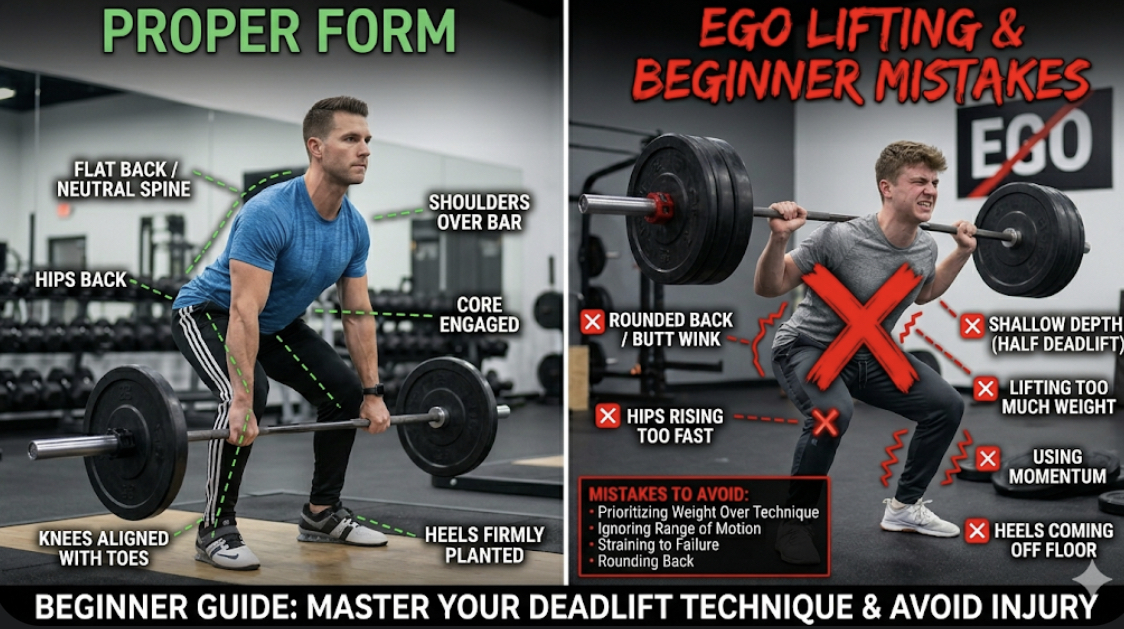
- Mistake #3: Ignoring technique. Neural strength is about efficient movement. Poor technique limits motor learning.
- Mistake #4: No periodization. Doing the same workout indefinitely leads to plateaus. Vary intensity and volume.
- Mistake #5: Not tracking progress. Without a log, you won't know if you're progressing or spinning wheels.
- Mistake #6: Skipping sleep. CNS recovery happens during sleep. <7 hours impairs strength gains.
9. Frequently Asked Questions
Can you increase strength without gaining fat?
Yes, through neuromuscular adaptations, proper nutrition (maintenance calories, high protein), and progressive overload training.
Do I need to be in a calorie surplus to get stronger?
Not necessarily. Beginners and intermediates can gain strength at maintenance. Advanced lifters may need a small surplus (100–200 kcal) for continued progress.
How much protein do I need for strength without bulking?
1.6–2.2 grams per kilogram of body weight daily. This supports recovery and neural function without excess calories.
Can I get stronger while losing fat?
Yes, especially if you're a beginner, have higher body fat, or are returning after a break. Strength gains are possible in a moderate deficit.
What's the best rep range for strength without hypertrophy?
1–5 reps at 80–85% 1RM is optimal for neural strength gains. This maximizes motor unit recruitment with minimal muscle damage.
How often should I train for strength without gaining fat?
3–4 sessions per week is ideal. Each session should focus on compound lifts with adequate rest between sessions (48–72 hours).
Will I eventually need to bulk to continue gaining strength?
Eventually, as you become advanced, further strength gains may require small amounts of muscle growth, which necessitates a modest calorie surplus. However, this can still be a "lean bulk" with minimal fat gain.
10. Related Resources
- How Much Weight Should You Add Each Week? Progressive Overload Guide
- Mind-Muscle Connection: How to Train Your Brain for Better Muscle Gains
- Why Your Muscles Look Smaller After a Workout (And How to Fix It Fast)
- Ectomorph Diet Guide: How to Eat 3000 Calories of Whole Foods for Muscle Gain
- How to Break Through a Squat Plateau Naturally and Increase Strength
11. Scientific References
- Sale, D. G. (1988). Neural adaptation to resistance training. Medicine & Science in Sports & Exercise, 20(5 Suppl), S135–S145. PubMed
- Morton, R. W., et al. (2018). A systematic review, meta-analysis and meta-regression of the effect of protein supplementation on resistance training-induced gains in muscle mass and strength in healthy adults. British Journal of Sports Medicine, 52(6), 376–384. PubMed
- Helms, E. R., et al. (2014). Evidence-based recommendations for natural bodybuilding contest preparation. Journal of the International Society of Sports Nutrition, 11(1), 20. PubMed
- Schoenfeld, B. J., et al. (2017). Effects of Resistance Training Frequency on Measures of Muscle Hypertrophy: A Systematic Review and Meta-Analysis. Sports Medicine, 46(11), 1689–1697. PubMed
- Aagaard, P., et al. (2002). Neural adaptation to resistance training: changes in evoked V-wave and H-reflex responses. Journal of Applied Physiology, 92(6), 2309–2318. PubMed
- Slater, G. J., et al. (2019). Is an Energy Surplus Required to Maximize Skeletal Muscle Hypertrophy Associated With Resistance Training? Frontiers in Nutrition, 6, 131. PubMed
- ACSM. (2021). Nutrition and Athletic Performance. Medicine & Science in Sports & Exercise, 53(3), 600–618. PubMed
Join the conversation