How to Know If You’re Gaining Muscle or Fat (Simple Tracking Guide)
How to Know If You're Gaining Muscle or Fat (Simple Tracking Guide)
⚡ TL;DR
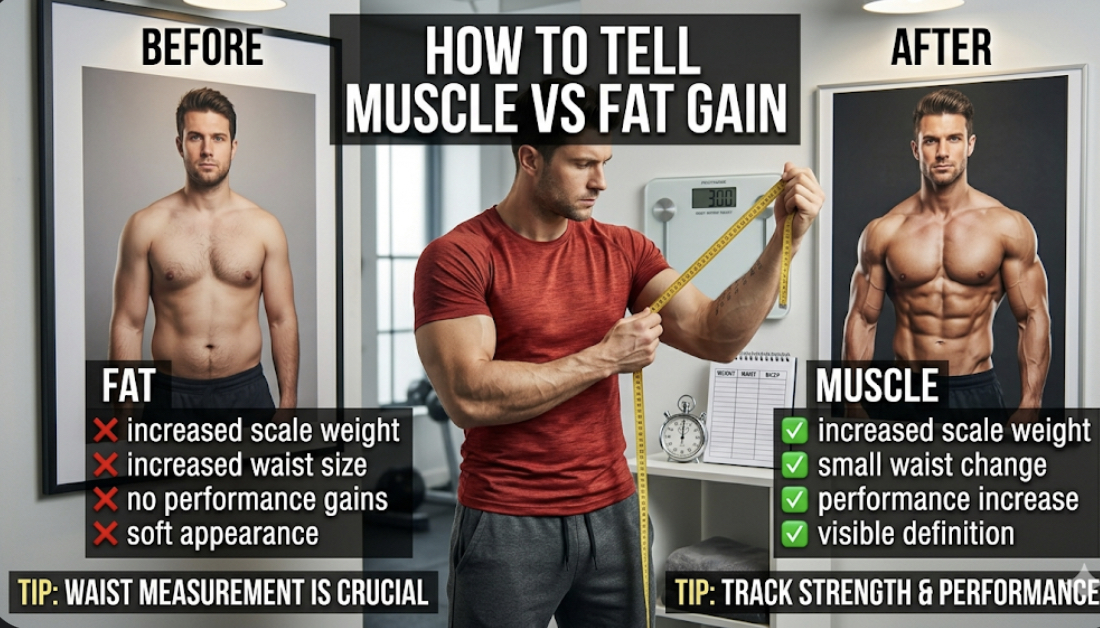
To know if you're gaining muscle or fat, don't rely solely on the scale. Use a combination of: strength tracking (if lifts go up, you're building muscle), body measurements (stable or shrinking waist = good), progress photos (visual changes), and body composition methods (calipers, DEXA). Research shows that strength gains correlate strongly with muscle growth, even when scale weight is stable . This guide provides a simple tracking system to distinguish muscle vs fat weight and keep you on the right track.
1. The Scale Deception: Why Weight Alone Lies
You step on the scale. The number went up. Should you celebrate or worry? Without context, you have no idea. That 1 kg could be muscle, fat, water, glycogen, or food in your digestive tract. The scale is a one-dimensional tool that can't tell you anything about your body composition. This guide will teach you how to accurately determine if you're gaining muscle or fat using simple, reliable methods.
How can you tell if you are gaining muscle or fat?
You can tell if you are gaining muscle or fat by tracking: 1) Strength progression—if your lifts are increasing, you're building muscle. 2) Body measurements—a stable or shrinking waist with increasing weight indicates muscle gain. 3) Visual changes—progress photos reveal definition. 4) Body composition methods—calipers, BIA, or DEXA scans provide direct data . Using these methods together gives you a complete picture of your progress.
2. The Science: What Your Body Actually Gains
2.1. The Composition of Weight Gain
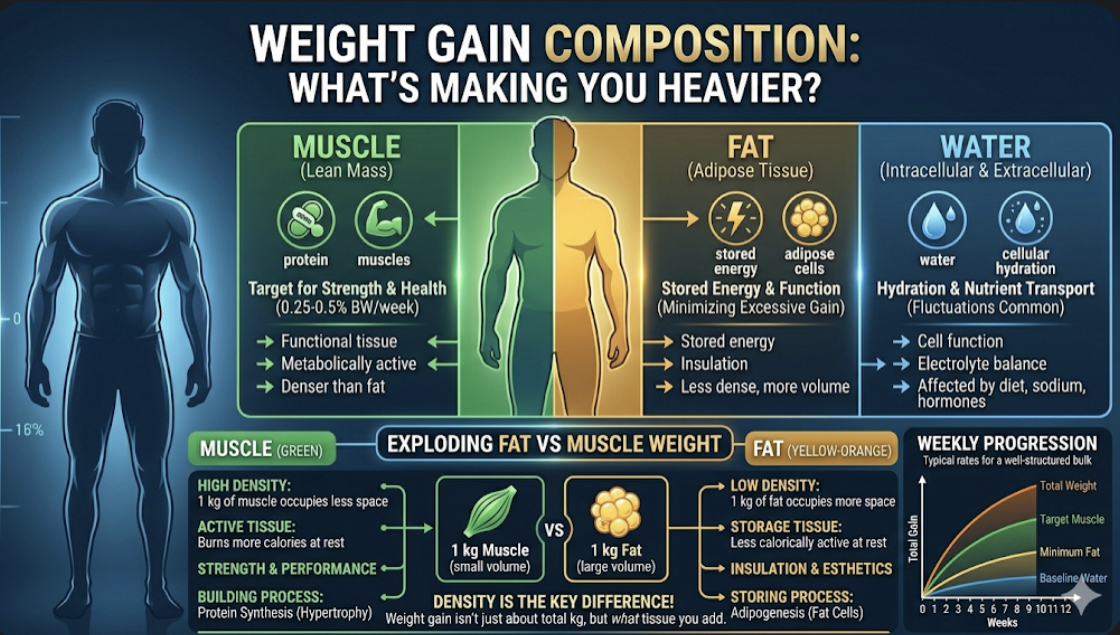
When you gain weight, the composition depends on your training and nutrition. With proper strength training and adequate protein, a significant portion of weight gain can be muscle . In a well-executed lean bulk, 50–75% of weight gained may be lean mass . Without training or insufficient protein, most weight gain is fat .
2.2. Why the Scale Can't Differentiate
Muscle and fat have different densities—muscle is about 18% denser than fat . But the scale only measures total mass, not composition. You could gain 2 kg of muscle and lose 1 kg of fat, and the scale would show only a 1 kg gain, hiding the significant body composition improvement.
2.3. The Role of Water and Glycogen
Glycogen stores (carbohydrates stored in muscle) bind 3–4 grams of water per gram of glycogen . Starting a new training program or increasing carbs can cause a rapid 2–3 kg weight gain that is neither muscle nor fat—it's water and glycogen. This temporary gain often misleads people into thinking they're gaining fat.
3. Method #1: Strength Tracking – The Best Indicator
3.1. The Strength-Muscle Connection
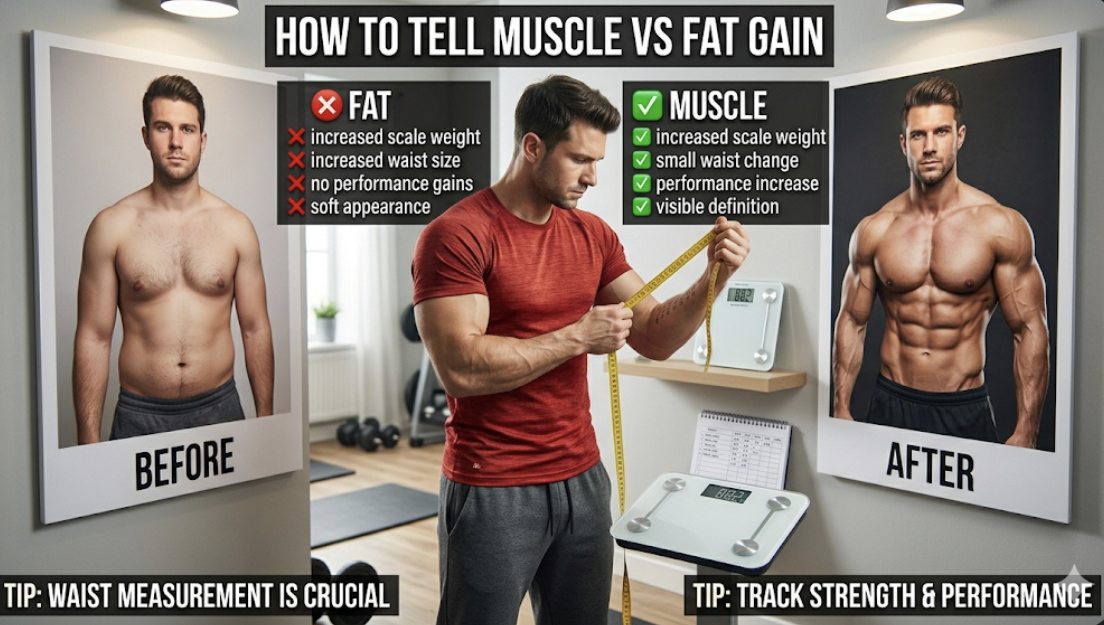
Research consistently shows a strong correlation between strength gains and muscle growth . If your lifts are going up—especially on compound movements like squat, bench press, deadlift, and rows—you are almost certainly building muscle. This is true even if the scale stays the same or changes slowly.
3.2. What to Track
- Progressive overload: Are you adding weight to the bar? Adding reps? Adding sets?
- Key lifts: Squat, deadlift, bench press, overhead press, rows, pull-ups.
- Frequency: Log every workout to see trends over 4–8 weeks.
4. Method #2: Body Measurements – Waist and Key Sites
4.1. Why Waist Circumference Matters
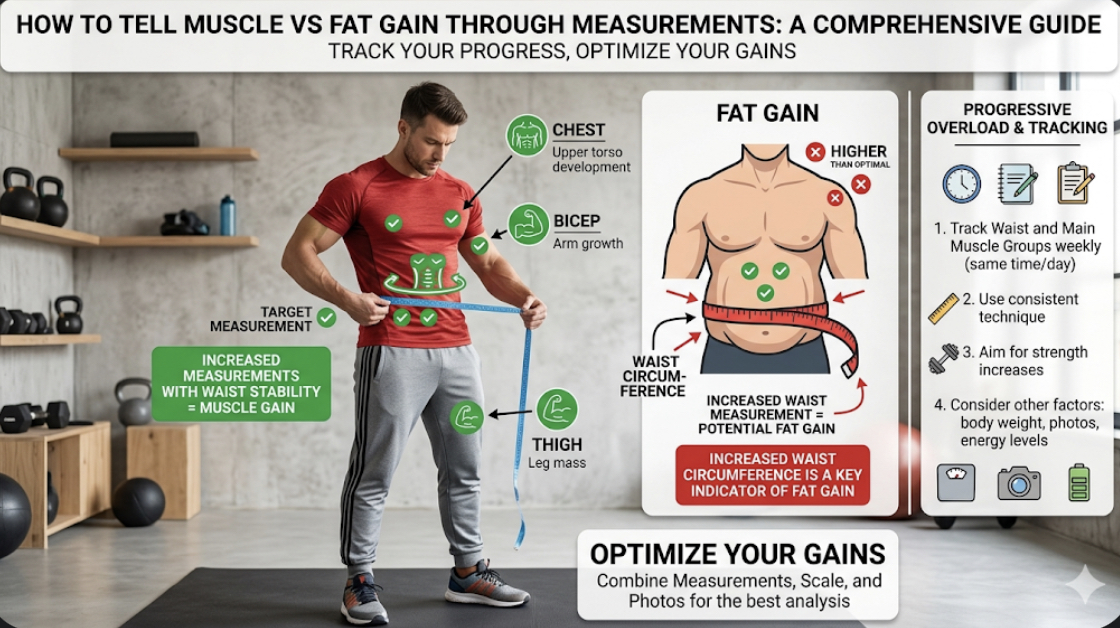
Waist circumference is one of the most reliable indicators of fat gain. If your waist is staying the same or shrinking while your weight increases, you're gaining muscle . If your waist is expanding rapidly, you're gaining fat .
4.2. What to Measure
- Waist: At the narrowest point (or halfway between ribs and hip bones).
- Hips: At the widest point around glutes.
- Arms: Mid-bicep, relaxed and flexed (growth indicates muscle).
- Thighs: Mid-point between hip and knee.
4.3. Measurement Protocol
Measure at the same time weekly (morning, after bathroom, before food). Take 2–3 measurements and average. Track trends over 4 weeks, not daily fluctuations.
5. Method #3: Progress Photos – Visual Evidence
5.1. Why Photos Work
Your eyes can deceive you when looking in the mirror daily. But side-by-side photos taken under consistent conditions reveal changes you might miss. Visual evidence often shows muscle definition improvements long before the scale moves significantly.
5.2. How to Take Effective Photos
- Same location, same lighting (natural light ideal).
- Same time of day (morning fasted recommended).
- Three poses: front, side, back.
- Minimal clothing (shorts/swimsuit).
- Take every 2–4 weeks.
6. Method #4: How Clothes Fit – The Real-World Test
Pick a pair of "reference jeans" or a fitted shirt. Try them on every 2 weeks. If they feel looser around the waist but tighter around the shoulders/chest, you're winning—you're gaining muscle and losing fat. If they're tight everywhere, you're gaining fat.
7. Method #5: Body Composition Tools (Calipers, BIA, DEXA)
7.1. Skinfold Calipers
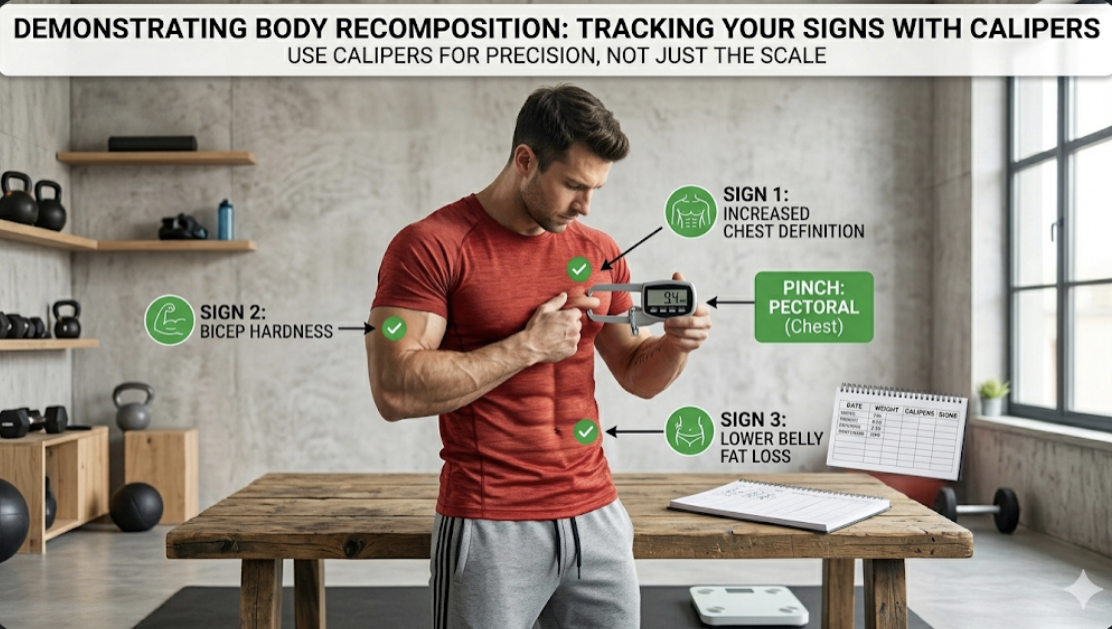
With proper technique, calipers can track changes in subcutaneous fat. Have the same trained professional measure at 3–7 sites every 4–6 weeks. Accuracy depends on technician skill.
7.2. Bioelectrical Impedance (BIA)
Home scales with BIA are affected by hydration, but can show trends if used under strict conditions (morning, fasted, after bathroom). Look at 4-week trends, not daily numbers.
7.3. DEXA Scans
DEXA is the gold standard for body composition. A scan every 3–6 months provides precise data on fat mass, lean mass, and bone density .
8. Simple 4-Week Tracking Plan
- Weekly (same time, morning): Weigh-in, waist measurement, log strength numbers.
- Bi-weekly: Try on reference jeans, note fit.
- Monthly: Progress photos (front/side/back), body fat measurement (if available).
Review trends every 4 weeks. If strength is up and waist is stable, you're on the right track regardless of scale weight.
9. Sample Nutrition to Support Lean Gains (2,800 kcal, 150g Protein)
Omnivore Plan
- Breakfast: 3 eggs + 2 egg whites, 1 cup oatmeal with 1 tbsp peanut butter, 1 banana (600 kcal, 35g protein)
- Lunch: 180g grilled chicken breast, 1.5 cups brown rice, 1 cup broccoli, 1 tbsp olive oil (650 kcal, 45g protein)
- Pre-workout: 1 scoop whey, 1 apple (200 kcal, 25g protein)
- Post-workout/Dinner: 180g lean beef or salmon, 1.5 cups sweet potato, 2 cups mixed greens (650 kcal, 45g protein)
- Evening: 200g Greek yogurt, 1 cup berries, 1 tbsp honey (350 kcal, 20g protein)
Vegan/Vegetarian Plan (2,800 kcal, 145g Protein)
- Breakfast: Tofu scramble (200g firm tofu), 1.5 cups oatmeal with 2 tbsp peanut butter, banana (700 kcal, 40g protein)
- Lunch: 200g tempeh, 1.5 cups quinoa, 1 cup roasted chickpeas, mixed greens (700 kcal, 45g protein)
- Pre-workout: 1 scoop pea protein, 1 apple (200 kcal, 25g protein)
- Post-workout/Dinner: 1.5 cups cooked lentils, 1.5 cups sweet potato, 150g edamame, 1 tbsp olive oil (650 kcal, 35g protein)
- Evening: 200g silken tofu with berries, 2 tbsp hemp seeds (350 kcal, 15g protein)
Gluten-Free Options
- Use certified gluten-free oats, quinoa, rice, or buckwheat.
- Ensure protein powders and tempeh/tofu are gluten-free certified.
10. Red Flags: Signs You're Gaining Fat, Not Muscle
- Waist expanding rapidly (more than 0.5–1 inch per month).
- Strength plateauing or decreasing despite weight gain.
- Clothes tight everywhere (not just shoulders/chest).
- Loss of muscle definition in photos.
- Weight gain rate >0.5–1% body weight per week for multiple weeks.
11. Frequently Asked Questions
How can you tell if you are gaining muscle or fat?
Track strength progression (increasing lifts = muscle), body measurements (stable/shrinking waist = good), progress photos, and body composition tools. Use all methods together for accurate assessment.
How much weight gain is normal during a bulk?
0.25–0.5% of body weight per week is ideal for lean gains. For an 80 kg person, that's 0.2–0.4 kg per week.
Can you gain muscle without gaining weight?
Yes—this is body recomposition, common in beginners, those returning after a break, or individuals with higher body fat. You lose fat and gain muscle simultaneously.
How much protein do I need to build muscle?
1.6–2.2 grams per kilogram of body weight daily. For a 75 kg person, that's 120–165 grams of protein per day.
Why did I gain 2 kg in a week?
Likely water and glycogen from increased carbohydrate intake or new training. True muscle growth is much slower (0.2–0.4 kg per week). Don't panic—look at 4-week trends.
How long does it take to see visible muscle growth?
Beginners: 4–8 weeks. Intermediates: 8–12 weeks. Advanced: 12–16+ weeks. Be patient and consistent.
Should I weigh myself every day?
If you can handle daily fluctuations emotionally, daily weigh-ins can provide data for weekly averages. If daily fluctuations stress you out, weigh once weekly under consistent conditions.
12. Related Resources
- How Much Weight Should You Add Each Week? Progressive Overload Guide
- Mind-Muscle Connection: How to Train Your Brain for Better Muscle Gains
- Why Your Muscles Look Smaller After a Workout (And How to Fix It Fast)
- Ectomorph Diet Guide: How to Eat 3000 Calories of Whole Foods for Muscle Gain
- How to Break Through a Squat Plateau Naturally and Increase Strength
13. Scientific References
- Morton, R. W., et al. (2018). A systematic review, meta-analysis and meta-regression of the effect of protein supplementation on resistance training-induced gains in muscle mass and strength in healthy adults. British Journal of Sports Medicine, 52(6), 376–384. PubMed
- Slater, G. J., et al. (2019). Is an Energy Surplus Required to Maximize Skeletal Muscle Hypertrophy Associated With Resistance Training? Frontiers in Nutrition, 6, 131. PubMed
- Helms, E. R., et al. (2014). Evidence-based recommendations for natural bodybuilding contest preparation. Journal of the International Society of Sports Nutrition, 11(1), 20. PubMed
- Schoenfeld, B. J., et al. (2017). Effects of Resistance Training Frequency on Measures of Muscle Hypertrophy: A Systematic Review and Meta-Analysis. Sports Medicine, 46(11), 1689–1697. PubMed
- Heymsfield, S. B., et al. (2018). Body composition analysis: principles and applications. Nature Reviews Endocrinology, 14(8), 467–478. PubMed
- Pouliot, M. C., et al. (1994). Waist circumference and abdominal sagittal diameter: best simple anthropometric indexes of abdominal visceral adipose tissue. American Journal of Cardiology, 73(7), 460–468. PubMed
- ACSM. (2021). Nutrition and Athletic Performance. Medicine & Science in Sports & Exercise, 53(3), 600–618. PubMed
Join the conversation