The Truth About Salt: How Sodium Affects Your Muscle Pump and Performance
The Truth About Salt: Does Sodium Help Your Muscle Pump?
🧂 TL;DR
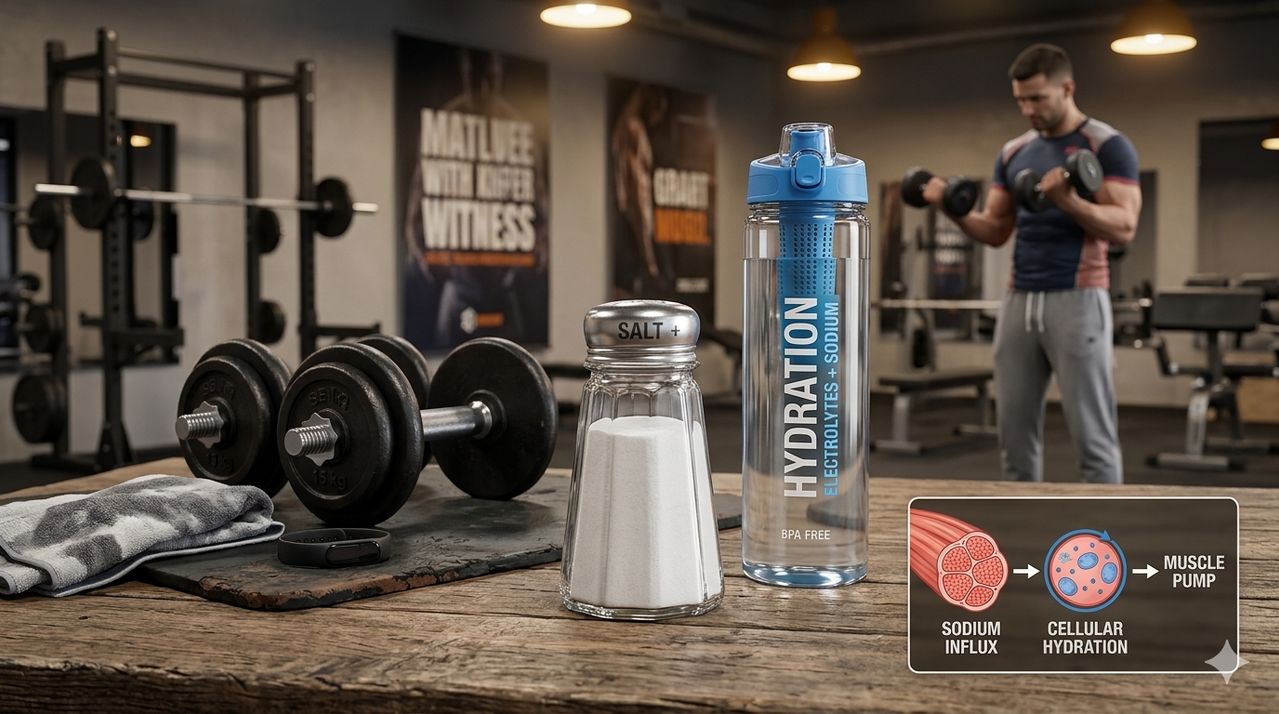
The truth about salt: does sodium help your muscle pump? The answer is yes—but only up to a point, and with important caveats. Sodium is essential for the sodium-potassium pump, a microscopic mechanism in every cell that generates the electrical charges for muscle contractions . A 2026 breakthrough from Aarhus University finally revealed how this pump distinguishes sodium from potassium at the molecular level . Sodium's osmotic properties also pull water into your bloodstream, increasing plasma volume and contributing to the "pump" during training . However, chronically high intake doesn't build more muscle and may harm long-term health . The key is strategic timing: adequate sodium before workouts (300-500mg) with plenty of water, but avoiding excessive intake that leads to bloating, high blood pressure, or dangerous fluid shifts . This guide breaks down the science, optimal dosing, and practical nutrition strategies.
1. The Salt Paradox: Friend or Foe?
For decades, sodium has been public health enemy number one. We're told to cut salt to lower blood pressure and protect our hearts. Yet in gyms and locker rooms, you'll hear whispers of another truth: that salt enhances the muscle pump, improves hydration, and boosts performance. So which is it?
The reality, as with most things in nutrition, lies in nuance. Sodium is not inherently bad—it's an essential electrolyte without which your muscles couldn't contract and your nerves couldn't fire . The question of the truth about salt: does sodium help your muscle pump? depends entirely on context: how much, when, and in whom. This guide separates the physiological facts from the fitness fiction.

2. The 2026 Breakthrough: How Your Muscles' Battery Works
2.1. The Nobel-Winning Discovery
The sodium-potassium pump was discovered in 1957 by Professor Jens Christian Skou of Aarhus University, a finding that earned him the Nobel Prize in 1997 . For decades, scientists knew it pumped sodium out and potassium into cells, but the exact mechanism remained a mystery—until now.
2.2. The March 2026 Nature Publication
In a landmark study published just this month, an international collaboration between Aarhus University and the University of Tokyo finally revealed the structure of the sodium-bound form of the pump at an unprecedented resolution of 0.28 nanometres . For the first time, researchers could actually "see" sodium ions binding within the pump .
The breakthrough explains how the pump distinguishes between sodium and potassium based on ion size—sodium ions are smaller and fit into specific binding sites, while the slightly larger potassium ions are blocked . This molecular dance consumes up to 40% of your body's energy at rest to maintain the electrical gradient essential for muscle contraction .
2.3. Why This Matters for Lifters
When you train, action potentials fire constantly, driven by passive fluxes of sodium and potassium . If the pump can't keep up, muscles lose excitability and force. Research shows that when the "leak/pump ratio" increases—due to pump inhibition or insufficient sodium—force decline accelerates within seconds . This is why adequate sodium, but not excess, is critical for performance.

3. Sodium and the Muscle Pump: The Hydration Connection
3.1. Osmosis and Plasma Volume
Sodium is highly osmotic, meaning it draws water. When you consume sodium with adequate fluid, it increases plasma volume—the liquid part of your blood . This expanded blood volume is what bodybuilders call the "pump": more blood flow into working muscles brings oxygen and nutrients while creating that tight, full feeling .
3.2. The "Salty Sweater" Phenomenon
Individual sodium needs vary dramatically based on sweat rate. If you finish workouts with white salt streaks on your skin or clothes, you're a "salty sweater" and lose more sodium than average . For these lifters, inadequate sodium replacement can lead to cramping, dizziness, and premature fatigue .
3.3. The Potassium Balance
It's not just about sodium. The NFPT explains that potassium pulls fluid into muscles while sodium pulls it out . The ideal scenario is a precise balance: when sodium concentration outside the cell is slightly lower than potassium inside, water shifts into muscles—exactly what you want . Too much sodium disrupts this balance, potentially drawing water out of muscles and causing cramping .
4. Optimal Sodium Intake: Finding Your Sweet Spot
4.1. General Guidelines vs. Athlete Needs
The World Health Organization recommends less than 2,000 mg of sodium per day (about 5g of salt) for general health . However, athletes who train intensely and sweat heavily may require more to replace losses. The key is matching intake to output, not exceeding it.
4.2. Dosing Tiers for Performance
Based on sports nutrition data, here are evidence-based sodium intake tiers for lifters :
- Maintenance (baseline): 100-200mg – Sufficient for short, low-intensity workouts in air-conditioned gyms .
- Performance (most lifters): 300-500mg – Ideal for 60-90 minute high-intensity sessions .
- Elite/Heavy Sweater: 500-1,000mg – Necessary for training >90 minutes in heat, or if you're a "salty sweater" .
4.3. Timing Matters
Consuming sodium 30-60 minutes pre-workout, with at least 16-20 ounces of water, allows it to expand plasma volume before training . Without adequate water, supplemental sodium can actually dehydrate tissues by pulling water from cells into the gut .
5. The "Salt Loading" Myth: Why More Isn't Better
5.1. What the IFBB Academy Says
A 2025 review from the IFBB Academy Nordic debunks the idea that high salt intake enhances muscle growth or fat loss . While sodium is essential, there's no evidence that consuming excess sodium boosts hypertrophy beyond what adequate intake provides . In fact, studies in older adults link high salt intake to reduced muscle strength and physical performance .
5.2. The Fat Loss Paradox
High sodium intake is associated with increased obesity risk. One study found that each 1-gram increase in daily sodium was linked to a 15% higher risk of obesity and a 24% higher risk of central obesity . The mechanism may involve increased thirst leading to consumption of sugary drinks, or metabolic disruption promoting insulin resistance .
5.3. Water Retention vs. Muscle Fullness
While sodium does cause water retention, this is mostly subcutaneous (under the skin) water, not intramuscular fluid. That's why high-sodium meals can make you look "soft" or bloated, not full and hard. The goal for a defined physique is to maintain electrolyte balance, not chronically elevate sodium .
6. Peak Week: Strategic Sodium Manipulation
6.1. The Traditional Depletion Method
Bodybuilders often drastically reduce sodium during peak week to achieve a "dry" look. However, this can backfire: extreme depletion triggers aldosterone release, a hormone that promotes sodium and water retention, potentially causing rebound bloating .
6.2. The Emerging Research
A 2022 case study suggests that a more consistent approach—maintaining normal sodium and water intake, with a slight increase shortly before stage—might achieve better muscle fullness without subcutaneous spillover . This aligns with the principle that stability beats drastic manipulation.
7. Sample 2500-Calorie Day with Balanced Sodium
This meal plan provides adequate sodium for training (~1500-2000mg total) without excess, emphasizing whole foods over processed sources.
Breakfast (7:30 AM) – 550 kcal | 35g protein
- 3 eggs scrambled with 1 cup spinach and ¼ cup diced bell peppers (~300mg sodium)
- 1 slice whole-grain toast with ½ avocado
- 1 cup black coffee
Lunch (1:00 PM) – 650 kcal | 45g protein
- 150g grilled chicken breast seasoned with herbs, not salt (use lemon, garlic, pepper) (~80mg sodium)
- 1 large sweet potato, roasted
- 2 cups mixed greens with 1 tbsp olive oil vinaigrette (add ¼ tsp salt = ~300mg)
Pre-Workout (4:30 PM) – 150 kcal
- 1 banana
- 16-20 oz water with ¼ tsp sea salt (~500mg sodium) – sip 30-60 min before training .
Dinner (7:30 PM) – 700 kcal | 50g protein
- 150g salmon seasoned with dill and lemon
- 1 cup quinoa
- Roasted asparagus with 1 tbsp olive oil and pinch of salt (~150mg)
Evening Snack – 250 kcal | 20g protein
- 1 cup Greek yogurt with ½ cup berries (~80mg sodium)
Total: ~2,300 kcal, ~150g protein, ~1,500mg sodium (adjust to needs)
7.1. Vegan/Vegetarian Adaptations
- Replace chicken with baked tofu or tempeh.
- Replace salmon with grilled portobello mushrooms or marinated tofu.
- Ensure adequate iodine from seaweed or iodized salt (¼ tsp daily).
- Use nutritional yeast for B vitamins and savory flavor.
8. Common Sodium Mistakes That Sabotage Performance
- Mistake #1: Salt tablets before workouts. This dangerous practice can pull fluid into the gut, away from muscles and heart .
- Mistake #2: Drastically cutting sodium pre-contest. Causes rebound water retention via aldosterone .
- Mistake #3: Ignoring potassium. Sodium without potassium disrupts the cellular pump .
- Mistake #4: High-sodium processed foods. These often lack potassium and come with unhealthy fats/sugars .
- Mistake #5: Not drinking enough water with sodium. Causes dehydration, not hydration .
9. Related Resources
10. Scientific References
- Clausen, T. (2003). The sodium pump keeps us going. Annals of the New York Academy of Sciences, 986, 595-602. PubMed
- Label Rater. (2026). Sea Salt: Benefits, Dosage & Top Products. labelrater.com. View Source
- Label Rater. (2026). Sodium: Benefits, Dosage & Top Products. labelrater.com. View Source
- Aarhus University. (2026). International research collaboration reveals the mechanism of the human body's most important battery. health.au.dk. View Source
- IFBB Academy Nordic. (2025). Debunking the High Salt Myth for Physique Athletes. ifbbacademynordic.fi. View Source
- National Federation of Professional Trainers. (2025). The Electrolytes Sodium and Potassium. nfpt.com. View Source
- Barakat, C., et al. (2022). Can bodybuilding peak week manipulations favorably affect muscle size? A case study. Sports, 10(7), 106. View Source
- Zhang, X., et al. (2018). High salt intake and obesity risk. American Heart Association Journals. View Source
- He, F. J., et al. (2015). High Salt Intake: Independent Risk Factor for Obesity? Hypertension. View Source
- GSSI. (2024). Dietary Water and Sodium Requirements For Active Adults. gssiweb.org. View Source
Join the conversation