Best Cheap High-Protein Foods for Muscle Growth (Budget-Friendly Guide)
Best Cheap High-Protein Foods for Muscle Growth (Budget-Friendly Guide)
⚡ TL;DR
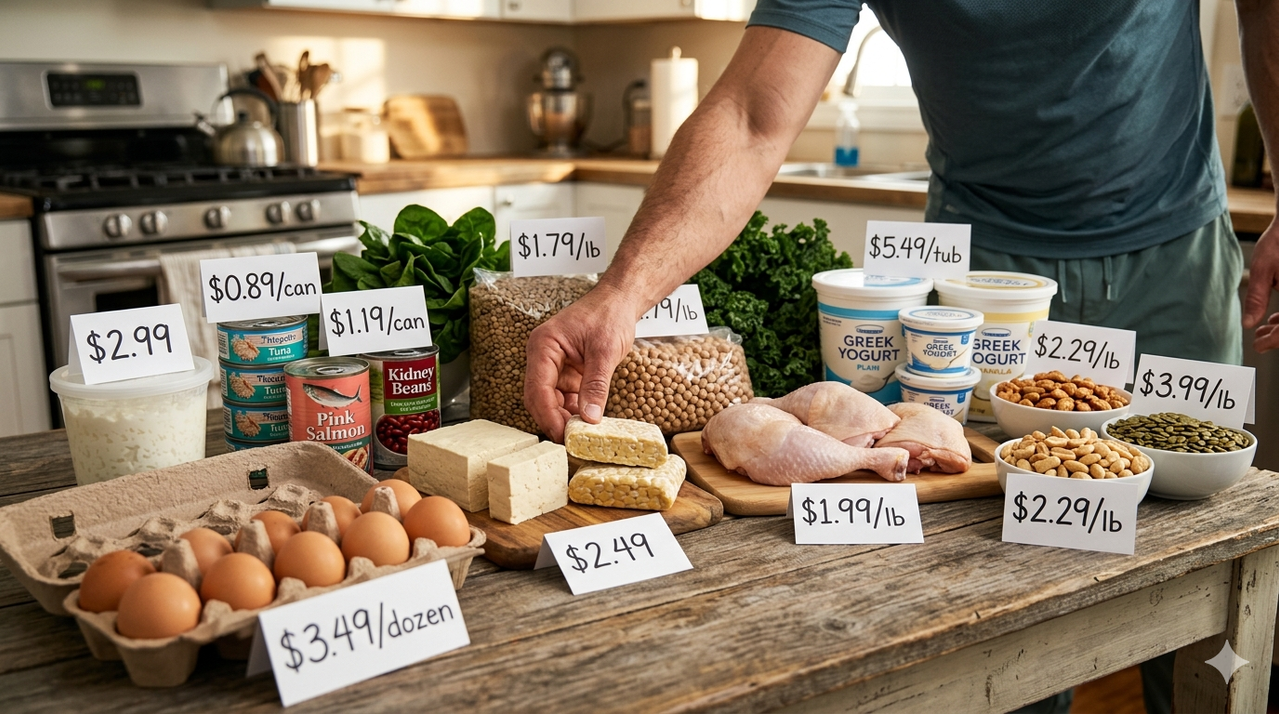
You can build muscle on a budget using cheap high-protein foods like eggs, chicken thighs, canned tuna, lentils, beans, Greek yogurt, cottage cheese, and peanuts. These affordable protein sources provide complete amino acid profiles or can be combined for completeness. Aim for 1.6–2.2 g protein per kg body weight. This guide lists the best budget protein foods, sample meal plans (omnivore, vegan, vegetarian), cost comparisons, and money-saving tips to hit your protein goals without spending a fortune .
1. The Myth: Muscle Building Is Expensive
Walk into any supplement store, and you'll see protein powders costing $50–$100 per tub. Social media influencers promote expensive grass-fed beef and organic chicken breast. But the truth is, you can build significant muscle on a tight budget. This budget-friendly guide will show you the best cheap high-protein foods to maximize muscle growth without emptying your wallet.
What are the cheapest high-protein foods?
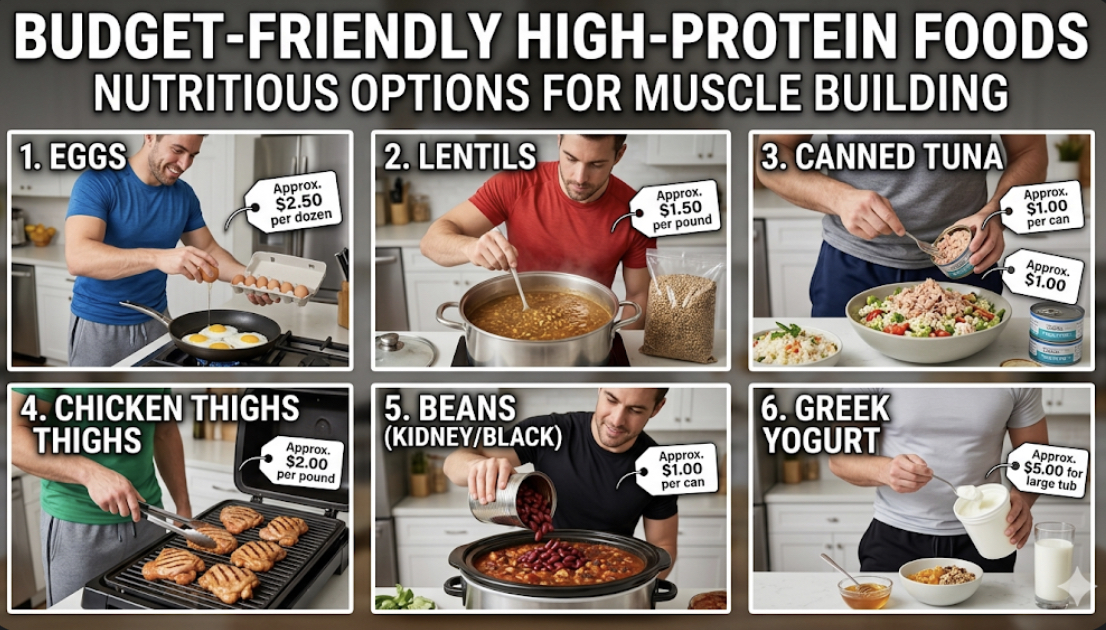
The cheapest high-protein foods per gram of protein are: eggs (approx. $0.15–0.25 per 20g protein), lentils ($0.20 per 18g protein), canned tuna ($0.30–0.50 per 20g protein), chicken thighs ($0.30–0.50 per 25g protein), and beans (chickpeas, black beans, kidney beans at $0.15–0.30 per 15g protein). These staples provide high-quality protein for muscle growth without expensive supplements or premium meats .
2. Top 15 Cheap High-Protein Foods (Ranked by Cost per Gram)
| Food | Serving | Protein (g) | Approx. Cost per Serving | Cost per 20g Protein |
|---|---|---|---|---|
| Eggs | 3 large | 18g | $0.45–0.75 | $0.15–0.25 |
| Lentils (dry) | ½ cup | 18g | $0.20–0.30 | $0.20–0.30 |
| Canned Tuna | 1 can (5 oz) | 20–25g | $0.80–1.20 | $0.30–0.50 |
| Chicken Thighs | 4 oz | 25g | $0.80–1.20 | $0.30–0.50 |
| Peanuts | ¼ cup | 9g | $0.15–0.25 | $0.35–0.55 |
| Black Beans (canned) | 1 cup | 15g | $0.50–0.80 | $0.35–0.55 |
| Chickpeas (canned) | 1 cup | 15g | $0.50–0.80 | $0.35–0.55 |
| Cottage Cheese | 1 cup (4% fat) | 25g | $1.20–1.80 | $0.50–0.70 |
| Greek Yogurt | 1 cup (plain) | 20g | $1.00–1.50 | $0.50–0.75 |
| Peanut Butter | 2 tbsp | 8g | $0.20–0.30 | $0.50–0.75 |
| Chicken Breast | 4 oz | 26g | $1.50–2.00 | $0.60–0.80 |
| Pork Shoulder | 4 oz | 22g | $1.20–1.80 | $0.55–0.80 |
| Milk | 2 cups | 16g | $0.50–0.80 | $0.60–1.00 |
| Tofu (firm) | ½ block | 20g | $1.00–1.50 | $0.50–0.75 |
| Oats | 1 cup (dry) | 10g | $0.20–0.30 | $0.40–0.60 |
Note: Prices are estimates and vary by location, store, and bulk purchases. Buying in bulk, store brands, and sales significantly reduce costs.
3. Complete vs. Incomplete Proteins (And How to Combine Them)
3.1. What Are Complete Proteins?
Complete proteins contain all nine essential amino acids in adequate amounts. Animal-based foods (eggs, chicken, fish, dairy) are complete. Most plant proteins are incomplete, missing one or more essential amino acids.
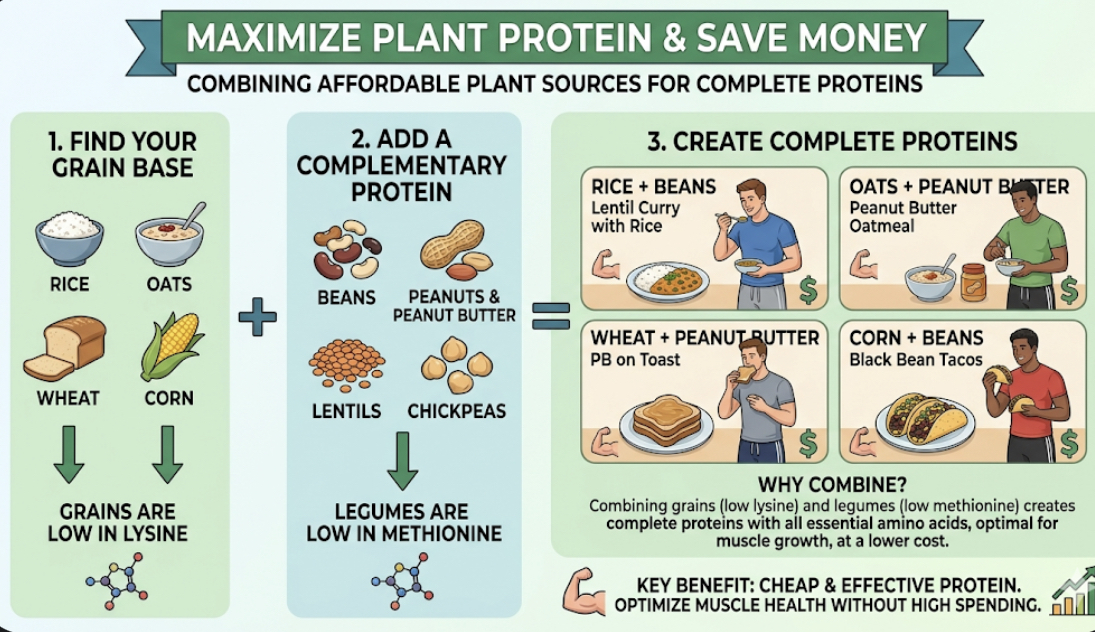
3.2. How to Combine Plant Proteins
You don't need to combine proteins at every meal—your body pools amino acids over the day. However, to ensure complete protein intake, combine complementary proteins:
- Grains + Legumes: Rice + beans, oatmeal + peanut butter, whole wheat bread + lentil soup
- Nuts/seeds + Legumes: Peanut butter + chickpeas, tahini + lentils
4. Sample Meal Plans for Muscle Growth on a Budget
4.1. Omnivore Budget Plan (2,500 kcal, 150g Protein, ~$8–10/day)
- Breakfast: 3 eggs, 1 cup oatmeal with 1 tbsp peanut butter, 1 banana (550 kcal, 30g protein)
- Lunch: 1 can tuna (5 oz), 1.5 cups brown rice, 1 cup mixed frozen vegetables (550 kcal, 40g protein)
- Snack: 1 cup Greek yogurt, ½ cup berries (200 kcal, 20g protein)
- Dinner: 6 oz chicken thighs, 1.5 cups lentils, 1 cup roasted broccoli (650 kcal, 50g protein)
- Evening: 1 cup cottage cheese, 1 tbsp honey (250 kcal, 20g protein)
Total: ~2,200 kcal, 160g protein
4.2. Vegan/Vegetarian Budget Plan (2,500 kcal, 140g Protein, ~$6–8/day)
- Breakfast: Tofu scramble (200g firm tofu with spinach), 1 cup oatmeal with 2 tbsp peanut butter, banana (700 kcal, 40g protein)
- Lunch: 1.5 cups cooked lentils, 1.5 cups quinoa, mixed greens, 1 tbsp olive oil (600 kcal, 35g protein)
- Snack: 1 cup edamame, 1 apple (200 kcal, 15g protein)
- Dinner: 1.5 cups chickpeas, 1.5 cups sweet potato, 1 cup spinach, 1 tbsp olive oil (650 kcal, 30g protein)
- Evening: 1 cup unsweetened soy milk + 2 tbsp hemp seeds (250 kcal, 15g protein)
Total: ~2,400 kcal, 135g protein
Gluten-Free Options
- Use certified gluten-free oats, quinoa, rice, or buckwheat.
- Ensure tempeh and tofu are gluten-free certified (most are).
5. Quick Budget-Friendly High-Protein Recipes
- Egg & Bean Scramble (450 kcal, 30g protein): 3 eggs, 1 cup black beans, ½ cup spinach, salsa. ~$1.50/serving.
- Tuna Rice Bowl (550 kcal, 45g protein): 1 can tuna, 1.5 cups brown rice, 1 cup frozen peas & carrots, soy sauce. ~$2.00/serving.
- Lentil Soup (400 kcal, 20g protein): 1 cup lentils, vegetable broth, carrots, celery, onion, garlic. ~$1.00/serving (makes multiple servings).
- Peanut Butter Banana Oatmeal (500 kcal, 20g protein): 1 cup oats, 2 tbsp peanut butter, 1 banana, 1 cup milk. ~$1.20/serving.
- Chickpea & Tofu Stir-fry (550 kcal, 35g protein): ½ block firm tofu, 1 cup chickpeas, mixed frozen vegetables, soy sauce. ~$2.50/serving.
6. Money-Saving Tips for High-Protein Eating
- Buy in bulk: Rice, oats, lentils, beans, and frozen vegetables are much cheaper in bulk.
- Choose frozen over fresh: Frozen chicken thighs, fish, and vegetables are often 20–40% cheaper and just as nutritious.
- Shop sales and store brands: Store-brand Greek yogurt, cottage cheese, and canned goods are identical to name brands.
- Use cheaper cuts: Chicken thighs are cheaper than breast and have more flavor. Pork shoulder, ground beef (70/30), and whole chickens are budget-friendly.
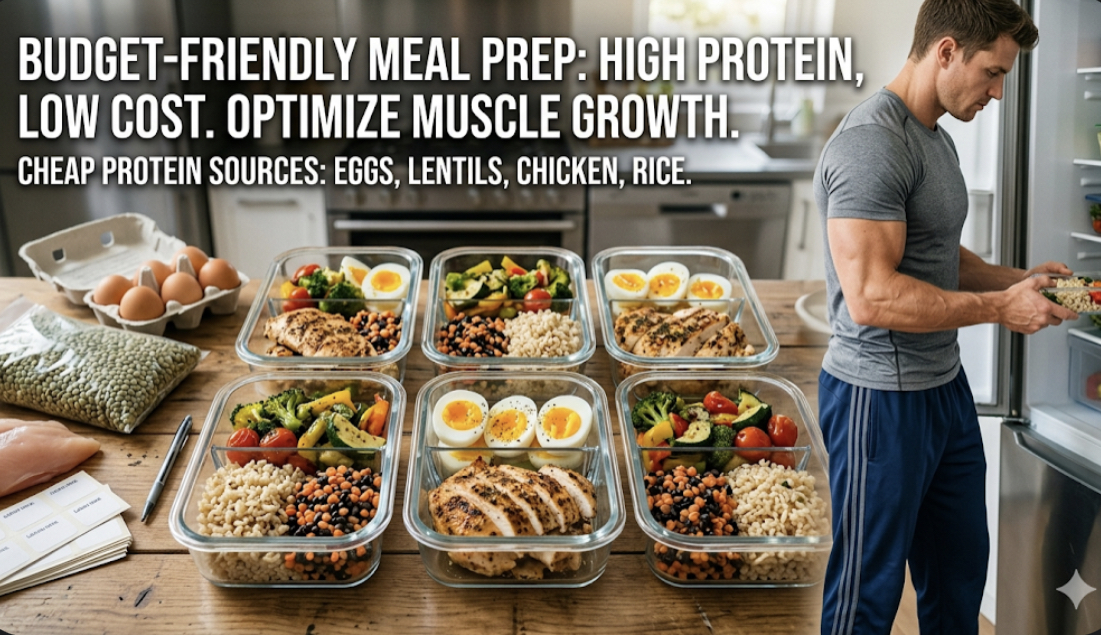
- Cook in batches: Meal prepping reduces waste and saves time. Cook large batches of rice, lentils, and grilled chicken for the week.
- Buy dried beans instead of canned: Dried lentils and beans cost 50–70% less per serving than canned.
- Use eggs as a staple: Eggs are one of the cheapest complete proteins—stock up when on sale.
7. Nutritional Considerations on a Budget
- Watch sodium in canned goods: Rinse canned beans and tuna to reduce sodium. Choose low-sodium options when available.
- Don't forget fiber: Lentils, beans, and oats provide both protein and fiber—important for digestion and satiety.
- Balance with fats: Eggs, peanuts, and chicken thighs provide healthy fats alongside protein.
- Add vegetables: Frozen vegetables are cheap and ensure micronutrient intake.
8. Common Mistakes When Trying to Build Muscle on a Budget
- Mistake #1: Relying on protein powders for most protein. Whole foods are often cheaper per gram and provide more nutrients.
- Mistake #2: Buying pre-made meals or supplements. Convenience costs money—cooking from scratch is much cheaper.
- Mistake #3: Not eating enough variety. Relying only on one protein source can lead to nutrient gaps.
- Mistake #4: Avoiding fat for budget reasons. Fat is calorie-dense and cheap—eggs, peanut butter, and chicken thighs provide affordable calories.
- Mistake #5: Buying organic when not necessary. For building muscle on a budget, conventional produce and meats are fine.
9. Frequently Asked Questions
What are the cheapest high-protein foods?
The cheapest high-protein foods per gram of protein are eggs, lentils, canned tuna, chicken thighs, and beans (black beans, chickpeas, kidney beans).
How much protein do I need to build muscle on a budget?
Aim for 1.6–2.2 grams per kilogram of body weight daily. For an 80 kg person, that's 128–176 grams of protein per day.
Can I build muscle without meat?
Yes. Plant-based proteins like lentils, beans, tofu, tempeh, and seitan, combined with grains, provide complete protein profiles.
Is canned tuna safe to eat every day?
Canned tuna is safe 2–3 times per week due to mercury concerns. Vary with chicken, eggs, beans, and lentils for other meals.
Are eggs a good budget protein source?
Yes, eggs are one of the most affordable complete proteins. At $0.15–0.25 per 20g protein, they're cheaper than almost any supplement.
How can I get enough protein without supplements?
Use whole food protein sources: eggs, chicken thighs, canned tuna, lentils, beans, Greek yogurt, cottage cheese, milk, and peanuts. A well-planned diet easily meets protein needs.
What's the cheapest way to get 150g of protein per day?
A sample day: 3 eggs (18g), 1 cup lentils (18g), 1 can tuna (25g), 6 oz chicken thighs (40g), 1 cup Greek yogurt (20g), 1 cup cottage cheese (25g) = 146g protein for ~$5–7/day.
10. Related Resources
- How to Build a Cheap High Protein Snack List: A Beginner's Guide for Athletes
- How to Reverse Diet After a Cut: Avoid Rebound Weight Gain and Keep Your Results
- How to Stay Full on a Budget: Beans & Lentils for Affordable Nutrition
- High-Protein Vegetarian Meals That Taste Amazing and Boost Muscle
- The Truth About Salt: How Sodium Affects Your Muscle Pump and Performance
- How to Meal Prep for a Whole Week in Under Two Hours (Easy Guide)
11. Scientific References
- Morton, R. W., et al. (2018). A systematic review, meta-analysis and meta-regression of the effect of protein supplementation on resistance training-induced gains in muscle mass and strength in healthy adults. British Journal of Sports Medicine, 52(6), 376–384. PubMed
- Phillips, S. M. (2014). A brief review of higher dietary protein diets in weight loss: a focus on athletes. Sports Medicine, 44(Suppl 2), S149–S153. PubMed
- USDA FoodData Central. (2024). Nutrient Database. USDA
- van Vliet, S., et al. (2015). Consumption of whole eggs promotes greater post-exercise muscle protein synthesis than consumption of isonitrogenous egg whites. American Journal of Clinical Nutrition, 102(6), 1528–1535. PubMed
- ACSM. (2021). Nutrition and Athletic Performance. Medicine & Science in Sports & Exercise, 53(3), 600–618. PubMed
Join the conversation