How Much Protein Per Kg Do You Really Need? (Muscle Growth Guide)
How Much Protein Per Kg Do You Really Need? (Muscle Growth Guide)

⚡ TL;DR
The optimal protein per kg depends on your goal: for muscle growth (bulking/recomposition), aim for 1.6–2.2 g per kg body weight. For fat loss (cutting), aim for 1.8–2.4 g per kg to preserve muscle. For sedentary individuals, 0.8 g per kg is sufficient. Research shows that intakes above 2.2 g/kg provide minimal additional muscle growth but may be beneficial during aggressive cuts . This guide breaks down the science, provides sample meal plans, and answers common questions about daily protein intake per kg.
1. The Protein Question: How Much Is Enough?
Walk into any gym, and you'll hear conflicting advice about protein. Some say 1 g per pound (2.2 g per kg). Others say 0.8 g per kg is plenty. Who's right? The answer depends on your goals, training status, and body composition. This muscle growth guide will give you science-backed recommendations for how much protein per kg you actually need.
How much protein per kg is optimal?
The optimal protein per kg is: 1.6–2.2 g per kg of body weight daily for muscle growth (bulking/recomposition). For fat loss (cutting), higher intakes of 1.8–2.4 g/kg are recommended to preserve muscle. For sedentary individuals, 0.8 g/kg is sufficient for general health . These recommendations are supported by meta-analyses showing that intakes above 1.6 g/kg do not significantly increase muscle growth but may help with fat loss phases .
2. The Science: How Protein Builds Muscle
2.1. Muscle Protein Synthesis (MPS)
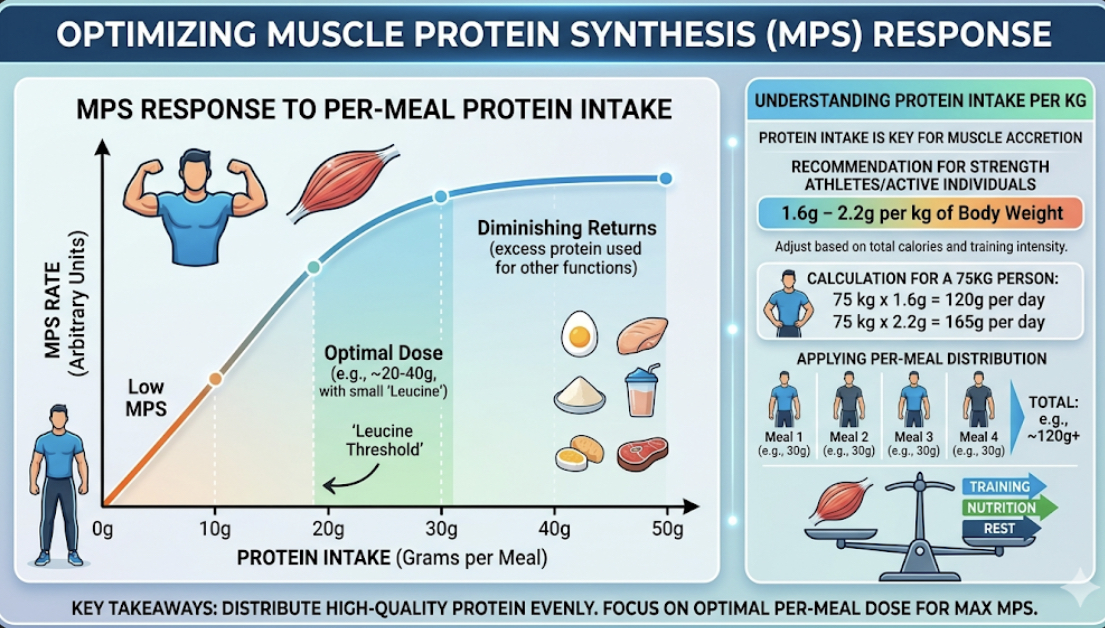
Muscle protein synthesis (MPS) is the process your body uses to build new muscle tissue. Protein provides the amino acids necessary for MPS. A single meal containing 20–40g of high-quality protein stimulates MPS for 2–4 hours .
2.2. Leucine Threshold
Leucine, an essential amino acid, acts as the primary trigger for MPS. A "leucine threshold" of approximately 2–3 g per meal is required to maximally stimulate MPS. This typically translates to 20–40 g of high-quality protein per meal .
2.3. Timing and Distribution
Research shows that spreading protein evenly across 3–5 meals (20–40 g per meal) stimulates MPS more effectively than consuming most protein in one or two meals .
3. Protein Per Kg by Goal: Complete Breakdown
3.1. Muscle Growth (Bulking / Body Recomposition)
1.6–2.2 g per kg body weight. For an 80 kg person: 128–176 g protein daily. A 2020 meta-analysis found that intakes above 1.6 g/kg did not further increase muscle growth in resistance-trained individuals .
3.2. Fat Loss (Cutting)
1.8–2.4 g per kg body weight. Higher protein intakes help preserve muscle during calorie restriction. For an 80 kg person: 144–192 g protein daily .
3.3. Maintenance / Sedentary
0.8 g per kg body weight. This is the RDA for sedentary adults. For an 80 kg person: 64 g protein daily .
3.4. Athletes / High Activity
1.2–1.6 g per kg body weight. Endurance athletes and active individuals have slightly higher needs .
| Goal | Protein per kg (g/kg) | Example for 80 kg person (g/day) |
|---|---|---|
| Muscle Growth (Bulking) | 1.6–2.2 | 128–176 |
| Fat Loss (Cutting) | 1.8–2.4 | 144–192 |
| Maintenance / Sedentary | 0.8 | 64 |
| Endurance Athletes | 1.2–1.6 | 96–128 |
4. Best Protein Sources for Hitting Your Daily Intake
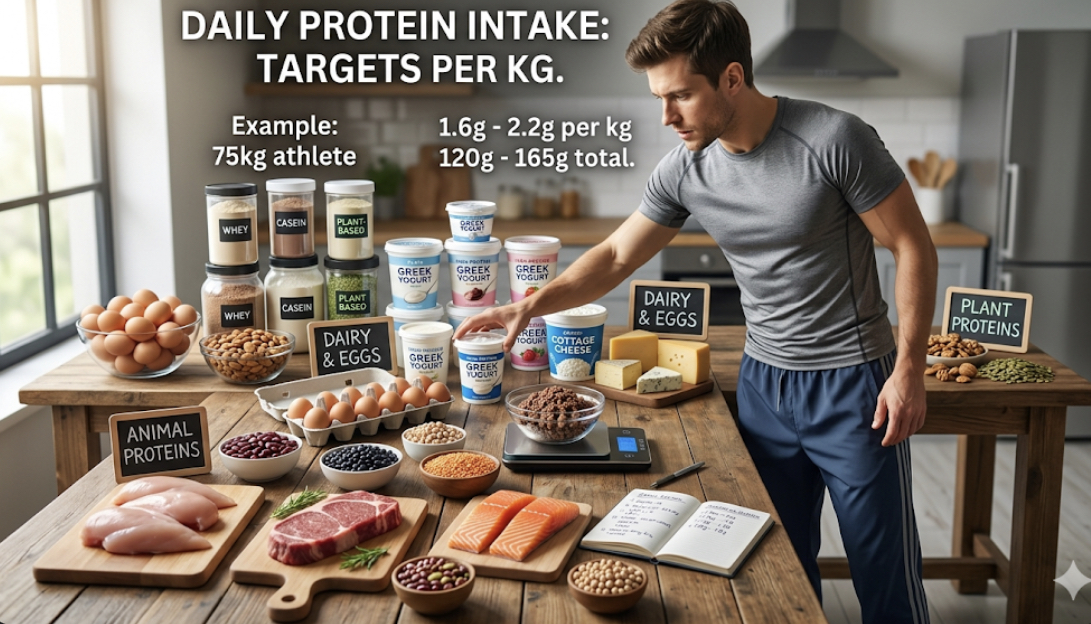
4.1. Animal-Based Proteins
- Chicken breast: 31g protein per 100g
- Lean beef: 26–30g protein per 100g
- Eggs: 6–7g protein per large egg
- Greek yogurt: 20g protein per 200g
- Cottage cheese: 25g protein per 200g
- Fish (tuna, salmon, cod): 20–25g protein per 100g
- Whey/casein protein: 20–25g per scoop
4.2. Plant-Based Proteins
- Tofu: 10–15g protein per 100g
- Tempeh: 20g protein per 100g
- Seitan: 25g protein per 100g
- Lentils: 18g protein per cup (cooked)
- Chickpeas: 15g protein per cup
- Edamame: 18g protein per cup
- Quinoa: 8g protein per cup
- Hemp seeds: 10g protein per 3 tbsp
5. Sample Meal Plans by Protein Target
5.1. 2,800 kcal, 160g Protein (for 80 kg person bulking)
- Breakfast: 4 eggs, 1 cup oatmeal with 1 tbsp peanut butter, 1 banana (650 kcal, 40g protein)
- Lunch: 200g grilled chicken breast, 1.5 cups brown rice, 1 cup broccoli, 1 tbsp olive oil (650 kcal, 50g protein)
- Snack: 200g Greek yogurt, 1 cup berries, 1 oz almonds (350 kcal, 25g protein)
- Dinner: 200g salmon, 1.5 cups sweet potato, 2 cups mixed greens (650 kcal, 45g protein)
- Evening: 200g cottage cheese, 1 tbsp honey (250 kcal, 20g protein)
5.2. 2,000 kcal, 150g Protein (for 80 kg person cutting)
- Breakfast: 3 eggs, 1 cup oatmeal with berries (450 kcal, 30g protein)
- Lunch: 150g chicken breast, 1 cup brown rice, 1 cup broccoli (450 kcal, 40g protein)
- Snack: 150g Greek yogurt, ½ cup berries (150 kcal, 15g protein)
- Dinner: 150g white fish, 1.5 cups sweet potato, 2 cups greens (450 kcal, 40g protein)
- Evening: 150g cottage cheese (150 kcal, 15g protein)
5.3. Vegan/Vegetarian Plan (2,800 kcal, 150g Protein)
- Breakfast: Tofu scramble (200g firm tofu), 1.5 cups oatmeal with 2 tbsp peanut butter, banana (700 kcal, 40g protein)
- Lunch: 200g tempeh, 1.5 cups quinoa, 1 cup roasted chickpeas, mixed greens (700 kcal, 45g protein)
- Snack: 200g silken tofu with berries, 2 tbsp hemp seeds (300 kcal, 20g protein)
- Dinner: 1.5 cups cooked lentils, 1.5 cups sweet potato, 150g edamame, 1 tbsp olive oil (650 kcal, 35g protein)
- Evening: 1 cup unsweetened soy milk + 1 tbsp chia seeds (150 kcal, 10g protein)
Gluten-Free Options
- Use certified gluten-free oats, quinoa, rice, or buckwheat.
- Ensure tempeh and tofu are gluten-free certified (most are).
6. Quick High-Protein Recipes
- Protein Oatmeal (450 kcal, 25g protein): 1 cup oats, 1 scoop whey/pea protein, 1 tbsp peanut butter, cinnamon.
- Post-Workout Smoothie (400 kcal, 30g protein): 1 cup Greek yogurt, 1 banana, 1 cup oat milk, 1 tbsp peanut butter.
- Chicken Rice Bowl (550 kcal, 45g protein): 150g chicken breast, 1 cup brown rice, 1 cup broccoli, soy sauce.
- Tofu Stir-fry (500 kcal, 30g protein): 200g firm tofu, mixed vegetables, 1 cup quinoa, soy sauce.
7. Protein Timing: Does It Matter?
7.1. Pre- and Post-Workout
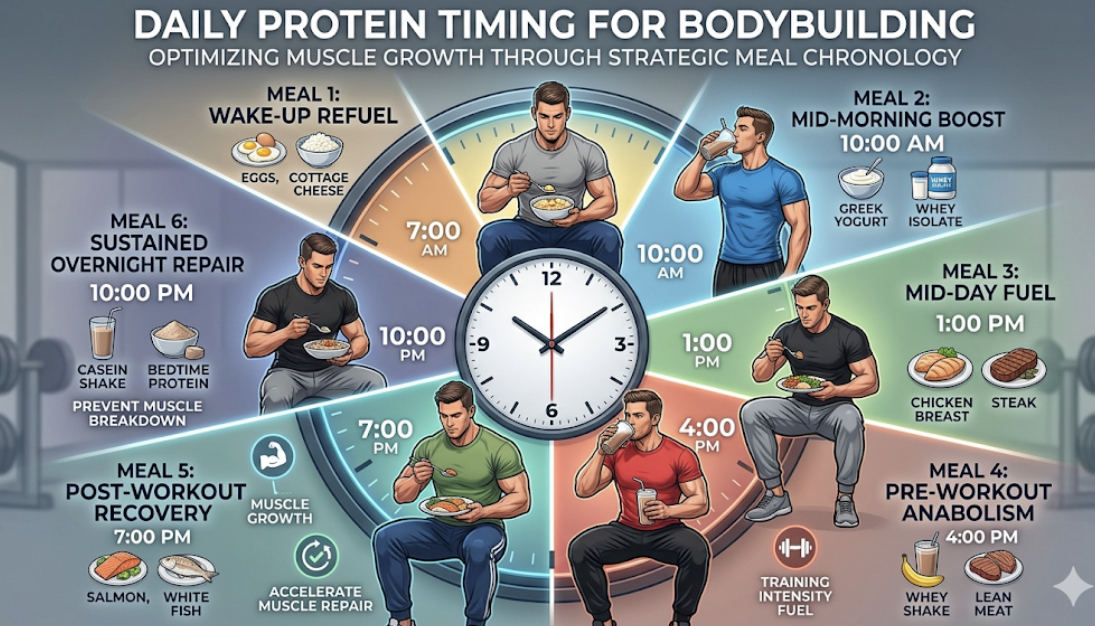
Consuming 20–40g of protein within 2–3 hours of training supports muscle repair and growth. The "anabolic window" is wider than once thought—up to 4–6 hours post-exercise .
7.2. Pre-Sleep Protein
Casein or cottage cheese before bed (20–40g) can support overnight muscle protein synthesis .
7.3. Meal Frequency
Aim for 3–5 meals with 20–40g protein each. This distribution maximizes MPS throughout the day .
8. Common Protein Mistakes That Hinder Results
- Mistake #1: Eating too little protein. Below 1.6 g/kg limits muscle growth.
- Mistake #2: Eating too much in one meal. The body can only use ~20–40g protein per meal for MPS; excess is oxidized or stored .
- Mistake #3: Relying only on supplements. Whole foods provide additional nutrients and higher satiety.
- Mistake #4: Not adjusting for goal. Cutting requires higher protein per kg than bulking.
- Mistake #5: Ignoring timing. Evenly distributed protein beats lumping most into one meal.
9. Frequently Asked Questions
How much protein per kg is optimal for muscle growth?
1.6–2.2 grams per kilogram of body weight daily. For an 80 kg person, that's 128–176 grams of protein per day.
How much protein per kg for fat loss?
1.8–2.4 grams per kilogram to preserve muscle during calorie restriction. For an 80 kg person, that's 144–192 grams per day.
Can I eat too much protein?
In healthy individuals, high protein intake is safe up to 3–4 g/kg. Excess protein is simply oxidized or excreted. However, very high intakes may cause digestive discomfort for some.
Do I need protein powder to hit my target?
No, whole foods can meet your needs. Protein powder is a convenient option but not required.
How much protein per meal is optimal?
20–40 grams per meal, consumed 3–5 times daily, maximizes muscle protein synthesis.
Is 2g per kg too much?
No. For active individuals and athletes, 2 g/kg is within the optimal range for muscle growth and preservation.
Does protein timing matter?
Spreading protein across 3–5 meals matters more than exact timing. Pre- and post-workout protein can support performance and recovery.
10. Related Resources
- How to Build a Cheap High Protein Snack List: A Beginner's Guide for Athletes
- How to Reverse Diet After a Cut: Avoid Rebound Weight Gain and Keep Your Results
- How to Stay Full on a Budget: Beans & Lentils for Affordable Nutrition
- High-Protein Vegetarian Meals That Taste Amazing and Boost Muscle
- The Truth About Salt: How Sodium Affects Your Muscle Pump and Performance
- How to Meal Prep for a Whole Week in Under Two Hours (Easy Guide)
11. Scientific References
- Morton, R. W., et al. (2018). A systematic review, meta-analysis and meta-regression of the effect of protein supplementation on resistance training-induced gains in muscle mass and strength in healthy adults. British Journal of Sports Medicine, 52(6), 376–384. PubMed
- Schoenfeld, B. J., & Aragon, A. A. (2018). How much protein can the body use in a single meal for muscle-building? Journal of the International Society of Sports Nutrition, 15, 10. PubMed
- Hector, A. J., & Phillips, S. M. (2018). Protein Recommendations for Weight Loss in Elite Athletes: A Focus on Body Composition. International Journal of Sport Nutrition and Exercise Metabolism, 28(2), 170–177. PubMed
- Areta, J. L., et al. (2013). Timing and distribution of protein ingestion during prolonged recovery from resistance exercise alters myofibrillar protein synthesis. Journal of Physiology, 591(9), 2319–2331. PubMed
- Trommelen, J., & van Loon, L. J. (2016). Pre-Sleep Protein Ingestion to Improve the Skeletal Muscle Adaptive Response to Exercise Training. Nutrients, 8(12), 763. PubMed
- Phillips, S. M. (2014). A brief review of higher dietary protein diets in weight loss: a focus on athletes. Sports Medicine, 44(Suppl 2), S149–S153. PubMed
- ACSM. (2021). Nutrition and Athletic Performance. Medicine & Science in Sports & Exercise, 53(3), 600–618. PubMed
Join the conversation