How to Eat Healthy on a Budget for Fitness (Simple & Affordable Plan)
How to Eat Healthy on a Budget for Fitness (Simple & Affordable Plan)
⚡ TL;DR
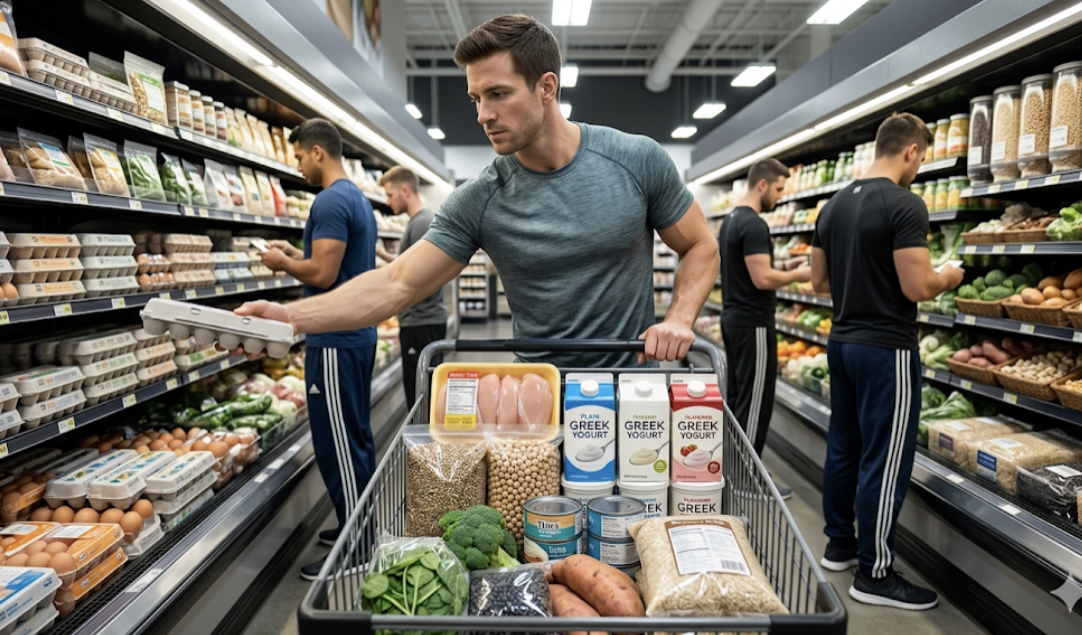
You can eat healthy on a budget for fitness by focusing on whole foods: eggs, oats, rice, beans, lentils, frozen vegetables, chicken thighs, and canned tuna. Plan meals, buy in bulk, cook at home, and minimize processed foods and supplements. A typical affordable fitness nutrition plan costs $5–8 per day for 2,500–3,000 kcal with 130–160g protein. This guide provides a cheap healthy diet plan, sample meal schedules, recipes, and money-saving strategies to fuel your fitness goals without breaking the bank .
1. The Myth: Healthy Eating Is Expensive
Walk into any health food store, and you'll see organic quinoa for $10 a bag, grass-fed beef for $15 a pound, and "superfood" powders for $50 a tub. The fitness industry often equates healthy eating with expensive eating. But the truth is, you can fuel your fitness goals on a tight budget. This affordable fitness nutrition guide will show you how to eat healthy on a budget for fitness without sacrificing results.
Can you eat healthy on a low budget?
Yes, absolutely. You can eat healthy on a low budget by choosing whole foods like rice, eggs, beans, lentils, oats, frozen vegetables, chicken thighs, and canned tuna. Plan meals around these staples, buy in bulk, cook at home, and avoid expensive processed "health" foods. Research shows that a nutrient-dense diet based on whole foods is achievable for as little as $5–8 per day . This approach provides all the protein, carbs, and healthy fats needed for fitness goals.
2. The Ultimate Budget-Friendly Food List for Fitness
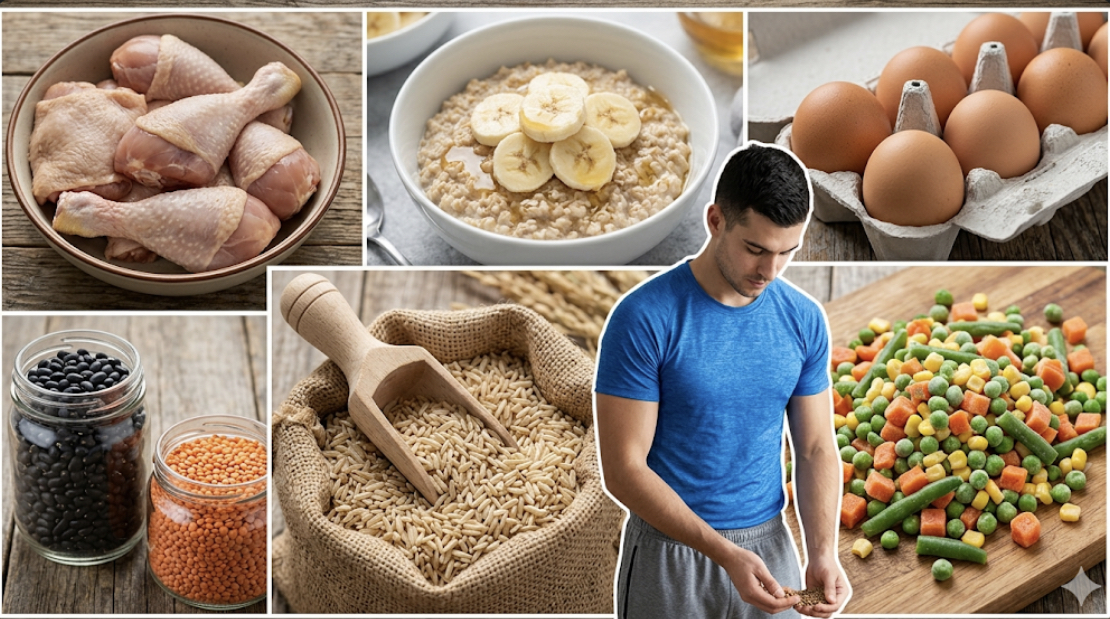
2.1. Protein Sources (Cheapest per Gram)
- Eggs: $0.15–0.25 per 20g protein. Complete protein, versatile.
- Chicken thighs: $0.30–0.50 per 25g protein. More flavor and cheaper than breast.
- Canned tuna: $0.30–0.50 per 20g protein. Shelf-stable, high protein.
- Lentils (dry): $0.20 per 18g protein. High fiber, cheap, shelf-stable.
- Beans (dry): $0.15–0.30 per 15g protein. Black beans, chickpeas, kidney beans.
- Greek yogurt (store brand): $0.50–0.75 per 20g protein. High protein, probiotics.
- Cottage cheese: $0.50–0.70 per 20g protein. Slow-digesting casein.
- Peanut butter: $0.50–0.75 per 8g protein. Calorie-dense, healthy fats.
- Milk: $0.60–1.00 per 16g protein. Affordable complete protein.
- Tofu (firm): $0.50–0.75 per 20g protein. Affordable plant protein.
2.2. Carbohydrate Sources
- Oats (bulk): $0.20–0.30 per 100g. Slow-digesting, high fiber.
- Brown rice (bulk): $0.20–0.30 per 100g. Staple carb source.
- Potatoes: $0.30–0.50 per lb. Nutrient-dense, filling.
- Sweet potatoes: $0.50–0.80 per lb. Rich in vitamin A.
- Whole wheat pasta: $0.50–0.80 per lb. Affordable complex carb.
- Bananas: $0.20–0.30 each. Cheap pre-workout fuel.
- Frozen vegetables: $1.00–1.50 per lb. Just as nutritious as fresh, cheaper.
2.3. Fat Sources
- Eggs: Already included—fat and protein together.
- Peanut butter: Affordable healthy fats.
- Olive oil (bulk): $0.30–0.50 per tbsp. Healthy monounsaturated fat.
- Sunflower seeds: $0.20–0.30 per serving. Affordable seed option.
3. Sample Affordable Meal Plans for Fitness Goals
3.1. Muscle Building (2,800 kcal, 160g Protein, ~$7–9/day)
- Breakfast (7:30 AM): 4 eggs, 1 cup oatmeal with 1 tbsp peanut butter, 1 banana (650 kcal, 40g protein)
- Lunch (12:30 PM): 6 oz chicken thighs, 1.5 cups brown rice, 1 cup frozen broccoli (650 kcal, 45g protein)
- Snack (4:00 PM): 1 cup Greek yogurt, ½ cup berries, 1 tbsp honey (300 kcal, 20g protein)
- Dinner (7:30 PM): 1 can tuna, 1.5 cups lentils, 2 cups mixed greens, 1 tbsp olive oil (700 kcal, 45g protein)
- Evening (10:00 PM): 1 cup cottage cheese (200 kcal, 20g protein)
3.2. Fat Loss (1,800 kcal, 140g Protein, ~$6–8/day)
- Breakfast: 3 eggs, 1 cup oatmeal with berries (450 kcal, 30g protein)
- Lunch: 5 oz chicken breast, 1 cup brown rice, 1 cup frozen spinach (450 kcal, 40g protein)
- Snack: 1 cup cottage cheese, ½ apple (200 kcal, 20g protein)
- Dinner: 1 cup lentils, 1.5 cups sweet potato, 1 cup broccoli, 1 tsp olive oil (450 kcal, 35g protein)
- Evening: 1 cup unsweetened almond milk + 1 scoop protein (optional, +100 kcal, +20g protein)
3.3. Vegan/Vegetarian Plan (2,500 kcal, 140g Protein, ~$6–8/day)
- Breakfast: Tofu scramble (200g firm tofu with spinach), 1 cup oatmeal with 2 tbsp peanut butter, banana (700 kcal, 40g protein)
- Lunch: 1.5 cups cooked lentils, 1.5 cups quinoa, mixed greens, 1 tbsp olive oil (600 kcal, 35g protein)
- Snack: 1 cup edamame, 1 apple (200 kcal, 15g protein)
- Dinner: 1.5 cups chickpeas, 1.5 cups sweet potato, 1 cup spinach, 1 tbsp olive oil (650 kcal, 30g protein)
- Evening: 1 cup unsweetened soy milk + 2 tbsp hemp seeds (250 kcal, 15g protein)
Gluten-Free Options
- Use certified gluten-free oats, quinoa, rice, or buckwheat.
- Ensure tempeh and tofu are gluten-free certified (most are).
4. Quick & Affordable Recipes
- Budget Protein Bowl (550 kcal, 40g protein): 1 can tuna, 1 cup brown rice, 1 cup frozen mixed vegetables, 1 tbsp soy sauce.
- Lentil Soup (400 kcal, 20g protein): 1 cup lentils, vegetable broth, carrots, celery, onion, garlic. Makes 4 servings for ~$4.
- Egg & Bean Scramble (450 kcal, 30g protein): 3 eggs, 1 cup black beans, ½ cup spinach, salsa.
- Peanut Butter Banana Oatmeal (500 kcal, 20g protein): 1 cup oats, 2 tbsp peanut butter, 1 banana, 1 cup milk.
- Chicken & Rice Bake (600 kcal, 45g protein): 6 oz chicken thighs, 1 cup brown rice, 1 cup frozen broccoli, baked together.
5. 10 Money-Saving Strategies for Healthy Eating
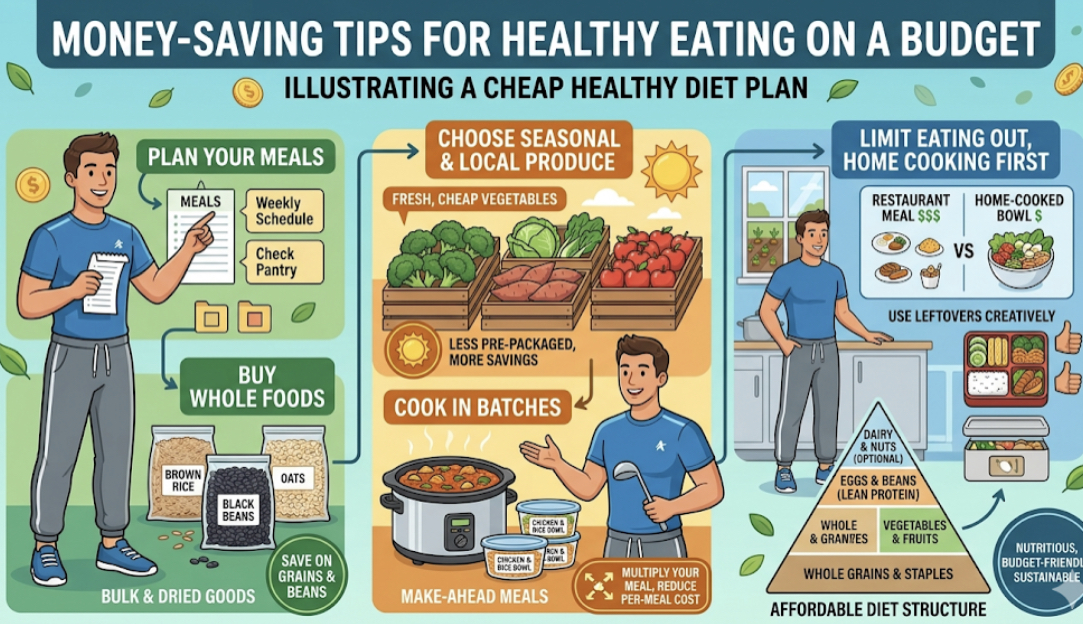
- Buy in bulk: Rice, oats, lentils, beans, and frozen vegetables are significantly cheaper in bulk.
- Choose frozen over fresh: Frozen fruits and vegetables are just as nutritious, often cheaper, and last longer.
- Shop sales and store brands: Store-brand Greek yogurt, cottage cheese, and canned goods are identical to name brands.
- Buy whole chickens: A whole chicken costs less per pound than breast; roast and use leftovers for multiple meals.
- Use cheaper cuts: Chicken thighs, ground turkey, pork shoulder, and beef chuck are affordable and flavorful.
- Cook dry beans instead of canned: Dried lentils and beans cost 50–70% less per serving.
- Meal prep: Cook large batches to save time and reduce waste. A Sunday prep session can cover 3–4 days.
- Plan meals around sales: Check weekly flyers and build your menu around what's on sale.
- Minimize supplements: Whole foods are cheaper and more nutritious than most supplements. Protein powder is optional.
- Reduce food waste: Use leftovers, freeze extra portions, and store produce properly to extend shelf life.
6. Meal Prep on a Budget: A Simple Weekly Plan
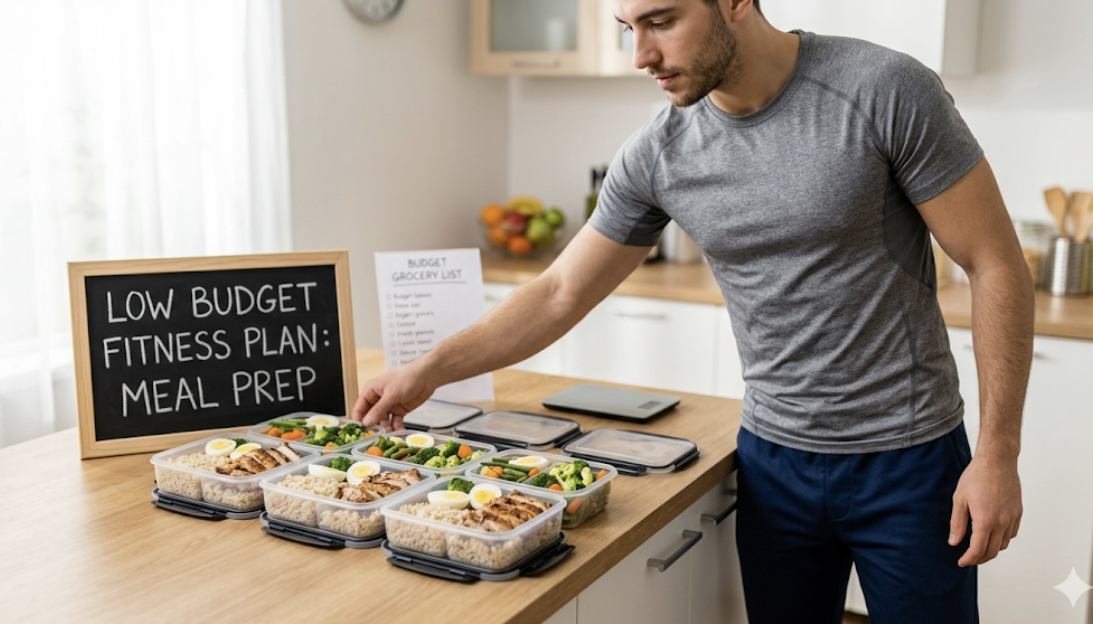
- Sunday Prep (2–3 hours): Cook 3 cups brown rice, 2 cups lentils, 6 chicken thighs, chop vegetables, hard-boil 12 eggs.
- Portion into containers: Make 5–6 meal prep containers with chicken, rice, and vegetables for lunch. Store lentils for dinners.
- Daily assembly: Breakfast: eggs + oatmeal. Lunch: prepped container. Snack: Greek yogurt or cottage cheese. Dinner: lentil-based meal with vegetables.
- Cost estimate: ~$50–60 per week for one person, covering 2,500–3,000 kcal daily with 140–160g protein.
7. Common Mistakes That Make Healthy Eating Expensive
- Mistake #1: Buying organic when not necessary. For fitness goals, conventional produce and meats are fine. Prioritize protein and calories, not organic labels.
- Mistake #2: Relying on supplements. Protein powder, pre-workouts, and "superfood" powders add up. Whole foods are cheaper and more nutritious.
- Mistake #3: Buying pre-cut or pre-packaged foods. Pre-cut vegetables, pre-made meals, and packaged snacks cost 2–3x more than whole foods.
- Mistake #4: Shopping without a list. Impulse purchases increase costs. Plan meals and stick to a list.
- Mistake #5: Eating out frequently. A single restaurant meal can cost as much as 2–3 days of homemade food. Cook at home.
- Mistake #6: Buying expensive "health" drinks. Smoothies, kombucha, and bottled protein drinks are expensive. Make your own.
8. Frequently Asked Questions
Can you eat healthy on a low budget?
Yes, by focusing on whole foods like eggs, oats, rice, beans, lentils, frozen vegetables, chicken thighs, and buying in bulk. A well-planned diet costs $5–8 per day.
What are the cheapest healthy foods for fitness?
Eggs, oats, brown rice, lentils, beans, frozen vegetables, chicken thighs, canned tuna, Greek yogurt, and peanut butter are the most cost-effective.
How much does a healthy fitness diet cost per week?
$50–75 per week for one person, depending on location and protein choices. Bulk buying and meal prep reduce costs further.
Is it cheaper to cook at home or eat out?
Cooking at home is 2–4x cheaper than eating out. A $15 restaurant meal can cover 2–3 days of home-cooked food.
Do I need protein powder to build muscle on a budget?
No. Whole food protein sources like eggs, chicken, tuna, lentils, and Greek yogurt are often cheaper per gram of protein than most protein powders.
How can I save money on meat?
Buy cheaper cuts (chicken thighs, pork shoulder), buy whole chickens, look for sales, and supplement with plant proteins like lentils and beans to reduce meat consumption.
Are frozen vegetables as healthy as fresh?
Yes. Frozen vegetables are flash-frozen at peak ripeness, preserving nutrients. They're often cheaper and last longer than fresh.
9. Related Resources
- How to Build a Cheap High Protein Snack List: A Beginner's Guide for Athletes
- How to Reverse Diet After a Cut: Avoid Rebound Weight Gain and Keep Your Results
- How to Stay Full on a Budget: Beans & Lentils for Affordable Nutrition
- High-Protein Vegetarian Meals That Taste Amazing and Boost Muscle
- The Truth About Salt: How Sodium Affects Your Muscle Pump and Performance
- How to Meal Prep for a Whole Week in Under Two Hours (Easy Guide)
10. Scientific References
- Morton, R. W., et al. (2018). A systematic review, meta-analysis and meta-regression of the effect of protein supplementation on resistance training-induced gains in muscle mass and strength in healthy adults. British Journal of Sports Medicine, 52(6), 376–384. PubMed
- USDA. (2024). Food Prices and Spending. Economic Research Service. USDA
- Drewnowski, A. (2010). The cost of US foods as related to their nutritive value. American Journal of Clinical Nutrition, 92(5), 1181–1188. PubMed
- Flynn, M. M., & Schiff, A. R. (2015). Economical healthy diets: The importance of planning and purchasing. Journal of Nutrition Education and Behavior, 47(4), 382–387. PubMed
- ACSM. (2021). Nutrition and Athletic Performance. Medicine & Science in Sports & Exercise, 53(3), 600–618. PubMed
Join the conversation