How to Start Bulking Without Gaining Too Much Fat (Lean Bulk Guide)
How to Start Bulking Without Gaining Too Much Fat (Lean Bulk Guide)
⚡ TL;DR
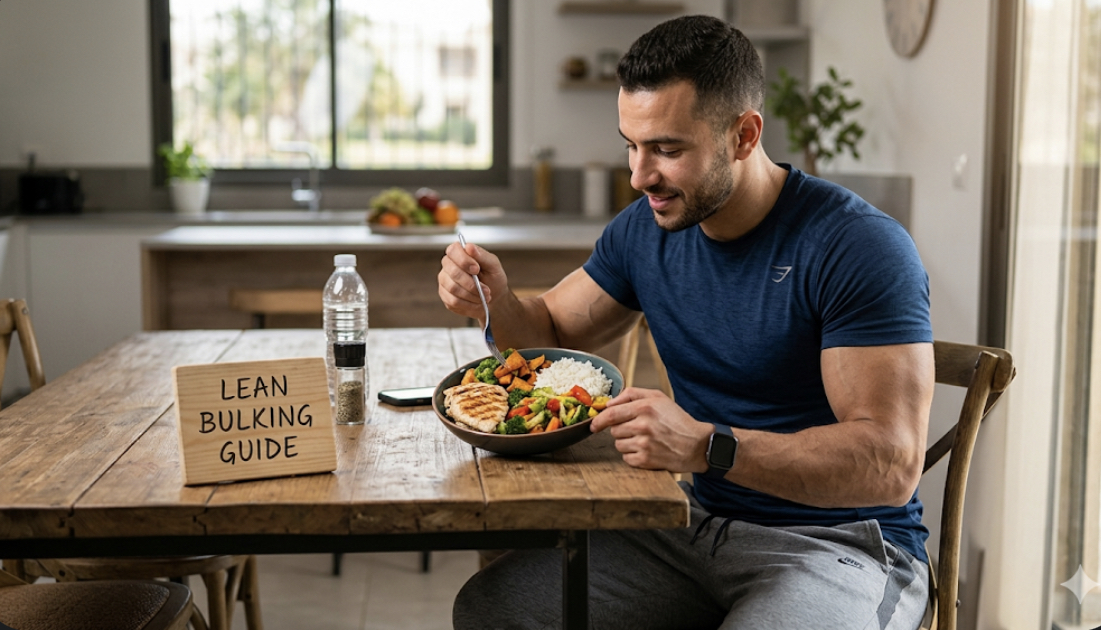
To bulk without gaining fat, you need a controlled calorie surplus of 250–500 kcal above maintenance, high protein intake (1.6–2.2 g/kg body weight), and consistent progressive overload training. This approach, known as lean bulking, maximizes muscle protein synthesis while minimizing fat storage. Aim for a weight gain of 0.25–0.5% of body weight per week. This guide covers everything from calorie calculations to meal plans (omnivore, vegan, gluten-free), training tips, and how to adjust as you progress.
1. Why Traditional Bulking Fails – The Lean Bulk Approach
For decades, the advice was simple: "Eat big to get big." The result? Men and women gained muscle—along with a significant amount of unwanted fat. The better approach is lean bulking: a controlled, science-based method to build muscle while minimizing fat gain. This lean bulking guide will show you exactly how to do it.
How can I bulk without gaining fat?
To bulk without gaining fat, follow three core principles: 1) Maintain a small calorie surplus of 250–500 kcal above maintenance—enough to fuel muscle growth but not excessive. 2) Eat high protein (1.6–2.2 g/kg body weight) to stimulate muscle protein synthesis. 3) Use progressive overload in training to signal your body to build new muscle tissue. This combination ensures that most of the weight you gain is lean mass, not fat.

2. The Science: How Muscle Grows Without Fat Storage
2.1. Calorie Surplus and Nutrient Partitioning
Your body uses excess calories either for muscle growth (if you provide the right stimulus) or fat storage. Nutrient partitioning refers to how your body allocates these calories. With proper training and nutrition, you can shift partitioning toward muscle . A small surplus (250–500 kcal) keeps fat gain minimal while still supporting muscle protein synthesis .
2.2. Protein's Role in Lean Mass Accretion
Higher protein intake during a surplus has been shown to increase lean mass gains and reduce fat gain compared to lower protein diets . A 2022 meta-analysis found that intakes above 1.6 g/kg/day were associated with greater gains in fat-free mass during resistance training .
2.3. The Importance of Progressive Overload
Muscle growth occurs when mechanical tension exceeds what your muscles are accustomed to. Without progressive overload (increasing weight, reps, or volume), a calorie surplus will mostly become fat. A systematic review confirmed that progressive overload is the primary driver of hypertrophy .

3. Step 1: Calculate Your Ideal Calorie Surplus
3.1. Find Your Maintenance Calories
Use the Mifflin-St Jeor equation or track your intake for 1–2 weeks while weight remains stable. Alternatively, use a rough estimate: maintenance kcal = body weight (kg) × 30–35. For a 75 kg person, maintenance is roughly 2,250–2,625 kcal.
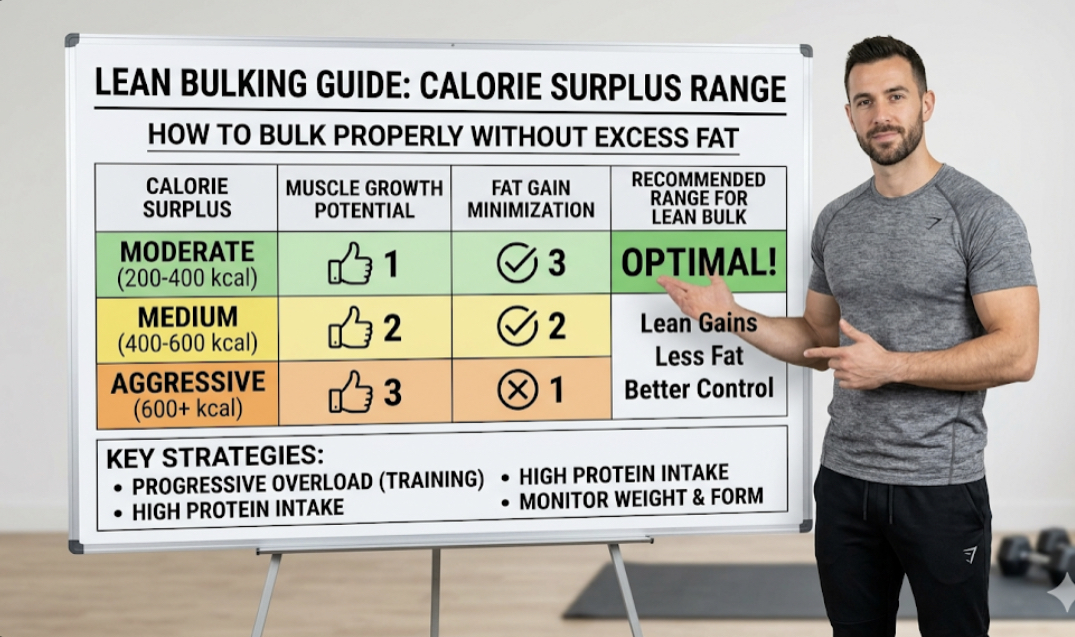
3.2. Add a Small Surplus
Add 250–500 kcal to your maintenance. This yields a weight gain of 0.25–0.5% of body weight per week (e.g., 0.2–0.4 kg for an 80 kg person) . If you gain faster, reduce surplus; if you gain slower and strength stalls, add a bit more.
3.3. Adjust Based on Progress
Weigh yourself weekly (same time, after bathroom). If weight gain exceeds 0.5% per week for multiple weeks, cut back surplus by 100–150 kcal. If no strength increases and no weight gain after 2–3 weeks, add 100–150 kcal.
4. Step 2: Macronutrients for Lean Bulking
4.1. Protein – The Building Block
1.6–2.2 g per kg of body weight daily. For an 80 kg person: 128–176 g protein. Distribute across 3–5 meals (20–40 g per meal) to maximize muscle protein synthesis .
4.2. Fats – Hormonal Support
20–30% of total calories. Fats support testosterone production and overall health. For a 2,800 kcal diet, that's 62–93 g of fat. Prioritize unsaturated fats (olive oil, nuts, avocado, fatty fish).
4.3. Carbohydrates – Fuel for Training
Fill remaining calories with carbs. Carbs replenish glycogen, improve workout performance, and support recovery. Focus on whole grains, fruits, legumes, and starchy vegetables.
4.4. Sample Macro Breakdown (3,000 kcal, 80 kg person)
- Protein: 160 g (640 kcal, 21%)
- Fat: 75 g (675 kcal, 22%)
- Carbs: 420 g (1,685 kcal, 57%)
5. Step 3: Progressive Overload Training
5.1. Focus on Compound Lifts
Squat, deadlift, bench press, overhead press, rows, and pull-ups should form the foundation. These exercises recruit the most muscle and allow for progressive loading.
5.2. Volume and Frequency
Train each muscle group 2 times per week with 10–20 sets per week per muscle group. A 2020 meta-analysis found that higher training volume (within reason) leads to greater hypertrophy .
5.3. Progression Strategies
- Add weight (e.g., +2.5 kg to bench press when you hit target reps)
- Add reps (e.g., from 8 to 10 reps before adding weight)
- Add sets (e.g., from 3 to 4 sets)
- Decrease rest time (advanced)
Aim to progress in at least one variable every 1–2 weeks.
6. Sample Lean Bulk Meal Plans
6.1. Omnivore Plan – 3,000 kcal, 160g Protein
- Breakfast (7:30 AM): 3 whole eggs + 3 egg whites, 1 cup oatmeal (dry) with 1 tbsp peanut butter, 1 banana (650 kcal, 40g protein)
- Lunch (12:30 PM): 200g grilled chicken breast, 1.5 cups cooked brown rice, 1 cup broccoli, 1 tbsp olive oil (700 kcal, 50g protein)
- Pre-workout (4:30 PM): 1 scoop whey protein + 1 apple, 1 tbsp almond butter (300 kcal, 25g protein)
- Post-workout/Dinner (7:30 PM): 200g salmon or lean beef, 2 medium sweet potatoes, 2 cups mixed greens + vinaigrette (800 kcal, 45g protein)
- Evening Snack (10:00 PM): 200g Greek yogurt + 100g berries + 1 tbsp honey (350 kcal, 20g protein)
6.2. Vegan/Vegetarian Plan – 3,000 kcal, 155g Protein
- Breakfast: Tofu scramble (250g firm tofu with spinach, turmeric), 1 cup oatmeal with 2 tbsp peanut butter, 1 banana (700 kcal, 40g protein)
- Lunch: 200g tempeh, 1.5 cups quinoa, 1 cup roasted chickpeas, mixed greens (750 kcal, 45g protein)
- Pre-workout: 1 scoop pea protein + water, 1 apple, 1 tbsp almond butter (300 kcal, 25g protein)
- Post-workout/Dinner: 2 cups cooked lentils, 2 medium sweet potatoes, 200g edamame, 1 tbsp olive oil (800 kcal, 40g protein)
- Evening: 200g silken tofu with berries + 2 tbsp hemp seeds (350 kcal, 20g protein)
Gluten-Free Options
- Use certified gluten-free oats, quinoa, rice, or buckwheat.
- Ensure protein powders and tempeh/tofu are gluten-free certified.
6.3. Quick Lean Bulk Recipes
- Protein Pancakes: 1 scoop protein powder, 1 egg, ½ cup oats, ½ banana, cinnamon. Top with Greek yogurt and berries (400 kcal, 30g protein).
- Post-Workout Smoothie: 1 scoop whey or pea protein, 1 cup oat milk, ½ cup frozen mango, 1 tbsp peanut butter, 1 tbsp chia seeds (450 kcal, 35g protein).
7. Common Mistakes That Cause Fat Gain While Bulking
- Mistake #1: Too large a surplus. Eating 1,000+ kcal above maintenance mostly becomes fat. Stick to 250–500 kcal.
- Mistake #2: Not enough protein. Low protein means less muscle stimulus and more potential fat storage.
- Mistake #3: Inconsistent training or no progressive overload. Without a growth stimulus, surplus calories are stored as fat.
- Mistake #4: Ignoring sleep and recovery. Poor sleep impairs muscle protein synthesis and can increase fat storage.
- Mistake #5: Dirty bulking (junk food). High sugar and processed foods worsen nutrient partitioning and can lead to metabolic issues.
- Mistake #6: Not tracking progress. Without weekly weigh-ins and strength logs, you can't adjust.
8. Frequently Asked Questions
How can I bulk without gaining fat?
Use a small calorie surplus (250–500 kcal above maintenance), eat high protein (1.6–2.2 g/kg), and train with progressive overload. This ensures most surplus calories go toward muscle growth.
How much weight should I gain per week during a lean bulk?
Aim for 0.25–0.5% of body weight per week. For an 80 kg person, that's 0.2–0.4 kg per week.
How long should a lean bulk last?
Typically 8–16 weeks, depending on goals. Some advanced lifters may bulk for 3–6 months, followed by a cutting phase.
Do I need to track calories for a lean bulk?
Initially, yes. After a few weeks, you'll develop a sense of portion sizes. However, tracking ensures you're not over- or under-eating.
Can I build muscle without gaining fat?
In a perfect scenario, you can gain muscle with very little fat, especially if you're a beginner or returning to training after a break. For advanced lifters, some fat gain is inevitable but minimal with a lean bulk approach.
What's the difference between lean bulk and dirty bulk?
Lean bulk uses a small surplus with nutrient-dense foods. Dirty bulk involves a large surplus with junk food, leading to rapid fat gain and potential health issues.
Should I do cardio while bulking?
Yes, light cardio (2–3 sessions/week) supports cardiovascular health and may improve nutrient partitioning. Just don't overdo it to the point that you need a larger surplus.
9. Related Resources
- How Much Weight Should You Add Each Week? Progressive Overload Guide
- Mind-Muscle Connection: How to Train Your Brain for Better Muscle Gains
- Why Your Muscles Look Smaller After a Workout (And How to Fix It Fast)
- Ectomorph Diet Guide: How to Eat 3000 Calories of Whole Foods for Muscle Gain
- How to Break Through a Squat Plateau Naturally and Increase Strength
10. Scientific References
- Hector, A. J., & Phillips, S. M. (2018). Protein Recommendations for Weight Loss in Elite Athletes: A Focus on Body Composition. International Journal of Sport Nutrition and Exercise Metabolism, 28(2), 170–177. PubMed
- Morton, R. W., et al. (2018). A systematic review, meta-analysis and meta-regression of the effect of protein supplementation on resistance training-induced gains in muscle mass and strength in healthy adults. British Journal of Sports Medicine, 52(6), 376–384. PubMed
- Slater, G. J., et al. (2019). Is an Energy Surplus Required to Maximize Skeletal Muscle Hypertrophy Associated With Resistance Training? Frontiers in Nutrition, 6, 131. PubMed
- Schoenfeld, B. J., et al. (2017). Effects of Resistance Training Frequency on Measures of Muscle Hypertrophy: A Systematic Review and Meta-Analysis. Sports Medicine, 46(11), 1689–1697. PubMed
- Helms, E. R., et al. (2014). Evidence-based recommendations for natural bodybuilding contest preparation. Journal of the International Society of Sports Nutrition, 11(1), 20. PubMed
- Areta, J. L., et al. (2013). Timing and distribution of protein ingestion during prolonged recovery from resistance exercise alters myofibrillar protein synthesis. Journal of Physiology, 591(9), 2319–2331. PubMed
- Iraki, J., et al. (2019). Nutrition Recommendations for Bodybuilders: An Evidence-Based Approach. Journal of the International Society of Sports Nutrition, 16(1), 17. PubMed
- Antonio, J., et al. (2016). A High Protein Diet (3.4 g/kg/d) Combined with a Heavy Resistance Training Program Improves Body Composition in Healthy Trained Men. Journal of the International Society of Sports Nutrition, 13(1), 1–7. PubMed
- ACSM. (2021). Nutrition and Athletic Performance. Medicine & Science in Sports & Exercise, 53(3), 600–618. PubMed
Join the conversation