Is Eating Late at Night Bad for Fat Loss? (Myth vs Reality)
Is Eating Late at Night Bad for Fat Loss? (Myth vs Reality)
⚡ TL;DR
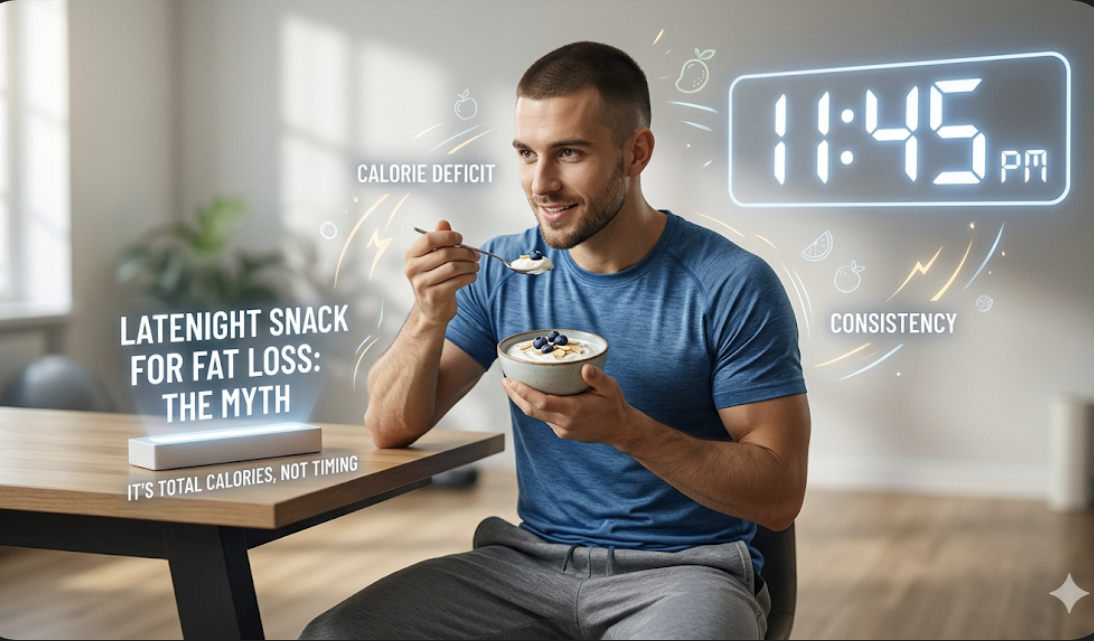
Eating late at night does not directly cause fat gain. The real factor is total daily calorie intake. If you're in a calorie surplus, you'll gain weight regardless of when you eat. However, late-night eating can indirectly affect fat loss if it leads to poor food choices, disrupted sleep, or exceeding your daily calorie needs. Some research suggests that eating close to bedtime may slightly impair glucose metabolism, but the effect is small compared to overall diet quality and total calories . For fat loss, focus on total calories, protein intake, and sleep quality—not just the clock.
1. The Midnight Snack Myth: Where Did It Come From?
You've probably heard it: "Don't eat after 8 PM or you'll gain weight." This advice has been repeated for decades, but is there any truth to it? The belief that eating late at night fat loss is impossible stems from early animal studies and oversimplified theories about metabolism slowing at night. Modern research tells a more nuanced story. Let's separate fact from fiction.
Does eating late at night cause fat gain?
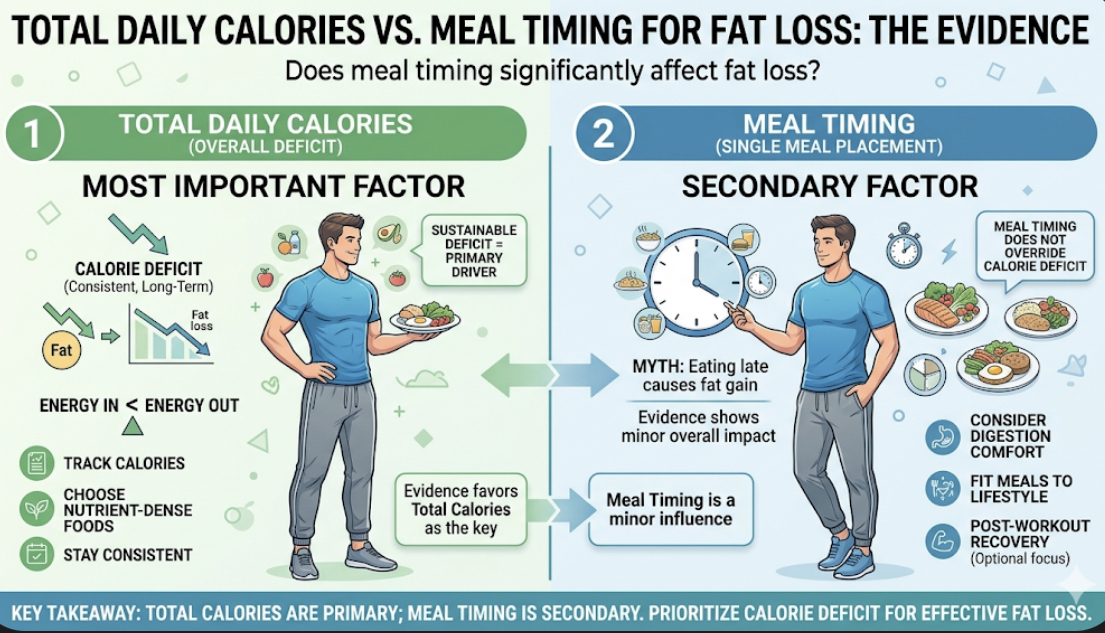
No, eating late at night does not directly cause fat gain. Weight gain occurs when you consume more calories than your body burns over time—regardless of when you eat. Multiple studies have shown that when total daily calories are controlled, meal timing has minimal impact on body weight . However, late-night eating may indirectly affect fat loss if it leads to: 1) Exceeding daily calorie needs, 2) Poor food choices (high-calorie, low-nutrient snacks), or 3) Disrupted sleep, which can affect hunger hormones .
2. The Science: What Research Actually Says About Late-Night Eating
2.1. Calorie Balance Is King
Multiple randomized controlled trials have shown that when total daily calorie intake is matched, meal timing has little to no effect on body weight or fat loss . A 2022 meta-analysis of 16 studies found that intermittent fasting (which restricts eating windows) produced similar weight loss to continuous calorie restriction—suggesting that calorie reduction, not timing, drives results .
2.2. Circadian Rhythms and Metabolism
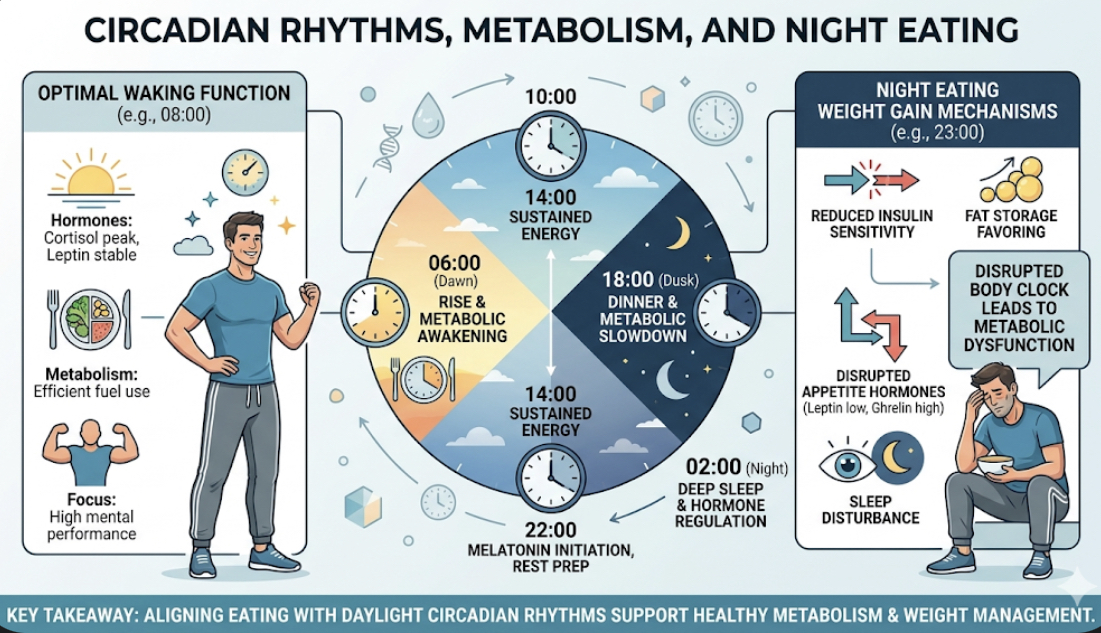
Your body does have circadian rhythms that affect metabolism. Some research suggests that eating later in the day may slightly reduce insulin sensitivity and increase fat storage compared to eating earlier . However, these effects are small and can be offset by overall diet quality and activity levels . For most people, the difference is clinically insignificant.
2.3. The Sleep Connection
Eating large meals close to bedtime can disrupt sleep quality. Poor sleep increases ghrelin (hunger hormone) and decreases leptin (satiety hormone), leading to increased appetite the next day . This indirect effect can make fat loss harder, not the act of eating itself.
3. When Late-Night Eating Actually Hurts Fat Loss
3.1. Excess Calorie Intake
If late-night snacking pushes you into a calorie surplus, you'll gain weight. This is the most common way nighttime eating sabotages fat loss—not because of timing, but because of quantity.
3.2. Poor Food Choices
Late-night cravings often lead to high-calorie, low-nutrient foods like ice cream, chips, or cookies. A 300-calorie bowl of cottage cheese won't hurt, but a 800-calorie pint of ice cream will.
3.3. Disrupted Sleep
Eating heavy, fatty, or spicy meals close to bedtime can cause indigestion and disrupt sleep. Poor sleep increases cortisol and appetite hormones, making fat loss harder .
3.4. Emotional Eating
Nighttime snacking is often driven by boredom, stress, or habit rather than true hunger. This mindless eating can add hundreds of extra calories without satisfying genuine nutritional needs.
4. Who Might Need to Avoid Late-Night Eating?
While late-night eating isn't inherently bad, some individuals may benefit from an earlier eating window:
- Those with GERD or acid reflux: Lying down soon after eating can worsen symptoms. Avoid eating 2–3 hours before bed.
- People with poor sleep: If late meals disrupt your sleep, try eating earlier.
- Individuals prone to mindless snacking: If you struggle with impulse control at night, setting a cutoff time can help.
- Those who prefer time-restricted eating: Some people find an earlier eating window helps them naturally eat fewer calories.
5. Healthy Late-Night Snack Options
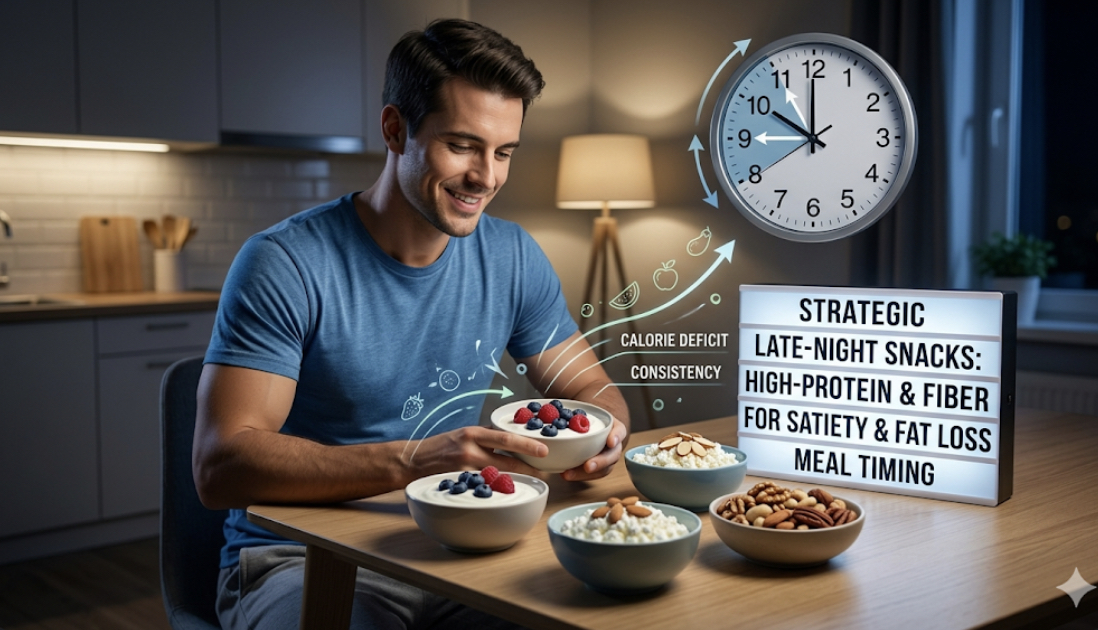
If you're genuinely hungry at night, choose these nutrient-dense, portion-controlled options:
- Greek yogurt (150g) + berries: 150 kcal, 15g protein
- Cottage cheese (½ cup) + cinnamon: 110 kcal, 13g protein
- Hard-boiled egg (1) + slice of whole-grain toast: 150 kcal, 10g protein
- Apple + 1 tbsp peanut butter: 200 kcal, 5g protein
- Protein shake (1 scoop) + water: 120 kcal, 25g protein
- Handful of almonds (10–12) + small apple: 150 kcal, 4g protein
- Warm milk (1 cup): 100 kcal, 8g protein
6. Sample Daily Meal Plan (Including a Late-Night Snack)
1,800 kcal Plan with Healthy Night Snack
- 8:00 AM – Breakfast: 3 eggs, 1 cup oatmeal with berries (450 kcal, 30g protein)
- 12:30 PM – Lunch: 150g chicken breast, 1 cup brown rice, 1 cup broccoli (450 kcal, 40g protein)
- 4:00 PM – Snack: 1 apple + 1 tbsp peanut butter (200 kcal, 5g protein)
- 7:00 PM – Dinner: 150g salmon, 1.5 cups sweet potato, 2 cups greens (500 kcal, 35g protein)
- 10:00 PM – Late-night snack: 150g Greek yogurt + ½ cup berries (150 kcal, 15g protein)
Total: ~1,750 kcal, 125g protein
Vegan/Vegetarian Late-Night Options
- 200g silken tofu with cinnamon (120 kcal, 10g protein)
- 1 cup unsweetened soy milk + 1 tbsp chia seeds (150 kcal, 8g protein)
- 1 small banana + 1 tbsp almond butter (180 kcal, 4g protein)
Gluten-Free Options
- All options above are naturally gluten-free when using certified GF oats and bread.
7. Practical Recommendations for Fat Loss
- Focus on total daily calories: Consistency matters more than meal timing. Use a food scale or app to track intake if you're unsure.
- Prioritize protein: Aim for 1.6–2.2 g per kg body weight. Protein helps with satiety and muscle preservation.
- Eat when you're hungry: Forcing yourself to stop eating at an arbitrary time can lead to nighttime hunger and subsequent overeating.
- Choose nutrient-dense snacks: If you need to eat late, opt for protein-rich, low-calorie options.
- Get quality sleep: Poor sleep increases hunger hormones and cravings. Aim for 7–9 hours nightly.
- Be mindful of emotional eating: If you're eating out of boredom or stress, find alternative activities (walking, reading, drinking water).
8. Common Myths About Late-Night Eating Debunked
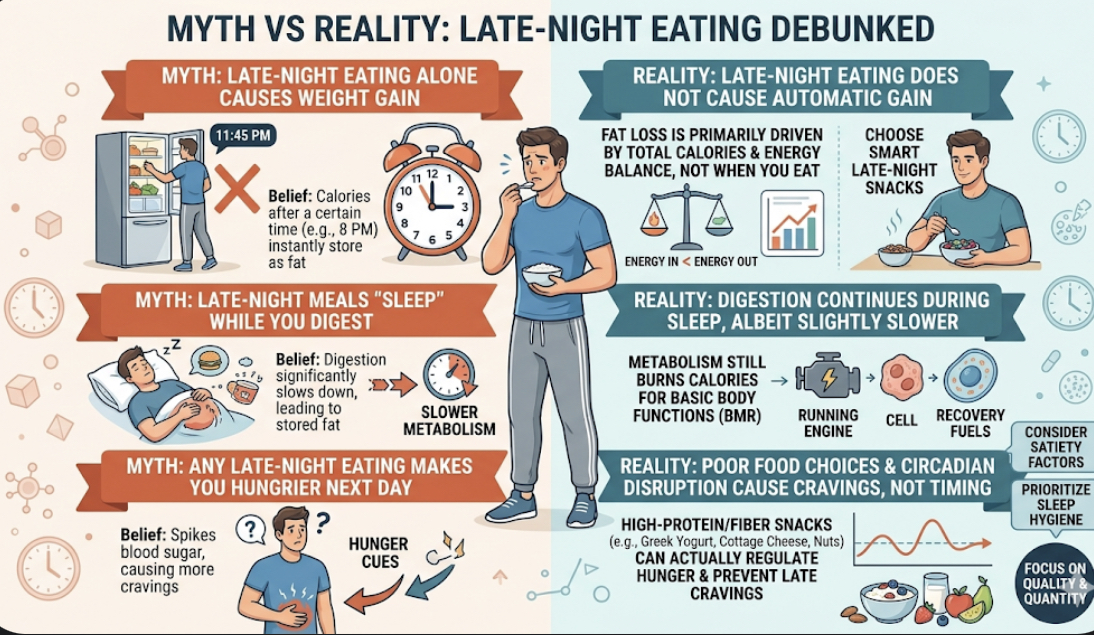
- Myth: "Your metabolism slows down at night, so calories are stored as fat." False. Your metabolism doesn't "shut off" at night. Basal metabolic rate remains active, and the thermic effect of food is similar regardless of time.
- Myth: "Eating after 8 PM guarantees weight gain." False. Weight gain is determined by total calories, not timing. Athletes who eat late to meet calorie needs do not gain excess fat if they're not in a surplus.
- Myth: "Your body stores more fat from nighttime meals." False. A 2020 study found no difference in fat storage between morning and evening meals when total intake was matched .
- Myth: "You shouldn't eat before bed because it disrupts sleep." Partially true. Large, heavy meals can disrupt sleep, but a small, protein-rich snack may actually improve sleep quality for some.
9. Frequently Asked Questions
Does eating late at night cause fat gain?
No, eating late at night does not directly cause fat gain. Weight gain occurs when you consume more calories than you burn over time, regardless of timing. However, late-night eating can lead to excess calorie intake if you're not mindful.
What is the best time to stop eating for fat loss?
There's no universal "best" time. Focus on total daily calories and sleep quality. If you have acid reflux or sleep issues, avoid eating 2–3 hours before bed.
Will a late-night protein shake make me gain fat?
No. A protein shake within your daily calorie needs will not cause fat gain. In fact, pre-sleep protein (especially casein) may support overnight muscle recovery.
Why do I crave food at night?
Nighttime cravings can be due to undereating during the day, poor sleep, stress, or habit. Ensure you're eating enough protein and fiber during the day to stay satisfied.
Is intermittent fasting better for fat loss than eating late?
Intermittent fasting works for some people because it helps them eat fewer calories. But it's not inherently superior to eating later in the day if total calories are controlled.
What's the best late-night snack for muscle growth?
Cottage cheese, Greek yogurt, or a casein protein shake. These provide slow-digesting protein that supports overnight muscle recovery.
Does eating before bed affect sleep quality?
Large, heavy, or spicy meals can disrupt sleep. However, a small, protein-rich snack may have neutral or even positive effects on sleep for some individuals.
10. Related Resources
- How to Build a Cheap High Protein Snack List: A Beginner's Guide for Athletes
- How to Reverse Diet After a Cut: Avoid Rebound Weight Gain and Keep Your Results
- How to Stay Full on a Budget: Beans & Lentils for Affordable Nutrition
- High-Protein Vegetarian Meals That Taste Amazing and Boost Muscle
- The Truth About Salt: How Sodium Affects Your Muscle Pump and Performance
- How to Meal Prep for a Whole Week in Under Two Hours (Easy Guide)
11. Scientific References
- Lowe, D. A., et al. (2020). Effects of time-restricted eating on weight loss and other metabolic parameters: a systematic review and meta-analysis. Obesity Reviews, 21(8), e13045. PubMed
- Parr, E. B., et al. (2020). Time-restricted eating as a nutrition strategy for health and performance. Sports Medicine, 50(6), 1095–1110. PubMed
- Kinsey, A. W., & Ormsbee, M. J. (2015). The health impact of nighttime eating: old and new perspectives. Nutrients, 7(4), 2648–2662. PubMed
- Allison, K. C., et al. (2019). The clinical significance of nighttime eating. Current Opinion in Endocrinology, Diabetes and Obesity, 26(6), 303–309. PubMed
- Nedeltcheva, A. V., et al. (2010). Insufficient sleep undermines dietary efforts to reduce adiposity. Annals of Internal Medicine, 153(7), 435–441. PubMed
- ACSM. (2021). Nutrition and Athletic Performance. Medicine & Science in Sports & Exercise, 53(3), 600–618. PubMed
Join the conversation