What to Eat Before and After a Workout for Best Results (Complete Guide)
What to Eat Before and After a Workout for Best Results (Complete Guide)
⚡ TL;DR
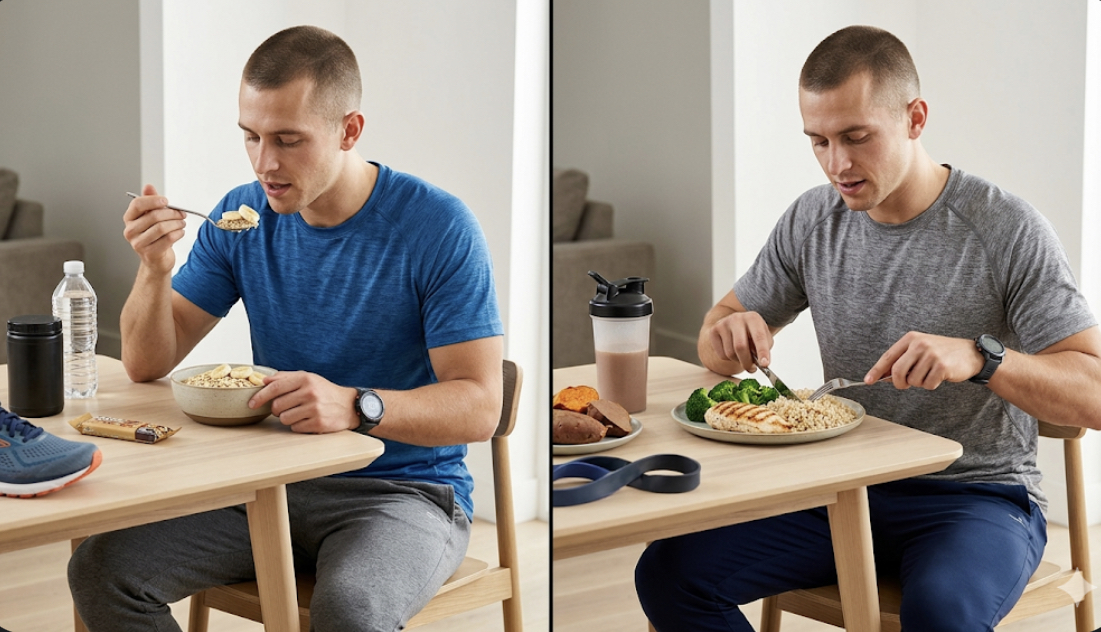
For best results, what to eat before and after a workout follows simple principles: Pre-workout (1–3 hours before): carbs + protein to fuel performance (e.g., oatmeal with protein, chicken with rice). Post-workout (within 2 hours): protein + carbs to repair muscle and replenish glycogen (e.g., protein shake with banana, chicken with sweet potato). The "anabolic window" is wider than once thought—4–6 hours post-exercise . Prioritize total daily nutrition, but strategic timing enhances performance and recovery. This guide provides meal timing, sample meals for omnivores and vegans, and quick recipes.
1. Why Workout Nutrition Matters
You train hard, but are you fueling your body correctly? What you eat before and after a workout can make the difference between mediocre results and optimal performance, recovery, and muscle growth. This workout nutrition timing guide will show you exactly what to eat, when to eat it, and why it works.
What should you eat before and after a workout?
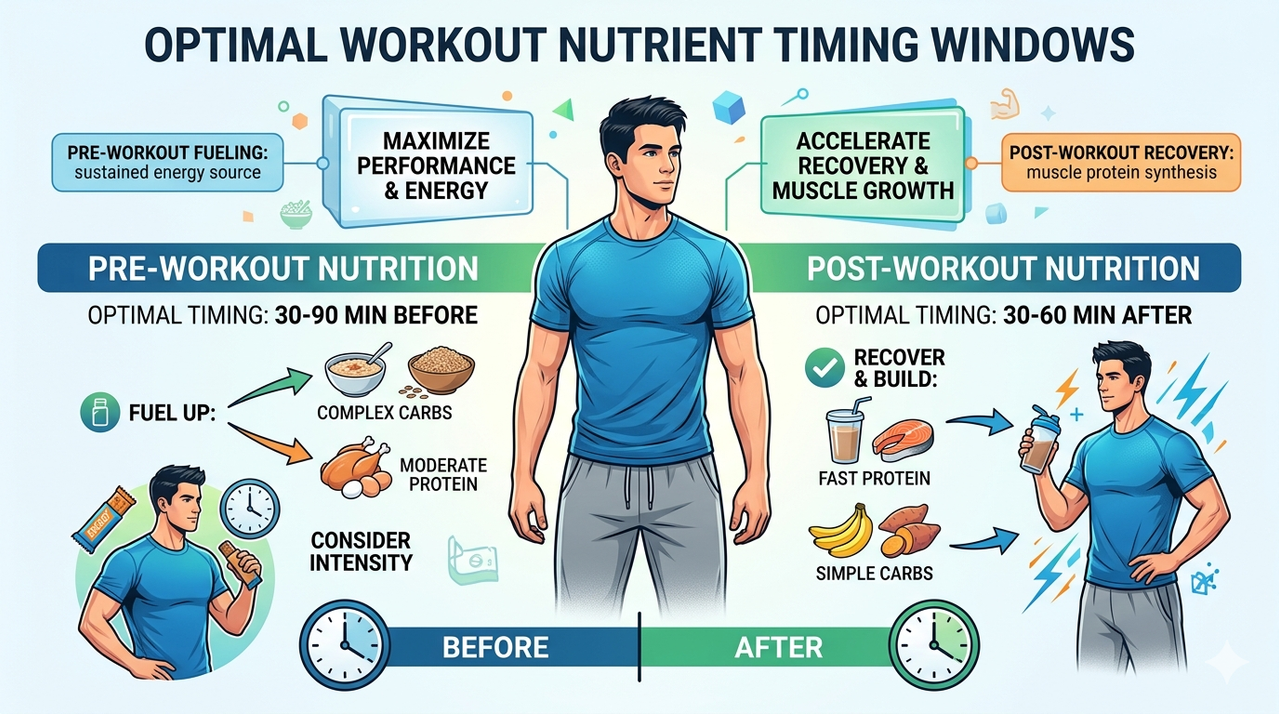
Before a workout: Eat a meal with carbohydrates for energy + protein for muscle support 1–3 hours prior. Examples: oatmeal with protein powder, banana with peanut butter, or chicken with rice. After a workout: Consume protein for muscle repair + carbohydrates to replenish glycogen within 2 hours. Examples: protein shake with fruit, Greek yogurt with berries, or salmon with sweet potato. Hydration is also critical .
2. Pre-Workout Nutrition: Fuel for Performance
2.1. Why Pre-Workout Matters
Eating before exercise provides the energy needed for optimal performance, reduces muscle breakdown during training, and helps maintain blood sugar levels . A well-timed pre-workout meal can improve endurance, strength, and focus .
2.2. What to Eat Before a Workout
- Carbohydrates: Primary fuel source for high-intensity exercise. Aim for 30–60g carbs before training .
- Protein: 20–30g protein to reduce muscle breakdown and provide amino acids .
- Low fat: Fat slows digestion; keep fat moderate (5–10g) to avoid GI distress.
- Hydration: Drink 16–20 oz water 2–3 hours before, and 8–10 oz 10–20 minutes before.
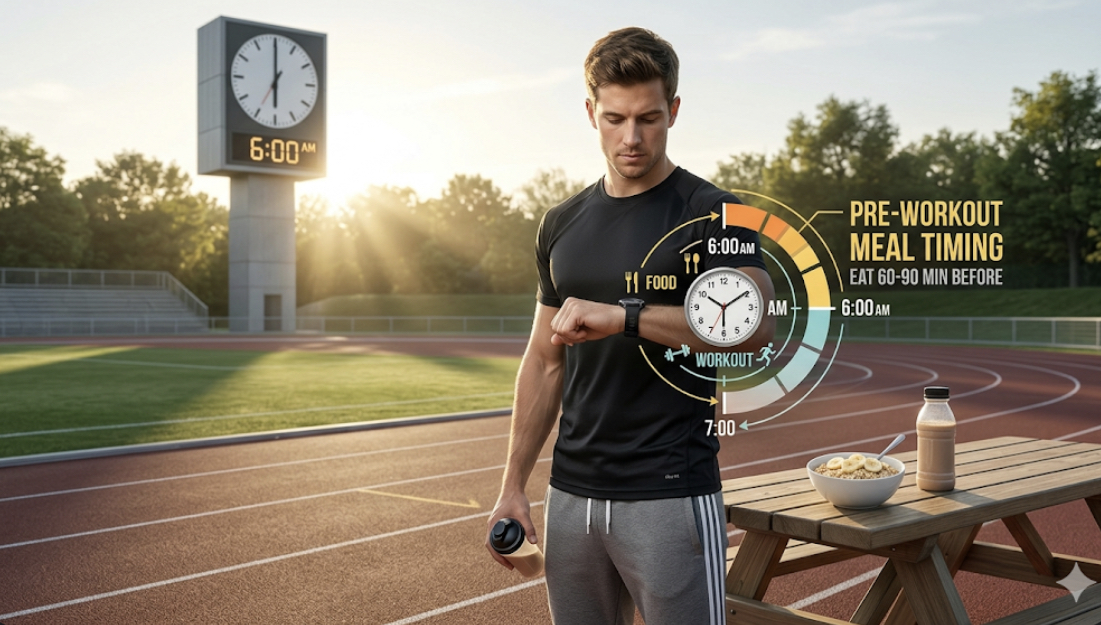
2.3. Pre-Workout Meal Timing
- 3–4 hours before: Large meal (500–700 kcal) with complex carbs, protein, and moderate fat.
- 1–2 hours before: Small meal (200–400 kcal) with simple carbs, moderate protein, low fat.
- 30–60 minutes before: Light snack (100–200 kcal) like banana, apple, or rice cake with jam.
2.4. Sample Pre-Workout Meals
- Omnivore (2–3 hours before): 150g chicken breast, 1.5 cups brown rice, 1 cup broccoli (500 kcal, 45g protein, 60g carbs)
- Omnivore (1 hour before): 1 cup oatmeal with 1 scoop whey protein, 1 banana (450 kcal, 30g protein, 65g carbs)
- Vegan (1–2 hours before): Tofu scramble (150g firm tofu) with 1 cup quinoa (400 kcal, 25g protein, 50g carbs)
- Quick snack (30 min before): 1 banana + 1 tbsp peanut butter (200 kcal, 5g protein, 30g carbs)
3. Post-Workout Nutrition: Recovery and Growth
3.1. Why Post-Workout Matters
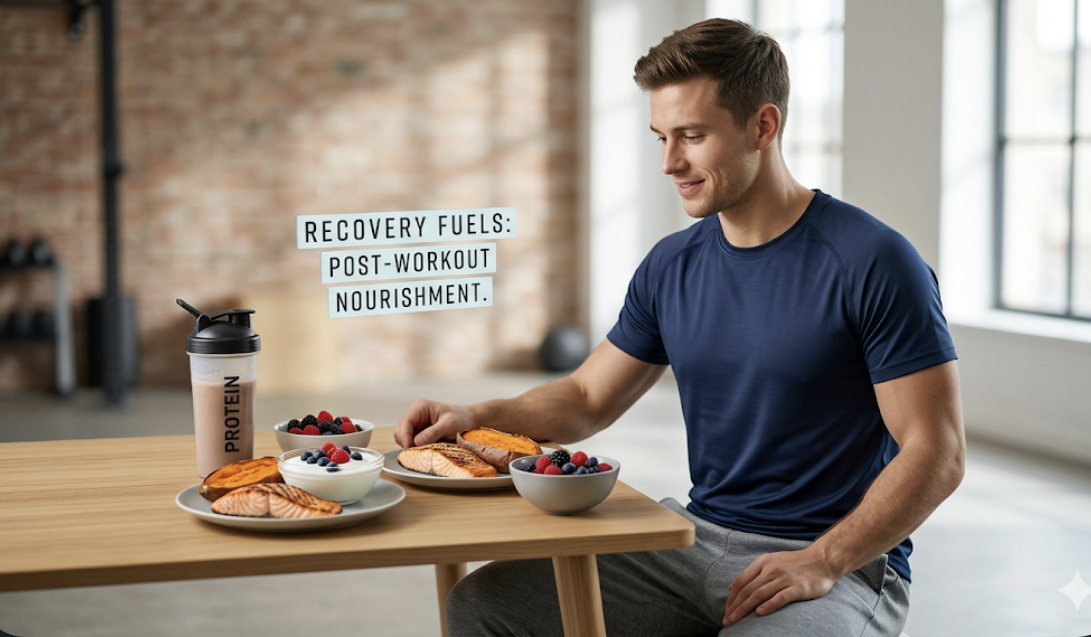
After exercise, your body is primed to replenish glycogen stores and repair muscle tissue. Consuming the right nutrients post-workout enhances recovery, reduces soreness, and stimulates muscle protein synthesis .
3.2. What to Eat After a Workout
- Protein: 20–40g protein to stimulate muscle protein synthesis. Aim for high-quality complete protein .
- Carbohydrates: 30–60g carbs to replenish glycogen, especially if training again within 24 hours.
- Hydration: Replace fluids lost through sweat; water plus electrolytes if training intensely.
3.3. Post-Workout Meal Timing
The "anabolic window" is wider than once believed—4–6 hours post-exercise is sufficient for protein intake . However, eating within 2 hours is optimal for glycogen replenishment. If you ate a pre-workout meal within 3 hours, the post-workout window is less urgent.
3.4. Sample Post-Workout Meals
- Omnivore (within 1 hour): 200g Greek yogurt + 1 cup berries + ½ cup granola (400 kcal, 25g protein, 50g carbs)
- Omnivore (full meal): 200g salmon, 1.5 cups sweet potato, 2 cups mixed greens (600 kcal, 45g protein, 55g carbs)
- Vegan: 1 scoop pea protein + 1 banana + 1 cup oat milk + 1 tbsp chia seeds (400 kcal, 30g protein, 50g carbs)
- Quick option: 1 cup cottage cheese + 1 apple (250 kcal, 25g protein, 25g carbs)

4. Nutrient Timing: The Science Behind the Window
4.1. The Anabolic Window: Myth vs Reality
Early research suggested a narrow 30–60 minute window for optimal protein intake. However, more recent studies indicate the window is actually 4–6 hours . If you've eaten a pre-workout meal within 3–4 hours, your post-workout timing is less critical. Focus on total daily intake .
4.2. Pre-Workout Benefits
Eating before training increases muscle protein synthesis during exercise, reduces muscle breakdown, and improves performance . A 2022 meta-analysis confirmed that pre-workout nutrition enhances strength and endurance compared to fasted training .
4.3. Post-Workout Benefits
Consuming protein after exercise stimulates muscle protein synthesis for 3–5 hours . Adding carbohydrates speeds glycogen replenishment, particularly important for athletes training twice daily .
5. Sample Meal Plans by Training Time
5.1. Morning Workout (8:00 AM)
- 6:30 AM – Pre-workout: 1 banana + 1 scoop whey/pea protein (250 kcal, 25g protein, 30g carbs)
- 8:00–9:00 AM – Workout
- 9:30 AM – Post-workout/Breakfast: 4 eggs, 1 cup oatmeal with berries (550 kcal, 35g protein, 55g carbs)
- 12:30 PM – Lunch: 200g chicken breast, 1.5 cups brown rice, 1 cup broccoli (650 kcal, 50g protein, 60g carbs)
- 5:00 PM – Snack: 200g Greek yogurt, 1 apple (250 kcal, 20g protein, 25g carbs)
- 7:30 PM – Dinner: 200g salmon, 1.5 cups sweet potato, 2 cups greens (600 kcal, 45g protein, 45g carbs)
5.2. Evening Workout (5:00 PM)
- 8:00 AM – Breakfast: 4 eggs, 1 cup oatmeal with berries (550 kcal, 35g protein, 55g carbs)
- 12:30 PM – Lunch: 200g chicken breast, 1.5 cups brown rice, 1 cup broccoli (650 kcal, 50g protein, 60g carbs)
- 3:00 PM – Pre-workout: 1 banana + 1 scoop whey (250 kcal, 25g protein, 30g carbs)
- 5:00–6:00 PM – Workout
- 6:30 PM – Post-workout/Dinner: 200g salmon, 1.5 cups sweet potato, 2 cups greens (600 kcal, 45g protein, 45g carbs)
- 9:00 PM – Evening Snack: 200g cottage cheese (200 kcal, 20g protein)
5.3. Vegan/Vegetarian Options
- Pre-workout: 1 banana + 1 scoop pea protein (250 kcal, 25g protein, 30g carbs)
- Post-workout: Tofu scramble (200g firm tofu) + 1.5 cups quinoa + veggies (600 kcal, 40g protein, 55g carbs)
- Alternative: 1 cup edamame + 1 cup cooked lentils + sweet potato (500 kcal, 35g protein, 50g carbs)
Gluten-Free Options
- Use certified gluten-free oats, quinoa, rice, or buckwheat.
- Ensure protein powders are gluten-free certified.
6. Quick Pre/Post Workout Recipes
- Pre-Workout Energy Bites (300 kcal, 15g protein): ½ cup oats, 2 tbsp peanut butter, 1 tbsp honey, 1 tbsp chia seeds. Roll into balls.
- Post-Workout Recovery Smoothie (400 kcal, 30g protein): 1 cup Greek yogurt, 1 banana, 1 cup oat milk, 1 tbsp honey.
- Vegan Post-Workout Bowl (500 kcal, 30g protein): 200g baked tofu, 1.5 cups quinoa, 1 cup roasted veggies, tahini drizzle.
- Pre-Workout Oatmeal (450 kcal, 25g protein): 1 cup oats, 1 scoop protein, 1 banana, cinnamon.
7. Common Workout Nutrition Mistakes
- Mistake #1: Training fasted without pre-workout fuel. Can impair performance and increase muscle breakdown.
- Mistake #2: Obsessing over the 30-minute post-workout window. The window is 4–6 hours; total daily intake matters more.
- Mistake #3: Skipping protein post-workout. Delaying protein can slow recovery and muscle repair.
- Mistake #4: Eating too close to training. Large meals <1 hour before can cause GI distress.
- Mistake #5: Not hydrating. Dehydration impairs strength and endurance.
- Mistake #6: Relying only on supplements. Whole foods provide additional nutrients and benefits.
8. Frequently Asked Questions
What should you eat before and after a workout?
Before: carbs + protein (e.g., oatmeal with protein, banana with peanut butter). After: protein + carbs (e.g., Greek yogurt with berries, chicken with rice).
How long before a workout should I eat?
1–3 hours before training. Larger meals need 2–3 hours; small snacks can be 30–60 minutes before.
Do I need to eat immediately after a workout?
No, the anabolic window is 4–6 hours post-workout. However, eating within 2 hours is beneficial for glycogen replenishment.
What's the best pre-workout meal for muscle growth?
A meal with 30–50g carbs and 20–30g protein 1–3 hours before. Example: chicken breast with rice, or oatmeal with protein.
What's the best post-workout meal for recovery?
20–40g protein with 30–60g carbs. Examples: protein shake with banana, Greek yogurt with fruit, salmon with sweet potato.
Can I train on an empty stomach?
While possible, fasted training can impair performance and increase muscle breakdown. A small pre-workout snack is beneficial.
How much water should I drink before and after workout?
16–20 oz 2–3 hours before, 8–10 oz 10–20 minutes before. After, drink 16–24 oz per pound of body weight lost during exercise.
9. Related Resources
- How to Build a Cheap High Protein Snack List: A Beginner's Guide for Athletes
- How to Reverse Diet After a Cut: Avoid Rebound Weight Gain and Keep Your Results
- How to Stay Full on a Budget: Beans & Lentils for Affordable Nutrition
- High-Protein Vegetarian Meals That Taste Amazing and Boost Muscle
- The Truth About Salt: How Sodium Affects Your Muscle Pump and Performance
- How to Meal Prep for a Whole Week in Under Two Hours (Easy Guide)
10. Scientific References
- Kerksick, C. M., et al. (2017). International society of sports nutrition position stand: nutrient timing. Journal of the International Society of Sports Nutrition, 14, 33. PubMed
- Schoenfeld, B. J., & Aragon, A. A. (2018). How much protein can the body use in a single meal for muscle-building? Journal of the International Society of Sports Nutrition, 15, 10. PubMed
- Areta, J. L., et al. (2013). Timing and distribution of protein ingestion during prolonged recovery from resistance exercise alters myofibrillar protein synthesis. Journal of Physiology, 591(9), 2319–2331. PubMed
- Morton, R. W., et al. (2018). A systematic review, meta-analysis and meta-regression of the effect of protein supplementation on resistance training-induced gains in muscle mass and strength in healthy adults. British Journal of Sports Medicine, 52(6), 376–384. PubMed
- Ormsbee, M. J., et al. (2014). Pre-exercise nutrition: the role of macronutrients, modified starches and supplements on metabolism and endurance performance. Nutrients, 6(5), 1782–1808. PubMed
- ACSM. (2021). Nutrition and Athletic Performance. Medicine & Science in Sports & Exercise, 53(3), 600–618. PubMed
Join the conversation