How Many Sets and Reps for Muscle Growth? (Optimal Training Guide)
How Many Sets and Reps for Muscle Growth? (Optimal Training Guide)
⚡ TL;DR
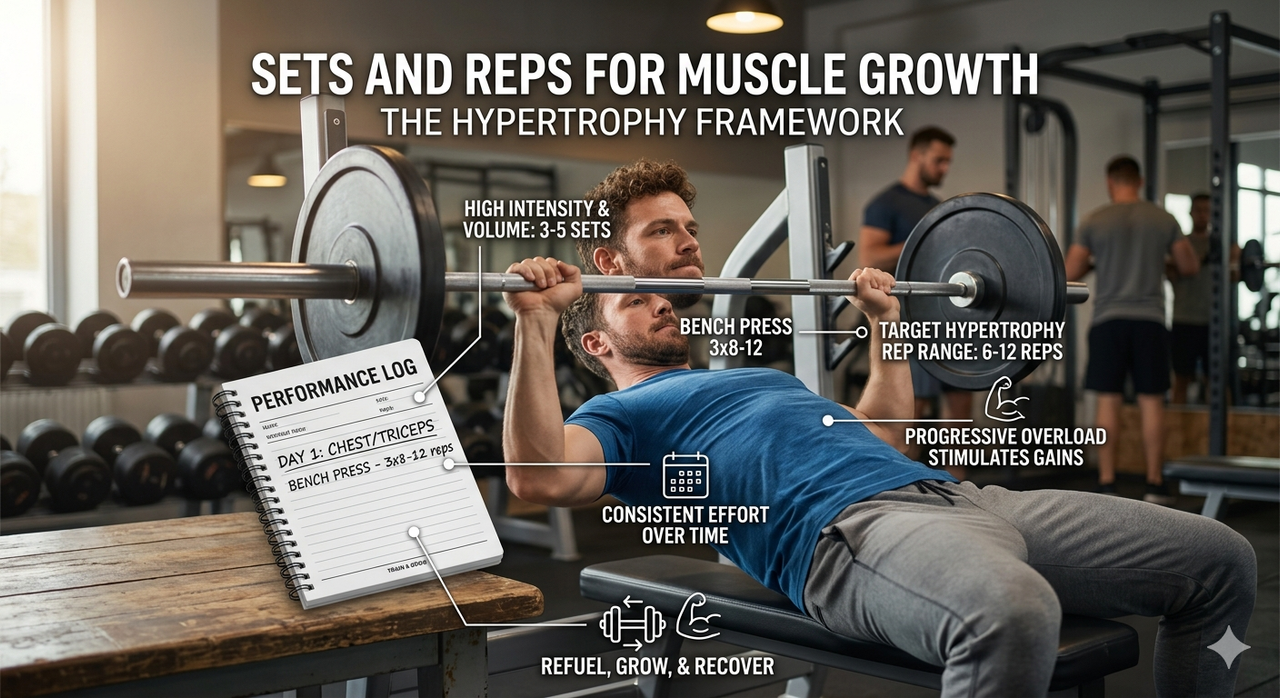
For optimal muscle growth (hypertrophy), the best sets and reps are: 3–5 sets per exercise with 6–12 reps per set. Total weekly volume should be 10–20 sets per muscle group. Research shows that training in the 6–12 rep range produces similar hypertrophy to lower reps (1–5) or higher reps (15–30) when volume is matched, but this range is most practical . Progressive overload (adding weight or reps over time) is essential regardless of set/rep scheme. This guide breaks down the evidence and provides practical recommendations.
1. The Set and Rep Question: Why It Matters
You're in the gym, staring at the weights. How many sets should you do? How many reps? The answer isn't one-size-fits-all, but science has given us a clear framework. Understanding optimal reps hypertrophy and volume will help you design workouts that maximize muscle growth efficiently.
What is the best sets and reps for muscle growth?
The best sets and reps for muscle growth is 3–5 sets of 6–12 reps per exercise, with a total weekly volume of 10–20 sets per muscle group. This range optimizes mechanical tension, metabolic stress, and muscle damage—the three primary drivers of hypertrophy . Research shows that both lower (1–5) and higher (15–30) rep ranges can also build muscle, but the 6–12 range is the most efficient and practical for most lifters . Progressive overload—adding weight or reps over time—is non-negotiable.
2. The Science: How Muscles Grow
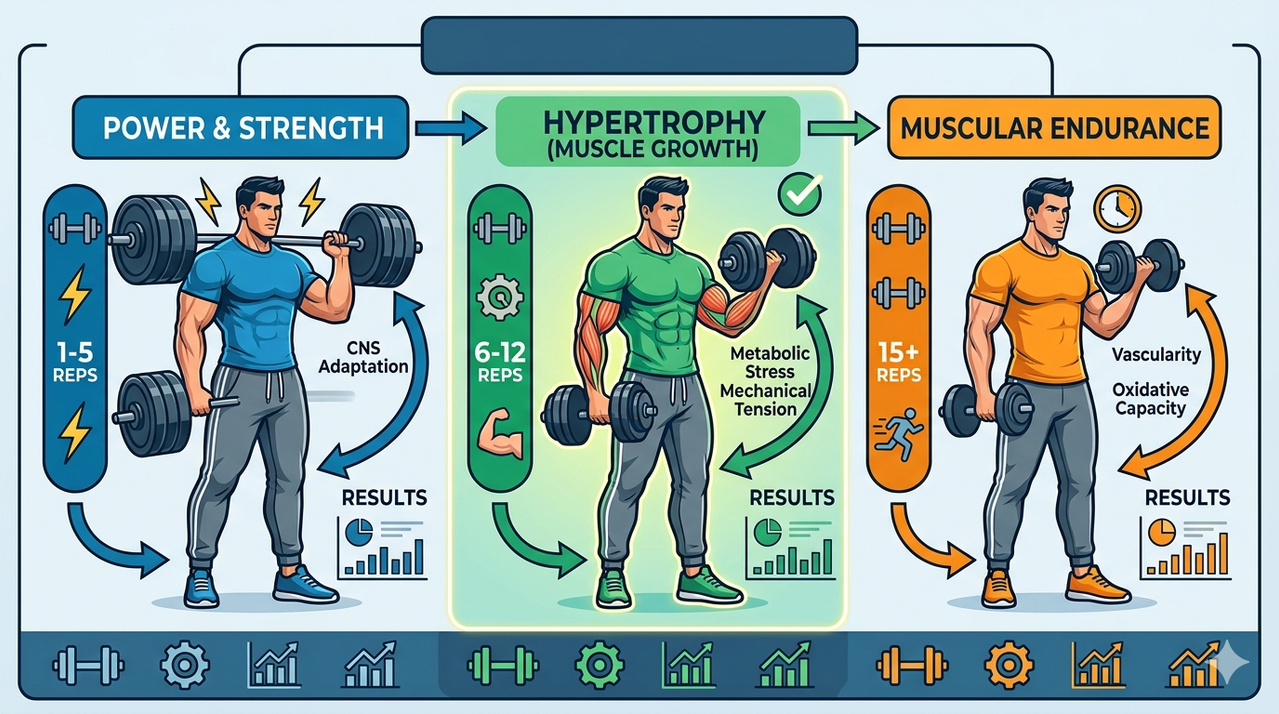
2.1. Mechanical Tension
Mechanical tension is the primary driver of muscle growth. It's created by lifting heavy weights (or challenging bodyweight exercises) and maintaining tension throughout the movement. The 6–12 rep range typically uses 65–85% of your one-rep max, creating significant tension .
2.2. Metabolic Stress
Metabolic stress (the "pump") from moderate reps (8–15) contributes to hypertrophy by triggering cellular swelling and anabolic signaling .
2.3. Muscle Damage
Eccentric-focused training (controlled lowering) causes muscle damage, which stimulates repair and growth. The 6–12 rep range balances damage with manageable fatigue .
3. Optimal Rep Ranges for Hypertrophy
3.1. The 6–12 Rep Range: The Sweet Spot
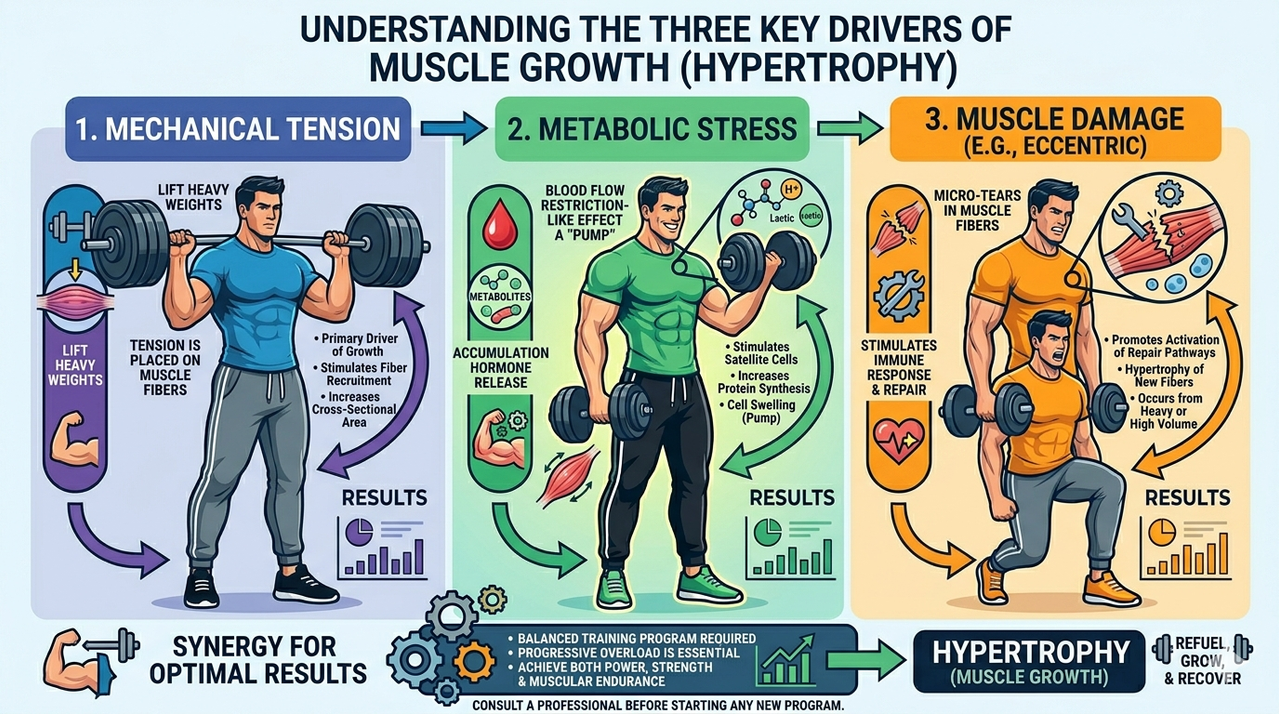
This range is most commonly used and recommended for hypertrophy. It balances tension, volume, and fatigue management. Studies show that rep ranges from 6–12 produce similar hypertrophy to lower or higher reps when volume is matched .
3.2. Low Reps (1–5): Strength Focus
Low reps build maximal strength and also contribute to hypertrophy. However, the volume (total reps) is lower, so you may need more sets to achieve sufficient volume .
3.3. High Reps (15–30): Endurance & Metabolic Stress
High reps can also build muscle, especially in trained individuals, but they may be less time-efficient. They're excellent for deload phases or addressing specific weaknesses .
4. Optimal Set Volume per Week
4.1. Volume Recommendations
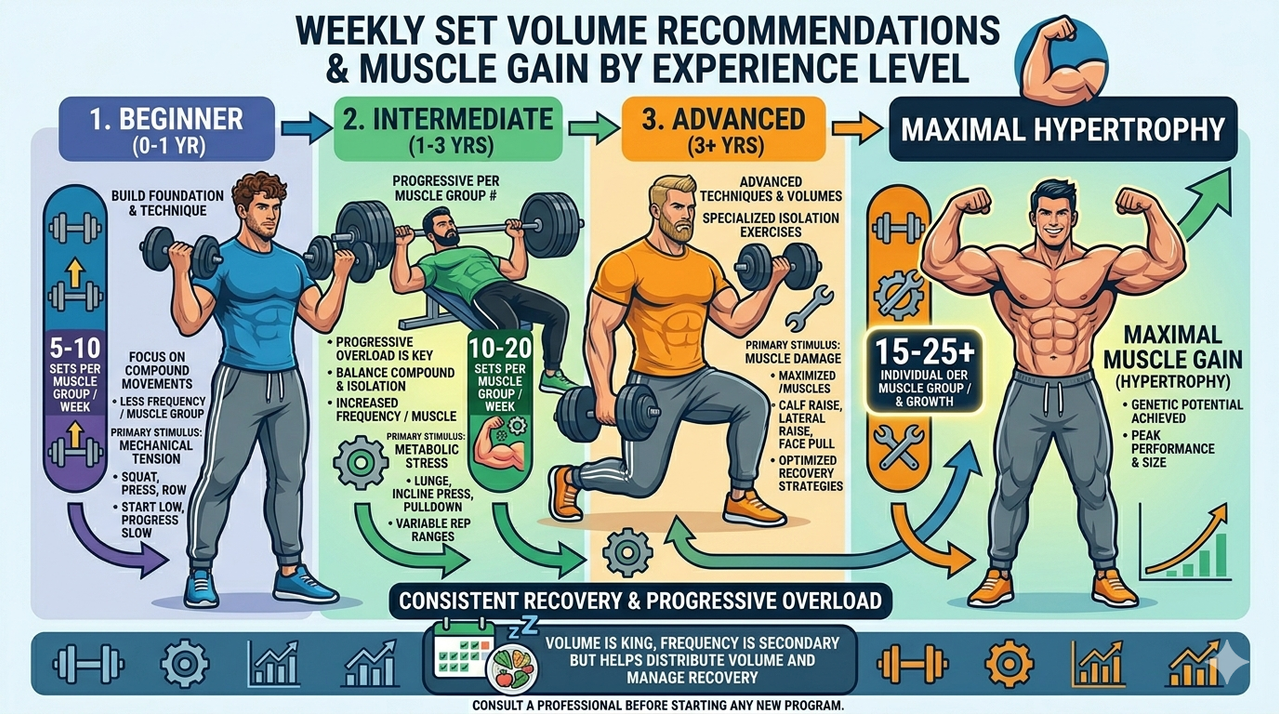
Research shows that muscle growth increases with volume up to a point, then plateaus or even reverses (junk volume). The optimal range is 10–20 sets per muscle group per week .
- Beginners: 10–12 sets per muscle group weekly (3–4 sets per session, 3x/week)
- Intermediates: 12–16 sets per muscle group weekly
- Advanced: 16–20 sets per muscle group weekly
4.2. How to Distribute Volume
Spread volume across 2–3 sessions per muscle group weekly. For example, if you do 12 sets for chest weekly, that could be 4 sets in 3 sessions or 6 sets in 2 sessions .
4.3. Signs You're Doing Too Much
- Persistent soreness >72 hours
- Declining strength despite consistent training
- Chronic fatigue, irritability, poor sleep
- Lack of motivation
5. Sample Workout Structures by Split
5.1. Full Body (3x/week)
- Squat: 3 × 8–10
- Bench Press: 3 × 8–10
- Bent-Over Row: 3 × 8–10
- Overhead Press: 3 × 8–10
- Plank: 3 × 45 sec
Weekly chest volume: 3 exercises × 3 sets = 9 sets (within beginner range)
5.2. Upper/Lower (4x/week)
- Upper A: Bench Press 3×8–10, Bent-Over Row 3×8–10, Overhead Press 3×8–10, Pull-ups 3×8–10, Bicep Curls 2×10–12, Tricep Pushdowns 2×10–12
- Upper B: Dumbbell Press 3×8–10, Seated Cable Row 3×8–10, Lateral Raises 3×10–12, Chin-ups 3×8–10, Hammer Curls 2×10–12, Tricep Extensions 2×10–12
Weekly chest volume: 3 (bench) + 3 (dumbbell) = 6 sets per upper session × 2 sessions = 12 sets (intermediate range)
5.3. Push/Pull/Legs (6x/week)
- Push: Bench Press 3×8–10, Overhead Press 3×8–10, Incline Press 3×10–12, Lateral Raises 3×12–15, Tricep Pushdowns 3×10–12
- Pull: Bent-Over Row 3×8–10, Pull-ups 3×8–10, Cable Row 3×10–12, Face Pulls 3×12–15, Barbell Curl 3×10–12
- Legs: Squat 3×8–10, Romanian Deadlift 3×8–10, Leg Press 3×10–12, Leg Curls 3×10–12, Calf Raises 3×12–15
Weekly chest volume: 3 (bench) + 3 (overhead) + 3 (incline) = 9 sets per push day × 2 push days = 18 sets (advanced range)
6. Progressive Overload – The Non-Negotiable Principle
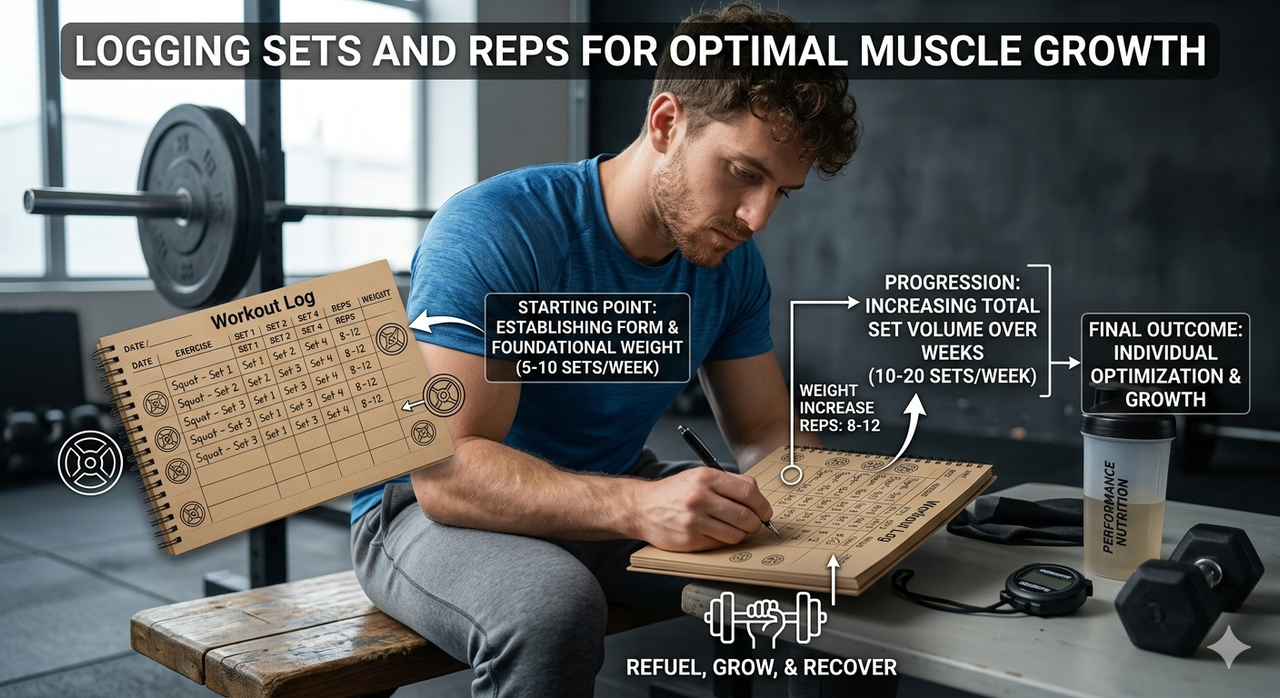
Without progressive overload, your muscles have no reason to grow. Track your lifts and aim to improve:
- Add weight: Increase by 2.5–5 lbs when you hit the top of your rep range (e.g., 10 reps → 12 reps → add weight).
- Add reps: Aim to add 1–2 reps per set before increasing weight.
- Add sets: Add an extra set to an exercise over weeks.
- Reduce rest time: Decrease rest between sets by 10–15 seconds (advanced).
7. Nutrition to Support Muscle Growth
7.1. Calorie and Protein Targets
- Calories: Eat at maintenance or a small surplus (250–500 kcal) for muscle growth.
- Protein: 1.6–2.2 g per kg body weight daily .
- Carbs: 4–6 g per kg for energy and recovery.
- Fats: 0.8–1.2 g per kg for hormonal health.
7.2. Sample Meal Plan (2,800 kcal, 160g Protein)
- Breakfast: 4 eggs, 1 cup oatmeal with 1 tbsp peanut butter, 1 banana (650 kcal, 40g protein)
- Lunch: 200g chicken breast, 1.5 cups brown rice, 1 cup broccoli (650 kcal, 50g protein)
- Pre-workout: 1 banana + 1 scoop whey (250 kcal, 25g protein)
- Post-workout/Dinner: 200g salmon, 1.5 cups sweet potato, 2 cups greens (650 kcal, 45g protein)
- Evening: 200g Greek yogurt (200 kcal, 20g protein)
Vegan/Vegetarian Plan (2,800 kcal, 150g Protein)
- Breakfast: Tofu scramble (200g firm tofu), 1.5 cups oatmeal with 2 tbsp peanut butter, banana (700 kcal, 40g protein)
- Lunch: 200g tempeh, 1.5 cups quinoa, 1 cup roasted chickpeas (700 kcal, 45g protein)
- Snack: 1 cup edamame, 1 apple (200 kcal, 15g protein)
- Dinner: 1.5 cups cooked lentils, 1.5 cups sweet potato, 1 cup spinach (650 kcal, 35g protein)
- Evening: 1 cup unsweetened soy milk + 2 tbsp hemp seeds (200 kcal, 15g protein)
Gluten-Free Options
- Use certified gluten-free oats, quinoa, rice, or buckwheat.
- Ensure tempeh and tofu are gluten-free certified.
8. Common Mistakes to Avoid
- Mistake #1: Too much volume. >25 sets per muscle group weekly leads to overtraining and diminishing returns.
- Mistake #2: Too little volume. <10 sets per muscle group weekly provides insufficient stimulus.
- Mistake #3: No progressive overload. Doing the same weight/reps for weeks = no growth.
- Mistake #4: Ignoring form. Cheating reps reduce tension on target muscles and increase injury risk.
- Mistake #5: Not tracking. You can't manage what you don't measure.
9. Frequently Asked Questions
What is the best sets and reps for muscle growth?
3–5 sets of 6–12 reps per exercise, with 10–20 total sets per muscle group weekly, is optimal for hypertrophy.
Do low reps build muscle?
Yes, low reps (1–5) build muscle, but you need enough total volume (sets) to stimulate growth. The 6–12 range is more time-efficient.
How many sets per workout for muscle growth?
For a full body workout: 15–25 total sets. For an upper/lower split: 10–15 sets per session. For PPL: 15–20 sets per session.
Is 3 sets of 10 reps enough?
For beginners, yes. As you progress, you'll likely need 3–5 sets per exercise and 10–20 sets per muscle group weekly.
How many reps for hypertrophy?
6–12 reps is the most commonly recommended range. However, both lower (1–5) and higher (15–30) reps can also build muscle with sufficient volume.
How long should I rest between sets?
60–90 seconds for hypertrophy. Longer for strength (3–5 min), shorter for endurance (30–60 sec).
Can I build muscle with bodyweight exercises?
Yes, using progressive overload (more reps, harder variations). The same set/rep principles apply.
10. Related Resources
- The Science of Rest Days: How Muscles Grow While You Sleep and Recover
- Morning Stretching Routine to Improve Strength and Lifting Performance
- How to Build a Powerful Chest at Home Without a Bench (Best Bodyweight Workouts)
- Best Bodyweight Shoulder Exercises to Build Strong and Stable Shoulders
- How to Do Your First Push-Up: Beginner Progression Guide to Build Strength Fast
11. Scientific References
- Schoenfeld, B. J., et al. (2017). Effects of Resistance Training Frequency on Measures of Muscle Hypertrophy: A Systematic Review and Meta-Analysis. Sports Medicine, 46(11), 1689–1697. PubMed
- Schoenfeld, B. J., et al. (2016). Resistance Training Volume Enhances Muscle Hypertrophy but Not Strength in Trained Men. Medicine & Science in Sports & Exercise, 48(8), 1530–1539. PubMed
- Schoenfeld, B. J. (2010). The mechanisms of muscle hypertrophy and their application to resistance training. Journal of Strength and Conditioning Research, 24(10), 2857–2872. PubMed
- Morton, R. W., et al. (2018). A systematic review, meta-analysis and meta-regression of the effect of protein supplementation on resistance training-induced gains in muscle mass and strength in healthy adults. British Journal of Sports Medicine, 52(6), 376–384. PubMed
- Helms, E. R., et al. (2014). Evidence-based recommendations for natural bodybuilding contest preparation. Journal of the International Society of Sports Nutrition, 11(1), 20. PubMed
- ACSM. (2021). Nutrition and Athletic Performance. Medicine & Science in Sports & Exercise, 53(3), 600–618. PubMed
Join the conversation