How to Avoid Injuries While Training (Safe Workout Tips for Beginners & Athletes)

Learn how to avoid injuries while training with simple tips on form, warm-up, recovery, and safe workouts.
How to Avoid Injuries While Training: Safe Workout Tips for Beginners & Athletes (2026)
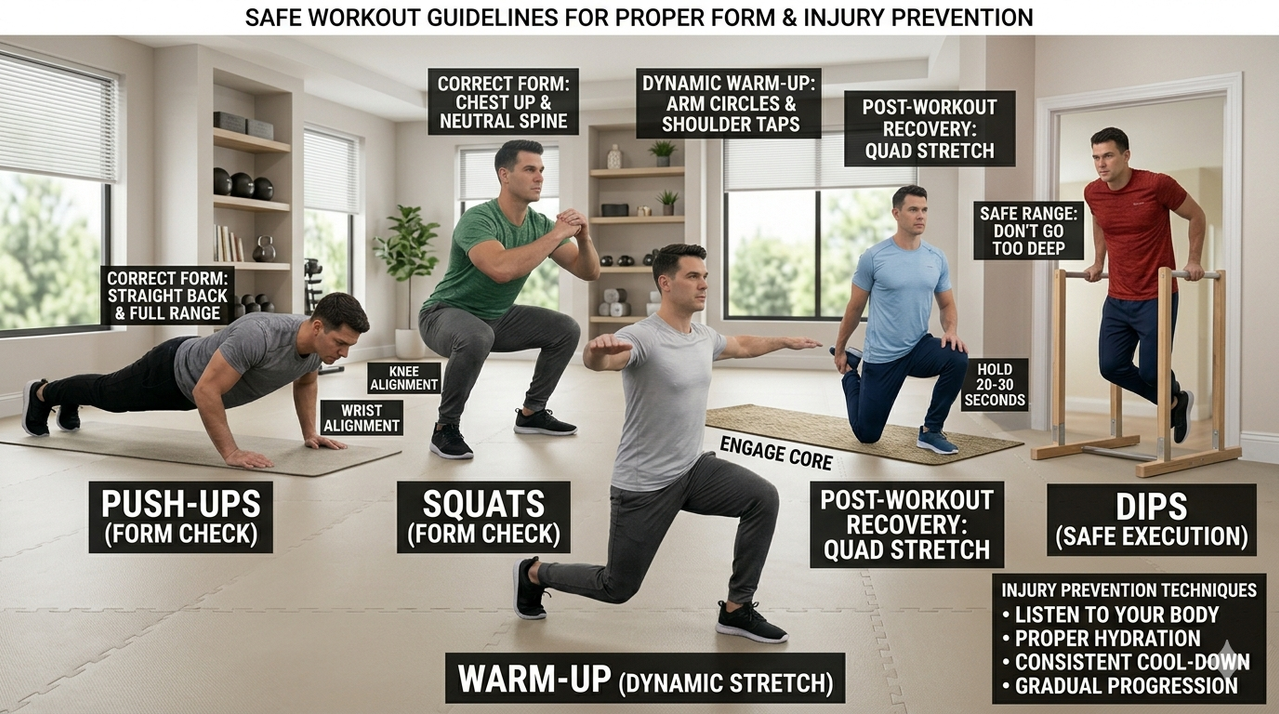
How to Avoid Injuries While Training: Safe Workout Tips for Beginners & Athletes (2026)

Safe workout tips infographic showing proper warm-up, correct form, gradual weight progression, and recovery for injury prevention
Image 1: Injury prevention is the foundation of long-term training success.

⚡ TL;DR

To avoid injuries while training, follow these evidence-based workout injury prevention strategies: warm up properly (5-10 minutes dynamic movement), use correct form (learn technique before adding weight), start with lighter weights and progress gradually, avoid overtraining (take rest days, 7-9 hours sleep), and listen to your body (distinguish soreness from pain). These safe training techniques reduce injury risk by up to 50%. Consistency matters more than intensity—train smart to train long .

1. The Injury Epidemic: Why Safe Training Matters

Each year, over 3.5 million people seek medical treatment for exercise-related injuries. Many are preventable. Understanding how to avoid injuries while training isn't just about staying healthy—it's about ensuring you can train consistently for years. This gym safety tips guide covers everything from proper warm-up to recovery strategies. Whether you're a beginner or experienced athlete, these proper exercise form tips will keep you training safely.

How can I avoid injuries while working out?

Avoid injuries while working out by: warming up properly (5-10 minutes dynamic movement), using correct form (learn proper technique), starting with lighter weights before increasing load, avoiding overtraining (take rest days), resting and recovering (7-9 hours sleep), listening to your body (distinguish soreness from pain), and incorporating mobility work.

Dynamic warm-up exercises for injury prevention including leg swings, arm circles, torso twists, and walking lunges
Image 2: A proper dynamic warm-up reduces injury risk by 30-50%.

2. The Science of Injury Prevention

Injuries typically result from one of three factors: excessive load (too much weight too soon), poor biomechanics (incorrect form), or inadequate recovery (not enough rest between sessions). Research shows that structured injury prevention programs can reduce injury rates by 30-50% .

📊 Common Training Injuries by Cause

.= "Lower back strain" ? 'Lower back strain' : '' ?>Lower back strain .= "Rotator cuff injury" ? 'Rotator cuff injury' : '' ?>Rotator cuff injury .= "Patellofemoral pain" ? 'Patellofemoral pain' : '' ?>Patellofemoral pain .= "Achilles tendinopathy" ? 'Achilles tendinopathy' : '' ?>Achilles tendinopathy .= "Hamstring strain" ? 'Hamstring strain' : '' ?>Hamstring strain

3. Warm-Up: Your First Line of Defense

A proper warm-up increases blood flow, muscle temperature, and joint mobility—reducing injury risk significantly. Follow this protocol:

  • Phase 1 (5 minutes): Light cardio (jumping jacks, cycling, rowing) to raise heart rate
  • Phase 2 (5 minutes): Dynamic stretching (leg swings, arm circles, torso twists, walking lunges)
  • Phase 3 (optional): Specific warm-up sets (50% weight for 8-10 reps before working sets)
💡 Never Skip Warm-up: Cold muscles are 30% more susceptible to strain. Even 5 minutes of warm-up significantly reduces injury risk.

4. Proper Form: The Non-Negotiable Foundation

Proper exercise form tips for key lifts:

  • Squat: Chest up, back straight, knees track over toes, squat to at least parallel
  • Deadlift: Neutral spine, bar over mid-foot, hips and shoulders rise together
  • Bench press: Shoulder blades retracted, feet planted, bar lowers to mid-chest
  • Overhead press: Core braced, don't arch back excessively, chin passes bar
  • Rows/Pull-ups: Controlled movement, full range of motion, avoid momentum

5. Load Management: Progress Gradually

The 10% rule: don't increase weight, volume, or intensity by more than 10% per week. This applies to:

  • Weight increases: Add 2.5-5 kg (5-10 lbs) weekly max
  • Volume increases: Add 1-2 sets or 5-10 reps weekly
  • Frequency increases: Add 1 training day every 2-3 weeks
  • Distance/Time: Increase by no more than 10% weekly for cardio

6. Recovery: Rest Is Training, Too

Muscles repair and strengthen during rest, not during workouts. Prevent workout injuries with:

  • Sleep: 7-9 hours nightly (sleep deprivation increases injury risk 1.5x)
  • Rest days: Train same muscle group every 48 hours (e.g., Monday, Wednesday, Friday)
  • Deload weeks: Every 8-10 weeks, reduce volume by 40-50% for one week
  • Active recovery: Walking, light stretching, foam rolling on rest days

7. Listen to Your Body: Pain vs. Soreness

Distinguishing between normal muscle soreness and injury pain is critical:

📊 Soreness vs. Pain: Key Differences

Injury TypePrimary CausePrevention Strategy
Rounded back in deadlifts/squatsMaintain neutral spine, brace core
Overhead pressing with poor formControl eccentric, don't flare elbows
Knees caving in squatsKnees track over toes
Overtraining, insufficient recoveryRest days, gradual progression
Insufficient warm-up, tight musclesDynamic stretching, proper warm-up
.= "Onset" ? 'Onset' : '' ?>Onset .= "Location" ? 'Location' : '' ?>Location .= "Sensation" ? 'Sensation' : '' ?>Sensation .= "Movement" ? 'Movement' : '' ?>Movement .= "Action" ? 'Action' : '' ?>Action

8. Sample Safe Training Week

  • Monday: Upper body strength (warm-up, working sets, cool-down)
  • Tuesday: Lower body strength
  • Wednesday: Rest or active recovery (walk 30 min)
  • Thursday: Upper body strength
  • Friday: Lower body strength
  • Saturday: Cardio or mobility work (light intensity)
  • Sunday: Complete rest

9. Nutrition for Injury Prevention

Proper nutrition supports tissue repair and reduces inflammation:

  • Protein: 1.6-2.2 g/kg body weight (muscle repair)
  • Omega-3 fatty acids: Fatty fish, walnuts, flax seeds (reduce inflammation)
  • Vitamin D: 600-2000 IU daily (bone health, immune function)
  • Hydration: 2.5-3.5 liters water daily (joint lubrication)

Sample Anti-Inflammatory Meal Plan (2,200 kcal)

  • Breakfast: 3 eggs, 1 cup oats with berries, 1 tbsp flax seeds (550 kcal, 30g protein)
  • Lunch: 150g salmon, 1.5 cups quinoa, 2 cups spinach, 1 tbsp olive oil (600 kcal, 40g protein)
  • Snack: 170g Greek yogurt, 1 apple, 30g walnuts (350 kcal, 20g protein)
  • Dinner: 150g chicken breast, 1.5 cups sweet potato, 1 cup broccoli (550 kcal, 40g protein)
  • Total: ~2,050 kcal, ~130g protein

Vegan/Vegetarian Anti-Inflammatory Plan

  • Breakfast: Tofu scramble (150g tofu), 1 cup oats, 1 tbsp flax seeds (550 kcal, 25g protein)
  • Lunch: 1.5 cups lentils, 1 cup quinoa, 2 cups spinach, 1 tbsp olive oil (550 kcal, 25g protein)
  • Snack: 1 cup edamame, 30g walnuts (250 kcal, 15g protein)
  • Dinner: 150g tempeh, 1.5 cups brown rice, 2 cups broccoli, 1 tbsp olive oil (600 kcal, 30g protein)
  • Total: ~1,950 kcal, ~95g protein (add plant shake for higher)

Gluten-Free Options

  • Use certified gluten-free oats
  • Choose rice, quinoa, buckwheat
  • Verify protein sources are gluten-free certified

10. Common Safety Mistakes

  • Skipping warm-up: Leading cause of muscle strains
  • Ego lifting: Using weight you can't control
  • No rest days: Overtraining syndrome leads to injury
  • Ignoring pain: Training through sharp pain worsens injury
  • Poor form: Sacrificing technique for weight
  • Inadequate sleep: Impairs recovery and reaction time

11. Frequently Asked Questions

How can I avoid injuries while working out?

Avoid injuries while working out by: warming up properly (5-10 minutes dynamic movement), using correct form (learn proper technique), starting with lighter weights before increasing load, avoiding overtraining (take rest days), resting and recovering (7-9 hours sleep), listening to your body (distinguish soreness from pain), and incorporating mobility work.

What is the most common workout injury?

The most common workout injuries include: lower back strain (poor deadlift/squat form), rotator cuff issues (overhead pressing with improper technique), patellofemoral pain (runner's knee), Achilles tendinopathy (overtraining), and hamstring strains (insufficient warm-up). Most injuries result from poor form, excessive load, or inadequate recovery.

How important is warm-up for injury prevention?

A proper warm-up reduces injury risk by 30-50%. Dynamic warm-up increases blood flow, muscle temperature, and joint mobility. Include 5-10 minutes of light cardio (jumping jacks, cycling) followed by dynamic stretches (leg swings, arm circles, torso twists). Never skip warm-up.

Should I train through pain?

No. Distinguish between muscle soreness (general achiness, improves with movement) and sharp/joint pain (localized, worsens with movement). Stop immediately if you feel sharp pain, popping sensation, or joint instability. Soreness is fine; pain is a warning sign. Consult a medical professional for persistent pain.

How do I know if my form is correct?

Check form by: recording yourself (compare to instructional videos), using mirrors at the gym, starting with very light weight (master form before adding load), working with a trainer initially, and watching for common errors (rounded back in deadlifts, knees caving in squats). Proper form feels controlled and stable.

How much rest do I need to prevent injuries?

Muscles need 48 hours of recovery between training the same muscle group. Beginners should train 3 days/week, intermediates 4-5 days/week. Sleep 7-9 hours nightly. Take a deload week (reduce volume by 40-50%) every 8-10 weeks. Rest days are as important as training days for injury prevention.

12. Related Resources

13. Scientific References

  1. Woods, K., et al. (2007). Warm-up and stretching in the prevention of muscular injury. Sports Medicine, 37(12), 1089–1099. PubMed
  2. Lauersen, J. B., et al. (2014). The effectiveness of exercise interventions to prevent sports injuries: a systematic review and meta-analysis. British Journal of Sports Medicine, 48(8), 871–877. PubMed
  3. Hootman, J. M., et al. (2007). Epidemiology of musculoskeletal injuries among sedentary and physically active adults. Medicine & Science in Sports & Exercise, 39(4), 635–641. PubMed
  4. Morton, R. W., et al. (2018). A systematic review, meta-analysis and meta-regression of the effect of protein supplementation on resistance training-induced gains in muscle mass and strength. British Journal of Sports Medicine, 52(6), 376–384. PubMed
  5. ACSM. (2021). Nutrition and Athletic Performance. Medicine & Science in Sports & Exercise, 53(3), 600–618. PubMed
FitForge Lab. Created by Techly420
FitForge Lab Welcome to WhatsApp chat
Hi! Need help with fitness or diet? 💪
Type here...
CharacteristicMuscle Soreness (DOMS)Injury Pain
24-72 hours after workoutImmediate or during activity
General muscle areaSpecific point (joint, tendon)
Aching, stiffnessSharp, shooting, throbbing
Improves with movementWorsens with movement
Train through it (lighter weight)Stop, rest, consult professional