How to Fix Bad Workout Form (Improve Technique & Prevent Injuries)
How to Fix Bad Workout Form: Improve Technique & Prevent Injuries (2026)
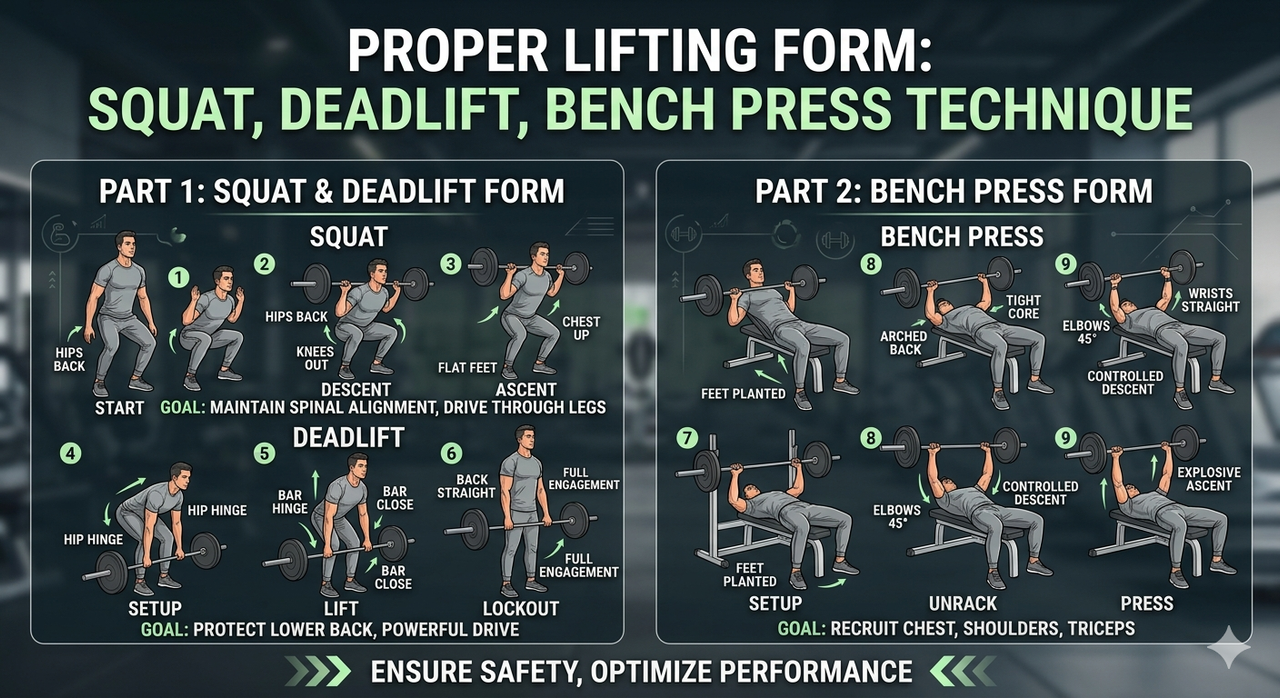
⚡ TL;DR
To fix bad workout form, follow this 4-step process: reduce weight by 30-50% immediately, slow down each rep (2-3 seconds lowering), record yourself to see errors, and learn proper technique from reputable sources. Common form mistakes include rounding back, knees caving, and using momentum. Proper lifting form prevents injuries (reduces risk by 50-70%), targets correct muscles, and enables progress. Spend 2-6 weeks retraining your form with light weights before increasing load .
1. The Ego Lifting Epidemic: Why Form Suffers
You see someone lifting heavy with terrible form. Maybe it's you. The desire to lift more weight often overrides the discipline to lift correctly. This fix bad workout form guide addresses the root causes of poor technique and provides actionable steps to improve exercise form. Proper lifting form isn't just about safety—it's about effectiveness. Bad form recruits the wrong muscles, limits progress, and eventually leads to injury .
How can I fix my workout form?
Fix your workout form by: starting with lighter weights (master form before adding load), focusing on slow and controlled movement (2-3 seconds lowering), using mirrors or recording yourself to self-correct, learning proper technique first before increasing intensity, and asking for guidance or watching tutorial videos from reputable sources.
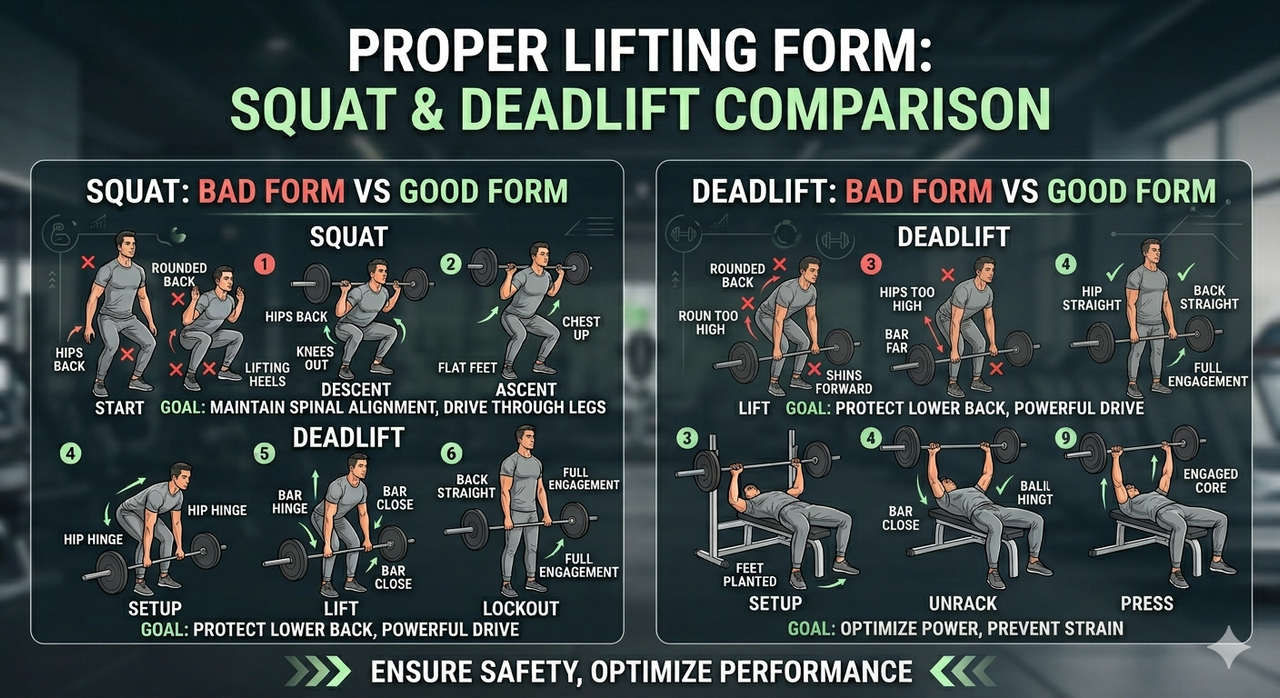
2. The Consequences of Bad Form
Poor technique has immediate and long-term consequences:
- Injury risk: Improper form increases injury risk by 50-70%
- Reduced muscle activation: Target muscles aren't properly stimulated
- Joint stress: Knees, lower back, shoulders take unnecessary load
- Plateaus: Bad form limits progressive overload potential
- Wasted time: Months of poor training produce minimal results
3. Common Form Mistakes by Exercise
Squat
- Mistake: Knees caving inward
- Fix: Push knees outward, keep them tracking over toes
- Mistake: Rounded lower back (butt wink)
- Fix: Stop at depth where back remains neutral, strengthen core
- Mistake: Heels lifting off ground
- Fix: Improve ankle mobility, use weightlifting shoes
Deadlift
- Mistake: Rounded back (spinal flexion)
- Fix: Maintain neutral spine, chest up, engage lats
- Mistake: Hips rising too fast
- Fix: Push through legs, hips and shoulders rise together
- Mistake: Bar too far from shins
- Fix: Keep bar over mid-foot, drag up shins
Bench Press
- Mistake: Flaring elbows (90 degrees to body)
- Fix: Tuck elbows 45-75 degrees from body
- Mistake: Bouncing bar off chest
- Fix: Control descent, light touch, then press
- Mistake: Feet not planted
- Fix: Drive through feet, maintain leg drive
📊 Quick Form Fixes Reference
4. How to Self-Correct Your Form
Correct workout technique requires feedback. Use these methods:
- Record your sets: Film from side and front angles. Watch in slow motion.
- Use mirrors strategically: Check alignment without turning head during lifts.
- Practice with empty barbell: Perfect form before adding weight.
- Work with a trainer: Even 1-2 sessions provides invaluable feedback.
- Compare to tutorials: Watch reputable sources (Alan Thrall, Juggernaut Training, Squat University).
5. The Form Reset Protocol (2-6 Weeks)
Follow this systematic approach to fix bad gym form:
- Week 1-2: Reduce weight to 50% of normal. Focus exclusively on slow, controlled reps. Record every set.
- Week 3-4: Increase to 70% weight. Maintain perfect form for all reps. If form breaks, reduce weight.
- Week 5-6: Progress to 85% weight. Only increase weight when you can maintain form for all sets.
- Ongoing: Record working sets weekly. If form degrades, reduce weight immediately.
6. Mobility and Form
Sometimes bad form isn't strength—it's mobility. Common restrictions:
- Ankle mobility: Limited dorsiflexion causes heels to lift in squats. Solution: elevate heels or ankle mobility drills.
- Hip mobility: Limited hip flexion causes rounded back in deadlifts. Solution: hip flexor stretches, deep squats with light weight.
- Thoracic mobility: Poor upper back extension leads to rounded shoulders. Solution: thoracic rotations, band pull-aparts.
- Shoulder mobility: Limits overhead pressing depth. Solution: shoulder dislocates, band work.
7. Nutrition to Support Form Retraining
Proper nutrition aids motor learning and recovery during form correction:
- Protein: 1.6-2.2 g/kg body weight (muscle repair and adaptation)
- Carbohydrates: 3-5 g/kg (energy for practice sessions)
- Hydration: 2.5-3.5 liters water (joint lubrication)
Sample Meal Plan for Form Practice (2,200 kcal)
- Breakfast: 3 eggs, 1 cup oats, 1 banana (550 kcal, 30g protein)
- Lunch: 150g chicken breast, 1.5 cups rice, 1 cup broccoli (550 kcal, 40g protein)
- Snack: 170g Greek yogurt, 1 apple (200 kcal, 18g protein)
- Dinner: 150g lean beef or salmon, 1.5 cups sweet potato, 2 cups spinach (550 kcal, 35g protein)
- Post-practice: 1 scoop whey, 1 banana (200 kcal, 25g protein)
- Total: ~2,050 kcal, ~148g protein
Vegan/Vegetarian Form Practice Plan
- Breakfast: Tofu scramble (150g tofu), 1 cup oats, 1 banana (500 kcal, 25g protein)
- Lunch: 1.5 cups lentils, 1 cup quinoa, 2 cups spinach, 1 tbsp olive oil (550 kcal, 25g protein)
- Snack: 1 cup edamame, 1 apple (200 kcal, 11g protein)
- Dinner: 150g tempeh, 1.5 cups brown rice, 2 cups broccoli, 1 tbsp olive oil (550 kcal, 30g protein)
- Post-practice: 1 scoop plant protein, 1 banana (200 kcal, 20g protein)
- Total: ~2,000 kcal, ~111g protein
Gluten-Free Options
- Use certified gluten-free oats
- Choose rice, quinoa, buckwheat
- Verify protein sources are gluten-free certified
8. Common Myths About Form
- Myth: "Perfect form" exists. Reality: Form varies by anatomy. Focus on safe, efficient mechanics for your body.
- Myth: Lighter weight always means better form. Reality: Light weight can hide form issues. Moderate weight (70-80%) reveals true technique.
- Myth: Form doesn't matter for isolation exercises. Reality: Poor form on curls, lateral raises still stresses joints incorrectly.
- Myth: You can't build muscle with perfect form. Reality: Proper form creates better muscle tension and activation.
9. When to Seek Professional Help
If you experience persistent pain despite form correction, consult:
- Physical therapist: For mobility restrictions or pain patterns
- Certified strength coach: For technique coaching
- Sports medicine doctor: For injury diagnosis
10. Frequently Asked Questions
How can I fix my workout form?
Fix your workout form by: starting with lighter weights (master form before adding load), focusing on slow and controlled movement (2-3 seconds lowering), using mirrors or recording yourself to self-correct, learning proper technique first before increasing intensity, and asking for guidance or watching tutorial videos from reputable sources.
What are common signs of bad form?
Common signs of bad form include: using momentum to lift (swinging weights), rounding back during squats or deadlifts, knees caving inward, not completing full range of motion, uneven bar path, pain during exercise (not muscle soreness), and inability to control weight on the way down.
Why is proper form important?
Proper form is crucial for: injury prevention (reduces risk by 50-70%), targeting the correct muscles (optimal muscle activation), efficient progress (better stimulus-to-fatigue ratio), long-term joint health, and being able to progressively overload safely. Bad form compensates with other muscles, reducing growth in target muscles.
How can I check my own form?
Check your own form by: recording your sets with a phone (watch back in slow motion), using gym mirrors (avoid turning head during lifts), practicing with empty barbell or light weights, working with a trainer occasionally for feedback, and comparing your form to instructional videos from reputable sources.
Should I lower weight to fix form?
Yes, absolutely. Reduce weight by 30-50% until you can perform the exercise with perfect form for all reps. Many people use ego-lifting weights that force bad form. Proper form with lighter weight is more effective and safer than heavy weight with poor technique. Form comes first, weight follows.
How long does it take to fix bad form?
Fixing bad form takes 2-6 weeks of focused practice, depending on how ingrained the habit is. Dedicate 1-2 weeks to practicing with light weight only (50% of normal). Then gradually increase weight while maintaining form. Consistent reinforcement is key—bad habits return quickly when fatigued or heavy.
11. Related Resources
- Best Rest Time Between Sets for Muscle Growth (Science-Based Guide)
- How Long Should a Workout Session Be? (Optimal Training Time Guide)
- How to Train Each Muscle Group Correctly (Complete Workout Guide)
- Beginner Mistakes in Workout Programs (Avoid These Common Errors)
- How Many Sets and Reps for Muscle Growth? (Optimal Training Guide)
- Best Weekly Workout Split for Beginners (Simple Training Plan)
12. Scientific References
- Escamilla, R. F., et al. (2001). Biomechanics of the knee during closed kinetic chain and open kinetic chain exercises. Medicine & Science in Sports & Exercise, 33(3), 432–441. PubMed
- Myer, G. D., et al. (2010). The back squat: A proposed assessment of functional deficits and technical factors that limit performance. Strength and Conditioning Journal, 32(6), 54–60. PubMed
- Morton, R. W., et al. (2018). A systematic review, meta-analysis and meta-regression of the effect of protein supplementation on resistance training-induced gains in muscle mass and strength. British Journal of Sports Medicine, 52(6), 376–384. PubMed
- ACSM. (2021). Nutrition and Athletic Performance. Medicine & Science in Sports & Exercise, 53(3), 600–618. PubMed
Join the conversation