How to Progress in the Gym Step by Step (Progressive Overload Guide)

Learn how to progress in the gym step by step using progressive overload to build strength and muscle effectively.
How to Progress in the Gym Step by Step: Progressive Overload Guide (2026)
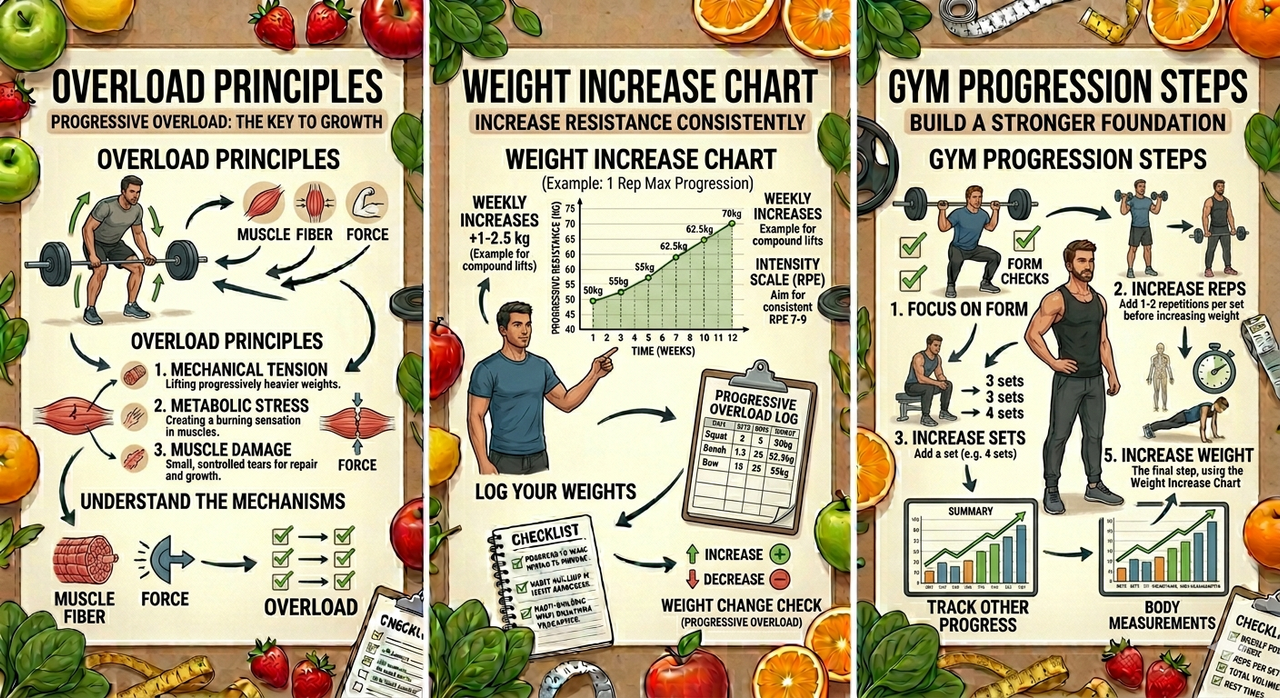
How to Progress in the Gym Step by Step: Progressive Overload Guide (2026)

Progressive overload guide infographic showing weight increase, rep progression, and gym progression steps
Image 1: Progressive overload is the fundamental principle of strength and muscle growth.

⚡ TL;DR

To progress in the gym, you must apply progressive overload—gradually increasing training demands. This progressive overload guide covers five methods: increase weights (2.5-5 kg when hitting target reps), increase reps or sets (add 1-2 reps or 1 set weekly), improve form (better control, range of motion), reduce rest time (90 to 60 seconds), and track workouts to ensure progression. Without overload, muscles have no reason to grow. Start with small increments, track everything, and progress weekly .

1. The Plateau Problem: Why Your Gains Have Stopped

You've been consistent. You show up. But the scale won't budge, and your lifts haven't increased in weeks. You've hit a plateau—and the culprit is almost always the same: lack of progressive overload. Understanding how to progress in the gym is the difference between spinning your wheels and continuous improvement. This progressive overload guide provides a systematic approach to how to get stronger in gym and build muscle consistently.

How do you progress in the gym step by step?

Progress in the gym step by step by: increasing weights gradually (2.5-5 kg when you hit target reps), increasing reps or sets (add 1-2 reps or 1 set weekly), improving exercise form (more control, better range of motion), reducing rest time (from 90 to 60 seconds), and tracking your workouts to ensure progression. This is the principle of progressive overload.
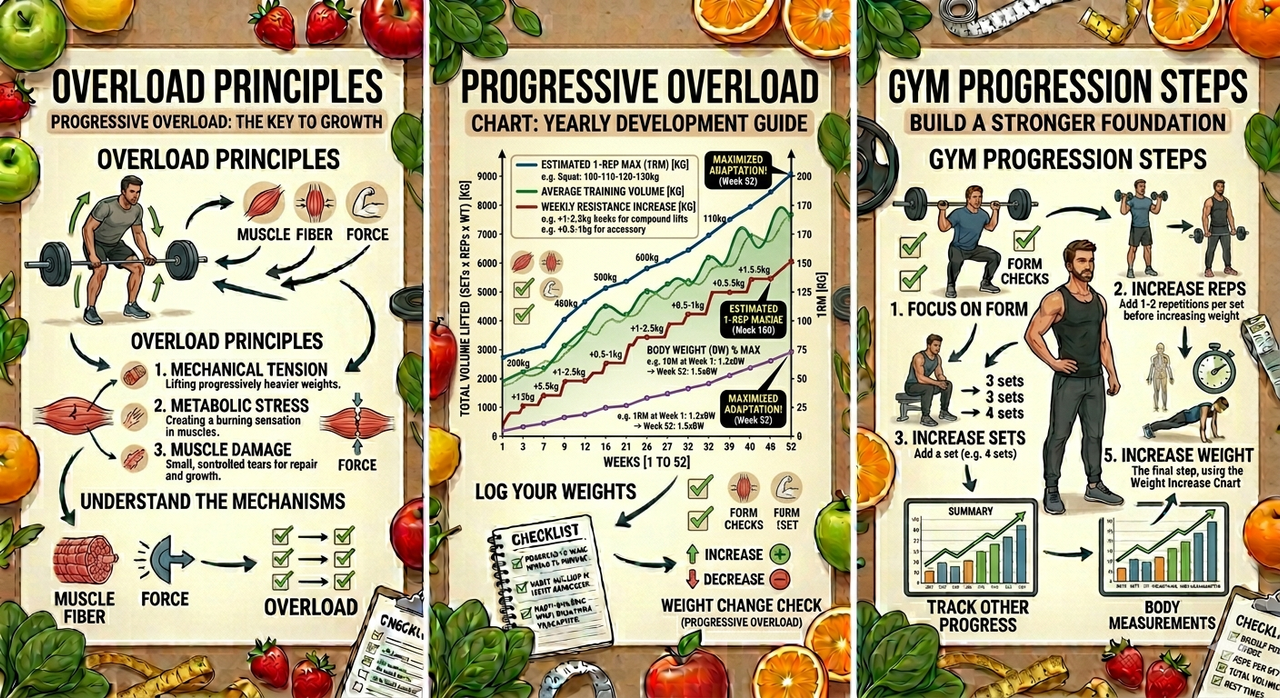
Weight progression chart showing how to increase weights in gym over time for muscle progression plan
Image 2: Progressive overload requires systematic increases in training demands over time.

2. What Is Progressive Overload? The Science

Progressive overload is the gradual increase of stress placed on the body during exercise. It's the fundamental principle of strength and muscle growth. Without it, muscles adapt to the current workload and stop growing . The body adapts to stress in three phases:

  • Alarm phase: Initial stress from training (muscle damage, fatigue)
  • Resistance phase: Body adapts by building more muscle and strength
  • Exhaustion phase: If no new stress is applied, adaptation plateaus
💡 Key Insight: Your muscles don't know how much weight you're lifting—they only know tension. Progressive overload can be achieved through weight, reps, sets, tempo, or rest periods.

3. Method 1: Increase Weight (Linear Progression)

This is the most straightforward method. For beginners, aim to add 2.5-5 kg (5-10 lbs) to compound lifts weekly when you can complete all reps with good form. For isolation exercises, add 1-2.5 kg (2.5-5 lbs) .

📊 Sample Weight Progression (12 weeks)

.= "1" ? '1' : '' ?>1 .= "2" ? '2' : '' ?>2 .= "3" ? '3' : '' ?>3 .= "..." ? '...' : '' ?>... .= "12" ? '12' : '' ?>12

4. Method 2: Increase Reps or Sets (Volume Progression)

When you can't add weight, add reps or sets. This is called double progression. Example:

  • Week 1-2: 70 kg × 6 reps (3 sets)
  • Week 3-4: 70 kg × 7 reps (3 sets)
  • Week 5-6: 70 kg × 8 reps (3 sets)
  • Week 7: Increase to 75 kg × 6 reps

Research shows increasing volume (sets × reps × weight) is a primary driver of hypertrophy .

5. Method 3: Improve Form and Tempo

Better form increases muscle tension without adding weight. Focus on:

  • Full range of motion: Squat to depth, full stretch on rows
  • Controlled eccentrics: 2-3 second lowering phase
  • Pause at stretch: 1-second pause at the bottom of bench press, squat
  • Mind-muscle connection: Actively squeeze the target muscle

6. Method 4: Reduce Rest Periods

Shorter rest increases metabolic stress and improves work capacity. Progression example:

  • Week 1-2: 90 seconds rest between sets
  • Week 3-4: 75 seconds rest between sets
  • Week 5-6: 60 seconds rest between sets

Keep weight the same initially; as you adapt, you can increase weight again .

7. How to Track Gym Progress

Gym progression tips start with tracking. Log every workout:

  • Exercise: Bench press
  • Weight used: 70 kg
  • Reps achieved: 8, 8, 7 (3 sets)
  • How it felt: RPE 8 (2 reps left in tank)
  • Weekly volume: Sets × reps × weight = total volume
💡 Pro Tip: Use a notebook, spreadsheet, or app. Review weekly to ensure progression. If you haven't progressed in 2-3 weeks, change variables.

8. Sample 12-Week Progressive Overload Plan

Full Body Routine (3 days/week)

  • Weeks 1-4: Focus on form, 3 sets of 8-10 reps, 90 sec rest. Add weight weekly.
  • Weeks 5-8: Increase to 4 sets, 8-10 reps, 75 sec rest. Add weight every 2 weeks.
  • Weeks 9-12: 3-4 sets, 6-8 reps (heavier weight), 90 sec rest. Add weight weekly.

9. Nutrition for Progressive Overload

To support progression, you need adequate fuel:

  • Protein: 1.6-2.2 g per kg body weight (muscle repair)
  • Calories: Slight surplus for muscle gain (250-500 kcal above maintenance)
  • Carbs before workout: 30-60g for energy
  • Hydration: 2.5-3.5 liters daily

Sample Pre-Workout Meal (1 hour before)

  • 1 banana + 1 tbsp peanut butter (200 kcal)
  • OR 1 cup oats + 1 scoop protein (400 kcal)

10. Common Progression Mistakes

  • Adding weight too fast: Sacrifices form, increases injury risk
  • No tracking: Can't progress what you don't measure
  • Inconsistent training: Missed sessions disrupt overload cycles
  • Poor sleep: 7-9 hours needed for recovery and adaptation
  • No deload weeks: Take a light week every 8-10 weeks to prevent overtraining
  • Ignoring small muscles: Isolation exercises still need progression

11. Frequently Asked Questions

How do you progress in the gym step by step?

Progress in the gym step by step by: increasing weights gradually (2.5-5 kg when you hit target reps), increasing reps or sets (add 1-2 reps or 1 set weekly), improving exercise form (more control, better range of motion), reducing rest time (from 90 to 60 seconds), and tracking your workouts to ensure progression. This is the principle of progressive overload.

What is progressive overload?

Progressive overload is the gradual increase of stress placed on the body during exercise training. It's the fundamental principle of strength and muscle growth. Without progressive overload, muscles have no reason to adapt and grow. Methods include increasing weight, reps, sets, or reducing rest periods.

How often should I increase weights?

Beginners can increase weights every 1-2 weeks. Aim to add 2.5-5 kg (5-10 lbs) to compound lifts when you can complete all reps with good form. For isolation exercises, add 1-2.5 kg (2.5-5 lbs). If you can't add weight, increase reps first, then weight.

What if I can't increase weight anymore?

If you can't increase weight, try these alternatives: increase reps (e.g., 8 to 10 reps), increase sets (3 to 4 sets), reduce rest time (90 to 60 seconds), improve form and tempo (3-second lowering), or change exercise variation (barbell to dumbbell). This is called double progression.

How do I track gym progress?

Track gym progress by: logging every workout (exercise, weight, reps, sets), monitoring weekly volume (sets × reps × weight), taking progress photos monthly, tracking body weight weekly, and noting how workouts feel (energy, recovery). Use a notebook, spreadsheet, or tracking app.

Why am I not progressing in the gym?

Common reasons for stalled progress: inconsistent training (missing sessions), insufficient protein or calories, poor sleep (less than 7 hours), no progressive overload (same weights every week), overtraining (no deload weeks), or improper form (not targeting muscles correctly).

12. Related Resources

13. Scientific References

  1. Schoenfeld, B. J. (2010). The mechanisms of muscle hypertrophy and their application to resistance training. Journal of Strength and Conditioning Research, 24(10), 2857–2872. PubMed
  2. Schoenfeld, B. J., et al. (2017). Effects of different weekly sets-equated resistance training frequencies on muscular strength, muscle hypertrophy, and body composition. Journal of Strength and Conditioning Research, 31(12), 3271–3278. PubMed
  3. Morton, R. W., et al. (2018). A systematic review, meta-analysis and meta-regression of the effect of protein supplementation on resistance training-induced gains in muscle mass and strength. British Journal of Sports Medicine, 52(6), 376–384. PubMed
  4. Helms, E. R., et al. (2014). Evidence-based recommendations for natural bodybuilding contest preparation. Journal of the International Society of Sports Nutrition, 11(1), 20. PubMed
  5. ACSM. (2021). Nutrition and Athletic Performance. Medicine & Science in Sports & Exercise, 53(3), 600–618. PubMed
FitForge Lab. Created by Techly420
FitForge Lab Welcome to WhatsApp chat
Hi! Need help with fitness or diet? 💪
Type here...
WeekBench PressSquatDeadlift
50 kg × 8 reps60 kg × 8 reps70 kg × 5 reps
52.5 kg × 8 reps62.5 kg × 8 reps72.5 kg × 5 reps
55 kg × 8 reps65 kg × 8 reps75 kg × 5 reps
.........
75 kg × 8 reps90 kg × 8 reps105 kg × 5 reps