How to Train When You Feel Tired (Smart Workout Strategies)

Learn how to train when you feel tired with smart strategies to stay consistent without overtraining.
How to Train When You Feel Tired: Smart Workout Strategies (2026)
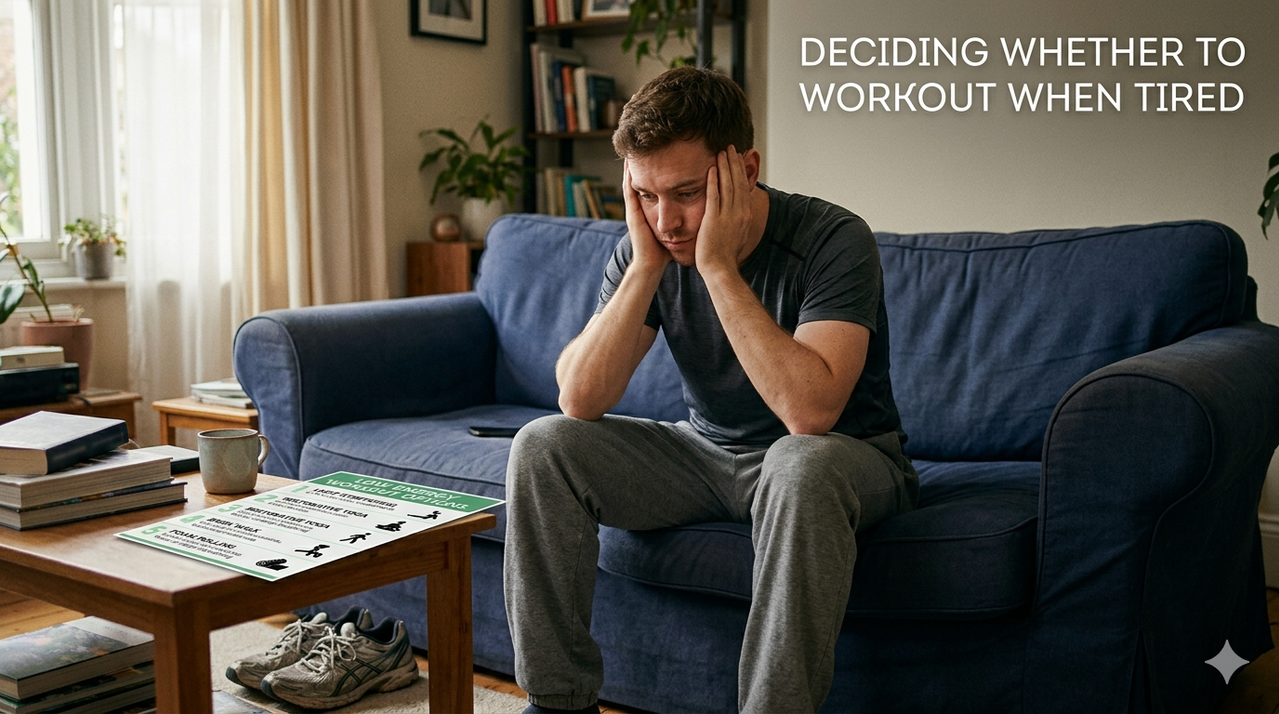
How to Train When You Feel Tired: Smart Workout Strategies (2026)

Smart workout strategies for training when tired showing low energy workout modifications and fatigue management
Image 1: Training when tired requires smart adjustments—learn when to push through and when to rest.

⚡ TL;DR

Learning how to train when you feel tired is essential for long-term fitness success. On mild fatigue days: reduce intensity (50-70% of normal), shorten workouts (30 minutes), and focus on technique. On severe exhaustion days (fever, <5 hours sleep, body aches): rest. Low energy workout tips include prioritizing compound movements, increasing rest periods, and using caffeine strategically. The key is distinguishing between "tired" and "overtrained." Training smart when fatigued maintains consistency while preventing injury .

1. The Fatigue Dilemma: Push Through or Rest?

You had a long day. Sleep was poor. Energy is low. But your workout is scheduled. What do you do? This dilemma—should I workout when tired—faces every fitness enthusiast. The answer isn't black and white. Learning how to exercise when tired requires understanding your body's signals. This guide provides fatigue training tips to help you make smart decisions and adapt workouts when energy is low.

Should you work out when you feel tired?

Should you work out when you feel tired? Yes if fatigue is mild (reduce intensity, shorten workout, focus on technique). No if exhaustion is severe (take a rest day). Signs to skip: fever, body aches, dizziness, persistent muscle soreness, sleep deprivation (<5 hours). On moderate fatigue days: reduce weight by 30-50%, cut volume by 50%, or do active recovery instead.
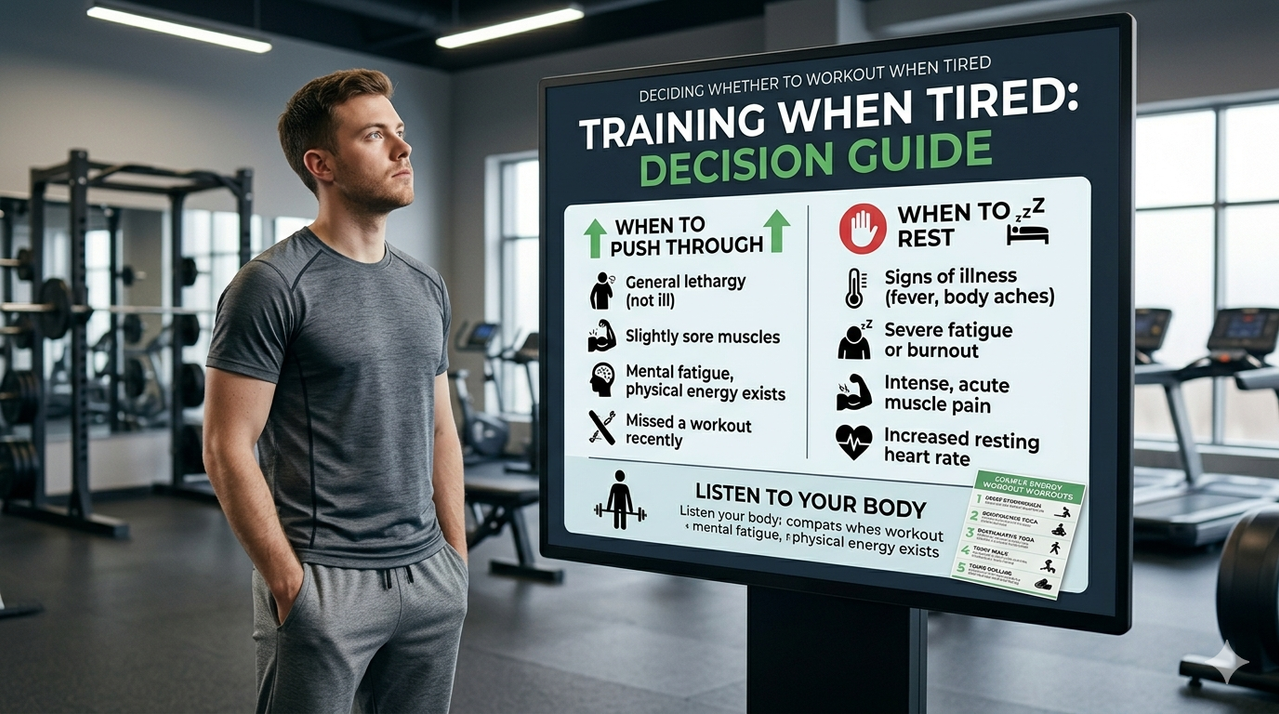
Decision guide for training when tired showing when to push through vs rest for workout fatigue management
Image 2: Use this guide to decide whether to train or rest based on fatigue level.

2. The Science of Fatigue: What's Happening in Your Body

Fatigue isn't just "feeling tired." It has physiological causes:

  • Central fatigue: Reduced neural drive from brain to muscles (mental exhaustion, lack of motivation)
  • Peripheral fatigue: Muscle-specific (glycogen depletion, metabolite accumulation)
  • Systemic fatigue: Illness, inflammation, hormonal imbalances

📊 Fatigue Types and Training Response

.= "Mild (lack of sleep, long day)" ? 'Mild (lack of sleep, long day)' : '' ?>Mild (lack of sleep, long day) .= "Moderate (poor sleep 2+ nights)" ? 'Moderate (poor sleep 2+ nights)' : '' ?>Moderate (poor sleep 2+ nights) .= "Severe (sickness, <5hrs sleep)" ? 'Severe (sickness, <5hrs sleep)' : '' ?>Severe (sickness, <5hrs sleep)

3. When to Train Through Fatigue

Workout when fatigued is appropriate when:

  • You're simply "tired" but not in pain
  • Sleep was slightly less than optimal (6-7 hours vs 8)
  • You had a long day at work but no physical exhaustion
  • You feel unmotivated but not physically ill
  • You've been consistent and this is an off-day

4. When to Skip the Workout

Gym motivation when tired shouldn't override health. Skip when:

  • Fever (temperature >38°C / 100.4°F)
  • Body aches (flu-like symptoms)
  • Dizziness or lightheadedness
  • Persistent joint or muscle pain (not normal soreness)
  • Sleep deprivation (<5 hours for 2+ consecutive nights)
  • Elevated resting heart rate (10+ bpm above normal)
⚠️ Important: Training when sick with fever can lead to myocarditis (heart inflammation). Above the neck (cold, congestion) is usually fine; below the neck (fever, body aches) requires rest.

5. Smart Modifications for Low-Energy Days

Low energy workout tips to maintain consistency:

5.1. Reduce Intensity

Use 50-70% of your normal working weight. Focus on perfect form. You'll still get benefit without taxing recovery.

5.2. Cut Volume

Reduce sets from 4 to 2, or reps from 10 to 6. A 20-30 minute workout beats no workout.

5.3. Increase Rest Periods

Rest 90-120 seconds between sets instead of 60 seconds. This allows more recovery between efforts.

5.4. Prioritize Compound Movements

Focus on squats, deadlifts, bench press, rows—get more "bang for your buck" with fewer exercises.

5.5. Do Active Recovery

Walk for 20-30 minutes, light stretching, foam rolling, or yoga instead of strength training.

💡 The "5-Minute Rule": Commit to just 5 minutes of movement. If you still feel terrible, stop and rest. Most people continue because starting is the hardest part.

6. Sample Low-Energy Workout (30 Minutes)

  • Warm-up (5 min): Light cardio, dynamic stretches
  • Squats: 3 sets of 8-10 reps at 60% normal weight (rest 90 sec)
  • Push-ups or bench press: 3 sets of 8-10 reps at 60% normal weight
  • Rows or pull-ups: 3 sets of 8-10 reps
  • Plank: 3 sets of 30 seconds
  • Cool-down (5 min): Light stretching

7. Nutrition to Combat Training Fatigue

What you eat before and after training affects energy levels:

  • Pre-workout (30-60 min before): Easily digestible carbs + protein (banana + peanut butter, Greek yogurt + honey)
  • Caffeine: 100-200mg (coffee or tea) 30-60 minutes before if tolerated
  • Hydration: 500ml water 1-2 hours before, plus electrolytes if sweating heavily
  • Post-workout: Protein + carbs for recovery (whey + banana)

Sample Pre-Workout Snacks for Low Energy

  • 1 banana + 1 tbsp peanut butter (200 kcal, 7g protein)
  • 170g Greek yogurt + 1 tsp honey (150 kcal, 18g protein)
  • 1 scoop protein + 1 cup water + ½ banana (200 kcal, 25g protein)
  • 1 slice whole grain toast + 1 egg (150 kcal, 8g protein)

Vegan/Vegetarian Pre-Workout Options

  • 1 banana + 1 tbsp almond butter (200 kcal)
  • 1 cup soy yogurt + 1 tbsp maple syrup (200 kcal, 10g protein)
  • 1 scoop plant protein + 1 cup oat milk + ½ banana (250 kcal, 25g protein)
  • 1 rice cake + 2 tbsp hummus (150 kcal, 4g protein)

Gluten-Free Options

  • Use certified gluten-free oats or rice cakes
  • Choose gluten-free bread or rice crackers
  • Verify protein powders are gluten-free certified

8. Natural Energy Boosters Before Training

How to exercise when tired often starts with a pre-workout energy boost:

  • Cold water: Drinking cold water activates the nervous system and increases alertness
  • Upbeat music: Listening to fast-paced music increases motivation and perceived energy
  • Light movement: 5-minute walk or dynamic stretches increases blood flow
  • Caffeine (coffee/tea): 30-60 minutes before training (don't exceed 400mg daily)
  • Bright light exposure: 5-10 minutes of natural or bright artificial light

9. Recovery Strategies to Prevent Fatigue

The best way to train when tired is to prevent excessive fatigue:

  • Sleep: 7-9 hours nightly. Sleep deprivation is the #1 cause of training fatigue
  • Deload weeks: Every 8-10 weeks, reduce volume by 40-50% for one week
  • Nutrition: Adequate protein (1.6-2.2 g/kg) and carbohydrates (4-7 g/kg)
  • Stress management: Chronic stress elevates cortisol, increasing fatigue
  • Hydration: Even 2% dehydration reduces performance significantly

10. Sample Weekly Schedule with Fatigue Management

  • Monday (high energy): Full workout (100% intensity)
  • Tuesday (moderate energy): Full workout (90% intensity)
  • Wednesday (low energy): Light workout (50% intensity) or active recovery
  • Thursday (high energy): Full workout (100% intensity)
  • Friday (moderate energy): Full workout (90% intensity)
  • Saturday (low energy): Light cardio or stretching
  • Sunday: Complete rest

11. Frequently Asked Questions

Should you work out when you feel tired?

Yes if fatigue is mild (reduce intensity, shorten workout, focus on technique). No if exhaustion is severe (take a rest day). Signs to skip: fever, body aches, dizziness, persistent muscle soreness, sleep deprivation (<5 hours). On moderate fatigue days: reduce weight by 30-50%, cut volume by 50%, or do active recovery instead.

How do I train when I'm tired?

Train when tired by: reducing intensity (use 50-70% of normal weight), shortening workout (30 minutes instead of 60), focusing on technique over performance, prioritizing compound movements, increasing rest between sets (90-120 seconds), and listening to your body. A 20-minute light session beats skipping entirely.

Is it bad to workout when tired?

It depends. Mild fatigue is fine—training can actually boost energy. Severe fatigue with signs of overtraining (elevated resting heart rate, persistent soreness, irritability, poor sleep) requires rest. Training when overtaxed increases injury risk by 50% and impairs recovery. Learn the difference between 'tired' and 'exhausted'.

What should I eat before a workout when tired?

Eat easily digestible carbs + protein 30-60 minutes before: banana with peanut butter (200 kcal), Greek yogurt with honey (250 kcal), protein shake with fruit (300 kcal), or oatmeal with berries (350 kcal). Avoid heavy fats or large meals that slow digestion. Hydrate with 500ml water 1-2 hours prior.

How can I boost energy before a workout?

Boost energy naturally by: drinking cold water (activates nervous system), listening to upbeat music (increases motivation), doing light movement (5-minute walk or dynamic stretches), consuming caffeine (coffee or tea, 30-60 min before), eating a small carb snack, and ensuring adequate sleep the night before.

When should I take a rest day instead of training?

Take a rest day when: you have a fever or illness, severe sleep deprivation (<5 hours for 2+ nights), persistent joint pain, extreme muscle soreness (can't perform daily tasks), elevated resting heart rate (10+ bpm above normal), or mental exhaustion. Rest is productive—overtraining leads to injury and burnout.

12. Related Resources

13. Scientific References

  1. Fullagar, H. H., et al. (2015). Sleep and athletic performance: the effects of sleep loss on exercise performance, and physiological and cognitive responses to exercise. Sports Medicine, 45(2), 161–186. PubMed
  2. Meeusen, R., et al. (2013). Prevention, diagnosis, and treatment of the overtraining syndrome: joint consensus statement of the European College of Sport Science and the American College of Sports Medicine. Medicine & Science in Sports & Exercise, 45(1), 186–205. PubMed
  3. Kreher, J. B., & Schwartz, J. B. (2012). Overtraining syndrome: a practical guide. Sports Health, 4(2), 128–138. PubMed
  4. Morton, R. W., et al. (2018). A systematic review, meta-analysis and meta-regression of the effect of protein supplementation on resistance training-induced gains in muscle mass and strength. British Journal of Sports Medicine, 52(6), 376–384. PubMed
  5. ACSM. (2021). Nutrition and Athletic Performance. Medicine & Science in Sports & Exercise, 53(3), 600–618. PubMed
FitForge Lab. Created by Techly420
FitForge Lab Welcome to WhatsApp chat
Hi! Need help with fitness or diet? 💪
Type here...
Fatigue TypeSymptomsTraining Decision
Low energy but no painModify: reduce intensity 30-50%
Fatigue, some sorenessLight workout or active recovery
Fever, body aches, dizzinessRest day (training would be harmful)