Best Low-Calorie Foods That Keep You Full Longer (Top Filling Foods List)
Best Low-Calorie Foods That Keep You Full Longer (Top Filling Foods List)
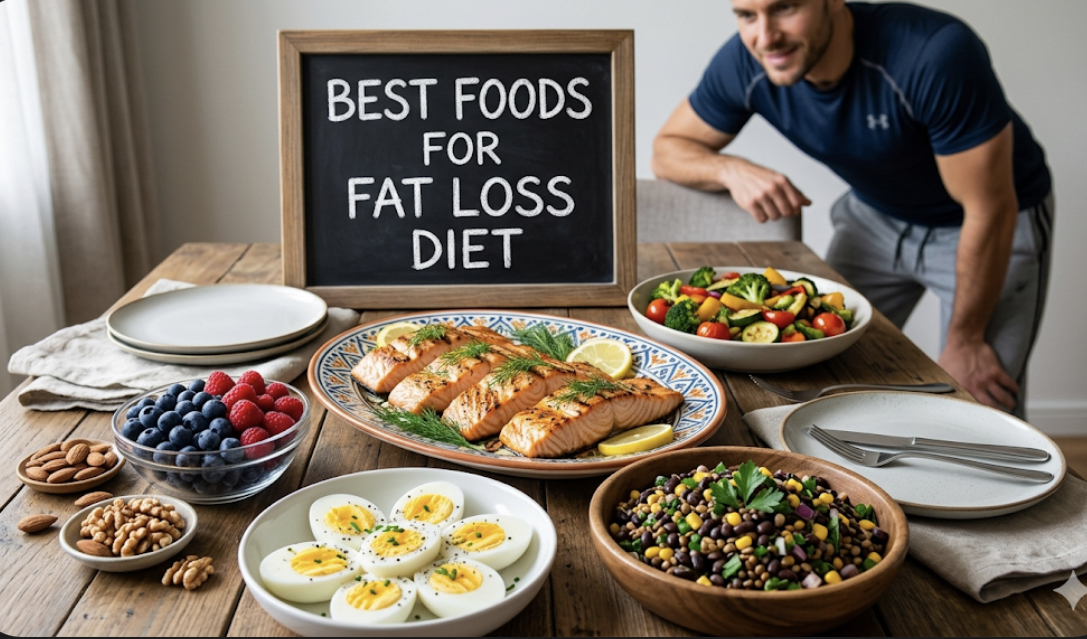
⚡ TL;DR – Top Filling Foods List
The most satiating low calorie foods that fill you up are those high in protein, fiber, or water. Foods like eggs, oats, potatoes, legumes, Greek yogurt, and leafy greens score highest on the satiety index. They work by slowing digestion, stretching the stomach, and regulating hunger hormones. This guide lists 25+ foods with meal ideas, vegan swaps, and a sample full day of eating to keep you full on fewer calories.
1. Why Some Foods Keep You Full – The Science of Satiety
Not all calories are equal when it comes to hunger. 200 calories from oatmeal will keep you full for hours, while 200 calories from soda disappear in minutes. The key is choosing foods that keep you full longer by influencing appetite hormones and gastric emptying. This article reveals the best options backed by research.
What foods keep you full the longest?
According to the satiety index and clinical studies, the foods that keep you full longest are those with high protein and high fiber content. Boiled potatoes, eggs, oatmeal, fish, and legumes top the list (Holt et al., 1995). They delay gastric emptying, stimulate PYY and GLP-1, and provide steady energy.

2. The Satiety Index: Ranking the Most Filling Foods
In 1995, researchers developed the satiety index by feeding participants 240-calorie portions of 38 foods and rating fullness every 15 minutes. Boiled potatoes scored the highest (323%), followed by fish (225%), oatmeal (209%), and oranges (202%) (Holt et al., 1995). These best foods for fat loss diet are now staples for appetite control.
2.1 How Satiety Works
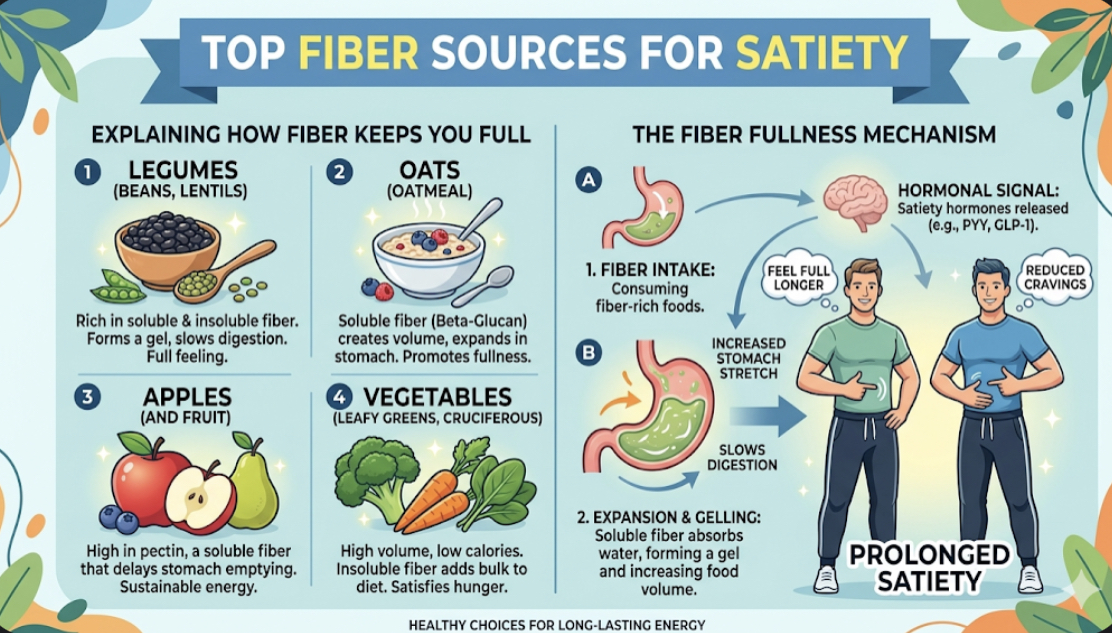
Satiety depends on: protein content (increases PYY), fiber (slows digestion), water volume (stomach stretch), and glycemic load (stable blood sugar).
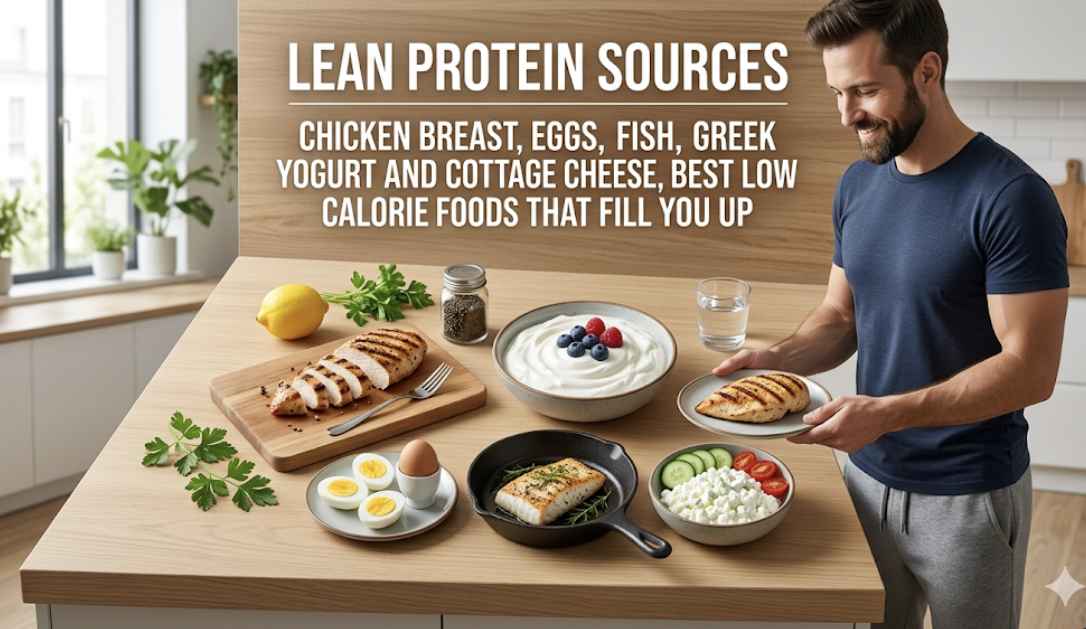
3. Top 25 Low-Calorie Foods That Keep You Full
3.1 Protein-Rich Champions
- Eggs: One large egg = 70 kcal, 6g protein. Breakfast eggs reduce ghrelin for 24h (Ratliff et al., 2010).
- Greek yogurt (0%): 150g = 80 kcal, 15g protein. High casein = slow digestion.
- Chicken breast: 100g = 165 kcal, 31g protein. Leanest, most filling meat.
- Cottage cheese: 200g = 160 kcal, 28g protein. Excellent pre-bed snack.
- Fish (cod, tuna): 150g = 120 kcal, 30g protein. High satiety per calorie.
3.2 Fiber-Packed Vegetables & Legumes
- Potatoes (boiled): #1 on satiety index. 150g = 120 kcal, 4g fiber, high resistant starch when cooled.
- Lentils: 200g cooked = 230 kcal, 18g protein, 16g fiber. Super-satiating.
- Broccoli: 100g = 34 kcal, 2.6g fiber. Volume eater's dream.
- Cauliflower: Can replace rice/mash. 100g = 25 kcal.
- Spinach/kale: Unlimited volume, micronutrient dense.
3.3 Fruits with Staying Power
- Apples: One medium = 95 kcal, 4g fiber. Pectin increases fullness.
- Oranges: High water and fiber, slow eating.
- Berries: 100g = 50 kcal, 2-3g fiber. Antioxidant boost.
3.4 Whole Grains & Seeds
- Oats: 40g dry = 150 kcal, 5g protein, 4g fiber. Beta-glucan = satiety.
- Quinoa: 150g cooked = 180 kcal, 6g protein, 5g fiber.
- Popcorn (air-popped): 3 cups = 100 kcal, 3.6g fiber. Best low-cal snack.
- Chia seeds: 1 tbsp = 60 kcal, 3g fiber, 2g protein. Expands in stomach.
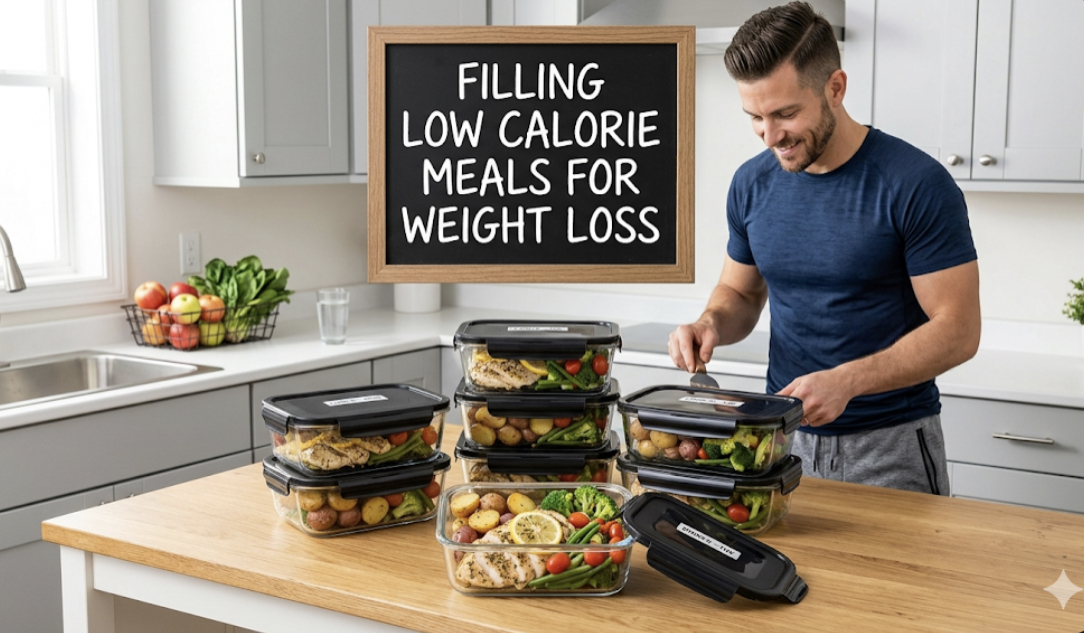
4. Sample Full Day of Filling Low-Calorie Meals
~1500 kcal day designed to maximize satiety (adjust portions for your needs).
- Breakfast (7:30): 2 boiled eggs + 40g oats cooked with water + 100g berries (350 kcal, 22g protein, 8g fiber).
- Snack (10:30): 150g Greek yogurt + 1 apple (200 kcal, 18g protein, 5g fiber).
- Lunch (13:30): 150g grilled chicken + 200g boiled potatoes (cooled) + 200g broccoli (400 kcal, 40g protein, 10g fiber).
- Snack (16:30): 1 cup air-popped popcorn + herbal tea (100 kcal, 3g fiber).
- Dinner (19:30): 150g white fish + 200g cauliflower rice + 100g lentils (450 kcal, 45g protein, 12g fiber).
Total: ~1500 kcal, 125g protein, 38g fiber.
4.1 Vegan/Vegetarian Version
- Breakfast: Tofu scramble (150g firm tofu) + oats with berries.
- Lunch: 200g cooked lentils + quinoa + roasted veggies.
- Dinner: 200g tempeh + sweet potato + spinach.
- Snacks: Apple with peanut butter powder, chia pudding.
4.2 Gluten-Free Options
- Use certified oats, quinoa, buckwheat, or rice.
- Ensure protein sources are unprocessed.
5. Three Quick Filling Recipes
5.1 Satiety Smoothie (350 kcal, 30g protein)
200ml unsweetened almond milk, 1 scoop pea protein, 30g oats, 50g spinach, 100g frozen berries – blend.
5.2 Loaded Potato Bowl (400 kcal)
200g boiled potatoes (chilled), 150g canned tuna, 100g Greek yogurt, chopped cucumber and dill.
5.3 Lentil Veggie Soup (300 kcal, 18g fiber)
Sauté onion, garlic, carrot; add 200g canned tomatoes, 100g dry lentils, 500ml veg stock; simmer 30 min.
6. Frequently Asked Questions
What are the best low-calorie foods that keep you full?
Boiled potatoes, eggs, oats, lentils, Greek yogurt, fish, and apples consistently rank highest for satiety per calorie.
Can fruit keep you full?
Yes – apples, oranges, and berries have high water and fiber, slowing digestion. Pair with protein for longer fullness.
Are potatoes good for weight loss?
Absolutely. Boiled potatoes are the most satiating food. Eat them cooled to increase resistant starch.
What keeps you full longer – protein or fat?
Protein has the highest satiety effect, followed by fiber, then fat. Fat is calorie-dense, so use moderate amounts.
How can I stay full without eating many calories?
Focus on volume: non-starchy veggies, broth soups, and high-protein foods. Drink water before meals.
7. Related Resources
- Low-Intensity Walking for Fat Loss: Simple Strategy to Burn More Fat
- How to Handle Hunger Pangs During a Strict Cutting Phase (Athlete’s Guide)
- Intermittent Fasting for Bodybuilders: Pros, Cons, and Muscle-Building Truth
- How to Lose Belly Fat Without Losing Muscle (Science-Based Guide)
- Why You’re Not Losing Fat Despite Eating Clean (7 Science-Backed Reasons)
8. Scientific References
- Holt, S. H., et al. (1995). A satiety index of common foods. European Journal of Clinical Nutrition, 49(9), 675–690. PubMed
- Ratliff, J., et al. (2010). Eggs modulate the metabolic response to a carbohydrate-restricted diet. Nutrition Research, 30(9), 609–616. PubMed
- Westerterp-Plantenga, M. S., et al. (2012). Dietary protein, metabolism, and body-weight regulation. American Journal of Clinical Nutrition, 95(2), 297–304. PubMed
- Slavin, J. L., & Green, H. (2007). Dietary fibre and satiety. Nutrition Bulletin, 32(s1), 32–42. Wiley
- Rolls, B. J., et al. (2004). Volume of food consumed affects satiety in men. American Journal of Clinical Nutrition, 79(6), 962–968. PubMed
- Paddon-Jones, D., et al. (2008). Protein, weight management, and satiety. American Journal of Clinical Nutrition, 87(5), 1558S–1561S. PubMed
- Howarth, N. C., et al. (2001). Dietary fiber and weight regulation. Nutrition Reviews, 59(5), 129–139. PubMed
- Leidy, H. J., et al. (2015). The role of protein in weight loss and maintenance. American Journal of Clinical Nutrition, 101(6), 1320S–1329S. PubMed
Join the conversation