Why You’re Not Losing Fat Despite Eating Clean (7 Science-Backed Reasons)
Why You Are Not Losing Fat Despite Eating Clean

⚡ TL;DR
If you're wondering why you are not losing fat despite eating clean, the answer isn't simple willpower—it's physiology. Research shows that even "healthy" foods can sabotage fat loss through hidden calories, deceptive portions, and metabolic adaptation . A 2025 NIH study confirms that weight loss reduces total energy expenditure by 10-20%, a phenomenon called adaptive thermogenesis . Additionally, your Non-Exercise Activity Thermogenesis (NEAT) can drop unconsciously when you diet, costing you up to 200-300 calories daily . This guide reveals the 7 hidden reasons your fat loss has stalled and provides actionable solutions—from portion strategies to NEAT optimization—so you can finally break through the plateau.
1. The Clean Eating Paradox: Doing Everything "Right" and Getting Nowhere
You've done everything right. You swapped white bread for whole grain, replaced soda with sparkling water, and filled your plate with kale, quinoa, and chicken breast. You're "eating clean." Yet the scale refuses to budge. Your jeans fit the same. The reflection in the mirror hasn't changed.
This frustrating scenario is more common than you think, and it's not a failure of willpower. The answer to why you are not losing fat despite eating clean lies in a complex interplay of physiology, psychology, and hidden variables that most diet advice ignores. A 2026 EatingWell report confirms that even nutrient-dense foods can hinder weight loss if they provide more energy than your body needs . This guide uncovers the science-backed reasons behind the plateau and provides a roadmap to restart your progress.
2. The Science: Your Body Fights Back
2.1. Metabolic Adaptation: The 2025 NIH Breakthrough
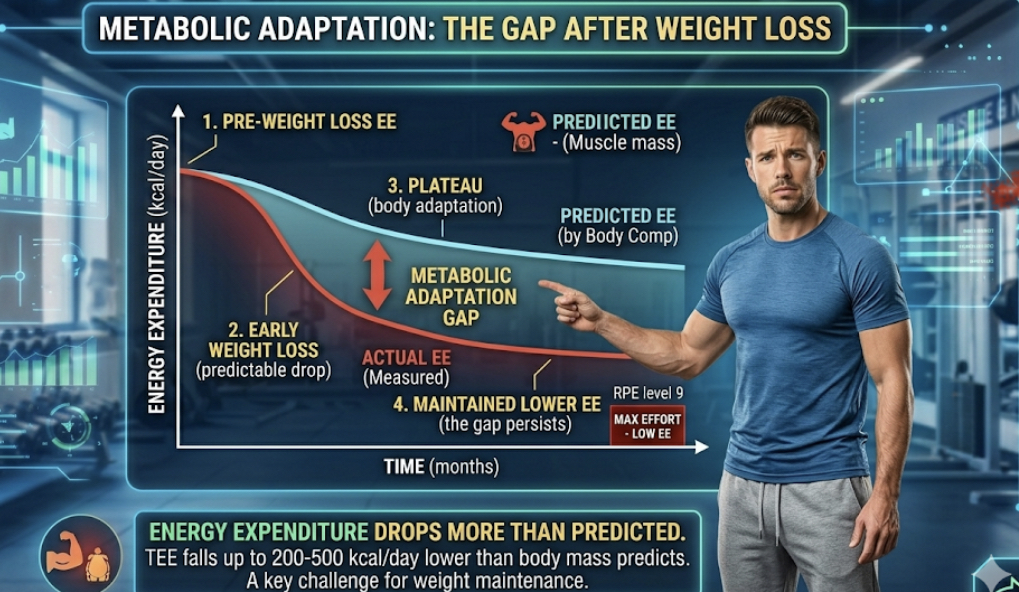
A landmark 2025 study published in Cell Reports Medicine confirms that weight loss triggers a powerful defense mechanism called adaptive thermogenesis . When you lose weight, your total energy expenditure drops by 10-20% more than expected based on your new body composition. This means if you lose 10 kg, your metabolism burns 200-400 fewer calories daily than it "should" . Your body becomes hyper-efficient, fighting to regain the lost weight.
2.2. The "Biggest Loser" Phenomenon
Research on contestants from "The Biggest Loser" revealed that metabolic adaptation persists for years. Participants burned about 500 fewer calories daily than predicted, even six years after the show . This explains why weight loss plateaus are not imaginary—they're physiological.
2.3. Hormonal Resistance
Prolonged dieting alters hunger hormones. Leptin (satiety) plummets, while ghrelin (hunger) surges . A 2020 study found that metabolic adaptation is directly associated with a greater increase in appetite following weight loss . Your body literally makes you hungrier while burning fewer calories.
3. Hidden Culprit #1: The "Health Halo" and Portion Distortion
3.1. Calorie Density Deception
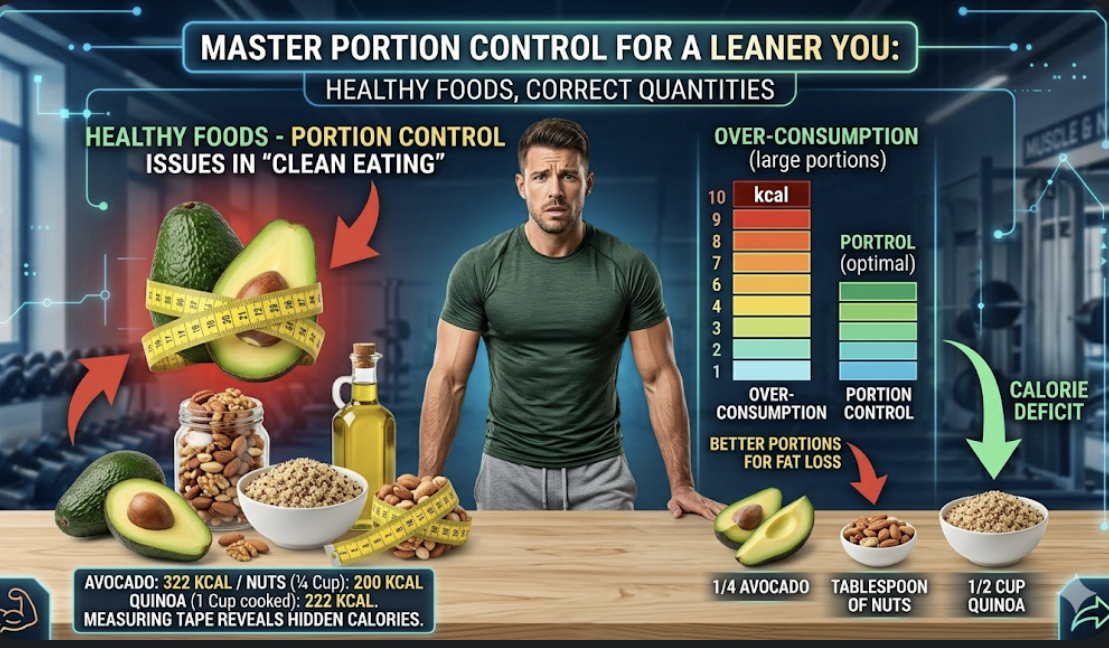
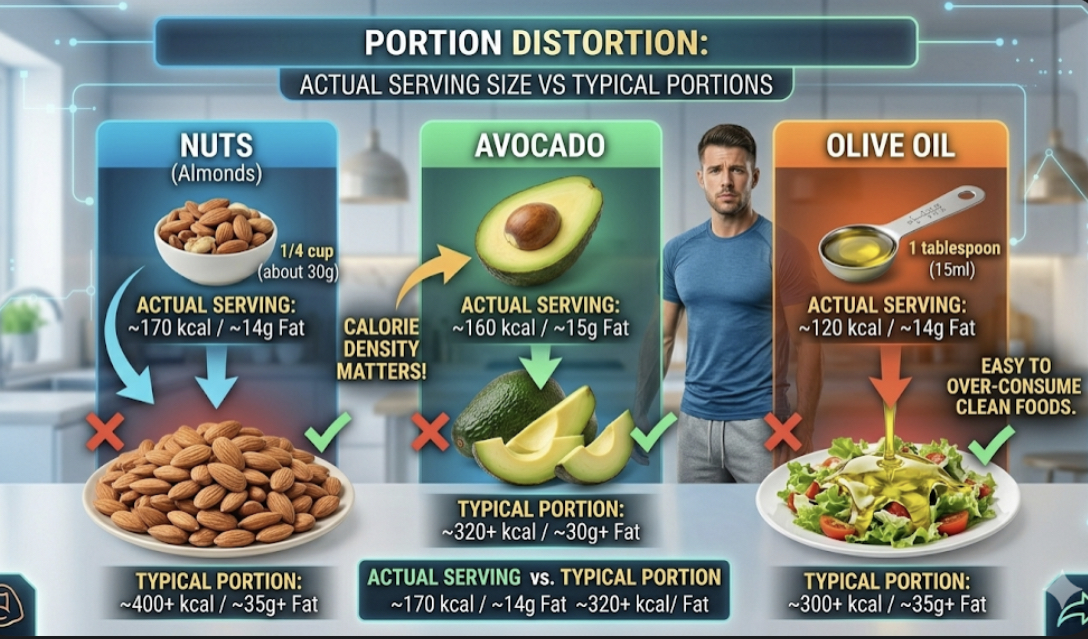
Registered Dietitian Melissa Mitri explains: "Too much of anything can blow your calorie budget for weight loss" . A medium avocado contains 320 calories. A cup of quinoa has 240 calories. Two tablespoons of olive oil add 240 calories . These "clean" foods are nutrient-dense but also calorie-dense. Without measuring, it's easy to consume 500-800 calories before your "real" meal.
3.2. The 2004 Penn State Study
A classic study by Dr. Barbara Rolls found that reducing energy density by 30% and portion size by 25% eliminated 800 calories daily without participants feeling deprived . The subjects didn't even notice the missing calories. This proves that small adjustments in portion size and food preparation can dramatically impact intake.
3.3. The "Protein Bar" Trap
"Protein chips or balls may pack more protein but contain the same amount of calories as the original version, or more," warns Mitri . Their "health halo" makes them easy to overindulge, thinking you're doing something good while actually consuming excess calories.
4. Hidden Culprit #2: The NEAT Crash
4.1. What is NEAT?
NEAT (Non-Exercise Activity Thermogenesis) is the energy you burn from everything that isn't sleeping, eating, or formal exercise . It includes walking, fidgeting, standing, shopping, and even typing. NEAT can account for 15-50% of your daily energy expenditure .
4.2. The 2025 Research: NEAT Drops When You Diet
A 2025 NIH study revealed that weight loss reduces non-resting energy expenditure (NREE) by 5.9-6.9 kcal/day per kg of fat-free mass lost, accounting for 62-72% of the total drop in energy expenditure . This translates to a reduction of roughly 170-200 kcal/day from spontaneous movement .
4.3. Why It Happens
Your body unconsciously moves less when you're in a calorie deficit. You sit longer, fidget less, and take the elevator instead of stairs . Japanese research confirms that this "micro-movement" reduction can significantly impact daily burn .
5. Hidden Culprit #3: Stress, Sleep, and Cortisol
5.1. The Cortisol Connection
Chronic stress elevates cortisol, which signals your body to store visceral fat and resist insulin . A 2021 Breaking Muscle report notes that if your body constantly feels threatened, "the last thing it wants to do when it thinks it's fighting for survival is comply with your fat loss protocol" .
5.2. Sleep Deprivation Sabotage
One study showed that those who slept 8.5 hours per night lost 50% more body fat than a group that got only 5.5 hours . Inadequate sleep increases ghrelin (hunger), decreases leptin (satiety), and impairs insulin sensitivity .
6. Hidden Culprit #4: Overestimating Exercise Burn
6.1. The "I Earned This" Trap
A study in the European Journal of Clinical Nutrition found that people who exercise regularly may think they can overindulge because they exercised . Author Jamie Cooper warns: "It is so easy to eat a lot of calories during the holidays, and exercise simply cannot undo all that damage" . The same applies to daily life.
6.2. The Math Mismatch
A 30-minute run might burn 300 calories. A "post-workout" smoothie can easily contain 400-500 calories. You're in a positive energy balance despite exercising. Additionally, many people overestimate their workout intensity and duration while underestimating their food intake .
7. Hidden Culprit #5: Inadequate Protein Intake
7.1. Protein Preserves Metabolism
A 2024 meta-analysis confirmed that higher protein intake helps maintain muscle mass during weight loss, which is critical for preserving resting metabolic rate . Muscle is metabolically active tissue; losing muscle accelerates metabolic adaptation .
7.2. The Thermic Effect
Protein has a higher thermic effect of food (TEF) than carbs or fat—your body burns about 20-30% of protein calories during digestion . Adequate protein also increases satiety hormones, reducing overall intake .
7.3. How Much Is Enough?
Research recommends 1.6-2.2 grams per kg of body weight (0.7-1.0 g/lb) during weight loss . For a 180 lb person, that's 126-180 grams daily.
8. Sample 1800-Calorie "Unstuck" Meal Plan
This plan emphasizes protein, portion control, and nutrient density to combat metabolic adaptation while keeping you full .
Breakfast (7:30 AM) – 400 kcal | 35g protein
- 3 eggs (18g protein) scrambled with 1 cup spinach
- 1 slice whole-grain toast (3g protein)
- 1 cup berries
- 1 tbsp almond butter (4g protein)
Lunch (12:30 PM) – 450 kcal | 40g protein
- 5 oz grilled chicken breast (35g protein)
- 1 cup roasted vegetables with 1 tsp olive oil
- ½ cup cooked quinoa (4g protein)
Afternoon Snack (4:00 PM) – 200 kcal | 15g protein
- 1 cup Greek yogurt, plain (20g protein)
- ½ cup cucumber slices
Dinner (7:30 PM) – 500 kcal | 40g protein
- 5 oz white fish or tofu (25g protein)
- 2 cups mixed greens with lemon juice
- 1 medium sweet potato (4g protein)
Evening Snack (optional) – 150 kcal | 10g protein
- 1 scoop casein protein or ½ cup cottage cheese
Total: ~1,700 kcal, ~140g protein
8.1. Vegan/Vegetarian Adaptation
- Replace eggs with tofu scramble (6 oz firm tofu = 15g protein)
- Replace chicken with 6 oz tempeh (30g protein)
- Replace fish with 6 oz extra-firm tofu (15g) + 1 cup lentils (18g)
- Add pea protein shake if needed
9. Common "Clean Eating" Mistakes
- Mistake #1: Drinking calories. Juices, smoothies, and "healthy" coffees can add 300-500 calories without fullness .
- Mistake #2: Relying on juice cleanses. They put your body in starvation mode, consuming muscle for fuel and further decreasing metabolism .
- Mistake #3: Ignoring liquid fats. Olive oil, nut butters, and dressings are healthy but calorie-dense. Measure them .
- Mistake #4: Doing the same workout. Your body adapts to routine, burning fewer calories over time .
- Mistake #5: Not adjusting intake as you lose weight. Your smaller body needs fewer calories. Recalculate every 5-10 kg lost .
10. Related Resources
11. Scientific References
- Women's Health Australia. (2017). Six Reasons You're Not Losing Weight. womenshealth.com.au. View Source
- EatingWell. (2026). The Common 'Healthy' Habit That May Be Secretly Sabotaging Weight Loss. eatingwell.com. View Source
- Women's Sports Medicine. (2025). Do our bodies have an evolutionary defense mechanism that resists weight loss? womenssportsmedicine.com. View Source
- Steinberg, G. R., et al. (2025). Can muscle avert GLP1R weight plateau and regain? Cell Reports Medicine, 6(9), 102308. PubMed Central
- 元氣網. (2025). 減少內臟脂肪不靠運動也可以!醫推「NEAT減重技巧」. health.udn.com. View Source
- Breaking Muscle. (2021). The Reasons You Aren't Losing Body Fat. breakingmuscle.com. View Source
- HealthDay. (2004). Study Shows Simple Steps to Painless Dieting. healthday.com. View Source
- patient.info. (2025). Weight reduction. patient.info. View Source
- Steinberg, G. R., et al. (2025). Can muscle avert GLP1R weight plateau and regain? ScienceDirect. View Source
- Women's Health Taiwan. (2026). 日本研究證實!這「1 個習慣」比跑步更燃脂. womenshealthmag.com. View Source
Join the conversation