How to Lose Belly Fat Without Losing Muscle (Science-Based Guide)
How to Lose Belly Fat Without Losing Your Hard-Earned Muscle

⚡ TL;DR
Learning how to lose belly fat without losing your hard-earned muscle requires a strategic shift from "weight loss" to "body recomposition." Research from Johns Hopkins Medicine confirms that a moderate calorie deficit combined with high protein intake preserves muscle while preferentially targeting fat . Aim for 1.2–1.6 g of protein per kg of body weight daily . A 2025 NIH study shows that resistance training with post-exercise cardio significantly reduces body fat while maintaining strength . This guide provides the exact macros, sample meal plans, training protocols, and vegan/vegetarian options to help you shed belly fat while keeping every ounce of muscle you've earned.
1. The Body Recomposition Paradox: Losing Fat While Keeping Muscle
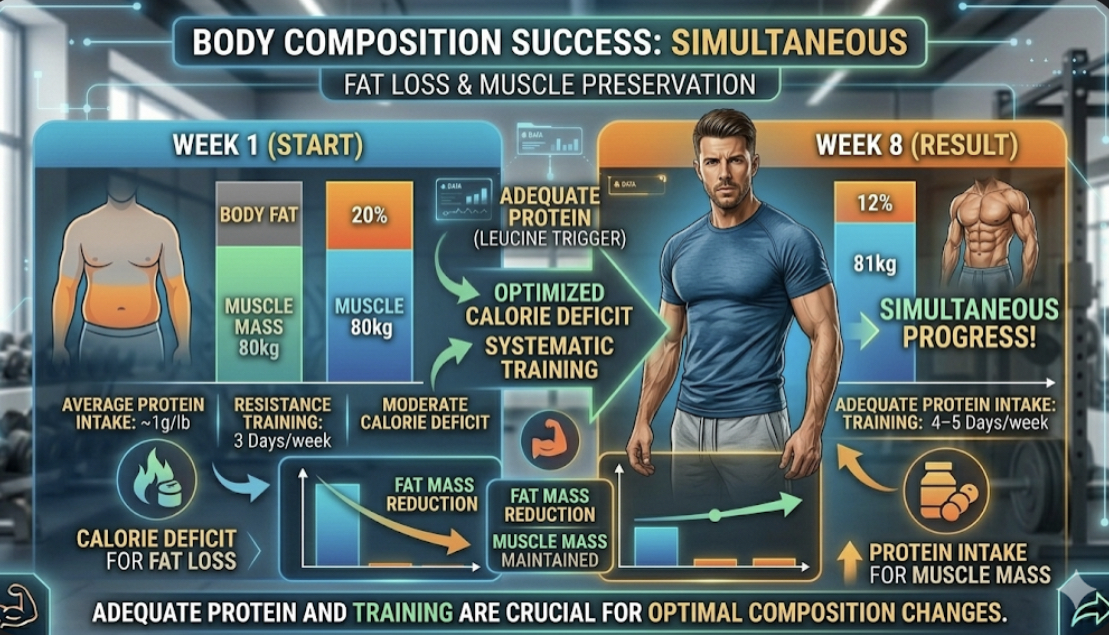
You've worked hard for your muscle. The hours in the gym, the progressive overload, the disciplined nutrition—it's all paid off. But now you want to lose the stubborn belly fat covering those abs. The fear? That any calorie deficit will cannibalize your hard-earned muscle.
This fear is valid. Research confirms that weight loss through calorie restriction alone reduces both fat and lean tissue . But the question of how to lose belly fat without losing your hard-earned muscle has a clear, science-backed answer. It's called body recomposition—simultaneously losing fat and gaining (or preserving) muscle. A 2025 study confirms that customization of training protocols according to individual goals is essential for optimal results . This guide provides the blueprint.
2. The Science: Why Belly Fat Is Stubborn and Muscle Is Vulnerable
2.1. Visceral vs. Subcutaneous Fat
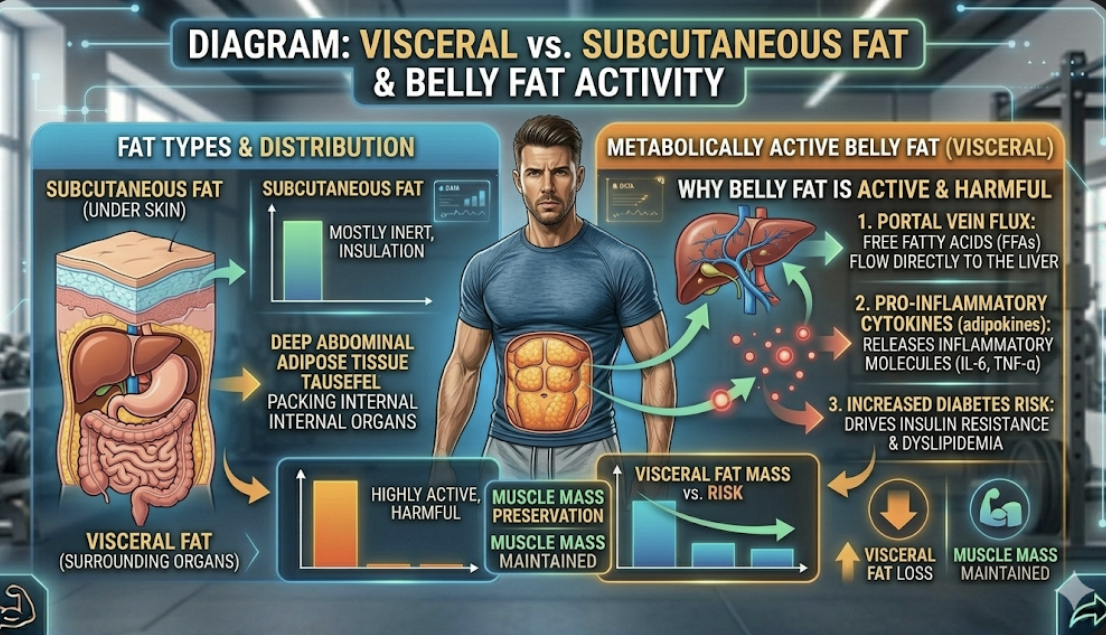
Belly fat consists of two types: subcutaneous (under the skin) and visceral (around organs). Visceral fat is metabolically active and linked to heart disease and diabetes . Exercise is particularly effective at reducing visceral fat because it lowers circulating insulin levels and causes the liver to use up fatty acids from these deposits .
2.2. The Muscle Preservation Challenge
When you're in a calorie deficit, your body breaks down both fat and muscle for energy. The key is tipping the balance. A 2025 NIH study confirms that weight loss, regardless of method, is inadvertently accompanied by lean body mass loss to varying degrees . However, strategic interventions—particularly protein intake and resistance training—can dramatically mitigate this loss .
2.3. The 2025 Training Study
A landmark 2025 study published in BMC Sports Science compared two groups: one focused on fat reduction (resistance training plus post-exercise cardio) and one focused on muscle gain (resistance training only). The fat reduction group significantly reduced body fat percentage while also supporting strength gains . This confirms that combining resistance training with cardio is optimal for fat loss without sacrificing muscle.
3. Nutrition: The Protein-Centric Approach
3.1. How Much Protein Do You Really Need?
The International Society of Sports Nutrition recommends 1.2–2.2 g of protein per kg of body weight for active individuals . For muscle preservation during a cut, research suggests aiming for 1.2–1.6 g/kg . This translates to:
- 150 lb (68 kg) person: 82–109 g protein daily
- 180 lb (82 kg) person: 98–131 g protein daily
- 200 lb (91 kg) person: 109–146 g protein daily
3.2. The Whey Protein Advantage
A 2015 study in the Journal of the International Society of Sports Nutrition found that post-exercise whey protein supplementation increased abdominal fat loss compared to carbohydrates, with a larger relative increase in fat-free mass . Whey protein appears to have a beneficial effect on body composition during resistance training .
3.3. Calorie Deficit: How Much Is Too Much?
Start with a modest deficit of 250–500 calories below maintenance . Aggressive deficits (below 1,200 calories) risk muscle loss and metabolic adaptation. Aim to lose 0.5–1% of body weight per week .
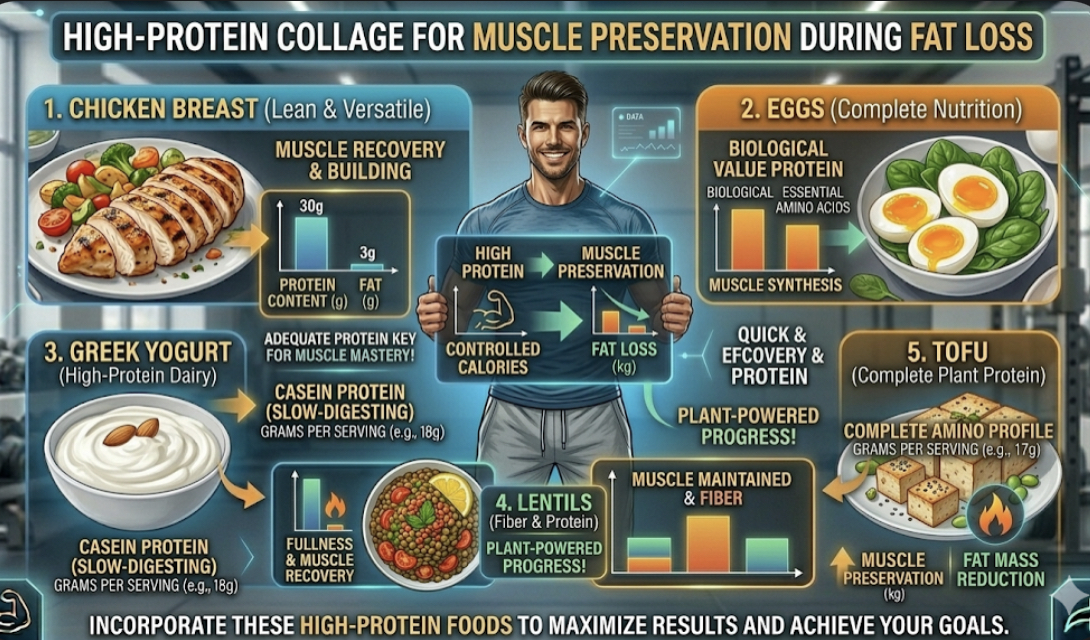
| Protein Source | Protein per Serving | Calories | Benefits |
|---|---|---|---|
| Chicken breast (4 oz) | 35g | 165 | Lean, versatile |
| Greek yogurt (1 cup) | 20g | 130 | Casein + whey blend |
| Cottage cheese (1 cup) | 28g | 160 | Slow-digesting casein |
| Lentils (1 cup cooked) | 18g | 230 | Fiber + protein |
| Tofu (4 oz) | 10g | 90 | Complete plant protein |
4. The Optimal Training Protocol
4.1. Resistance Training: The Non-Negotiable
Resistance training tells your body "keep this muscle." Aim for 3 sessions per week, targeting all major muscle groups . A 2025 study used compound exercises like leg press, bench press, lat pulldown, and rows with 8-12 reps at 75-85% of 1RM .
4.2. Strategic Cardio: Post-Resistance or HIIT
The fat reduction group in the 2025 study performed 25–30 minutes of post-exercise aerobic activity after each resistance session . Alternatively, HIIT (high-intensity interval training) 2-3 times weekly preserves muscle while burning fat .
4.3. Sample Weekly Schedule
- Monday: Full-body resistance + 25 min cardio
- Tuesday: HIIT (20 min) or active recovery
- Wednesday: Full-body resistance + 25 min cardio
- Thursday: Rest or light walking
- Friday: Full-body resistance + 25 min cardio
- Saturday: HIIT or outdoor activity
- Sunday: Rest
5. Sample 2000-Calorie Muscle-Preserving Meal Plan
This sample plan provides ~150g protein, ideal for a 180 lb athlete in a moderate deficit.
Breakfast (7:30 AM) – 450 kcal | 35g protein
- 3 eggs scrambled with spinach (18g protein)
- 1 slice whole-grain toast (3g protein)
- 1 cup Greek yogurt, plain (20g protein)
- ½ cup berries
Lunch (12:30 PM) – 500 kcal | 40g protein
- 5 oz grilled chicken breast (35g protein)
- 1 cup roasted vegetables with 1 tsp olive oil
- ½ cup cooked quinoa (4g protein)
- Side salad with lemon juice
Afternoon Snack (4:00 PM) – 200 kcal | 20g protein
- 1 cup cottage cheese (25g protein)
- Cucumber slices
Dinner (7:30 PM) – 550 kcal | 45g protein
- 5 oz salmon or lean beef (35g protein)
- 2 cups mixed greens with balsamic
- 1 medium sweet potato (4g protein)
Evening Snack (optional) – 150 kcal | 10g protein
- 1 scoop casein protein or ½ cup Greek yogurt
Total: ~1,850 kcal, ~150g protein
5.1. Vegan/Vegetarian Adaptation
- Replace eggs with tofu scramble (6 oz firm tofu = 15g protein)
- Replace chicken with 6 oz tempeh (30g protein) or seitan
- Replace salmon with 6 oz extra-firm tofu (15g) + 1 cup lentils (18g)
- Add pea protein shake to meet protein targets
- Use nutritional yeast for B12 and savory flavor
6. Recovery: Sleep and Stress Management
6.1. Sleep's Role in Fat Loss
One study showed that those who slept 8.5 hours per night lost 50% more body fat than a group that got only 5.5 hours, despite similar calorie deficits . Sleep deprivation increases ghrelin (hunger) and decreases leptin (satiety).
6.2. Cortisol and Belly Fat
Chronic stress elevates cortisol, which signals the body to store visceral fat and resist insulin . Aim for 7-9 hours of quality sleep and incorporate stress-management practices .
7. Common Mistakes That Sabotage Your Efforts
- Mistake #1: Cutting calories too aggressively. This triggers muscle loss and metabolic adaptation. Stick to 250-500 calories below maintenance .
- Mistake #2: Dropping protein too low. Protein needs increase during a deficit. Don't drop below 1.2g/kg .
- Mistake #3: Doing only cardio. Without resistance training, your body burns muscle for fuel. Lift heavy .
- Mistake #4: Ignoring sleep and stress. High cortisol directly promotes belly fat storage .
- Mistake #5: Relying on the scale. Muscle is denser than fat. Measure waist circumference and track strength .
8. How to Track Progress Beyond the Scale
8.1. Waist Circumference
Measure your waist at the navel. Aim for <35 inches (women) or <40 inches (men) for health .
8.2. Strength Performance
If your lifts are dropping significantly, you're likely losing muscle. Maintain or slightly reduce volume, but keep intensity high .
8.3. Progress Photos and Measurements
Take photos every 2-4 weeks. Measure arms, chest, and hips in addition to waist .
Key Takeaways: Your Body Recomposition Action Plan
- ✅ Calculate your numbers: Maintenance calories minus 250-500 = daily target. Protein at 1.2-1.6 g/kg minimum.
- ✅ Lift heavy 3x/week: Prioritize compound lifts with progressive overload .
- ✅ Add strategic cardio: 25-30 min post-workout or HIIT 2-3x weekly .
- ✅ Prioritize sleep: 7-9 hours nightly for optimal fat loss and muscle recovery .
- ✅ Track waist and strength: The scale lies—muscle weighs more than fat.
9. Related Resources
10. Scientific References
- Johns Hopkins Medicine. (2025). 8 Ways to Lose Belly Fat and Live a Healthier Life. hopkinsmedicine.org. View Source
- Verywell Health. (2025). How to Preserve Muscle While Losing Weight. verywellhealth.com. View Source
- PMC. (2025). Effects of resistance training with and without post-exercise aerobic activity on strength and body composition. NIH, 17:311. View Source
- InBody USA. (2025). 7 Expert Ways to Lose Body Fat Without Losing Muscle. inbodyusa.com. View Source
- Arora, G., et al. (2026). Pharmacologic Treatments for the Preservation of Lean Body Mass During Weight Loss. Journal of Clinical Medicine, 15(2):541. PubMed
- Journal of the International Society of Sports Nutrition. (2015). The effects of whey protein with or without carbohydrates on resistance training adaptations. JISSN, 12:48. View Source
- Men's Fitness. (2025). How Much Protein You Need to Maintain Muscle During a Cut. mensfitness.com. View Source
- Optimum Nutrition. (2025). Can you Build Muscle and Lose Fat at the Same Time? optimumnutrition.com. View Source
- Faria, I., et al. (2024). The Etiology of Reduced Muscle Mass with Surgical and Pharmacological Weight Loss. Nutrients, 17(1):132. PubMed
- Kerksick, C., et al. (2009). The combined effects of exercise training and ingestion of a weight loss supplement on body composition. JISSN, 6(Suppl 1):P19. View Source
Join the conversation