Best Meal Timing for Muscle Growth Beginners (When to Eat for Results)
Best Meal Timing for Muscle Growth Beginners (When to Eat for Results)
⚡ TL;DR
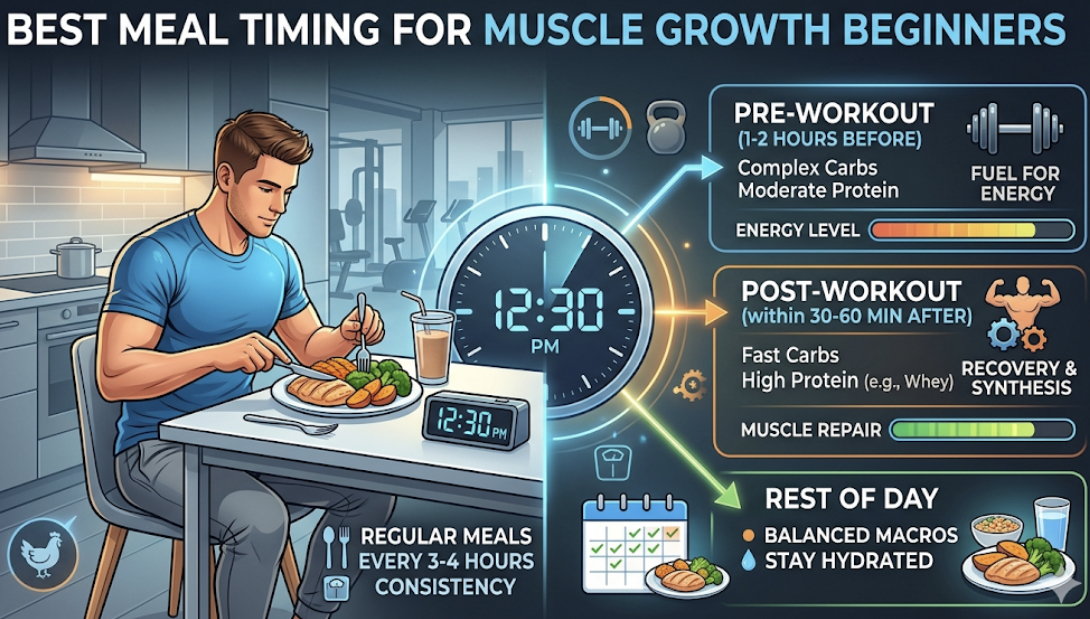
For beginners, meal timing for muscle growth is less critical than total daily protein and calorie intake. However, strategic timing can optimize results. Key principles: spread protein evenly across 3–5 meals (20–40g per meal), eat a pre-workout meal 1–3 hours before training, and consume protein within 2 hours post-workout . The "anabolic window" is wider than once thought—up to 4–6 hours post-exercise . Prioritize hitting your daily protein target (1.6–2.2 g/kg) and total calories before stressing about exact timing. This guide provides practical schedules, sample meal plans, and answers to common timing questions.
1. The Timing Debate: Does It Really Matter?
Walk into any gym, and you'll hear advice about the "anabolic window" and needing protein within 30 minutes of training. But how important is meal timing for muscle growth? The answer: it matters, but not as much as supplement companies would have you believe. For beginners, total daily nutrition far outweighs precise timing .
Does meal timing matter for muscle growth?
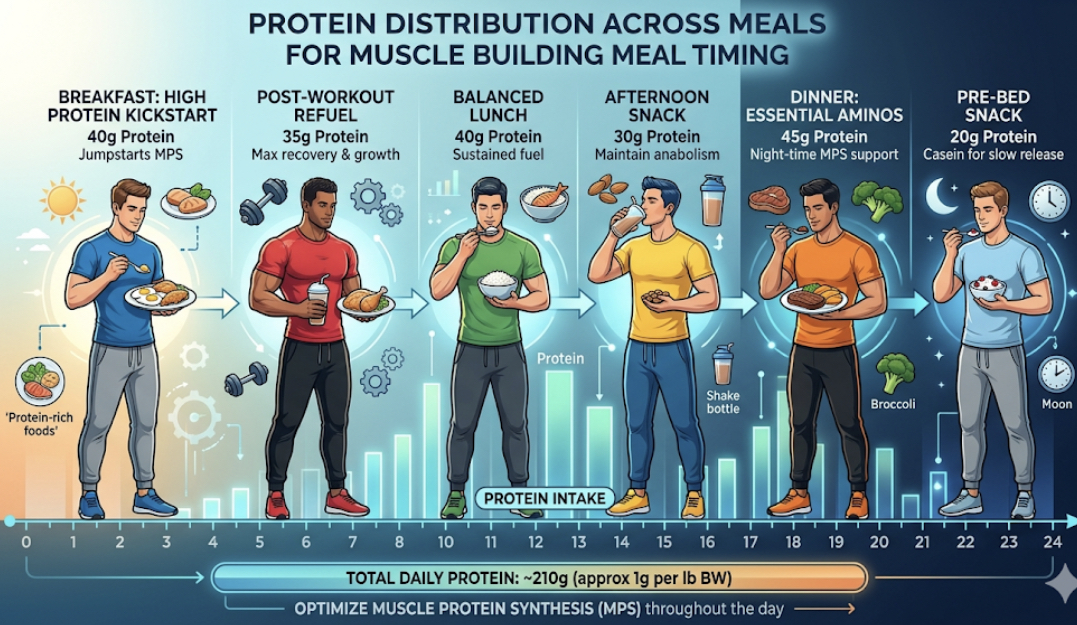
Yes, meal timing matters for muscle growth, but it's less important than total daily protein and calorie intake. Research shows that spreading protein intake evenly across 3–5 meals (20–40g per meal) stimulates muscle protein synthesis more effectively than consuming most protein in one meal . Pre- and post-workout nutrition can enhance performance and recovery, but the "anabolic window" is actually 4–6 hours post-exercise, not the 30-minute window once believed . For beginners, focusing on hitting daily protein targets (1.6–2.2 g/kg) and total calories is the priority. Timing fine-tunes results.
2. The Science: How Nutrient Timing Works
2.1. Muscle Protein Synthesis (MPS) and Meal Frequency
Muscle protein synthesis is stimulated by protein intake, with each meal providing a pulse of amino acids. Research shows that consuming 20–40g of protein per meal, 3–5 times daily, maximizes MPS throughout the day . Fewer meals with larger protein doses may not sustain MPS as effectively.
2.2. The "Anabolic Window": Myth vs Reality
Early research suggested a narrow 30–60 minute window post-workout for optimal protein intake. However, more recent studies indicate the window is actually 4–6 hours . Consuming protein within several hours after training is sufficient, especially if you've eaten a pre-workout meal. The urgency is overblown—focus on overall daily intake.
2.3. Pre-Workout Nutrition
Eating 1–3 hours before training provides energy, reduces muscle breakdown, and improves performance. A meal with carbohydrates and protein (e.g., 30–40g carbs, 20–30g protein) is ideal .
2.4. Post-Workout Nutrition
After training, your muscles are primed to take up amino acids. Consuming 20–40g of protein post-workout supports recovery and MPS. Carbs help replenish glycogen stores, especially if training again within 24 hours .
3. Meal Frequency: How Many Meals Should You Eat?
3.1. The Research
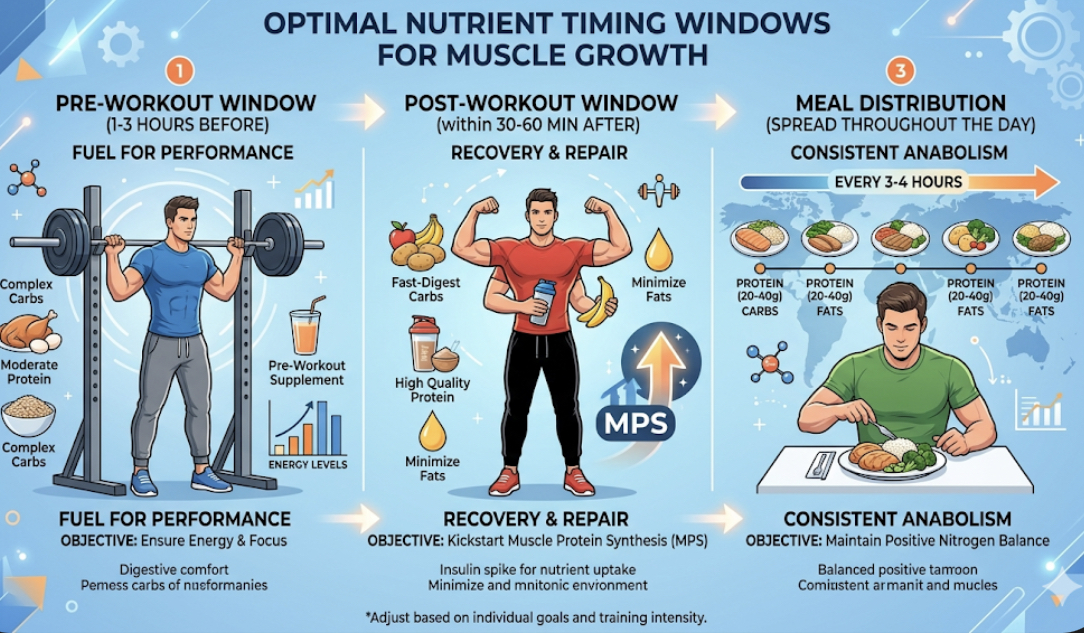
Studies comparing 3 meals vs 6 meals daily show no significant difference in muscle growth when total calories and protein are matched . What matters more is spreading protein intake across the day. For most beginners, 3–5 meals work well.
3.2. Practical Recommendations
- 3 meals/day: Works if each meal contains 40–50g protein. Simple and sustainable.
- 4 meals/day: Sweet spot for many—easier to distribute protein (30–35g per meal).
- 5 meals/day: Helpful for those with smaller appetites or trying to increase calories.
4. Pre-Workout Nutrition: Fueling Your Training
4.1. What to Eat and When
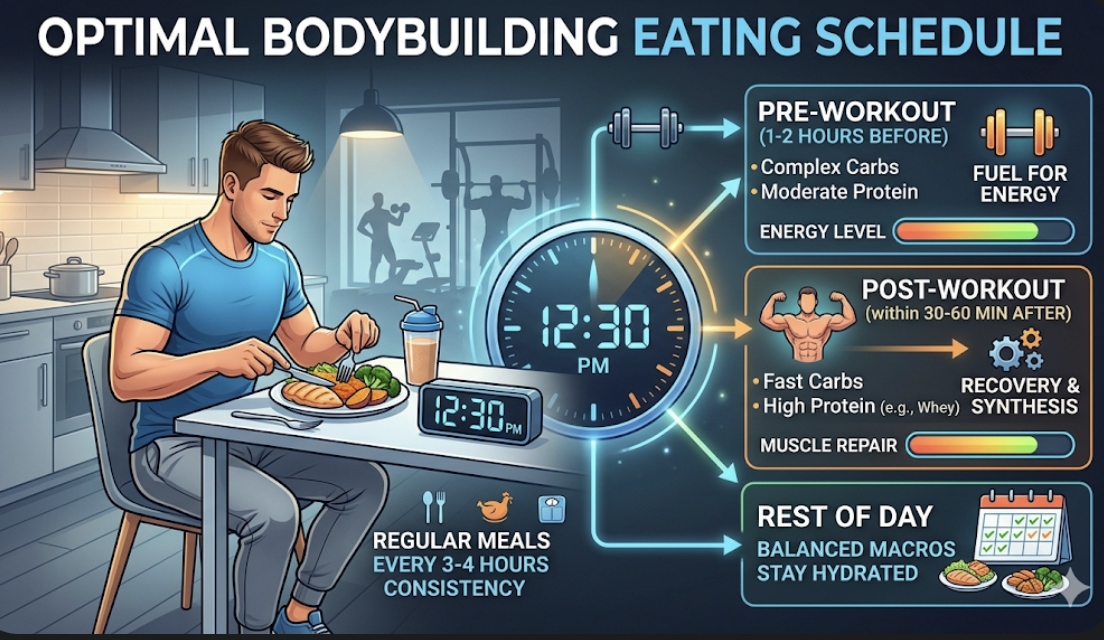
Aim to eat a meal containing protein and carbohydrates 1–3 hours before training. This provides energy, reduces muscle breakdown, and improves performance .
- 1 hour before: Smaller meal: banana + 1 scoop whey (200–300 kcal).
- 2–3 hours before: Larger meal: chicken, rice, vegetables (400–500 kcal).
4.2. Sample Pre-Workout Meals
- 1 cup oatmeal + 1 scoop protein + 1 banana (450 kcal, 35g protein, 60g carbs)
- 2 slices whole-grain toast + 2 eggs + 1 tbsp peanut butter (400 kcal, 25g protein, 35g carbs)
- 200g Greek yogurt + 1 cup berries + 1 tbsp honey (300 kcal, 20g protein, 40g carbs)
5. Post-Workout Nutrition: Recovery and Growth
5.1. The Post-Workout Window
Consume 20–40g of protein within 2–4 hours after training to maximize muscle protein synthesis . Carbohydrates are beneficial for glycogen replenishment, especially if training again within 24 hours.
5.2. Sample Post-Workout Meals
- 200g grilled chicken + 1.5 cups sweet potato + 1 cup broccoli (550 kcal, 45g protein, 55g carbs)
- Protein smoothie: 1 scoop whey, 1 banana, 1 cup oat milk (350 kcal, 25g protein, 45g carbs)
- 200g Greek yogurt + 1 cup berries + ½ cup granola (400 kcal, 25g protein, 50g carbs)
6. Sample Meal Timing Schedules for Beginners
6.1. Morning Workout Schedule (Train at 8:00 AM)
- 6:00 AM – Pre-workout: 1 banana + 1 scoop whey (250 kcal, 25g protein)
- 8:00–9:00 AM – Workout
- 9:30 AM – Post-workout/Breakfast: 4 eggs, 1 cup oatmeal with berries, 1 tbsp peanut butter (650 kcal, 40g protein)
- 1:00 PM – Lunch: 200g chicken breast, 1.5 cups brown rice, 1 cup broccoli (650 kcal, 50g protein)
- 4:00 PM – Snack: 200g Greek yogurt, 1 apple (250 kcal, 20g protein)
- 7:00 PM – Dinner: 200g salmon, 1.5 cups sweet potato, 2 cups greens (600 kcal, 45g protein)
6.2. Evening Workout Schedule (Train at 5:00 PM)
- 8:00 AM – Breakfast: 4 eggs, 1 cup oatmeal with berries (550 kcal, 35g protein)
- 12:00 PM – Lunch: 200g chicken breast, 1.5 cups brown rice, 1 cup broccoli (650 kcal, 50g protein)
- 3:00 PM – Pre-workout: 1 banana + 1 scoop whey (250 kcal, 25g protein)
- 5:00–6:00 PM – Workout
- 6:30 PM – Post-workout/Dinner: 200g salmon, 1.5 cups sweet potato, 2 cups greens (600 kcal, 45g protein)
- 9:00 PM – Evening Snack: 200g cottage cheese, 1 tbsp honey (250 kcal, 20g protein)
6.3. Vegan/Vegetarian Meal Timing Options
- Pre-workout: 1 banana + 1 scoop pea protein (250 kcal, 25g protein)
- Post-workout: Tofu scramble (200g firm tofu) + 1.5 cups quinoa + veggies (600 kcal, 40g protein)
- Meals: Tempeh, lentils, chickpeas, edamame, and hemp seeds for protein distribution.
Gluten-Free Options
- Use certified gluten-free oats, quinoa, rice, or buckwheat.
- Ensure protein powders and tempeh/tofu are gluten-free certified.
7. Quick Pre/Post Workout Recipes
- Pre-Workout Energy Bites (300 kcal, 15g protein): ½ cup oats, 2 tbsp peanut butter, 1 tbsp honey, 1 tbsp chia seeds. Roll into balls.
- Post-Workout Recovery Smoothie (400 kcal, 30g protein): 1 cup Greek yogurt, 1 banana, 1 cup oat milk, 1 tbsp honey.
- Vegan Post-Workout Bowl (500 kcal, 30g protein): 200g baked tofu, 1.5 cups quinoa, 1 cup roasted veggies, tahini drizzle.
8. Common Meal Timing Mistakes Beginners Make
- Mistake #1: Obsessing over the 30-minute window. The anabolic window is much wider—focus on total daily intake.
- Mistake #2: Skipping pre-workout nutrition. Training fasted can impair performance and increase muscle breakdown.
- Mistake #3: Eating too little protein per meal. Aim for 20–40g protein per meal to stimulate MPS.
- Mistake #4: Ignoring total daily protein. Meal timing can't compensate for inadequate overall intake.
- Mistake #5: Eating too close to training. Large meals <1 hour before can cause digestive issues—allow 2–3 hours for full meals.
9. Frequently Asked Questions
Does meal timing matter for muscle growth?
Yes, meal timing matters, but total daily protein and calories are more important. Spreading protein across meals and eating pre/post-workout can optimize results.
Do I need to eat immediately after a workout?
No, the "anabolic window" is 4–6 hours post-exercise. As long as you eat within a few hours, you'll be fine. Pre-workout nutrition also influences this window.
How many meals should I eat per day to build muscle?
3–5 meals per day work well. The key is distributing protein evenly across meals (20–40g per meal) and meeting total daily protein and calorie needs.
What should I eat before a workout?
A meal with protein and carbohydrates 1–3 hours before training. Examples: chicken and rice, oatmeal with protein, Greek yogurt with fruit.
What should I eat after a workout?
20–40g of protein within 2–4 hours post-workout. Carbohydrates help replenish glycogen if training frequently. Whole food options work as well as shakes.
Can I build muscle eating only 3 meals a day?
Yes, as long as each meal contains adequate protein (40–50g) and total daily calories are sufficient. Consistency matters more than meal frequency.
Is it bad to eat late at night?
Not if it fits your total daily intake. A pre-sleep protein source (cottage cheese, casein) can support overnight muscle protein synthesis. Avoid large meals too close to bedtime if they disrupt sleep.
10. Related Resources
- Can You Build Muscle Without Supplements? (Natural Muscle Growth Guide)
- How to Know If You’re Gaining Muscle or Fat (Simple Tracking Guide)
- Best Weekly Weight Gain Rate for Muscle Growth (Lean Bulk Guide)
- How to Increase Strength Without Gaining Fat (Lean Strength Guide)
- How Long Does It Take to Build Noticeable Muscle? (Real Timeline Explained)
- Beginner Mistakes That Kill Muscle Growth (Avoid These 7 Errors)
11. Scientific References
- Schoenfeld, B. J., & Aragon, A. A. (2018). How much protein can the body use in a single meal for muscle-building? Journal of the International Society of Sports Nutrition, 15, 10. PubMed
- Areta, J. L., et al. (2013). Timing and distribution of protein ingestion during prolonged recovery from resistance exercise alters myofibrillar protein synthesis. Journal of Physiology, 591(9), 2319–2331. PubMed
- Morton, R. W., et al. (2018). A systematic review, meta-analysis and meta-regression of the effect of protein supplementation on resistance training-induced gains in muscle mass and strength in healthy adults. British Journal of Sports Medicine, 52(6), 376–384. PubMed
- Schoenfeld, B. J., et al. (2013). The effect of protein timing on muscle strength and hypertrophy: a meta-analysis. Journal of the International Society of Sports Nutrition, 10(1), 53. PubMed
- Kerksick, C. M., et al. (2017). International society of sports nutrition position stand: nutrient timing. Journal of the International Society of Sports Nutrition, 14, 33. PubMed
- Helms, E. R., et al. (2014). Evidence-based recommendations for natural bodybuilding contest preparation. Journal of the International Society of Sports Nutrition, 11(1), 20. PubMed
- ACSM. (2021). Nutrition and Athletic Performance. Medicine & Science in Sports & Exercise, 53(3), 600–618. PubMed
Join the conversation