Best Morning Routine for Faster Fat Loss (Simple Daily Habits That Work)
Best Morning Routine for Faster Fat Loss (Simple Daily Habits That Work)

⚡ TL;DR
The best morning routine for faster fat loss isn't about extreme workouts or complicated rituals—it's about simple, science-backed habits that set your metabolism up for success. Research shows that morning light exposure regulates circadian rhythm, improving sleep and subsequent fat loss . Drinking 500ml of water can temporarily boost metabolism by 24-30% . A protein-rich breakfast (30-40g) increases satiety and reduces cravings throughout the day . A 2022 study found that morning exercise reduces abdominal fat and blood pressure in women, while evening exercise builds upper-body strength . This guide provides a step-by-step morning protocol—from wake-up to first meal—with sample breakfasts and vegan options to accelerate your fat loss.
1. Why Your Morning Matters for Fat Loss
You've tried countless diets and workout plans. You've counted calories, cut carbs, and pushed through grueling gym sessions. But one factor you might be overlooking could be sabotaging all that effort: what you do—or don't do—in the first hours after waking.
The best morning routine for faster fat loss isn't a myth. It's a collection of evidence-based habits that prime your hormones, stabilize your blood sugar, and set you up for better decisions all day. A 2025 study confirms that morning chronotype is associated with better weight management outcomes . This guide breaks down the 5 essential morning habits that actually work, backed by peer-reviewed research, and provides a practical template you can implement tomorrow.
2. The Science: How Morning Habits Influence Fat Loss
2.1. Circadian Rhythm and Metabolism
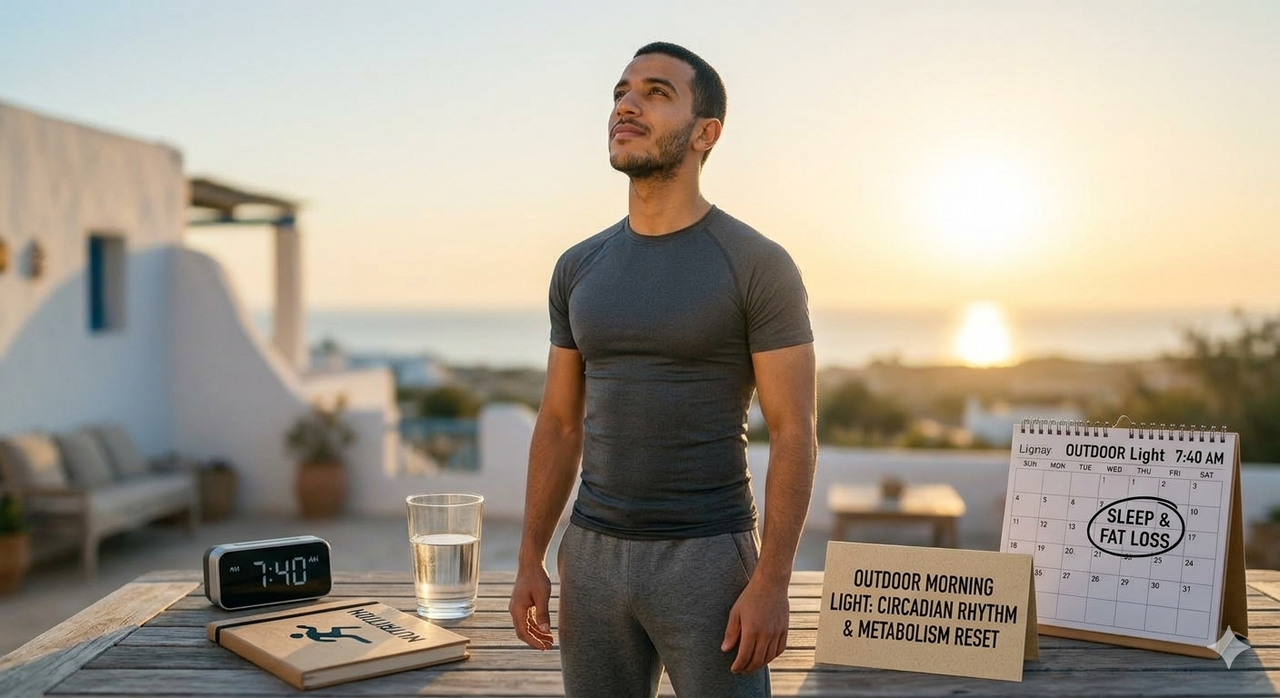
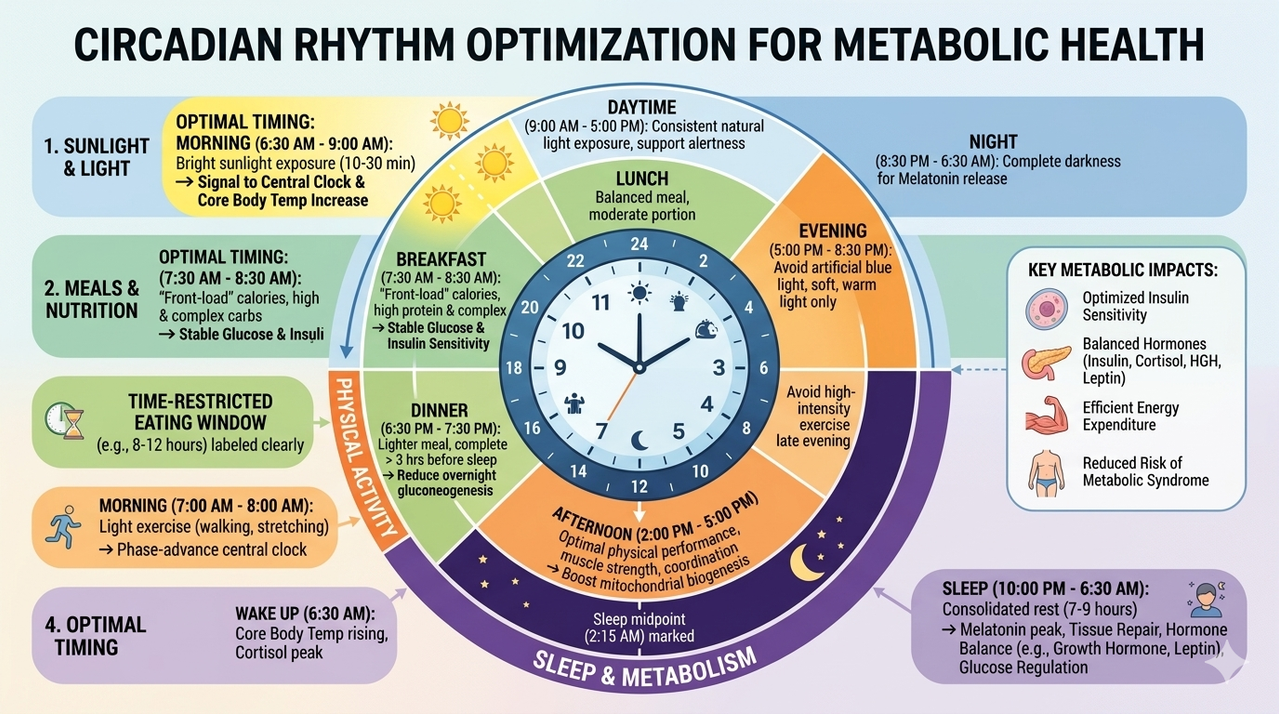
Your body's internal clock—the circadian rhythm—regulates everything from hormone release to energy expenditure. A 2025 meta-analysis found that morning chronotypes (early risers) tend to have better weight management outcomes . Morning light exposure signals your brain to suppress melatonin and release cortisol, preparing your body for activity and setting your internal clock for optimal sleep .
2.2. The Morning Cortisol Spike
Cortisol naturally peaks about 30-45 minutes after waking . This "cortisol awakening response" helps mobilize energy and prepares you for the day. However, chronic stress can dysregulate this pattern. A structured morning routine helps keep cortisol in a healthy rhythm .
2.3. The 2022 Exercise Timing Study
A landmark 2022 study in Frontiers in Physiology examined exercise timing in 56 adults over 12 weeks. Women who exercised in the morning lost more abdominal fat and reduced blood pressure, while evening exercise built upper-body strength . For fat loss, morning exercise appears to have a slight edge for women, while men saw similar results regardless of time .
3. The 5-Step Morning Routine for Faster Fat Loss
3.1. Step 1: Wake Up and Hydrate Immediately
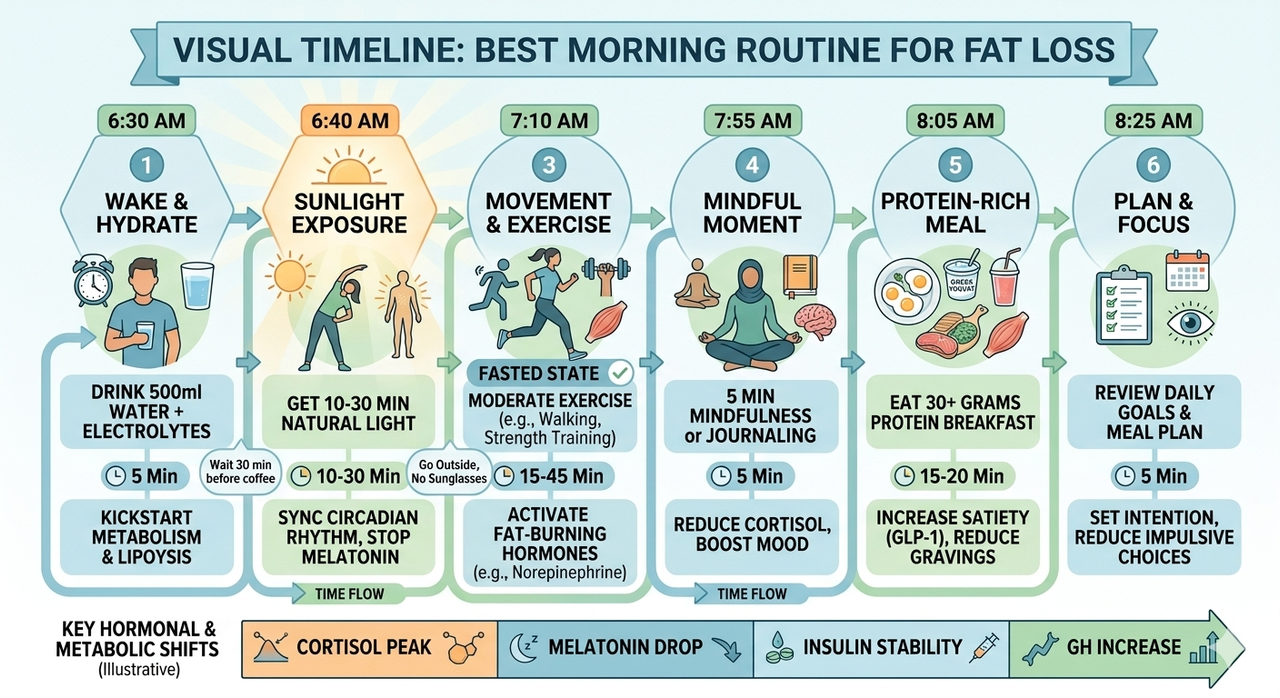
After 7-8 hours of sleep, you're mildly dehydrated. A 2003 study found that drinking 500ml of water increased metabolic rate by 24-30% within 10 minutes, lasting over an hour . Water also helps flush toxins and prepares your digestive system for food . Aim for 16-20 oz (500-600 ml) of water within 30 minutes of waking. Add lemon for flavor if desired.
3.2. Step 2: Get Morning Sunlight (10-30 minutes)
Expose your eyes to natural light within 30-60 minutes of waking. This signals your brain to stop producing melatonin and increases serotonin, boosting mood and alertness . Morning light also sets your circadian rhythm, leading to better sleep—a critical factor for fat loss, as sleep deprivation increases hunger hormones .
3.3. Step 3: Move Your Body (10-30 minutes)
You don't need a full workout—just movement. Options include:
- Morning walk: 20-30 minutes of brisk walking burns calories and increases NEAT .
- Light stretching or yoga: Improves flexibility and reduces stress .
- Bodyweight exercises: 10 minutes of squats, lunges, and pushups activates muscles .
3.4. Step 4: Eat a High-Protein Breakfast
A protein-rich breakfast is one of the most powerful tools for fat loss. Aim for 30-40 grams of protein. Research shows that a high-protein breakfast increases satiety, reduces cravings, and stabilizes blood sugar throughout the day . One study found that participants who ate eggs for breakfast lost 65% more weight than those who ate a carb-heavy breakfast with the same calories .
3.5. Step 5: Plan Your Day (5 minutes)
Take 5 minutes to review your schedule, plan meals, and set intentions. This reduces decision fatigue and helps you make healthier choices later .
4. Sample High-Protein Breakfasts (30-40g Protein)
Option 1: Classic Egg Breakfast
- 3 large eggs (18g protein)
- 1 cup egg whites (26g protein) or additional 3 eggs
- 1 cup spinach sautéed in 1 tsp olive oil
- 1 slice whole-grain toast (3g protein)
- Total: ~400-500 kcal, 35-40g protein
Option 2: Greek Yogurt Bowl
- 1.5 cups plain Greek yogurt (30g protein)
- ¼ cup berries (1g protein)
- 1 tbsp chopped almonds (2g protein)
- 1 tbsp chia seeds (3g protein)
- Total: ~350 kcal, 36g protein
Option 3: Protein Smoothie
- 1 scoop whey or pea protein (25g protein)
- 1 cup milk or unsweetened soy milk (8g protein)
- 1 banana (1g protein)
- 1 tbsp peanut butter (4g protein)
- Total: ~400 kcal, 38g protein
Option 4: Vegan Tofu Scramble
- 6 oz firm tofu, crumbled (15g protein)
- 1 cup cooked quinoa (8g protein)
- 1 cup black beans (15g protein)
- Spinach and veggies sautéed in 1 tsp oil
- Total: ~450 kcal, 38g protein
5. Should You Do Fasted Cardio?
5.1. The Theory
The idea behind fasted cardio is that with low glycogen stores, your body will rely more on fat for fuel . Some small studies show that fasted exercise increases fat oxidation during the workout itself .
5.2. The Reality
The difference in total fat loss over time is negligible. A 2014 study found that fasted vs. fed cardio made no significant difference in body composition changes over 4 weeks . What matters most is total calorie burn and consistency. If fasted exercise leaves you energized, do it. If it leaves you lightheaded, eat a small protein-rich snack first .
6. Common Morning Mistakes That Sabotage Fat Loss
- Mistake #1: Skipping breakfast. A 2025 study confirms that morning chronotypes have better weight management—skipping breakfast disrupts your circadian rhythm .
- Mistake #2: Drinking sugary coffee drinks. A latte or flavored coffee can add 300-500 calories before 9 AM .
- Mistake #3: Checking phone immediately. Starting the day with stress-inducing emails or social media spikes cortisol .
- Mistake #4: Not getting sunlight. Artificial light doesn't provide the same circadian signal .
- Mistake #5: Overcomplicating things. Perfectionism leads to giving up. Start with one habit at a time .
7. Frequently Asked Questions
What is the best morning routine for fat loss?
The best morning routine includes: 1) Hydrate with 16-20 oz water, 2) Get 10-30 minutes of morning sunlight, 3) Move your body for 10-30 minutes (walk, stretch, or exercise), 4) Eat a high-protein breakfast (30-40g protein), and 5) Spend 5 minutes planning your day. This sequence is backed by research on metabolism, circadian rhythm, and appetite regulation .
Does drinking water in the morning boost metabolism?
Yes. A 2003 study found that drinking 500ml of water increased metabolic rate by 24-30% within 10 minutes, lasting over an hour .
What should I eat for breakfast to lose belly fat?
A high-protein breakfast (30-40g) is most effective. Research shows it increases satiety, reduces cravings, and stabilizes blood sugar . Examples include eggs with egg whites, Greek yogurt bowls, or protein smoothies.
Is morning or evening exercise better for fat loss?
A 2022 study found that women who exercised in the morning lost more abdominal fat, while evening exercise built upper-body strength. For fat loss specifically, morning may have a slight edge for women .
How long should I walk in the morning?
Aim for 20-30 minutes of brisk walking. This burns calories, increases NEAT, and exposes you to sunlight for circadian benefits .
Can I drink coffee in the morning?
Yes, but drink it black or with minimal additions. Sugary coffee drinks can add hundreds of calories. Coffee may also enhance fat oxidation when consumed before exercise .
8. Related Resources
- Low-Intensity Walking for Fat Loss: Simple Strategy to Burn More Fat
- How to Handle Hunger Pangs During a Strict Cutting Phase (Athlete’s Guide)
- Intermittent Fasting for Bodybuilders: Pros, Cons, and Muscle-Building Truth
- How to Lose Belly Fat Without Losing Muscle (Science-Based Guide)
- Why You’re Not Losing Fat Despite Eating Clean (7 Science-Backed Reasons)
9. Scientific References
- Chronobiology International. (2025). Morning chronotype is associated with better weight management outcomes: A meta-analysis. Taylor & Francis. View Source
- Arciero, P. J., et al. (2022). Morning Exercise Reduces Abdominal Fat and Blood Pressure in Women; Evening Exercise Increases Upper-Body Strength in Men. Frontiers in Physiology. View Source
- Sleep Foundation. (2025). Cortisol and Sleep. sleepfoundation.org. View Source
- Boschmann, M., et al. (2003). Water-induced thermogenesis. Journal of Clinical Endocrinology & Metabolism. PubMed
- Mayo Clinic. (2026). 5 morning habits to help you lose weight. mayoclinic.org. View Source
- Women's Health. (2026). Why Morning Exercise May Help You Burn More Fat. womenshealthmag.com. View Source
- Verywell Health. (2025). Why Am I Not Losing Weight? 10 Reasons and What to Do. verywellhealth.com. View Source
- Mayo Clinic. (2026). Morning workouts: A weight-loss trigger? mayoclinic.org. View Source
- Today's Dietitian. (2026). The Role of Morning Routines in Weight Management. todaysdietitian.com. View Source
- Schoenfeld, B. J., et al. (2014). Fasted versus fed-state training: effects on body composition. Journal of the International Society of Sports Nutrition. View Source
Join the conversation