How Many Calories Do You Need to Build Muscle? (Complete Guide)
How Many Calories Do You Need to Build Muscle? (Complete Guide)
⚡ TL;DR
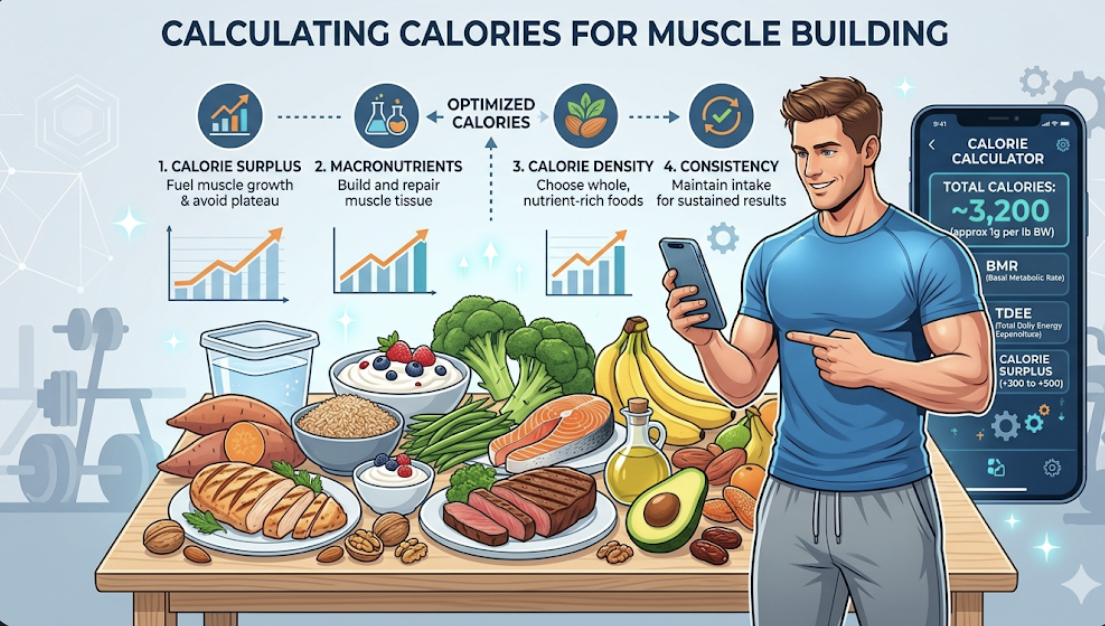
The optimal calories to build muscle is a small surplus of 250–500 calories above your maintenance level. This yields a weight gain of 0.25–0.5% of body weight per week, maximizing muscle growth while minimizing fat accumulation . To find your maintenance, track your intake for 1–2 weeks while weight stays stable, then add 250–500 kcal. Prioritize protein (1.6–2.2 g/kg), carbs for energy, and healthy fats. This guide provides step-by-step calculations, sample meal plans for omnivores and vegans, and adjustments for different body types.
1. The Calorie Conundrum: How Much Is Enough?
Eat too little, and your muscles stay small. Eat too much, and you gain fat. Finding the sweet spot for calories to build muscle is one of the most critical factors in a successful bulk. This guide will teach you exactly how to calculate your personal calorie needs for optimal muscle growth.
How many calories should I eat to build muscle?
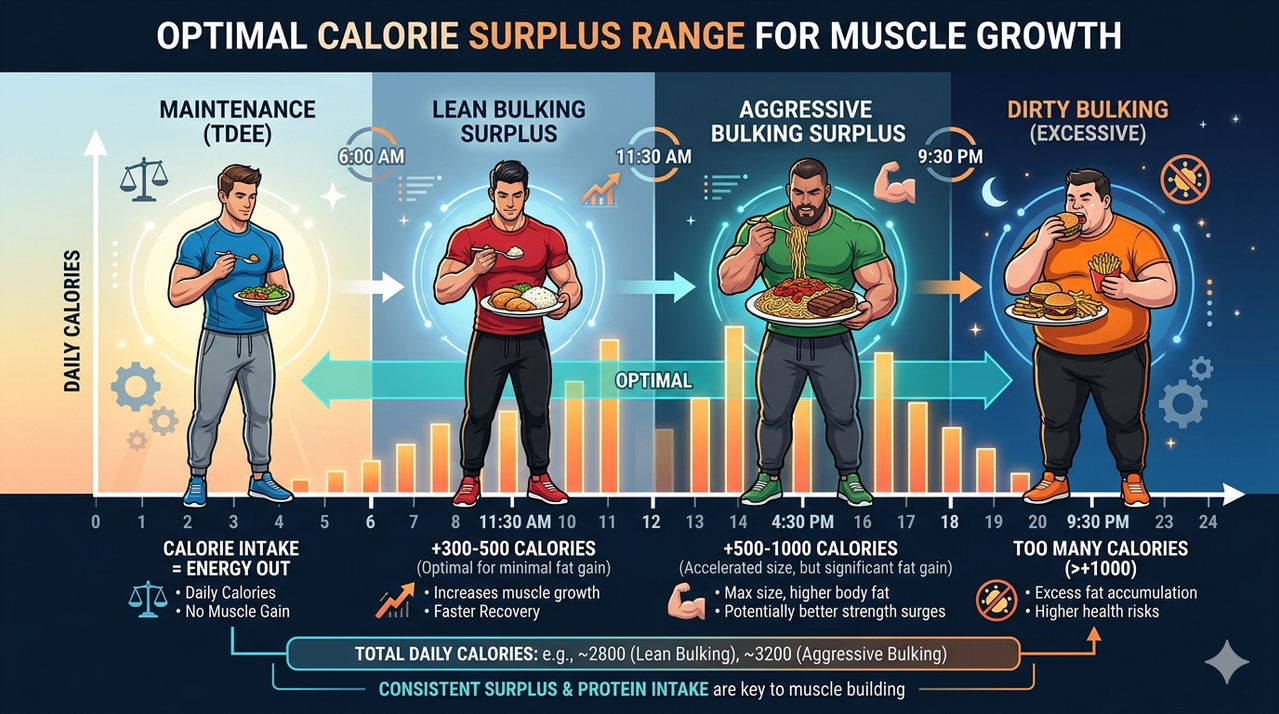
To build muscle, you should eat a small calorie surplus of 250–500 calories above your maintenance level. For a 75 kg (165 lb) person with a maintenance of 2,500 kcal, that means eating 2,750–3,000 kcal daily. This surplus supports muscle protein synthesis without excessive fat gain. Research shows that larger surpluses (>500 kcal) do not accelerate muscle growth but do increase fat accumulation .
2. Step 1: Calculate Your Maintenance Calories
2.1. Method 1: Track Your Intake
The most accurate method is to track your food intake for 1–2 weeks while weighing yourself daily. If your weight stays stable, your average daily intake is your maintenance. This accounts for your individual metabolism and activity level.
2.2. Method 2: Use a Formula (Mifflin-St Jeor)
- Men: (10 × weight in kg) + (6.25 × height in cm) – (5 × age) + 5
- Women: (10 × weight in kg) + (6.25 × height in cm) – (5 × age) – 161
Then multiply by an activity factor: sedentary (1.2), light activity (1.375), moderate (1.55), active (1.725), very active (1.9). This gives your maintenance estimate.
2.3. Example Calculation
A 30-year-old, 80 kg (176 lb), 180 cm (5'11") male who trains 4x/week (moderate activity):
BMR = (10×80) + (6.25×180) – (5×30) + 5 = 800 + 1,125 – 150 + 5 = 1,780 kcal.
Maintenance = 1,780 × 1.55 = 2,759 kcal.

3. Step 2: Add Your Surplus (250–500 kcal)
3.1. Surplus by Experience Level
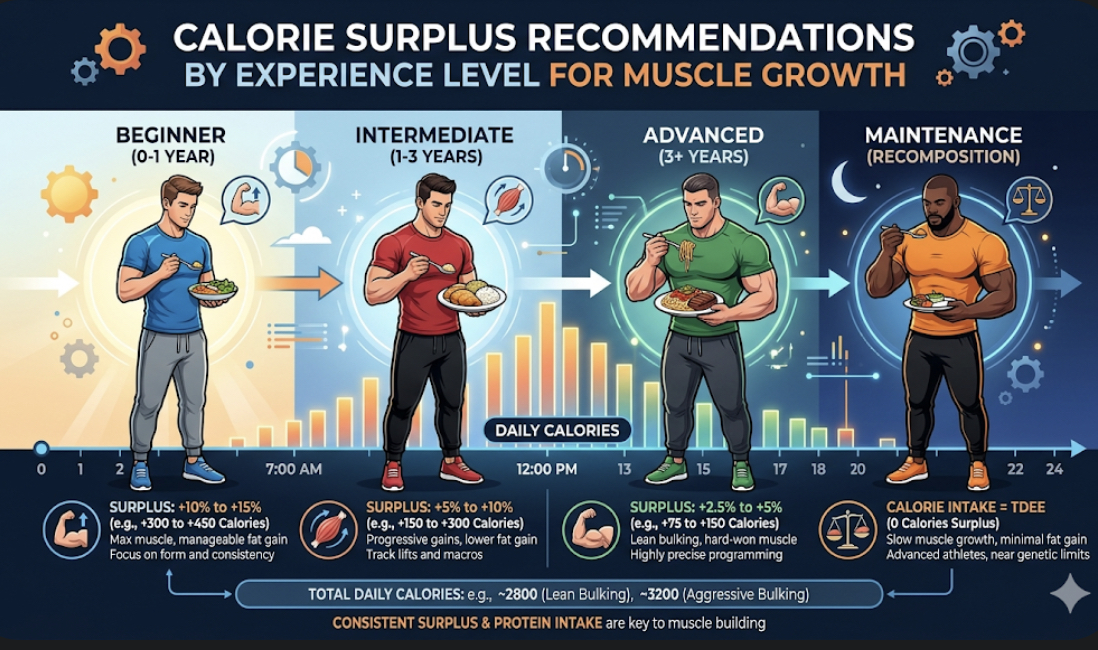
- Beginners: 250–350 kcal surplus. Newbie gains mean you can build muscle even at maintenance.
- Intermediates: 300–450 kcal surplus. Consistent progress requires a modest surplus.
- Advanced: 200–400 kcal surplus. Advanced lifters need less surplus as muscle gain is slower.
3.2. Weight Gain Targets
Aim for 0.25–0.5% of body weight per week. For an 80 kg person: 0.2–0.4 kg (0.4–0.9 lb) per week. This rate ensures most weight gained is muscle .
3.3. Adjust Based on Progress
- If gaining faster than target → reduce surplus by 100–150 kcal.
- If gaining slower and strength stalls → increase surplus by 100–150 kcal.
- If strength is progressing and weight is stable → you may be recomping—this is fine.
4. Macronutrients for Muscle Growth
4.1. Protein – The Building Block
1.6–2.2 g per kg of body weight daily. For an 80 kg person: 128–176 g protein. Spread across 3–5 meals (20–40 g per meal) to maximize muscle protein synthesis .
4.2. Fats – Hormonal Support
20–30% of total calories. Fats support testosterone production and overall health. For a 2,800 kcal diet, that's 62–93 g fat. Prioritize unsaturated fats (olive oil, nuts, avocado, fatty fish).
4.3. Carbohydrates – Fuel for Training
Fill remaining calories with carbs. Carbs replenish glycogen, improve workout performance, and support recovery. Focus on whole grains, fruits, legumes, and starchy vegetables.
4.4. Sample Macro Breakdown (3,000 kcal, 80 kg person)
- Protein: 160 g (640 kcal, 21%)
- Fat: 75 g (675 kcal, 22%)
- Carbs: 420 g (1,685 kcal, 57%)
5. Sample Meal Plans by Calorie Target
5.1. Omnivore Plan – 2,800 kcal, 160g Protein
- Breakfast (7:30): 4 eggs, 1 cup oatmeal with 1 tbsp peanut butter, 1 banana (650 kcal, 40g protein)
- Lunch (12:30): 200g grilled chicken breast, 1.5 cups brown rice, 1 cup broccoli, 1 tbsp olive oil (650 kcal, 50g protein)
- Snack (4:00): 200g Greek yogurt, 1 cup berries, 1 oz almonds (350 kcal, 25g protein)
- Dinner (7:30): 200g salmon or lean beef, 1.5 cups sweet potato, 2 cups mixed greens (650 kcal, 45g protein)
- Evening (10:00): 200g cottage cheese, 1 tbsp honey (250 kcal, 20g protein)
5.2. Omnivore Plan – 3,200 kcal, 170g Protein (for larger individuals)
- Breakfast: 4 eggs + 2 egg whites, 1.5 cups oatmeal with 2 tbsp peanut butter, 1 banana (800 kcal, 50g protein)
- Lunch: 220g chicken breast, 2 cups brown rice, 1.5 cups broccoli, 1 tbsp olive oil (750 kcal, 55g protein)
- Snack: 250g Greek yogurt, 1 cup berries, 1 oz almonds (400 kcal, 30g protein)
- Dinner: 220g salmon, 2 cups sweet potato, 2 cups greens (700 kcal, 50g protein)
- Evening: 250g cottage cheese, 1 tbsp honey, 1 tbsp peanut butter (350 kcal, 25g protein)
5.3. Vegan/Vegetarian Plan – 2,800 kcal, 150g Protein
- Breakfast: Tofu scramble (200g firm tofu), 1.5 cups oatmeal with 2 tbsp peanut butter, banana (700 kcal, 40g protein)
- Lunch: 200g tempeh, 1.5 cups quinoa, 1 cup roasted chickpeas, mixed greens (700 kcal, 45g protein)
- Snack: 200g silken tofu with berries, 2 tbsp hemp seeds (300 kcal, 20g protein)
- Dinner: 1.5 cups cooked lentils, 1.5 cups sweet potato, 150g edamame, 1 tbsp olive oil (650 kcal, 35g protein)
- Evening: 1 cup unsweetened soy milk + 1 tbsp chia seeds (150 kcal, 10g protein)
Gluten-Free Options
- Use certified gluten-free oats, quinoa, rice, or buckwheat.
- Ensure tempeh and tofu are gluten-free certified (most are).
6. Quick High-Calorie Recipes for Bulking
- Mass Gainer Smoothie (800 kcal, 45g protein): 1 scoop whey/pea protein, 1 cup oat milk, 1 banana, 2 tbsp peanut butter, 1 tbsp chia seeds, ½ cup frozen mango.
- Protein Pancakes (600 kcal, 35g protein): 2 scoops protein powder, ½ cup oats, 2 eggs, 1 banana, cinnamon. Top with Greek yogurt and berries.
- High-Calorie Oatmeal (700 kcal, 30g protein): 1 cup oats, 1 scoop protein, 2 tbsp peanut butter, 1 tbsp honey, 1 banana.
- Chicken Rice Bowl (700 kcal, 50g protein): 200g chicken breast, 1.5 cups rice, 1 cup beans, 1 tbsp olive oil, avocado.
7. Adjusting for Body Type and Metabolism
7.1. Hard Gainers (Ectomorphs)
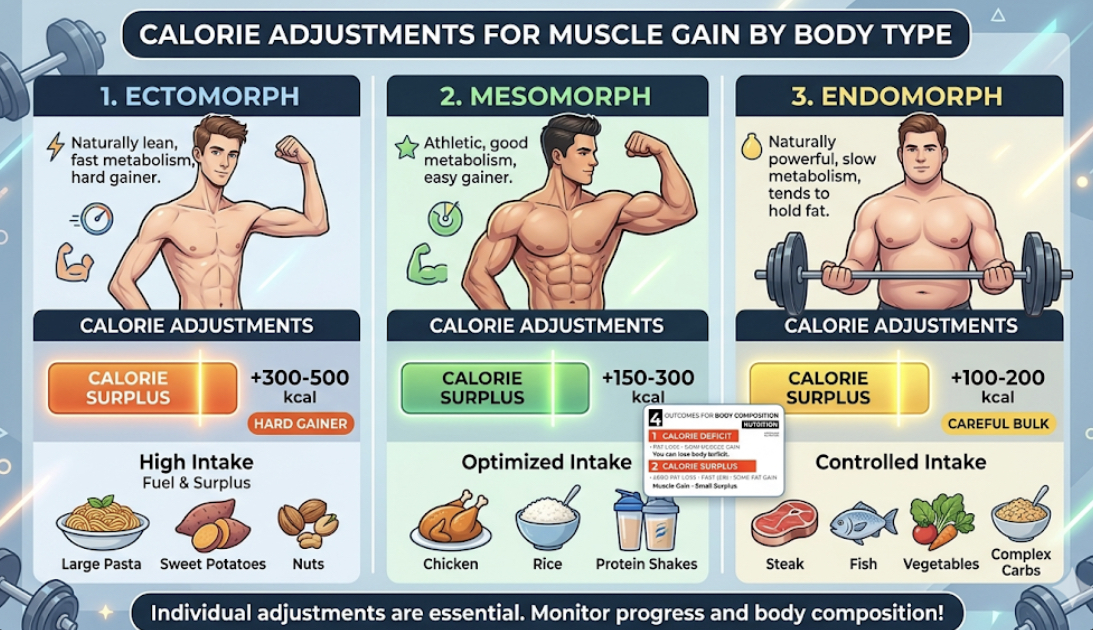
If you struggle to gain weight even with a surplus, you may need a larger surplus (400–600 kcal) and more frequent meals. Liquid calories (smoothies, shakes) can help. Prioritize calorie-dense foods like nuts, seeds, oils, and whole milk .
7.2. Easy Gainers (Endomorphs)
If you gain fat easily, use a smaller surplus (150–300 kcal) and monitor waist circumference closely. Keep carbs moderate and prioritize protein and fiber. Adjust surplus down if waist expands faster than 0.5 inch per month .
8. Common Calorie Mistakes That Kill Muscle Growth
- Mistake #1: Too large a surplus. Gaining >0.5–1% body weight per week adds mostly fat.
- Mistake #2: Too small a surplus. If weight is stable for weeks, you're not in a surplus—no growth.
- Mistake #3: Ignoring protein. Surplus without adequate protein = fat gain, not muscle.
- Mistake #4: Not tracking progress. You can't manage what you don't measure.
- Mistake #5: Dirty bulking with junk food. Poor nutrition can impair insulin sensitivity and nutrient partitioning.
- Mistake #6: Not adjusting as you gain weight. Maintenance calories increase with body weight—reassess every 4–6 weeks.
9. Frequently Asked Questions
How many calories should I eat to build muscle?
A small surplus of 250–500 calories above maintenance, yielding 0.25–0.5% body weight gain per week.
How do I find my maintenance calories?
Track your intake for 1–2 weeks while weight stays stable. Or use the Mifflin-St Jeor formula with an activity multiplier.
How much protein do I need while bulking?
1.6–2.2 grams per kilogram of body weight daily. For an 80 kg person, that's 128–176 grams of protein per day.
Can I build muscle in a calorie deficit?
Yes, if you're a beginner, have higher body fat, or are returning after a break. For advanced lifters, a surplus is usually needed.
How fast should I gain weight while bulking?
0.25–0.5% of body weight per week. For an 80 kg person, that's 0.2–0.4 kg per week.
Do I need to track calories forever?
No. Track for the first few weeks to calibrate. Once you learn portion sizes, you can eat intuitively while monitoring weight trends.
What if I'm gaining fat too fast?
Reduce your surplus by 100–150 kcal/day. Check waist measurements—if waist is expanding faster than 0.5 inch per month, cut back.
10. Related Resources
- Can You Build Muscle Without Supplements? (Natural Muscle Growth Guide)
- How to Know If You’re Gaining Muscle or Fat (Simple Tracking Guide)
- Best Weekly Weight Gain Rate for Muscle Growth (Lean Bulk Guide)
- How to Increase Strength Without Gaining Fat (Lean Strength Guide)
- How Long Does It Take to Build Noticeable Muscle? (Real Timeline Explained)
- Beginner Mistakes That Kill Muscle Growth (Avoid These 7 Errors)
11. Scientific References
- Slater, G. J., et al. (2019). Is an Energy Surplus Required to Maximize Skeletal Muscle Hypertrophy Associated With Resistance Training? Frontiers in Nutrition, 6, 131. PubMed
- Morton, R. W., et al. (2018). A systematic review, meta-analysis and meta-regression of the effect of protein supplementation on resistance training-induced gains in muscle mass and strength in healthy adults. British Journal of Sports Medicine, 52(6), 376–384. PubMed
- Helms, E. R., et al. (2014). Evidence-based recommendations for natural bodybuilding contest preparation. Journal of the International Society of Sports Nutrition, 11(1), 20. PubMed
- Schoenfeld, B. J., et al. (2017). Effects of Resistance Training Frequency on Measures of Muscle Hypertrophy: A Systematic Review and Meta-Analysis. Sports Medicine, 46(11), 1689–1697. PubMed
- Iraki, J., et al. (2019). Nutrition Recommendations for Bodybuilders: An Evidence-Based Approach. Journal of the International Society of Sports Nutrition, 16(1), 17. PubMed
- ACSM. (2021). Nutrition and Athletic Performance. Medicine & Science in Sports & Exercise, 53(3), 600–618. PubMed
- Antonio, J., et al. (2016). A High Protein Diet (3.4 g/kg/d) Combined with a Heavy Resistance Training Program Improves Body Composition in Healthy Trained Men. Journal of the International Society of Sports Nutrition, 13(1), 1–7. PubMed
Join the conversation