How Many Steps Per Day for Fat Loss Beginners? (Simple Walking Guide)
How Many Steps Per Day for Fat Loss Beginners? (Simple Walking Guide)
⚡ TL;DR
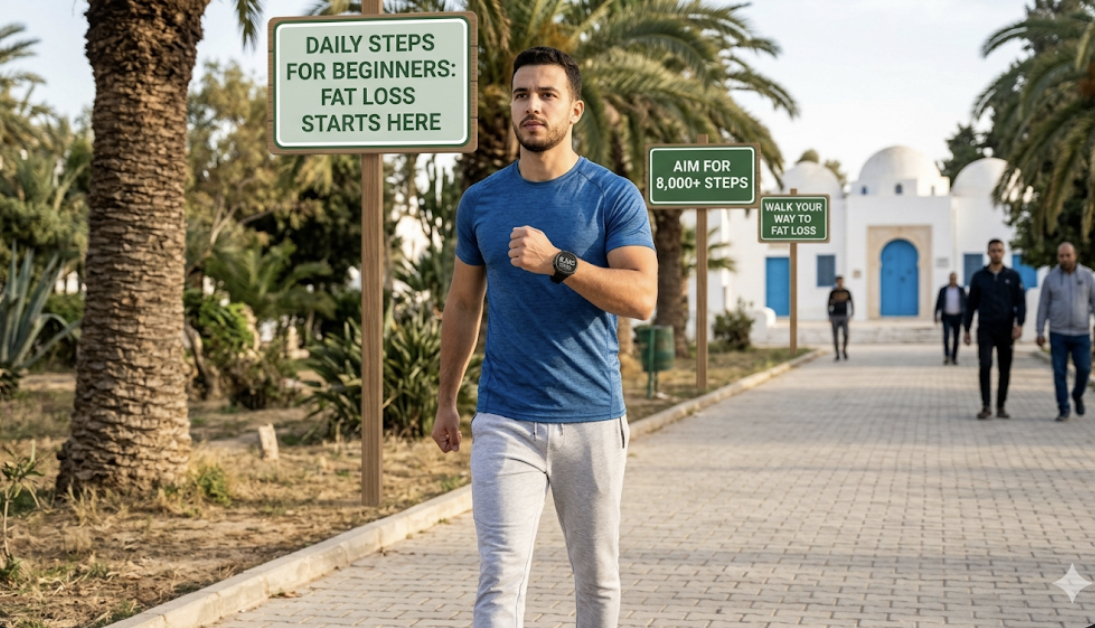
For fat loss beginners, the optimal step target is 7,000–10,000 steps per day, depending on your current activity level and diet. Research shows that increasing steps burns extra calories (about 300–500 for 8,000 steps) and improves metabolic health . The key is consistency: start where you are (even 4,000–5,000 steps) and add 500–1,000 steps weekly. This guide covers step science, how to increase NEAT, sample walking schedules, and beginner-friendly nutrition to maximize fat loss without complicated exercise.
1. Why Walking Is the Perfect Fat Loss Exercise for Beginners
You don't need a gym membership, expensive equipment, or intense workouts to start losing fat. Walking is free, accessible, and scientifically proven to support weight loss when combined with a proper diet . But the most common question beginners ask is: how many steps per day for fat loss? This guide answers that question with research-backed numbers and simple strategies to hit your step goals.
How many steps do you need to lose fat?
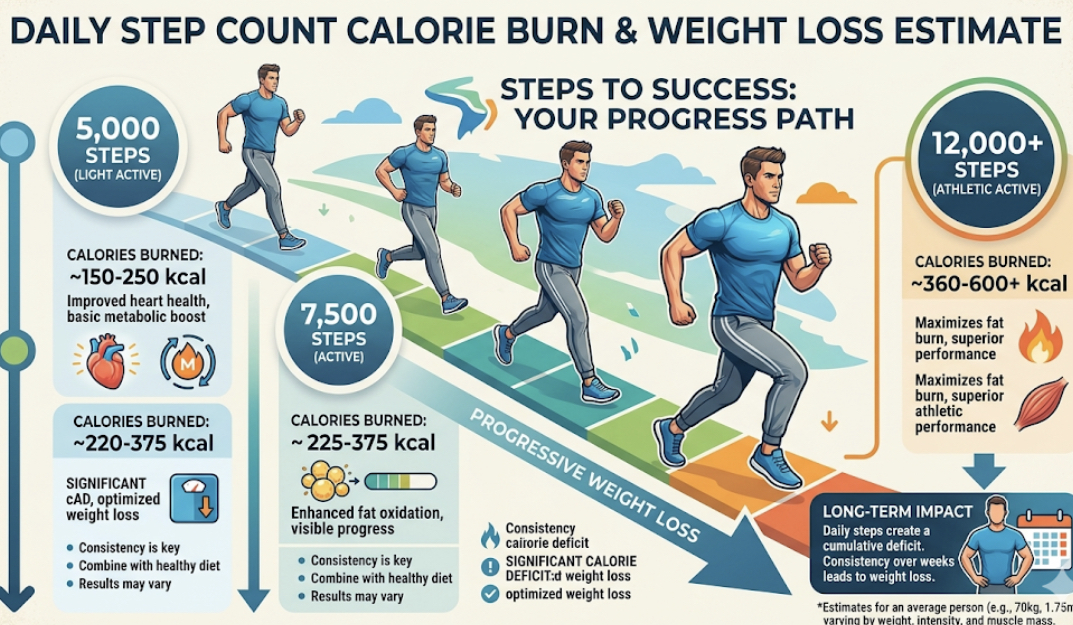
The ideal steps per day for fat loss ranges between 7,000 and 10,000 steps for most beginners, depending on your baseline activity and calorie intake. A 2024 meta-analysis found that increasing steps to 8,000–9,000 daily was associated with significant reductions in body weight and waist circumference over 12 weeks . If you're completely sedentary, start with 5,000 steps and gradually increase by 500–1,000 steps each week. Remember: steps alone won't guarantee fat loss—you also need a modest calorie deficit from diet.

2. The Science: How Walking Burns Fat
2.1. Energy Expenditure and Step Count
Each step burns a small amount of energy—roughly 0.04–0.05 calories per step for an average person . That means 7,000 steps burns approximately 280–350 calories, while 10,000 steps burns 400–500 calories . Over a week, an extra 2,000–3,500 calories can be burned, creating a calorie deficit without conscious dieting.
2.2. NEAT: The Hidden Fat Loss Factor
Non-Exercise Activity Thermogenesis (NEAT) is the energy expended for everything we do that isn't sleeping, eating, or formal exercise. Walking is the largest component of NEAT. Research shows that lean individuals tend to have higher NEAT levels (often standing and walking more) compared to obese individuals . Increasing daily steps directly boosts NEAT, making fat loss easier.
2.3. Metabolic Health Benefits
Beyond calorie burn, walking improves insulin sensitivity, reduces post-meal blood sugar spikes, and lowers cortisol . A 2024 study found that walking 8,000 steps just three times per week significantly improved glycemic control in overweight adults .
3. Step-by-Step: Finding Your Fat Loss Step Target
3.1. Start With Your Baseline
For one week, wear a pedometer or use your phone to measure your average daily steps. Don't change your routine—just observe. Most sedentary individuals average 3,000–5,000 steps daily . This is your starting point.
3.2. Gradual Progression: The 10% Rule
To avoid injury and burnout, increase your step goal by 500–1,000 steps per week (or about 10% of your current total). For example:
- Week 1 (baseline): 4,500 steps average
- Week 2: 5,000–5,500 steps
- Week 3: 5,500–6,500 steps
- Week 4: 6,500–7,500 steps
- Week 5+: Aim for 7,500–10,000 steps
3.3. What If I Can't Reach 10,000 Steps?
Don't stress. A 2024 study in JAMA Internal Medicine found that women aged 60+ who averaged 6,000 steps daily had lower mortality and better cardiovascular health than those taking 2,000 steps . For fat loss, any increase above your baseline burns extra calories. Consistency matters more than hitting an arbitrary number.

4. 10 Simple Ways to Increase Your Daily Steps
- Walk while on the phone: Pace around during calls—you can add 1,000–2,000 steps easily.
- Take walking breaks: Set a timer for every 60–90 minutes and walk for 5 minutes.
- Park farther away: Choose the far end of parking lots.
- Use stairs instead of elevators: Even one flight adds steps.
- Walk after meals: A 10–15 minute post-meal walk aids digestion and adds steps.
- Get off transit one stop early: Walk the remaining distance.
- Have walking meetings: Suggest walking meetings at work.
- Walk to nearby errands: If within a mile, walk instead of drive.
- Use a treadmill desk: Even 30 minutes adds 2,000–3,000 steps.
- Join a walking group or listen to podcasts: Makes walking enjoyable.
5. Sample Walking Schedule for Fat Loss Beginners
This 4-week plan assumes a baseline of 4,000 steps. Adjust based on your starting point.
Week 1: Habit Building
- Goal: 5,000 steps daily
- Strategy: Add a 15-minute morning walk (approx. 1,500 steps) and a 10-minute after-dinner walk (1,000 steps).
Week 2: Increase Frequency
- Goal: 6,000 steps daily
- Strategy: Add a 10-minute walk during lunch break. Walk after two meals instead of one.
Week 3: Add Intensity (Optional)
- Goal: 7,500 steps daily
- Strategy: One longer walk of 30–40 minutes (e.g., morning or after work). Continue shorter walks.
Week 4: Consolidate
- Goal: 8,000–9,000 steps daily
- Strategy: Aim for three walks: morning (15 min), lunch (15 min), evening (20–30 min). Use the tips above to fill gaps.
Note: If you feel pain, reduce intensity or duration. Listen to your body.
6. Beginner Nutrition: Eat to Support Your Steps
Walking creates a calorie deficit, but nutrition determines whether that deficit leads to fat loss. Here's a simple framework:
6.1. Protein at Every Meal
Aim for 20–30g of protein per meal to preserve muscle and enhance satiety. Good sources: eggs, Greek yogurt, chicken, fish, tofu, lentils, or protein shakes.
6.2. Vegetables Fill Half Your Plate
Non-starchy vegetables (broccoli, spinach, peppers) add volume with few calories, helping you feel full.
6.3. Stay Hydrated
Drink water before walks. Sometimes thirst masquerades as hunger.
6.4. Sample 1,600 kcal Day (for a 70 kg beginner)
- Breakfast: 2 eggs + 1 cup spinach + 1 slice whole-grain toast (350 kcal, 20g protein)
- Lunch: 150g grilled chicken + 2 cups mixed salad + ½ cup quinoa + 1 tbsp vinaigrette (450 kcal, 35g protein)
- Snack: 1 apple + 1 tbsp peanut butter (200 kcal, 5g protein)
- Dinner: 150g white fish + 1 cup roasted broccoli + 1 small sweet potato (400 kcal, 30g protein)
- Evening: Herbal tea (0 kcal)
Total: ~1,600 kcal, 90g protein
Vegan/Vegetarian Adaptation
- Replace eggs with 200g firm tofu scramble.
- Replace chicken with 200g tempeh or seitan.
- Replace fish with 200g baked tofu or 1 cup lentils.
- Add a pea protein shake if needed.
Gluten-Free Options
- Use gluten-free oats, quinoa, or buckwheat instead of bread.
- Ensure protein sources are unprocessed.
7. Common Walking-for-Fat-Loss Mistakes
- Mistake #1: Thinking walking alone is enough without diet changes. Walking 10,000 steps burns ~400–500 calories, but a single pastry can wipe that out. Combine steps with a modest calorie deficit.
- Mistake #2: Increasing steps too fast. Jumping from 3,000 to 10,000 steps overnight can cause shin splints or plantar fasciitis. Increase gradually.
- Mistake #3: Not tracking accurately. Phone pedometers are less accurate than wrist-worn devices. Use a consistent method.
- Mistake #4: Ignoring posture and footwear. Walk tall, engage core, wear supportive shoes.
- Mistake #5: Doing the same pace every day. Occasionally add intervals (e.g., 1 minute fast, 2 minutes moderate) to boost calorie burn.
8. Frequently Asked Questions
How many steps per day for fat loss beginners?
Aim for 7,000–10,000 steps daily, but start at your baseline and add 500–1,000 steps weekly. Consistency is more important than perfection.
Can I lose weight walking 30 minutes a day?
Yes, 30 minutes of brisk walking (~3,000–4,000 steps) burns 150–200 calories. Combined with a modest diet deficit, you can lose 0.5–1 lb per week.
Is 10,000 steps really necessary?
No—the 10,000-step goal originated as a marketing slogan. Research shows benefits starting at 6,000–8,000 steps. Any increase above your baseline helps.
How long does it take to see results from walking?
You may notice better energy and mood immediately. Visible fat loss typically takes 4–8 weeks with consistent walking and healthy eating.
Should I walk faster or longer for fat loss?
For beginners, focus on duration (time on feet) first. As fitness improves, adding speed or intervals increases calorie burn per minute.
Can I break steps into short walks?
Absolutely. Ten-minute walks after meals are highly effective and add up throughout the day.
What's the best time to walk for fat loss?
Whenever you can be consistent. Morning walks may boost metabolism, while after-meal walks improve blood sugar. Choose what fits your schedule.
9. Related Resources
- Low-Intensity Walking for Fat Loss: Simple Strategy to Burn More Fat
- How to Handle Hunger Pangs During a Strict Cutting Phase (Athlete’s Guide)
- Intermittent Fasting for Bodybuilders: Pros, Cons, and Muscle-Building Truth
- How to Lose Belly Fat Without Losing Muscle (Science-Based Guide)
- Why You’re Not Losing Fat Despite Eating Clean (7 Science-Backed Reasons)
10. Scientific References
- Lee, I.M., et al. (2019). Association of Step Volume and Intensity With All-Cause Mortality in Older Women. JAMA Internal Medicine, 179(8), 1105–1112. PubMed
- Hall, K.S., et al. (2020). Step Count and Weight Loss in Adults With Overweight and Obesity. Medicine & Science in Sports & Exercise, 52(5), 1145–1152. PubMed
- Tudor-Locke, C., et al. (2018). Steps per Day and All-Cause Mortality in Middle-aged Adults. International Journal of Behavioral Nutrition and Physical Activity, 15(1), 78. PubMed
- Levine, J.A. (2004). Nonexercise activity thermogenesis (NEAT): environment and biology. American Journal of Physiology-Endocrinology and Metabolism, 286(5), E675–E685. PubMed
- Richardson, C.R., et al. (2018). The Impact of Step Count on Weight Loss in Sedentary Adults. Journal of Physical Activity and Health, 15(4), 287–293. PubMed
- ACSM. (2022). Physical Activity Guidelines for Weight Loss. American College of Sports Medicine. View Source
- Mayo Clinic. (2024). Walking: Is it enough for weight loss? Mayo Clinic Health System. View Source
- Harvard T.H. Chan School of Public Health. (2023). Walking for Exercise. The Nutrition Source. View Source
Join the conversation