How to Stay Full While Cutting Calories (Hunger Control Guide)
How to Stay Full While Cutting Calories (Hunger Control Guide)

⚡ TL;DR
Learning how to stay full while cutting calories is the secret to sustainable fat loss. Research shows that your body is more sensitive to the volume of food than the calories it contains . By focusing on high-volume, low-calorie foods (vegetables, lean protein, whole fruits), you can eat satisfying portions while maintaining a deficit . Aim for 0.7-1g of protein per pound of body weight to regulate hunger hormones . Fiber slows digestion and stabilizes blood sugar . This guide provides actionable strategies, sample meal plans, and vegan options to help you control hunger without white-knuckling your way through the day.
1. The Hunger Problem: Why Cutting Calories Feels So Hard
You've done the math. You've set your calories at a perfect deficit—500 below maintenance. You're ready to shed fat. Then hunger hits. By 3 p.m., you're raiding the snack drawer. By evening, willpower is gone, and the deficit is blown.
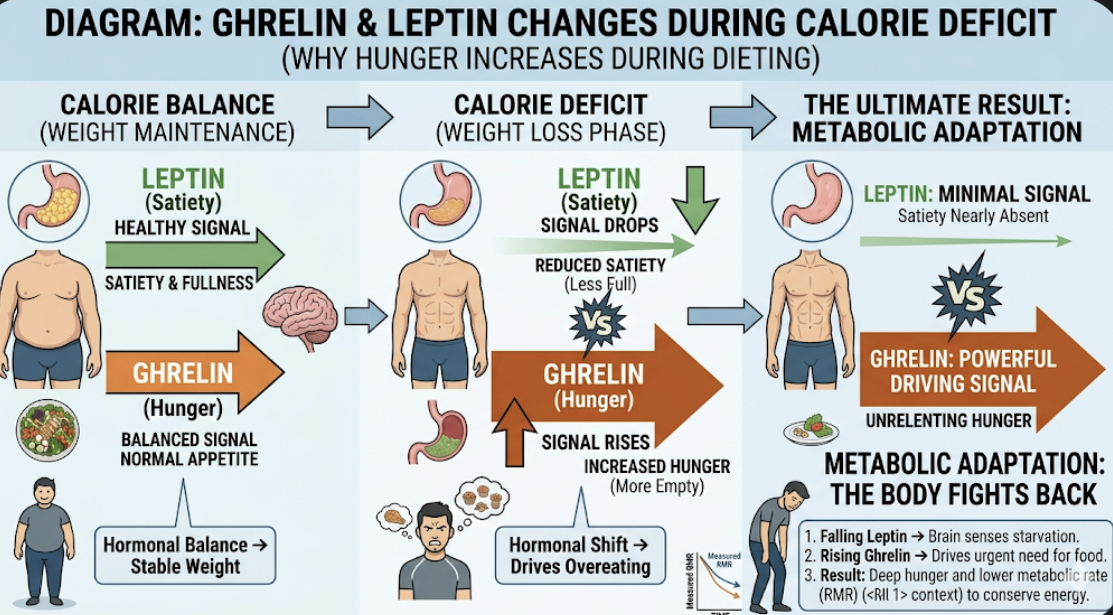
This isn't a lack of discipline; it's a lack of strategy. When you cut calories, your body doesn't think "fat loss goal"—it thinks "famine" and ramps up hunger hormones (ghrelin) while suppressing fullness signals (leptin) . The key to how to stay full while cutting calories isn't more willpower—it's working with your biology by choosing foods and habits that naturally suppress appetite. This guide provides 7 science-backed strategies to keep hunger at bay.
2. Why Do I Feel Hungry in a Calorie Deficit?
Hunger during a calorie deficit happens for three main reasons: low volume foods, inadequate protein, and poor meal timing. When you cut calories, your body expects the same volume of food. If you replace high-volume foods (like vegetables) with tiny portions of calorie-dense foods, your stomach isn't stretched enough to trigger fullness signals .
Additionally, protein deficiency means less PYY (satiety hormone) and more ghrelin (hunger hormone) . And erratic meal timing causes blood sugar crashes that trigger intense hunger .
3. The Science: How Fullness Works
3.1. The Volume Principle
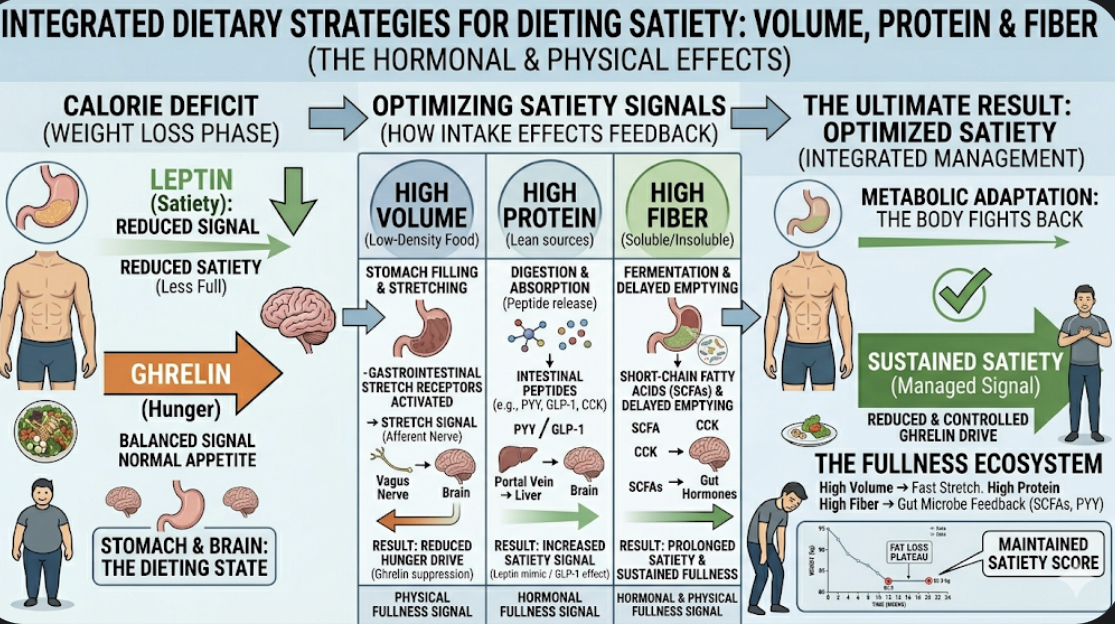
Research shows that our body is far more sensitive to the absolute amount of food we eat rather than the calories it provides . This is why if you double the caloric content of your normal volume of food (using fattier foods, oil, etc.), you'd probably have no trouble eating it all. Your body doesn't detect the calorie increase . Conversely, if you maintain volume while reducing calories, you stay full .
3.2. Hormonal Regulators
After weight loss, the "energy gap" between what your body wants and what you're eating widens. Peripheral factors like increased orexigenic peptides (ghrelin) and decreased anorexigenic peptides (PYY, CCK, GLP-1) communicate a state of nutrient deprivation to the brain . This results in increased hunger and lower satiation .
3.3. Protein's Satiety Advantage
Protein helps regulate hunger hormones—it helps leptin (the full hormone) hang around longer in your system and keeps ghrelin at bay . Protein may suppress appetite for 4-6 hours after consumption, compared to carbohydrates which leave your stomach grumbling after just an hour .
4. Strategy #1: Volume Eating—Fill Your Stomach, Not Your Calories
4.1. What is Volume Eating?
Volume eating means choosing foods that take up a lot of space in your stomach but provide minimal calories. This is based on the principle of calorie density—the number of calories per gram of food. Vegetables, fruits, and broth-based soups have low calorie density .
4.2. Best Volume Foods
- Leafy greens: Spinach, kale, lettuce—virtually no calories, huge volume .
- High-water vegetables: Cucumber, zucchini, celery, tomatoes, cauliflower, broccoli .
- Whole fruits: Berries, melon, apples, pears (eat the skin for fiber) .
- Broth-based soups: Start meals with vegetable soup to expand stomach before eating .
4.3. Volume Swaps That Work
- Swap rice for cauliflower rice (mix 50/50 for familiarity)
- Swap pasta for zucchini noodles or shirataki noodles
- Swap chips for air-popped popcorn (3 cups popcorn = 100 calories)
- Swap granola for steel-cut oats
- Swap fries for baked potatoes
5. Strategy #2: Protein—The Hunger Hormone Regulator
5.1. How Much Protein Do You Need?
Aim for 0.7-1g of protein per pound of body weight daily . For a 170 lb person, that's 120-170g protein. This might seem high, but it's achievable with smart planning .
5.2. Protein Timing
- Breakfast: 30-40g protein—front-loading your day reduces cravings .
- Every meal: Include a protein source with each meal and snack .
- Before bed: Casein protein or cottage cheese supports overnight satiety .
5.3. Best Lean Protein Sources
- Animal: Chicken breast, turkey, salmon, egg whites, Greek yogurt, cottage cheese .
- Plant: Tofu, tempeh, lentils, chickpeas, edamame, pea protein .
- Swaps: 99% lean ground turkey has nearly twice the volume of 80/20 beef for the same calories .
6. Strategy #3: Fiber—The Slow-Digesting Satiety Booster
6.1. Why Fiber Works
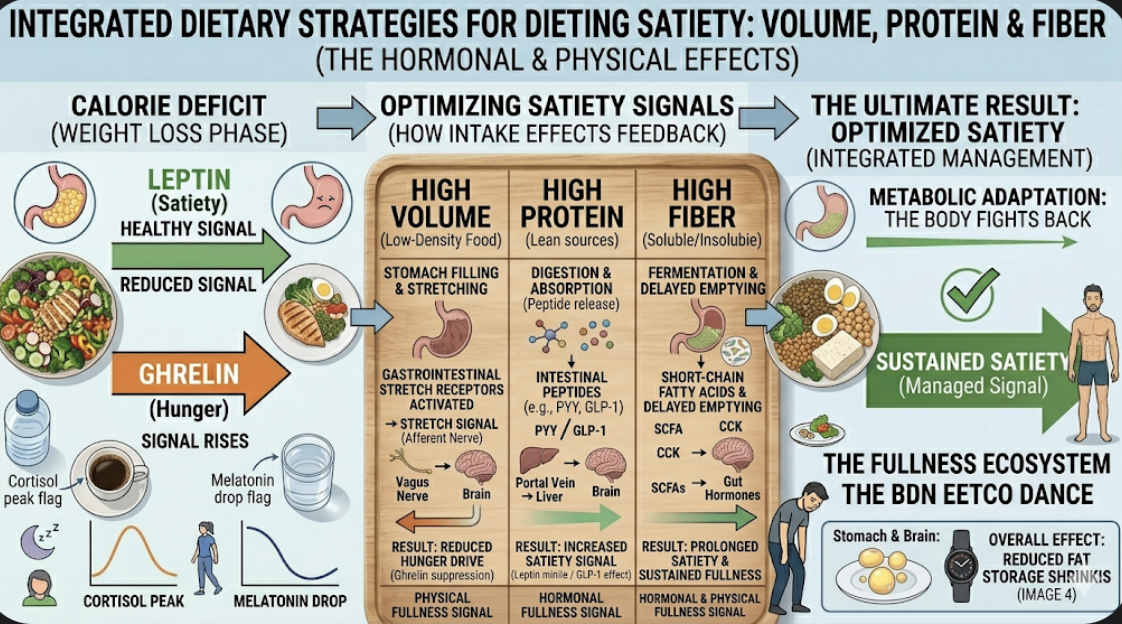
Fiber doesn't get digested quickly in your body. It takes time to move through, so it sticks around longer and keeps you feeling full . Fiber also slows digestion and reduces blood sugar spikes, preventing energy crashes that trigger hunger .
6.2. Best Fiber Sources
- Legumes: Lentils, chickpeas, black beans, edamame .
- Fruits: Apples, pears, berries, bananas (choose whole fruit over juice) .
- Vegetables: Broccoli, Brussels sprouts, carrots .
- Grains: Oats, quinoa, barley .
- Seeds: Chia seeds, flaxseeds (add to yogurt or oatmeal) .
6.3. Daily Fiber Target
Aim for 25-35g of fiber per day. Most people fall short—increase gradually to avoid digestive discomfort .
7. Strategy #4: Hydration—Water as an Appetite Suppressant
7.1. Water Before Meals
Drinking 16-20 ounces of water 20-30 minutes before meals kickstarts stomach expansion, creating a foundation of fullness that makes smaller portions feel more satisfying .
7.2. Thirst vs. Hunger
We often mistake thirst for hunger . The sensation of thirst can feel similar to hunger, leading to unnecessary snacking. When you feel hungry, try drinking a glass of water first and waiting 15 minutes .
7.3. Warm Beverages
Hot liquids like coffee or tea may expand the stomach and suppress appetite. Coffee may also raise metabolic rate . Just avoid sugary creamers .
8. Strategy #5: Meal Timing and Frequency
8.1. Avoid Extreme Deficits
Aim for a moderate deficit of 300-500 calories below maintenance. Aggressive deficits (800+ calories below) trigger extreme hunger, food obsession, and metabolic adaptation .
8.2. Front-Load Calories
Eating earlier in the day and less at night may help control appetite better . This is called "chrononutrition"—a hearty breakfast and lighter dinner can reduce hunger .
8.3. Eat at Regular Intervals
Don't skip meals. Skipping meals can cause blood sugar to drop, which leads to strong hunger later . Consistent meal timing keeps energy and hunger balanced .
8.4. The Dinner Window
Eating dinner earlier (e.g., 6 p.m.) and not snacking afterward creates a natural fasting window. Initially challenging, but your body adapts .
9. Strategy #6: Sleep—The Overlooked Hunger Factor
9.1. The Research
Even one night of poor sleep can increase ghrelin by up to 15% and decrease leptin by 26% . Sleep-deprived people eat an average of 300 more calories per day than well-rested people .
9.2. How Much Sleep?
Aim for 7-9 hours of quality sleep nightly. This regulates hunger hormones and improves decision-making around food .
9.3. Sleep Hygiene Tips
- Consistent sleep schedule
- Cool, dark, quiet environment
- No screens 30-60 minutes before bed
- Avoid caffeine after 2pm
10. Sample 1800-Calorie Satisfying Day (150g Protein)
This sample day uses volume eating, protein at every meal, and strategic timing to keep you full .
Breakfast (7:30 AM) – 400 kcal | 35g protein
- 3 eggs scrambled with spinach (18g protein)
- 1 slice whole-grain toast (3g protein)
- 1 cup Greek yogurt, plain (20g protein)
- ½ cup berries
Lunch (12:30 PM) – 450 kcal | 35g protein
- 5 oz grilled chicken breast (35g protein)
- 2 cups mixed greens with lemon juice
- ½ cup quinoa (4g protein)
- 1 tbsp olive oil
Afternoon Snack (4:00 PM) – 200 kcal | 15g protein
- 1 cup cottage cheese (25g protein) or 1 scoop protein shake
Dinner (7:30 PM) – 500 kcal | 40g protein
- 5 oz salmon or lean beef (35g protein)
- 1 cup roasted broccoli
- 1 medium sweet potato (4g protein)
Evening Snack (optional) – 150 kcal | 10g protein
- 1 cup Greek yogurt or 1 scoop casein
Total: ~1,700 kcal, ~140g protein (adjust portions to hit 1,800)
10.1. Vegan/Vegetarian Adaptation
- Replace eggs with tofu scramble (6 oz firm tofu = 15g protein)
- Replace chicken with 6 oz tempeh (30g) or seitan
- Replace salmon with 6 oz extra-firm tofu + 1 cup lentils
- Add nutritional yeast for B12 and protein boost
- Use pea protein shakes to hit protein targets
11. Common Hunger Management Mistakes
- Mistake #1: Too large a deficit. Warning signs: constant food thoughts, difficulty sleeping, extreme hunger, irritability . Stick to 300-500 below maintenance .
- Mistake #2: Skimping on protein. Protein is the most satiating macronutrient. Don't drop below 0.7g/lb .
- Mistake #3: Ignoring fiber. Most people fall short of 25-35g daily. Make vegetables half your plate .
- Mistake #4: Poor sleep. One night of bad sleep can derail hunger hormones .
- Mistake #5: Not drinking water. Pre-meal water reduces calorie intake by 22% .
- Mistake #6: Relying on "diet" processed foods. These are often low in nutrients and can confuse hunger signals .
12. Frequently Asked Questions
How to stay full while cutting calories?
Focus on high-volume, low-calorie foods (vegetables, fruits, lean protein), eat adequate protein (0.7-1g/lb), drink water before meals, and get enough sleep. These strategies work with your biology to suppress hunger naturally .
Why do I feel hungry in a calorie deficit?
Hunger during a deficit happens because of low volume foods (your stomach isn't stretched), inadequate protein (low satiety hormones), and poor meal timing (blood sugar crashes). Your body also increases ghrelin and decreases leptin to fight the deficit .
What are the best low-calorie filling foods?
Leafy greens (spinach, kale), high-water vegetables (cucumber, zucchini), berries, apples, broth-based soups, lean proteins (chicken, fish, egg whites), and legumes (lentils, chickpeas) are excellent choices .
How much protein do I need to stay full?
Aim for 0.7-1g per pound of body weight daily. For a 170 lb person, that's 120-170g. Include protein at every meal, especially breakfast (30-40g) .
Does drinking water before meals help with hunger?
Yes. Drinking 16-20 oz of water 20-30 minutes before meals expands the stomach and triggers fullness signals, helping you eat less while feeling satisfied .
Can poor sleep make me hungrier?
Absolutely. Even one night of poor sleep can increase ghrelin by 15% and decrease leptin by 26%, leading to 300 more calories consumed the next day .
What foods should I avoid when cutting?
Avoid low-volume, high-calorie foods like chips, pastries, sweets, fried foods, and sugary drinks. They provide little satiety despite high calories .
13. Related Resources
- Low-Intensity Walking for Fat Loss: Simple Strategy to Burn More Fat
- How to Handle Hunger Pangs During a Strict Cutting Phase (Athlete’s Guide)
- Intermittent Fasting for Bodybuilders: Pros, Cons, and Muscle-Building Truth
- How to Lose Belly Fat Without Losing Muscle (Science-Based Guide)
- Why You’re Not Losing Fat Despite Eating Clean (7 Science-Backed Reasons)
14. Scientific References
- Matthews, M. (2025). The Easiest Way to Beat Hunger. Legion Athletics. View Source
- NIH. (2017). Figure 1: Energy intake and energy expenditure balance. PMC, 5452198. View Source
- Cleveland Clinic. (2024). Foods That Keep You Feeling Full. Health Essentials. View Source
- Sabin, N. (2025). 5 No-Nonsense Ways to Manage Hunger During a Fat Loss Phase. Born Fitness. View Source
- Cleveland Clinic. (2024). How To Suppress Appetite Naturally. Health Essentials. View Source
- THIP Media. (2025). Hunger on a diet: Why does eating less feel so hard? thip.media. View Source
- University of Kerbala. (2026). How can I eat and feel full without gaining weight? pharmacy.uokerbala.edu.iq. View Source
- Spatz Medical. (2025). High Volume Low Calorie Foods: Feel Full, Lose Weight. spatzmedical.com. View Source
- Westerterp-Plantenga, M.S., et al. (2012). Dietary protein, metabolism, and body-weight regulation. American Journal of Clinical Nutrition, 95(2), 297-304. PubMed
- Rolls, B.J. (2009). The relationship between dietary energy density and energy intake. Physiology and Behavior, 97(5), 609-615. PubMed
Join the conversation