How to Track Fat Loss Without a Scale (Accurate Progress Methods)
How to Track Fat Loss Without a Scale (Accurate Progress Methods)

⚡ TL;DR – Track Fat Loss Without a Scale
The scale can't differentiate between fat, muscle, water, and glycogen. To accurately track fat loss without scale, use a combination of: weekly body measurements (waist, hips), progress photos (same lighting/pose), how your clothes fit, strength progression, and body fat percentage assessments (skinfold calipers or DEXA). This guide provides step-by-step protocols for each method, plus a printable tracker and sample meal plan to support your goals.
1. Why the Scale is a Liar – And What to Do Instead
You step on the scale. It's up 0.5kg from yesterday. Panic sets in. But here's the truth: that number reflects water retention, glycogen stores, bowel content, and muscle inflammation – not fat gain. Learning how to track weight loss progress without obsessing over the scale is essential for mental health and accurate assessment.
How can I track fat loss without weighing myself?
You can accurately track fat loss without scale using four primary methods: body measurements (waist, hip, thigh circumference), progress photos (front/side/back monthly), strength tracking (progressive overload in the gym), and how clothes fit (reference jeans). Research shows these correlate strongly with actual fat loss (Heymsfield et al., 2018).
2. The Science: Why Body Weight Fluctuates Daily
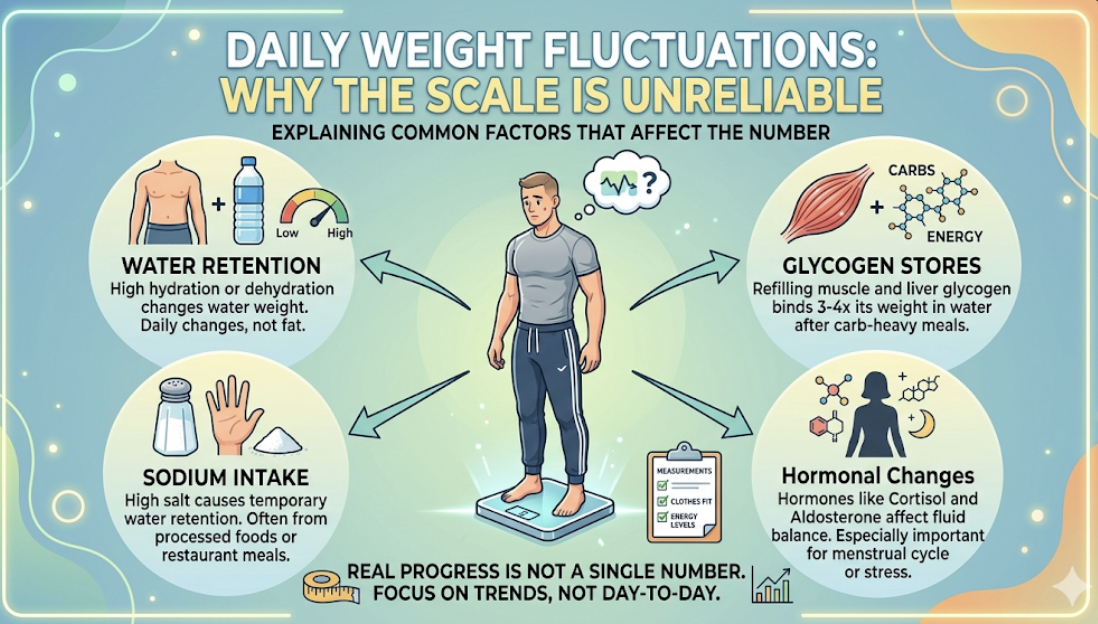
2.1 Water Weight and Glycogen
Each gram of glycogen binds 3-4 grams of water. After a high-carb meal or intense training, glycogen supercompensation can increase body weight by 2-3kg without any fat gain (Kreitzman et al., 1992).
2.2 Hormonal Influences
Women can retain 1-2kg of water during certain phases of the menstrual cycle due to estrogen and progesterone fluctuations (White et al., 2011). Cortisol from stress also causes water retention.
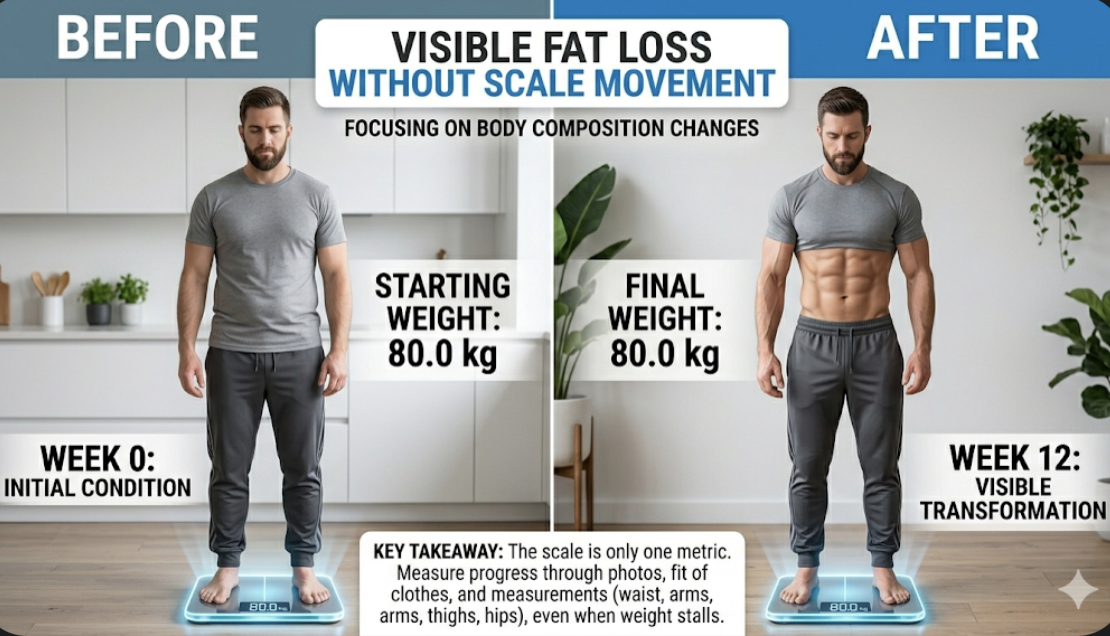
2.3 Muscle Gain Masks Fat Loss
During body recomposition, you may lose fat and gain muscle simultaneously – the scale stays stuck while your body composition improves (Thomas et al., 2016).
3. Method #1: Body Measurements – The Gold Standard
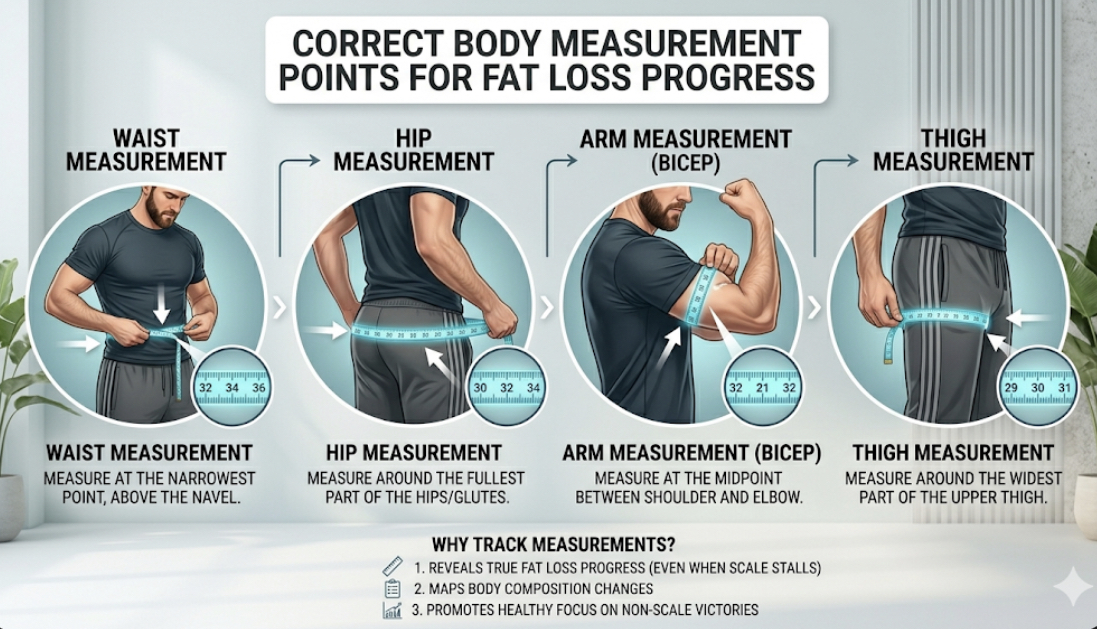
3.1 What to Measure
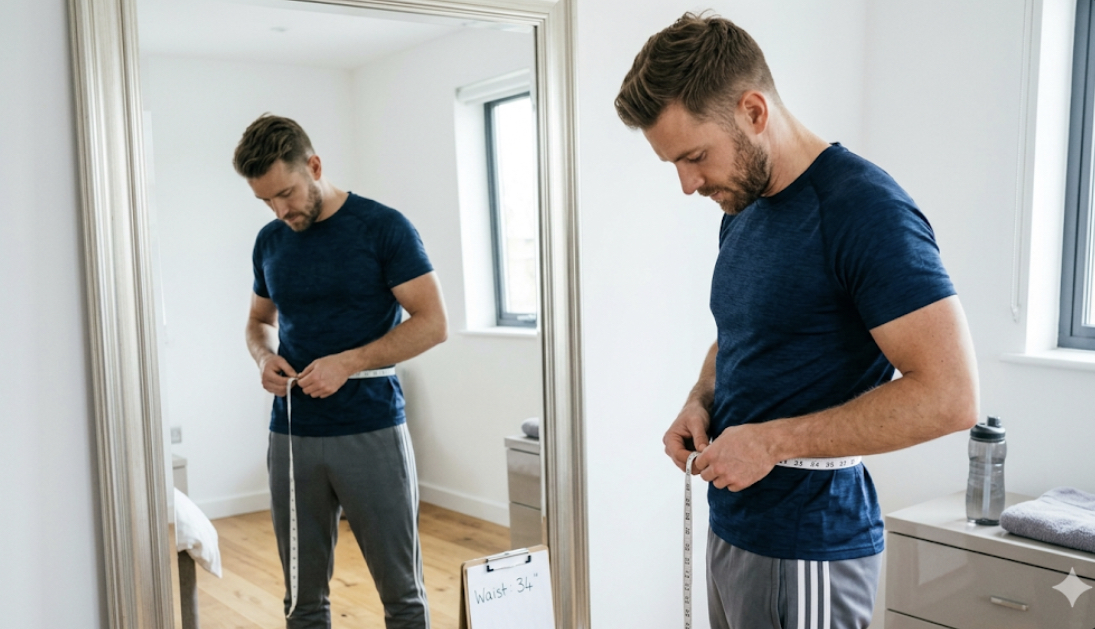
- Waist: At narrowest point (or midpoint between ribs and iliac crest).
- Hips: At widest point around glutes.
- Chest: At nipple line, relaxed.
- Arms: Mid-bicep, relaxed and flexed.
- Thighs: Mid-point between hip and knee.
3.2 Protocol for Accuracy
- Measure same time each week (e.g., Friday morning, after bathroom, before food).
- Use a flexible, non-stretch tape.
- Pull snug but not compressing skin.
- Take 2-3 measurements and average.
Research indicates that waist circumference change is strongly correlated with visceral fat loss (r=0.85) (Pouliot et al., 1994).
4. Method #2: Progress Photos – Visual Proof
4.1 How to Take Effective Photos
- Same location, same lighting (natural light ideal).
- Same time of day (morning fasted recommended).
- Three poses: front, side, back.
- Minimal clothing (shorts/swimsuit).
- Use a tripod or have someone help for consistency.
4.2 Frequency
Take photos every 2-4 weeks. Visual changes are often visible before measurements change (Ross et al., 2000).
5. Method #3: Strength Gains & Performance
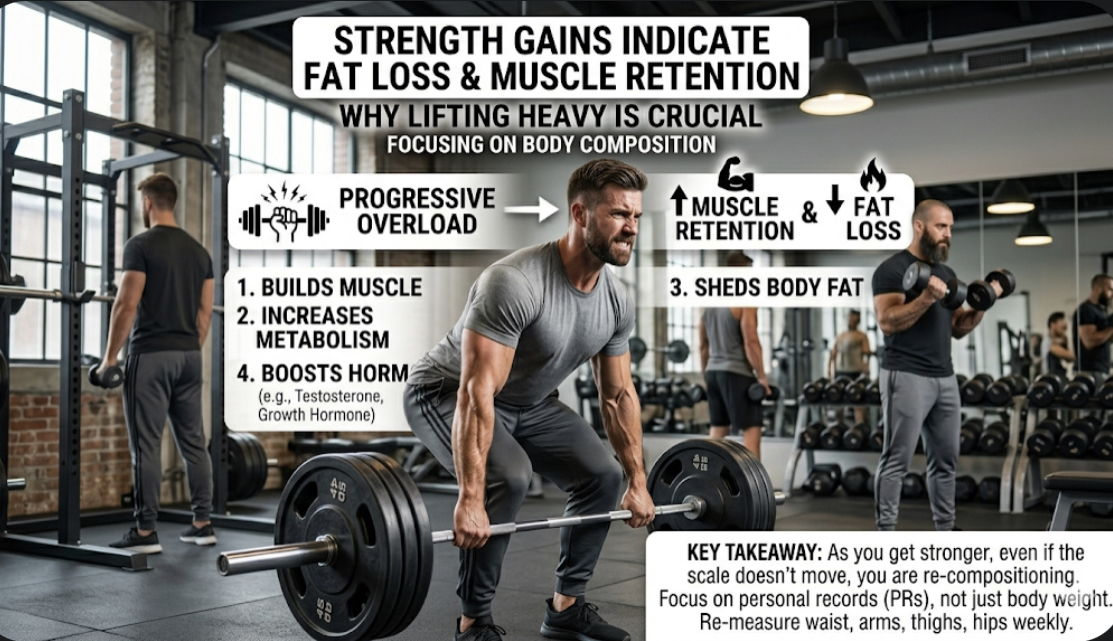
If you're getting stronger while losing weight, you're likely preserving or building muscle – a sign of successful body recomposition tracking. Log your lifts: if you add reps or weight over time, you're on the right track (Schoenfeld et al., 2016).
- Track main lifts (squat, bench, deadlift, overhead press).
- Note improvements in cardio endurance (longer runs, higher watts).
- Increased energy and recovery also indicate progress.
6. Method #4: How Your Clothes Fit
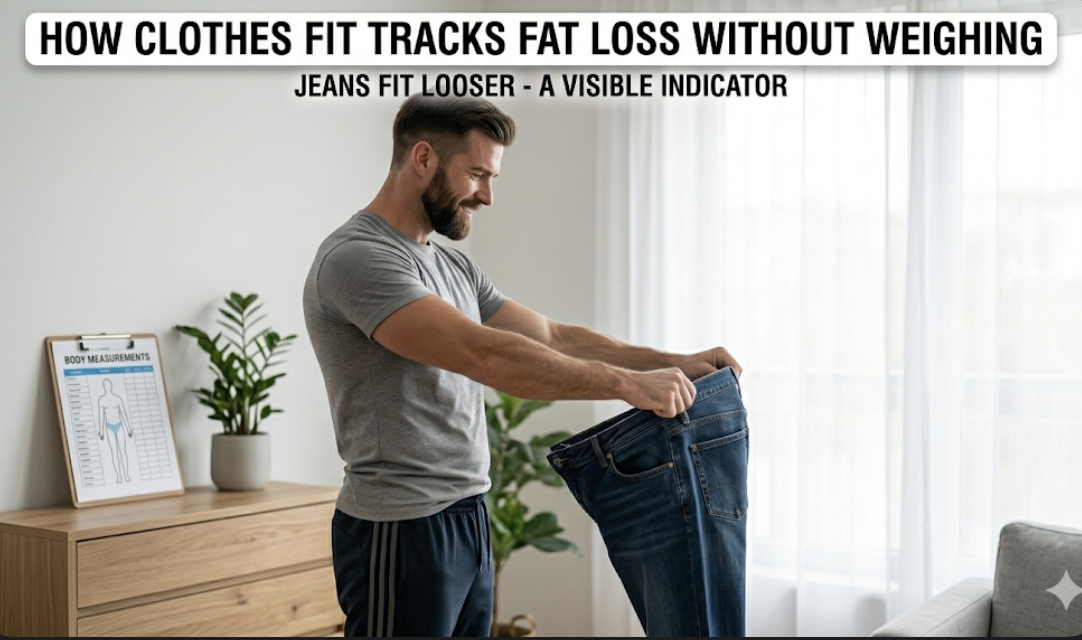
Pick a pair of "reference jeans" or a fitted shirt. Try them on every 2 weeks. If they feel looser, you've lost fat – even if the scale hasn't moved. This is perhaps the most intuitive and reliable non-scale victory (NSV).
7. Method #5: Body Fat Percentage Assessments
7.1 Skinfold Calipers
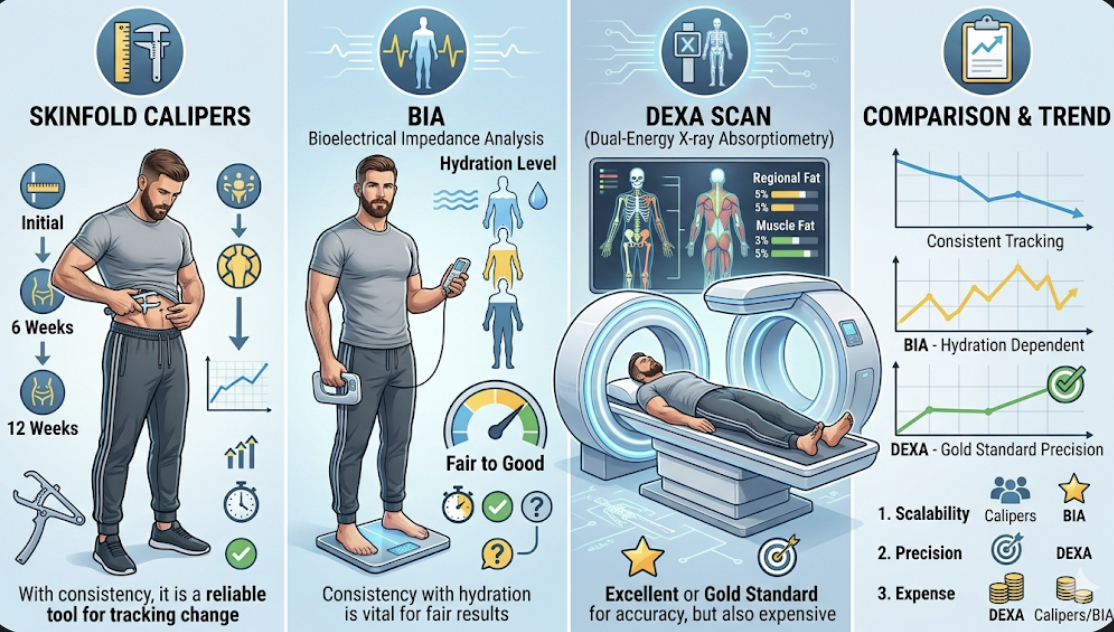
With proper technique, calipers can track changes in subcutaneous fat. Have the same trained professional measure at 3-7 sites every 4-6 weeks (ACSM, 2021).
7.2 Bioelectrical Impedance (BIA)
Home scales with BIA are affected by hydration, but can show trends if used under strict conditions (morning fasted, after bathroom).
7.3 DEXA Scans
DEXA is the gold standard for body composition. A scan every 3-6 months provides precise data on fat mass, lean mass, and bone density (Heymsfield et al., 2018).
8. Sample Weekly Tracking Protocol
- Monday (morning): Weigh-in (optional, once weekly) + body measurements.
- Wednesday (gym): Log strength progress (main lifts).
- Friday (morning): Progress photos (every 2-4 weeks).
- Saturday: Try on reference jeans – note fit.
Use a tracking sheet or app to record all metrics. Focus on trends over 4-8 weeks, not daily fluctuations.
9. Sample Nutrition Day to Support Fat Loss (1800 kcal)
While tracking progress, ensure your nutrition supports fat loss without muscle loss.
- Breakfast: 3 eggs (18g protein), 100g berries, 30g oats (350 kcal).
- Lunch: 150g chicken breast, 200g sweet potato, 200g broccoli (450 kcal).
- Snack: 150g Greek yogurt + 1 apple (200 kcal).
- Dinner: 150g white fish, 300g mixed veggies, 1 tbsp olive oil (400 kcal).
- Evening: 1 scoop casein protein (120 kcal).
Vegan Adaptation
- Replace eggs with 200g firm tofu.
- Replace chicken with 200g tempeh.
- Use pea protein shakes.
10. Common Mistakes When Tracking Fat Loss
- Weighing daily and reacting emotionally.
- Inconsistent measurement techniques (time, tape placement).
- Comparing photos in different lighting/poses.
- Ignoring strength progress.
- Not tracking long enough to see trends.
11. Frequently Asked Questions
How can I track fat loss without a scale?
Use weekly body measurements (waist, hips), progress photos, strength tracking, and how clothes fit. These methods reflect body composition changes better than the scale.
How often should I take progress photos?
Every 2-4 weeks, in consistent lighting and poses. Monthly is sufficient to see visible changes.
Can you lose fat and not lose weight?
Yes – body recomposition: losing fat while gaining muscle. The scale stays the same but you look leaner.
What is the most accurate way to measure body fat?
DEXA scans are most accurate, but skinfold calipers by a trained professional are practical for tracking trends.
Should I throw away my scale?
Not necessarily, but use it as one of many data points – not the only one. Focus on trends over time.
12. Related Resources
- Low-Intensity Walking for Fat Loss: Simple Strategy to Burn More Fat
- How to Handle Hunger Pangs During a Strict Cutting Phase (Athlete’s Guide)
- Intermittent Fasting for Bodybuilders: Pros, Cons, and Muscle-Building Truth
- How to Lose Belly Fat Without Losing Muscle (Science-Based Guide)
- Why You’re Not Losing Fat Despite Eating Clean (7 Science-Backed Reasons)
13. Scientific References
- Heymsfield, S. B., et al. (2018). Body composition analysis: principles and applications. Nature Reviews Endocrinology, 14(8), 467–478. PubMed
- Kreitzman, S. N., et al. (1992). Glycogen storage: illusions of easy weight loss. American Journal of Clinical Nutrition, 56(1), 292S–293S. PubMed
- White, C. P., et al. (2011). Fluid retention over the menstrual cycle. Journal of Obstetrics and Gynaecology Canada, 33(6), 589–594. PubMed
- Thomas, D. M., et al. (2016). Time to correctly predict the amount of weight loss with dieting. Journal of the Academy of Nutrition and Dietetics, 116(1), 16–22. PubMed
- Pouliot, M. C., et al. (1994). Waist circumference and abdominal sagittal diameter: best simple anthropometric indexes of abdominal visceral adipose tissue. American Journal of Cardiology, 73(7), 460–468. PubMed
- Ross, R., et al. (2000). Reduction in obesity and related comorbid conditions after diet-induced weight loss. Annals of Internal Medicine, 133(2), 92–103. PubMed
- Schoenfeld, B. J., et al. (2016). Effects of resistance training frequency on measures of muscle hypertrophy: a systematic review. Sports Medicine, 46(11), 1689–1697. PubMed
- ACSM. (2021). ACSM's Guidelines for Exercise Testing and Prescription (11th ed.). Wolters Kluwer. ACSM
Join the conversation