Why Your Muscles Are Not Growing (Even If You Train Hard)
Why Your Muscles Are Not Growing (Even If You Train Hard)

⚡ TL;DR
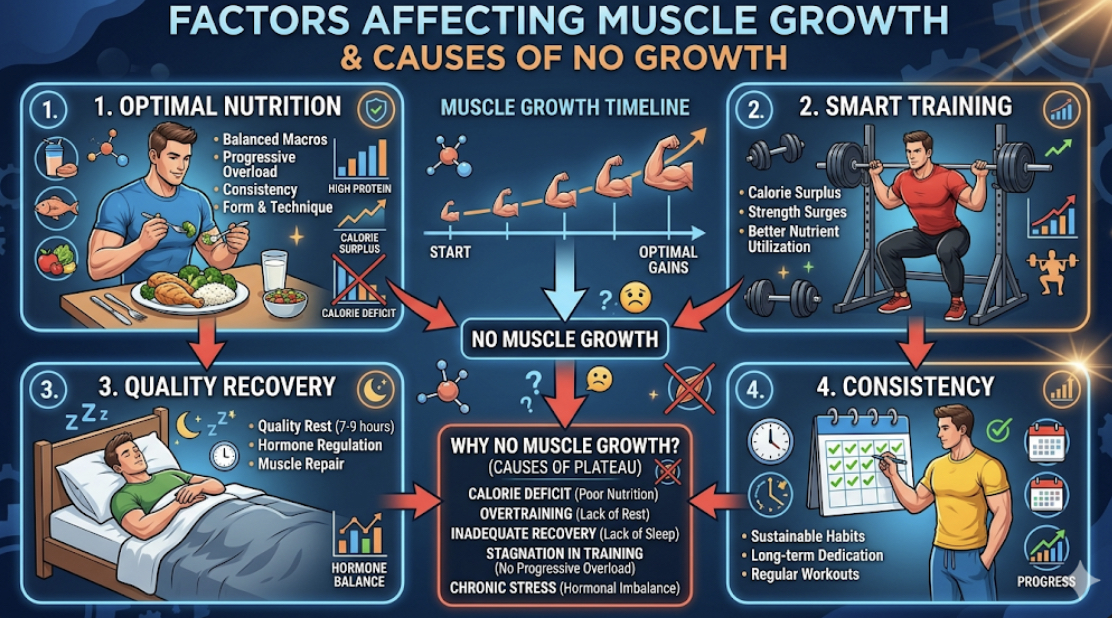
If your muscles are not growing despite training hard, the problem is almost always one of these: insufficient calorie intake (no surplus), inadequate protein (<1.6 g/kg), poor training intensity (no progressive overload), insufficient recovery (sleep <7 hours), excessive training volume, inconsistent workouts, or chronic stress . Fix these seven factors, and your growth will restart. This guide breaks down each reason with science-backed solutions, sample meal plans, and training adjustments to get your gains back on track.
1. The Frustration: Training Hard, Seeing Nothing
You're in the gym 4–5 days a week. You push through heavy sets, you leave sweating, you feel the pump. Yet weeks turn into months, and your physique hasn't changed. The mirror shows the same reflection. The tape measure hasn't budged. If your muscles are not growing, you're not alone—and it's rarely due to bad genetics. It's almost always a fixable mistake in one of three areas: nutrition, training, or recovery.
Why are my muscles not growing despite training?
Your muscles are not growing despite training due to one or more of these reasons: 1) Low calorie intake—muscle growth requires a calorie surplus. 2) Poor training intensity—lack of progressive overload means no growth stimulus. 3) Insufficient recovery—poor sleep or overtraining prevents repair. 4) Low protein intake—below 1.6 g/kg/day limits muscle protein synthesis . Addressing these four pillars will almost always restart growth.
2. Reason #1: You're Not Eating Enough Calories (No Surplus)
2.1. The Energy Equation
Muscle is metabolically expensive to build. Your body won't invest energy in building new tissue if it thinks resources are scarce. Without a calorie surplus, muscle protein synthesis cannot outpace breakdown .
2.2. How Much Do You Need?
To build muscle, aim for a moderate surplus of 250–500 kcal above maintenance. This translates to a weight gain of 0.25–0.5% of body weight per week . If your weight is stable for weeks, you're not in a surplus—you're maintaining.
3. Reason #2: Your Protein Intake Is Too Low
3.1. The Protein-MPS Connection
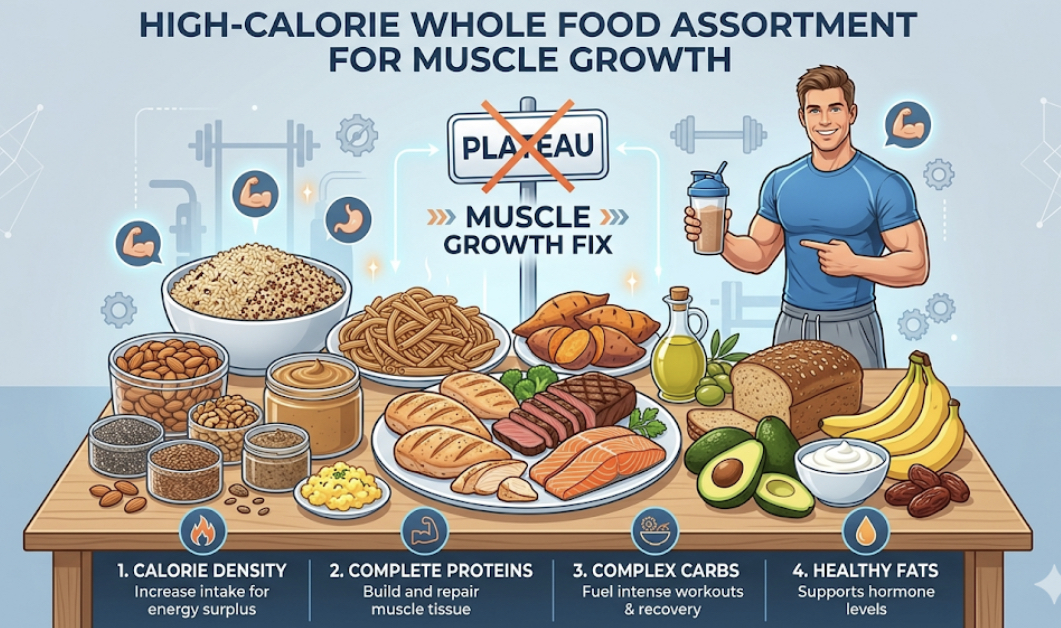
Protein provides the amino acids necessary for muscle protein synthesis. Research consistently shows that intakes below 1.6 g per kg of body weight are suboptimal for maximizing muscle growth . For an 80 kg person, that's at least 128 g of protein daily.
3.2. Distribution Matters
Spreading protein across 3–5 meals (20–40 g per meal) stimulates MPS more effectively than consuming most protein in one meal . Aim for protein at every meal, including a pre-sleep source like cottage cheese or casein.
4. Reason #3: You're Not Progressively Overloading
4.1. What Is Progressive Overload?
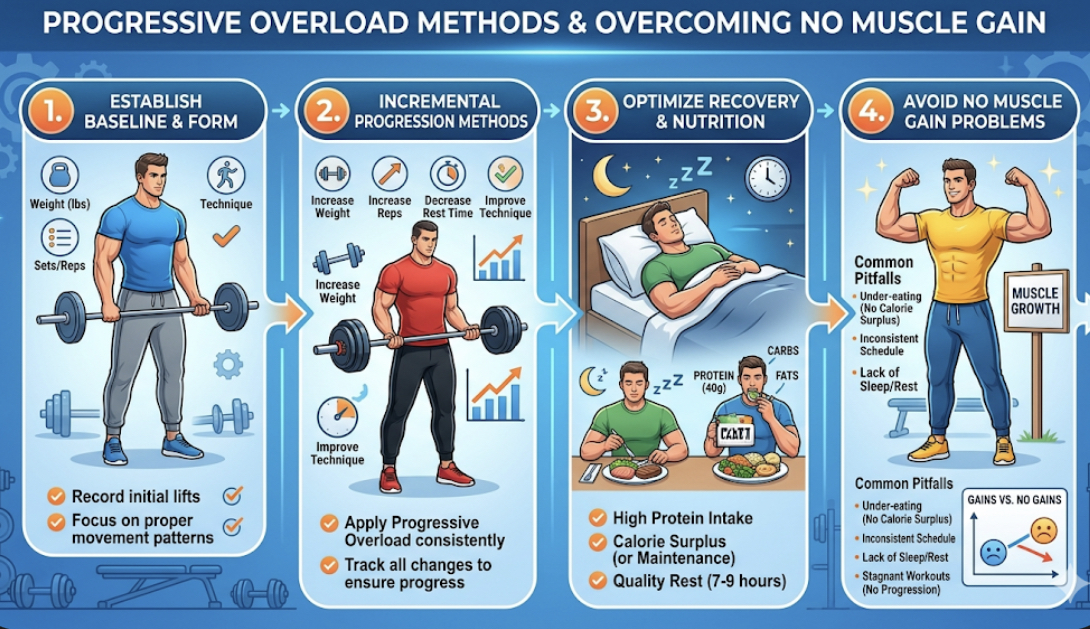
Muscle grows only when forced to adapt to increasing demands. If you lift the same weight for the same reps week after week, your body has no reason to build new tissue. Progressive overload—gradually increasing weight, reps, sets, or frequency—is the primary driver of hypertrophy .
4.2. How to Progress
- Add 2.5–5 kg to compound lifts when you hit the top of your rep range.
- Increase reps (e.g., from 8 to 10 before adding weight).
- Add an extra set.
- Decrease rest time (advanced).
5. Reason #4: You're Not Recovering Enough (Sleep & Rest)
5.1. The Sleep-Mass Connection
Muscle repair and growth happen during sleep, not while you're lifting. Poor sleep (<7 hours) impairs protein synthesis, increases cortisol, and reduces testosterone . A 2020 study found that sleep restriction significantly reduced muscle mass gains .
5.2. Overtraining vs. Under-recovering
Many lifters train 6–7 days a week without adequate rest. Muscles need 48–72 hours to recover between sessions. Without recovery, you'll experience diminishing returns and increased injury risk .
6. Reason #5: Your Training Volume Is Off (Too Low or Too High)
6.1. Volume Recommendations
Research suggests that for maximum hypertrophy, each muscle group should be trained with 10–20 sets per week, spread across 2–3 sessions . Too few sets (<10) provides insufficient stimulus; too many sets (>20–25) can lead to overtraining and diminished returns.
6.2. Signs You're Doing Too Much
- Persistent soreness lasting >72 hours
- Declining strength despite consistent training
- Chronic fatigue, irritability, poor sleep
- Lack of motivation
7. Reason #6: You're Inconsistent
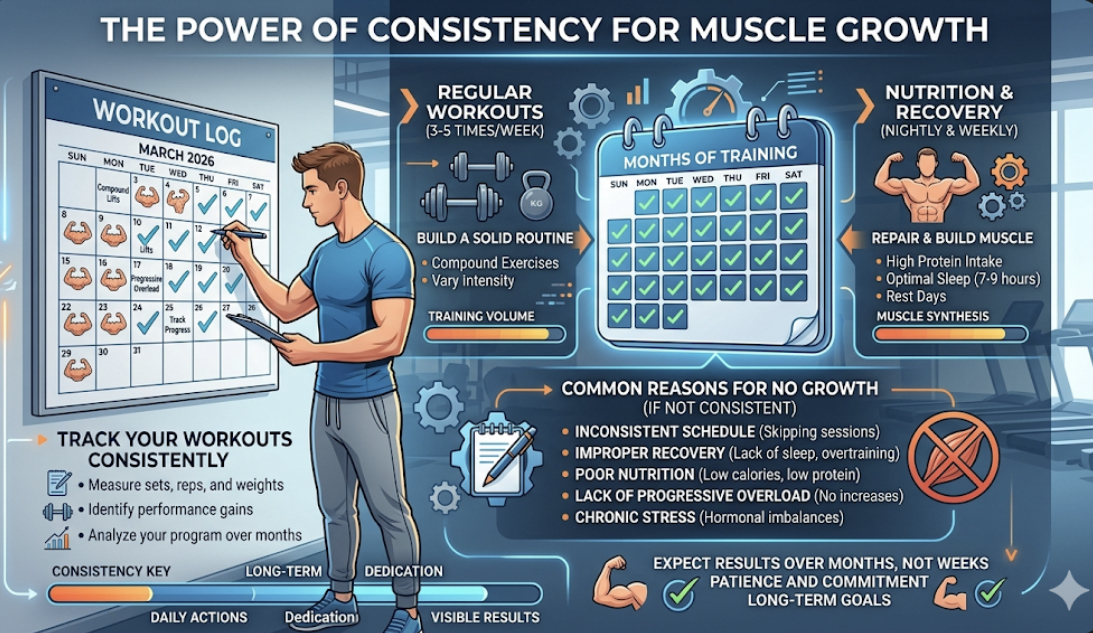
Muscle growth requires consistent stimulus over months. Skipping workouts, taking weeks off, or training only when motivated disrupts the progressive overload cycle. Even 1–2 missed weeks can set you back significantly .
8. Reason #7: Chronic Stress Is Sabotaging You
Chronic stress elevates cortisol, which can promote muscle breakdown and fat storage. High cortisol also impairs sleep, reduces testosterone, and blunts the anabolic response to training . Managing stress is as important as managing your workout.
9. Sample Meal Plan to Restart Muscle Growth (2,800 kcal, 160g Protein)
Omnivore Plan (for 75–80 kg person)
- Breakfast (7:30): 4 eggs, 1 cup oatmeal with 1 tbsp peanut butter, 1 banana (650 kcal, 40g protein)
- Lunch (12:30): 200g grilled chicken breast, 1.5 cups brown rice, 1 cup broccoli, 1 tbsp olive oil (650 kcal, 50g protein)
- Snack (4:00): 200g Greek yogurt, 1 cup berries, 1 oz almonds (350 kcal, 25g protein)
- Dinner (7:30): 200g salmon or lean beef, 1.5 cups sweet potato, 2 cups mixed greens (650 kcal, 45g protein)
- Evening (10:00): 200g cottage cheese, 1 tbsp honey (250 kcal, 20g protein)
Vegan/Vegetarian Plan (2,800 kcal, 150g Protein)
- Breakfast: Tofu scramble (200g firm tofu), 1.5 cups oatmeal with 2 tbsp peanut butter, banana (700 kcal, 40g protein)
- Lunch: 200g tempeh, 1.5 cups quinoa, 1 cup roasted chickpeas, mixed greens (700 kcal, 45g protein)
- Snack: 200g silken tofu with berries, 2 tbsp hemp seeds (300 kcal, 20g protein)
- Dinner: 1.5 cups cooked lentils, 1.5 cups sweet potato, 150g edamame, 1 tbsp olive oil (650 kcal, 35g protein)
- Evening: 1 cup unsweetened soy milk + 1 tbsp chia seeds (150 kcal, 10g protein)
Gluten-Free Options
- Use certified gluten-free oats, quinoa, rice, or buckwheat.
- Ensure tempeh and tofu are gluten-free certified (most are).
10. Quick Fix Checklist: Are You Making These Mistakes?
- ☐ Eating enough calories? (Weight slowly increasing)
- ☐ Protein ≥1.6 g/kg body weight?
- ☐ Progressive overload? (Adding weight/reps weekly)
- ☐ Sleep ≥7 hours nightly?
- ☐ Training volume 10–20 sets per muscle group/week?
- ☐ Consistent training (3–5 sessions/week)?
- ☐ Stress managed?
11. Frequently Asked Questions
Why are my muscles not growing despite training?
The most common reasons are: insufficient calorie intake, too little protein, lack of progressive overload, poor sleep, excessive training volume, inconsistency, or chronic stress.
How much protein do I need to build muscle?
1.6–2.2 grams per kilogram of body weight daily. For an 80 kg person, that's 128–176 grams of protein per day.
How long does it take to see muscle growth?
Beginners: 4–8 weeks. Intermediates: 8–12 weeks. Advanced: 12–16+ weeks. Be patient and consistent.
Can I build muscle in a calorie deficit?
Yes, if you're a beginner, have higher body fat, or are returning after a break. For advanced lifters, a surplus is usually needed.
Should I change my workout if I'm not seeing results?
First, check nutrition and recovery. If those are on point, then adjust training variables (volume, frequency, exercise selection) every 4–8 weeks.
Is it possible to overtrain?
Yes. Signs include persistent fatigue, declining strength, poor sleep, irritability, and lack of motivation. If you're experiencing these, take a deload week or reduce volume.
How much sleep do I need for muscle growth?
7–9 hours per night. Sleep is when most muscle repair and growth occurs.
12. Related Resources
- Can You Build Muscle Without Supplements? (Natural Muscle Growth Guide)
- How to Know If You’re Gaining Muscle or Fat (Simple Tracking Guide)
- Best Weekly Weight Gain Rate for Muscle Growth (Lean Bulk Guide)
- How to Increase Strength Without Gaining Fat (Lean Strength Guide)
- How Long Does It Take to Build Noticeable Muscle? (Real Timeline Explained)
- Beginner Mistakes That Kill Muscle Growth (Avoid These 7 Errors)
13. Scientific References
- Morton, R. W., et al. (2018). A systematic review, meta-analysis and meta-regression of the effect of protein supplementation on resistance training-induced gains in muscle mass and strength in healthy adults. British Journal of Sports Medicine, 52(6), 376–384. PubMed
- Slater, G. J., et al. (2019). Is an Energy Surplus Required to Maximize Skeletal Muscle Hypertrophy Associated With Resistance Training? Frontiers in Nutrition, 6, 131. PubMed
- Helms, E. R., et al. (2014). Evidence-based recommendations for natural bodybuilding contest preparation. Journal of the International Society of Sports Nutrition, 11(1), 20. PubMed
- Schoenfeld, B. J., et al. (2017). Effects of Resistance Training Frequency on Measures of Muscle Hypertrophy: A Systematic Review and Meta-Analysis. Sports Medicine, 46(11), 1689–1697. PubMed
- Areta, J. L., et al. (2013). Timing and distribution of protein ingestion during prolonged recovery from resistance exercise alters myofibrillar protein synthesis. Journal of Physiology, 591(9), 2319–2331. PubMed
- Nedeltcheva, A. V., et al. (2010). Insufficient sleep undermines dietary efforts to reduce adiposity. Annals of Internal Medicine, 153(7), 435–441. PubMed
- ACSM. (2021). Nutrition and Athletic Performance. Medicine & Science in Sports & Exercise, 53(3), 600–618. PubMed
Join the conversation