Best Low-Calorie High-Protein Foods (Top Picks for Fat Loss & Muscle)
Best Low-Calorie High-Protein Foods: Top Picks for Fat Loss & Muscle (2026)

⚡ TL;DR
Low-calorie high-protein foods are the cornerstone of effective fat loss while preserving muscle. This guide provides the best high protein foods for fat loss, including low calorie protein sources like chicken breast, egg whites, Greek yogurt, and white fish. Learn the best protein foods for dieting and build a sustainable fat loss high protein diet. This lean protein foods list includes foods high protein low calories with complete nutrition data. Maximize satiety, preserve muscle, and accelerate fat loss with these protein-packed foods.
1. Why Low-Calorie High-Protein Foods Are Essential for Fat Loss
When dieting for fat loss, protein is your most important nutrient. High protein intake preserves muscle mass, increases satiety, and has a higher thermic effect of food (TEF) – meaning you burn more calories digesting protein than carbs or fat (Westerterp, 2004).
This guide covers the best low-calorie high-protein foods for fat loss and muscle preservation. Whether you're looking for high protein foods for fat loss or a complete lean protein foods list, these low calorie protein sources will help you achieve your goals.
What are the best low-calorie high-protein foods?
What are the best low-calorie high-protein foods? Chicken breast, egg whites, tuna, Greek yogurt, cottage cheese, turkey, white fish (cod, tilapia, halibut), shrimp, whey protein, and lean beef (95/5). These foods provide 20-30g protein per 100-150 calories, making them ideal for fat loss while preserving muscle.
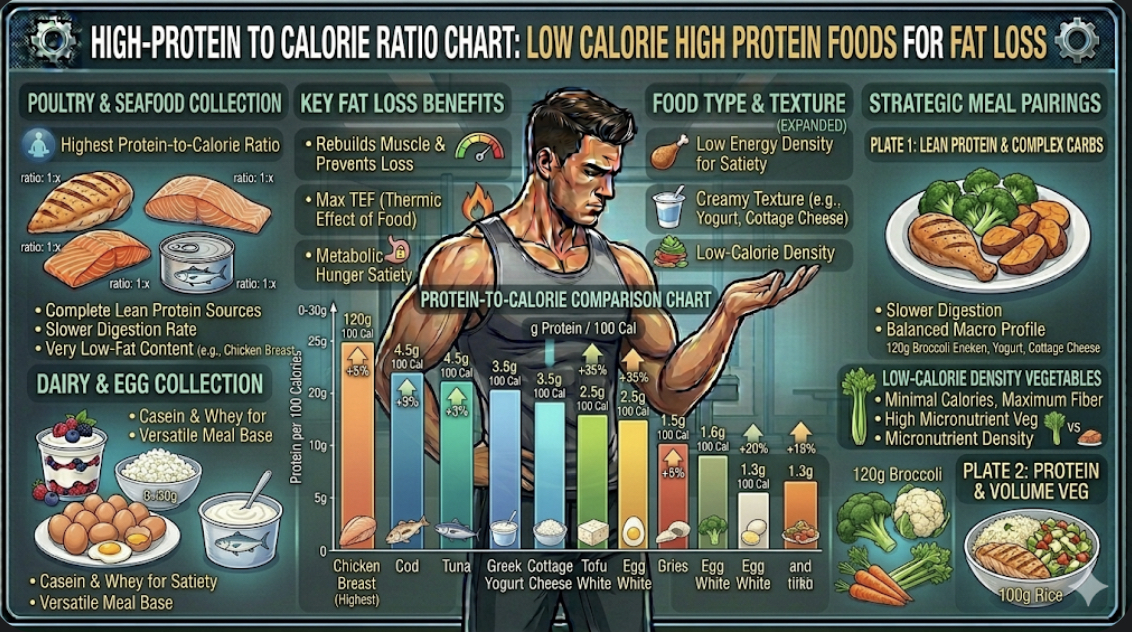
2. The Science: Why Protein Is Critical for Fat Loss
High protein foods for fat loss work through three primary mechanisms:
- Muscle preservation: During calorie deficit, your body breaks down muscle for energy. High protein intake (1.6-2.2 g/kg) minimizes muscle loss (Morton et al., 2018).
- Increased satiety: Protein reduces ghrelin (hunger hormone) and increases CCK/PYY (fullness hormones). A high-protein meal keeps you full for 3-5 hours.
- Higher thermic effect: Protein requires 20-30% of its calories for digestion vs 5-10% for carbs and 0-3% for fat. Eating 100 calories of protein nets ~70-80 calories after digestion (Westerterp, 2004).
For optimal fat loss, consume 1.6-2.2 g protein per kg body weight daily (30-35% of calories). A 75 kg (165 lb) person needs 120-165g protein daily.
📊 Top Low-Calorie High-Protein Foods (Ranked by Protein per 100 Calories)
| Food | Serving | Calories | Protein (g) | Protein per 100 cal | Fat (g) | Carbs (g) |
|---|---|---|---|---|---|---|
| Egg Whites | 1 cup (243g) | 125 | 26g | 20.8g | 0g | 2g |
| Chicken Breast (skinless) | 100g | 165 | 31g | 18.8g | 3.6g | 0g |
| Tuna (canned in water) | 1 can (100g) | 120 | 25g | 20.8g | 1g | 0g |
| White Fish (cod/tilapia) | 100g | 90 | 20g | 22.2g | 1g | 0g |
| Shrimp | 100g | 120 | 24g | 20.0g | 2g | 0g |
| Greek Yogurt (non-fat) | 1 cup (170g) | 150 | 20g | 13.3g | 0g | 8g |
| Cottage Cheese (1-2%) | 1 cup (226g) | 180 | 25g | 13.9g | 5g | 8g |
| Whey Protein Isolate | 1 scoop (30g) | 120 | 25g | 20.8g | 1g | 2g |
3. Animal-Based Low-Calorie High-Protein Foods
Chicken Breast – The Gold Standard
- Nutrition: 165 calories, 31g protein per 100g
- Why it's great: Leanest cut of chicken, versatile, high satiety
- How to eat: Grilled, baked, shredded, in salads, with vegetables
Turkey Breast (Skinless)
- Nutrition: 160 calories, 30g protein per 100g
- Why it's great: Similar to chicken, slightly different flavor profile
- How to eat: Ground turkey, turkey breast slices, roasted turkey
Lean Beef (95/5 or leaner)
- Nutrition: 170 calories, 26g protein per 100g
- Why it's great: Rich in iron, B12, and creatine. Choose 95/5 or leaner.
- How to eat: Lean ground beef patties, steak tips, stir-fry
White Fish (Cod, Tilapia, Halibut)
- Nutrition: 90 calories, 20g protein per 100g
- Why it's great: Extremely low calorie, high protein – almost pure protein
- How to eat: Baked, grilled, in fish tacos (use low-carb tortillas)
Shrimp
- Nutrition: 120 calories, 24g protein per 100g
- Why it's great: Low calorie, high protein, quick to cook
- How to eat: Grilled, sautéed with garlic, in stir-fry, shrimp cocktail
Tuna (Canned in Water)
- Nutrition: 120 calories, 25g protein per can (100g)
- Why it's great: Convenient, shelf-stable, excellent protein-to-calorie ratio
- How to eat: Tuna salad (use Greek yogurt instead of mayo), on salads, with crackers
- Limit: 2-3 servings weekly due to mercury concerns
Salmon (Wild-caught – moderate fat, still good)
- Nutrition: 200 calories, 22g protein per 100g
- Why it's great: Omega-3 fatty acids support fat loss and recovery
- How to eat: Baked, grilled, smoked salmon on rice cakes
Eggs and Egg Whites
- Whole egg: 70 calories, 6g protein – nutrient-dense
- Egg whites: 52 calories, 11g protein per 100g – pure protein
- Why it's great: Complete protein, versatile, affordable
- How to eat: Scrambled, omelets, hard-boiled, egg white bites
Greek Yogurt (Non-Fat)
- Nutrition: 150 calories, 20g protein per cup (170g)
- Why it's great: High protein, probiotics for gut health, creamy
- How to eat: Plain with berries, in smoothies, as sour cream substitute
Cottage Cheese (1-2% Milkfat)
- Nutrition: 180 calories, 25g protein per cup (226g)
- Why it's great: Slow-digesting casein protein, keeps you full longer
- How to eat: With fruit, on rice cakes, in lasagna (replace ricotta)
4. Plant-Based Low-Calorie High-Protein Foods
Tofu (Extra Firm)
- Nutrition: 140 calories, 16g protein per 100g
- Why it's great: Complete protein, versatile, affordable
- How to eat: Stir-fry, baked, scrambled tofu, in soups
Tempeh
- Nutrition: 190 calories, 20g protein per 100g
- Why it's great: Fermented, high protein, nutty flavor
- How to eat: Grilled, crumbled as ground meat substitute, in stir-fry
Edamame
- Nutrition: 120 calories, 11g protein per cup (shelled)
- Why it's great: Complete protein, high fiber, good for snacking
- How to eat: Steamed with salt, in salads, as a snack
Seitan
- Nutrition: 120 calories, 21g protein per 100g
- Why it's great: Very high protein, meat-like texture
- Note: Not gluten-free (made from wheat gluten)
- How to eat: Sliced, stir-fried, in sandwiches
Lentils
- Nutrition: 230 calories, 18g protein per cup (cooked)
- Why it's great: High protein + high fiber (15g fiber per cup)
- How to eat: Lentil soup, salads, curries, as a side dish
Chickpeas (Garbanzo Beans)
- Nutrition: 270 calories, 15g protein per cup (cooked)
- Why it's great: High fiber (12g), versatile
- How to eat: Hummus, roasted chickpeas, salads, curries
Pea Protein Powder
- Nutrition: 120 calories, 24g protein per scoop
- Why it's great: Hypoallergenic, complete protein (when combined with rice protein), convenient
- How to eat: Shake with water or plant milk, in smoothies, baking
5. Sample High-Protein Fat Loss Meal Plan (1,600 kcal, 150g Protein)
Breakfast (7:00 AM) – 350 kcal, 35g protein
- 5 egg whites + 1 whole egg (150 kcal, 25g protein)
- 1 cup spinach + 1/2 cup mushrooms (30 kcal, 2g protein)
- 1 slice whole grain toast (80 kcal, 4g protein)
- 1/2 cup berries (40 kcal, 1g protein)
Lunch (12:00 PM) – 400 kcal, 45g protein
- 150g grilled chicken breast (250 kcal, 45g protein)
- 2 cups mixed greens + cucumber + tomatoes (50 kcal, 2g protein)
- 1/2 cup quinoa (110 kcal, 4g protein)
- Lemon juice + herbs (10 kcal)
Afternoon Snack (3:30 PM) – 200 kcal, 20g protein
- 1 cup non-fat Greek yogurt (150 kcal, 20g protein)
- 1/2 cup strawberries (25 kcal, 0g protein)
Dinner (7:00 PM) – 450 kcal, 45g protein
- 150g white fish (cod or tilapia) (135 kcal, 30g protein)
- 2 cups roasted broccoli (100 kcal, 5g protein)
- 1 cup cauliflower rice (40 kcal, 2g protein)
- 1/2 cup brown rice (110 kcal, 3g protein)
- 1 tsp olive oil (40 kcal, 0g protein)
Evening Snack (9:30 PM) – 150 kcal, 20g protein
- 1 cup cottage cheese (1% fat) (150 kcal, 20g protein)
Daily Total: ~1,550 kcal, ~165g protein
For more meal ideas, check out full day of eating for fat loss and 7-day meal plan for muscle gain.
6. Quick High-Protein Recipes for Fat Loss
Grilled Chicken & Vegetable Bowl (15 min)
- 150g chicken breast + 2 cups mixed vegetables + 1/2 cup quinoa
- Macros: 450 kcal, 50g protein, 40g carbs, 10g fat
Protein Smoothie (5 min)
- 1 scoop whey + 1 cup unsweetened almond milk + 1/2 cup frozen spinach + 1/2 banana
- Macros: 250 kcal, 27g protein, 25g carbs, 5g fat
Egg White Omelet (10 min)
- 5 egg whites + 1 cup spinach + 1/4 cup mushrooms + 1/4 cup onions
- Macros: 180 kcal, 25g protein, 8g carbs, 3g fat
Tuna Salad Lettuce Wraps (5 min)
- 1 can tuna + 2 tbsp Greek yogurt (instead of mayo) + lettuce cups
- Macros: 200 kcal, 30g protein, 5g carbs, 6g fat
7. High-Protein Snacks for Fat Loss
- Greek yogurt cup: 150 kcal, 20g protein
- Hard-boiled eggs (2): 140 kcal, 12g protein
- Turkey roll-ups: 3 slices turkey + mustard (90 kcal, 15g protein)
- Cottage cheese + berries: 200 kcal, 22g protein
- Protein shake: 120 kcal, 25g protein
- Tuna pouch: 120 kcal, 25g protein
- Edamame (1 cup shelled): 120 kcal, 11g protein + 8g fiber
- Beef jerky (look for low sugar): 80 kcal, 15g protein per oz
8. Foods to Avoid or Limit on a High-Protein Fat Loss Diet
- Fatty meats (ribeye, pork belly, sausage): High in calories from fat, lower protein-to-calorie ratio
- Processed meats (bacon, salami, pepperoni): High in fat, sodium, and preservatives
- Full-fat dairy (whole milk, full-fat cheese): Choose low-fat or non-fat versions for better protein-to-calorie ratio
- Fried proteins (fried chicken, fish & chips): Adds hundreds of calories from oil
- Protein bars with added sugar: Many have 200-300 calories with only 10-15g protein. Choose bars with <5g sugar and >15g protein.
- High-carb protein sources (beans in syrup, sweetened yogurt): Added sugar adds unnecessary calories
9. Special Diets: Vegan and Vegetarian High-Protein Options
Vegan High-Protein Fat Loss Meal Plan (1,600 kcal, 120g Protein)
- Breakfast: Tofu scramble (1.5 cups) + 1 cup spinach + 1/2 cup oats (450 kcal, 35g protein)
- Lunch: 150g tempeh + 2 cups quinoa + 2 cups broccoli (550 kcal, 40g protein)
- Snack: 1 cup edamame + 1/4 cup chickpeas (250 kcal, 18g protein)
- Dinner: 200g lentils + 2 cups brown rice + 2 cups roasted vegetables (600 kcal, 35g protein)
- Total: ~1,850 kcal, ~128g protein
Vegetarian High-Protein Fat Loss Meal Plan (1,600 kcal, 140g Protein)
- Breakfast: 5 egg whites + 1 whole egg + 1 cup spinach + 1 slice toast (350 kcal, 35g protein)
- Lunch: 1 cup cottage cheese + 1 cup Greek yogurt + 1/2 cup berries (400 kcal, 45g protein)
- Snack: 1 scoop whey + water (120 kcal, 25g protein)
- Dinner: 150g paneer + 2 cups quinoa + 2 cups mixed vegetables (550 kcal, 40g protein)
- Total: ~1,420 kcal, ~145g protein
Gluten-Free High-Protein Options
- All animal proteins are naturally gluten-free
- Plant proteins: Tofu, tempeh, edamame, lentils, chickpeas, beans (certified gluten-free)
- Avoid seitan (made from wheat gluten)
- Verify protein powder is gluten-free certified
10. Common Mistakes on a High-Protein Fat Loss Diet
- Not eating enough calories overall: Very low-calorie diets (<1,200 kcal) make it difficult to get adequate protein. Target 1,500-1,800 calories for sustainable fat loss.
- Relying only on protein supplements: Whole foods provide greater satiety and nutrients. Use supplements to fill gaps, not replace meals.
- Avoiding all fats: Healthy fats support hormone function. Add small amounts of avocado, nuts, or olive oil.
- Choosing high-fat protein sources: Ribeye, pork shoulder, and full-fat dairy add hundreds of extra calories. Choose lean cuts.
- Not varying protein sources: Different protein sources provide different amino acid profiles. Rotate between animal and plant sources.
11. Frequently Asked Questions
What are the best low-calorie high-protein foods?
Chicken breast, egg whites, tuna, Greek yogurt, cottage cheese, turkey, white fish (cod, tilapia, halibut), shrimp, whey protein, and lean beef (95/5). These foods provide 20-30g protein per 100-150 calories, making them ideal for fat loss while preserving muscle.
What foods are high in protein but low in calories?
Top foods: chicken breast (31g protein, 165 cal per 100g), egg whites (11g protein, 52 cal per 100g), tuna (25g protein, 120 cal per can), Greek yogurt (20g protein, 150 cal per cup), cottage cheese (25g protein, 180 cal per cup), white fish (20g protein, 90 cal per 100g), shrimp (24g protein, 120 cal per 100g).
How much protein should I eat for fat loss?
For fat loss, consume 1.6-2.2 g protein per kg body weight daily (30-35% of calories). A 75 kg (165 lb) person needs 120-165g protein daily. Higher protein intake preserves muscle during calorie deficit, increases satiety, and has a higher thermic effect of food (20-30% of calories burned during digestion).
What is the leanest protein source?
The leanest protein sources are: egg whites (52 cal, 11g protein per 100g), white fish like cod and tilapia (90 cal, 20g protein per 100g), shrimp (120 cal, 24g protein per 100g), chicken breast (165 cal, 31g protein per 100g), and whey protein isolate (120 cal, 25g protein per scoop). These have the highest protein-to-calorie ratio.
Can I build muscle with low-calorie high-protein foods?
Yes, low-calorie high-protein foods are excellent for building muscle during a cutting phase. Protein provides amino acids for muscle protein synthesis. While a calorie surplus is typically needed for maximum muscle gain, high protein intake (1.6-2.2 g/kg) during a deficit minimizes muscle loss and can even support lean muscle gain in beginners or those returning from a break.
Is it safe to eat high protein long-term?
Yes, high protein intake (up to 2.5 g/kg) is safe for healthy individuals. Concerns about kidney damage only apply to people with pre-existing kidney disease. Healthy kidneys can handle high protein intake. Ensure adequate water intake (2-3 liters daily) and include fiber-rich foods for digestive health.
12. Related Resources
- How to Read Food Labels for Fitness Goals (Beginner-Friendly Guide)
- Healthy Grocery List for Fitness Beginners (Complete Shopping Guide)
- Best Post-Workout Meals for Muscle Recovery (Fast Recovery Foods Guide)
- How Much Water Should You Drink for Fitness? (Daily Hydration Guide)
- What to Drink During Workout for Better Performance (Hydration Guide)
- High Protein Breakfast Ideas for Muscle Gain (Quick & Healthy Meals)
13. Scientific References
- Westerterp, K. R. (2004). Diet induced thermogenesis. Nutrition & Metabolism, 1(1), 5. PubMed
- Morton, R. W., et al. (2018). A systematic review, meta-analysis and meta-regression of the effect of protein supplementation on resistance training-induced gains in muscle mass and strength. British Journal of Sports Medicine, 52(6), 376-384. PubMed
- Leidy, H. J., et al. (2015). The role of protein in weight loss and maintenance. American Journal of Clinical Nutrition, 101(6), 1320S-1329S. PubMed
- Schoenfeld, B. J., & Aragon, A. A. (2018). How much protein can the body use in a single meal for muscle-building? Journal of the International Society of Sports Nutrition, 15(1), 10. PubMed
- Helms, E. R., et al. (2014). Evidence-based recommendations for natural bodybuilding contest preparation. Journal of the International Society of Sports Nutrition, 11(1), 20. PubMed
- Jäger, R., et al. (2017). International Society of Sports Nutrition Position Stand: protein and exercise. Journal of the International Society of Sports Nutrition, 14(1), 20. PubMed
- Phillips, S. M. (2014). A brief review of higher dietary protein diets in weight loss: A focus on athletes. Sports Medicine, 44(S2), 149-153. PubMed
Join the conversation